
Our readers keep the lights on and the weekend projects moving. As an Amazon Associate, I earn from qualifying purchases.
A 4K television is the centerpiece of a modern home theater, but choosing one under a thousand dollars means navigating a maze of panel types, refresh rates, and processing engines. The difference between a satisfying purchase and a regretful one often comes down to local dimming zones, peak brightness in nits, and HDMI 2.1 port allocation—details that can make or break the experience for both movie lovers and console gamers.
I’m Rikta — the founder and writer behind FitlyFast. I’ve spent years analyzing display hardware across budget, mid-range, and premium tiers, focusing specifically on how real-world specs like contrast ratio and color volume translate to viewing satisfaction.
After rigorously comparing 11 models ranging from Mini-LED powerhouses to AI-driven QLED sets, this guide cuts through the marketing clutter to reveal the 4k tv under $1000 that delivers the best combination of brightness, motion handling, and smart features for your money.
How To Choose The Best 4K TV Under $1000
The ceiling is the sweet spot for 4K televisions because it opens the door to advanced panel technologies like Mini-LED backlighting and quantum dot color without crossing into flagship pricing. The key is knowing which specs actually impact your viewing experience and which are marketing gloss. This section breaks down the three most critical factors.
Panel Technology: Mini-LED vs QLED vs Standard LED
Not all 4K panels render black levels and brightness the same way. Standard LED backlights often produce grayish blacks in dark scenes because the light bleeds across the whole screen. Quantum Dot (QLED) enhances color volume and brightness by using nanoparticles to convert light into purer reds and greens. Mini-LED takes this further by packing thousands of tiny LEDs into zones behind the screen, allowing precise local dimming that dramatically improves contrast. For a dark room home theater, prioritize Mini-LED with a high zone count. For a bright living room, QLED’s high brightness ceiling is your ally.
Refresh Rate and HDMI 2.1 for Gaming
If you own a PS5, Xbox Series X, or a gaming PC, the native refresh rate of the panel dictates how smooth motion looks. A 60Hz panel is fine for movies and casual viewing, but fast-paced shooters and racing games benefit from a native 120Hz or 144Hz panel. Pair this with HDMI 2.1 ports that support 4K at 120Hz or 144Hz, Variable Refresh Rate (VRR), and Auto Low Latency Mode (ALLM). Check how many HDMI 2.1 ports the TV actually has—some models only offer one full-bandwidth port, which limits multi-console setups.
HDR Format Support and Processor Quality
High Dynamic Range (HDR) is what makes highlights pop and shadows stay detailed. The two dominant formats are Dolby Vision, which uses dynamic metadata scene by scene, and HDR10+, which does the same but is more common on Amazon Prime content. HDR10 is the baseline and works everywhere. A TV that supports both Dolby Vision IQ and HDR10+ Adaptive gives you the widest compatibility. The processor matters equally—a good chip upscales lower-resolution content (like cable TV or 1080p YouTube) convincingly. Brands like Sony and Samsung invest heavily in proprietary AI processors that clean up noise and sharpen edges without introducing artifacts.
Quick Comparison
On smaller screens, swipe sideways to see the full table.
| Model | Category | Best For | Key Spec | Amazon |
|---|---|---|---|---|
| Samsung Neo QLED QN70F 65″ | Premium Mini-LED | Upscaling & brightness | NQ4 AI Gen2 20 neural nets | Amazon |
| Sony BRAVIA 3 II 65″ | Premium LED | PS5 & motion clarity | XR Processor + native 120Hz | Amazon |
| iFFALCON 65U85 65″ | Mid Premium Mini-LED | Gaming & multi-HDMI 2.1 | 4x HDMI 2.1, 144Hz panel | Amazon |
| Toshiba Z670R 55″ | Japanese Quality | Bright room & deep bass | REGZA Engine ZRi Gen3 + 144Hz | Amazon |
| Hisense U6 65″ | Mid-Range Mini-LED | Brightness & local dimming | 600-zone FALD, up to 1000 nits | Amazon |
| TCL T7 65″ | Mid-Range QLED | Fast gaming & PC monitor | Native 144Hz, 4K 120Hz via HDMI | Amazon |
| Samsung QLED Q8F 55″ | Mid Premium QLED | Color accuracy & design | 100% Color Volume with Quantum Dot | Amazon |
| Sony BRAVIA 2 II 65″ | Mid-Range LED | Budget Sony & PS5 features | 4K HDR Processor X1 | Amazon |
| Amazon Fire TV Omni QLED 55″ | Mid-Range QLED | Alexa integration & ambient mode | 64-zone local dimming, QLED | Amazon |
| Roku Plus Series 65″ | Value Mini-LED | Roku OS simplicity & brightness | Mini-LED backlight, QLED panel | Amazon |
| Panasonic W70 65″ | Entry Level | Budget 4K & Alexa | HDR bright panel, MEMC motion | Amazon |
In‑Depth Reviews
1. Samsung 65″ Neo QLED QN70F

The Samsung QN70F sits at the top of the budget because it combines a genuine Mini-LED backlight with the NQ4 AI Gen2 processor—a chip that runs 20 neural networks to upscale standard content to near-4K clarity. The Quantum Matrix Technology controls Mini-LEDs with precision, producing deep blacks without the halo effect that plagues lower-end local dimming implementations. In bright living rooms, this TV maintains punchy contrast where standard LED panels wash out.
Motion Xcelerator 144Hz caters to serious gamers, handling 4K at 144Hz VRR through HDMI 2.1. The Gaming Hub aggregates cloud streaming services without needing a console, and Auto Low Latency Mode engages instantly. Samsung TV Plus offers over 2,700 free channels, reducing dependence on external streaming subscriptions. The AirSlim design sits nearly flush against the wall, a subtle but appreciated aesthetic touch.
The built-in speakers lack the richness of dedicated soundbars, but dialogue remains clear for casual viewing. Owners praise the picture quality but note that the TV is heavy and requires careful handling during unboxing. For the price, no other model matches this blend of AI upscaling, Mini-LED contrast, and gaming performance at 65 inches.
Why it’s great
- 20 neural network AI upscaling
- Deep contrast with minimal blooming
- Solid gaming features at 144Hz
Good to know
- Built-in audio lacks bass depth
- Heavy unit requires two-person setup
- Price can fluctuate on Amazon
2. Sony BRAVIA 3 II 65″
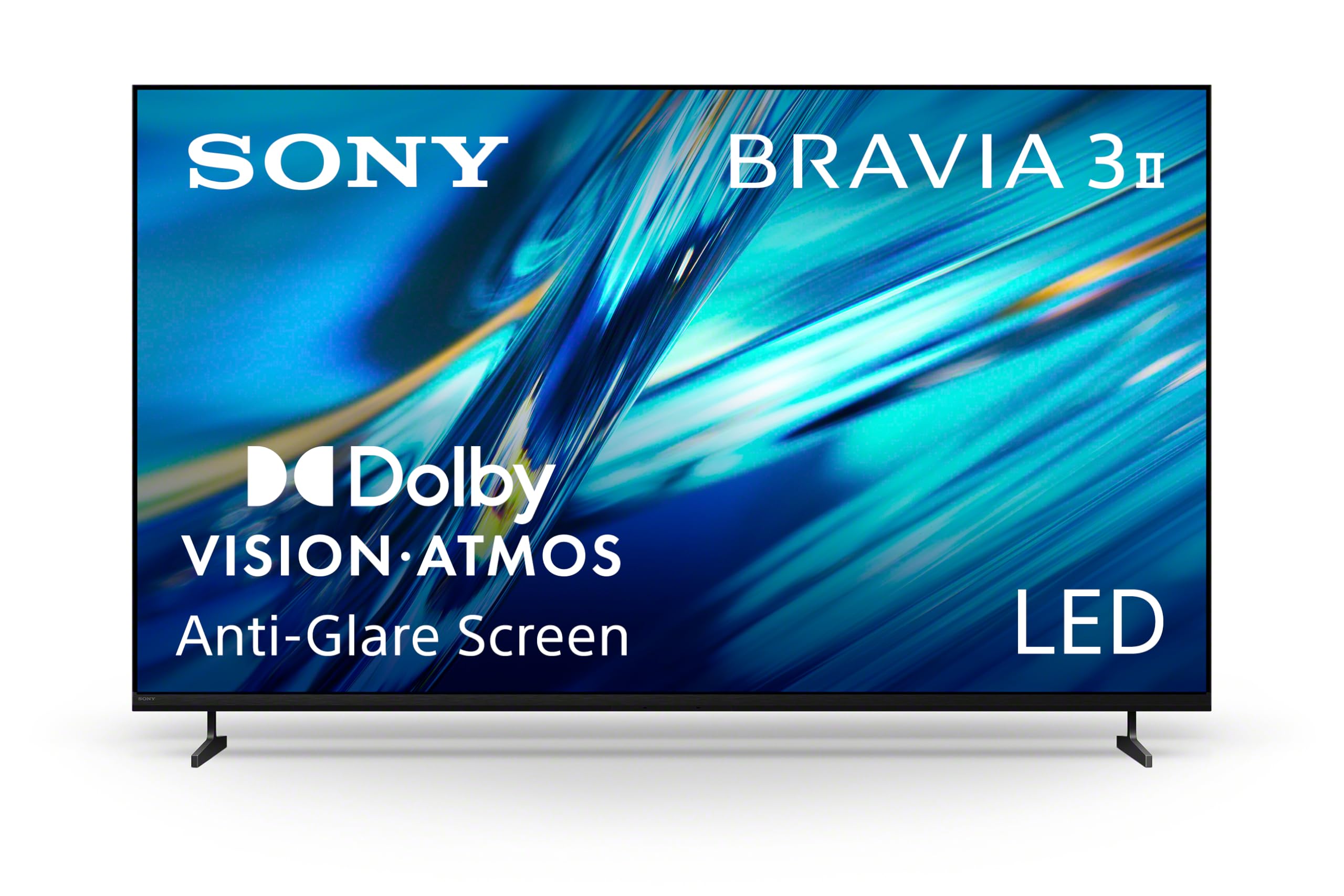
Sony’s BRAVIA 3 II is engineered specifically for PlayStation 5 owners, with exclusive features like Auto HDR Tone Mapping that calibrates the TV’s brightness curve to the console’s output automatically. The XR Processor analyzes each scene in real time using AI, enhancing textures and reducing digital noise better than any other processor in this price tier. The 120Hz native refresh rate, combined with HDMI 2.1 ports supporting 4K at 120Hz VRR and ALLM, delivers tear-free, low-lag gameplay.
The anti-glare screen is a standout feature for bright rooms, diffusing reflections without crushing shadow detail. Dolby Vision and Dolby Atmos support means streaming movies from Netflix and Disney+ in full cinematic quality. Google TV with Gemini integration allows natural language searches, and the SONY PICTURES CORE app includes 5 movie credits and a 12-month subscription to hundreds of classics.
The X-Balanced speakers prioritize clear dialogue but lack the deep bass needed for immersive movie audio, so a soundbar is recommended for serious home theater. Some users reported a lengthy initial setup process due to Google account prompts and privacy preferences. Despite these quirks, the Sony’s processing power and PS5 synergy make it the best choice for console-first buyers.
Why it’s great
- Best-in-class AI upscaling and noise reduction
- Exclusive PS5 features for HDR and game mode
- Effective anti-glare coating
Good to know
- Initial setup can be time-consuming
- Built-in speakers lack bass
- Panel is not Mini-LED
3. iFFALCON 65U85 65″
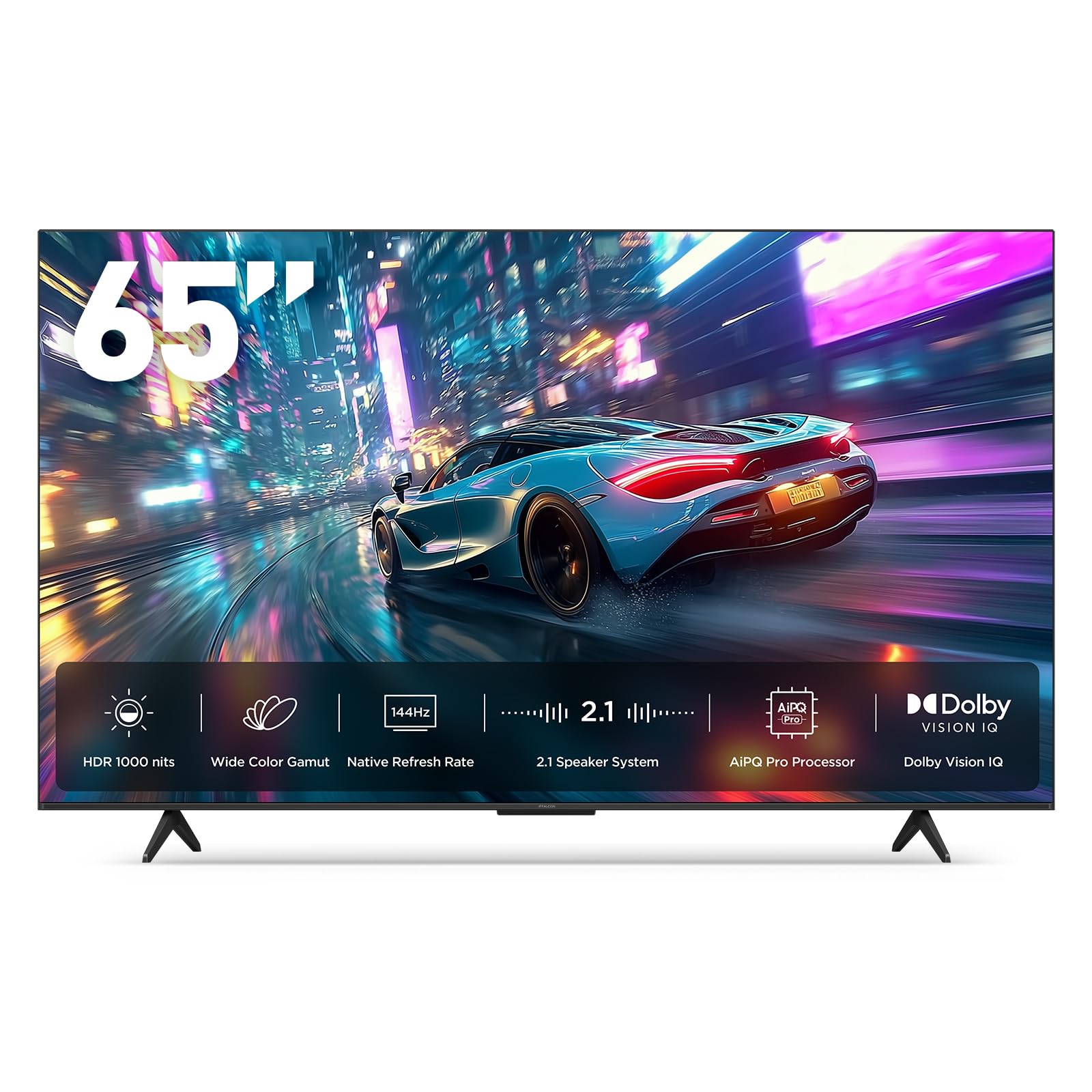
The iFFALCON 65U85 is a gaming-first television that undercuts premium competitors on price while matching their critical specs. It features four HDMI 2.1 ports, two of which support 4K at 144Hz for simultaneous connection to a PS5, Xbox Series X, and a gaming PC without swapping cables. The Mini-LED panel with local dimming delivers a 7,000:1 contrast ratio, and peak brightness reaches up to 1,000 nits, making HDR highlights in games like Cyberpunk 2077 genuinely striking.
FreeSync Premium Pro certification ensures tear-free gameplay with low framerate compensation, while the built-in 50W 2.1-channel audio system (2x15W tweeters plus a 20W woofer) produces fuller sound than most competitors. Dolby Vision Gaming and IMAX Enhanced are supported, so compatible titles render with director-approved color and dynamic metadata. Google TV with built-in Chromecast and AirPlay 2 provides a clean, bloat-free interface.
The build quality feels less premium than Samsung or Sony sets, with a plastic back that lacks refinement. Some users noted that the full retail price is harder to justify, but at sale prices this TV delivers an unbeatable feature-per-dollar ratio for multi-console gamers. The hotel mode and IP control make it a strong choice for commercial installations as well.
Why it’s great
- 4x HDMI 2.1 ports at this price is rare
- FreeSync Premium Pro for tear-free gaming
- 50W built-in audio with dedicated woofer
Good to know
- Build quality feels less refined
- Best value found during sale periods
- Interface can feel slightly less polished
4. Toshiba Z670R 55″
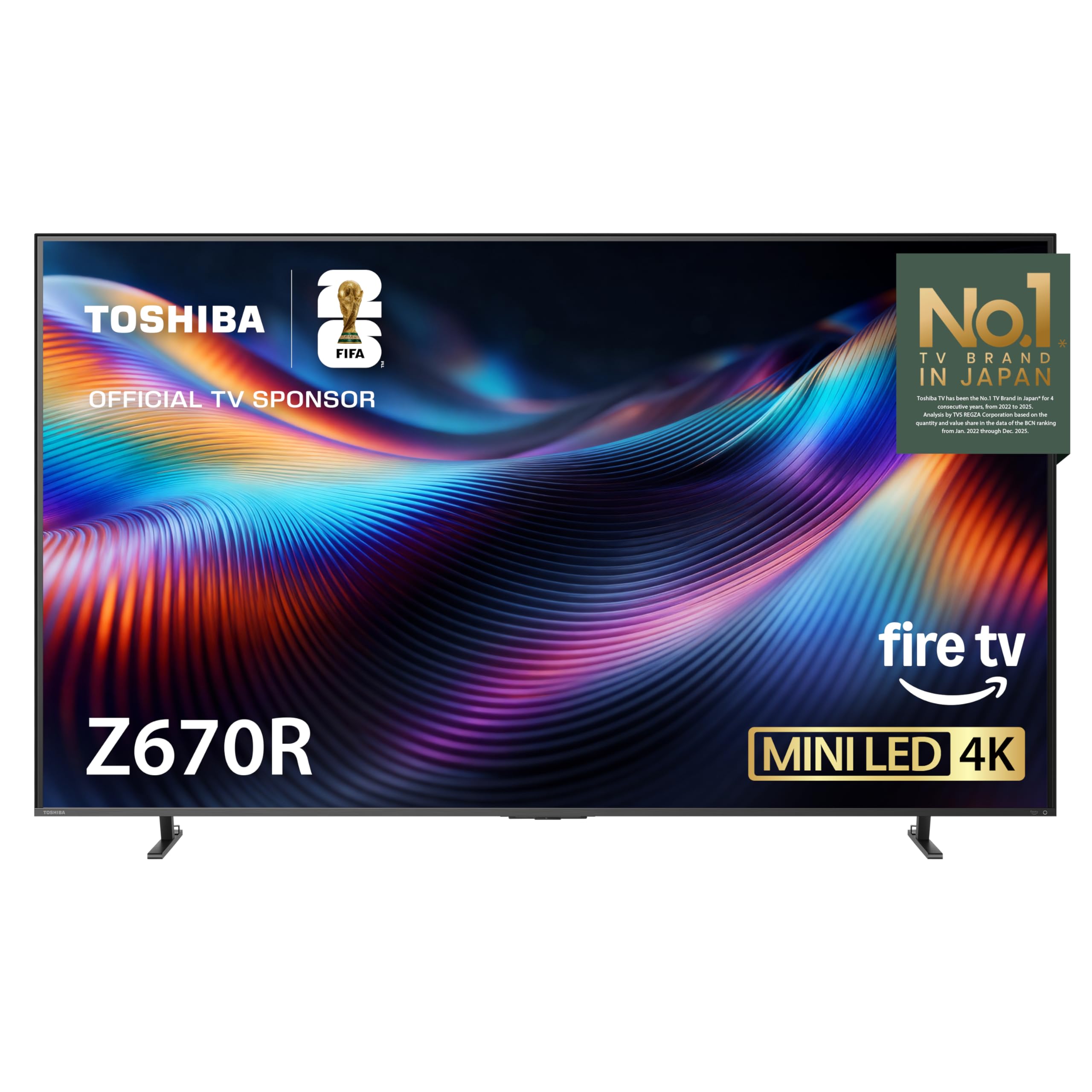
The Toshiba Z670R brings Japanese-engineered picture processing to the sub- price bracket. The REGZA Engine ZRi Gen3 uses AI to optimize contrast, clarity, and audio per scene, and the Mini-LED backlight with full array local dimming delivers black levels that rival sets costing twice as much. The 55-inch size is ideal for medium-sized living rooms or bedrooms where a 65-inch panel would overwhelm the space.
QLED color technology ensures over a billion shades with realistic saturation, while the native 144Hz refresh rate and AMD FreeSync Premium support make it a capable gaming display. The built-in Bass Woofer gives the audio system genuine low-end presence, reducing the immediate need for a soundbar. Dolby Vision IQ and HDR10+ Adaptive cover the full HDR spectrum, automatically adjusting brightness and color based on ambient room lighting.
The Fire TV interface is responsive, though users accustomed to Google TV may find the app ecosystem slightly less flexible. The AI Light Sensor Pro reduces eye strain by adjusting brightness based on room conditions. A minor complaint is that the 55-inch size may feel small for buyers expecting a 65-inch screen at this price point, but for those prioritizing processing quality over raw real estate, this Toshiba is a standout.
Why it’s great
- REGZA processor rivals high-end Sony upscaling
- Built-in woofer for surprisingly deep audio
- Full HDR format support
Good to know
- 55-inch panel may feel small for the price
- Fire TV OS, not Google TV
- Limited to 2x HDMI 2.1 ports
5. Hisense U6 65″
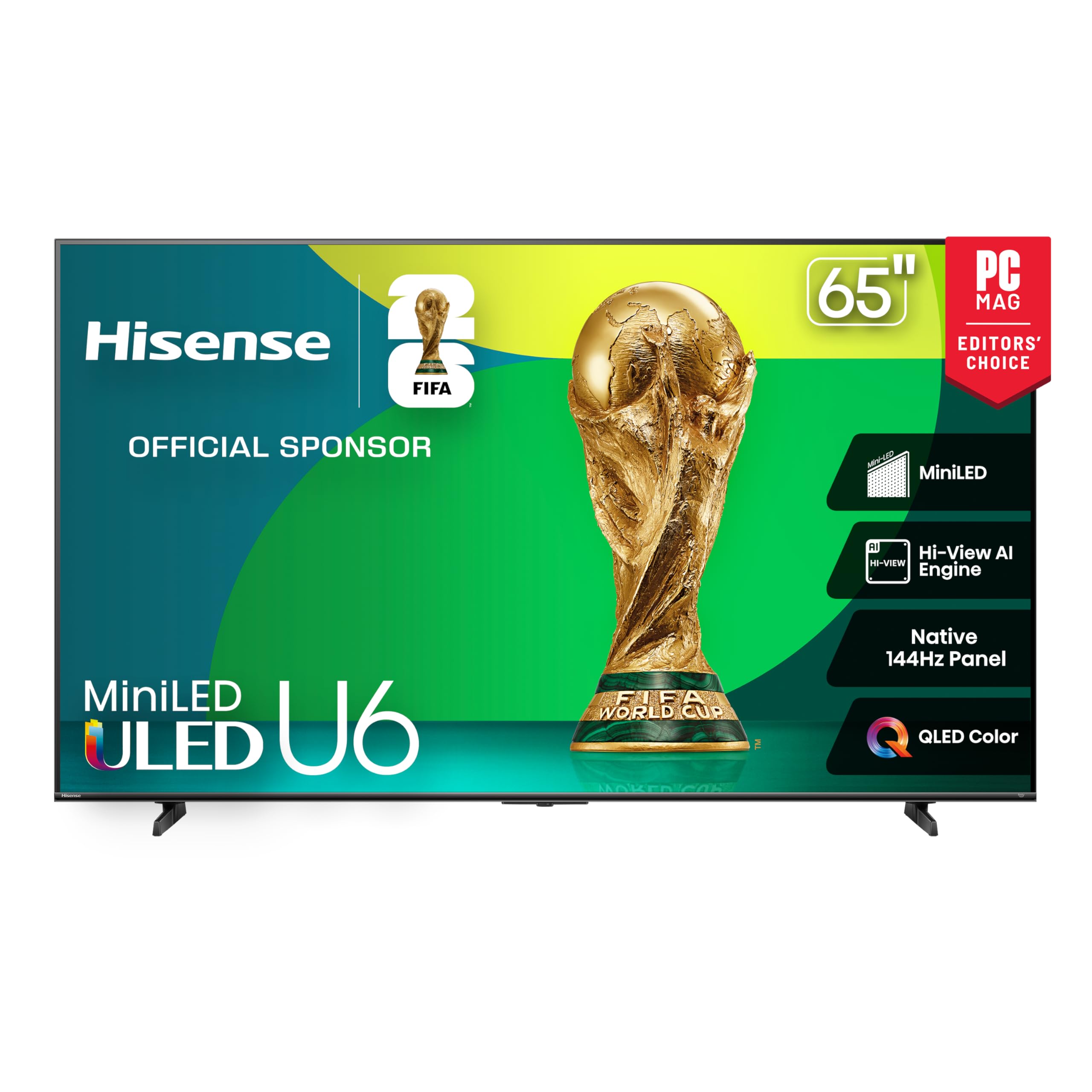
The Hisense U6 Series punches far above its price point thanks to a Mini-LED backlight with up to 600 local dimming zones and peak brightness reaching 1,000 nits. In HDR content, this produces specular highlights that genuinely pop—explosions in action movies and sunlight reflections in nature documentaries look dramatically more realistic than on standard LED TVs. The Hi-View AI Engine optimizes picture and sound per content type automatically.
QLED quantum dot technology covers a wide DCI-P3 color gamut, and the native 144Hz panel with Motion Rate 480 ensures smooth motion in fast sports and games. Game Mode Pro with AMD FreeSync Premium and a VRR range of 48Hz to 144Hz eliminates screen tearing. The built-in subwoofer delivers the best out-of-box audio in this price tier, with deep bass that typical TV speakers cannot replicate.
The Fire TV smart platform is snappy and integrates Alexa voice control. Some users reported that only two of the four HDMI ports support HDMI 2.1 at 144Hz, which is standard at this price but worth noting for multi-device gamers. Initial setup may require a factory reset to bypass a Wi-Fi update hitch, but this is a one-time inconvenience. For buyers who want maximum HDR impact per dollar, the Hisense U6 is the clear leader.
Why it’s great
- Up to 600 dimming zones for deep contrast
- 1000-nit peak brightness for HDR highlights
- Built-in subwoofer for rich audio
Good to know
- Only 2x full-bandwidth HDMI 2.1 ports
- May need factory reset for initial Wi-Fi setup
- Heavier than average 65-inch panel
6. TCL T7 65″

The TCL T7 Series is an Amazon exclusive that targets gamers and PC power users who need high refresh rates without the premium markup. Its native 144Hz panel can accept a 4K 120Hz signal from a PS5 or Xbox Series X, and when connected to a PC, it can hit 144Hz at 1080p or 240Hz at a lower resolution for competitive gaming. The QLED panel covers nearly the entire DCI-P3 color space, producing vibrant colors that make games and HDR movies look rich and saturated.
The AIPQ Pro Processor handles upscaling competently, though it does not match the AI-driven polish of Sony or Toshiba’s higher-end chips. Dolby Atmos support provides spatial audio processing, and the FullView 360 metal bezel-less design gives the TV a sleek, modern appearance that minimizes bezel distraction. Google TV is the smart platform here, delivering a clean interface with Chromecast built-in and Apple AirPlay 2 support.
PC users should note that the TV does not always wake properly from power save when connected via HDMI, requiring a cable reseat—a known quirk rather than a defect. The included height-adjustable feet allow clearance for a soundbar, a thoughtful design touch. For buyers building a desk-centric gaming setup or a living room media rig with a console and a PC, the TCL T7 delivers the refresh rates and color volume needed without exceeding the budget line.
Why it’s great
- 144Hz native with 240Hz 1080p gaming option
- Bezel-less design looks premium on a desk
- Height-adjustable feet for soundbar compatibility
Good to know
- PC wake-from-sleep HDMI quirk
- Upscaling not as refined as higher-end processors
- Requires internet setup before HDMI use
7. Samsung QLED Q8F 55″

The Samsung Q8F is engineered for buyers who prioritize color accuracy above all else. The Quantum Dot technology achieves 100% Color Volume in the DCI-P3 space, meaning colors remain vivid and accurate even as brightness levels change—no washout in bright scenes and no clipping in dark ones. The Q4 AI Processor enhances contrast and sharpness per content type, making standard HD broadcasts look convincingly close to 4K.
The AirSlim design is among the thinnest in its class, and the solar-powered remote eliminates the need for disposable batteries—a small but meaningful sustainability feature. Motion Xcelerator provides 144Hz VRR gaming support, and Samsung Gaming Hub aggregates cloud gaming services like Xbox Game Pass and GeForce Now. Alexa is built-in, and Samsung TV Plus offers extensive free content without a subscription.
The 55-inch size is a deliberate trade-off: you get superior color and processing over larger models at the same price, but the smaller screen may not satisfy buyers who want maximum immersion for movie nights. The included stand legs are narrow and can feel unstable on uneven surfaces. Sound quality is acceptable for casual viewing but lacks the bass and clarity needed for cinematic experiences. If color fidelity is your priority and space allows for a smaller screen, the Q8F is exceptional.
Why it’s great
- 100% DCI-P3 color volume at any brightness
- Ultra-slim profile and solar remote
- Excellent AI upscaling for HD content
Good to know
- 55-inch smaller than similarly priced 65-inch models
- Stand legs can feel unstable
- Sound quality is average without a soundbar
8. Sony BRAVIA 2 II 65″

The Sony BRAVIA 2 II is the most affordable entry point into Sony’s 4K lineup at 65 inches, and it retains the brand’s legendary processing DNA even without the high-end XR chip. The 4K HDR Processor X1 delivers natural color reproduction and sharp detail, with Motionflow XR smoothing fast sports and action sequences effectively. Exclusive PS5 features like Auto HDR Tone Mapping and Auto Genre Picture Mode work seamlessly, optimizing the picture based on whether you are gaming or streaming.
Google TV with all major streaming apps is preloaded, and Sony Pictures CORE gives you 5 movie credits and access to IMAX Enhanced titles. The ECO Dashboard consolidates energy-saving settings, helping reduce power draw to under 200 watts during normal use. The TV runs cool and uses significantly less energy than older LCD models, making it a smart choice for long viewing sessions.
The panel is standard LED backlit without local dimming, so black levels in dark rooms show typical LED grayish haze rather than deep ink blacks. Some users reported software freezing issues requiring periodic power cycles, though this is not universal. The built-in speakers are adequate for dialogue but cannot deliver cinematic bass or dynamic range. For buyers who want Sony’s color science and PS5 integration at 65 inches without spending on Mini-LED, this is a solid, reliable option.
Why it’s great
- Sony’s trusted color processing at a low price
- Exclusive PS5 features for seamless gaming
- Low power consumption vs older LCDs
Good to know
- Standard LED panel, no local dimming
- Reported occasional software freezing
- Audio lacks depth for movies
9. Amazon Fire TV Omni QLED 55″
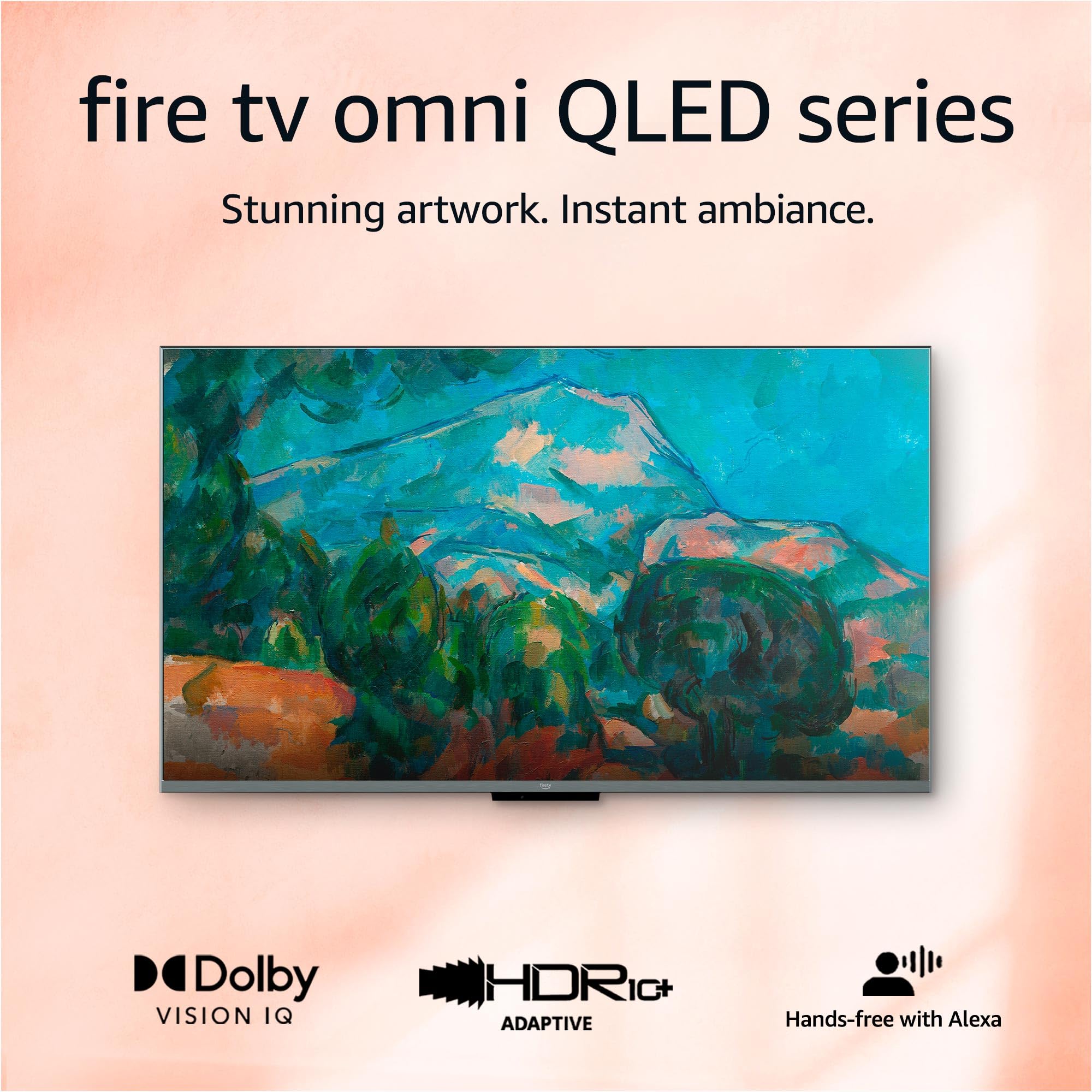
The Amazon Fire TV Omni QLED is designed for households deeply integrated into the Alexa ecosystem. Hands-free voice control with built-in microphones lets you turn on the TV, launch apps, and control smart home devices without touching the remote. The QLED display with 64-zone full array local dimming delivers vibrant colors and improved contrast over standard LED, and the Adaptive Brightness sensor automatically adjusts the picture based on room lighting.
Dolby Vision IQ and HDR10+ Adaptive support ensures HDR content looks correct regardless of ambient light conditions. The Fire TV Ambient Experience transforms the screen into an art display or personal photo frame when not in use, a feature that competing platforms lack. Pairing Echo speakers via Alexa Home Theater creates a multi-channel wireless surround system that compensates for the TV’s mediocre built-in speakers.
The interface can feel laggy compared to Google TV or Roku, with some apps taking longer to launch. Out-of-box picture settings often require calibration to remove the soap opera effect and achieve natural color. HDR peak brightness is adequate but does not match the intensity of Mini-LED competitors. For cord-cutters who already own Echo devices and want a unified smart home hub with a decent 4K picture, the Omni QLED fits naturally into that ecosystem.
Why it’s great
- Deep Alexa integration with hands-free controls
- Ambient Experience mode for art display
- Dolby Vision IQ and HDR10+ Adaptive support
Good to know
- Interface can feel laggy
- Needs calibration for accurate picture
- Speakers are average without Echo pairing
10. Roku Plus Series 65″
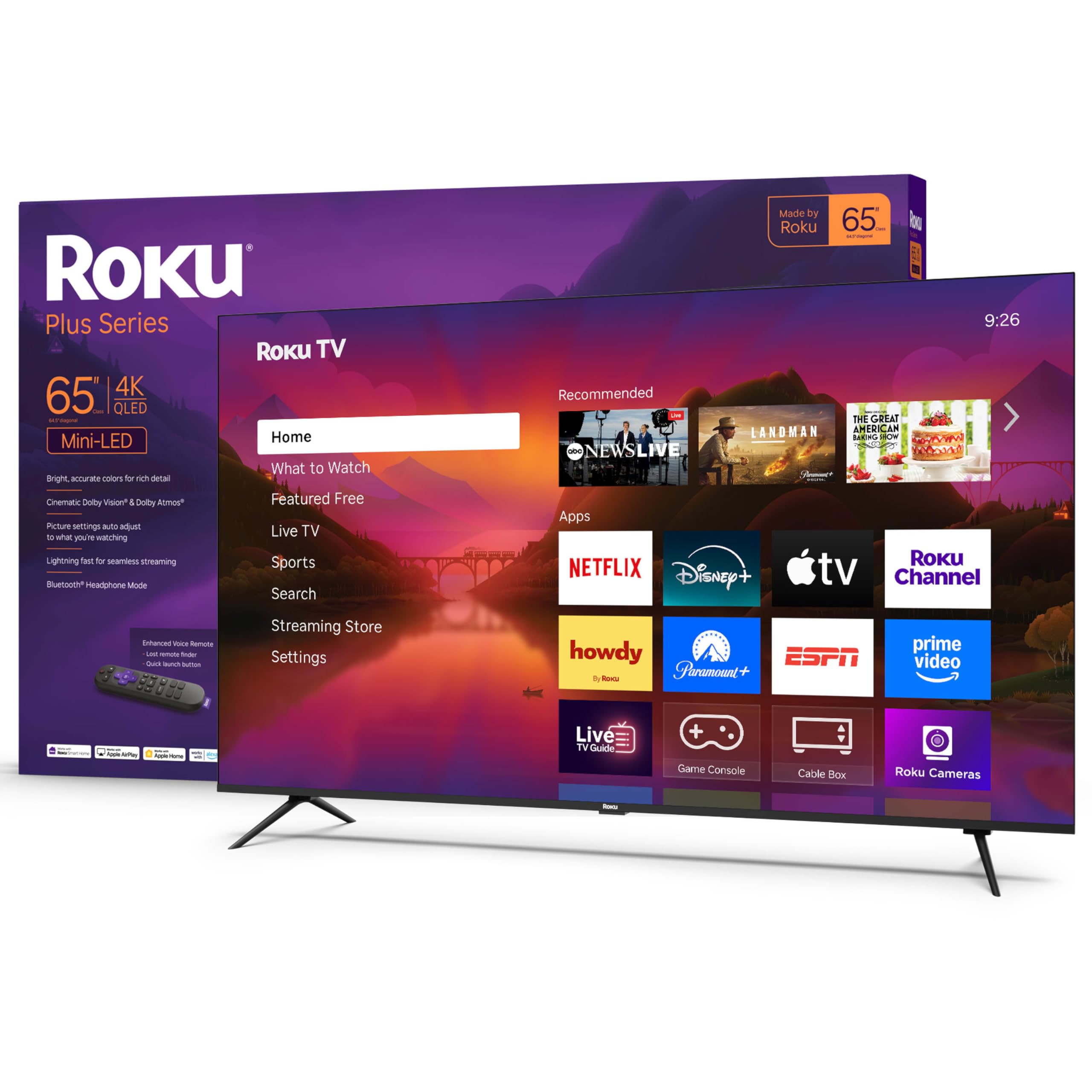
The Roku Plus Series is a rare combination of Mini-LED backlighting and the Roku operating system—widely considered the most intuitive and least cluttered smart TV platform available. The QLED panel with Mini-LED zones produces deep blacks and vibrant colors, and the Dolby Vision and Dolby Atmos support deliver theatrical picture and sound fidelity. The AI-powered Roku Smart Picture Max cleans up incoming signals and optimizes sharpness scene by scene.
Audio is a highlight here: the built-in subwoofer provides genuine bass impact for explosions and soundtrack lows, and the Bluetooth Headphone Mode allows private listening without waking the house. The Enhanced Voice Remote includes a lost remote finder and programmable shortcut keys. Dolby Vision and HDR10 are supported, though HDR10+ is absent, which may matter for Amazon Prime Video users who prefer dynamic metadata.
A known minor flaw is that the USB port keeps bias lights powered for about 10 minutes after the TV is turned off, which can be annoying for accessory-dependent setups. The Roku interface, while excellent for streaming discovery, offers fewer customization options than Google TV. For buyers who prioritize ease of use, fast app launching, and a bright Mini-LED picture with solid audio, the Roku Plus Series is a compelling choice that simplifies the entire TV experience.
Why it’s great
- Roku OS is the simplest and fastest smart platform
- Mini-LED with QLED for excellent contrast and color
- Built-in subwoofer for better-than-average audio
Good to know
- No HDR10+ support
- USB port stays active after power off
- Settings menu is basic compared to competitors
11. Panasonic W70 65″ Bundle
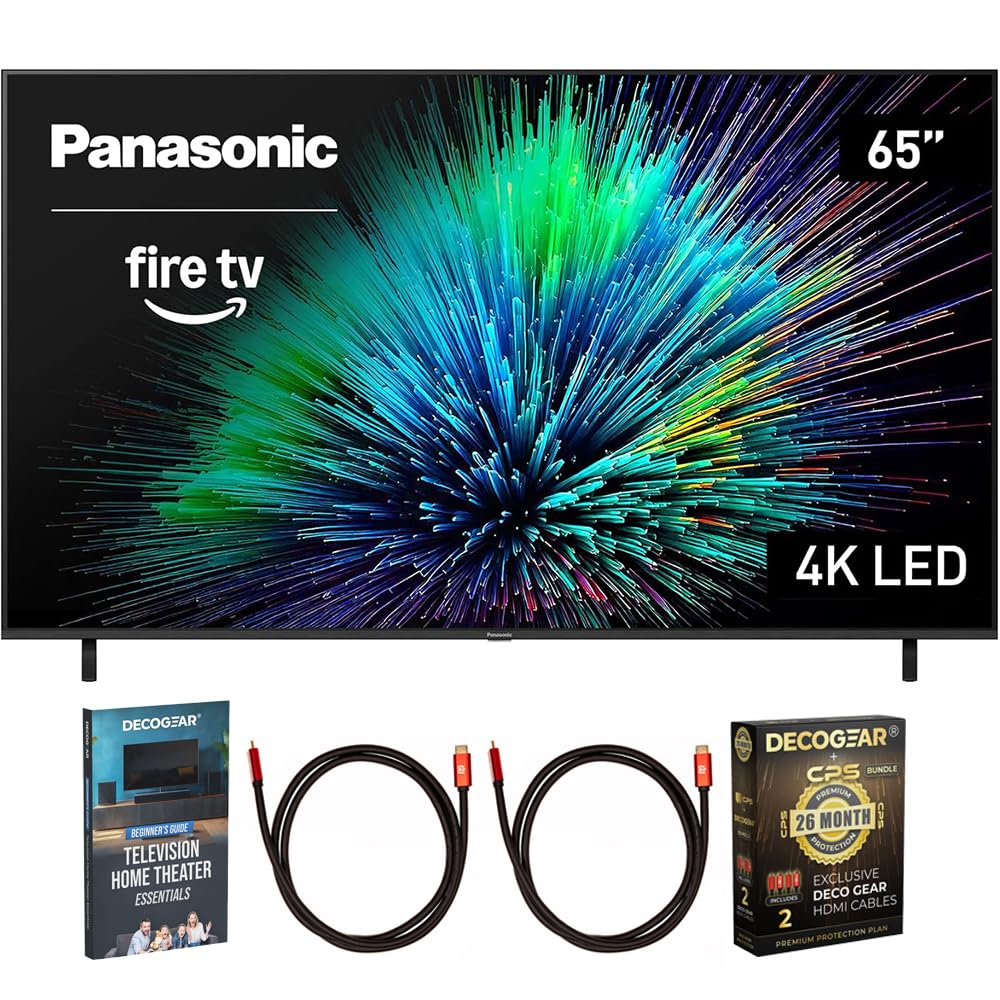
The Panasonic W70 bundle is the most budget-friendly entry in this list, but it includes a 26-month extended service plan with accidental and burn-in coverage, making it a low-risk purchase for buyers on a tight budget. The HDR Bright Panel with 4K Studio Color Engine delivers acceptable picture quality in well-lit rooms, and the MEMC motion technology smooths fast-moving content without major artifacts. Fire TV integration with Alexa voice control provides easy access to streaming apps and smart home commands.
The bundle includes two 6FT Universal 4K HDMI 2.0 cables and a Deco Gear Beginner’s Guidebook for home theater newcomers. Four HDMI ports, including one HDMI 2.1 port, offer reasonable connectivity, and Bluetooth 5.0 supports wireless headphone pairing for private listening. The 65-inch screen size at this entry-level price is the bundle’s primary draw, offering large-screen immersion for a minimal investment.
Picture quality is a clear step down from QLED and Mini-LED competitors: black levels are grayish in dark rooms, peak brightness is moderate, and HDR performance is limited. Some customers have reported receiving units with missing bundle items or minor cosmetic defects. The Panasonic name and the included protection plan provide peace of mind, but buyers should set realistic expectations regarding contrast and color saturation. This bundle is best suited for secondary rooms, rental properties, or first-time 4K buyers on a strict budget.
Why it’s great
- Lowest price entry point for 65-inch 4K
- Includes 26-month extended protection plan
- Fire TV with Alexa built-in
Good to know
- Standard LED panel with gray blacks in dark rooms
- Moderate peak brightness for HDR
- Bundle completeness reported inconsistently
FAQ
What is the difference between native 120Hz and native 144Hz on a 4K TV?
Do I need a soundbar for a good 4K TV under $1000?
Is Mini-LED better than QLED for a bright living room?
Final Thoughts: The Verdict
For most users, the 4k tv under $1000 winner is the Samsung 65″ Neo QLED QN70F because it delivers Mini-LED contrast, AI-driven upscaling, and 144Hz gaming in a 65-inch package that outperforms nearly everything else at the price. If you want the absolute best gaming experience with multiple HDMI 2.1 ports, grab the iFFALCON 65U85. And for PS5 owners who value processing purity over raw brightness, nothing beats the Sony BRAVIA 3 II.