
Our readers keep the lights on and the weekend projects moving. As an Amazon Associate, I earn from qualifying purchases.
A beginner’s first router should eliminate the dead zone in your living room, not introduce a new one during setup. Most entry-level buyers grab whatever is cheapest at the store only to wrestle with spotty video calls, buffering streams, and confusing interfaces. The right starting point delivers reliable coverage and simple controls without demanding a networking degree.
I’m Rikta — the founder and writer behind FitlyFast. I’ve spent years analyzing networking hardware, comparing real-world benchmarks on router throughput, range, and multi-device handling to separate lasting value from speculative specs.
This guide breaks down the best options by actual performance metrics that matter for a first-time buyer, helping you match WiFi 6 speeds, mesh adaptability, and coverage to your home layout. Whether you rent from your ISP or buy your own, this is your manual to the best beginner router for a stable, frustration-free network.
How To Choose The Best Beginner Router
Your first router purchase is a balancing act between speed, range, and ease of management. Beginners often over-index on raw Mbps numbers while ignoring how well a router handles a dozen devices at once or how far that signal reaches through a single wall. The specs that matter most are the ones tied to your specific home layout, internet plan, and device count.
WiFi Generation: WiFi 6 vs. WiFi 5
WiFi 6 (802.11ax) is the current standard and the one every beginner should target. It uses OFDMA to split channels more efficiently, reducing lag when multiple phones, laptops, and smart home gadgets are active. A WiFi 6 router also handles more simultaneous connections without choking, which is critical in a household with several streaming sessions and video calls running at once. WiFi 5 (802.11ac) is still functional for very basic use, but the price gap has shrunk enough that WiFi 6 is the smarter baseline for a router you will keep for years.
Coverage vs. Construction
Manufacturers advertise coverage in square feet, but real-world range depends on wall construction, floor plans, and interference from neighboring networks. A router rated for 1,500 sq. ft. in an open layout may only cover 1,000 sq. ft. through plaster walls or metal studs. Beginners in larger or multi-story homes should lean toward mesh-capable routers or systems that allow adding nodes later without replacing the entire setup.
Ease of Setup and App Control
A beginner router should get you online in under 15 minutes. Look for a companion app that guides you through connecting the router to your modem, creating a WiFi name and password, and scanning for firmware updates. Advanced features like parental controls, device prioritization (QoS), and guest networks should be accessible from the same app without needing to log into a web interface. Routers that offer app-based setup drastically reduce the frustration that drives many first-time buyers to call their ISP for help.
Quick Comparison
On smaller screens, swipe sideways to see the full table.
| Model | Category | Best For | Key Spec | Amazon |
|---|---|---|---|---|
| TP-Link Archer AX21 | Mid-Range | Balanced WiFi 6 upgrade | AX1800 Dual-Band WiFi 6 | Amazon |
| Amazon eero 6 | Mesh System | Simple mesh coverage | WiFi 6 Mesh, 1,500 sq. ft. | Amazon |
| NETGEAR Nighthawk RAX30 | Premium | High-speed gaming & streaming | AX2400, 2,000 sq. ft. | Amazon |
| Google WiFi | Mesh System | Dead-simple whole-home mesh | AC1200 Mesh, 1,500 sq. ft. | Amazon |
| NETGEAR R6700AX | Mid-Range | Reliable WiFi 6 on a budget | AX1800 Dual-Band, 1,500 sq. ft. | Amazon |
| TP-Link Archer A6 | Entry-Level | Budget WiFi 5 with gigabit ports | AC1200 Dual-Band, Beamforming | Amazon |
| Linksys Hydra 6 | Entry-Level | Affordable WiFi 6 mesh starter | AX2200 Mesh, 1,500 sq. ft. | Amazon |
In‑Depth Reviews
1. TP-Link Archer AX21 (AX1800)

The Archer AX21 is the benchmark for a first-time WiFi 6 buyer. Its 1.8 Gbps total bandwidth is split across 2.4 GHz and 5 GHz bands, with OFDMA technology letting it talk to multiple devices simultaneously without the slowdowns that plague older routers. In real-world use, customers upgrading from ISP-issued hardware report speed bumps from 310 Mbps to over 360 Mbps on the same internet plan, plus noticeably stronger signal penetration through walls.
Setup is handled through the TP-Link Tether app, which walks you through connecting the router to your modem and configuring your network. The four external antennas and integrated FEM chipset extend range reliably through a 1,500 sq. ft. home, and the router supports VPN server functionality for those who need secure remote access. The design is low-profile enough to sit unobtrusively on a shelf or entertainment center.
It lacks a USB port for network-attached storage, but for a pure internet-sharing role, it delivers precisely what a beginner needs without driving up the price with unused extras.
Why it’s great
- True WiFi 6 OFDMA reduces lag under multi-device loads
- Strong beamforming antennas cover a typical 1,500 sq. ft. home
- VPN server support is rare at this price tier
Good to know
- No USB port for shared storage
- App interface is functional but basic compared to mesh systems
2. Amazon eero 6 (1-Pack)

The eero 6 is the pragmatic choice for anyone who wants a mesh-capable system from day one without fighting with technical configurations. It covers up to 1,500 sq. ft. per node and supports WiFi speeds up to 900 Mbps, which aligns perfectly with mid-tier cable internet plans. TrueMesh technology dynamically routes traffic through the most efficient path, reducing drop-offs when you move from room to room on a video call.
Setup is app-driven and famously beginner-friendly: plug in the eero, open the app, and follow the on-screen prompts. The router includes a built-in Zigbee smart home hub, so it can talk directly to Alexa-compatible lights, locks, and sensors without needing a separate bridge. For households already invested in Amazon’s ecosystem, this consolidation saves both money and counter space.
Customer feedback highlights its reliability in apartments and medium-sized houses, with many users noting that the single node eliminated dead zones their ISP router could not touch. Performance on video calls is stable, though a small fraction of users report occasional brief freezes. The eero lineup is easily expandable — adding another eero later is a simple app-based process, making it a future-proof starting point for growing smart homes.
Why it’s great
- Extremely simple app-based setup, great for first-timers
- Built-in Zigbee hub removes need for a separate smart home bridge
- Mesh expandable later without buying a whole new system
Good to know
- No wired LAN ports beyond the single Ethernet backhaul
- Max 900 Mbps throughput may limit ultra-fast fiber plans
3. NETGEAR Nighthawk RAX30 (AX2400)

The Nighthawk RAX30 is the premium entry point for beginners who value raw speed and coverage above all else. With AX2400-class WiFi 6 — theoretical speeds up to 2.4 Gbps — and coverage rated at 2,000 sq. ft., it can comfortably serve a larger home or a household with heavy streaming and gaming demands. The 5-stream architecture dedicates more bandwidth to the 5 GHz band, which directly benefits latency-sensitive applications.
Setup is handled through the NETGEAR Nighthawk app, which provides guided installation and ongoing network monitoring. The router includes four gigabit Ethernet ports for wired consoles or PCs, and automatic firmware updates keep security current without manual intervention. Customers who replaced aging Nighthawk models report immediate speed improvements — from 100 Mbps to over 200 Mbps on the same plan — and a significant range boost that reaches outdoor cameras and garage spaces.
One distinction of this unit is that it is a renewed product, meaning it has been inspected and certified to work like new at a reduced cost. Long-term owners note it runs reliably for years, with one user reporting over two years of trouble-free operation. The trade-off is a larger physical footprint and external antennas that are less subtle than the sleek white pucks of mesh systems.
Why it’s great
- Highest speed rating in this list at AX2400
- 2,000 sq. ft. coverage handles larger homes
- Renewed certification provides performance at a lower entry cost
Good to know
- Renewed, so packaging and documentation may be minimalist
- Bulky design with external antennas not ideal for clutter-free spaces
4. Google WiFi (AC1200 Mesh)

Google WiFi is the system that made mesh networking accessible to the average buyer, and it remains a strong contender for beginners who care more about seamless coverage than raw speed. Each node covers 1,500 sq. ft., and the system intelligently hands your connection from one point to the next as you move through the house, so there is no noticeable drop when walking from the kitchen to the home office.
The Google Home app walks you through setup in minutes and provides ongoing visibility into which devices are connected, how much bandwidth each uses, and the ability to pause WiFi on kid- or guest-specific devices. Network Assist technology automatically steers your device to the clearest channel and fastest band, which is a genuine help in dense apartment buildings where dozens of neighboring networks compete for airtime.
Customers living in homes with thick walls — including concrete and aluminum siding — consistently report that a three-pack eliminates dead zones that previous routers could not touch. Speed tests show full modem throughput of 100+ Mbps even in rooms at the far end of a 1,200 sq. ft. apartment. The trade-off is that Google WiFi is WiFi 5 (802.11ac), not WiFi 6, so heavy simultaneous streaming across many devices will not be as efficient as newer hardware.
Why it’s great
- Set-and-forget mesh operation with intelligent band steering
- App-based parental controls are intuitive and effective
- Works reliably through thick walls and awkward floor plans
Good to know
- WiFi 5 only — lacks OFDMA efficiency of WiFi 6
- No web-based admin panel for advanced users
5. NETGEAR R6700AX (AX1800)
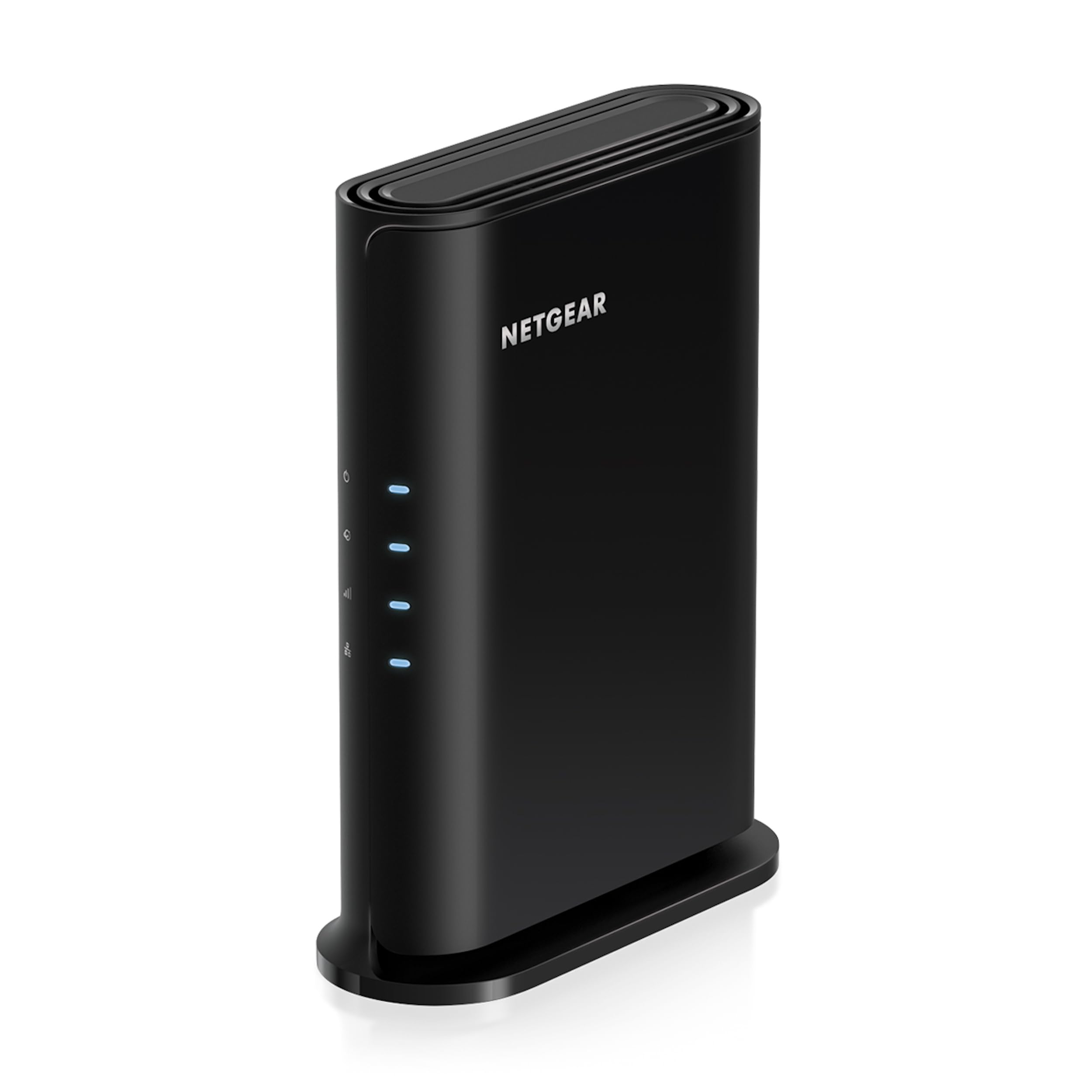
The NETGEAR R6700AX is a straightforward WiFi 6 router that does not overcomplicate the purchase decision. It offers AX1800 speeds over dual bands and covers up to 1,500 sq. ft., making it a direct match for standard suburban homes with cable internet plans up to 1 Gbps. The internal antenna design gives it a compact, unobtrusive appearance that blends into a desk or media cabinet better than models with visible external antennas.
Setup is guided by the Nighthawk app, which some users find slightly step-heavy — one review counted over 30 prompts — but once installed, the router delivers reliable speeds close to the wired limit. In real-world testing on a 1 Gbps fiber plan, throughput measured 934 Mbps down over WiFi, which is exceptional for an entry-level WiFi 6 router. The four gigabit LAN ports provide plenty of wired connectivity for a gaming console, PC, and streaming device.
Customer reports highlight that the R6700AX easily replaces ISP rental routers, saving ongoing monthly fees. One 72-year-old buyer described the entire setup as taking about 10 minutes. The router supports up to 20 devices simultaneously, which covers a typical family’s phones, laptops, smart TVs, and cameras. It lacks a USB port, so network sharing requires a separate NAS solution, but for pure internet routing it hits the mark.
Why it’s great
- Near-gigabit WiFi throughput with a simple setup process
- Internal antennas keep the design clean and compact
- Trusted NETGEAR brand with broad ISP compatibility
Good to know
- Setup app requires multiple steps and an internet connection
- No USB port for shared printers or storage
6. TP-Link Archer A6 (AC1200)

The Archer A6 is the entry-level choice for buyers on the tightest budget who still want a reliable upgrade over a basic ISP router. It is a WiFi 5 (AC1200) dual-band router with 300 Mbps on 2.4 GHz and 900 Mbps on 5 GHz, totaling 1.2 Gbps — enough for moderate streaming on a 200–400 Mbps internet plan. Four external antennas with beamforming concentrate the signal toward connected devices, which noticeably extends usable range compared to cheaper single-antenna models.
Setup is quick through the TP-Link Tether app, and the router supports AP mode for those who want to wire it into an existing network rather than replace it. MU-MIMO on the 5 GHz band allows simultaneous data streams to multiple devices, reducing lag when phones, laptops, and a smart TV are all active. The Archer A6 also includes WPA3 security, the latest WiFi encryption standard, which is a rarity at this price level.
Customers praise its stable signal in congested environments — one reviewer in a dense apartment complex reported strong performance despite dozens of competing networks. Another relied on it as a secondary 5 GHz router for VR gaming, finding the gigabit connection smooth enough for room-scale experiences. The A6 runs warm, so it needs a spot with airflow, but it has proven durable even after handling 20–30 TB of data transfer over its lifespan.
Why it’s great
- Reliable beamforming extends range through walls effectively
- WPA3 security included at a budget-friendly price point
- Full gigabit LAN ports for wired device connections
Good to know
- WiFi 5 only — lacks OFDMA for high-density device handling
- Runs warm; needs open airflow to maintain stability
7. Linksys Hydra 6 (AX2200)

The Linksys Hydra 6 brings WiFi 6 mesh capabilities to the budget-friendly tier, making it an appealing option for users who want the latest wireless standard without paying flagship prices. It is a dual-band AX2200 router powered by a Qualcomm chipset that delivers stable streaming and wire-like low latency. Intelligent Mesh technology allows you to expand the network later by adding additional Hydra 6 nodes, effectively eliminating dead zones over time.
Setup takes about 10 minutes through the Linksys App, which provides a quick walkthrough and ongoing control over device prioritization. The router covers 1,500 sq. ft., and users report that the signal reaches neighbors’ homes where older routers failed entirely. The compact tower design is vertical, saving desk space, and the matte black finish hides dust well compared to glossy plastic alternatives.
Customer feedback emphasizes the ease of installation and the immediate speed improvement over ISP-provided equipment. One reviewer saw buffering issues and “no internet” errors vanish completely after switching. The device supports up to 15+ connected devices, and the app makes it easy to see which gadgets are consuming the most bandwidth. The main caveat is that the initial setup instructions can be slightly ambiguous about login credentials, but once past that step, the Hydra 6 runs very reliably.
Why it’s great
- WiFi 6 mesh expandable over time for growing homes
- Fast, app-driven setup takes roughly 10 minutes
- Compact vertical stand saves desk space
Good to know
- Setup instructions can be vague about the admin password
- Range is solid for an entry-level router but not market-leading
FAQ
Do I need a separate modem with these routers?
How many devices can a beginner router handle?
Should I buy a WiFi 6 router if my internet plan is under 200 Mbps?
What does the coverage number actually mean for real homes?
Final Thoughts: The Verdict
For most users, the best beginner router winner is the TP-Link Archer AX21 because it delivers genuine WiFi 6 performance — OFDMA, beamforming, and VPN server support — at a price that undercuts the competition while keeping setup simple for first-time buyers. If you want effortless mesh expansion and a built-in Zigbee hub for your smart home, grab the Amazon eero 6. And for larger homes or gaming-focused households that need the widest coverage and highest speed ceiling, nothing beats the NETGEAR Nighthawk RAX30.