
Our readers keep the lights on and the weekend projects moving. As an Amazon Associate, I earn from qualifying purchases.
Setting your vehicle on four jack stands under the unibody frame rails is the safe way, but it is also the slow and tedious way. Auto ramps offer a faster, more stable platform for oil changes, undercarriage inspections, and light mechanical work by letting you simply drive the car up onto a solid incline. The catch is that not every ramp set clears a low front lip, and not every set supports the weight of a heavy-duty pickup truck without flexing. This guide breaks down the critical load ratings, approach angles, and material choices that separate a smart buy from a frustrating slip.
I’m Rikta — the founder and writer behind FitlyFast. I’ve spent months analyzing material science reports, load test data, and real user feedback across budget, mid-range, and premium ramp offerings to determine which models deliver genuine stability and which cut corners on grip or construction.
For a weekend mechanic who needs to get under the car fast without worrying about crushed floor jacks or shifting stands, understanding the right auto ramps boils down to matching the ramp’s load capacity and incline design to your vehicle’s weight and ground clearance.
How To Choose The Best Auto Ramps
Selecting auto ramps requires matching three variables: your vehicle’s weight, its front overhang clearance, and the type of service you plan to perform underneath. A ramp that works perfectly for a Honda Civic may flex or collapse under a Ford F-250, and a ramp that lifts a pickup high enough for a transmission pan drop might block access on a Miata. Here’s what you need to check before you click add to cart.
Load Capacity Per Pair vs Per Ramp
Manufacturers often list the combined capacity for the pair, but your vehicle’s weight is distributed unevenly. A front-heavy truck may place 60% of its gross weight on the front axle. If the ramps are rated for 6,500 lbs per pair, only 3,250 lbs per ramp is supported. For a 5,000 lb truck with a 60/40 weight split, the front axle load could reach 3,000 lbs — within the per-ramp limit. Always use the per-ramp rating as your safety margin, and never exceed it even if the pair rating looks generous.
Approach Angle and Ramp Length
The approach angle is the maximum slope a vehicle’s front bumper can clear before scraping. A ramp with a short, steep incline may cause the bumper to hit the ramp edge before the tire makes contact. Look for ramps that list the loading angle in degrees or that measure at least 30 inches in length. Ramps with a 17° to 20° slope generally accommodate most sedans and coupes without bumper contact. For lowered cars, ultra-low-profile ramps with an 8.6° loading angle are essential to avoid plastic lip damage.
Material: Plastic vs Steel
Polypropylene ramps are lightweight, corrosion-resistant, and quieter to drive onto. They are ideal for mid-size sedans and SUVs up to the rated capacity. Steel ramps offer higher rigidity under sustained load, handle heavier trucks up to 6,500 lbs per pair, and resist flexing on uneven surfaces. The trade-off is weight — steel ramps can weigh over 30 lbs per set — and the risk of rust if stored in a damp garage. For occasional use on a personal car, quality plastic ramps are sufficient. For daily shop use or heavy trucks, steel is the more durable path.
Non-Slip Features and Base Stability
A ramp that slides on smooth concrete is dangerous during drive-up. Look for rubber or TPE anti-slip pads bonded to the base. Some models add ribbed tops and rubber stops at the bottom edge to prevent the ramp from walking forward as the tire climbs. Internal honeycomb or grid reinforcement also prevents distortion under load. Always check whether the bottom surface includes any grip texture — bare plastic on polished garage floors is a known hazard.
Storage and Portability
Stackable ramps collapse into a compact footprint that fits on a garage shelf or in a trunk. Detachable two-piece ramps can be separated into a long approach section and a short lift section, making them larger to store but easier to drive onto. Fixed one-piece ramps are the simplest to use but require the most storage space. Consider how often you will need to move them between locations — built-in handles and side grip holes make carrying heavy plastic or steel ramps significantly easier.
Quick Comparison
On smaller screens, swipe sideways to see the full table.
| Model | Category | Best For | Key Spec | Amazon |
|---|---|---|---|---|
| HOXWELL Portable Car Ramps | Premium Plastic | 13,000 lb GVW trucks & SUVs | 17° approach slope | Amazon |
| Solid Steel 3 Ton Auto Ramp | Heavy-Duty Steel | Full-size trucks & heavy repairs | Alloy Steel, 35″ length | Amazon |
| Eastwood Detachable Poly Ramp | Premium Detachable | Low cars needing jack access | 54″ length, 3.6 ton | Amazon |
| Eastwood One Piece Car Ramp | Value Plastic | Mid-size sedans & SUVs | 8.5″ lift height | Amazon |
| MaxxHaul 50515 Car Ramps | Mid-Range Plastic | Standard cars & trucks | 6.25″ lift height | Amazon |
| MaxxHaul 50947 Stackable Ramps | Stackable Plastic | Compact storage & portability | 6.7″ lift height | Amazon |
| OULEME Low Profile Ramps | Low-Profile Plastic | Lowered & sports cars | 2.5″ lift, 8.6° slope | Amazon |
In‑Depth Reviews
1. HOXWELL Portable Car Ramps for Oil Changes

The HOXWELL ramps sit at the intersection of high load capacity and thoughtful design, offering a 13,000 lb GVW rating per pair — enough for heavy-duty pickup trucks and large SUVs. The 12-inch wide tread provides generous tire contact, and the internal honeycomb reinforcement prevents distortion under sustained load on longer jobs like transmission fluid exchanges. The 17° slope is gentle enough for most crossover SUVs and standard sedans to drive up without scraping the front lip.
The anti-slip texture on the top surface combines with rubber pads on the bottom to keep the ramp planted on smooth concrete or asphalt. Side and back holes serve as carry handles, making the 17.88 lb per set easier to move than steel alternatives. The 6.1-inch lift height is adequate for oil drains and undercarriage inspections on vehicles with standard ground clearance, though taller lifts may still require a floor jack supplement.
User reports confirm that the ramps work seamlessly on a Chevy Cruze RS and a Mazda 2, with no slipping or wobble during the drive-up. The internal stop dish gives clear tactile feedback when the wheel reaches the top, reducing the chance of overshooting. This is a solid choice for a home mechanic who services both a daily driver and a full-size truck.
Why it’s great
- Highest weight capacity in this price tier at 13,000 lbs GVW per pair
- 17° gradual slope protects low bumpers
- 12-inch wide platform for oversized tires
- Rubber bottom pads eliminate sliding
Good to know
- 6.1-inch lift may feel short for full clearance on tall trucks
- Not suitable for extremely low ground-clearance sports cars
2. Solid Steel 3 Ton 6500 LBS Auto Ramp Set
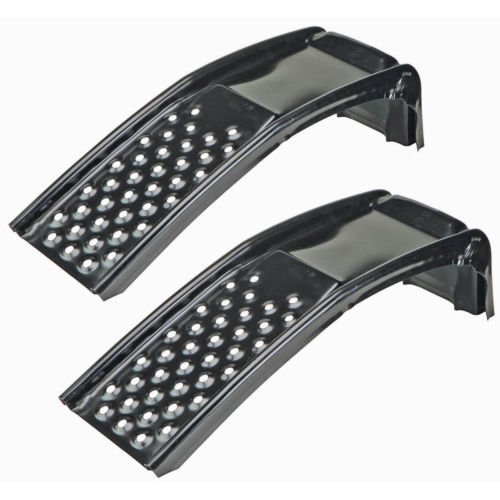
When plastic ramps raise concern about creep or flex, the Solid Steel set delivers uncompromising rigidity. Each ramp is formed from heavy-gauge stamped alloy steel with a powder-coat black finish that resists garage moisture. The 8-inch lift height is among the tallest in this roundup, providing generous clearance for oil pan drains and transmission pan bolts on full-size trucks. The 35-inch length allows a secure drive-up without feeling dangerously steep.
The ramp surface features punched and extruded traction holes that bite into tire tread as you climb, reducing the risk of a slip on wet or dusty rubber. Raised safety ribs run along the side edges to help guide the tire and prevent wandering. At a shipping weight of 29.65 lbs per pair, these ramps are heavy to move around, but the weight translates directly into stability — they do not shift or bounce during drive-up, even with a heavy front axle.
One reported limitation is that the 13-inch width accommodates tires up to approximately 245 section width. Wider off-road tires or truck tires may sit too far over the edge, compromising stability. A single reviewer noted buckling on a 2017 F-150, which suggests that the 6,500 lb rating per pair requires careful alignment on the ramp. Adding jack stands as a backup is always recommended with steel ramps, as the stamped metal can develop fatigue cracks over time.
Why it’s great
- Rigid alloy steel construction provides zero flex under load
- 8-inch lift height offers excellent under-car access
- Powder-coat finish resists rust in humid garages
- Side ribs and traction holes improve tire stability
Good to know
- Tire width limited to about 245 section for safe use
- Heavy steel is difficult to move and store
- Some units have shown buckling on heavy trucks; use jack stands
3. Eastwood Detachable Removable Poly Car Ramp Set

The Eastwood Detachable Ramp Set redefines the approach angle problem with a two-piece design that separates into a long, gradual slope section and a lift section. The combined length hits 54 inches, offering by far the most gentle incline in this group. This matters most for low-slung sports cars like an S2000 or a lowered Golf, where even a 17° slope can cause bumper contact. The ramp is certified to ASME-PASE 2014 standards, giving professional shop confidence.
Once the vehicle is at the top, the removable front section detaches, freeing up space beneath the chassis for access to the front jack point or oil filter. This eliminates the pain of trying to wedge a catch pan around a fixed ramp. The poly material is heavy at 40.2 lbs per set, but the heft is paired with a non-slip base and recessed handles for carrying. The 6.25-inch lift height is moderate but standard for most DIY jobs.
Users consistently praise the ramp for eliminating scrape anxiety on performance cars while remaining stable enough for 3/4-ton pickups. The two-piece connection uses a tab-and-notch system that feels secure when assembled. The only downside is the storage footprint — at 54 x 15 x 15 inches, these ramps demand a dedicated garage shelf or wall mount. For the owner of a low car and a full-size truck, this set bridges both worlds better than any single-piece ramp.
Why it’s great
- 54-inch total length provides the most gradual incline here
- Detachable section opens access to jack point and filter
- ASME-PASE 2014 safety certification
- Works across low sports cars and heavy trucks
Good to know
- 40.2 lbs per set — heavy to move and store
- Large storage footprint requires shelf or wall hook
- 6.25-inch lift is standard, not exceptional for tall trucks
4. Eastwood Car Ramps One Piece Set

The Eastwood One Piece Ramp is a simpler, more affordable plastic option that still carries the brand’s ASME-PASE 2014 certification. It delivers an 8.5-inch lift height, which is generous for a non-detachable plastic ramp and provides enough clearance for most oil changes and brake line inspections on mid-size sedans and SUVs. The single-piece construction means there are no separate sections to align, making setup as straightforward as placing the ramp on level ground and driving up.
The base includes a non-slip rubber underside that grips smooth concrete surfaces effectively. The top surface has raised traction ribs that prevent tire spin during the climb. At 35.63 inches long, the approach is moderate — not as gentle as the 54-inch Eastwood detachable set, but still long enough to avoid bumper scraping on most crossovers and standard sedans. The ramps weigh 21.12 lbs per set, which is manageable for moving from a shelf to the driveway.
Customer feedback highlights the ease of use compared to jack stands, with many reporting that the ramp transformed their oil change routine from a chore into a quick task. The 3,000 lb per ramp rating comfortably supports a Honda CR-V or Toyota Camry. The one limitation is the fixed shape — you cannot remove a section to improve under-body access, so tasks requiring deep filter access may still need a jack. For straightforward maintenance on standard vehicles, this is a reliable workhorse at a smart price.
Why it’s great
- ASAE-PASE 2014 safety certified
- 8.5-inch lift height is above average for plastic ramps
- Simple one-piece setup with no assembly
- Non-slip base prevents movement on concrete
Good to know
- Fixed design limits under-car access on some vehicles
- Not suitable for heavy trucks or extremely low sports cars
5. MaxxHaul 50515 6.25″ Lift Car Ramps

The MaxxHaul 50515 is a straight-ahead polypropylene ramp that focuses on the fundamentals: a 6.25-inch lift, a per-ramp rating of 3,250 lbs, and rubber stops bonded to the base to prevent forward walk during the drive-up. The 35.5-inch length provides a stable, gradual incline that works well on a Silverado 1500 and a Honda Odyssey. The deep-grooved top surface adds traction even when the tires are wet from morning dew.
The rubber base stops are a standout detail — they compress slightly under load and grip the floor much better than bare plastic. This addresses a common failure point with lower-cost ramps that slide on polished garage floors. The 20.05 lb per set weight is light enough for one person to carry from the shelf to the driveway. The ridged surface also helps with self-cleaning, as grime and oil fall through the grooves instead of building up on the climbing surface.
Users have reported minor cracking on one unit after extended use, which suggests that heavy continuous shop duty may exceed the plastic’s fatigue limit. For the home mechanic performing seasonal oil changes and brake work on two or three vehicles, these ramps hold up fine. The 6.25-inch lift is sufficient for most DIY jobs but won’t give you the clearance needed for a full transmission swap. Pair these with a set of jack stands for added peace of mind.
Why it’s great
- Rubber base stops prevent sliding on smooth floors
- Deep-grooved surface sheds oil and debris
- Light enough for one-handed carry
- Adequate 6.25-inch lift for routine maintenance
Good to know
- Minor cracking reported on heavily used units
- Low under-car clearance for a tall technician
- Bulky to store despite manageable weight
6. MaxxHaul 50947 Stackable Vehicle Car Ramp

The MaxxHaul 50947 shares the same polypropylene build as the 50515 model but adds an important feature: a patented stackable design that allows two ramps to nest together for compact storage. The 6.7-inch lift height is slightly taller than the 50515, offering a marginal improvement in overhead clearance. The 35.63-inch length and 12-inch width match the standard dimensions for stable, predictable drive-ons.
Built-in side handles make carrying easier, and the ribbed platform surface provides solid tire bite. The stackable nature is ideal for mobile mechanics or apartment dwellers who need to stash ramps in a trunk or on a narrow shelf. The per-ramp load is 3,250 lbs, which covers most passenger cars and light SUVs. The material thickness feels adequate for the rated capacity, but users report the ramps are slightly heavier than expected at 18.92 lbs per set.
Real-world feedback from a VW Passat owner confirms that the low approach profile works with lower ground clearance vehicles — the ramp tail is low enough that even a Passat’s front lip clears without contact. The stacking feature is genuinely useful; you can lift the car higher by stacking two sets, though this requires buying two pairs. For a single pair, the design delivers a solid balance of price, lift height, and storage convenience.
Why it’s great
- Stackable design saves shelf space and enables dual-height use
- Low approach tail accommodates sedan front lips
- Built-in side handles for easy portability
- 6.7-inch lift is slightly taller than comparable models
Good to know
- Slightly heavier than expected for plastic ramps
- Full stacking requires buying a second pair
7. OULEME Low Profile Car Service Ramp

The OULEME Low Profile Ramp exists for one specific job: getting a jack under a lowered car that sits too low for standard ramps or floor jacks. The 2.5-inch lift height is minimal, and the ramp isn’t designed for full under-car access on its own. Instead, it provides just enough clearance to slide a hydraulic jack under the front crossmember. The 8.6° loading angle is the gentlest in this guide, which is critical for cars with front splitters or body kits that would scrape on any steeper ramp.
Each ramp weighs only 3.5 lbs, making it easy to position or pack away. The polypropylene construction is rated for 6,600 lbs per pair, so even a heavy luxury coupe is within spec. Six anti-slip blocks on the bottom keep the ramp from sliding when you drive up. The mesh channel top surface prevents oil and water buildup, which is useful when working on a car that has just been driven in wet conditions.
Owners of BMW M340i, Maserati, and lowered Civic models confirm that the ramp prevents bumper damage and makes differential fluid changes possible without lifting the entire chassis. The trade-off is obvious: at 2.5 inches, the ramp alone does not provide safe working clearance. You will need a floor jack and jack stands to complete the job. Think of the OULEME as an access tool rather than a standalone lift. For the enthusiast who needs to get a jack under an extremely low car, it is purpose-built and affordable.
Why it’s great
- Ultra-low 8.6° slope prevents bumper scraping on lowered cars
- Lightweight 3.5 lbs per ramp for easy placement
- Six non-slip pads keep ramps stable on smooth floors
- Enables jack access on cars with no ground clearance
Good to know
- 2.5-inch lift is only for jack access, not for working underneath
- Mesh channels may clog with heavy debris over time
FAQ
Can I use auto ramps on an uneven or sloped driveway?
How do I know if my low-profile car will clear auto ramps?
Should I use jack stands in addition to auto ramps?
Do steel ramps hold up better than plastic ramps over time?
Final Thoughts: The Verdict
For most users, the auto ramps winner is the HOXWELL Portable Car Ramps because it combines the highest per-pair load capacity in the mid-range tier with a gentle 17° approach and excellent non-slip grip. If you want the storage convenience of a stackable design, grab the MaxxHaul 50947. And for low-profile sports car access without bumper scraping, nothing beats the OULEME Low Profile Ramp.