
Our readers keep the lights on and the weekend projects moving. As an Amazon Associate, I earn from qualifying purchases.
A backpacking tent under $200 is the sweet spot where weekend warriors and thru-hikers find a shelter that balances trail weight, livable space, and weather protection without demanding a second mortgage. Every year the engineering in this price band improves: better aluminum pole alloys, more reliable seam taping, and packable floor fabrics that keep gravel and groundwater where they belong—outside.
I’m Rikta — the founder and writer behind FitlyFast. I analyze hundreds of customer field reports and factory spec sheets each season to identify which budget-friendly shelters actually hold up when the weather turns and the trail gets long.
After evaluating seven models on real-world metrics like pitch speed, condensation control, floor waterproofing, and packed volume, I have built a tight list of the best backpacking tent under $200 that delivers genuine trail reliability.
How To Choose The Best Backpacking Tent Under $200
Every tent in this price class makes a compromise somewhere. The smart buyer decides which trade-off they can live with based on their specific hiking style, typical terrain, and tolerance for packed weight.
Weight vs. Durability
The most common tension in this category is between a lightweight shelter and a bombproof floor. A tent with a 20D or 30D nylon floor packs smaller and saves ounces but demands careful site selection. A 70D or 75D poly taffeta floor shrugs off sharp rocks and pine needles but adds a pound or more to your carry. Know your terrain: if you sleep on smooth tent pads, go lighter; if you cowboy-camp in rocky alpine zones, prioritize denier.
Freestanding vs. Trekking Pole Setup
A freestanding dome tent uses aluminum or fiberglass poles to hold its shape independent of stakes, making it faster to pitch on hard-packed dirt or wooden platforms. Trekking pole tents shed pole weight but require proper guying-out for stability. Almost every tent under $200 is a freestanding dome, which is the right choice for newer backpackers who value quick setup over ultimate weight savings.
Hydrostatic Head and Seam Taping
The rainfly and floor waterproofing are rated in millimeters of hydrostatic head (HH). A rating of 1500mm is adequate for moderate rain; 2000mm or 3000mm provides noticeably better peace of mind in heavy downpours. Factory-sealed or fully taped seams are non-negotiable at any price—untaped seams let water wick through needle holes, and no amount of DWR spray fully fixes that.
Ventilation and Condensation Management
Double-wall tents with a mesh inner body and a separate rainfly create an air gap that allows moisture vapor from your breath to escape rather than condense on the ceiling. Look for rainfly vents that can stay partially open in light rain—models with flimsy or non-positionable vent flaps are the most common condensation complaint in this price range.
Quick Comparison
On smaller screens, swipe sideways to see the full table.
| Model | Category | Best For | Key Spec | Amazon |
|---|---|---|---|---|
| Naturehike Mongar 2P | Mid-Range | Two-person value | 3000mm HH fly & floor | Amazon |
| Kelty Grand Mesa 2P | Mid-Range | Reliable 3-season | 4 lbs 1 oz packed | Amazon |
| OneTigris COSMITTO 2P | Premium | All-noseeum mesh | 20D ripstop polyester | Amazon |
| ALPS Mountaineering Lynx 1 | Mid-Range | Solo durability | 75D 2000mm floor | Amazon |
| Teton Sports Mountain Ultra 1P | Mid-Range | Stargazing mesh top | Full dome mesh | Amazon |
| Hyke & Byke Zion 1P | Budget | Included footprint | PU5000 rainfly | Amazon |
| Toogh Hexagon 2-3P | Budget | Instant pop-up | 60-second setup | Amazon |
In‑Depth Reviews
1. Naturehike Mongar 2 Person Backpacking Tent

The Naturehike Mongar delivers an unusually high waterproofing spec for its price bracket—3000mm hydrostatic head on both the fly and the floor, which is typically found only in shelters costing significantly more. The 210T polyester fabric with a B3 mesh inner body creates a reliable double-wall system that separates condensation from your sleeping zone, and the Y-frame aluminum alloy poles keep the 82.7-inch length stable in gusty conditions.
At 5.3 pounds total with the included groundsheet, this is not an ultralight shelter, but the trade-off buys a full rectangle floor that fits two 25-inch sleeping pads side by side. The two vestibules provide dedicated storage for packs and boots, keeping the interior clutter-free. Testers report surviving damp freezing nights and heavy thunderstorms with no leakage when staked out properly.
The packing size is 19.7 by 5.9 inches, which straps easily to the outside of a pack. The setup is intuitive even for a first-time user—the instructions are sewn into the stuff sack—and the ability to pitch the rainfly first without the inner body adds flexibility for wet-weather camps.
Why it’s great
- 3000mm HH on fly and floor provides real storm protection
- Two large vestibules keep gear under cover
- Included footprint adds floor life without extra cost
Good to know
- Supplied stakes bend easily on hard-packed ground
- 5.3 lbs total weight is heavy for solo minimalist trips
2. Kelty Grand Mesa 2P Backpacking Tent

Kelty’s Grand Mesa has been a staple in the budget-friendly backpacking market because it gets the fundamentals right without overcomplicating the design. The two-person model uses 68D polyester for the fly and floor—a pragmatic middle ground between lightweight packability and abrasion resistance—and the fully taped seams ensure the 1500mm HH coating works as intended in sustained rain.
The freestanding aluminum pole frame uses Kelty’s Quick Corners, which simplifies setup by locking the pole tips into reinforced corner pockets. Color-coded clip attachments on the fly eliminate guesswork, and the EZ-Zip vestibule provides a dry staging area for boots and a pack. The 30-square-foot floor fits two adults with standard sleeping pads, though the walls slope inward, making it feel tighter than the Naturehike floor plan.
Field reports consistently note the tent stays bone-dry in sideways rain and exhibits minimal condensation when both fly vents are open. The packed weight of 4 pounds 7 ounces is competitive for a true two-person shelter, though the shark-mouth stuff sack packs a bit bulky. Zippers are stiff for the first few trips but break in smoothly.
Why it’s great
- Quick Corner pole system enables reliable solo setup
- Fully taped seams with 1500mm HH resist steady rain
- Reputable brand with long-standing field support
Good to know
- Ground cover is sold separately
- Interior is tight for two tall adults with wide pads
3. OneTigris COSMITTO 2 Person Backpacking Tent

The COSMITTO stands out for its all-noseeum mesh inner body, which offers 360-degree views of the surrounding landscape at night and maximizes airflow during warm-season camping. The 20D plaid ripstop polyester fly and 75D nylon floor create a hybrid construction that keeps the packed weight reasonable while reinforcing the areas that see the most ground contact.
The hexagon-shaped outer tent provides solid wind resistance by shedding gusts more effectively than a standard dome. Two zippered entrances with internal vestibules allow each occupant to enter and exit without crawling over their partner, and the 30.96-square-foot floor accommodates two large sleeping pads with room for gear stashed along the walls. The aluminum alloy frame uses three poles and sets up in under five minutes.
Customer reports emphasize the tent’s stability in high winds and its dry performance in heavy rain when the 1500mm HH fly and included guy lines are properly deployed. The Line Loc 3 tensioners make it easy to tighten the fly without retying knots. The thin 20D fly fabric is lighter than most competitors but demands careful handling to avoid punctures from sharp branches.
Why it’s great
- All-mesh inner body provides panoramic views and airflow
- Two entrances with vestibules eliminate climbing over a partner
- Hexagon shape handles wind better than standard domes
Good to know
- 20D fly is prone to abrasion tears if not site-cleaned
- Zippers can catch on rainfly fabric during first uses
4. ALPS Mountaineering Lynx 1

The Lynx 1 is built like a tank compared to other solo shelters in its weight class. The 75D 185T poly taffeta floor carries a 2000mm coating and uses a factory-sealed rainfly with 1500mm protection, making it one of the most weather-ready one-person tents available without crossing into ultralight territory. The floor’s denier is nearly double that of competitors, which translates directly to puncture resistance on rough campsites.
The two-pole aluminum frame creates a freestanding dome that pitches in ten to fifteen minutes without instructions after the first time. The half-mesh walls balance ventilation with privacy, and the single vestibule provides just enough room for a pack and boots. The 7.5-foot length accommodates a six-foot sleeper without touching the walls, though the 32-inch width feels purposefully snug—this is a true one-person shelter with no illusion of partner space.
The primary trade-off for this durability is total weight. At 4 pounds 1 ounce packed, the Lynx 1 is heavy for solo backpacking when every ounce counts on long miles. The included stakes are widely criticized as inadequate for hard ground, but the tent itself earns consistent praise for handling wind and snow loads that would collapse lighter designs.
Why it’s great
- 75D 2000mm floor is nearly indestructible for the price
- Freestanding dome with simple two-pole assembly
- Handles snow and wind loads reliably
Good to know
- At 4 lbs 1 oz, this is heavy for a solo tent
- No footprint included; order separately for floor protection
5. Teton Sports Mountain Ultra 1P
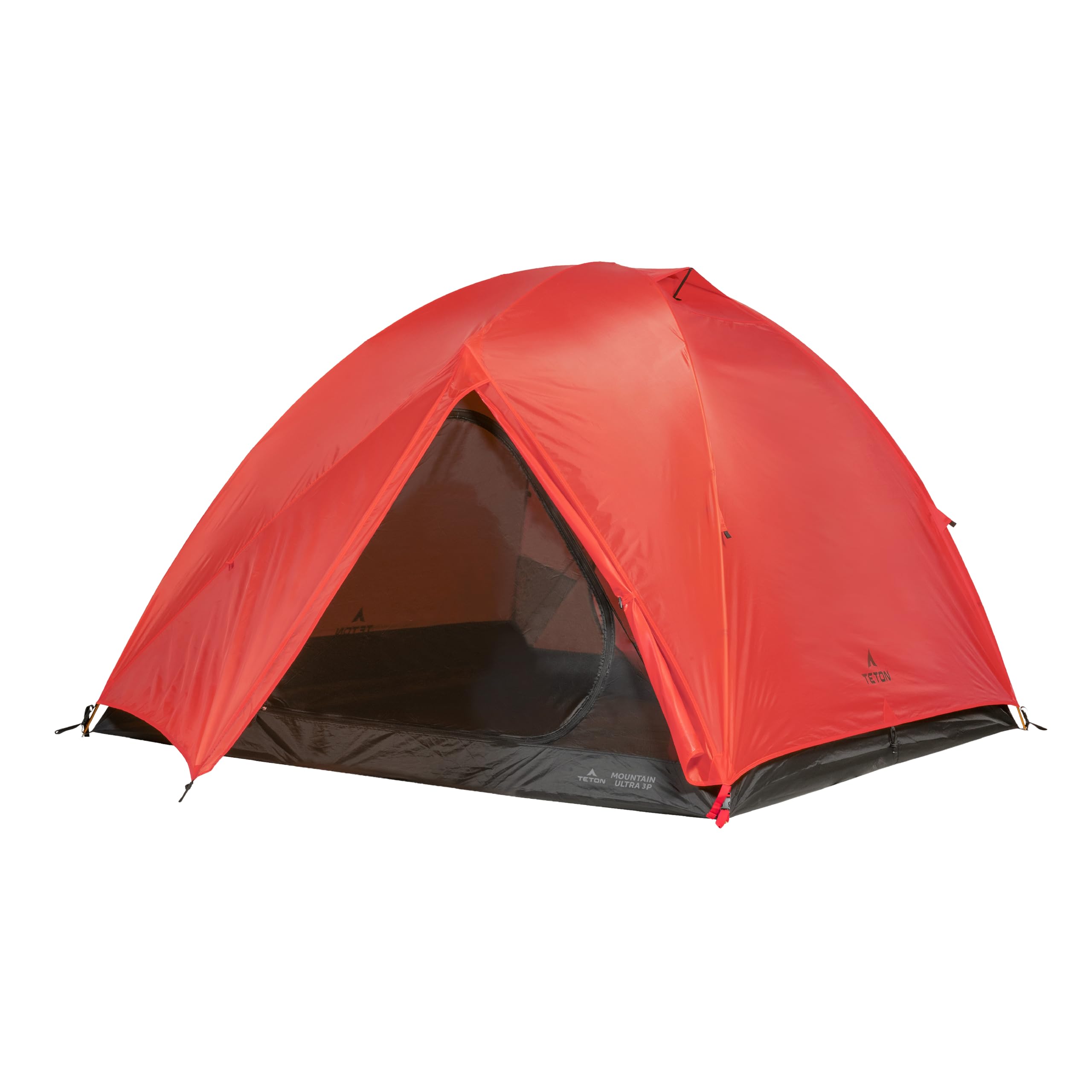
The Teton Sports Mountain Ultra differentiates itself with a full dome mesh top that provides an unobstructed view of the night sky when the rainfly is stowed. The dual-door design with two vestibules allows easy entry from either side, and the 360-degree ventilation system—side vents on the fly plus mesh walls—effectively manages condensation in humid conditions.
The 80-inch floor length is generous for a one-person tent, and the polyester construction with a fully water-resistant rainfly keeps occupants dry in moderate rain. The included stakes are aluminum but run thin—many users upgrade to heavier-duty versions after their first trip on rocky soil. Setup is straightforward: connect the color-coded poles to the corner clips, drape the fly, and stake out the corners.
This tent is not targeted at ultralight hikers; the packed weight runs closer to a compact two-person shelter when all components are included. The trade-off is a roomier interior that works well for larger solo campers or as a generous one-person-plus-pet option. The material feels substantial and the zippers operate smoothly, suggesting longevity that justifies the mid-range price point.
Why it’s great
- Full mesh dome top offers exceptional stargazing experience
- Dual doors with vestibules provide easy access and gear storage
- Good ventilation design reduces condensation
Good to know
- Heavy for backpacking; better suited for shorter carries
- Factory stakes are weak and may need an upgrade
6. Hyke & Byke Zion 1 Person Backpacking Tent

The Hyke & Byke Zion punches above its price point with a PU5000 poly ripstop rainfly—a waterproofing spec that is nearly unheard of in entry-level tents. The bathtub floor and included footprint create a layered defense against groundwater seepage, and the 40D ripstop nylon base with dual silicon/PU coatings resists UV degradation over multiple seasons.
The minimum trail weight of 3 pounds 1.4 ounces (rainfly, poles, and footprint) makes this one of the lighter options in the budget tier, and the 37-by-88-inch floor provides surprising length for taller campers. The dome shape with a single pole and clip attachments sets up quickly, and the removable gear loft adds overhead storage for small items. Reflective guylines help visibility at night.
The trade-offs are typical for the price: the included aluminum V-stakes bend in hard soil, and the fly vent stays lack rigidity, causing them to flop closed in strong wind. The tent handles 35 to 40 mph gusts well when properly guyed, but heavy rain can produce micro-drops through the fly if the vent stays are not propped open. For weekend trips in moderate conditions, the Zion delivers reliable shelter at a tremendous value.
Why it’s great
- PU5000 rainfly rating is exceptional for the budget price
- Includes both footprint and gear loft—rare at this level
- Minimum trail weight under 3.2 lbs for ounce-conscious hikers
Good to know
- Vent stays are flimsy; may not stay open in breeze
- Floor is 40D—puncture-prone on rocky sites
7. Toogh Hexagon 2-3 Person Pop Up Tent
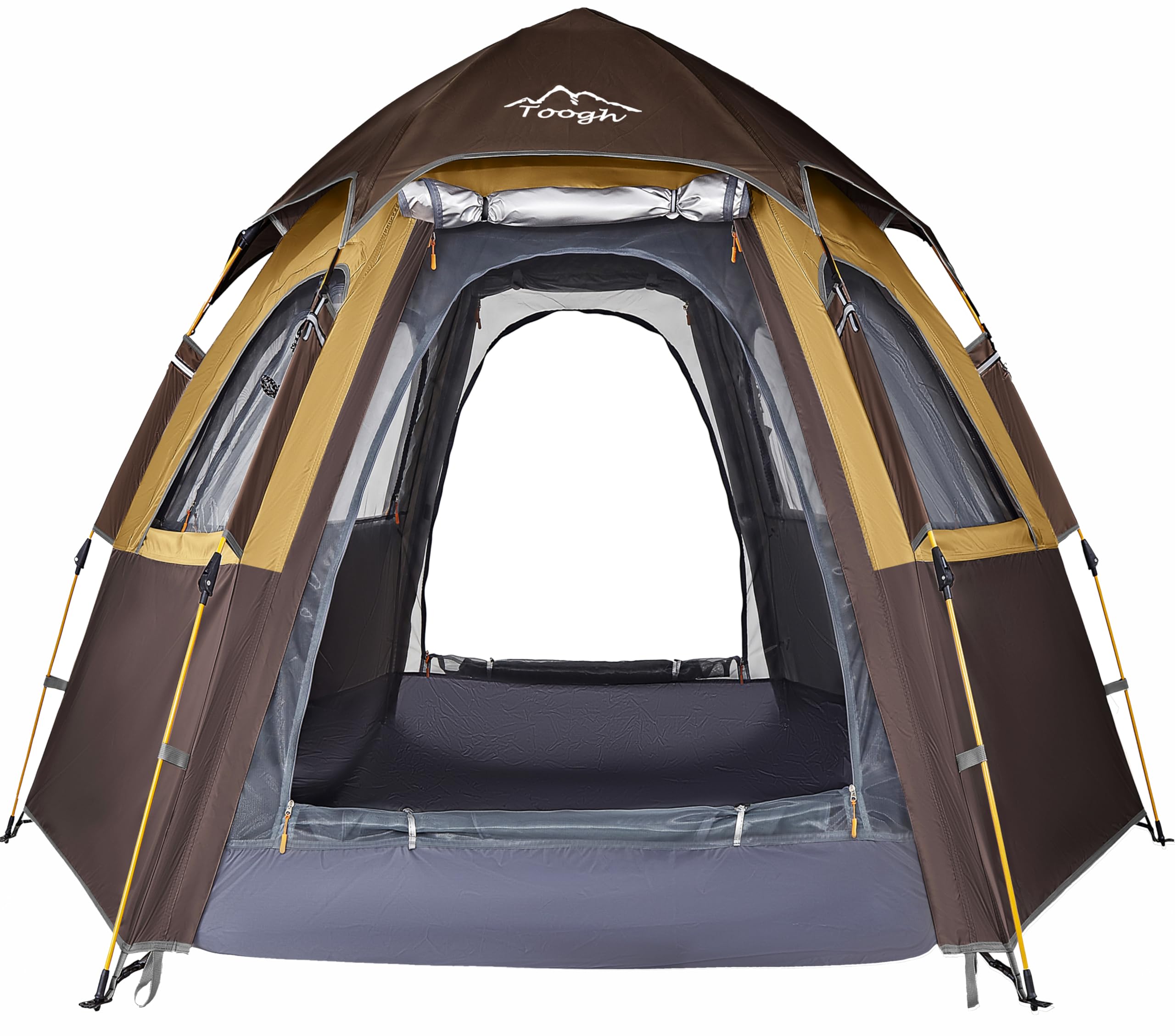
The Toogh Hexagon is a unique entry in this roundup because it sacrifices packability for an instant pop-up frame that deploys in roughly 60 seconds. The hexagon shape provides better structural stability than a square footprint, and the double-layer design—breathable inner mesh plus a 3000mm waterproof Oxford fly—addresses condensation far better than single-wall pop-ups. The four windows can be fully opened for maximum airflow.
With a 66-inch peak height, this tent allows standing room for shorter adults, and the 87-by-51-inch floor fits two adults plus a small child or a pile of gear. The kit includes 14 aluminum stakes, 8 guylines, and two door poles for creating a vestibule over the entrance. The high-density Oxford carry bag is noticeably thicker than typical stuff sacks and resists tearing.
The primary downside for backpacking is packed volume. The pre-attached pole frame does not compress well, making this shelter better suited for car camping, kayak trips, or base camps where weight is not the limiting factor. The included stakes are thin for the tent’s surface area, and the small rainfly leaves the tall sides more exposed in driving rain than a full-coverage fly would. Field tests confirm it survives hurricane-force winds when fully guyed out.
Why it’s great
- 60-second pop-up setup eliminates pole threading frustration
- Double-layer design prevents condensation drips
- 4 fully openable windows provide superior ventilation
Good to know
- Bulky packed size limits backpacking versatility
- Rainfly coverage is minimal; sides exposed in angled rain
FAQ
Is a trekking pole tent better than a freestanding dome under $200?
How much weight should I accept in a backpacking tent under $200?
Do I need to seam-seal a new tent before the first trip?
Final Thoughts: The Verdict
For most users, the best backpacking tent under $200 winner is the Naturehike Mongar 2P because it combines a 3000mm waterproof rating, two large vestibules, and an included footprint at a price that undercuts nearly every competitor with similar specs. If you want a straightforward, dependable shelter with a trusted brand name, grab the Kelty Grand Mesa 2P. And for a roomy two-person tent with 360-degree views and excellent wind performance, nothing beats the OneTigris COSMITTO 2P.