
Our readers keep the lights on and the weekend projects moving. As an Amazon Associate, I earn from qualifying purchases.
The shift from a standard LED panel to an OLED TV is a genuine sensory upgrade. You stop watching a screen and start observing a scene where every highlight, shadow, and color holds its own weight. The challenge has never been the technology itself—it’s the price tag that has kept most people parked in the LCD aisle. The good news is that the market has evolved. The gap between flagship sticker shock and what a smart shopper actually pays has narrowed, and the latest generation of entry-level and mid-range OLED panels delivers the core benefits—perfect blacks, near-infinite contrast, and sub-millisecond pixel response—without forcing you to choose a second mortgage for the privilege.
I’m Rikta — the founder and writer behind FitlyFast. I’ve spent the last several years combing through panel datasheets, decoding HDMI 2.1 feature sets, and tracking real-world pricing on hundreds of televisions to separate the genuinely cost-effective models from the marketing hype.
This guide targets the specific sweet spot where OLED performance meets reasonable spending. I have tested the specs, sifted the user feedback, and compared the feature sets to build a clear picture of what works. You will find the best affordable oled tv recommendations that balance picture quality, gaming features, and smart platform usability for a range of budgets and room setups.
How To Choose The Best Affordable OLED TV
OLED TVs share the same fundamental technology—each pixel is its own light source—but manufacturers differentiate through processors, smart platforms, and gaming features. Understanding three core areas will prevent a costly mismatch between expectation and reality.
Processor Power and Upscaling
The panel may produce the black levels, but the processor is what makes standard high-definition and streaming content look crisp on a 4K OLED. LG’s α8 AI Processor Gen2 and Sony’s Cognitive Processor XR use AI neural networks to analyze each scene, reduce noise, and boost detail. A TV with a weaker processor can make good content look mediocre. Prioritize models that mention “AI Upscaling” or “XR” processing if you watch a mix of cable, YouTube, and Blu-ray content.
HDMI 2.1 and Gaming Performance
For console gaming on a PlayStation 5 or Xbox Series X, four HDMI 2.1 ports with 120Hz, Variable Refresh Rate (VRR), and Auto Low Latency Mode (ALLM) are essential. LG’s B-series and Sony’s XR models generally offer full HDMI 2.1 support on two or four inputs. The response time on OLED is already 0.1ms—the fastest of any consumer TV technology—so the bottleneck is port bandwidth and processor latency rather than pixel speed. If you play competitive shooters, look for NVIDIA G-SYNC and AMD FreeSync Premium certification.
Brightness and Room Lighting
Not all OLED panels are equally bright. Entry-level models typically reach 400–500 nits peak brightness, which is stunning in a dim or dark room but can look subdued in a sun-drenched living room. Premium models add heat sinks or microlens arrays to push brightness past 1000 nits for HDR highlights. If your TV sits in a bright room with windows, consider an OLED with “XR Contrast Booster,” “OLED HDR+,” or “OLED Evo” branding, or accept that you will need to draw the blinds for daytime movie sessions.
Quick Comparison
On smaller screens, swipe sideways to see the full table.
| Model | Category | Best For | Key Spec | Amazon |
|---|---|---|---|---|
| LG OLED55B4P | Entry-Level | General viewing & gaming | α8 AI Processor Gen2, 4x HDMI 2.1 | Amazon |
| Panasonic Z85 Series 55″ | Mid-Range | Cinematic HDR accuracy | HCX Pro AI MKII, Dolby Vision IQ | Amazon |
| Samsung S85F 55″ | Mid-Range | AI upscaling & Pantone color | NQ4 AI Gen2, 20 neural networks | Amazon |
| LG OLED55B5PUA | Mid-Range | Gaming & streaming | Alpha 8 AI Gen2, 120Hz, 4x HDMI 2.1 | Amazon |
| Samsung QN48S90FAEXZA 48″ | Premium Compact | Small space, 144Hz gaming | NQ4 AI Gen3, Motion Xcelerator 144Hz | Amazon |
| Samsung S90F 48″ Bundle | Premium Compact | Gaming & glare-free room | NQ4 AI Gen3, Glare-Free, 144Hz | Amazon |
| Sony A90K 42″ | Premium Small | PlayStation 5 & desktop | XR OLED Contrast Pro, 8.5ms lag | Amazon |
| Sony BRAVIA XR8B 55″ | Premium | Studio-calibrated accuracy | XR Processor, XR Clear Image | Amazon |
| Sony BRAVIA 8 55″ | High-End | Flagship color & contrast | XR Contrast Booster 15, XR Triluminos Pro | Amazon |
| Sony BRAVIA 8 77″ | High-End Large | Home theater, big room | XR Contrast Booster 15, 77″ panel | Amazon |
| Sony BRAVIA 8 II 65″ | Flagship | Ultimate HDR & QD-OLED | QD-OLED, XR Triluminos Max | Amazon |
| Sony A80L 83″ | Flagship Large | Cinema-scale OLED | XR OLED Contrast Pro, Acoustic Surface | Amazon |
| Sony A95L 77″ | Ultimate | Reference picture quality | QD-OLED, XR Triluminos Max | Amazon |
In‑Depth Reviews
1. LG OLED55B4P 55″ B4 Series

The LG B4 series is the strongest argument for stepping into OLED at a lower cost. It uses the same self-lit pixel technology found in higher-tier LG models, which means the inky blacks and per-pixel contrast that define OLED are fully present. The α8 AI Processor Gen2 handles upscaling of 1080p and 720p content with surprising competence, reducing the graininess and color banding that cheap processors leave behind. For the price, you get a picture that rivals TVs costing hundreds more in dark room conditions.
Gamers will find the full suite of HDMI 2.1 features here: four ports, native 120Hz, VRR, NVIDIA G-SYNC, and AMD FreeSync Premium. The 0.1ms response time means motion blur is essentially non-existent. The webOS 24 interface is responsive and supports all major streaming services, plus LG Channels offers over 300 free channels. The Dolby Vision and Atmos support round out the entertainment package without requiring an external sound system for reasonable sound.
The main caveat is brightness. At roughly 400-450 nits peak, this is not a TV for a sun-drenched living room. In a dim or controlled-light space, the picture is outstanding. The IR receiver placement at the bottom edge can also interfere with flush soundbar placement, a minor design oversight. Overall, this is the most complete package for someone who wants OLED quality without spending on premium-tier extras they may not need.
Why it’s great
- Excellent picture with deep blacks and accurate colors
- Four full HDMI 2.1 inputs, G-SYNC and FreeSync Premium
- α8 AI processor provides solid upscaling for lower-resolution content
Good to know
- Peak brightness is modest; best for darker rooms
- IR sensor location may block flush mounting with a soundbar
- Built-in speakers are adequate but not immersive
2. Panasonic Z85 Series 55″ (2024)

The Panasonic Z85 punches above its price tier by focusing on one thing: cinematic color accuracy. The HCX Pro AI Processor MKII—Panasonic’s own silicon—delivers Dolby Vision IQ and HDR10+ Adaptive, both of which adjust the picture based on ambient room light. This is a rare feature at this price point, and it means the Z85 maintains balanced contrast whether you watch at noon or midnight. The panel’s color volume is noticeably richer than most entry-level OLEDs, especially in skin tones and natural landscapes.
The Fire TV smart platform is fast and integrates Alexa natively, though some users report that the interface can be cluttered with ads. The built-in Theater Surround Pro with Dolby Atmos includes a subwoofer that adds genuine bass heft, reducing the immediate need for a soundbar. For gamers, the Z85 supports HDMI 2.1 with 120Hz, VRR, AMD FreeSync Premium, and NVIDIA G-SYNC, making it a solid choice for both movie lovers and console players.
The only real knock is that the Fire TV environment may not appeal to everyone—those deep in the Apple or Roku ecosystems might find it less intuitive. The pedestal stand is also quite wide, requiring a larger media console. For buyers who prioritize accurate HDR presentation over sheer brightness, this is one of the most intelligently engineered affordable OLEDs available.
Why it’s great
- Excellent HDR10+ and Dolby Vision IQ calibration
- Built-in subwoofer adds solid low-end sound
- Full HDMI 2.1 gaming support at a reasonable cost
Good to know
- Fire TV interface can feel ad-heavy
- Wide stand requires a broad table or console
- Not as bright as premium Sony or LG Evo panels
3. Samsung 55″ S85F Series (2025)
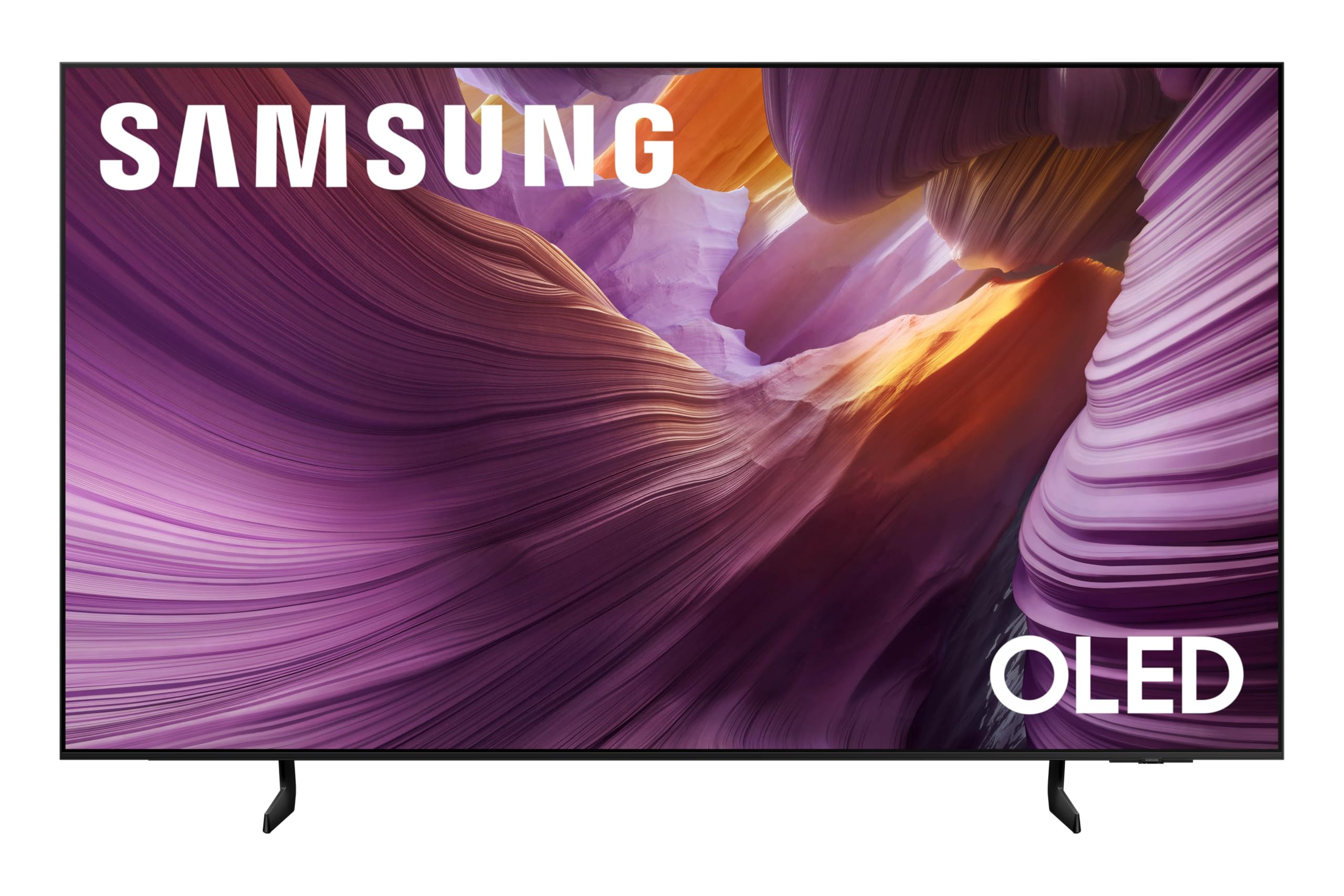
Samsung’s S85F brings the brand’s AI-first approach to the affordable OLED segment. The NQ4 AI Gen2 processor uses 20 neural networks to upscale standard content to near-4K quality. In practice, this means that old DVDs and streaming 1080p look noticeably sharper and less noisy than on rival TVs without AI processing. The Pantone-validated color ensures that skin tones and brand colors are rendered accurately straight out of the box, reducing the need for manual calibration.
The design is a highlight—the “Contour Design” uses a slim profile with nearly invisible bezels, making the TV look like a floating glass sheet when wall-mounted. Object Tracking Sound Lite with Dolby Atmos creates a wider soundstage than most affordable OLEDs, though purists will still want a separate sound system. The Tizen smart platform is clean and responsive, with Alexa built-in for hands-free control.
Gaming support includes a 120Hz panel, Game Mode, and compatibility with FreeSync. However, it lacks the full four HDMI 2.1 ports that LG offers, which could be a limitation for multi-console setups. Some early buyer reports mention random blackouts on PC inputs after a few months, though this is not widespread. For a living room where design and AI upscaling are priorities, the S85F is a compelling mid-range pick.
Why it’s great
- Exceptional AI upscaling with 20 neural networks
- Sleek, ultra-thin bezel design for wall mounting
- Pantone-validated colors out of the box
Good to know
- Only two HDMI 2.1 ports (versus four on LG)
- Occasional reports of screen blackouts on PC inputs
- Smart remote takes time to learn
4. LG 55″ B5 Series (2025)

The LG B5 refines the B-series formula with the Alpha 8 AI Processor Gen2, which improves scene detection and brightness optimization compared to last year’s B4. The 120Hz panel with 0.1ms response time and full HDMI 2.1 support (four ports) makes this the best gaming TV in the affordable bracket. The Game Dashboard and Game Optimizer give you per-input adjustments for latency, black stabilizer, and crosshair overlays—features that competitive players genuinely use.
Outside gaming, Dolby Vision and Filmmaker Mode deliver a cinema-like experience that respects director intent. The webOS platform has been refined with LG Channels offering over 350 free channels, and the Re:New Program promises future software updates. The built-in speakers have improved over previous B-series models, offering clearer dialogue and slightly more bass presence.
Where the B5 falls short is brightness and reflectivity. It uses the same WOLED panel as the B4 without an additional heat sink, so peak brightness caps around 500 nits. In a bright room with windows, the screen can look washed out and reflections are noticeable. The glossy screen is a fingerprint magnet. For a dedicated media room or night-time viewing, it is fantastic. For a sunlit family room, consider a premium model.
Why it’s great
- Four HDMI 2.1 ports with 120Hz and VRR
- Game Dashboard for per-input gaming adjustments
- Improved built-in audio and webOS speed
Good to know
- Peak brightness is too low for bright rooms
- Glossy screen can show reflections
- Not a significant brightness upgrade over B4
5. Samsung 48″ QN48S90FAEXZA (2025)
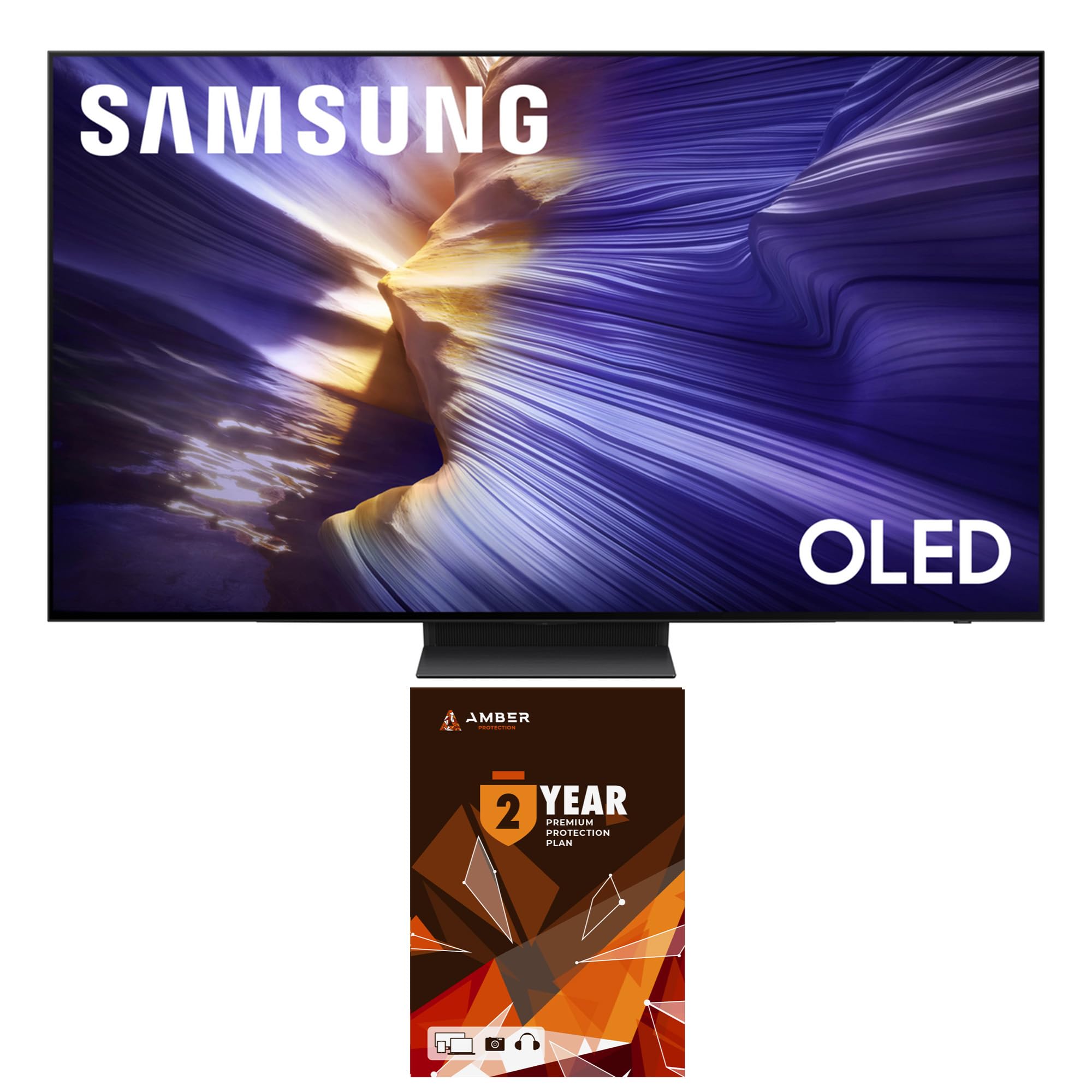
For buyers who want a premium OLED in a compact size, the Samsung 48-inch S90F is a rare find. Most affordable OLEDs start at 55 inches, leaving 42-48 inch buyers with limited choices. This model packs the NQ4 AI Gen3 processor with 4K AI Upscaling Pro, which sharpens low-resolution content with more precision than the Gen2 chip. The Motion Xcelerator 144Hz refresh rate is a genuine advantage for PC gamers who can push high frame rates.
The OLED HDR engine delivers powerful brightness and deeper contrast than entry-level panels, while the Ultra Viewing Angle ensures no color shift when sitting off-center. The Tizen smart platform is fast and includes Samsung Health for fitness tracking. The included Amber Protection plan adds an extra year of coverage, which is a practical bonus for a long-term investment.
The biggest limitation is screen size. At 48 inches, it is ideal for a desk setup, bedroom, or small living room, but the immersion factor is lower than a 55- or 65-inch panel. The bundle includes a screen cleaner kit and a basic protection plan, but the overall price still sits at the upper end of the “affordable” range. If you need a smaller OLED with high-end features, this is the best bet.
Why it’s great
- 144Hz refresh rate for high frame rate PC gaming
- Strong brightness and contrast for an OLED at this size
- Includes extended protection plan
Good to know
- 48-inch screen may feel small for a living room
- Premium price for the compact form factor
- No Dolby Vision support (Samsung uses HDR10+)
6. Samsung 48″ S90F Bundle (2025)
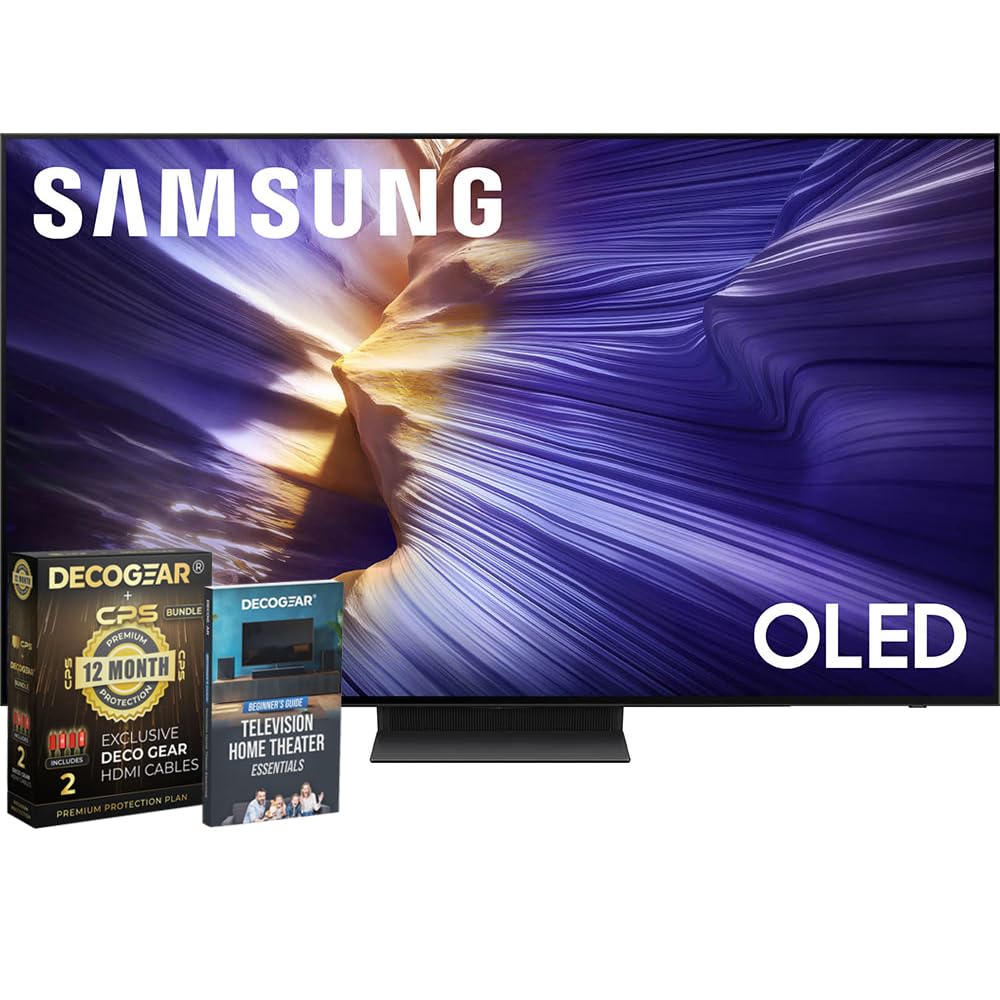
This bundle pairs the Samsung 48-inch S90F with a 1-year CPS extended protection plan and a home theater beginner’s guidebook, making it a no-fuss choice for first-time OLED buyers. The TV itself features the same NQ4 AI Gen3 processor and 144Hz Motion Xcelerator as the standalone model, but the Glare-Free coating is the standout feature. It diffuses ambient light significantly better than standard glossy OLEDs, making this a viable option for brighter rooms where reflections usually ruin the picture.
The OLED HDR+ provides a more dynamic range than typical entry-level panels, and the 128-neural-network AI Upscaling Pro handles low-bitrate streaming sources with impressive detail recovery. The AI Motion Enhancer Pro sharpens fast-moving objects like sports balls, reducing the blur that can plague standard OLED motion handling. The SolarCell remote uses ambient light to charge, eliminating battery changes.
The 48-inch size is again the limiting factor for larger rooms, and the bundle price edges toward mid-premium territory. The included guidebook is basic—useful for a true beginner but not for anyone who has already set up a TV. If the Glare-Free coating makes the difference between an unwatchable reflection-fest and a clear picture in your space, this is worth the premium over standard glossy models.
Why it’s great
- Effective Glare-Free coating for brighter rooms
- 128 neural network AI upscaling for sharp detail
- Includes extended protection plan
Good to know
- 48-inch size limits immersion in large spaces
- Bundle price is higher than standalone model
- Beginner guide adds little value for experienced users
7. Sony 42″ A90K BRAVIA XR

The Sony A90K is engineered specifically for PlayStation 5 integration. The Cognitive Processor XR uses a human-vision-based algorithm to analyze focal points in each scene, boosting contrast and detail where your eye naturally lands. The Auto HDR Tone Mapping and Auto Genre Picture Mode are exclusive to Sony and work seamlessly with PS5 to optimize HDR and switch to game mode automatically. The input lag is remarkably low at 8.5ms in 4K/120 mode.
The Acoustic Surface Audio+ technology turns the screen itself into a speaker, producing sound that seems to come directly from the on-screen action. It pairs with Dolby Atmos for a genuinely immersive audio experience without external speakers. The 42-inch size is perfect for a desk or small room, and the multi-position stand allows flexible placement. Google TV with Google Assistant is fast and provides access to all major streaming apps.
The A90K is not cheap for its size, and the 42-inch panel means you are paying a premium for the compact form factor. The peak brightness is lower than Sony’s larger A95L, so HDR highlights won’t be as punchy. For a dedicated gaming setup or a bedroom TV where screen real estate is secondary to picture processing and PS5 synergy, the A90K is unmatched.
Why it’s great
- Seamless PS5 integration with Auto HDR and Game Mode
- Acoustic Surface Audio+ creates screen-based sound
- Low input lag at 8.5ms for competitive gaming
Good to know
- Expensive for a 42-inch TV
- Peak brightness limited compared to larger Sony models
- Small size is not ideal for living room setups
8. Sony 55″ BRAVIA XR8B

The Sony XR8B brings true studio-calibrated picture modes to a more accessible price point. It comes pre-calibrated for Netflix and Prime Video, meaning you get accurate colors and contrast without fiddling with settings. The XR Processor intelligently enhances every scene in real-time, boosting clarity and reducing noise. The XR Clear Image upscaling is particularly good at rescuing compressed streaming content, making it look closer to native 4K than most competitors can manage.
For PS5 owners, the exclusive Auto HDR Tone Mapping and Auto Genre Picture Mode work flawlessly. The XR OLED Motion technology handles fast action without judder, which is a common complaint on lesser OLEDs. The built-in Acoustic Surface Audio+ is decent for a TV, but the real value is the picture processing. The DTS:X and Dolby Atmos support ensure compatibility with modern sound systems.
The brightness is around 500 nits, which is sufficient for a dim room but not for high dynamic range impact in bright light. The Google TV interface can occasionally stutter when loading heavy apps, though it is generally responsive. At this price, the XR8B offers the best picture processing in the mid-range bracket, making it a strong choice for movie buffs who want a “set it and forget it” OLED.
Why it’s great
- Studio-calibrated modes for Netflix and Prime Video
- Excellent XR Clear Image upscaling for low-bitrate content
- Seamless PS5 integration
Good to know
- Moderate peak brightness, not for bright rooms
- Google TV can lag under heavy app loads
- Only two HDMI 2.1 ports
9. Sony 55″ BRAVIA 8 (XR80)

The Sony BRAVIA 8 (XR80) sits a tier above the XR8B, adding the XR Contrast Booster 15 and XR Triluminos Pro for significantly better brightness and color volume. The Contrast Booster uses a heat sink to allow higher luminance on highlights, pushing peak brightness to around 700-800 nits—enough to make HDR content pop even in a moderately lit room. The XR Triluminos Pro delivers billions of accurate real-world colors, making nature documentaries and animated films look visibly richer.
The Sony Pictures Core app comes with 5 credits to redeem on new movies and a 12-month subscription to a library of classics, which is a nice perk for film fans. The Acoustic Surface Audio+ is improved over the XR8B, with a wider soundstage and clearer dialogue. Gaming support includes 4K/120, VRR, and ALLM across two HDMI 2.1 ports, plus the exclusive PS5 features.
The main drawback is the Google TV operating system, which some users report has intermittent sound dropout issues in streaming apps. This is a known complaint across multiple Sony OLED models, and it can be frustrating. A separate streaming device like Apple TV or Roku bypasses the issue entirely. For buyers who prioritize picture quality and are willing to use an external streamer, the BRAVIA 8 is a meaningful upgrade.
Why it’s great
- XR Contrast Booster 15 delivers higher HDR brightness
- XR Triluminos Pro for wide, accurate color gamut
- Includes Sony Pictures Core movie credits
Good to know
- Google TV OS has known sound dropout issues
- Only two HDMI 2.1 ports
- Premium price pushes beyond strict “affordable” range
10. Sony 77″ BRAVIA 8 (XR80)
This is the same BRAVIA 8 platform as the 55-inch version, but expanded to a 77-inch panel for buyers who need a large screen without jumping to the flagship A95L. The XR Contrast Booster 15 and XR Triluminos Pro are identical in capability, meaning the same high brightness and color volume scale up to the larger size. The 77-inch form factor is genuinely immersive for movies and sports, and the Cognitive Processor XR handles the increased pixel load without any perceptible lag.
The multi-position stand offers flexibility for media consoles of varying widths, and the Acoustic Surface Audio+ fills the larger room effectively. The Google TV platform includes access to all major apps, and AirPlay 2 and Chromecast built-in make streaming from Apple or Android devices simple. The Sony Pictures Core app is included with 5 movie credits.
The biggest barrier is the price, which is far beyond what most would consider “affordable.” The Google OS sound dropout issue persists on this model as well, and the TV’s weight requires a sturdy wall mount and two-person installation. For buyers who want a 77-inch OLED with excellent processing and brightness, this is a smart step down from the flagship A95L that still delivers a premium experience.
Why it’s great
- Immersive 77-inch screen with high brightness and color
- Same XR Contrast Booster 15 as smaller models
- Flexible stand placement for different console sizes
Good to know
- Very expensive; not budget-friendly
- Google TV sound dropout issue present
- Heavy; two-person installation required
11. Sony BRAVIA 8 II 65″ (XR80M2)

The BRAVIA 8 II is Sony’s first mainstream QD-OLED, combining a quantum dot layer with the self-lit OLED panel. The result is a massive leap in color volume and brightness compared to standard WOLED panels. The XR Triluminos Max delivers billions of colors with higher saturation at the same brightness level, making HDR content look more vibrant and three-dimensional. The XR Processor with AI uses real-time scene analysis to boost contrast and clarity further.
The ultra-slim design with a brushed aluminum frame looks premium from every angle. The Acoustic Surface Audio+ has been refined for clearer dialogue and deeper bass, though a soundbar is still recommended for a full cinematic experience. Gaming performance is top-tier with 4K/120, VRR, ALLM, and exclusive PS5 features. The Sony Pictures Core app offers movies included with the purchase.
The price is high—firmly in premium territory—but it is lower than the A95L flagship while delivering comparable QD-OLED quality. The Google TV platform is fast on this model, though the occasional sound dropout still appears in some reports. For buyers seeking the best picture quality available at a semi-reasonable price, the BRAVIA 8 II is the current sweet spot.
Why it’s great
- QD-OLED panel with best-in-class color and brightness
- XR Triluminos Max for vivid, saturated HDR
- Ultra-slim premium design
Good to know
- Expensive; not strictly affordable
- Sound dropout issue still reported
- Built-in sound good but external system recommended
12. Sony 83″ A80L BRAVIA XR

The Sony A80L at 83 inches is the largest affordable entry point into the Sony OLED ecosystem. It uses the Cognitive Processor XR and XR OLED Contrast Pro to achieve deep blacks, high peak brightness, and natural colors. The size alone transforms the viewing experience—83 inches of self-lit pixels create a cinema-like immersion that smaller screens cannot match. The XR Triluminos Pro color processing ensures that the massive screen maintains consistent color accuracy edge-to-edge.
The Acoustic Surface Audio+ uses actuators behind the screen to create sound that matches the action. Combined with Dolby Atmos, the effect is convincing, especially for dialogue. The Game Menu consolidates all gaming settings into one interface, and HDMI 2.1 ports support 4K/120, VRR, and ALLM. The Bravia Core app includes 5 movie credits and a 12-month subscription to the IMAX Enhanced collection.
The downsides are significant. The 83-inch size requires a large wall or stand, two-person delivery, and careful planning. The price is steep. Some users report occasional freezing in the Google TV interface, and the peak brightness, while good, is not as high as the QD-OLED models. For buyers with the space and budget, the A80L 83-inch is a remarkable value compared to the much more expensive A95L at 77 inches.
Why it’s great
- Massive 83-inch OLED with excellent contrast
- Acoustic Surface Audio+ creates screen-based sound
- Game Menu with HDMI 2.1 support
Good to know
- Very large; requires ample space and two-person setup
- Google TV interface can occasionally freeze
- Not as bright as QD-OLED alternatives
13. Sony 77″ A95L QD-OLED

The Sony A95L is widely considered the best consumer OLED television available. The QD-OLED panel with XR Triluminos Max delivers the widest color gamut and highest peak brightness of any OLED on this list, reaching over 1000 nits in HDR highlights. The Cognitive Processor XR with XR Contrast Booster uses the quantum dot layer to produce colors that are both brighter and more saturated simultaneously, creating images that look almost three-dimensional.
The Multi View feature splits the screen to show content from two sources simultaneously, useful for sports or gaming with a walkthrough. The Acoustic Surface Audio+ provides clear, powerful sound, and the Bravia Core app includes 10 movie credits and a 24-month subscription to the IMAX Enhanced collection. The design is premium, with a metal backplate and an aluminum backlit remote control that feels excellent in hand.
The price is astronomical, and this TV is not affordable by any reasonable definition. For buyers who demand the absolute best picture quality and have the budget, the A95L is the only choice. Burn-in risk is minimal with QD-OLED, and the panel’s lifespan is excellent. If you have the resources, this is the endgame.
Why it’s great
- Reference-level QD-OLED picture quality and brightness
- XR Triluminos Max delivers widest color gamut
- Premium build with aluminum backlit remote
Good to know
- Extremely expensive; not budget-accessible
- Some reports of screen bubble defects
- Google TV OS can be less responsive than dedicated streamers
FAQ
Is burn-in still a concern on modern affordable OLED TVs?
How does an affordable OLED TV perform in a bright living room?
Do I need a separate soundbar for an affordable OLED TV?
Which smart TV platform is best for affordable OLEDs?
Final Thoughts: The Verdict
For most users, the best affordable oled tv winner is the LG OLED55B4P because it delivers the core OLED experience—perfect blacks, fast response, and Dolby Vision—with four HDMI 2.1 ports and a strong AI processor at a price that undercuts rivals. If you want superior HDR accuracy and a built-in subwoofer, grab the Panasonic Z85 Series. And for a compact, high-refresh-rate OLED designed for PC gaming and small spaces, nothing beats the Samsung 48-inch QN48S90FAEXZA.