
Our readers keep the lights on and the weekend projects moving. As an Amazon Associate, I earn from qualifying purchases.
At 12x magnification, every bit of hand tremor is amplified, and each ounce of glass weight pulls on your neck after an hour of glassing. The “50” in 12×50 tells you the objective lens diameter in millimeters, directly dictating how much light hits your eye at dusk or dawn. That single spec separates a bright, usable image from a muddled, frustrating shadow—especially when the target is a buck at 300 yards or a distant mountain ridgeline.
I’m Rikta — the founder and writer behind FitlyFast. My research process for this category involves comparing exit pupil calculations against real-world low-light test footage and cross-referencing coating technology claims with actual transmission data.
The guide below cuts through marketing jargon to find the best binoculars 12×50 that actually hold a bright, sharp image in your hands without breaking your back or your budget.
How To Choose The Best Binoculars 12×50
A 12×50 configuration walks a tight line between raw reach and field of view. You gain 20% more detail at distance compared to a 10×42, but you lose a chunk of the panoramic context and introduce more shake. The key is finding a build that counteracts those downsides with smart ergonomics, quality glass, and coatings that maximize light throughput.
Prism Type and Glass Grade
Every 12×50 on the market uses either roof or porro prisms. Roof prisms allow a straight, compact barrel, but they demand phase-correction coatings to prevent contrast loss. Porro prisms, with their offset barrels, deliver inherently brighter images at lower cost but often weigh more. BaK-4 glass is non-negotiable for either type; BK-7 glass leaves you with clipped exit pupils and dimmer edge views.
Exit Pupil and Low-Light Performance
A 12×50 produces a 4.2mm exit pupil (50 divided by 12). That number is the diameter of the beam of light leaving the eyepiece. If your pupils dilate to 5mm or more in dim conditions, a 4.2mm beam means some light is wasted—you simply see less. Bigger objective lenses or lower magnification fix that, but within the 12×50 format, look for fully multi-coated (FMC) optics to squeeze every photon through that 4.2mm window.
Eye Relief and Eyeglass Compatibility
Long eye relief (14mm or more) matters if you wear glasses. Insufficient relief forces you to press lenses against the eyecups, scratching them and cutting off the full field. Twist-up eyecups with multiple click stops let you dial in the ideal distance between the eyepiece and your eye, critical for maintaining the full 12×50 field of view during extended glassing sessions.
Quick Comparison
On smaller screens, swipe sideways to see the full table.
| Model | Category | Best For | Key Spec | Amazon |
|---|---|---|---|---|
| Pentax Jupiter 12×50 | Porro Prism | Entry-level stargazing | 50° Apparent FOV | Amazon |
| Nikon PROSTAFF 5 12×50 | Roof Prism | Hiking & backpacking | 15.5mm eye relief | Amazon |
| Celestron Nature DX ED 12×50 | Roof Prism | Astronomy & birding | ED objective lenses | Amazon |
| Bushnell Prime 12×50 | Roof Prism | All-weather hunting | EXO Barrier coating | Amazon |
| Vortex Viper HD 12×50 | Roof Prism | Serious glassing | Dielectric prism coating | Amazon |
| Leupold BX-4 Pro Guide HD 12×50 | Roof Prism | Premium low-light hunting | Guard-ion coating | Amazon |
| Evil Eye 10-30×50 Zoom | Zoom Porro | Budget general use | Variable 10-30x zoom | Amazon |
In‑Depth Reviews
1. Vortex Optics Viper HD Roof Prism Binoculars 12×50

The Viper HD delivers a high-density optical system with XR anti-reflective coatings and dielectric prism coatings that push light transmission to the mid-90% range. At 12×50, the 5.5-degree field of view is wider than many competitors at this magnification, reducing the tunnel-vision feeling that plagues 12x glass. The argon purging and O-ring seals provide waterproof and fogproof performance that survives a full day in wet cover.
The open-bridge chassis with thumb indents makes one-handed glassing possible without cramping, and the 16mm of eye relief is generous for eyeglass wearers. The GlassPak chest harness included in the box is a serious upgrade over a standard neck strap, distributing the weight of a 50mm binocular across your torso instead of your cervical spine. The locking diopter ring prevents accidental adjustment when you pull the bins out of your pack.
Edge-to-edge clarity is exceptional for this tier, with minimal chromatic aberration even against bright snow or sky. The focus wheel has just the right tension for fast adjustments without overshooting. At this level, the Viper HD competes with glass costing nearly twice as much, making it the best optical value in the 12×50 format for the serious outdoorsman.
Why it’s great
- Dielectric-coated BaK-4 prisms deliver bright, neutral color even in twilight
- Argon purged for zero fogging and IPX7 waterproofing
- VIP unconditional lifetime warranty covers any damage
Good to know
- Carrying case is functional but feels dated compared to the optics
- Diopter adjustment may not fully correct mixed near/far prescription without glasses
2. Leupold BX-4 Pro Guide HD Binoculars 12x50mm Gen 2

The Gen 2 BX-4 Pro Guide uses Leupold’s Elite Optical System with proprietary lens coatings that minimize glare and maximize resolution across the entire field. At 12×50, the apparent field of view hits 65.2 degrees, giving a wide, immersive sight picture that feels closer to an 8x than a 12x. The open-bridge, dual-hinge design shaves weight while improving grip ergonomics for long carry days.
Guard-ion hydrophobic lens coating is the standout feature here—water, snow, and fingerprints bead off the glass instantly, keeping the image clear in messy weather. The factory-set collimation is tight, with no double-image or misalignment issues out of the box. Users consistently report that these bins match or exceed models in brightness and resolution, particularly in the last 15 minutes of legal shooting light.
The diopter adjustment is smooth and stays locked, and the twist-up eyecups have four click stops for fine eye-relief tuning. At 1.83 pounds, it’s not the lightest 12×50, but the weight distribution feels balanced in the hand. For a hunter who needs every second of usable low-light visibility, the BX-4 Pro Guide is a top-tier choice.
Why it’s great
- Guard-ion coating repels water and grease better than standard FMC
- Wide 65.2° apparent FOV reduces the 12x tunnel effect
- Leupold lifetime warranty and US-based customer service
Good to know
- Weight is on the higher side for ultralight backpacking
- Near focus distance is longer than some competitors
3. Celestron Nature DX ED 12×50 Premium Binoculars
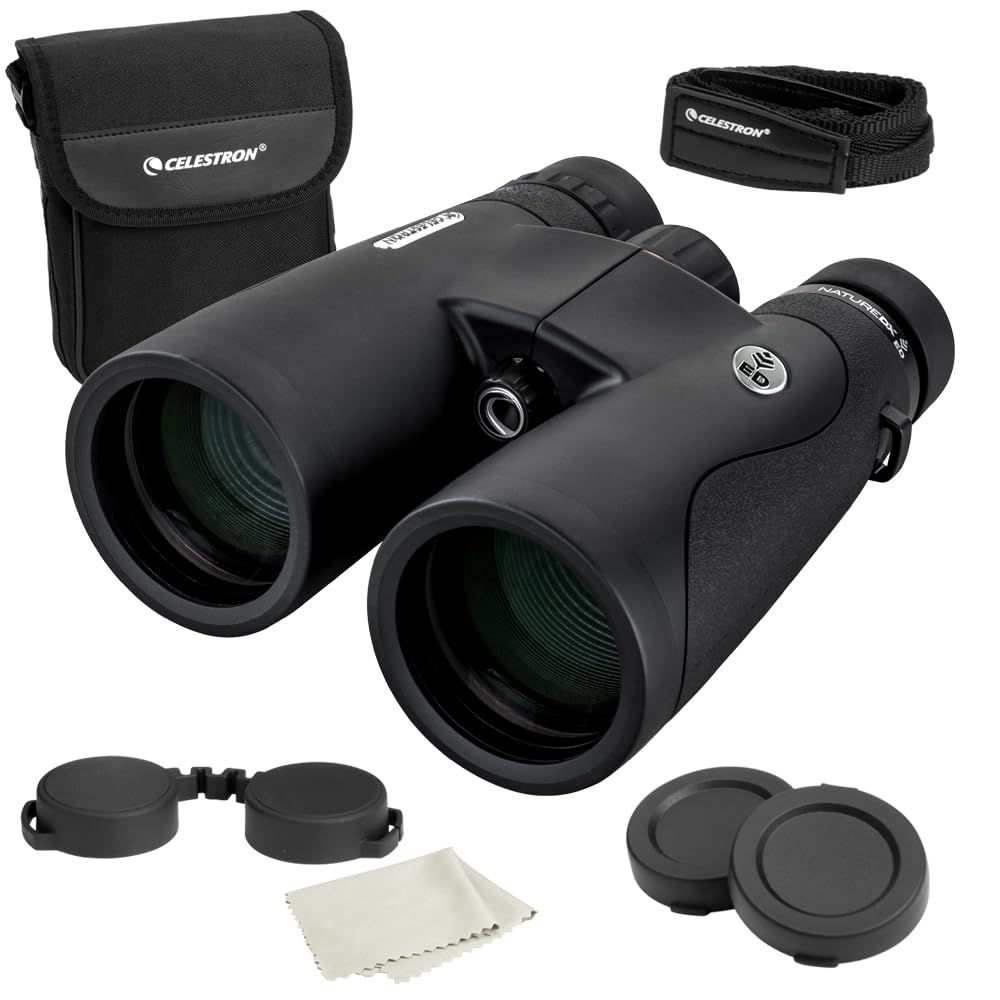
Extra-low dispersion (ED) glass is the headline feature here, and it pays off immediately. Chromatic aberration—that purple or green fringe around high-contrast edges like branches against sky—is virtually eliminated. The image stays razor-sharp from center to edge, which is rare in the mid-range 12×50 market. Phase-coated BaK-4 roof prisms push contrast and brightness well beyond what the price tier suggests.
The body is a rubber-armored polycarbonate housing that feels solid without weighing you down. Waterproofing and nitrogen purging mean you can glass through morning mist or light rain without interior fogging. The tripod adapter socket is a welcome addition for astronomy use—12×50 is a serious stargazing format, and mounting it eliminates arm fatigue during long sessions.
Eye relief measures 14.3mm, which works for most eyeglass wearers but is not as generous as the Nikon PROSTAFF 5. The twist-up eyecups have click stops but some users report they don’t lock as tightly as premium models. For the price, the ED glass alone makes this the best overall pick for anyone prioritizing color accuracy and resolution without stepping into high-end price territory.
Why it’s great
- ED glass virtually eliminates color fringing at high contrast edges
- Phase-coated BaK-4 prisms offer excellent contrast for the price
- Built-in tripod mount for stable astronomy viewing
Good to know
- Twist-up eyecups feel slightly looser than premium bins
- Weight (896g) gets noticeable after an hour handheld
4. Nikon PROSTAFF 5 12x50mm Binoculars
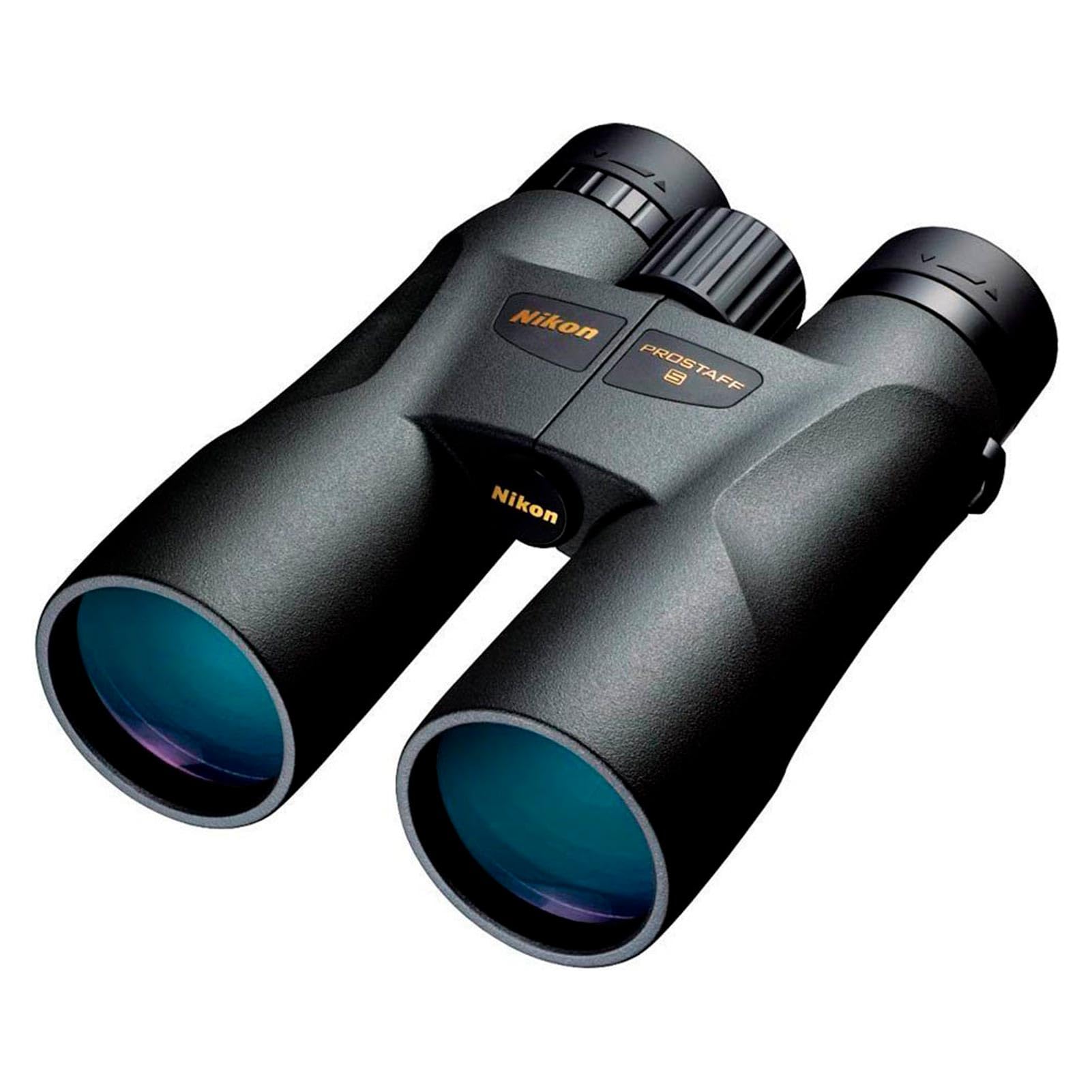
Nikon’s PROSTAFF 5 is engineered around a fiberglass-reinforced polycarbonate resin chassis that keeps the weight down to levels normally associated with 10×42 bins. At 12×50, shaving ounces matters, and this model balances well enough for day-long hikes. The multilayer-coated lenses and prisms produce bright, color-accurate images with reduced glare, punching above its weight class in dawn and dusk conditions.
Eye relief stretches to 15.5mm, making this one of the most comfortable 12×50 options for eyeglass wearers. The turn-and-slide multi-click eyecups lock into position reliably, so you can set your preferred relief and forget it. The central focus knob is dampened for smooth, precise movement without backlash, letting you track moving subjects across varying distances quickly.
Nitrogen-filled and O-ring sealed construction delivers genuine waterproof and fogproof performance—not just splash resistance. Multiple long-term users report five years of hard use without internal fogging or loss of alignment. The trade-off is a 246-foot field of view at 1,000 yards, which is narrower than some competitors, but the image clarity and ergonomic comfort make it a strong mid-range contender for hikers and birders.
Why it’s great
- Lightweight polycarbonate chassis ideal for long carries
- Excellent 15.5mm eye relief for eyeglass compatibility
- Proven long-term durability and fog resistance
Good to know
- Field of view is narrower than some 12×50 options
- Not phase-coated on the prisms, so contrast lags behind ED models
5. Bushnell Prime 12×50 Binocular

Bushnell’s Prime series sits at the intersection of affordability and serious weather sealing. The EXO Barrier protection bonds to the outer lens surface at a molecular level, repelling water, oil, and dust more effectively than standard coatings. In the 12×50 configuration, this means you can glass through rain, sleet, or fogged-in coastal air without constantly wiping the objectives.
The fully multi-coated optics and BaK-4 prisms produce a clean image with decent contrast for the tier. The field of view is listed at 1,000 meters, which is competitive with mid-range options. The aluminum housing feels dense and durable, and the rubber armor provides a secure grip even with wet hands. IPX7 waterproof rating means it can handle complete submersion up to one meter for 30 minutes.
Some users have reported needing a warranty replacement on the first unit due to optical defects, which is more common at this price point, but Bushnell’s customer service resolved the issues promptly. Once you get a clean sample, the Prime holds up well over years of use. It is a solid choice for the hunter who needs a waterproof, drop-resistant binocular without spending for premium glass.
Why it’s great
- EXO Barrier molecular coating sheds water and oil effectively
- IPX7 rated for complete waterproof protection
- Durable aluminum chassis with rubber armor
Good to know
- Quality control can be inconsistent; inspect your unit
- Image brightness trails phase-coated premium options
6. Pentax Jupiter 12×50 Easy Viewing Porro Prism Binocular

The Pentax Jupiter delivers a classic porro prism design that prioritizes light-gathering efficiency over compactness. The large 50mm objective lenses are multi-coated to reduce internal reflections, and the 4.2mm exit pupil matches the 12×50 standard. The image is bright for a porro at this price, with a 50-degree apparent field of view that feels natural to the eye.
Build quality is solid with a rubber coating that provides good grip, but the body is heavier than roof prism alternatives. The focus ring is easy to access, and the center focus mechanism is smooth for the category. An optional TP-3 tripod adapter adds stability for lunar observation, which is a smart upgrade given these binoculars’ strong performance on the moon—users note sharp, bright views of craters without excessive chromatic aberration.
Eye relief is only 11mm, which may be tight for eyeglass wearers. The weight also makes handheld use tiring during extended sessions, so tripod mounting is strongly recommended for astronomy. For the entry-level price, this is a functional 12×50 that gets you into the format without major investment, but the optical coatings and build refinement are a clear step down from the premium tiers.
Why it’s great
- Porro prism design delivers natural brightness for the price
- Smooth center focus with easy-to-hold rubber coating
- Works well for casual moon and landscape viewing
Good to know
- 11mm eye relief is insufficient for most eyeglass wearers
- Heavier than roof prism models; tripod helps
7. Evil Eye 10-30×50 High Power Military Zoom Binoculars

The Evil Eye zoom binocular offers a variable 10-30x magnification range within the 50mm objective format, a feature not found in fixed-power models. At 10x, the image is usable for scanning; at 30x, you can pull in distant details but at the cost of significant brightness and a very narrow field. The 22mm eyepiece lens and BAK7 prism glass aim to maximize light, but the zoom mechanism introduces optical compromises at the high end of the range.
The body is rubber-armored with a metal internal structure, weighing in at 1.76 pounds. The anti-slip texture is genuinely grippy in wet conditions, and the built-in tripod mount thread at the front helps stabilize the image at 30x. The package includes a messenger bag, harness strap, lens cleaning cloth, and four lens caps—generous for the entry-level price. Several users confirmed the waterproofing holds in rain and snow, though submersion is not recommended.
Lens covers are loose and prone to falling off, and the strap mechanism is fiddly to adjust. At full 30x zoom, the exit pupil drops below 2mm, making the image dim and shaky without a tripod. For the budget-conscious buyer who wants flexibility and understands the optical trade-offs, the Evil Eye is a functional tool. For serious glassing, a fixed 12x will deliver a brighter, sharper image at the same price.
Why it’s great
- Variable 10-30x zoom adds flexibility for different viewing distances
- Robust metal chassis with rubber armor for wet-weather grip
- Full accessory kit included out of the box
Good to know
- At 30x, image is dim and requires a tripod for stability
- Loose lens caps and tricky strap adjustment are common complaints
FAQ
Can I handhold 12×50 binoculars without a tripod?
Why does the field of view vary so much between 12×50 models?
Is 12×50 worth it for astronomy or is 10×50 better?
Final Thoughts: The Verdict
For most users, the binoculars 12×50 winner is the Celestron Nature DX ED because it delivers extra-low dispersion glass at a mid-range price, eliminating chromatic aberration while keeping the build light and weather-sealed. If you want class-leading low-light performance and a forgiving field of view, grab the Leupold BX-4 Pro Guide HD. And for a budget-friendly entry into the 12×50 format that prioritizes compact weight and comfort for eyeglass wearers, nothing beats the Nikon PROSTAFF 5.