
Our readers keep the lights on and the weekend projects moving. As an Amazon Associate, I earn from qualifying purchases.
That persistent bloating, the brain fog after lunch, the skin breakouts you can’t explain — chronic discomfort often isn’t random. For millions, the root cause is a hidden food sensitivity that standard medical panels overlook. An at-home food sensitivity test puts the power of discovery back in your hands, letting you screen hundreds of potential triggers from your own kitchen table without needles, appointments, or costly lab fees.
I’m Rikta — the founder and writer behind FitlyFast. I’ve spent years analyzing the diagnostic kit market, cross-referencing lab certifications, screening panel sizes, and real user outcome data to separate science-backed tools from wellness theater.
This guide walks you through the top contenders so you can choose with confidence. After comparing lab quality, item counts, result speed, and real customer outcomes, I’ve narrowed the field to the seven best options to help you find the best at-home food sensitivity test for your specific needs.
How To Choose The Best At-Home Food Sensitivity Test
Not all tests are created equal. Screening methodology, panel size, lab certification, and post-result support vary dramatically between brands. Before you buy, match the test’s design to your primary symptom — digestive issues, skin flare-ups, or chronic fatigue — and prioritize tests that offer clear severity rankings over raw item counts.
Start with the testing method
Most at-home kits use hair-sample bioresonance, which measures cellular energy patterns to flag potential intolerances. Others collect a finger-prick blood sample and analyze IgG antibody reactions. Bioresonance is non-invasive and covers more items, while IgG panels have more clinical backing for delayed food reactions. Choose based on whether you prioritize breadth or established lab protocols.
Prioritize severity rankings over total numbers
A test that screens 1,000 items but lumps everything into one “sensitive” pile is less useful than a test that tests 300 items and ranks each by reaction level — green, yellow, red. This lets you focus elimination efforts on the few high-reactivity items first, making the process manageable rather than overwhelming.
Check turnaround time and lab location
Results range from 48 hours to two weeks after the lab receives your sample. If you’re eager to start feeling better, pick a brand with a stated 48–72 hour turnaround and a US-based lab to avoid international shipping delays. Also confirm that the company provides a prepaid return envelope so you’re not caught off guard by hidden postage fees.
Quick Comparison
On smaller screens, swipe sideways to see the full table.
| Model | Category | Best For | Key Spec | Amazon |
|---|---|---|---|---|
| AllergyHero | Blood IgG Panel | Clinically backed screening | 286 foods, IgG antibody analysis | Amazon |
| UCARI 1,500+ | Hair Bioresonance | Maximum item coverage | 1,500+ foods & environmental items | Amazon |
| 5Strands 950 | Hair Bioresonance | Food + environmental screening | 658 foods + 282 environmental items | Amazon |
| UCARI 630+ | Hair Bioresonance | Fast 48-hour results | 630+ foods & additives | Amazon |
| AFIL 750+ | Hair Bioresonance | Family-friendly wellness screening | 750+ foods, drinks & nutrients | Amazon |
| AFIL Primal 350+ | Hair Bioresonance | Budget entry-level screening | 350+ food & drink items | Amazon |
| Check My Body Health 990 | Hair Bioresonance | Broad food & environment coverage | 990 food, drink, & environmental items | Amazon |
In‑Depth Reviews
1. AllergyHero Comprehensive Food Sensitivity Test

The AllergyHero test takes a different approach from the hair-sample kits on this list — it’s an IgG antibody blood panel that analyzes your immune response to 286 foods and beverages. This gives it stronger clinical grounding for detecting delayed food reactions. Users consistently report that the finger-prick collection is simple and that elimination based on results leads to symptom relief within days.
What makes AllergyHero stand out is the precision of its scoring. Rather than a blanket “sensitive” label, it ranks each food by IgG reaction level, allowing you to prioritize the few items your body is actually reacting to. Multiple reviews confirm that eliminating the top-tier triggers resolved chronic bloating, stomach pain, nausea, and headaches that had gone undiagnosed for years.
The trade-off is turnaround time — expect roughly two weeks for lab results, which is slower than the 48–72 hour hair tests. A few users also noted that the blood draw left a small scar and that the interpretation requires a “soft guidance” mindset — these are not hard allergy diagnoses but directional data. For those who want lab-tested IgG analysis and are willing to wait, this is the most scientifically credible option.
Why it’s great
- Clinically grounded IgG antibody analysis provides stronger scientific backing than bioresonance
- Detailed severity ranking helps focus elimination on high-reaction items first
- Users report symptom relief within days after removing top triggers
Good to know
- Results take up to two weeks, significantly longer than hair-based tests
- Finger-prick blood draw may leave a small mark for sensitive users
- Results are “soft guidance” — not a definitive medical allergy diagnosis
2. UCARI Personal Sensitivity Profiling Test

The UCARI 1,500+ test is the widest-net option on this list, screening not just foods and drinks but also skincare ingredients and environmental factors. That breadth is especially valuable if your symptoms are intermittent or hard to pin to a specific meal. The hair-sample collection is mess-free, and the digital report arrives within roughly two business days of the lab receiving your sample.
User experiences highlight this test’s ability to uncover surprising triggers. One reviewer with severe eye irritation that six doctors couldn’t solve found a severe potato intolerance on their report. Eliminating potatoes and other moderate-ranked foods like eggs and tomatoes resolved the eye issue entirely. Another user confirmed a beef allergy in their dog, then ordered human kits for the whole family.
The main drawback is that some users receive a very long “red” list, making it hard to know where to start. One reviewer reported 24 severe and 140 moderate intolerances, many for items they rarely consume, which made the report feel overwhelming rather than actionable. The test works best as a broad screening tool — users willing to cross-reference results with their actual diet will extract the most value.
Why it’s great
- Largest screening panel on this list at 1,500+ items including skincare and environment
- Fast digital report turnaround — typically within 2 business days
- Simple non-invasive hair collection accepted for adults and children
Good to know
- Very long “red” lists can be overwhelming without clear prioritization guidance
- Some users report contradictions (e.g., coconut water vs. coconut milk showing different results)
- Not a medical diagnostic tool — directional wellness screening only
3. 5Strands Food Intolerance & Environmental Sensitivity Test
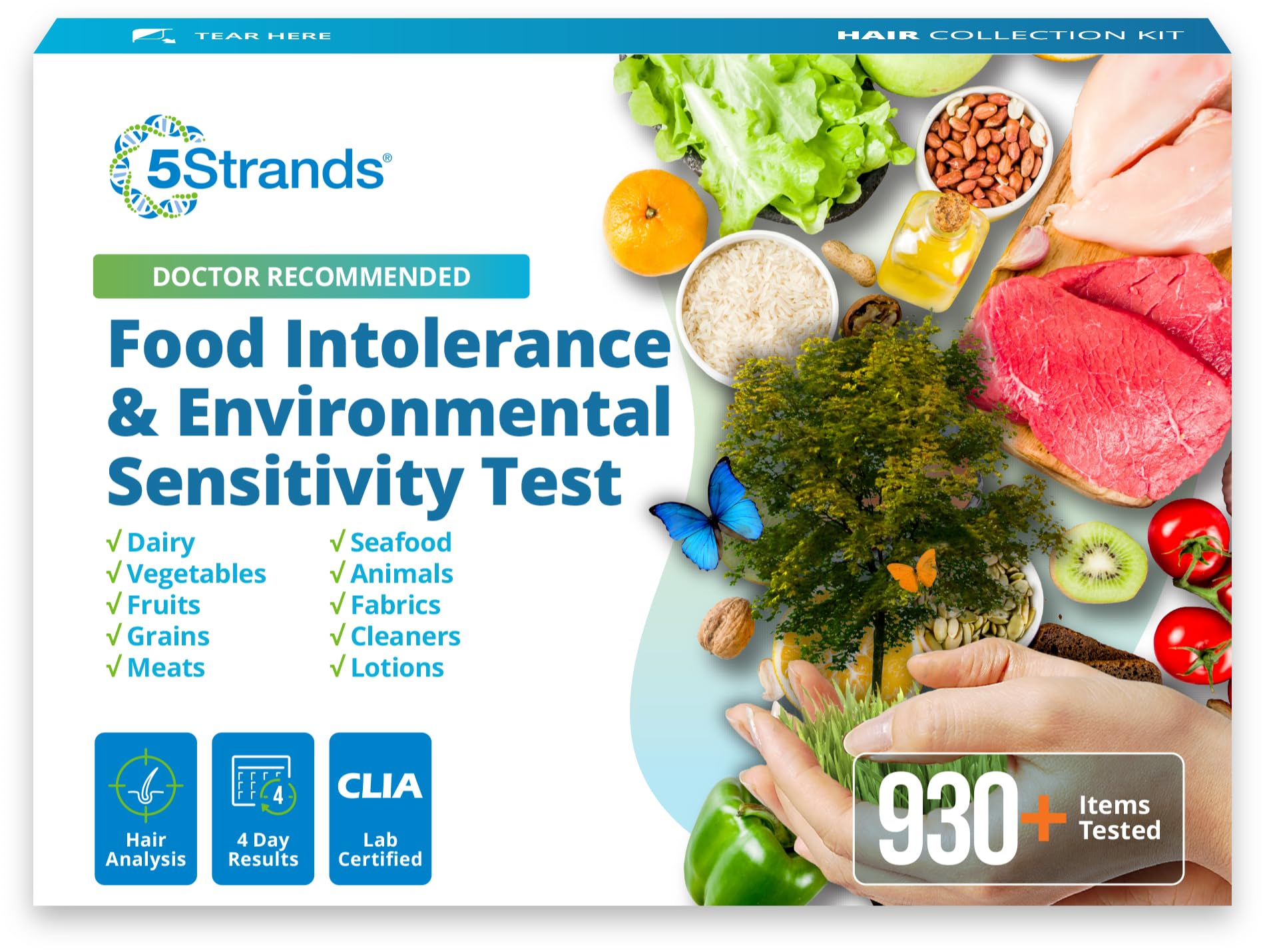
The 5Strands test splits its 950-item panel into 658 foods and 282 environmental items — animals, grasses, mold, pollen, chemicals, fabrics, and lotions. This dual coverage makes it the smartest pick if you suspect both dietary and environmental triggers, especially for skin flare-ups or seasonal symptoms that linger year-round. The kit includes prepaid return shipping and delivers results within 4 days of sample receipt.
The four-level severity system — safe, reduce, remove, moderation — is a standout feature. Multiple users report that eliminating high-severity foods like dairy and gluten resolved chronic stomach pain, gas, and bloating within days. The test is also trusted by holistic health practitioners and has been used by over 345,000 people, which adds a layer of real-world validation to the bioresonance methodology.
The most serious concern comes from a reviewer who ran two tests one week apart — with identical diet, exercise, and hair source — and found a 58% mismatch in results. That inconsistency raises legitimate questions about reproducibility. If you’re looking for a broad initial map of potential triggers and are comfortable treating results as directional rather than definitive, this test offers value. For those needing repeatable data, the variability is a red flag.
Why it’s great
- Screens both foods (658) and environmental items (282) in one test
- Four-level severity system makes elimination planning straightforward
- Widely used — over 345,000 tests processed with holistic health practitioner trust
Good to know
- Significant result variability reported — one user saw 58% mismatch on retest
- Some users felt the “Cadillac” upgrade added little extra value over the standard panel
- Results are directional wellness data, not a clinical diagnosis
4. UCARI Sensitivity Test for Humans
The UCARI 630+ test delivers the fastest turnaround in this guide — results arrive within roughly 48 hours of the lab receiving your sample. That speed is ideal if you’re already symptomatic and want to start an elimination diet as quickly as possible. The hair-sample collection takes under five minutes and accepts colored or treated hair, making it truly barrier-free for all users.
The screening panel covers 630+ foods and additives with color-coded severity levels, and the digital report includes downloadable wellness guidance to support elimination planning. Verified buyers describe the process as “easy to use” and “eye-opening,” with one reviewer noting that the test was processed the same day the lab received it. The price lands in the mid-range tier, offering solid value for the speed and item count.
This is a very new product — first available in February 2025 — so long-term user data is limited. A few early reviewers expressed skepticism about the bioresonance methodology itself, noting that they eat many of the flagged items without issues. As with all hair-based tests, treat the results as a starting point for personal experimentation rather than a final verdict.
Why it’s great
- Fastest turnaround — results in approximately 48 hours after lab receipt
- Non-invasive hair collection accepts colored and treated hair
- Color-coded report with downloadable elimination guidance included
Good to know
- Very new product with limited long-term user reliability data
- Bioresonance methodology has skeptics — some flagged items may not cause real reactions
- Not a medical allergy test — directional wellness screening only
5. AFIL 750+ At-Home Wellness Test Kit
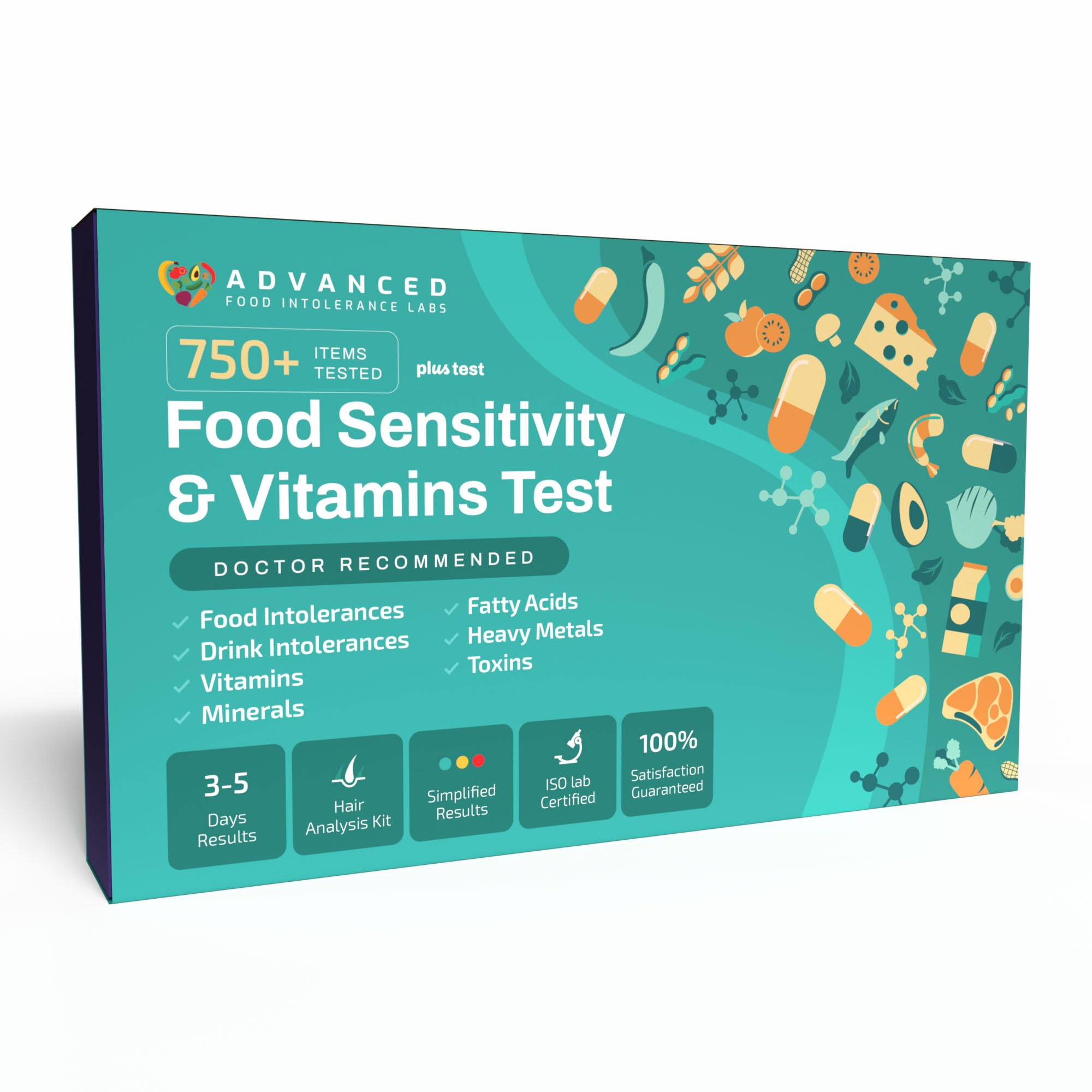
The AFIL 750+ test is marketed as a family-friendly wellness tool, screening 750+ items including foods, drinks, nutrients, and household and environmental factors. The hair sample collection accepts both body and facial hair, and the kit includes a prepaid return envelope. Results are uploaded to a secure portal within 72 hours of the lab receiving the sample.
AFIL is an ISO/IEC 27001 certified company, meaning your personal health data is protected by recognized information security standards — a meaningful differentiator in a category where privacy concerns surface regularly. The interactive clickable report lets you tap each item to learn more, which reduces the overwhelm factor. Several users found the test helpful for identifying vitamin and mineral deficiencies, not just food triggers.
The test scored mixed reviews on accuracy. While many users reported improvements after eliminating flagged items, one reviewer called it a waste of money, and another noted that the report didn’t explain why their overall inflammation score was so high. The lack of a tracking number on the return envelope also caused delivery delays for some, so factor in an extra week for shipping.
Why it’s great
- ISO/IEC 27001 certified for data security and privacy protection
- Interactive clickable report makes large data sets manageable
- Accepts body and facial hair — truly non-invasive for all users
Good to know
- No tracking number on return envelope — mail delays are common
- Some reports lacked context for high inflammation scores
- Mixed user feedback — results are not universally positive
6. AFIL Primal 350+ Food & Drinks Sensitivity Test
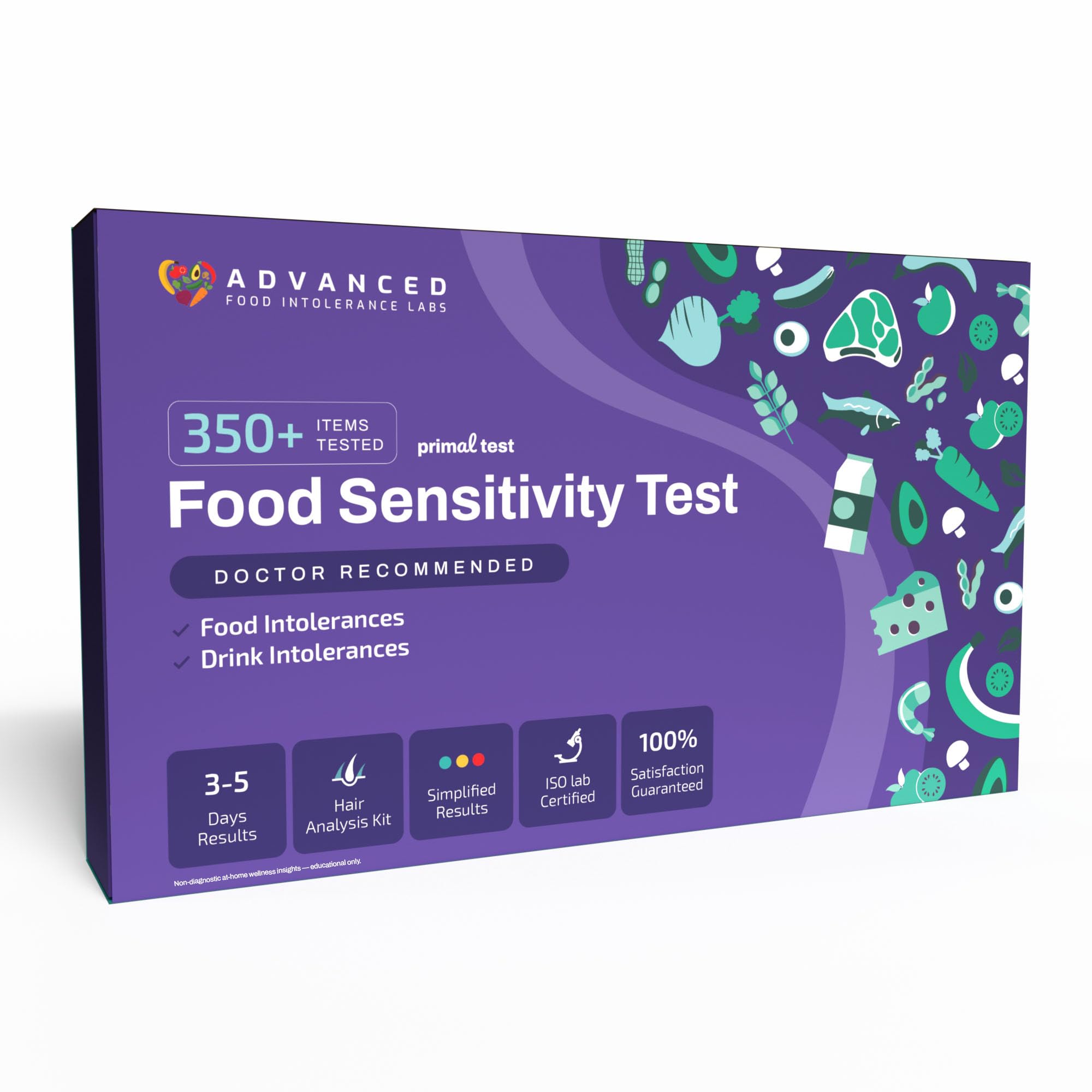
The AFIL Primal kit is the most affordable entry point into hair-sample food sensitivity testing, screening 350+ common foods and drinks. It follows the same ISO-certified bioresonance process as AFIL’s larger 750+ kit, making it a low-risk option for first-time users who aren’t ready to invest in a premium-tier test. Results arrive within 3 business days after the lab receives the sample.
Despite the lower item count, user reports are surprisingly strong. Multiple verified buyers discovered triggers — coconut milk, peanut butter, dark chocolate — that had been causing acne, bloating, and stomach pain for years. The color-coded “caution” and “avoid” system is straightforward, and the portal provides access to diet plans and recipe suggestions based on your results.
The main red flag is customer service. One reviewer described a delayed result and contradictory emails, calling the experience a “scam.” Another noted that the low price came with a notable lack of support. For the price, this test works best as a low-stakes starting point — but don’t expect white-glove support if something goes wrong with your sample or timeline.
Why it’s great
- Most affordable option — ideal entry-level screening for new users
- Fast 3-business-day turnaround with color-coded avoid/caution system
- Portal includes diet plans and recipe suggestions based on results
Good to know
- Customer service is inconsistent — some users report delays and poor communication
- Only 350 items screened, missing less common foods and environmental items
- Not suited for users seeking comprehensive environmental sensitivity data
7. Check My Body Health 990 Item Complete Test
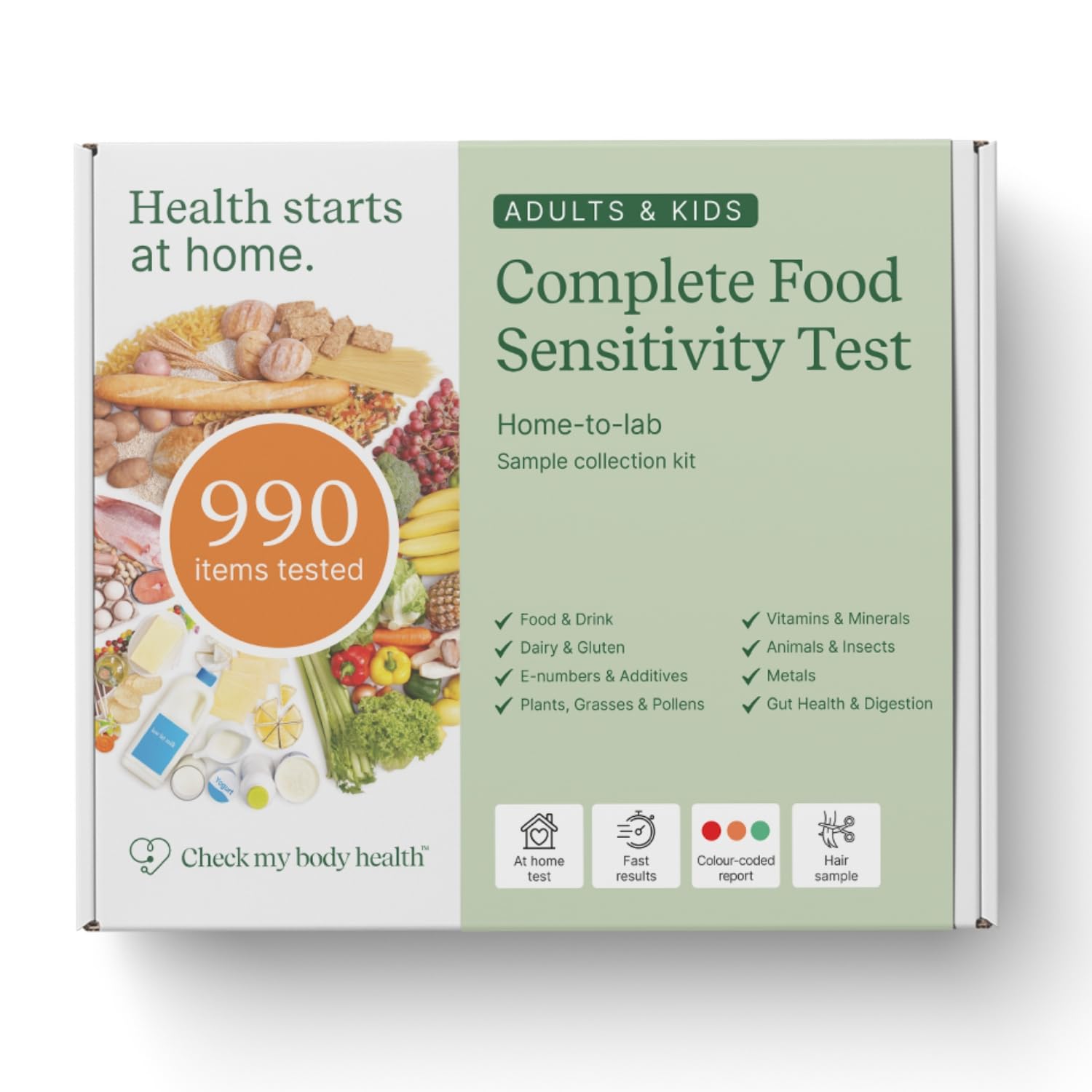
The Check My Body Health 990 test screens foods, drinks, and environmental items including nuts, gluten, dairy, eggs, caffeine, chemicals, additives, and vitamins A–K. The hair sample collection is pain-free, and results arrive within 3–5 days of the lab receiving the sample. The kit includes an Elimination Diet Guide and 30-day access to a meal-planning tool.
Users consistently highlight the test’s ability to uncover hidden triggers that standard medical tests miss. One reviewer who had been on a restrictive diet for years discovered a severe sensitivity to almonds, which explained persistent fatigue. Another user reported dramatic health improvement within two days of eliminating dairy and gluten. The test also covers additives, heavy metals, and skincare ingredients, giving it unusually broad coverage for the mid-range price bracket.
However, the test has drawn fire over its methodology and security. One reviewer noted that the hair sample arrived in a simple ziplock bag with no chain-of-custody procedures, calling the approach unprofessional. Others pointed out that bioresonance lacks strong peer-reviewed scientific backing for food intolerance detection. Also note that shipping is an extra fee, and some users felt the results were designed to upsell branded supplements rather than provide neutral data.
Why it’s great
- Broad coverage — 990 items including additives, heavy metals, and skincare ingredients
- Includes Elimination Diet Guide and 30-day meal planning tools
- Users report dramatic symptom relief within days of following results
Good to know
- Shipping costs extra — not included in the base kit price
- Unprofessional sample handling reported (ziplock bag, no chain-of-custody)
- Bioresonance methodology lacks robust peer-reviewed scientific consensus
FAQ
Can an at-home food sensitivity test diagnose celiac disease or a food allergy?
How many hair strands do I actually need to collect for the sample?
Why did my test show a severe reaction to a food I eat every day without issues?
Final Thoughts: The Verdict
For most users, the best at-home food sensitivity test winner is the AllergyHero because it uses IgG antibody analysis with clear severity rankings, offering stronger scientific grounding for delayed food reactions. If you want maximum item coverage to cast the widest net, grab the UCARI 1,500+ test. And for a balanced combination of food and environmental screening backed by real-world volume, nothing beats the 5Strands 950 test for holistic insight.