
Our readers keep the lights on and the weekend projects moving. As an Amazon Associate, I earn from qualifying purchases.
The American drone market has matured past the days of jittery video feeds and confusing FAA paperwork. Today’s best picks hover under the 249-gram registration threshold, deliver 4K gimbal-stabilized footage, and pack GPS brains that bring them home automatically. Whether you are scouting a job site or chasing golden-hour landscapes, the right build eliminates the guesswork before the rotors even spin.
I’m Rikta — the founder and writer behind FitlyFast. I’ve spent years tracking the spec sheets, firmware updates, and real-world flight reports across the domestic drone landscape to separate engineering substance from marketing noise.
After sorting through the latest flight logs and component breakdowns, only nine models earned their spot on this guide to the best american drone.
How To Choose The Best American Drone
Selecting the right drone for U.S. airspace involves more than comparing battery life. You need to match the platform to your flying environment, local regulations, and the quality of footage you actually need — not what the box claims.
The 249g FAA Threshold
Any drone that takes off at under 249 grams (including the battery and propellers) is exempt from FAA registration and Remote ID requirements. This simplifies outdoor flying dramatically — no sticker, no broadcast module, no paperwork. Most mid-range and premium models now engineer their airframes to stay just below this line while keeping a 3-axis gimbal and GPS module onboard.
Gimbal Type vs. EIS
A physical 3-axis brushless gimbal mechanically counteracts wind and yaw, giving you smooth footage even during fast descents or banking turns. Electronic image stabilization (EIS) crops the sensor feed and corrects wobble in software, which works fine in calm air but degrades in gusty conditions. For American landscapes with open fields and coastal breezes, a gimbal is the safer bet.
Transmission System and Range
Wi-Fi-based video links are cheap but susceptible to interference, especially near urban power lines or cell towers. Wired digital transmission systems — often using a dedicated cable between the remote and phone — maintain a clearer feed over longer distances. Look for advertised ranges of at least 10,000 feet if you plan to survey large properties or open water.
Quick Comparison
On smaller screens, swipe sideways to see the full table.
| Model | Category | Best For | Key Spec | Amazon |
|---|---|---|---|---|
| DJI Flip (RC-N3) | Premium | 4K/60fps HDR, 31-min flight, under 249g | 1/1.3-inch CMOS sensor | Amazon |
| Bwine F7MINI 4K(RC3) | Premium | Built-in 1080p RC screen, 8K photos, 64-min flight | 5.5″ 500nit RC display | Amazon |
| Ruko F13 | Mid-Range | 96-min total flight with 3 batteries, 8K stills | Quadruple positioning (GPS/TOF/Optical) | Amazon |
| Bwine F7GIM | Mid-Range | 70-min flight, industrial design, TOF safety | 3-axis brushless gimbal + EIS | Amazon |
| Holy Stone HS790 | Mid-Range | 6K photos, AI night mode, fast charging hub | 30,000ft Wi-Fi Repeater transmission | Amazon |
| Holy Stone HS600 | Mid-Range | Built-in Remote ID, level-6 wind resistance | 2-axis gimbal + EIS stabilization | Amazon |
| HOVERAir X1 | Budget | Palm takeoff, hands-free follow-me, 125g weight | 2.7K/30fps HDR + 32GB internal | Amazon |
| DJI Neo 2 | Budget | Palm launch, gesture control, omnidirectional sensing | 4K UHD, 151g, multi-propeller guards | Amazon |
| Potensic ATOM LT | Budget | 80-min flight (2 batts), 2.5K EIS, entry-level GPS | PixSync 2.0, 4KM transmission | Amazon |
In‑Depth Reviews
1. DJI Flip (RC-N3)

The DJI Flip packs a 1/1.3-inch CMOS sensor that captures 4K/60fps HDR video with noticeably better dynamic range than the smaller sensors found on sub-200g competitors. The 3-axis mechanical gimbal keeps horizons level even when flying in 15 mph coastal winds — a real advantage over EIS-only models that soften the image during sharp corrections.
At 31 minutes of real flight time per battery, this drone outlasts most of the premium-tier options in its weight class. The RCN3 remote is responsive but you will want a second battery and a storage case for day trips, as none are included. The full-coverage carbon fiber propeller guards add a layer of safety for flying near people without adding bulk.
Subject tracking works reliably for hiking or group shots, and the under-249g weight means zero FAA paperwork. The only real compromise is the lack of omnidirectional obstacle sensing — forward-facing avoidance covers the most common crash scenarios but you still need situational awareness during lateral or backward flight.
Why it’s great
- Superb low-light sensor with 4K/60fps HDR output
- True 3-axis gimbal delivers professional-grade stability
- FAA-exempt at sub-249g with full propeller guards
Good to know
- Only forward obstacle avoidance — no side or rear sensors
- Extra batteries and a carrying case sold separately
2. Bwine F7MINI 4K(RC3)
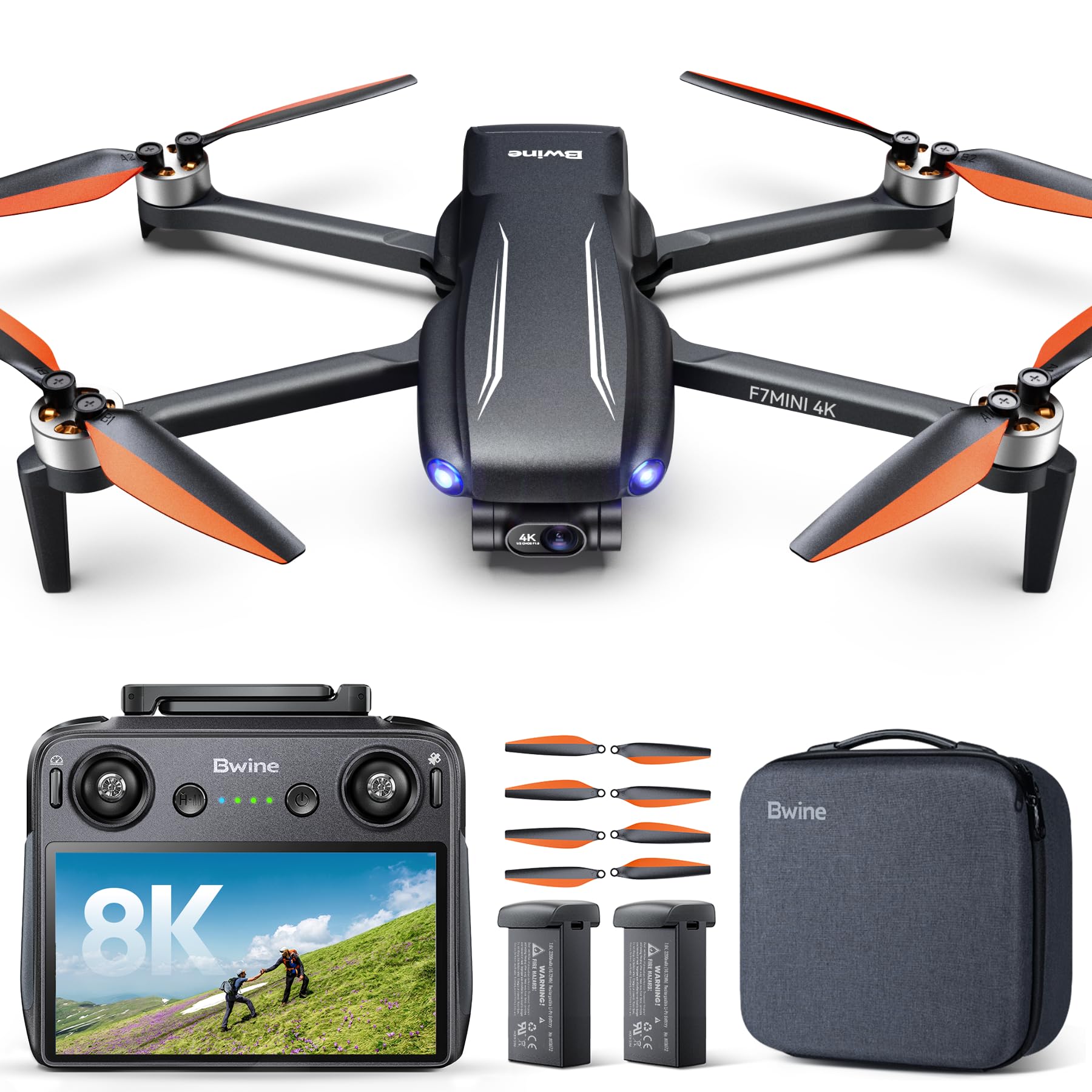
The F7MINI 4K(RC3) stands apart with a built-in 5.5-inch 1080p screen on the remote, eliminating the need to tether your phone for live view. The 500-nit brightness holds up well in direct sunlight — a real pain point for phone-based setups that wash out outdoors. The controller also includes 32GB of internal storage for saving photos directly.
This drone captures 8K stills and 4K UHD video through a 48MP sensor with an F1.8 aperture, backed by a 3-axis brushless gimbal and EIS for double stabilization. Two batteries deliver 64 minutes of total flight time, and PD 3.0 fast charging cuts the wait between sessions. The sub-249g airframe keeps you FAA-exempt while including GPS features like Active Track and Waypoint Planning.
The 20,000-foot digital transmission range is solid for open-field work, though latency can creep up at the far end of the range. New pilots find the one-button takeoff and auto-return functions reassuring, but the lack of omnidirectional obstacle avoidance means you still need to watch the surroundings.
Why it’s great
- Built-in remote screen removes phone dependency
- 3-axis gimbal plus EIS for redundant stabilization
- FAA-exempt under 249g with GPS smart features
Good to know
- No rear or side obstacle sensors
- Transmission latency increases at max range
3. Ruko F13

The Ruko F13 pushes total flight time to 96 minutes with three included intelligent batteries, making it the best pick for extended surveying or long family outings. The 1/2-inch 48MP CMOS sensor captures 8K stills and 4K/30fps video, and the 3-axis brushless gimbal plus EIS combination keeps the footage steady through moderate wind.
Quadruple positioning — GPS, barometric altitude hold, TOF sensors, and optical flow — gives this drone precise hover accuracy even when GPS signals are weak under tree cover. The AI-assisted takeoff and landing system smooths out the shaky first flights beginners often experience. A loud 120dB beeper in the app helps locate the drone if it lands out of sight.
The R2 digital transmission system pushes 20,000 feet of clean video feed without the interference that plagues Wi-Fi-based links. The trade-off is a slightly heavier build at 248 grams — right at the FAA threshold but still exempt. The controller works reliably but lacks a built-in screen, so you rely on your phone’s brightness for the live view.
Why it’s great
- Four-positioning system ensures rock-solid hover
- 96 minutes total with three batteries included
- Loud beeper for drone recovery in tall grass
Good to know
- No built-in screen on the remote
- Weighs 248g — very close to the FAA limit
4. Bwine F7GIM
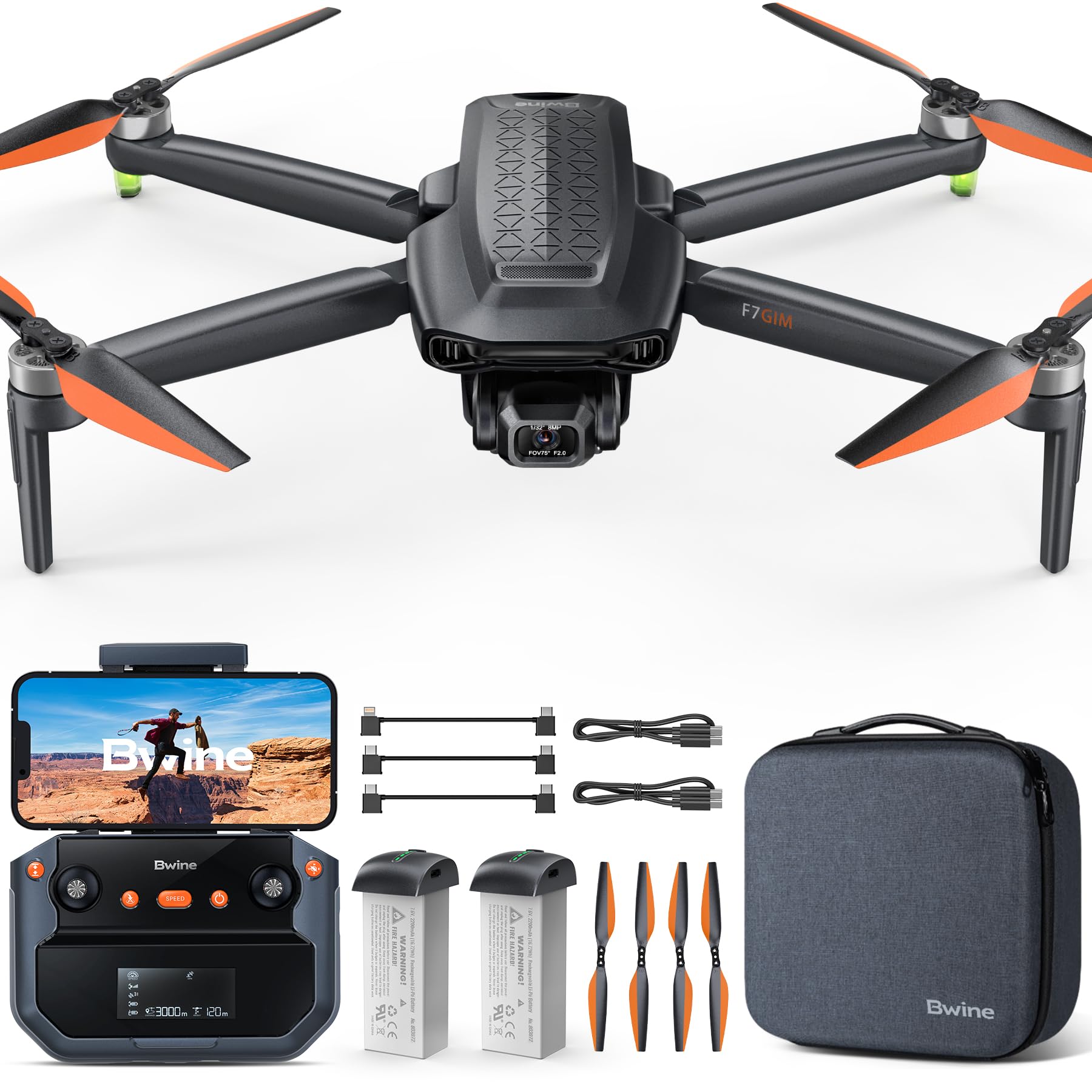
The F7GIM brings an industrial aesthetic with a textured body and orange propeller accents, but the real substance is under the shell. A 3-axis brushless gimbal paired with a 6K photo-capable sensor delivers clean footage, and the TOF (Time of Flight) sensors improve low-altitude stability by 200 percent — critical for roof inspections or dock patrols where precision matters.
Two batteries give a combined 70 minutes of flight time, and the digital transmission system streams 4K at up to 10,000 feet with noticeably low latency. The wired connection between the remote and phone eliminates Wi-Fi interference, though you must remember to plug in the USB-C cable stored in the controller’s phone holder before each flight.
Beginner mode limits altitude and speed, making this a safe platform for new pilots, but experienced flyers will appreciate the full manual controls and sport mode. The included military-grade carrying case is water and dust resistant — a rare inclusion at this tier. Some users report the remote screen legibility drops in bright sunlight, but the overall build quality justifies the mid-range price.
Why it’s great
- TOF sensors dramatically improve low-altitude stability
- Wired digital transmission avoids Wi-Fi noise
- Rugged carrying case included
Good to know
- Remote screen can be hard to read outdoors
- Must connect USB-C cable from controller each flight
5. Holy Stone HS790
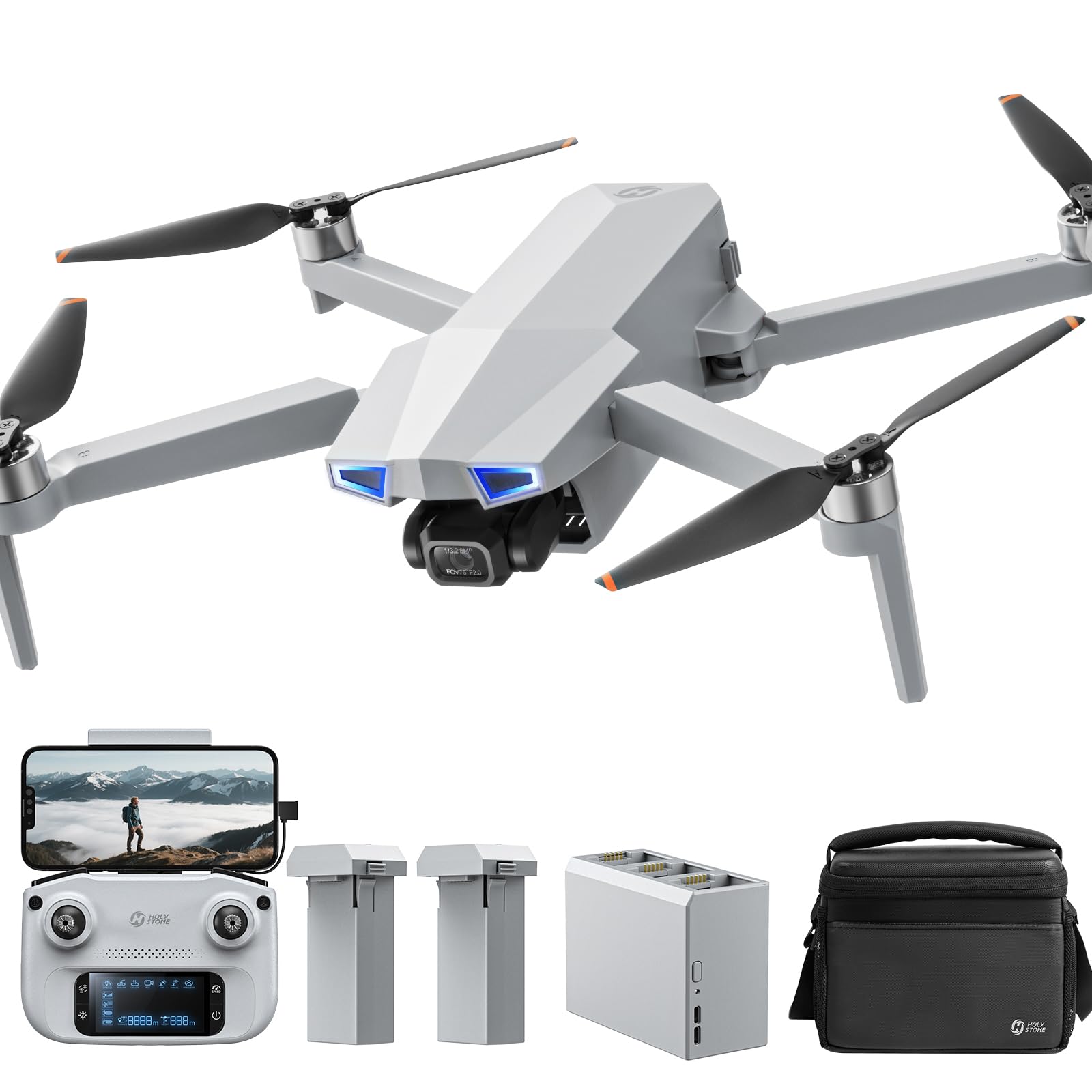
The HS790 uses a 3-axis brushless gimbal to stabilize 4K/30fps video and 6K photos, and the dual intelligent battery system with a fast-charging hub delivers up to 60 minutes of airtime. The charging hub doubles as a power bank — a thoughtful addition for field use where AC outlets are scarce.
Holy Stone’s Wi-Fi Repeater technology claims 30,000 feet of range, though real-world performance at that distance depends on clear line-of-sight and minimal RF interference. The built-in Remote ID module satisfies FAA requirements without an external module, so you can fly legally out of the box. Night Mode lowers image noise for twilight shooting, and the 1506 brushless motors run quietly and resist level-6 winds.
The foldable body fits into the included carrying case, making it easy to pack for travel. The app interface has occasional stability quirks on Android — some users report better results with an older version of the HT FLY app. Beginners appreciate the one-key takeoff and Headless Mode, while more advanced flyers will use the full manual controls for creative shots.
Why it’s great
- PD fast-charging hub works as a portable power bank
- Built-in Remote ID — no FAA module required
- Quiet brushless motors handle level-6 winds
Good to know
- App stability can be inconsistent
- 30,000ft range requires perfect line-of-sight
6. Holy Stone HS600

The HS600 is one of the few mid-range drones that ships with integrated Remote ID already activated, meaning no extra module purchase or firmware tinkering to fly legally in the U.S. The 2-axis gimbal combined with EIS does a respectable job smoothing 4K/30fps footage, though winds above 20 mph will test the stabilization limits.
A Sony sensor feeds the camera, and the 20,000-foot range transmission uses a Wi-Fi repeater embedded in the remote controller rather than a phone-to-drone Wi-Fi link — this cuts interference and extends usable range. Level-6 wind resistance (up to 31 mph) gives you confidence along exposed ridgelines. The 2500mAh battery delivers roughly 34 minutes of real flight time, which is competitive for the price point.
Follow Me and Waypoint modes work reliably, and the auto-return function brings the drone back within a few feet of the takeoff point. The biggest drawback is the 2-axis gimbal — tilting and rolling are covered, but panning movements show some jitter in the footage. The included carrying bag protects the airframe during storage.
Why it’s great
- Integrated Remote ID — no extra FAA gear needed
- Sony sensor camera with solid 4K color accuracy
- Wi-Fi repeater extends range beyond phone Wi-Fi limits
Good to know
- 2-axis gimbal can show jitter during pans
- Not under 249g — FAA registration required
7. HOVERAir X1

At 125 grams, the HOVERAir X1 is lighter than most smartphones and requires zero FAA registration. The fully enclosed propeller design means you can catch it midair or launch it from your palm without worrying about spinning blades — a major safety plus for group outings. The pre-programmed flight paths — Hover, Follow, Zoom Out, Orbit, Bird’s Eye — let you focus on the activity rather than piloting.
The 2.7K/30fps HDR video with triple stabilization (EIS plus gimbal-like digital correction) produces smooth footage for social media clips, but this is not a cinematic workhorse. The 1050mAh battery lasts about 11 minutes per charge, and the charging hub holds multiple batteries for quick swaps. The 32GB of internal storage eliminates the need for a microSD card and protects your privacy with local-only storage.
Performance drops in winds above level 4 (15 mph), and the drone struggles over water where optical flow sensors lose reference. Manual control through the app exists but is limited compared to a dedicated remote. This is a specialized tool for vloggers and action sports enthusiasts who want hands-free tracking — not a general-purpose aerial camera.
Why it’s great
- Fully enclosed design allows safe palm landing
- 32GB internal storage — no SD card needed
- No FAA registration at 125g
Good to know
- 11-minute battery life limits extended shoots
- Struggles in wind over 15 mph and over water
8. DJI Neo 2
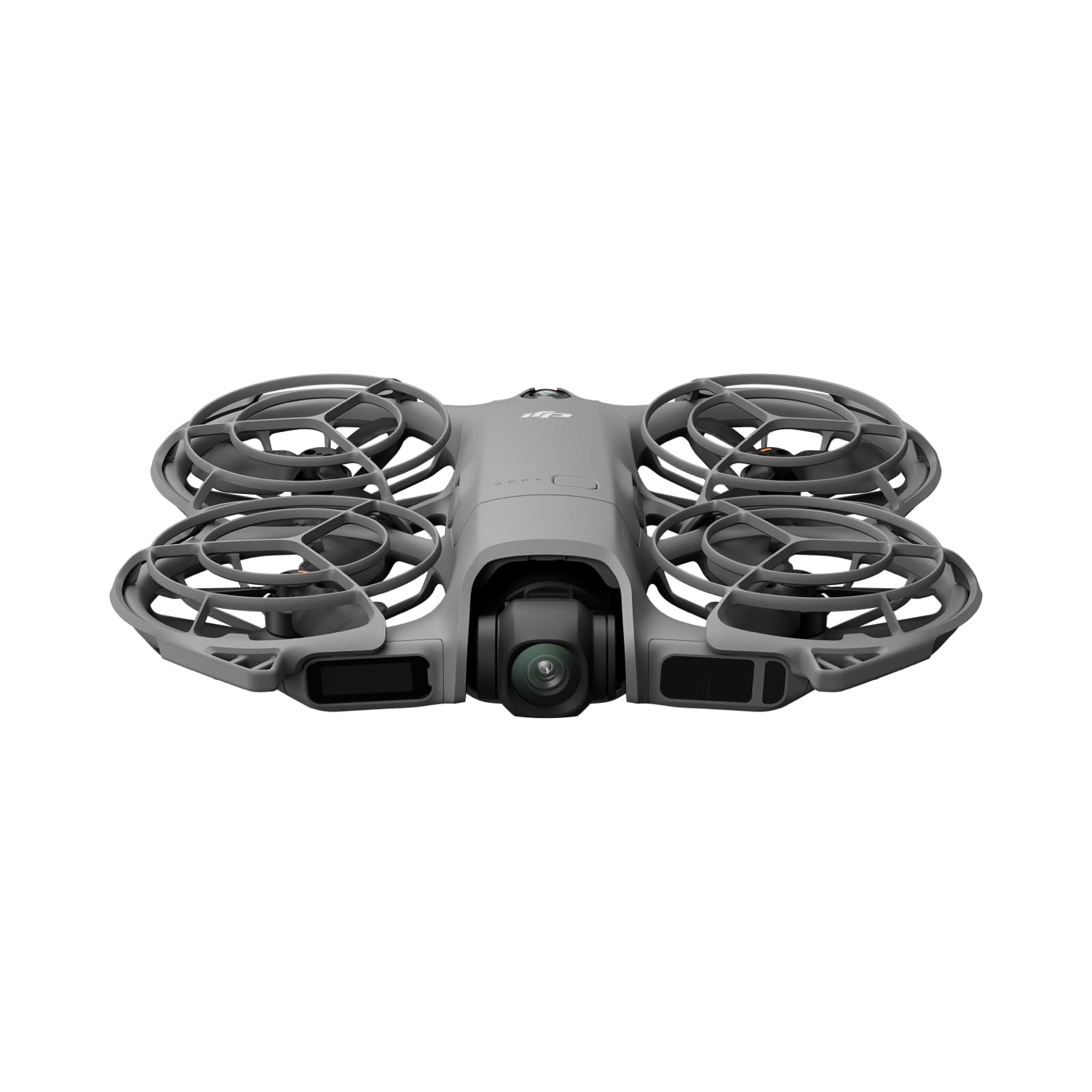
The DJI Neo 2 redefines entry-level flying by removing the controller entirely — you can launch, track, and land using palm gestures and voice control through an Apple Watch. At 151 grams with full-coverage propeller guards, it is safe to fly indoors or in tight spaces. The omnidirectional obstacle sensing (a first at this weight) dramatically reduces crash risk during automated flight paths.
4K resolution with a stable gimbal delivers crisp footage for a drone of this size. ActiveTrack locks onto subjects reliably, and the SelfieShot mode captures group photos with a simple tap. The battery lasts about 18 minutes in real-world use, which is adequate for short sessions but requires multiple batteries for day trips.
The lack of an included remote means you rely entirely on the DJI Fly app or wearable for control — power users will miss the precision of physical sticks. The internal storage (no SD card slot) and the removal of the DJI Fly app from the Google Play store (you must download it from DJI’s website) add minor friction to an otherwise frictionless experience.
Why it’s great
- Gesture and voice control for true hands-free operation
- Omnidirectional obstacle sensing in a 151g frame
- Full propeller guards make indoor flight safe
Good to know
- No physical remote controller included
- 18-min battery life requires extra batteries for longer use
9. Potensic ATOM LT

The ATOM LT offers 80 minutes of total flight time from two 3000mAh batteries — an outstanding figure for the entry-level price tier. The 2.5K EIS camera with a Sony sensor captures 2560×1440 footage at 30 fps, and the ShakeVanish 2.0 stabilization cleans up minor vibrations. The PixSync 2.0 transmission system maintains a stable feed up to 4 kilometers (13,123 feet), though actual range depends on local interference.
Four GNSS systems (GPS, GLONASS, Galileo, BeiDou) provide fast satellite locking for auto-return, Follow Me, Waypoint, and Circle Fly modes. The under-249g weight means no FAA paperwork, and the foldable design fits into a jacket pocket. Beginner mode limits altitude and distance, giving new pilots a safe envelope to learn control inputs.
The camera resolution is noticeably lower than the 4K options on this list, and there is no mechanical gimbal — just EIS — so fast turns introduce rolling shutter artifacts. Some users report slow GPS acquisition on the first flight of the day. The trade-off is clear: you sacrifice some image quality and stabilization for a price that leaves room for extra accessories.
Why it’s great
- 80 minutes total flight time from two included batteries
- Four GNSS systems for fast GPS locking
- FAA-exempt sub-249g foldable design
Good to know
- No physical gimbal — EIS only, rolling shutter at speed
- Camera limited to 2.5K resolution, not true 4K
FAQ
Do I need FAA registration for a drone under 249 grams?
What is the difference between a 2-axis and a 3-axis gimbal?
Can I fly an American drone in the rain or snow?
How long does it take for a GPS drone to acquire satellites?
Final Thoughts: The Verdict
For most users, the best american drone winner is the DJI Flip (RC-N3) because its 1/1.3-inch sensor, true 3-axis gimbal, and sub-249g frame deliver premium image quality without FAA red tape. If you want a built-in controller screen that works in direct sunlight, grab the Bwine F7MINI 4K(RC3). And for the longest battery endurance at the best value per minute of flight, nothing beats the Ruko F13 with its 96-minute total airtime.