
Our readers keep the lights on and the weekend projects moving. As an Amazon Associate, I earn from qualifying purchases.
Choosing an entry-level or mid-range mirrorless body often feels like navigating a maze of sensor sizes, autofocus points, and lens mount ecosystems. The real question isn’t which camera has the highest megapixel count, but which system delivers the sharpest results for the way you actually shoot — without forcing you into a dead-end upgrade path.
I’m Rikta — the founder and writer behind FitlyFast. I’ve parsed hundreds of hours of customer field tests, lab charts, and real-world image samples to separate the genuinely capable bodies from the marketing-heavy also-rans in this specific price range.
This guide ranks the current lineup of bodies that deliver real photographic value, not just spec-sheet hype, so you can confidently choose the best affordable mirrorless camera for your specific needs and budget.
How To Choose The Best Affordable Mirrorless Camera
Mirrorless cameras have matured into a broad spectrum of sensor technologies, stabilizations, and autofocus algorithms. For an entry-level or mid-range body, the wrong choice can lock you into a lens system with limited support or leave you struggling with poor low-light performance. Here are the core specs to focus on.
Sensor Size: Micro Four Thirds vs. APS-C vs. Full-Frame
Sensor size determines your dynamic range, depth-of-field control, and low-light ceiling. Micro Four Thirds (MFT) bodies like the Panasonic G85 are smaller and have excellent stabilized kits, but the smaller sensor produces noisier images in dim light. APS-C sensors — found in the Sony A6100 or Canon R10 — strike a strong balance between size, cost, and quality. Full-frame bodies like the Sony A7 III offer the highest light-gathering ability and shallow depth of field, but they are heavier, larger, and more expensive to lens.
In-Body Image Stabilization (IBIS)
IBIS compensates for hand shake by shifting the sensor itself. A body with good IBIS — like the Panasonic G85 (5-axis) — lets you shoot sharp handheld shots at shutter speeds 3-5 stops slower than normal. This is critical for low-light indoor or travel photography, and it stabilizes any lens you attach, including vintage manual glass.
Autofocus System Performance
Autofocus points, detection algorithms, and tracking consistency vary wildly between generations. Sony’s Real-Time Eye AF (found on the A6100 and ZV-E10) locks onto human and animal eyes with high accuracy. Canon’s Dual Pixel CMOS AF II (in the R10) offers fast, smooth tracking. For action or unpredictable subjects (kids, pets), a body with at least 200-400 phase-detection points is strongly recommended at this price level.
Quick Comparison
On smaller screens, swipe sideways to see the full table.
| Model | Category | Best For | Key Spec | Amazon |
|---|---|---|---|---|
| Sony A7 III | Full-Frame | Professional low-light & dynamic range | 24.2MP BSI Full-Frame Sensor | Amazon |
| Fujifilm X-E5 | APS-C | Film-like colors & compact travel | 40.2MP X-Trans 5 HR Sensor | Amazon |
| Canon EOS R10 | APS-C | High-speed burst shooting & subject tracking | 24.2MP APS-C with DIGIC X | Amazon |
| Nikon Z50 II | APS-C | Built-in presets & bird/animal AF | 20.9MP DX (APS-C) Sensor | Amazon |
| Sony A6100 | APS-C | Fastest burst & Real-Time Eye AF | 24.2MP Exmor CMOS Sensor | Amazon |
| OM System E-M10 IV | Micro 4/3 | IBIS & compact travel with selfie flip-down | 20MP Live MOS Sensor | Amazon |
| Sony ZV-E10 | APS-C | Vlogging & product showcase with sharp 4K | 24.2MP APS-C Exmor CMOS | Amazon |
| Panasonic G85 | Micro 4/3 | Weather-sealed dual stabilization & value | 16MP MFT Sensor (No Filter) | Amazon |
| Panasonic G100 | Micro 4/3 | Advanced audio & webcam/vlogging | 20MP MFT Sensor | Amazon |
| Nikon Z30 | APS-C | Lightweight vlogging & USB-C streaming | 20.9MP DX (APS-C) Sensor | Amazon |
| Canon EOS Rebel T7 | DSLR | Budget-friendly bundle with telephoto reach | 24.1MP APS-C CMOS Sensor | Amazon |
In‑Depth Reviews
1. Sony A7 III

The Sony A7 III delivers a 24.2MP back-illuminated full-frame sensor that captures 15 stops of dynamic range, offering professional-level low-light performance at a mid-range price point. Its 693 phase-detection AF points cover 93 percent of the frame, and the inclusion of a 28-70mm f/3.5-5.6 kit lens makes it a ready-to-shoot solution for event, portrait, and travel photography.
Videographers will appreciate the full-frame 4K oversampled from 6K, with S-Log and HLG profiles for color grading, plus excellent battery life rated at 710 shots per charge. The body is compact for a full-frame system, but the interface retains the classic Sony menu depth, which some users find less intuitive than the competition.
The kit lens is functional but not optimized for low-light work; many users pair the body with a fast f/1.8 prime for 90 percent of their shooting. For serious photographers ready to invest in full-frame glass, this body provides a rock-solid foundation without the flagship price tag.
Why it’s great
- Exceptional 15-stop dynamic range in full-frame
- 693 phase-detection AF points with 93% sensor coverage
- Long 710-shot battery life per charge
Good to know
- Kit lens is decent but not ideal for low light
- Menu system is dense and takes time to learn
- Weather sealing may not suit harsh outdoor conditions
2. Fujifilm X-E5

The Fujifilm X-E5 packs a 40.2MP X-Trans 5 HR sensor and X-Processor 5 engine into a compact rangefinder-style body. Its hallmark is the customizable Film Simulation dial, giving you direct access to iconic color recipes like Provia, Velvia, and Acros without post-processing. The 23mm f/2.8 R WR pancake lens keeps the kit pocketable while delivering sharp, contrast-rich stills.
In-body stabilization reaches up to seven stops at the center, making handheld low-light shots viable even without a tripod. The aluminum top plate and analog control dials offer a tactile, premium feel that rivals cameras costing significantly more. AI-powered subject detection AF handles people, animals, and vehicles with deep learning accuracy.
There is no built-in flash, the body is not fully weather-sealed, and the film simulation dial is debated by purists who prefer dedicated hard controls for ISO and shutter speed. For travel or street photographers who love Fujifilm’s color science and want a lightweight, high-resolution body, the X-E5 is a compelling pick.
Why it’s great
- 40.2MP X-Trans 5 HR sensor for high-resolution stills
- Up to 7-stop IBIS for handheld low-light confidence
- Customizable Film Simulation dial for straight-out-of-camera colors
Good to know
- No built-in flash and limited weather sealing
- Film simulation dial reduces dedicated physical controls
- Premium price due to brand demand
3. Canon EOS R10

The Canon EOS R10 is a compact APS-C body built around the DIGIC X processor and a 24.2MP sensor that delivers sharp, natural-looking images. Its 651-point hybrid AF system covers a wide area and includes subject detection for people, animals, and vehicles, making it one of the most reliable autofocus systems at this price. Mechanical shutter shooting reaches up to 15 fps, ideal for fast action and sports.
The kit RF-S 18-45mm f/4.5-6.3 IS STM lens is compact and adequate for daylight use but loses sharpness at longer distances. The fully articulating touchscreen is excellent for selfies and vlogging, and the built-in flash adds versatility in low-light social situations. The body is lightweight with an ergonomic grip that suits extended handheld shooting.
Non-Canon EF lenses used via adapter may have autofocus compatibility quirks, and the stock battery offers moderate life compared to competitors. For those entering the Canon RF ecosystem, the R10 provides a fast, modern platform with access to both RF-S and full-frame RF lenses.
Why it’s great
- Up to 15 fps mechanical burst with continuous AF
- 651-point hybrid AF with reliable subject detection
- Compact, lightweight build with articulating screen
Good to know
- Kit lens softness at longer shooting distances
- Non-Canon EF lenses may have AF compatibility issues
- Wi-Fi transfer is notably slow using the app
4. Nikon Z50 II

Nikon’s Z50 II features the same processor as the Z9, enabling 9-subject detection (people, dogs, cats, birds, vehicles) with dedicated bird and airplane modes for impressive wildlife and aviation tracking. The 20.9MP DX (APS-C) sensor produces lifelike colors, and the built-in flash offers a natural Night Portrait mode for well-balanced interior shots. The body weighs only 17 ounces, making it one of the lightest stabilized options in this class.
Thirty-one Picture Control presets, including bespoke Cloud presets downloadable from Nikon Imaging Cloud, allow direct creativity without post-processing. In-camera slow motion at 120p (Full HD) and 4K 60p UHD provide flexible video capture. The free SnapBridge app enables fast image sharing to a smartphone.
Battery life is shorter than some peers, and there is no automatic sensor cleaning. The single card slot may limit professionals who need instant redundancy. For enthusiasts and beginners wanting a lightweight, user-friendly APS-C body with advanced AF presets straight from Nikon’s flagship technology, the Z50 II is a strong contender.
Why it’s great
- Z9-derived processor with 9-subject AF tracking
- 31 Picture Control presets and Cloud downloads
- 17-ounce lightweight body with built-in flash
Good to know
- Single SD card slot with no backup
- Shorter battery life than some competitors
- No automatic sensor cleaning mechanism
5. Sony A6100

The Sony A6100 claims the world’s fastest autofocus at 0.02 seconds, with 425 phase-detection and 425 contrast-detection points covering 84 percent of the sensor. Real-time Eye AF and object tracking lock onto human and animal subjects with high precision. The 24.2MP Exmor CMOS sensor with front-end LSI achieves an ISO range up to 51,200, allowing respectable low-light handholding.
Burst shooting at 11 fps with AF/AE tracking makes it a strong pick for capturing fast-moving subjects. The 180-degree tiltable touchscreen is effective for selfies and vlogging, and the compact size is highly portable. Sony’s E-mount provides access to the largest mirrorless lens library available.
The electronic viewfinder (EVF) is low-resolution and uncomfortable for some users, and the menu system is famously dense. There is no in-body stabilization, relying instead on lens-based stabilization. For action photographers and content creators who prioritize autofocus speed and lens availability, the A6100 remains a solid performer.
Why it’s great
- World’s fastest AF at 0.02 seconds with 425 points
- Real-time Eye AF for human and animal tracking
- 11 fps continuous burst with full AF/AE
Good to know
- No in-body image stabilization
- EVF quality is noticeably low-resolution
- Menu system is complex and not beginner-friendly
6. OM System E-M10 Mark IV

The OM System E-M10 Mark IV offers a 20MP Live MOS sensor inside a compact Micro Four Thirds body with 5-axis in-body stabilization rated for 4.5 stops of compensation. The flip-down monitor activates a dedicated selfie mode, making it a user-friendly option for casual shooters and social content. Sixteen art filters including Instant Film deliver nostalgic looks straight out of camera.
The kit 14-42mm EZ pancake lens collapses to a remarkably flat profile, allowing the combo to slide into a jacket pocket. Bluetooth connectivity provides always-on connection to the OI Share app for background image syncing. The retro design with twin dials offers both beginner-friendly scene modes and full manual control for growth.
There is no USB-C charging (older micro-USB port is included), and the built-in flash is modest. The Micro Four Thirds sensor shows less dynamic range in high-contrast scenes than larger APS-C competitors. For travelers and beginners who prioritize stabilization and compactness over sensor size, this is a comfortable, capable daily carry.
Why it’s great
- 5-axis IBIS with 4.5-stop compensation for handheld sharpness
- Flip-down selfie mode and 16 art filters for creative fun
- Extremely compact with collapsible kit lens for pocket carry
Good to know
- Older micro-USB charging, no USB-C
- Built-in flash is underpowered for larger scenes
- MFT sensor has less DR than APS-C in high contrast
7. Sony ZV-E10
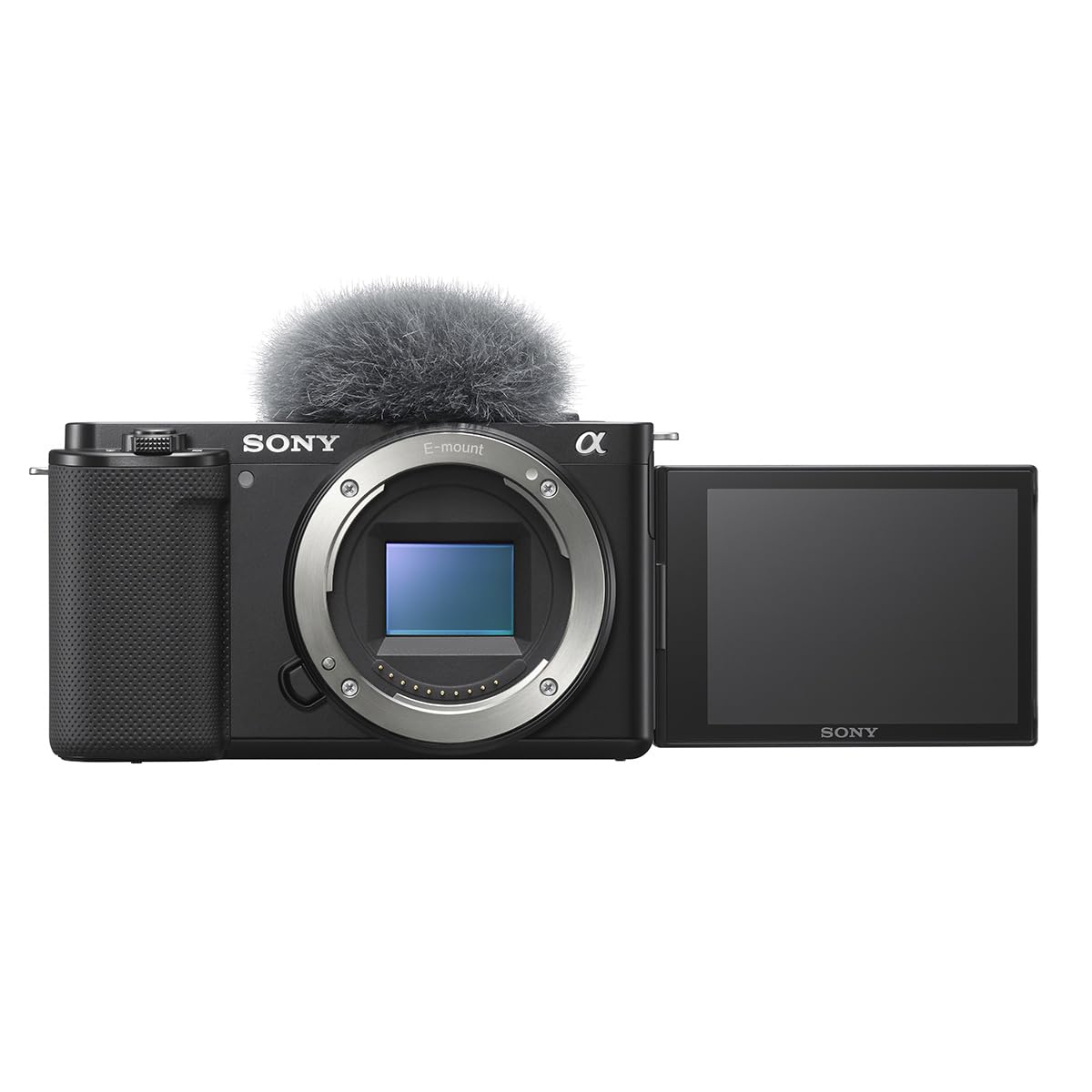
The Sony ZV-E10 is built for content creators, pairing a 24.2MP APS-C Exmor sensor with a BIONZ X processor that oversamples 4K from 6K without pixel binning. The Product Showcase mode transitions focus from a face to an object held to the lens, making it ideal for review-style or tutorial videos. A dedicated Background Defocus button instantly engages maximum bokeh.
Real-Time Eye AF and 425 phase-detection points ensure reliable focus on subjects during selfie-style recording. The three-capsule directional microphone delivers clean audio, and USB-C connectivity allows plug-and-play live streaming without a capture card. The 180-degree articulating screen works well for front-facing monitoring.
There is no in-body stabilization, and the electronic stabilization in 4K introduces a heavy crop. Battery life is moderate, especially when recording 4K video. The severe rolling shutter can be distracting for fast motion. For vloggers and streamers who prioritize sharp 4K and seamless focus transitions, the ZV-E10 is a purpose-built tool at a fair price.
Why it’s great
- 4K oversampled from 6K with full pixel readout
- Product Showcase mode smooths face-to-object focus
- USB-C plug-and-play live streaming compatibility
Good to know
- No IBIS; heavy crop in 4K electronic stabilization
- Severe rolling shutter in fast motion scenes
- Battery life limited to around 25 minutes of 4K recording
8. Panasonic LUMIX G85

The Panasonic G85 is a 16MP Micro Four Thirds body with class-leading 5-axis in-body stabilization that works simultaneously with the Power O.I.S. lens stabilization for dual image stabilization. This system produces sharp handheld shots in low light and stable 4K video. The magnesium alloy front body and weather-sealed kit lens make it one of the most durable affordable options.
The tilting 3-inch LCD touchscreen with 1,040k dots provides clear framing at various angles, while the integrated OLED live viewfinder at 2,360k dots offers a crisp eye-level experience. 4K Photo function allows 30 fps burst capture with post-shot focus selection. The camera is comfortable to handle with an ergonomic grip.
The 12-60mm kit lens shows noticeable softness at its long end, and autofocus in very low 4K light can be slower than competitors. Battery life is mediocre, and there is no headphone jack for audio monitoring. For videographers and photo enthusiasts seeking a tough, stabilized body with high value, the G85 remains a compelling pick.
Why it’s great
- 5-axis dual image stabilization for sharp handheld results
- Weather-sealed magnesium alloy body with quality construction
- 4K Photo function at 30 fps with post-shot focus selection
Good to know
- Kit lens shows softness at the long (60mm) end
- Autofocus can be sluggish in very low light 4K
- No headphone jack for audio monitoring
9. Panasonic LUMIX G100

The Panasonic LUMIX G100 differentiates itself with a 360-degree tracking microphone that auto-adjusts to record audio from subjects inside, outside, in crowds, and in nature. The 20MP Micro Four Thirds sensor delivers 4K photo and 4K video at 24/30p, and the body’s light weight makes one-handed recording comfortable. iA (intelligent auto) mode simplifies operation for beginners moving from smartphones.
5-axis hybrid image stabilization helps keep shots steady, and V-Log L recording supports flat color profiles for grading. The USB-C connection allows easy webcam use for professional-looking video calls. The micro HDMI port and smartphone app integration provide flexible transfer and remote control options.
There is a very limited 4K recording time cap that stops the camera automatically at the max, frustrating longer shoots. The contrast-detection autofocus system is less sophisticated than phase-detection alternatives. For vloggers and hybrid shooters who value compact size and advanced built-in audio capture, the G100 is a unique niche pick.
Why it’s great
- 360-degree tracking microphone adjusts to subject location
- Lightweight body with V-Log L recording capability
- Easy USB-C webcam functionality for professional streaming
Good to know
- 4K recording time is heavily limited; auto-stops at max
- Contrast-detection AF is slower than phase-detection systems
- No built-in flash for low-light stills
10. Nikon Z30

Nikon designed the Z30 as its most compact mirrorless body for creators and streamers. The 20.9MP DX (APS-C) sensor captures crisp 4K UHD with human and pet eye-tracking autofocus. The flip-out selfie monitor includes a red REC light and adjustable stereo microphone gain, plus smartphone app remote control. Plug-and-play USB-C operation smooths out full HD 60p streaming.
The body is compatible with Nikon’s entire NIKKOR Z lens line and supports FTZ adapter access to F-mount lenses. The built-in VR stabilization helps reduce shake during handheld video. It is extremely lightweight, making it easy to mount on a gimbal or carry for long vlogging sessions.
There is no electronic viewfinder and no in-body stabilization. The APS-C sensor shows noticeable noise in dim lighting, and battery life is moderate. For dedicated vloggers and streamers who prioritize a compact, lightweight body with reliable autofocus and direct USB streaming over full-featured stills photography, the Z30 is a focused tool.
Why it’s great
- Flip-out selfie monitor with red REC light and gain control
- Plug-and-play USB-C streaming in Full HD 60p
- Compact, lightweight body ideal for gimbal use
Good to know
- No viewfinder and no in-body image stabilization
- APS-C sensor can be noisy in low-light conditions
- Battery life is moderate for extended recording
11. Canon EOS Rebel T7
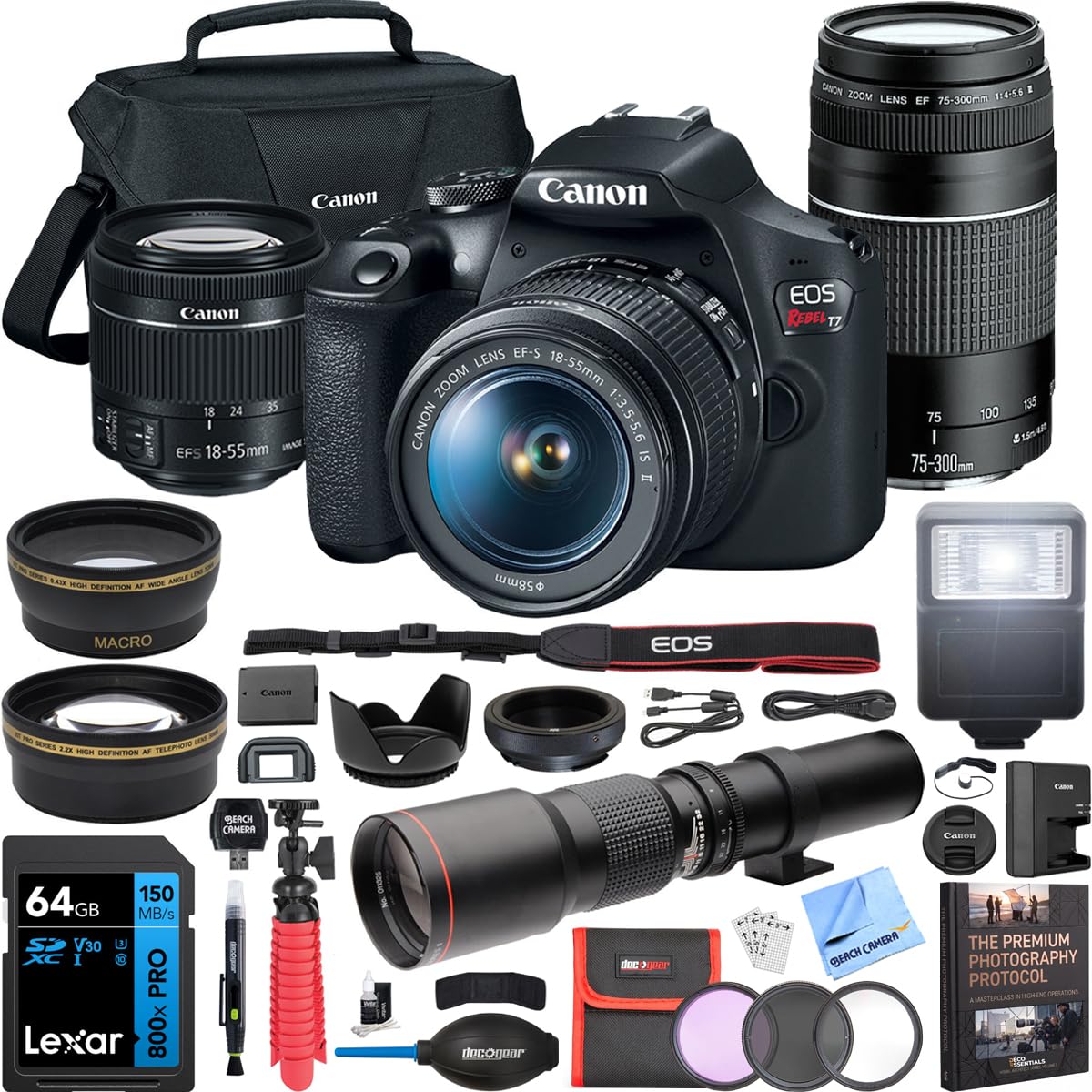
The Canon EOS Rebel T7 is a DSLR, not a mirrorless body, but its bulky kit bundle with 18-55mm and 75-300mm zooms plus a 500mm preset telephoto lens makes it an extremely cost-effective entry into interchangeable lens photography. The 24.1MP APS-C sensor and DIGIC 4+ processor deliver solid JPEG colors and decent resolution for the price.
The bundle includes a flash, wide-angle and telephoto add-ons, a 64GB SD card, tripod, bag, and filter set, providing a complete starter kit. The optical viewfinder has 95 percent coverage, and built-in Wi-Fi with NFC allows basic image transfer. Scene Intelligent Auto mode simplifies operation for first-time DSLR users.
Autofocus is a basic 9-point system that struggles with fast action. The 3 fps continuous shooting is slow by any modern standard, and the battery has been reported to drain quickly under heavy use. The preset 500mm lens provides long reach but delivers soft, low-contrast images. For absolute beginners on the tightest budget who want a massive accessory bundle to learn on, the Rebel T7 kit is a functional starting point.
Why it’s great
- Massive bundle includes dual zoom lenses, flash, and filters
- 24.1MP APS-C sensor with Canon’s proven JPEG colors
- Optical viewfinder with 95% coverage for DSLR experience
Good to know
- 9-point AF system is outdated for action photography
- Only 3 fps continuous shooting
- Battery drain can be rapid; preset 500mm lens has poor clarity
FAQ
How important is IBIS for an entry-level mirrorless camera?
Should I buy a Micro Four Thirds or APS-C camera for photography?
What lens should I start with on a budget mirrorless body?
Final Thoughts: The Verdict
For most users seeking the best affordable mirrorless camera, the winner is the Sony A7 III because it delivers professional full-frame dynamic range, outstanding 693-point AF, and industry-leading battery life at a mid-range price. If you want straight-out-of-camera film colors and a compact, high-resolution body, grab the Fujifilm X-E5. And for budget-conscious film students or vloggers needing a lightweight streaming tool with reliable eye-AF, nothing beats the Nikon Z30.