
Our readers keep the lights on and the weekend projects moving. As an Amazon Associate, I earn from qualifying purchases.
Choosing between poly boning that sews directly into fabric and steel that requires casing is the first real fork in the road for any corset maker. Get this wrong and your garment either buckles under tension or feels like a straitjacket. The right boning type determines whether your corset holds its hourglass shape through a full day of wear or collapses at the waist seam.
I’m Rikta — the founder and writer behind FitlyFast. I’ve spent years analyzing garment construction materials, evaluating everything from spring steel temper to polypropylene weave density so you can match the right boning to your specific corset project.
This guide breaks down the best options across synthetic and metal categories, with detailed specs on width, length, and flexibility. Use this to find the ideal boning for corsets that matches your sewing skill level and the structural demands of your design.
How To Choose The Best Boning For Corsets
Boning is the skeleton of your corset. Pick a material that matches the tension your project demands. Lightweight fashion corsets get away with sew-through polyester. Waist-training or tight-lacing garments need spiral stainless or spring steel that won’t buckle under repeated cinching. Width also matters: wider 1/2-inch boning distributes pressure better across the torso, while 1/4-inch boning offers more flexibility for curved panels.
Match Boning Type to Corset Purpose
Polyester boning (Rigilene or sew-through) works well for costumes, nursing covers, and lightweight bodices where the garment isn’t under heavy tension. Spiral stainless steel bends in all directions, making it ideal for curved corset panels that need to move with the body. Spring steel is stiffer and stays straight — it belongs in the front and back panels of serious waist-reduction corsets where vertical support is non-negotiable. Every review below calls out which projects each boning type handles best.
Quick Comparison
On smaller screens, swipe sideways to see the full table.
| Model | Category | Best For | Key Spec | Amazon |
|---|---|---|---|---|
| Tescona Spiral Stainless 11 Yard | Premium | Heavy corsetry & waist training | 1/2″ spiral stainless steel | Amazon |
| item4ever Spiral Metal 10 Yard + Tips | Premium | Flexible corset panels & dance wear | 1/4″ spiral steel | Amazon |
| item4ever Spring Steel 5.5 Yard | Mid-Range | Tight-lacing front/back panels | 1/2″ nylon-coated spring steel | Amazon |
| PATIKIL Spiral 304 Stainless 33 Feet | Mid-Range | Rust-proof corsets & wedding wear | 5mm spiral 304 stainless steel | Amazon |
| Anrookie Nude Polyester 50 Yards | Mid-Range | Nude-toned bodices & lingerie | 1/2″ sew-through polyester | Amazon |
| item4ever Rigilene Poly 50 Yards | Budget-Friendly | Bridal gown inner corsets | 3/8″ extra-strong Rigilene | Amazon |
| Sntieecr Polyester 25 Yard | Budget-Friendly | Costume sewing & craft projects | 1/2″ low-density polyester boning | Amazon |
In‑Depth Reviews
1. Tescona 11 Yard Roll of 1/2″ Wide Spiral Stainless Steel Corset Boning

Professional corset makers consistently reach for this 1/2-inch wide spiral stainless steel boning because it bends in every direction while maintaining rigid vertical support. The continuous roll gives you 10.94 yards to work with, enough for multiple full corsets or one heavily structured gown with boning channels in every seam. The spiral construction prevents kinking, so the boning returns to its original shape after each wear.
Users report that a single layer of this boning creates the exact stiffness needed for waist-training corsets without the bulk of doubled-up plastic alternatives. The 1/2-inch width distributes pressure evenly across the torso, reducing the risk of painful pressure points during all-day wear. Costumers and fashion designers have switched to this after replacing flimsy plastic boning from commercial lingerie brands.
The main trade-off is edge finishing — cut ends are sharp and require boning caps or a layer of hot glue to prevent fabric puncture. Experienced makers recommend using a Dremel to smooth cut edges before capping, and several veteran users have relied on this exact spool for years without switching back to plastic alternatives.
Why it’s great
- Spiral design flexes in all directions without losing vertical rigidity
- Continuous 10.94-yard roll covers multiple projects
- 1/2-inch width prevents pressure points during waist training
Good to know
- Cut edges require boning caps or hot glue to avoid fabric damage
- Heavier than polyester options, not ideal for ultralight garments
2. item4ever Spiral Metal Boning — 10 Yards, 1/4″ + 24 Tips

This 10-yard roll of 1/4-inch wide spiral steel boning comes with 24 end caps, making it a near-complete kit for corset projects that require flexibility around curved waist and hip panels. The narrower width compared to the Tescona above makes it better suited for lighter corsets, dance wear, and underbust designs where you need structure without the stiffness of 1/2-inch steel. Users confirm it cuts cleanly with standard wire cutters, which is a major convenience for home sewists who don’t own aviation snips.
Cosplayers and costume makers praise this specific roll for period garments that require subtle shaping rather than extreme waist reduction. The spiral construction allows the boning to conform to torso curves naturally, and the included end tips install easily with needle-nose pliers. One reviewer noted the end caps didn’t always grip firmly, though most found boning cap pliers resolved the fit.
At 1/4-inch wide, this boning flexes noticeably more than wider alternatives, which is perfect for panels that cross the rib cage but less ideal for front-closure panels that need maximum vertical stiffness. Several longtime users mentioned they reorder this specific spool because the 10-yard length is exactly right for a single corset with generous seam boning.
Why it’s great
- 1/4-inch width bends easily around curved panels and rib cage
- Comes with 24 end caps for immediate use
- 10-yard continuous roll covers one full corset project
Good to know
- Included end caps may need boning cap pliers to seat firmly
- Narrow width provides less pressure distribution for waist training
3. item4ever 5.5 Yards of White Spring Steel Boning (1/2″)

Spring steel is the stiffest boning material available, and this 5.5-yard roll is purpose-built for tight-lacing corsetry where front and back panels must resist vertical buckling under extreme tension. The nylon coating prevents direct metal-to-fabric contact, but the steel core delivers uncompromising vertical support that polyester or even spiral steel simply cannot match. Professional costume makers specifically buy this for lacing panels on waist-reduction corsets that will be cinched to closing.
Cutting this boning requires aviation snips or mini bolt cutters — standard wire cutters will struggle. The nylon coating tends to chip at cut ends, so users recommend heat-shrink tubing, plasti dip, or dedicated end caps to prevent the raw steel from wearing through the boning channel fabric over time. The 5.5-yard length is enough to bone the front and back of one corset, with some left for busk reinforcement.
The spring steel is notably harder to shape into tight curves, which makes it perfect for straight vertical panels but less suitable for spiral-cut corset patterns that curve around the hips. Costumers building hoop skirts found it works well for structural rings that need to hold a round shape, though connecting the steel ends requires creative fastening since the material doesn’t take well to crimped connectors.
Why it’s great
- Maximum vertical stiffness for tight-lacing front and back panels
- Nylon coating protects fabric from direct steel contact
- 5.5-yard length covers critical structural panels of one corset
Good to know
- Cutting requires aviation snips or bolt cutters
- Coating chips at cut ends, needs caps or tubing to prevent wear
4. PATIKIL Spiral 304 Stainless Steel Boning, Flat Metal Corset Boning with 30 Steel Boning Tips — 33 Feet (5mm Wide)

This 33-foot roll of 5mm-wide 304 stainless steel spiral boning brings professional-grade corrosion resistance to corset making. The 304 grade alloy resists oxidation and rust, making it the preferred choice for garments that will be washed frequently or worn in humid conditions. The narrower 5mm width (approximately 3/16-inch) makes it lighter and more flexible than 1/2-inch steel, which users found comfortable for all-day wear in both corsets and costume bodices.
The boning comes with 40 stainless steel cap heads that stay put without slipping or loosening, a significant upgrade over the friction-fit caps that come with cheaper steel boning. Users who compared this to Wawak’s spiral boning noted it’s slightly thinner but performs identically in finished garments. The 304 stainless construction means you can cut it to length without worrying about rust forming at the raw edge.
Cutting does require heavy-duty wire cutters or tin snips, and the cut ends need edge finishing to avoid sharp points near the skin. One user successfully used a Dremel with a grinding bit to smooth edges before capping. The 5mm width makes this boning ideal for corset-vests, bras, and wedding dress inner corsets where you want structure without the pronounced stiffness of 1/2-inch steel, but it may not provide enough support for serious waist training.
Why it’s great
- 304 stainless steel resists rust and oxidation permanently
- 30 included steel cap heads grip securely without slipping
- 33-foot length provides ample material for multiple projects
Good to know
- Requires heavy-duty cutters, standard wire cutters won’t work
- 5mm width is thinner than 1/2-inch steel, less support for waist training
5. Anrookie Nude Polyester Boning for Sewing — 50 Yards Sew-Through Low Density Polypropylene Boning (12mm)

This 50-yard roll of nude-colored sew-through polyester boning solves a specific problem: visible boning lines under sheer or light-colored fabrics. The nude tone blends into skin and neutral fabrics, making it the go-to choice for nude corsets, lingerie, and bodices where white or black poly boning would show through. The low-density polypropylene weave is flexible enough to hand-sew or machine-stitch directly through without a dedicated boning channel.
Users sewing nude corsets reported they could skip lining the garment entirely because the boning’s color didn’t contrast against the fabric. The 1/2-inch width matches the most common channel size, and the 50-yard roll gives you enough material for multiple large projects. The polyester material holds up to washing and dry cleaning without significant loss of stiffness, unlike some budget poly boning that softens after a few cycles.
The trade-off is that this is still polyester boning, not steel. It provides moderate support suitable for fashion corsets, bridal bodices, and swimwear, but it will buckle under the tension of serious waist training. Several users noted the boning is slightly softer than premium Rigilene, so it works better in garments where some flex is acceptable than in designs requiring rigid vertical support.
Why it’s great
- Nude color disappears under sheer and light fabrics
- 50-yard roll offers exceptional value for bulk projects
- Sew-through design eliminates need for boning channels
Good to know
- Polyester boning buckles under high-tension waist training
- Slightly softer than premium Rigilene, less rigid support
6. item4ever 50yds Rigilene Poly Polyester Boning for Nursing Cover, Corset, Bridal Gowns (White, 3/8″, Extra Strong)
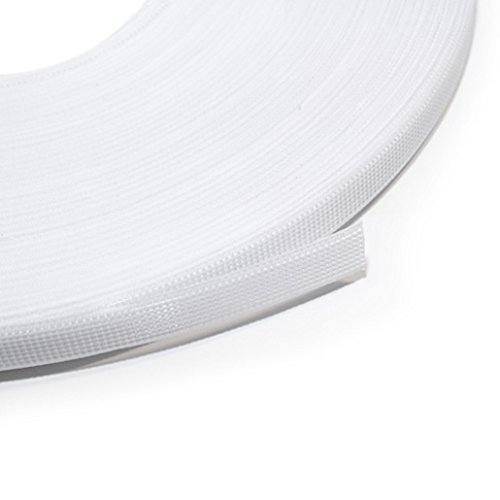
This is the extra-strong variant of classic Rigilene, the transparent polyester boning that dressmakers have relied on for decades. The 3/8-inch width is slightly narrower than the standard 1/2-inch, making it ideal for bridal gown inner corsets where boning needs to sit in narrower channels between seams. Bridal alteration specialists consistently repurchase this specific roll because the see-through design ensures it won’t affect the color or opacity of the outer fabric.
Historical costume builders use this product extensively for replica garments that require moderate structure without the risk of rust or metal fatigue. The polyester construction allows it to be heat-sealed with a wood burner or soldering iron, creating clean, non-fraying ends that won’t poke through fabric. One reviewer noted it held firm all day and night in a wedding dress inner corset, smoothing back bumps and supporting the bust without additional underwire for smaller cup sizes.
The 50-yard roll is significantly cheaper per yard than buying Rigilene from fabric stores, making it a cost-effective choice for professionals who go through boning quickly. The 3/8-inch width means less material per channel, so you’ll need more parallel boning rows to achieve the same overall stiffness as 1/2-inch boning. This works fine for moderate support but isn’t ideal for high-tension panels where maximum vertical strength is required.
Why it’s great
- Transparent see-through design won’t affect fabric color or opacity
- Heat-sealable ends prevent fraying and fabric puncture
- 50-yard bulk roll beats fabric store pricing per yard
Good to know
- 3/8-inch width requires more boning rows for equal stiffness
- Not suitable for high-tension waist-reduction panels
7. Sntieecr 1/2 Inch x 25 Yard White Polyester Boning for Sewing, Low Density Boning

This 25-yard roll of low-density polyester boning is the entry-level workhorse for craft sewists and costume makers who need boning for lightweight applications. The 1/2-inch wide woven nylon rod construction is easy to stitch directly into fabric without a channel, and the low density means a standard sewing machine needle can pass through without difficulty. Users have successfully sewn this into plush toys, hat brims, bag straps, and even guinea pig tunnels, which speaks to its versatility beyond garment construction.
The boning has a slight hardness that provides enough structure to hold a costume bodice or nursing cover upright, but it lacks the rigidity needed for a corset that will exert or resist significant tension. Several reviewers mentioned it worked exactly as expected for their specific projects, with one noting it was “sturdy enough to keep projects open” without being difficult to cut or sew through. The white color is neutral enough for light fabrics but may show through darker sheer materials.
The 25-yard length covers multiple small to medium projects, and the boning can be cut with standard household scissors — no special tools required. This makes it the most accessible option for beginners who are just learning to work with boning. The trade-off is lower durability compared to steel or high-density Rigilene, and the boning will soften over time with repeated washing, making it a temporary structural solution rather than a heirloom-quality option.
Why it’s great
- Low density allows sewing directly through with standard needles
- Can be cut with household scissors, no special tools needed
- 25-yard roll covers multiple small projects economically
Good to know
- Not rigid enough for waist-training or tight-lacing corsets
- Will soften over time with repeated washing and wear
FAQ
Can I use polyester boning for waist training corsets?
How do I cut spiral stainless steel boning without damaging it?
What width boning should I use for a strapless wedding dress bodice?
Do I need to use end caps on poly boning?
Final Thoughts: The Verdict
For most users, the boning for corsets winner is the Tescona 11 Yard Spiral Stainless because the 1/2-inch width and spiral construction deliver the ideal balance of vertical support and lateral flexibility for corsets of all types. If you need extreme vertical stiffness for tight-lacing front panels, grab the item4ever Spring Steel 5.5 Yard. And for lightweight bodices and nude-tone lingerie where boning invisibility matters most, nothing beats the Anrookie Nude Polyester 50 Yards.