
Our readers keep the lights on and the weekend projects moving. As an Amazon Associate, I earn from qualifying purchases.
A day on the mountain demands smart gear management. A pack that shifts, swells with snow, or lacks hydration access turns a perfect powder day into a chore. The right design balances secure boot storage, quick-goggle access, and a drink tube that doesn’t freeze mid-run.
I’m Rikta — the founder and writer behind FitlyFast. I analyze ski pack designs, fabric denier, hydration insulation systems, and load-stabilization features across dozens of brands to identify what actually holds up on the chairlift and in the backcountry.
This guide breaks down the specific features that separate a resort-friendly hauler from a backcountry-ready pack. Find the right model with this focused analysis of the backpack for skiing that fits your day on the snow.
How To Choose The Best Backpack For Skiing
Selecting a ski pack involves more than just picking a brand. You need to match volume, suspension, and specific features to how you actually ski — resort chairlifts, slackcountry bootpacks, or multi-day traverses.
Volume: Liters Match Your Mission
For a full resort day with extra layers, snacks, and a hydration bladder, aim for 12 to 20 liters. If you carry boots separately or need capacity for a helmet and goggles plus outerwear, jump to 45 to 70 liters. Overpacking a small bag strains the suspension; underpacking a large bag lets gear shift and unbalance you on descents.
Hydration System: Insulation is Non-Negotiable
A standard bladder hose freezes solid in minutes on a windy chairlift. Look for packs with an insulated hose sleeve that runs inside the shoulder strap, a bite-valve cover, and an insulated reservoir compartment. The combination prevents ice from forming in the line even at temperatures well below freezing.
Boot Compartment: Separate vs. Integrated
A dedicated, padded boot compartment with a waterproof bottom keeps wet, muddy boots away from your dry clothing. Rear-loading zippered access panels are ideal. Some bags offer a fold-down floor panel that doubles as a standing mat for changing in slushy parking lots — a detail that adds real convenience mid-trip.
Fabric and Durability
Ski packs endure sharp edges, ice crust, and abrasion from lift chairs. Fabrics rated above 600 denier (like 840D nylon) resist cuts and tears better than lightweight pack cloth. Reinforced bottoms with tarpaulin or ballistic nylon prevent moisture wicking when you set the pack down in snow.
Suspension and Stability
For active skiing, a pack must stay locked to your torso. Look for dual adjustable sternum straps, a padded hip belt (even on smaller packs), and a contoured back panel that prevents shifting during aggressive turns. Ski-specific packs often include a diagonal or A-frame ski carry loop and an ice-axe attachment point.
Quick Comparison
On smaller screens, swipe sideways to see the full table.
| Model | Category | Best For | Key Spec | Amazon |
|---|---|---|---|---|
| Osprey Glade | Hydration Pack | Low-profile all-day hydration | 2.5L reservoir + insulated harness | Amazon |
| Dakine Heli Pro 20L | Day Pack | Active sidecountry / resort | 20L with diagonal ski carry | Amazon |
| Thule RoundTrip 45L | Boot Backpack | Travel + boot/helmet storage | 45L with standing mat panel | Amazon |
| CamelBak Zoid | Hydration Pack | Minimalist lift-served days | 70oz reservoir + Therminator hose | Amazon |
| Dakine Boot 50L | Boot Backpack | Travel + gear haul | 50L with dedicated boot pocket | Amazon |
| Semsty 70L Boot Bag | Boot Backpack | Large capacity / budget travel | 70L with 840D nylon shell | Amazon |
| CamelBak Bootlegger | Hydration Pack | Under-jacket hydration | 50oz Crux reservoir, insulated tube | Amazon |
In‑Depth Reviews
1. Osprey Glade 5

The Osprey Glade is a purpose-built 5-liter hydration pack designed to sit low-profile under a jacket while delivering 2.5 liters of freeze-resistant water. Its NanoTough fabric resists snags from branches and sharp ski edges, and the integrated Hydraulics reservoir pairs with an insulated harness sleeve that keeps the tube flowing in sub-zero temps. At just over a pound, it disappears on your back.
External gear loops allow you to secure a snow helmet or extra layers without adding bulk to the main compartment. The internal stash pocket fits a phone, keys, and a small first-aid kit, keeping essentials dry and accessible. The minimalist design is ideal for lift-served resort days where you don’t want extra weight or flapping straps.
Testers noted it works equally well for snowshoeing and winter hiking, and the tough outer shell resists snags from branches and twigs. The main limitation is its small 5-liter capacity — it won’t carry a boot bag or extra gear for a full day in the backcountry. This is a hydration-first pack for active moving on the mountain.
Why it’s great
- Insulated harness sleeve prevents tube freezing
- NanoTough fabric resists edge slices and abrasion
- Ultra-light 1.27 lb design for all-day comfort
Good to know
- 5L capacity limits gear to jacket and essentials
- No dedicated ski carry loops
2. Dakine Heli Pro 20L

The Dakine Heli Pro 20L is a classic resort and sidecountry pack that balances capacity with mobility. Its vertical and diagonal ski carry loops lock skis or a snowboard securely for bootpacking, while the hydration sleeve doubles as a padded laptop compartment for travel versatility. The pack is compact enough to not interfere with helmet or goggles on the lift.
Users who logged over 100 snowboard days praised its ability to carry a 2-liter water sack with tube routing, plus a jacket, snacks, and small tools. The waist straps prevent swinging while biking or skating to the hill. Build quality is excellent — thick material, heavy-duty zippers, and reinforced stitching hold up to repeated snow and ice exposure.
The main downside: the small organizer pockets lack depth, and items like multitools or snacks can fall out during hard riding. There’s no dedicated pole attachment system. For a dedicated daypack that transitions to a school or travel bag, the Heli Pro remains a versatile and durable choice.
Why it’s great
- Diagonal and vertical ski carry for hiking
- Hydration sleeve doubles as laptop pocket
- Compact size doesn’t interfere with helmet
Good to know
- Small organizer pockets lack depth
- No dedicated pole carrying system
3. Thule RoundTrip 45L Boot Backpack

The Thule RoundTrip 45L redefines the ski travel backpack with a rear-loading boot compartment that fits boots up to US 13, plus a padded, soft-lined goggle pocket at the top. The standout feature is the fold-down backpanel door that becomes a standing mat, letting you change boots without stepping in slush. Bluesign-certified materials add environmental credibility.
The main compartment loads from the top or front, making it easy to pack a helmet, goggles, gloves, and several layers. Quality YKK zippers and thick polyester fabric withstand rough baggage handling. Users praised its carry-on compatibility on most major airlines, though it lacks an AirTag hook and waist strap.
For family trips, one reviewer used it as an ice-skating bag for three family members. The boot compartment is ventilated and dirt-resistant. It’s expensive, but the thoughtful organization and standing mat make it the best boot-backpack for fly-and-ski travelers.
Why it’s great
- Standing mat panel for dry boot changes
- Rear-loading boot compartment fits large boots
- Carry-on compatible for most airlines
Good to know
- No waist strap or carry loops for skis
- Expensive compared to basic boot bags
4. CamelBak Zoid Snow Hydration Pack
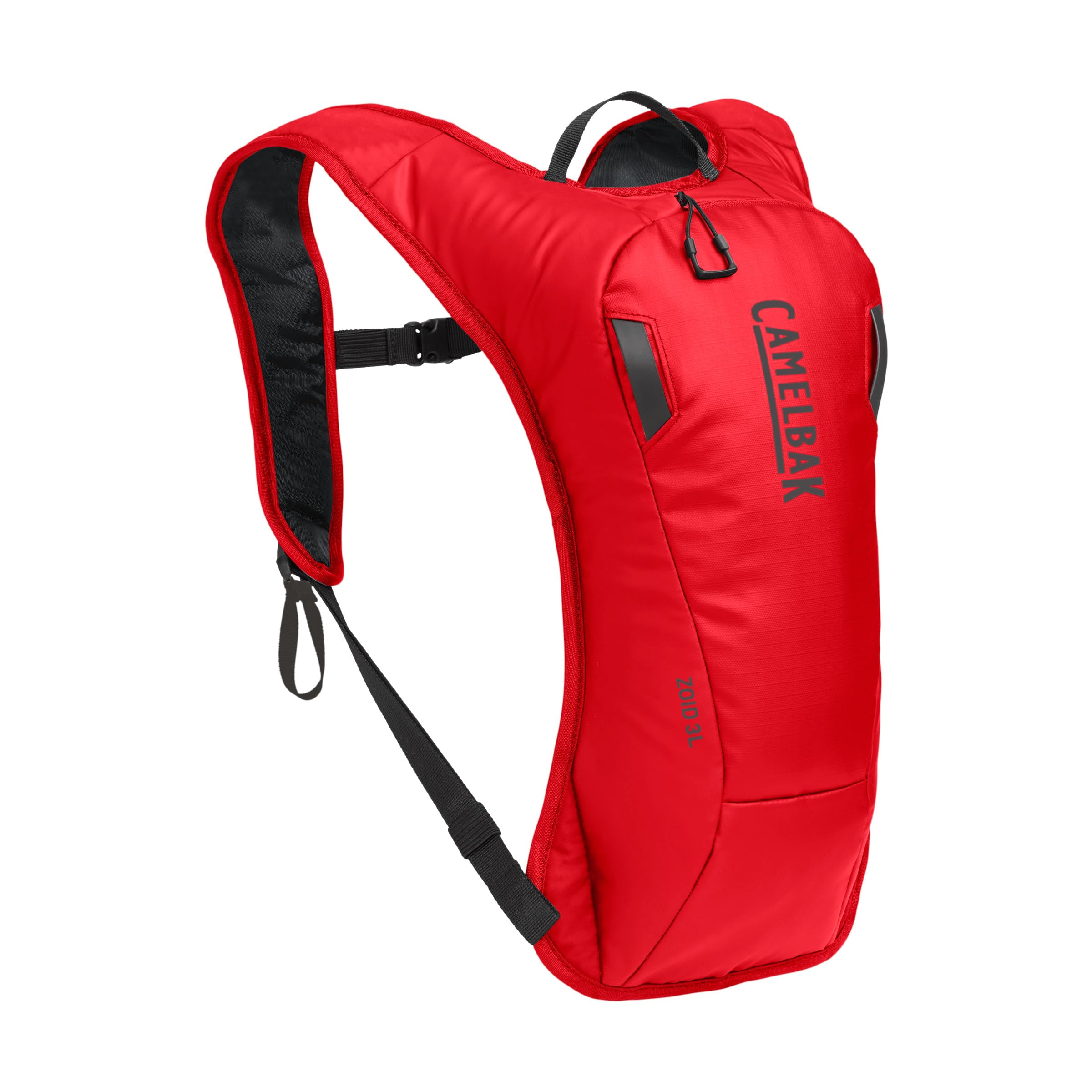
The CamelBak Zoid is a minimalist 2-liter hydration pack built specifically for lift-served days. Its Therminator harness insulates the drinking tube within the shoulder strap, preventing freeze-ups even on cold chairlifts. The SnowShield fabric repels snow and moisture, and the Lift Access QR Harness makes it easy to shuck the pack on and off while riding.
The 70-ounce Crux reservoir delivers more water per sip with a quick on/off lever, and the bite valve cover adds another layer of freeze protection. The secure zippered pocket is big enough for a phone, energy bars, and a small tool kit. Multiple users reported the pack survived hard falls without leaking or shift.
Some early units had quality-control issues with leaking reservoirs, but replacement units performed well. The lack of a traditional storage pocket means you can’t carry a puffy or extra gloves internally. For pure hydration and minimalism on in-bounds runs, the Zoid is a top choice.
Why it’s great
- Therminator harness prevents tube freezing
- SnowShield fabric repels moisture
- Ultra-light and fits under a parka
Good to know
- No large gear storage beyond snack pocket
- Some early units had reservoir leaks
5. Dakine Boot Backpack 50L

The Dakine Boot Backpack 50L is a dedicated gear hauler with a padded boot compartment that separates wet ski or snowboard boots from your clean clothing. The rear-entry zippered access panel makes loading and unloading fast, and the padded helmet/goggle pocket protects fragile items from dings. Made from 100% recycled polyester, it balances environmental responsibility with rugged durability.
Users who have flown with it for 10 seasons report it still looks new. The boot section fits size 11-12 boots with room for socks and gloves, and the top section holds a helmet, goggles, and one full ski outfit. Multiple testers noted it fits as a carry-on on most airlines, though it gets heavy when fully packed and lacks wheels.
The lack of an external water bottle pocket is a minor annoyance for some. The boot compartment is water- and dirt-resistant, and the padded back prevents boots from poking into your spine. For budget-conscious travelers who need reliable, durable boot storage, the Dakine 50L is a proven workhorse.
Why it’s great
- Separate padded boot compartment keeps gear clean
- Carry-on compatible for most flights
- Durable 100% recycled polyester construction
Good to know
- No external water bottle pocket
- Gets heavy when fully packed; no wheels
6. SEMSTY 70L Ski Boot Bag Backpack
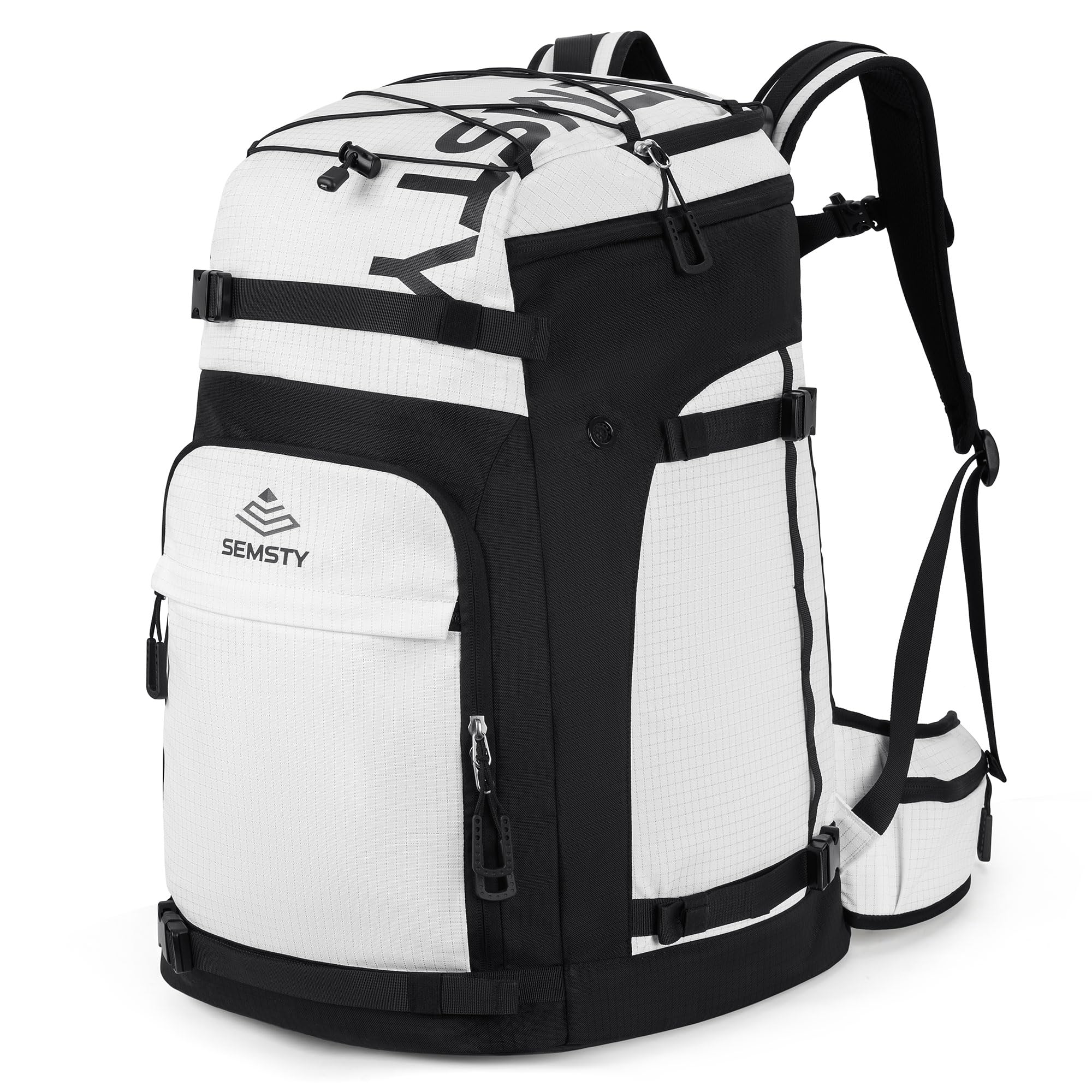
The SEMSTY 70L Boot Bag is a budget-friendly option that packs massive capacity into a waterproof, tear-resistant 840D nylon shell. The boot compartment fits size 11 boots with room to spare, and the adjustable straps allow you to carry skis, snowboard, or poles externally. The ergonomic back panel and padded EVA mesh prevent boots from knocking your spine.
For a boot bag at this tier, the organization is impressive: a separate top compartment for helmet and goggles, multiple zippered pockets for accessories, and a standing platform for changing shoes. Users praised its ability to fit snowboard boots, helmets, goggles, gloves, and layers for multiple family members. The adjustable chest and waist straps stabilize the load even for larger users.
The main concern is zipper strength — some users reported zippers splitting when the bag was overstuffed. It lacks side or belt pockets for quick-access items. The 70L size is large for a carry-on (most airlines cap at 45L), so plan to check it for air travel. For the price, it offers exceptional storage and durability for road trips.
Why it’s great
- Massive 70L capacity fits boots + full gear
- 840D nylon shell resists tears and moisture
- Parallel ski-carry straps and standing platform
Good to know
- Zippers can split if overstuffed
- Too large for airline carry-on
7. CamelBak Bootlegger Ski Hydration Pack

The CamelBak Bootlegger is a low-profile hydration pack designed to fit under a ski or snowboard jacket, reducing bulk while keeping water close to your core. The 50-ounce Crux reservoir delivers more water per sip, and the insulated reservoir compartment, tube, and bite valve cover prevent freezing in extreme cold. Dual adjustable sternum straps create a secure, customizable fit through turns and descents.
Testers reported it fits comfortably under a jacket without restricting motion, and the ergonomic handle makes refills easy with gloves on. The clip system allows you to remove the bladder without leaking. Many users appreciated that the water stayed unfrozen even on cold days. The single pocket design limits storage to the reservoir and a small pocket for phone or keys.
Some users found the strap system overly complex with too many parts. The 50-ounce capacity is smaller than the Zoid’s 70-ounce reservoir, meaning you may need to refill mid-day for heavy exertion. For skiers who prioritize a sleek, jacket-compatible hydration system for lift-served runs, the Bootlegger is a solid choice.
Why it’s great
- Fits under jacket for low-bulk carry
- Insulated tube and bite valve prevent freezing
- Crux reservoir delivers high water flow
Good to know
- 50oz reservoir is smaller than some alternatives
- Multiple straps can feel complex to adjust
FAQ
How many liters should a ski day pack be?
Can I use a regular hiking daypack for skiing?
How do I keep my water tube from freezing?
What size boot bag do I need for flying?
Do I need a separate avalanche safety pocket?
Final Thoughts: The Verdict
For most skiers, the backpack for skiing winner is the Osprey Glade because it combines an insulated hydration system, lightweight design, and durable NanoTough fabric in a low-profile package that works under your jacket. If you want dedicated boot storage for travel, grab the Thule RoundTrip 45L. And for an active daypack that carries skis and transitions to everyday use, nothing beats the Dakine Heli Pro 20L.