
Our readers keep the lights on and the weekend projects moving. As an Amazon Associate, I earn from qualifying purchases.
Bed partners counting the ceiling tiles at 2 a.m. isn’t a sustainable sleep strategy. Snoring disrupts your own oxygen intake and your partner’s sleep cycle, creating a household-wide health deficit that accumulates night after night. The fix isn’t one-size-fits-all — the right solution depends entirely on whether your airway is collapsing in your throat, your nasal passages are too narrow, or your sleeping position is the root cause.
I’m Rikta — the founder and writer behind FitlyFast. I’ve analyzed sleep hardware specifications, FDA clearances, and customer compliance data to identify which anti-snoring devices actually deliver measurable reductions in airway obstruction and which ones end up in the nightstand drawer after three nights.
This breakdown covers positional aids, mouthguards, nasal dilators, and magnetic strip systems to help you match your specific snoring pattern to the right solution. This is your complete guide to finding the best anti-snoring device that fits your anatomy and sleep habits.
How To Choose The Best Anti-Snoring Device
Snoring is mechanical — something in your airway is vibrating. The device you pick must match the exact source of that vibration. A mouthguard won’t fix a collapsed nostril, and a nasal dilator won’t prevent a tongue from falling backward. Self-diagnose which type you are first.
Identify Your Snoring Type
Back sleepers whose snoring stops when they roll onto their side have positional snoring — a simple posture trainer may be all you need. If your snoring persists regardless of position, the obstruction is likely in your throat or nasal passages. Mouth breathers and those who wake with a dry throat typically have throat-based collapse, requiring a mandibular advancement device (MAD) that holds the lower jaw and tongue forward. If your mouth stays closed but you hear a thin whistling or congestion sound, the blockage is in your nasal valve — try a nasal dilator or magnetic strip first.
Check for FDA Clearance and Material Safety
FDA-cleared mouthguards have been reviewed for safety and mechanical performance. BPA-free materials matter because any device in your mouth for 7-8 hours will leach compounds if poorly manufactured. For nasal devices, BPA-free and latex-free ratings matter less than whether the material stays flexible at body temperature — rigid plastics inside the nose create pressure points that disrupt sleep.
Consider Compliance Over Perfection
The most clinically effective device is useless if you remove it at 3 a.m. Mouthguards require a 2-4 week adjustment period for jaw soreness and saliva production. Nasal dilators can cause temporary nostril tenderness. Positional trainers may wake you briefly during the first week. Your expected compliance threshold — how much initial discomfort you can tolerate — is as important as the device’s theoretical airway-opening capability.
Quick Comparison
On smaller screens, swipe sideways to see the full table.
| Model | Category | Best For | Key Spec | Amazon |
|---|---|---|---|---|
| ZQuiet Advance | Mouthguard | Throat Snoring | 4 Adjustments up to +6 mm | Amazon |
| Good Morning Snore Solution | Mouthpiece | Tongue-Based Snoring | Suction Cup Tongue Retention | Amazon |
| Intake Breathing Magnetic Strips | Nasal Strips | Nasal Valve Collapse | Magnetic Band + 4 Size Tabs | Amazon |
| SilentZPro 2.0 | Mouthguard | Throat Snoring | 5 Adjustment Settings | Amazon |
| SleepRight Breathe Aid | Nasal Dilator | Nasal Congestion | Up to 58% Airflow Increase | Amazon |
| BruxArmor Nightguard | Mouthguard | Bruxism + Snoring | Dentist-Designed Microwave Fit | Amazon |
| Calma Clip v2 (Whole Nights) | Positional Aid | Back-Sleeping Snorers | Foam Ball + Clip Attachment | Amazon |
In‑Depth Reviews
1. ZQuiet Advance

The ZQuiet Advance addresses the most common failure point of boil-and-bite mouthguards: inability to fine-tune the jaw advancement. With four strap sizes that deliver incremental jaw positioning up to +6 mm, you can dial in exactly how far the lower jaw sits forward without guessing. The slim, low-profile design uses a patented living hinge that allows lateral jaw movement, eliminating the pressure on front teeth that bulky guards create.
Customer feedback highlights a critical detail — users who failed with SnoreRX and other thick guards found ZQuiet’s contactless front relieved tooth pain on the first night. The moldable trays lock onto upper and lower teeth separately, so the device doesn’t drift when you change position. Some users report the molded insert can detach during cleaning, but a dab of superglue fixes that permanently.
The 2-3 day adjustment period is shorter than the 3-4 weeks required by some competitors. Expect minor jaw soreness and increased saliva in the first week. The open-front design also allows mouth breathing, which helps if nasal congestion is a secondary issue — keep water on your nightstand during the adaptation phase.
Why it’s great
- Four incremental jaw strap settings provide precise adjustment
- Low-profile, slim design eliminates front tooth pressure
- Patented living hinge allows natural side-to-side jaw movement
Good to know
- Some units have misaligned hinges that require troubleshooting
- Molded inserts can detach during cleaning
- Not returnable if it doesn’t fit
2. Good Morning Snore Solution
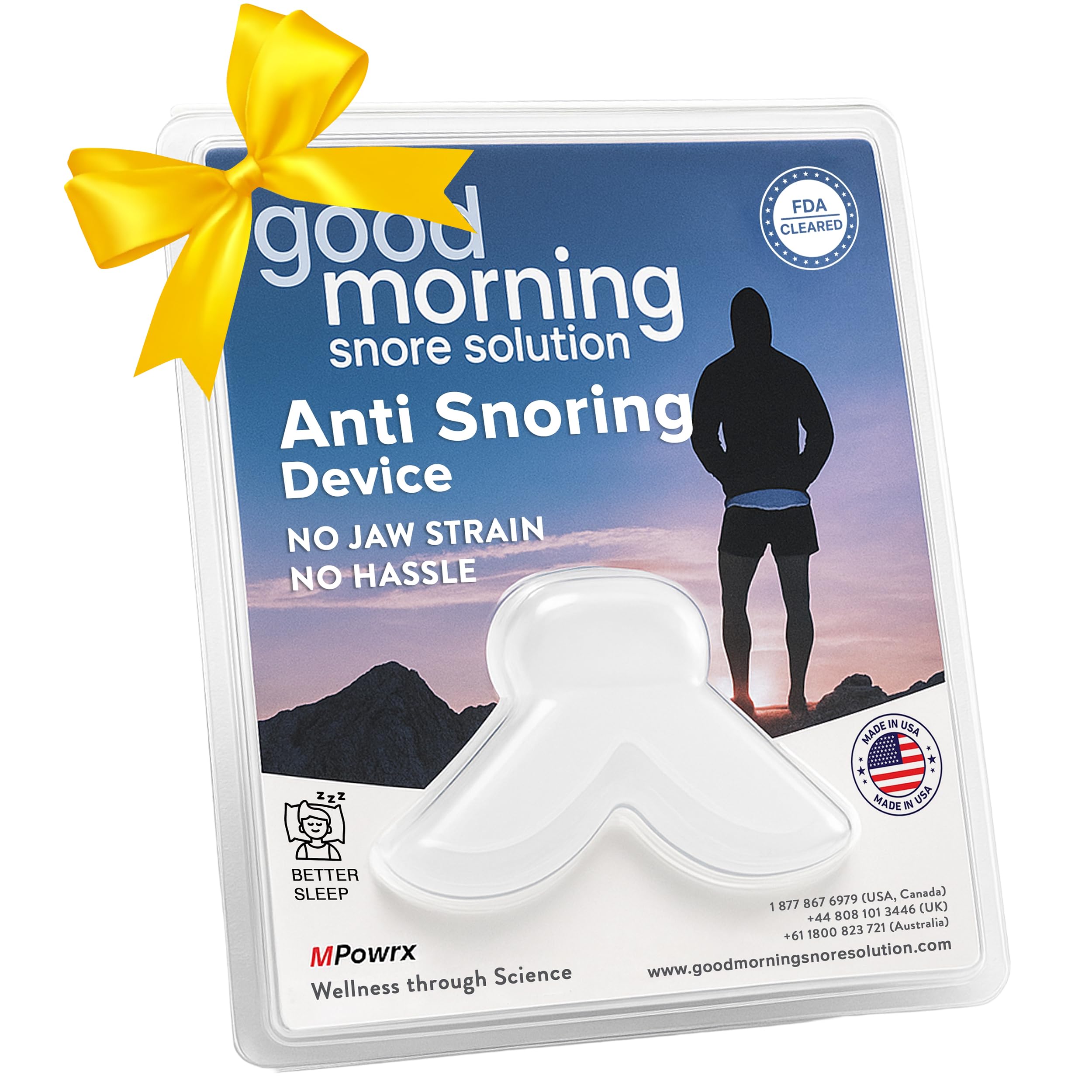
The Good Morning Snore Solution takes a different mechanical approach than MAD-style mouthguards — it uses suction to hold the tongue forward, which keeps the airway open at the base of the tongue without moving the jaw. This is the right device if your snoring originates from the tongue falling backward during sleep (most common in heavier individuals or those with larger tongues). The device is small, fits entirely inside the mouth, and weighs under 1 ounce, so there’s no external strap to adjust.
User data shows a sharp split: roughly half of users report complete snoring cessation after a week-long adjustment, while the other half experience tongue slippage once they fall asleep, which causes the device to pop out and wake them. The suction strength is critical — if your tongue doesn’t seal completely, the negative pressure creates a tingling sensation and excessive saliva production that disrupts sleep. Responsive customer service sends replacement sizes for free if the fit is off.
The device lasts about 6 months before the suction seal degrades. Some long-term users trim plastic edges that rub against the lower gum line. If you have a strong gag reflex or a small mouth, the tongue cup may feel bulky initially. It’s the most discreet option on this list for partners who find mouthguards visually off-putting.
Why it’s great
- Targets tongue-based snoring without moving the jaw
- Compact and lightweight, no external straps
- Responsive customer support sends free replacement sizes
Good to know
- Suction fails for some users, causing tongue slippage
- Can cause gum irritation and excess saliva
- Needs replacement every 6 months
3. Intake Breathing Magnetic Nasal Strips
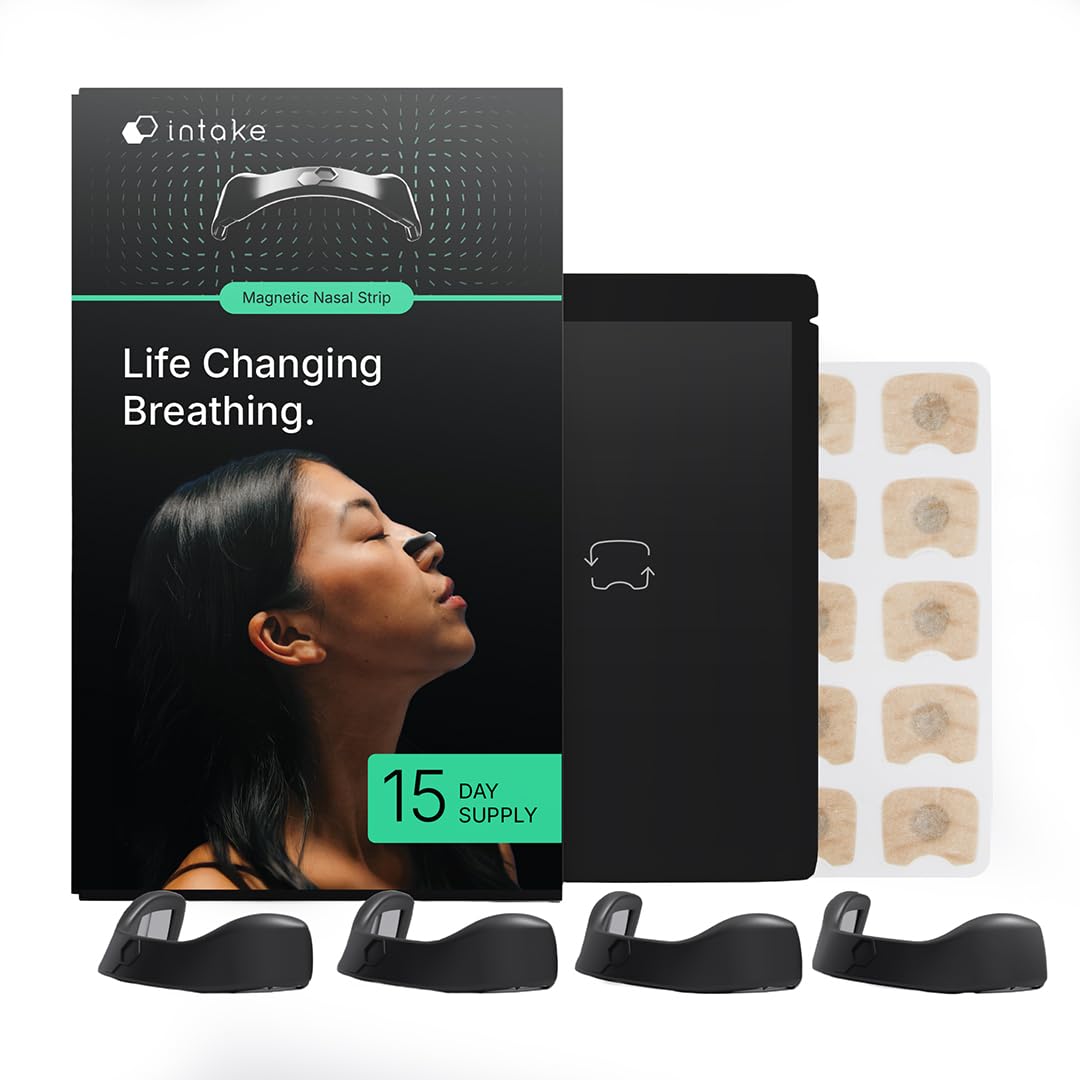
The Intake system re-engineers the nasal strip concept by replacing single-use adhesive tension with a magnetic band that provides consistent, structural lift across the entire nasal valve. Where traditional adhesive strips lose grip from facial oil or sweat within hours, the magnetic band holds the nostrils open with adjustable tension — you choose from four band sizes (XS through L) for a precise fit, and the adhesive tabs simply anchor the band to your skin without providing lift themselves.
Users report that the magnetic system stays secure even when applied over nighttime moisturizers and serums, which is a significant advantage for anyone with a skincare routine. The band remains reusable while only the adhesive tabs are disposable — the starter kit includes 15 tabs in multiple sizes. Athletes use the same system for daytime training because the magnetic hold doesn’t loosen during intense movement or sweating.
The trade-off is cost-per-night. Refill tabs run higher than traditional adhesive strips, and some users note that identical-looking tabs are available on wholesale platforms for substantially less. The band’s magnetic connection is strong enough that removing it quickly in the morning can pull skin — peel slowly. If your snoring is strictly nasal, this delivers a stronger, more consistent airway opening than any adhesive-only strip.
Why it’s great
- Magnetic band provides stronger, consistent lift than adhesive strips
- Reusable band with only tabs needing replacement
- Works over skincare products without losing adhesion
Good to know
- Refill tabs are expensive compared to traditional strips
- Adhesive backing can be difficult to remove
- Tabs may loosen if placed on oily skin without washing
4. SilentZPro 2.0 (BlueTech)
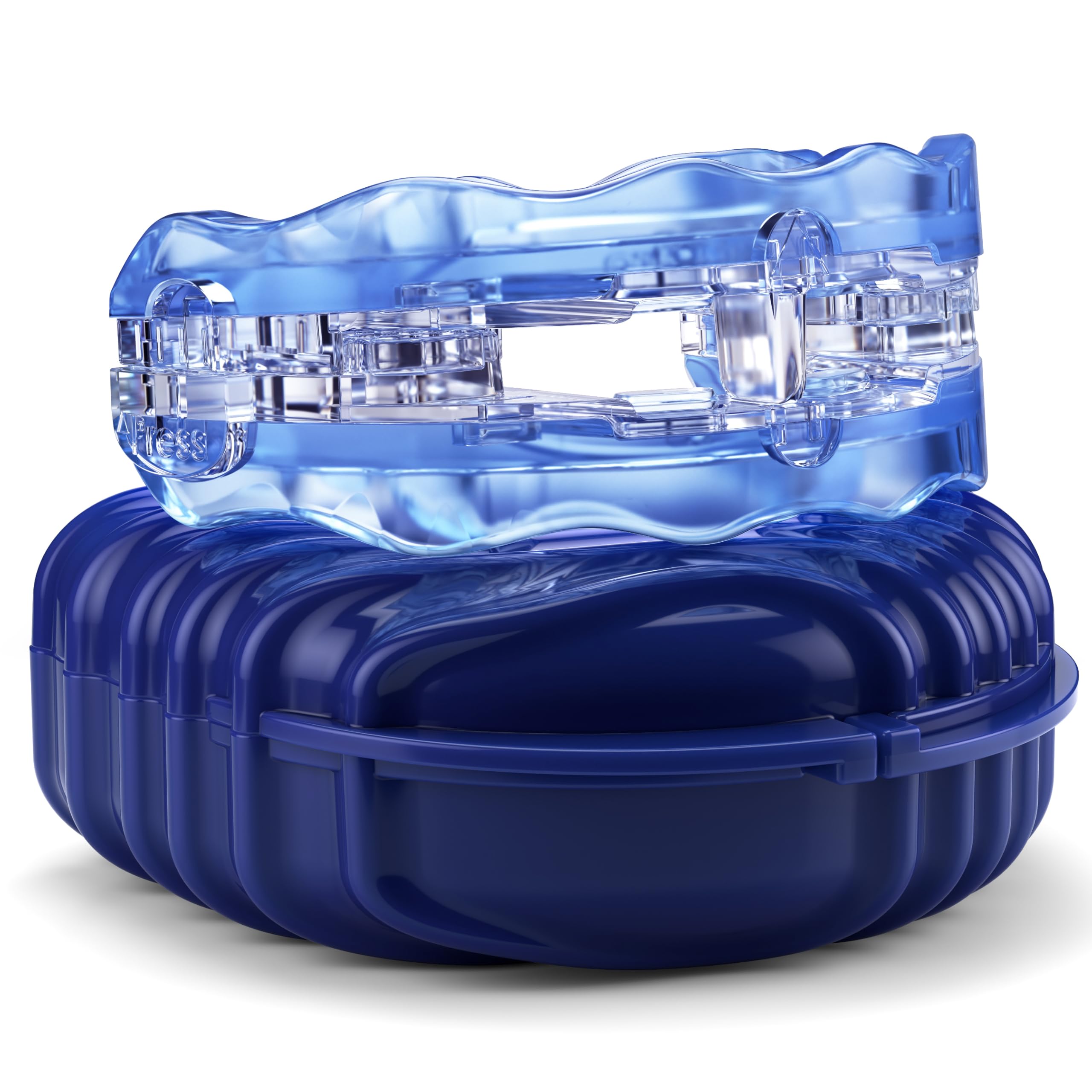
The SilentZPro 2.0 is an FDA-cleared, BPA-free mandibular advancement device with five progressive adjustment settings, giving you more fine-tuning resolution than single-position mouthguards. The patented design permits both vertical and lateral jaw movement, which reduces the locked-in feeling that makes some MADs intolerable for jaw-sensitive individuals. The device is designed for normal-size mouths — if your dental arch is unusually narrow or wide, the tongue space may feel cramped.
The boil-and-mold fitting process is straightforward, and the manufacturer provides a video instruction to ensure proper molding. Customer feedback indicates that users who achieve a secure custom fit see immediate snoring reduction, while those who rush the molding process end up with a loose fit that falls out during the night. The five adjustment settings allow you to start at the minimum advancement and increment weekly, which reduces the initial jaw soreness that causes many users to abandon mouthguards.
Some users report that the plastic edges feel sharp after molding and suggest sanding them lightly with a nail file for comfort. The device is bulkier than ZQuiet’s slim profile — this extra thickness can trigger gagging in sensitive individuals. The U.S.-based customer support team responds quickly to sizing issues. For moderate throat-based snoring, this is a reliable mid-range option with clinical-level adjustability.
Why it’s great
- Five adjustment settings for incremental jaw advancement
- FDA-cleared and BPA-free materials
- Allows lateral and vertical jaw movement for comfort
Good to know
- Bulky design with sharp edges that may need sanding
- Not ideal for small or unusually-shaped mouths
- Requires 3-4 week adjustment period
5. SleepRight Intra-Nasal Breathe Aid

The SleepRight Breathe Aid is the most instantly effective option on this list if your snoring is caused by nasal congestion or a narrow nasal valve. The flexible silicone flares insert directly into the nostrils and gently expand the nasal passages — the manufacturer claims up to 58% airflow increase, and user data supports a dramatic improvement in nasal breathing during the first night. Unlike adhesive strips that pull from the outside, internal dilators apply radial force from inside the nostril, which can open passages that external tension can’t reach.
Each unit lasts roughly 15 days before the silicone loses some spring tension, and a 2-pack includes 4 total pieces — enough for 60 nights of use. The no-adhesive design means zero skin irritation, red marks, or acne flare-ups. Users with chronic allergies, deviated septums, or exercise-induced nasal collapse report that these dilators stay comfortable through the night and also work for daytime nasal breathing during workouts.
The most common complaint is nostril tenderness and scabbing during the first two weeks, which resolves with consistent use and a small amount of petroleum jelly applied to the nostril rim. Some users find the dilators slip out by morning if their nostrils are particularly narrow or if they sleep face-down on a pillow. Clean with mild soap and cool water — avoid hot water as it permanently softens the silicone structure.
Why it’s great
- Works immediately for nasal-sourced snoring
- No adhesive — zero skin irritation or red marks
- Reusable for 15+ days per unit, includes storage case
Good to know
- Initial nostril tenderness and scabbing for 1-2 weeks
- May fall out during deep sleep for narrow nostrils
- Hot water degrades silicone permanently
6. BruxArmor Nightguard

The BruxArmor Nightguard occupies a unique position in this guide — it’s primarily designed for bruxism (teeth grinding) rather than snoring, but it belongs here because many people snore as a secondary effect of jaw clenching. The patented fitting material is activated in the microwave rather than boiling water, which eliminates the common problem of boiling water distorting the material unevenly. The dentist-designed shape is thin enough to allow comfortable lip closure, which prevents the open-mouth position that often worsens snoring.
User reviews consistently compare the fit favorably to dentist-fitted guards. The material molds tightly around teeth without the bulky flanges that push the jaw backward during sleep. If your snoring is accompanied by morning jaw pain, worn-down molars, or sensitive teeth, this dual-purpose guard addresses both issues simultaneously. The 2-pack provides a backup unit for travel or extended use.
The primary limitation is that this guard does not actively advance the jaw — it simply protects teeth from grinding forces. If your snoring is strictly caused by a collapsing airway (not jaw clenching), this won’t resolve it. The initial mold can feel tight, and a small number of users report side flanges that are too high, causing the guard to fold when biting. Trim the flanges with scissors if they interfere with comfort.
Why it’s great
- Microwave molding prevents common boiling-water distortion
- Dual-purpose: protects teeth from grinding while reducing snoring
- Dentist-designed fit at home-use cost
Good to know
- Does not advance jaw — ineffective for airway-collapse snoring
- Side flanges may be too high and need trimming
- May cause excess saliva in the first few nights
7. Whole Nights Calma Clip v2
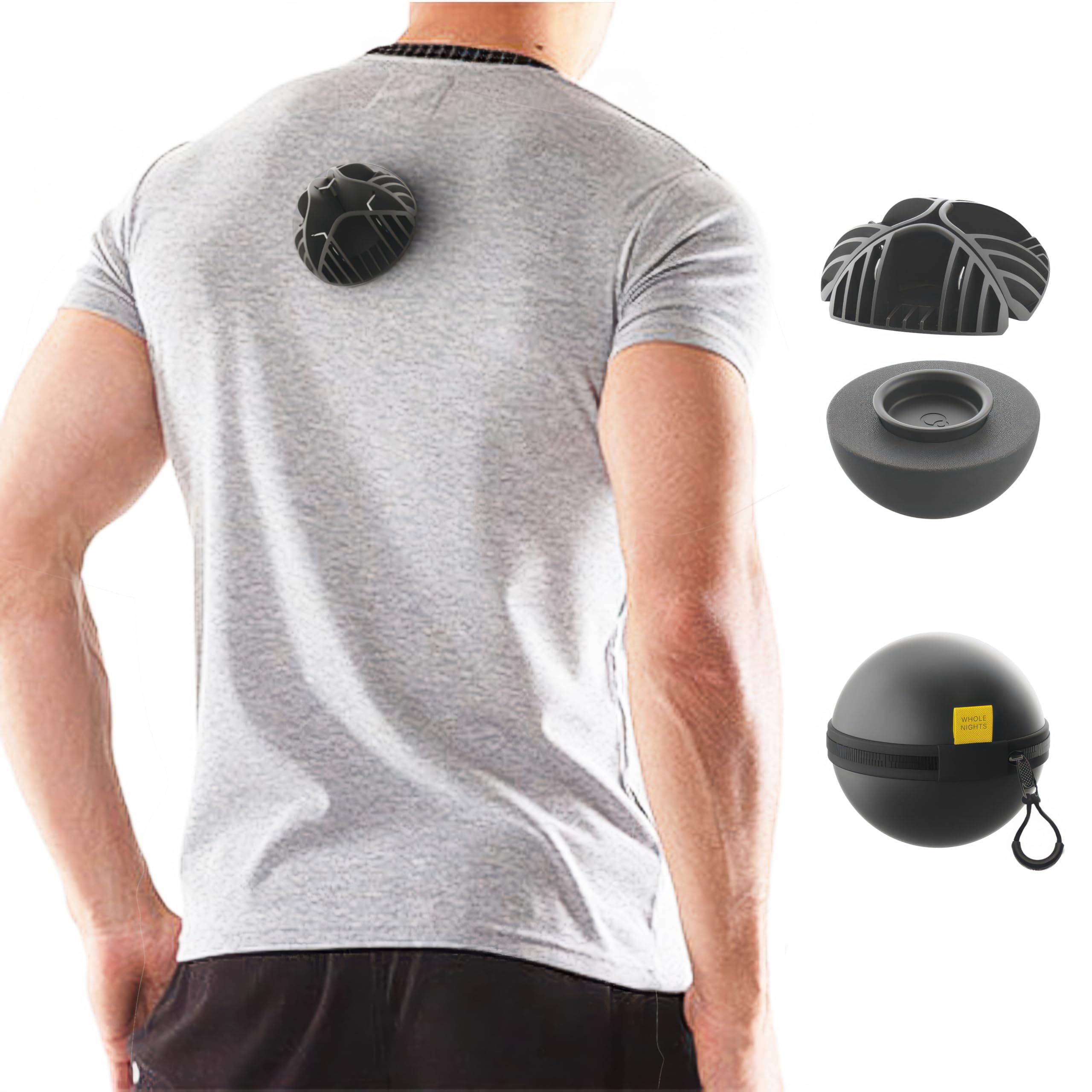
The Calma Clip v2 is the simplest mechanism on this list — a hard plastic ball encased in foam that clips to the upper back of your shirt. When you roll onto your back, the ball creates a gentle pressure point that subconsciously encourages you to return to your side. It works because back-sleeping is the single biggest positional risk factor for snoring — gravity pulls the tongue and soft palate backward, narrowing the airway. Positional therapy is clinically recommended for mild to moderate positional snoring, and this device costs a fraction of the electronic vibrating alternatives.
User reports show that the effectiveness correlates directly with how consistently you wear it. Users who clip it every night for 7-14 days report developing a natural side-sleeping habit even after removing the device. The hard shell is lightweight at 2.3 ounces and fits in a travel bag without taking up space. The foam padding is removable for washing, and the clip is strong enough to stay attached through normal tossing and turning.
This device will not work if you already snore on your side or stomach — it specifically targets back-snoring. The ball may fall off during the first few nights if your shirt is loose or if you sleep aggressively. A snug-fitting shirt is essential. For anatomically simple positional snoring, this is the lowest-friction solution in the guide — no fitting, no cleaning, no batteries. It also serves as a low-cost diagnostic tool: if clipping it to your back stops the snoring, you know the root cause was position.
Why it’s great
- Immediately identifies if snoring is positional
- No fitting, charging, or cleaning required
- Develops natural side-sleeping habit over 1-2 weeks
Good to know
- Only works for back-sleeping snorers
- Foam ball may detach if shirt is loose
- Requires nightly consistency for habit formation
FAQ
How do I know if my snoring comes from my nose or my throat?
Can I wear an anti-snoring mouthguard with braces or retainers?
How long does it take for a mouthguard to stop snoring completely?
Why do nasal strips stop working halfway through the night?
Final Thoughts: The Verdict
For most users, the anti-snoring device winner is the ZQuiet Advance because it combines 4-stage jaw adjustment with a low-profile design that fits more mouth shapes than any competitor. If you want tongue-specific snoring relief without moving your jaw, grab the Good Morning Snore Solution. And for purely nasal snoring with zero chemical exposure on your face, nothing beats the SleepRight Intra-Nasal Breathe Aid.