
Our readers keep the lights on and the weekend projects moving. As an Amazon Associate, I earn from qualifying purchases.
Your gardenia is all leaves and no buds. Your rose bush looks green but refuses to set a single flower. The issue isn’t your watering schedule or sunlight exposure — it’s almost certainly a nitrogen-overloaded fertilizer pushing foliage at the expense of blooms. A targeted blooming fertilizer shifts the nutrient balance to prioritize flower formation, giving you the dense, colorful display you’re after.
I’m Rikta — the founder and writer behind FitlyFast. I’ve spent years analyzing soil science data, comparing NPK ratios across hundreds of commercial blends, and tracking real-world bloom outcomes from organic amendments to water-soluble synthetic boosters.
This guide walks you through the phosphorus and potassium ratios that actually matter for flower production, the differences between granular, liquid, and water-soluble powder forms, and which specific formulations deliver the most visible results. My goal is to help you find the absolute best blooming fertilizer for your specific plants without wasting money on overhyped generic feeds.
How To Choose The Best Blooming Fertilizer
Not every plant food is designed to push flowers. A blooming booster flips the script on standard all-purpose fertilizers by prioritizing phosphorus and potassium over nitrogen. Here are the three specs that separate a high-performing bloom formula from a mediocre one.
NPK Ratio — The Middle Number Rules Everything
The three numbers on the bag (like 10-30-20) represent nitrogen, phosphorus, and potassium. For blooming, the middle number — phosphorus — is your primary target. A ratio where phosphorus is the highest number (such as 10-30-20 or 4-10-7) drives root development, bud set, and flower size. Avoid formulas where the first number beats the second, as that indicates a foliage-focused feed that will produce leaves instead of blooms.
Form — Water-Soluble Powder vs. Liquid Concentrate vs. Granular
Water-soluble powders like Jack’s Classic offer the fastest uptake and allow precise control over dosage per gallon, making them ideal for containers and hydroponics. Liquid concentrates like Neptune’s Harvest are easier to measure for small batches and work well as both soil drenches and foliar sprays. Granular options like FoxFarm Happy Frog release nutrients slowly and suit in-ground beds where you want steady feeding over weeks. Choose based on how often you water and how much control you need.
Quick Comparison
On smaller screens, swipe sideways to see the full table.
| Model | Category | Best For | Key Spec | Amazon |
|---|---|---|---|---|
| Jack’s Classic 10-30-20 (4lb) | Powder | Heavy bloom production | 10-30-20 NPK ratio | Amazon |
| RAW All in One Bloom | Powder | Indoor/hydro growers | Complete micronutrient profile | Amazon |
| Neptune’s Harvest 2-6-4 | Liquid | Organic roses & vegetables | 2-6-4 OMRI-listed formula | Amazon |
| Dr. Earth Flower Girl 4-10-7 | Granular | Organic no-till beds | 4-10-7 Non-GMO blend | Amazon |
| FoxFarm Happy Frog 4-9-3 | Granular | Fruit trees & potted flowers | Mycorrhizal fungi included | Amazon |
| Jack’s Classic 10-30-20 (8oz) | Powder | Small container gardens | 10-30-20 high phosphorus | Amazon |
| Miracle-Gro LiquaFeed Bloom Booster | Liquid | Quick hose-end feeding | Ready-to-use liquid refills | Amazon |
In‑Depth Reviews
1. Jack’s Classic 10-30-20 Blossom Booster (4lb)
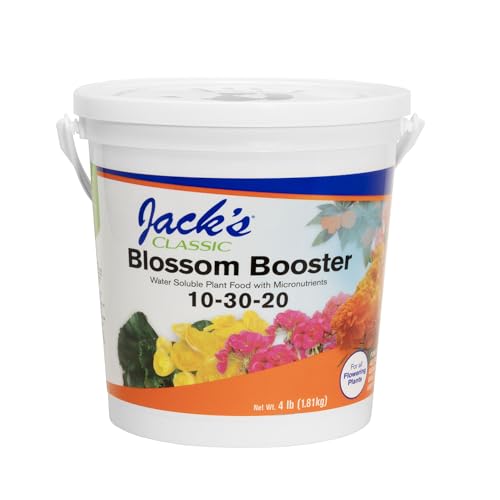
The big 4-pound tub of Jack’s Classic delivers the highest phosphorus-to-nitrogen ratio in this lineup, with a 10-30-20 formulation engineered to prioritize bloom formation over foliage growth. Gardeners report visible improvements in flower vibrancy, stem strength, and overall bloom density within a week of the first application. The water-soluble powder mixes cleanly and works for everything from hydrangeas and annuals to Vanda orchids and vegetable crops.
Each 4-pound container breaks down into hundreds of gallons of feed at the standard 5.5 tablespoons per 16-ounce water concentrate ratio, making it the most cost-effective option for gardeners with large beds or multiple containers. The included measuring spoon removes the guesswork, and users note that even plants that were struggling before bounce back quickly after a few feedings.
The micronutrient package covers secondary elements like magnesium and sulfur that standard high-phosphorus blends often skip. Some users recommend pairing with a separate calcium-magnesium supplement for optimal results, particularly in soft-water areas or with heavy-feeding plants like tomatoes. Wear gloves during mixing as the concentrated powder can irritate skin.
Why it’s great
- Highest phosphorus ratio in the review for maximum bud set
- Extremely economical at 4 pounds — makes hundreds of gallons
- Works for indoor, outdoor, and hydroponic setups
Good to know
- May require added calcium and magnesium for certain plants
- Powder can irritate skin; wear gloves during mixing
2. RAW All in One Bloom

RAW All in One Bloom is a premium water-soluble powder that combines a high-phosphorus base with kelp, humic acids, and a full spectrum of macro and micronutrients in a single formula. This eliminates the need for multiple additives during the flowering stage, making it a favorite among indoor growers and hydroponic cultivators who want a streamlined feeding routine. The built-in pH buffer keeps the solution around 6.5, which falls perfectly in the sweet spot for nutrient uptake.
The recommended mixing ratio of just half a teaspoon per gallon of water means the 2-ounce container goes far, though serious growers with multiple plants will want to stock up. Reviews consistently highlight dramatic improvements in bud density and flower fragrance — one user reported the best-smelling roses they had ever grown after switching to RAW. The formula also includes calcium and magnesium, reducing the need for separate supplements in most setups.
Some users found the formula potent enough that they diluted it even further, with one experienced grower using only 1/128th of a teaspoon per half-gallon with excellent results. The powder arrives double-bagged to prevent moisture damage during shipping. For growers who want a single-bottle solution that covers all bases during bloom, this is a strong contender.
Why it’s great
- All-in-one blend with kelp, humics, and micronutrients
- Built-in pH buffer around 6.5 — no pH adjustment needed
- Highly concentrated; small doses go a long way
Good to know
- Small 2-ounce container is better for small gardens or trial runs
- Formula is very strong — easy to overfeed if not measured carefully
3. Neptune’s Harvest Rose & Flowering Fertilizer 2-6-4
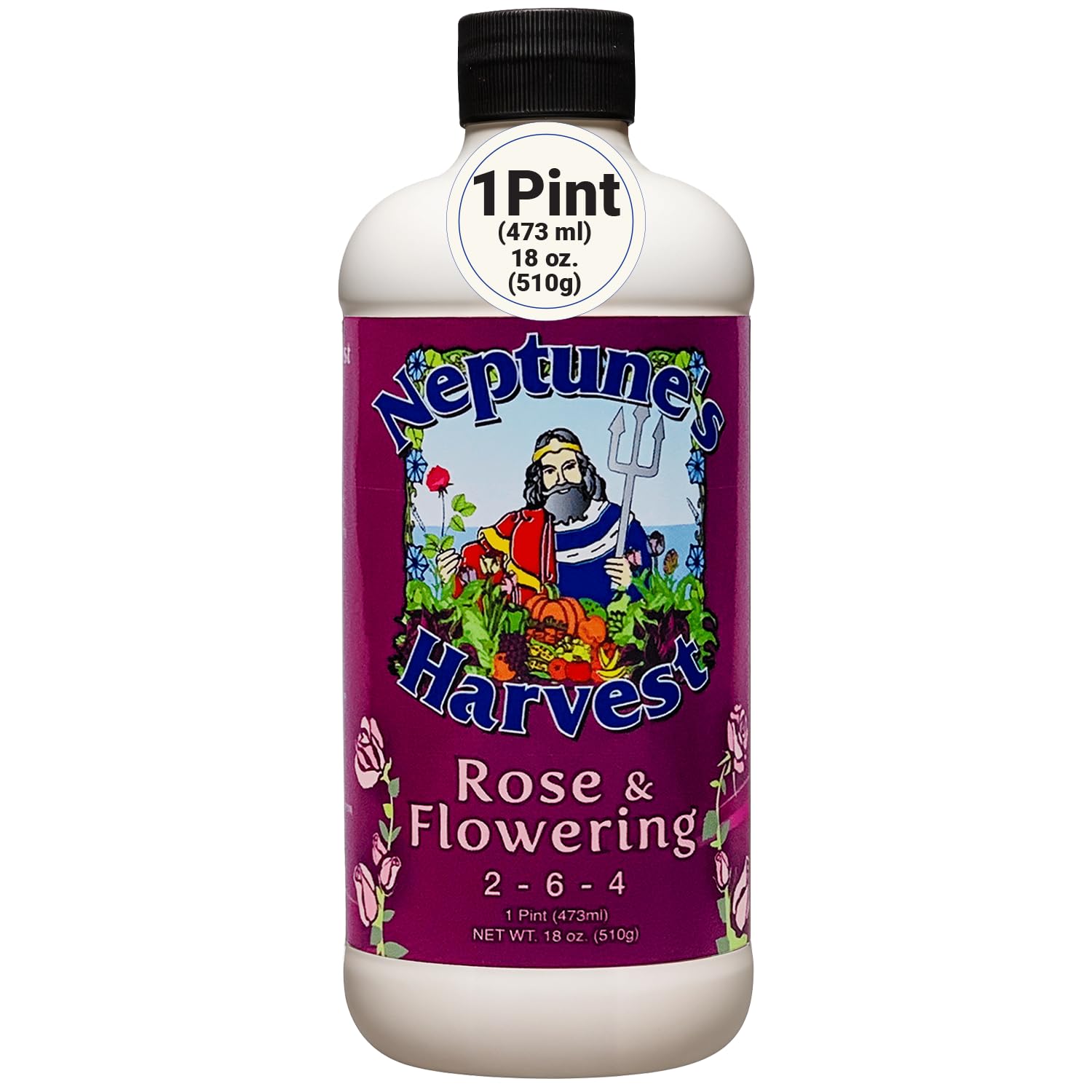
Neptune’s Harvest delivers a certified organic liquid fertilizer made from fish, seaweed, molasses, humic acids, yucca extract, biological microbes, and liquid calcium. The mild 2-6-4 NPK ratio is intentionally lower in concentration than synthetic powders, but the formula focuses on feeding soil biology and building long-term soil structure rather than just dumping salts on the root zone. Gardeners report that flowers not only bloom more vigorously but also develop richer, deeper color.
Users saw dramatic recoveries — one grower revived a dying Brandywine tomato plant overnight, and another harvested 102 bell peppers from nine two-year-old indoor plants after incorporating this feed into their routine. The liquid form works both as a soil drench and a foliar spray, giving you flexibility in application. The smell is noticeable but dissipates quickly once it dries, which is typical of fish-based organics.
The pint-sized bottle is convenient for small gardens and houseplant collections. Heavy feeders may need more frequent application compared to synthetic options, but the trade-off is a healthier, more resilient soil ecosystem. Neptune’s Harvest is also safe around kids and pets once dry, making it a solid choice for edible gardens where chemical residues are a concern.
Why it’s great
- Fully organic with fish, seaweed, humic acids, and beneficial microbes
- Can be used as both a soil drench and foliar feed
- Safe for edible gardens, kids, and pets after drying
Good to know
- Strong fish-based odor during application (dissipates when dry)
- Mild NPK ratio requires more frequent feeding for heavy feeders
4. Dr. Earth Flower Girl Bud & Bloom Booster 4-10-7

Dr. Earth’s Flower Girl formula is a handcrafted organic granular blend with a 4-10-7 NPK analysis, though some batches may ship as 3-9-4 depending on the production run — always check the package. This is a dry, slow-release product that works best when worked into the soil at planting time or top-dressed around established perennials. The organic certification and Non-GMO Project Verification make it a top pick for growers who avoid synthetic inputs entirely.
The blend is free of chicken manure, sewage sludge, and GMOs, using only plant and mineral-derived ingredients. Gardeners using this on dragon fruit saw bloom counts jump from 3 to 25 in a single season, and dahlia planters reported noticeably larger, more vibrant flowers. The 4-pound bag covers a generous area for in-ground beds and large containers, and the slow-release nature means fewer applications over the growing season.
The primary trade-off is speed — granular organics take longer to show results compared to water-soluble powders. Users transitioning from synthetic fertilizers should expect a week or two before seeing visible changes. The product is safe for people and pets, making it suitable for edible landscapes and flower beds where children or animals may roam.
Why it’s great
- Certified organic with Non-GMO Project Verified ingredients
- Slow-release granular form reduces application frequency
- No chicken manure, sewage sludge, or synthetic fillers
Good to know
- Actual NPK may vary between 3-9-4 and 4-10-7 depending on batch
- Slower onset of results compared to water-soluble boosters
5. FoxFarm Happy Frog Fruit & Flower Fertilizer 4-9-3

FoxFarm’s Happy Frog line focuses on building root health as the foundation for flowering, and the Fruit & Flower formula includes mycorrhizal fungi to increase root efficiency and water absorption. The 4-9-3 NPK ratio is phosphorus-forward without being extreme, making it suitable for a wide range of flowering plants, fruit trees, and vegetables. The granular form is designed for simple top-dressing or mixing into the planting hole.
Gardeners using this product on cold-damaged banana trees saw a full revival, and potted flower growers reported impressive results with just monthly sprinkling. The mycorrhizal component sets it apart from standard bloom boosters by improving the plant’s ability to access existing soil nutrients, not just the ones you add. The 4-pound bag covers a substantial area, and the formula has minimal odor compared to fish-based organics.
The nitrogen content at 4 is still present enough to support foliage during early bloom, which helps keep plants green while they set flowers. However, gardeners seeking an extremely high-phosphorus push for final bud swell may find the 4-9-3 ratio less aggressive than 10-30-20 options. Best for gardeners who want a balanced organic feed that works on both flowers and fruiting crops.
Why it’s great
- Mycorrhizal fungi improve root efficiency and nutrient uptake
- Balanced 4-9-3 ratio works for flowers, fruits, and vegetables
- Low odor — suitable for indoor and patio use
Good to know
- Phosphorus level is moderate compared to dedicated bloom boosters
- Granular form works slower than water-soluble powders
6. Jack’s Classic 10-30-20 Blossom Booster (8oz)
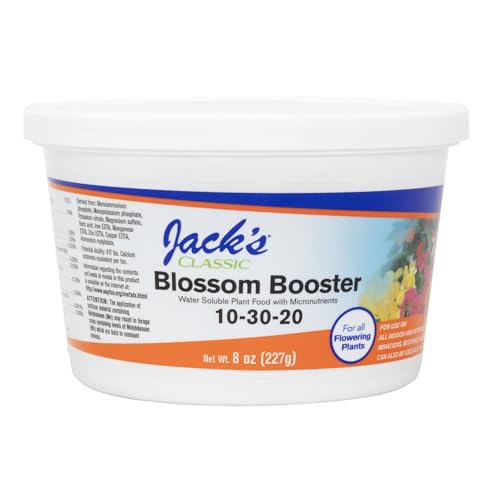
This 8-ounce tub of Jack’s Classic gives you the exact same 10-30-20 high-phosphorus formula as the 4-pound version, but in a smaller, more budget-friendly package. It’s ideal for gardeners with a modest collection of containers, hanging baskets, or a few indoor pots who don’t need to mix hundreds of gallons of feed. The water-soluble powder dissolves completely and works as either a root drench or a foliar spray.
Users saw quick results on Hoya, jasmine, orchids, and hanging baskets — one reviewer reported bigger blooms and a noticeable multiplication of flowers within days of switching from a standard all-purpose feed. The included measuring spoon ensures accurate mixing, though users should still wear gloves as the concentrated powder can cause skin irritation. The small tub is also convenient for travel or for testing the formula before committing to the larger size.
The main limitation is simply the quantity — serious gardeners with many plants will run through the 8-ounce container relatively quickly. At the standard mixing rate, it produces roughly 32 gallons of feed, which is enough for a small container garden for a season. If you fall in love with the results, the 4-pound upgrade is the logical next step.
Why it’s great
- Same high-performance 10-30-20 formula as the larger tub
- Compact size is perfect for small gardens and testing
- Works as both soil drench and foliar feed
Good to know
- Small 8-ounce container runs out fast for larger gardens
- Powder can irritate skin — handle with gloves
7. Miracle-Gro LiquaFeed Bloom Booster

Miracle-Gro’s LiquaFeed Bloom Booster is designed for convenience above all else. This is a liquid concentrate that works with the brand’s hose-end sprayer system, allowing you to feed and water simultaneously with zero measuring. The 4-pack of 16-ounce refills provides a total of 64 fluid ounces of concentrated feed, which translates to many gallons of ready-to-use solution. It’s a practical choice for gardeners with large flower beds who want speed over precision.
Users report that their flowers showed increased health and blooming in a fairly short time, with one gardener noting that blooms were bigger than ever before with routine every-other-day feeding. The formulation is designed specifically for flowering plants, so it won’t push excessive foliage growth. The hose-end system also eliminates the need for mixing buckets or cleaning sprayers, reducing the barrier to regular feeding.
The trade-off is that the LiquaFeed system locks you into Miracle-Gro’s proprietary refills — you can’t use the hose-end sprayer with other brands. The formula is synthetic and faster-acting than organic options, but it won’t build soil biology the way fish or kelp-based feeds do. Best for gardeners who prioritize speed and ease of application above all else.
Why it’s great
- Extremely convenient hose-end feeding — no mixing or measuring
- Fast-acting liquid formula shows bloom results quickly
- 4-pack provides good value for heavy users
Good to know
- Proprietary refill system only works with the LiquaFeed sprayer
- Synthetic formula does not contribute to long-term soil health
FAQ
What NPK ratio is best for forcing flowers on reluctant plants?
Can I use a blooming fertilizer on vegetables and fruit trees?
How often should I apply a water-soluble bloom booster?
Will a bloom fertilizer harm my plants if I use it year-round?
Final Thoughts: The Verdict
For most users, the best blooming fertilizer winner is the Jack’s Classic 10-30-20 (4lb) because it delivers the highest phosphorus concentration available, works across all growing methods, and offers unbeatable value per gallon of feed. If you want an organic liquid that builds soil health while pushing flowers, grab the Neptune’s Harvest 2-6-4. And for no-fuss, fast feeding of large flower beds, nothing beats the Miracle-Gro LiquaFeed Bloom Booster for pure convenience.