
Our readers keep the lights on and the weekend projects moving. As an Amazon Associate, I earn from qualifying purchases.
Finding a board game that holds the attention of an 8-to-10-year-old without frustrating them with overly complex rules is a genuine balancing act. At this age, kids crave strategy and a bit of competition, but they still need fast-paced turns and clear objectives to stay engaged. The right game turns a rainy afternoon into a session of laughter, problem-solving, and gentle rivalry.
I’m Rikta — the founder and writer behind FitlyFast. I’ve spent years analyzing the mechanics, replayability, and age-appropriate complexity of hundreds of family board games to find the ones that actually work.
After evaluating dozens of titles for cognitive demand, component quality, and playtime length, these picks represent the strongest lineup of board games for 8-10 year olds that deliver real fun without the boredom.
How To Choose The Best Board Games For 8-10 Year Olds
Eight to ten is a sweet spot where kids can handle multi-step strategy but still benefit from clear, simple rules. The best games for this age group balance luck and skill, keep rounds under an hour, and use components that can withstand excited handling.
Playtime and Attention Span
Games that run 15 to 45 minutes are ideal. Shorter rounds mean kids stay focused and can play multiple times, learning the strategy deeper with each session. Games that drag past an hour often lead to frustration or wandering interest.
Mechanics Over Theme
A popular movie or character tie-in might grab attention, but the mechanics — set collection, area control, cooperative play — determine whether the game holds that attention. Look for mechanics that encourage planning ahead and adapting to opponents without requiring complex reading or math.
Quick Comparison
On smaller screens, swipe sideways to see the full table.
| Model | Category | Best For | Key Spec | Amazon |
|---|---|---|---|---|
| Monkey Palace | Strategy / Building | LEGO fans who love creative problem-solving | 45-min playtime, 231 LEGO elements | Amazon |
| Exploding Kittens Party Pack | Party Card Game | Large groups and quick, chaotic fun | 15-min playtime, supports up to 10 players | Amazon |
| Spin Master Tetris Board Game | Puzzle / Strategy | Kids who love digital Tetris and head-to-head play | 20-min playtime, includes 128 Tetriminos | Amazon |
| Wordplay for Kids | Educational Word Game | Building vocabulary through fast-paced challenges | 30-min playtime, 60-second timer rounds | Amazon |
| Hasbro Game of Life: Barbie Edition | Family Lifestyle | Barbie fans and creative career exploration | 20-min playtime, Dream Career cards included | Amazon |
| The World Game | Educational Trivia | Learning world geography and capitals | 40-min playtime, 194 country cards included | Amazon |
| Spin Master Wicked: The Game | Cooperative Card Game | Wicked fans who prefer team-based play | 20-min playtime, 170 story cards included | Amazon |
In‑Depth Reviews
1. Monkey Palace

Monkey Palace brilliantly merges LEGO construction with strategic tower-building. Kids use real interlocking bricks to build monkey fortresses, and unstable towers collapse to create unpredictable, laugh-out-loud moments. The game uses a simple banana-scoring system that makes tracking progress easy, while the 45-minute playtime gives room for deep strategic thinking without overstaying its welcome.
The included 231 LEGO elements are high-quality and compatible with existing LEGO collections, which eases the sting of the limited pieces — a common complaint. The jungle maps and 84 game cards add a layer of resource management that keeps each game feeling fresh, and the instructions, while initially dense, become intuitive after one playthrough.
Color blindness can be an issue with the green tones, and the box lacks internal organization, so baggies are recommended for quick setup. Despite these quirks, Monkey Palace engages visual-spatial and critical thinking skills better than most dedicated educational games.
Why it’s great
- Encourages creativity and forward planning.
- High-quality, reusable LEGO components.
- Collapsing towers keep the energy high.
Good to know
- May need extra LEGO bricks for longer sessions with 4 players.
- Color-blind players may struggle with green bricks.
- Setup requires sorting small pieces.
2. Exploding Kittens Party Pack

Exploding Kittens Party Pack is the fast-paced card game where players dodge the Exploding Kitten using strategy, luck, and a bit of betrayal. With up to 10 players and a 15-minute round, it is a party game night favorite. The absurd illustrations from The Oatmeal keep the tone light and funny, and the mechanics are simple enough for an 8-year-old to grasp after one demonstration.
The Party Pack doubles the chaos with almost double the cards from the original version, including the Imploding Kittens expansion and 10 new cards. The rulebook is as unhinged as the art, but the core gameplay — draw a card, hope you don’t explode — is instantly intuitive. Kids quickly learn to use defuse cards and plan their turns to avoid elimination.
It is best with three or more players; two-player games lose some tension. Some younger kids may find the “exploding” theme slightly intense, but the majority find it hilarious. The cards are durable and survive repeated shuffling, making this a great travel companion.
Why it’s great
- Extremely fast to learn and play.
- Supports large groups of up to 10.
- Humor appeals to both kids and adults.
Good to know
- Best with 3+ players for proper tension.
- Bathroom humor may not suit every family.
- Theme might alarm very sensitive kids.
3. Spin Master Tetris Board Game
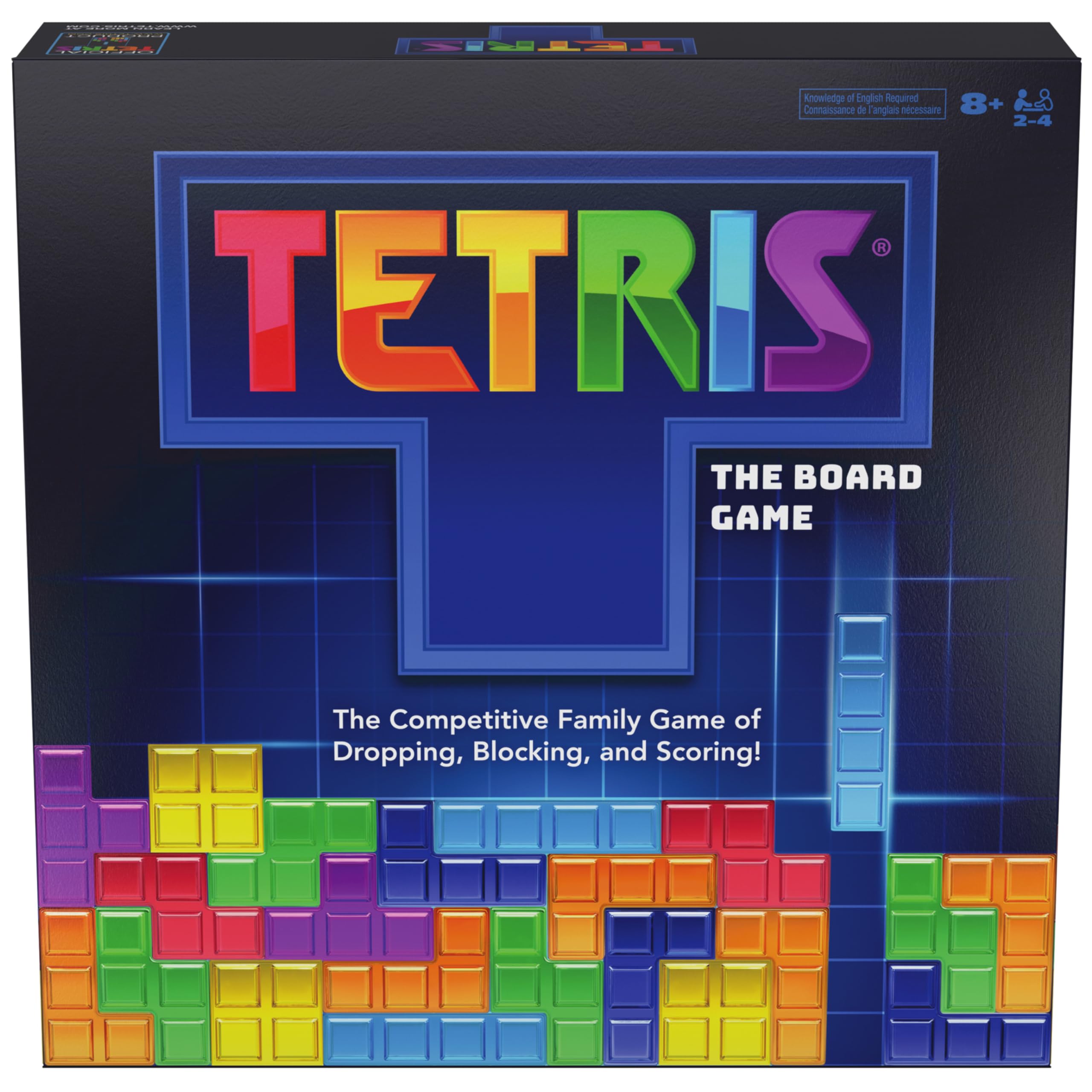
Spin Master Games brings the classic digital puzzle to the tabletop with Tetris: The Board Game, a multiplayer head-to-head challenge of rotating, dropping, and line-making. The semi-translucent Tetrimino pieces are satisfying to handle and fit snugly into the individual player grids. The game introduces a unique mechanic: dropping a piece on a black Garbage Drop Icon lets you add a block to an opponent’s grid, creating a direct interactive layer that the video game lacks.
With a 20-minute playtime and easy-to-understand rules, it works well for family game nights. The cognitive skill development is real — kids practice spatial reasoning and quick decision-making under pressure. The 4 player grids and 128 Tetriminos provide enough variety for multiple rounds without repetition.
Some pieces arrived bent in early batches, though most reports note they flatten after a short time. The game is best with 4 players for maximum interference and strategy. It is an excellent choice for kids who love the original video game but need a screen-free alternative.
Why it’s great
- Faithful physical adaptation of a beloved digital game.
- Competitive blocking mechanic adds social dynamics.
- Fast 20-minute rounds keep engagement high.
Good to know
- Some pieces may arrive slightly bent.
- Limited to 4 players maximum.
- Spatial challenge may frustrate some 8-year-olds.
4. Wordplay for Kids

Wordplay for Kids is an award-winning, fast-paced word game that gets kids thinking under pressure. The spinner reveals two letters, and the dice picks a category — Food or Drink, Object or Thing, Living Creature, or a name. Players have 60 seconds to come up with a word that fits both constraints, and longer words earn more spaces on the board. The timer keeps the pace lively, and the categories spark creativity without requiring advanced vocabulary.
It won a Teacher’s Choice Award for a reason: the game encourages spelling, vocabulary, and quick thinking in a way that feels like play rather than homework. The full-sized edition includes a larger board and more accessories than the previous compact travel version. Parents report it has helped reluctant readers build confidence in word recognition and spelling.
The game works with just 2 players but really shines with 3 or 4. The 30-minute playtime is flexible depending on how many rounds you play. The only downside is that some categories can feel repetitive after many sessions, but the random letter combination keeps it fresh.
Why it’s great
- Builds vocabulary and spelling in a fun format.
- Fast 60-second rounds keep energy high.
- Teacher’s Choice Award winner.
Good to know
- Categories can feel repetitive over time.
- Not suitable for children who struggle with reading.
- Requires basic reading fluency for full participation.
5. Hasbro Game of Life: Barbie Edition
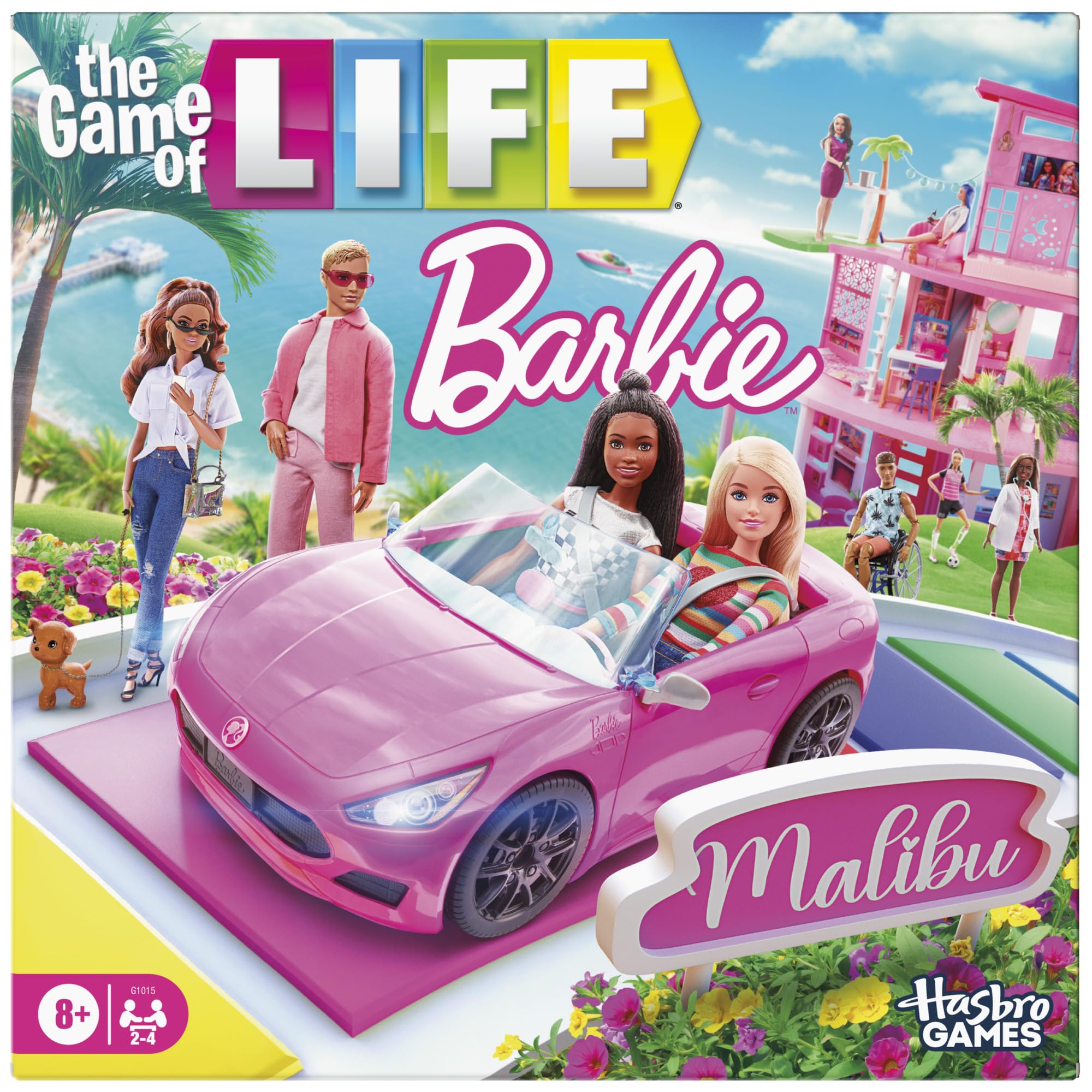
Hasbro’s The Game of Life: Barbie Edition drops the traditional career and salary mechanics in favor of Dream Careers (Pop Star, Marine Biologist) and DreamHouses (Getaway House, Dream Boat). Players drive Dream Convertibles and collect pet and friend pegs, then land on Trendsetter spaces to set fashion trends like Ballet Core or Coastal Cowgirl. Every time another player spins that trend’s number, you earn Dream Points.
The gameplay is streamlined — no swapping dream houses, no hill pieces from the original — which makes it faster and more accessible for younger players. Setup takes about 4-5 minutes, and rounds wrap up in around 20 minutes. The Barbie theme is a hit with fans and spans generations, making it a popular choice for multi-generational game nights.
The included 91 cards (Action, Dream Career, DreamHouse, Trendsetter) provide excellent replayability, and the emphasis on choice and creativity differentiates it from the standard Game of Life. The instructions are thorough but require adult reading for younger kids, so it’s best reserved for family game nights with adult participation.
Why it’s great
- Empowers kids to explore creative career paths.
- Quick setup and playtime.
- Barbie theme is beloved by many age groups.
Good to know
- Rules require adult explanation for 8-year-olds.
- Lacks the traditional hill and building pieces.
- Limited to 4 players.
6. The World Game
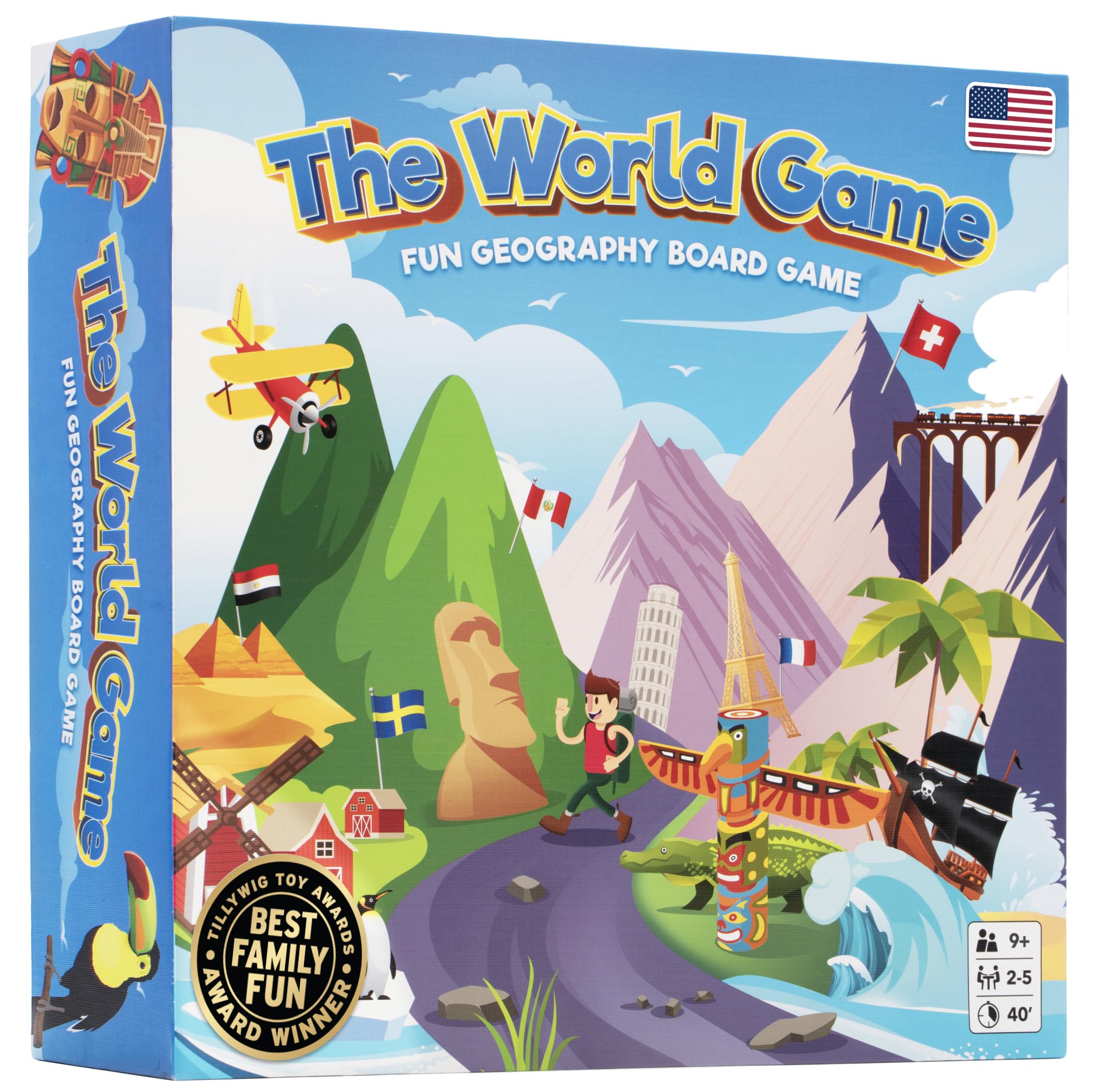
The World Game turns geography into a fast-paced, competitive race. Players travel the globe, pass famous landmarks, and answer trivia about flags, capitals, and country locations. The cards hold over 1,500 country facts covering GDP, area, and population, making it one of the most data-rich educational games available. The 40-minute playtime accommodates deeper learning, though younger players may need breaks.
The game board and card quality are excellent — thick, durable, and designed to survive repeated use. The country data is updated regularly, which matters for a game focused on current facts. Kids aged 10 and 11 particularly enjoy the challenge of identifying countries on the map and memorizing capitals, while adults find it equally engaging during family game nights.
The main drawback is the 45-minute playtime, which can feel long for some 8-year-olds, especially if they are not naturally drawn to geography. The game works best with 3 to 5 players, and teachers have used it successfully in classrooms to supplement Social Studies units. It is a fantastic tool for covering the Human Development Index in a fun context.
Why it’s great
- Covers all 194 countries with detailed data.
- Encourages geographical literacy and strategy.
- High-quality, durable components.
Good to know
- 45-minute playtime may be long for some 8-year-olds.
- Best for kids who already show interest in geography.
- Limited to 5 players maximum.
7. Spin Master Wicked: The Game

Wicked: The Game invites 2 to 4 players to team up with Elphaba and Glinda to unlock the chapters of their story and save Oz from the Wizard. This cooperative card game uses set collection and strategic planning to earn Thrillifying Magic tokens from the stunning Emerald City 3D centerpiece. The cooperative nature means players work together rather than against each other, making it a great choice for kids who prefer teamwork over competition.
The 170 story cards provide significant replayability, and the 12 chapter cards create a structured narrative arc. The estimated 20-minute playtime is perfect for younger attention spans, and the components — including 20 Thrillifying Magic tokens and a Wizard Track Mover — are durable and child-friendly. The Wizard Track adds tension as players race to beat the last Chapter before the balloon reaches 13.
The rules are somewhat complex for a family game, requiring adult explanation initially, but the cooperative format means everyone learns together. Once understood, the gameplay is engaging and rewarding. It works best for Wicked fans ages 10 and up, though motivated 8- and 9-year-olds can participate with some guidance.
Why it’s great
- Cooperative play eliminates conflict and encourages teamwork.
- Beautiful Emerald City 3D centerpiece is a visual highlight.
- Rich narrative structure keeps players invested.
Good to know
- Rules can be complicated; requires adult explanation.
- Strong appeal limited to Wicked fans.
- Limited to 4 players maximum.
FAQ
What is the ideal player count for board games for 8-10 year olds?
How long should a board game last for a 9 year old?
Are cooperative or competitive games better for 8 year olds?
Final Thoughts: The Verdict
For most users, the board games for 8-10 year olds winner is the Monkey Palace because it uniquely combines creative building with strategic planning, offering high replayability and genuine cognitive engagement. If you want a quick, chaotic party game for large groups, grab the Exploding Kittens Party Pack. And for an educational geography challenge that grows with the child, nothing beats the The World Game.