
Our readers keep the lights on and the weekend projects moving. As an Amazon Associate, I earn from qualifying purchases.
An arm compression sleeve needs to do three things at once — hold firm without cutting off circulation, breathe during activity, and stay in place through a full range of motion. The wrong fit means constant tugging, bunching at the elbow, or a sleeve that rolls down mid-set. The right one becomes invisible, allowing you to focus entirely on your movement or recovery.
I’m Rikta — the founder and writer behind FitlyFast. I analyze materials, graduated compression ratings, and anti-slip engineering across the market to separate sleeves that actually hold their promise from those that slip after an hour of wear.
Whether you are managing tendinitis, recovering from a strain, or adding muscle support during training, choosing the right arm compression sleeve comes down to reading the fit data, fabric behavior, and real use feedback rather than relying on generic sizing charts.
How To Choose The Best Arm Compression Sleeve
Compression sleeves are deceptively simple. Pick the wrong size or material, and you will spend the entire workout adjusting it. Focus on these three factors to land on a sleeve that supports without distraction.
Compression Gradient & Pressure Rating
The key spec is the mmHg rating. Sleeves in the 20-30 mmHg range provide firm graduated pressure — tightest at the wrist, loosening toward the bicep — to encourage blood flow and reduce fatigue. Lower ratings (15-20 mmHg) work for light support or sun protection but won’t deliver the same recovery or pain relief benefit for tendinitis or post-surgery swelling.
Fabric Blend & Breathability
Look for a nylon and spandex blend, typically 80/20 or 75/25. Nylon provides durability and shape retention; spandex adds stretch. Avoid sleeves that feel like thin leggings — they lack the rebound needed to maintain compression after repeated wear and washing. Moisture-wicking properties are non-negotiable for athletic use to prevent that soggy, heavy feeling during sweat sessions.
Anti-Slip Design & Fit Security
A sleeve that slides down defeats its purpose. Silicone dot bands at the top edge, integrated spring stays along the arm, or zigzag stitching at the cuff all help anchor the fabric. Measure your bicep circumference at the widest point and match it to the brand’s chart — guessing by height or weight alone leads to sleeves that cut into the arm or sag at the elbow.
Quick Comparison
On smaller screens, swipe sideways to see the full table.
| Model | Category | Best For | Key Spec | Amazon |
|---|---|---|---|---|
| Bauerfeind Sports Compression Arm Sleeves | Premium | All-day wear & sports performance | Microfiber knit, gradient compression | Amazon |
| Incrediwear Arm Sleeve | Premium | Pain relief during recovery | Antimicrobial fabric, 15-20 mmHg | Amazon |
| BRUCE BOLT Graduated Compression Arm Sleeve | Premium | Baseball & throwing sports | Moisture-wicking, 20-30 mmHg | Amazon |
| Hiball Lymphedema Medical Compression Arm Sleeve | Mid-Range | Full arm & hand coverage | 20-30 mmHg, silicone grip band | Amazon |
| ITHW Bicep Tendonitis Brace | Mid-Range | Targeted bicep support | Spring stays, 3D knitted material | Amazon |
| KEKING Compression Arm Sleeves | Mid-Range | Versatile daily & sports use | 80% Nylon, 20% Spandex, 20-30 mmHg | Amazon |
| Nike Dri-Fit UV Solar Arm Sleeves | Budget | Sun protection & light activity | Dri-FIT, UPF 40+ | Amazon |
In‑Depth Reviews
1. Bauerfeind Sports Compression Arm Sleeves
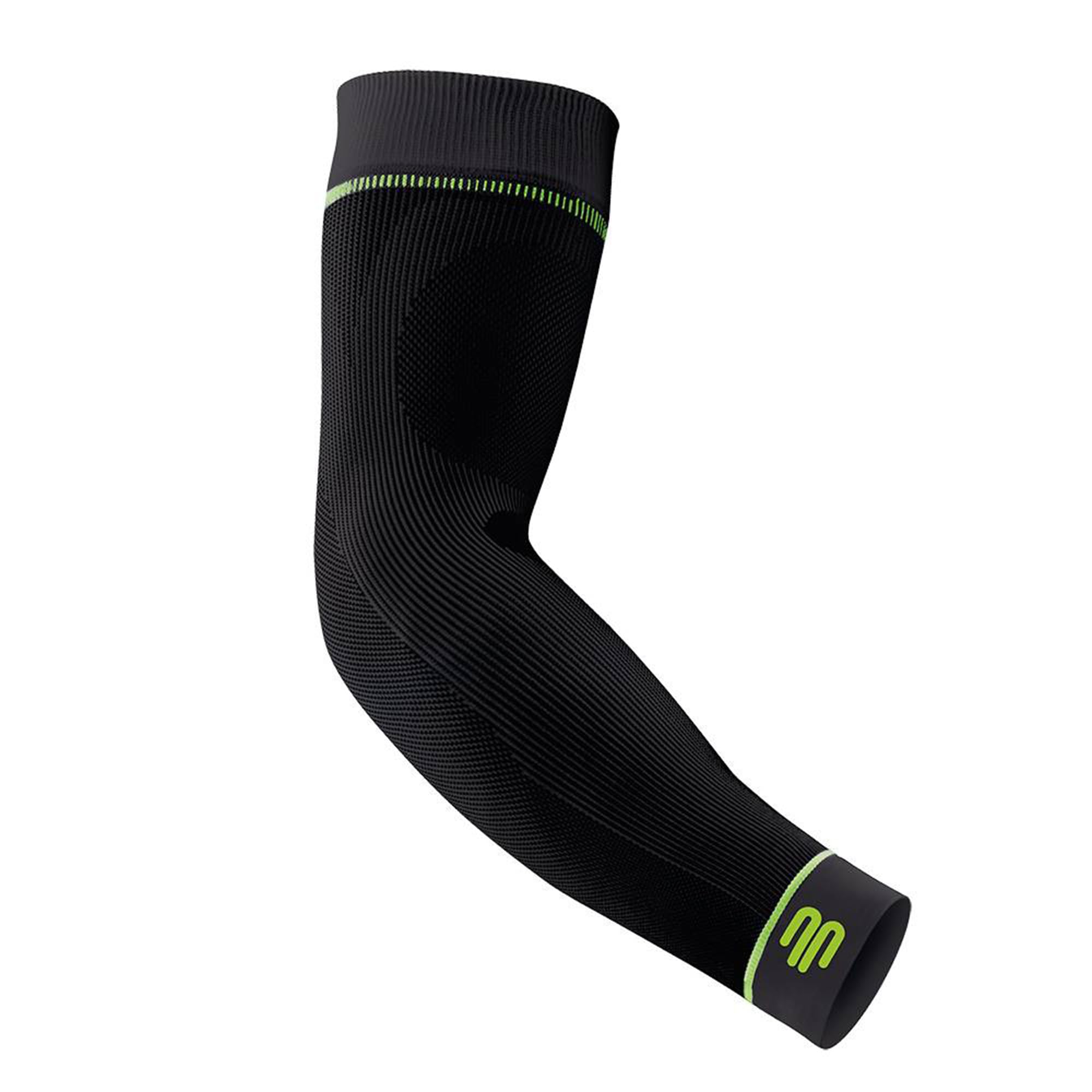
The Bauerfeind sleeve is built with a dense microfiber knit that delivers consistent gradient compression without that tight-legume feel. Users report it stays in place through hours of tennis, baseball, or daily wear, reducing arm fatigue noticeably. The fabric holds its shape wash after wash, unlike cheaper alternatives that stretch out by month two.
Multiple reviewers with larger builds confirm the X-Large Extra Long fits a 19-inch bicep at 220 pounds, which is a test many sleeves fail. The compression is steady across the forearm and bicep, providing relief for everything from tendinitis to carpal discomfort. The material feels substantial yet breathable — not a thin layer, but not stifling either.
One minor trade-off is the light pilling that can occur if the sleeve rubs against Velcro or sticky grips. Sizing up from a medium to large can help if you prefer a slightly less aggressive squeeze. Overall, the Bauerfeind delivers the most reliable long-term performance in this lineup.
Why it’s great
- Premium microfiber knit holds shape and compression after dozens of washes
- Stays put during intense sport without rolling or sliding
- True graduated compression that reduces arm fatigue and assists recovery
Good to know
- Premium price point reflects the material quality and German engineering
- May pill if exposed to Velcro, tape, or abrasive surfaces
2. Incrediwear Arm Sleeve

Incrediwear uses a proprietary fabric blend infused with carbon and natural minerals, which the brand claims enhances blood flow at the cellular level. Real user feedback backs this up — multiple reviewers report noticeable pain relief from golfers elbow and tendinitis within minutes of putting the sleeve on. It is not the highest compression rating, but the material feels active rather than passive.
The sleeve is lightweight and breathable, making it comfortable for all-day wear at work, during practice, or through a grappling session in Judo or BJJ. The material stretches easily if pulled too hard, so take care when pulling it over the hand. The antimicrobial treatment also resists odor better than standard nylon-spandex blends.
Fit runs smaller than the measurement chart suggests. A 13-inch bicep may need a M/L, and a 15-inch bicep should jump straight to Large. Many users who sized up reported a perfect fit; those who followed the chart exactly often experienced painful tightness at the upper edge.
Why it’s great
- Immediate pain relief reported for tennis elbow and tendinitis
- Antimicrobial, odor-resistant fabric for long wear
- Stays in place during high-motion sports like grappling and basketball
Good to know
- Runs small — expect to size up for proper fit
- Material can stretch permanently if yanked aggressively
3. BRUCE BOLT Graduated Compression Arm Sleeve
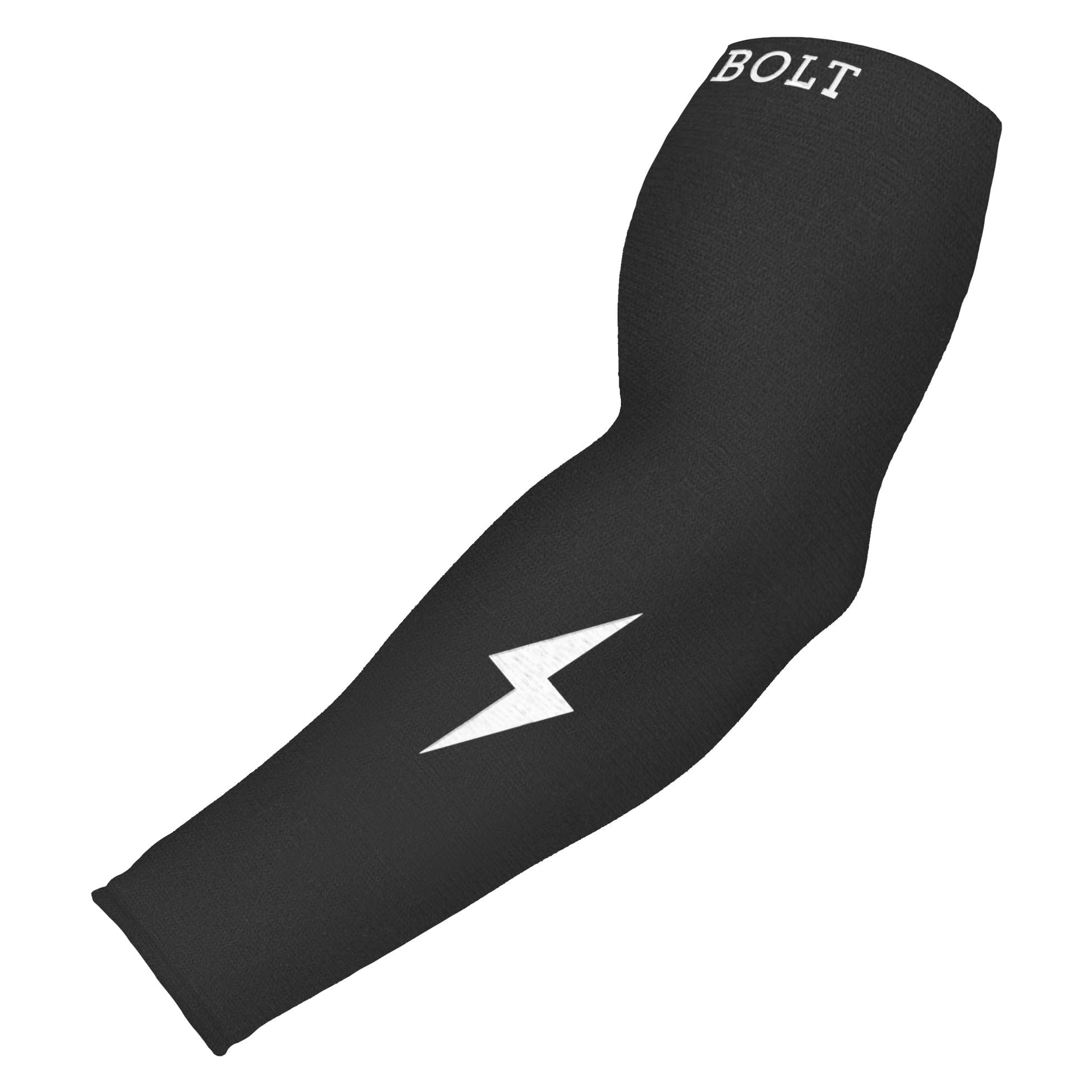
BRUCE BOLT has built a reputation among baseball players for a reason — these sleeves offer reliable graduated compression that feels supportive without strangling the arm. The material is dense and soft to the touch, with a knit that wicks moisture effectively during outdoor practice or throwing drills. It holds its elasticity well, staying snug after multiple wears and washes.
Reviewers note that the fit is true to the size chart, which is a relief in this category. The Adult Small even fits a 12-year-old athlete at 120 pounds, making it a viable pick for youth sports. The compression sits firmly across the forearm and elbow, reducing muscle vibration and fatigue during repetitive throwing motions.
The price sits at a premium tier, and some users feel the cost is high for a single sleeve. But those who have used cheaper alternatives note the difference in material rebound and long-term shape retention. If you are serious about arm care during training, this sleeve holds up over a full season.
Why it’s great
- Dense, soft fabric with strong moisture management
- Accurate sizing chart reduces guesswork
- Maintains elasticity through extended use and washing
Good to know
- Premium-priced, considered expensive by some buyers
- Limited color options compared to sports brands
4. Hiball Lymphedema Medical Compression Arm Sleeve with Gauntlet

The Hiball sleeve stands out because it includes a built-in gauntlet that covers the wrist and palm, providing continuous compression from the hand up through the bicep. This is particularly useful for those managing lymphedema, post-surgical swelling, or conditions like arthritis and neuropathy that affect the whole arm. The 20-30 mmHg rating is medical-grade, offering firm pressure that actually supports recovery.
The silicone dotted band at the top helps prevent slippage during movement. If the band irritates the skin, you can flip it outward — a thoughtful design detail. The fabric is a lightweight nylon-polyester blend that breathes well during sleep or daily office work, though some users note the material can feel a bit warm in hot climates.
Fit consistency is the main variable here. While many users report a great fit, a few found the upper arm section looser than expected after a few wears. The gauntlet portion fits snugly, but the bicep area may not feel as graduated if you are between sizes. Measure your arm before ordering and consider the size chart carefully.
Why it’s great
- Full arm and hand coverage for complete compression therapy
- Medical-grade 20-30 mmHg graduated pressure
- Flipable silicone band reduces skin irritation risk
Good to know
- Upper arm fit may loosen on some body types over time
- Gauntlet portion can feel restrictive for those with larger hands
5. ITHW Bicep Tendonitis Brace
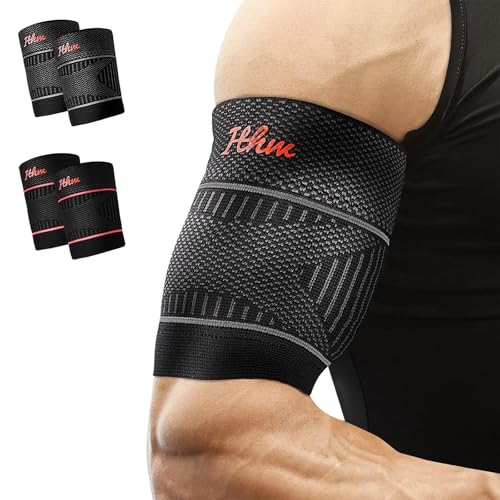
The ITHW sleeve is engineered specifically for bicep and triceps support, with two soft spring inserts sewn into the sides to prevent the sleeve from rolling down during movement. This is a unique feature among arm sleeves and makes it a strong option for bodybuilders, powerlifters, or anyone recovering from a bicep strain. The 3D knitted material is environmentally friendly, odorless, and breathable, addressing the sweat issue that plagues many sleeves during heavy lifting sessions.
Users consistently praise the fit and support, with several noting reduced pain from chronic bicep tendonitis after switching to this brace. The compression is not graduated across the whole arm — it focuses primarily on the upper arm — so it won’t replace a full forearm-to-bicep sleeve if you need total arm therapy. But for targeted bicep relief, it performs better than a generic sleeve.
Size selection is critical. The band runs tight, and multiple users had to return their first order because the sleeve would not go past the mid-bicep. Follow the circumference measurements exactly, and if you are between sizes, go up rather than down.
Why it’s great
- Built-in spring stays prevent rolling and keep placement secure
- Breathable 3D knit reduces sweat buildup during intense activity
- Excellent support for bicep tendonitis and post-surgery recovery
Good to know
- Fits very tightly — measure carefully and size up if borderline
- Focused on upper arm, not full forearm compression
6. KEKING Compression Arm Sleeves
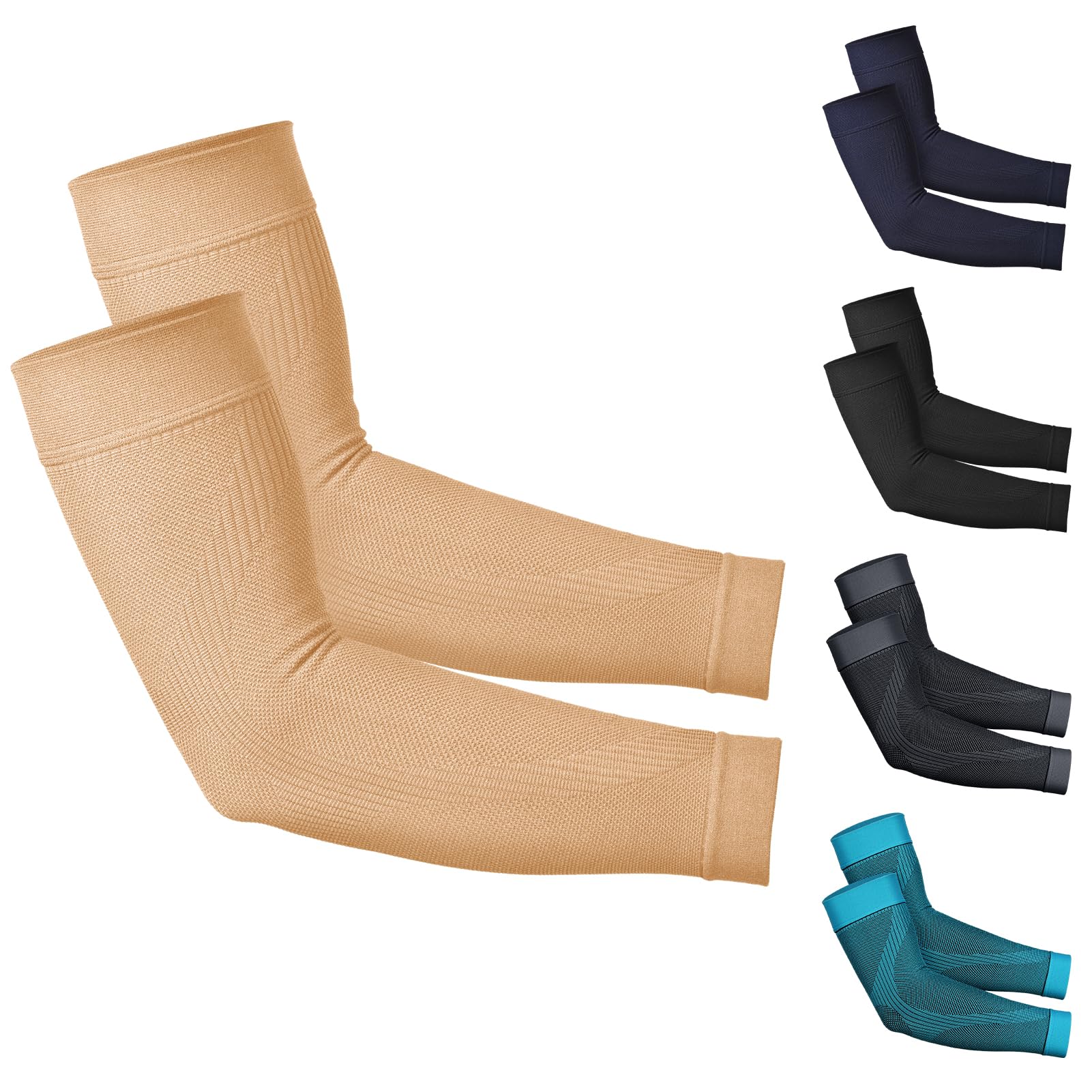
The KEKING sleeve hits a solid balance between price and performance. Made from 80% nylon and 20% spandex, it delivers firm 20-30 mmHg graduated compression without the premium price tag. Users recovering from radial tunnel syndrome, post-lift surgery, or daily tendinitis report significant pain reduction and swelling control. The material is moisture-wicking and holds up well through repeated wear.
Fit consistency is a strong point — multiple reviewers note that the sleeve stays in place without excessive tightness or rolling. The fabric is latex-free, which matters for those with sensitivities. The beige color option is subtle under clothing, making it suitable for everyday wear at work or around the house.
Some users find the material slightly scratchy against bare skin, and a few report the sleeve runs a bit long, requiring a cuff roll at the wrist. The compression level also feels moderate rather than intense — adequate for daily support and light sports, but not as aggressive as the Bauerfeind or Hiball options for serious medical needs.
Why it’s great
- True graduated compression at a value-driven price
- Durable nylon-spandex blend resists wear and tear
- Stays in place during sports and daily activity without sliding
Good to know
- Material can feel slightly scratchy and runs warm for some
- Moderate compression level, not as firm as medical-grade alternatives
7. Nike Dri-Fit UV Solar Arm Sleeves

Nike’s Dri-Fit sleeves are built for sun protection and light activity, not high-grade compression therapy. The material is thin and breathable, designed to wick sweat and block UV rays during outdoor runs, cycling, or work in the sun. A dermatologist recommended these to one reviewer for daily sun exposure, and they deliver on that promise with UPF 40+ coverage across the forearm and bicep.
The compression is mild — more of a snug fit than a therapeutic squeeze. They work well for keeping muscles warm during warm-ups or cool under direct sun, but they won’t support tendinitis or post-surgery recovery the way a 20-30 mmHg sleeve will. The fabric washes well and retains elasticity, though some users report the bicep side sliding down after a few hours of wear.
Note that the material is thin enough to tear on rough surfaces like volleyball court floors if you dive. These are best reserved for running, cycling, or yard work where the primary need is UV defense rather than compression performance.
Why it’s great
- Excellent UPF 40+ sun protection for outdoor activities
- Lightweight and breathable Dri-FIT fabric wicks sweat effectively
- Trusted Nike brand fit, washes well and retains shape
Good to know
- Very low compression — not suitable for tendinitis or medical use
- Thin material can tear on rough surfaces or during contact sports
FAQ
How tight should an arm compression sleeve feel?
Can I wear a compression sleeve for sleep?
How do I measure my arm for a compression sleeve?
Why does my sleeve keep sliding down?
Final Thoughts: The Verdict
For most users, the arm compression sleeve winner is the Bauerfeind Sports Compression Arm Sleeves because it combines medical-grade graduated compression with premium microfiber construction that outlasts every other sleeve in this lineup. If you want immediate pain relief for tendinitis with an antimicrobial fabric and lightweight feel, grab the Incrediwear Arm Sleeve. And for full arm and hand coverage during lymphedema recovery or post-surgery swelling, nothing beats the Hiball Lymphedema Medical Compression Arm Sleeve with Gauntlet.