
Our readers keep the lights on and the weekend projects moving. As an Amazon Associate, I earn from qualifying purchases.
The moment you spot a rustle in the leaves, you need a pair of binoculars that resolves feather detail at a quarter mile, not a blurry blob. Whether you’re tracking a soaring hawk or a deer at tree line, your optics determine what you actually see — and what you miss.
I’m Rikta — the founder and writer behind FitlyFast. I’ve spent years analyzing optical coatings, prism types, and build materials to separate marketing claims from real-world performance in the field.
This guide breaks down seven carefully vetted models, comparing light transmission, ergonomics, and weather sealing so you can find the best binoculars for animal viewing that match your budget and terrain.
How To Choose The Best Binoculars For Animal Viewing
Picking a binocular for wildlife is about balancing magnification, light gathering, and portability. A 10×42 configuration is the most versatile generalist spec, but your specific terrain — open plains, dense forest, or mountainous slopes — changes the ideal formula. Understanding a few core ratings prevents the frustration of buying something that looks great in a store but fails at dawn or dusk.
Magnification and Objective Lens Size
The first number (e.g., 10x) tells you how many times closer an object appears. The second (e.g., 42mm) is the diameter of the front lens, which dictates how much light enters. A 10×42 binocular hits the sweet spot: enough reach for most wildlife while keeping the exit pupil (4.2mm) large enough for low-light work. Higher magnification like 12x or 20x demands a tripod for steady viewing and narrows your field of view, making it harder to track moving animals.
Optical Coatings and Prism Quality
Fully multi-coated lenses apply anti-reflective layers to every air-to-glass surface, boosting light transmission and reducing glare. Paired with BaK-4 glass prisms (which produce a round, bright exit pupil instead of a clipped one), you get sharp, color-accurate views even in shadow or twilight. Cheaper binoculars often use BK-7 prisms or single-coated lenses, resulting in dimmer, softer images.
Weather Sealing and Build
Animal viewing often happens in damp or dusty conditions. A binocular that is O-ring sealed and nitrogen-purged resists internal fogging and survives rain or splashes. Rubber armoring protects against drops and provides a reliable grip in wet hands. For extended sessions, eye relief of 14mm or more ensures comfortable viewing, especially if you wear glasses.
Quick Comparison
On smaller screens, swipe sideways to see the full table.
| Model | Category | Best For | Key Spec | Amazon |
|---|---|---|---|---|
| Nikon Monarch M5 10×42 | Premium | High-clarity all-purpose wildlife | ED Glass + Dielectric Coatings | Amazon |
| Leupold BX-4 Pro Guide HD 12×50 | Premium | Extended reach in low light | Guard-ion HD, 12x50mm | Amazon |
| Celestron Outland X 10×50 | Mid-Range | Bright views and tripod use | 50mm objectives, BaK-4 | Amazon |
| Vortex Copperhead HD 10×42 | Mid-Range | Durability with lifetime warranty | HD optics, shockproof | Amazon |
| Bushnell H2O Xtreme 10×42 | Mid-Range | Wet-weather and marine use | IPX7 waterproof, fully multi-coated | Amazon |
| Nikon Travelite EX 10×25 | Mid-Range | Ultra-portable travel companion | 25mm objectives, aspherical lenses | Amazon |
| Bushnell PowerView 2 20×50 | Budget | High magnification on a budget | 20x mag, 50mm objectives | Amazon |
In‑Depth Reviews
1. Nikon Monarch M5 10×42
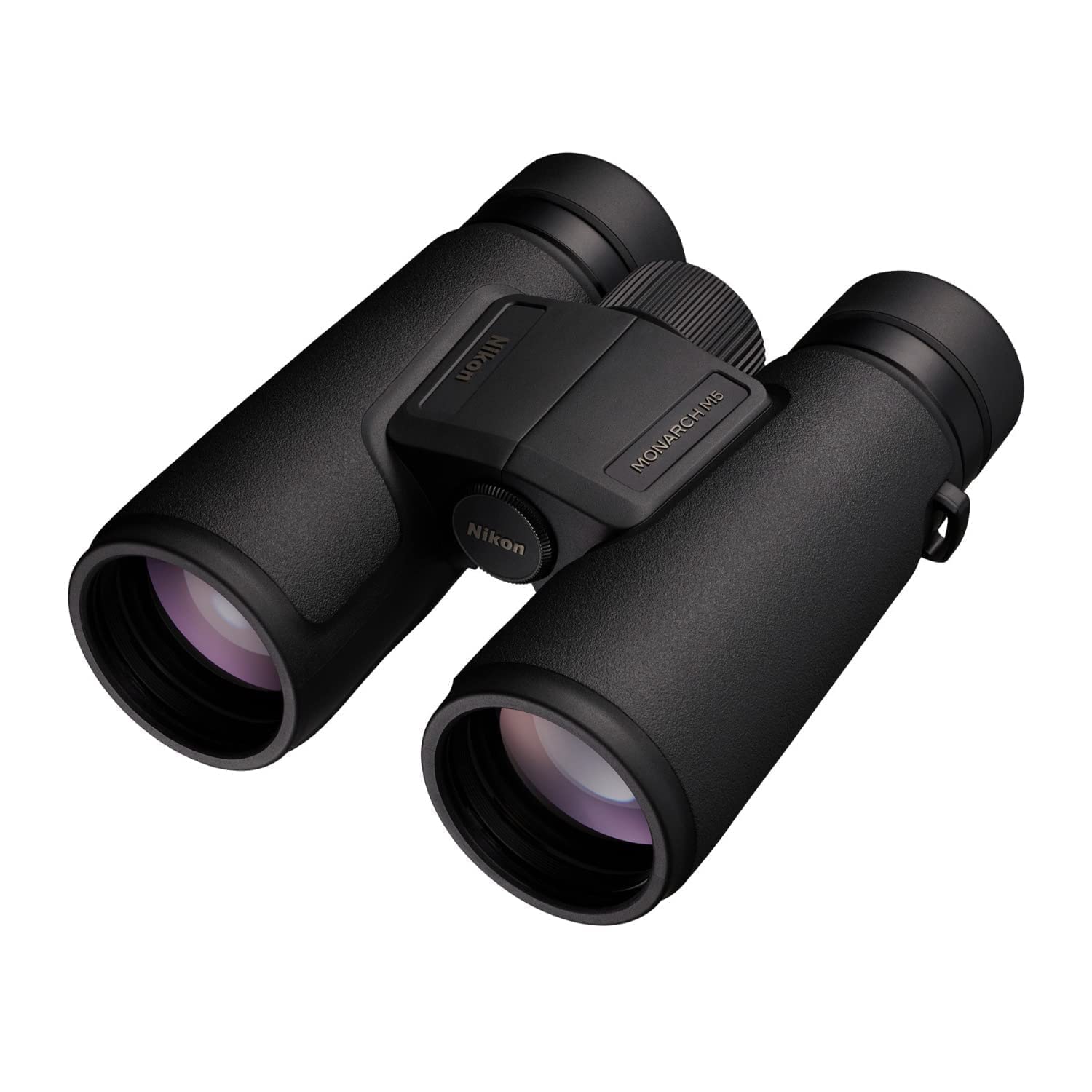
The Nikon Monarch M5 is the gold standard for serious wildlife enthusiasts who need sharp, color-accurate images in variable light. Its Extra-low Dispersion (ED) glass virtually eliminates chromatic aberration — that purple fringe you see around branches against a bright sky — while dielectric high-reflective prism coatings push light transmission far beyond what standard multi-coated optics deliver. The result is a bright, contrast-rich view that holds detail even in the deep shadows of a forest understory.
At 10x magnification with 42mm objectives, this binocular produces a 4.2mm exit pupil, which is generous enough for steady viewing at dawn or dusk. The 18.4mm of eye relief accommodates eyeglass wearers without blackouts, and the twist-up click-stop eyecups lock securely at intermediate positions. The close focus of 8.2 feet lets you inspect butterflies or frogs without backing up, adding versatility for mixed terrain.
The rubber-armored body feels solid without being heavy, and the nitrogen-purged housing keeps it fogproof across rapid temperature shifts. One minor trade-off: there is no tripod adapter thread, so for hours of stationary scanning you will need an aftermarket mounting solution. For mobile wildlife walks, however, the Monarch M5 delivers clarity that rivals models costing much more.
Why it’s great
- ED glass produces exceptional color fidelity and sharpness
- Dielectric prism coatings maximize low-light brightness
- Long eye relief and comfortable for eyeglass wearers
Good to know
- No built-in tripod mount
- Eyepiece cap reported as loose by some users
2. Leupold BX-4 Pro Guide HD 12×50

When your animal viewing requires identifying a buck at 400 yards or scanning a ridgeline at dusk, the Leupold BX-4 Pro Guide HD delivers the reach and brightness to make it happen. The 12x magnification paired with 50mm objectives produces a 4.17mm exit pupil, which is remarkably usable in fading light thanks to Leupold’s Elite Optical System that suppresses glare and maximizes resolution. The Guard-ion hydrophobic lens coating actively sheds water, dirt, and fingerprints, keeping the view clear in misty or dusty conditions.
The open-bridge, dual-hinge design makes the 1.8-pound body feel surprisingly balanced in hand, reducing fatigue during extended glassing sessions. Its 65.2-degree apparent field of view is wide for a 12x binocular, giving you enough peripheral awareness to track animals on the move. The diopter adjustment is precise, and the tripod-adaptable threads (built-in) mean you can mount it for shake-free long-range observation.
Made in Japan, the build quality is evident in every click of the eyecups and the smooth, dampened focus wheel. The 100% waterproof and fogproof guarantee is backed by Leupold’s legendary customer service. The only real consideration is that 12x magnification requires a steady hold or a support — hand shake is magnified compared to 10x models. For the viewer who prioritizes detail at distance, this is a standout.
Why it’s great
- Exceptional low-light clarity and glare reduction
- Hydrophobic lens coating is ideal for wet environments
- Wide apparent field of view for a 12x binocular
Good to know
- 12x magnification amplifies hand shake without a rest
- Premium price point suits dedicated observers
3. Celestron Outland X 10×50

The Celestron Outland X 10×50 is built for the viewer who wants maximum light gathering without venturing into the high-price tier. The 50mm objective lenses let in significantly more light than a 42mm binocular, yielding a 5.0mm exit pupil that produces a bright, easy-to-view image even in shaded woodland or late afternoon. The multi-coated optics and BaK-4 prisms work together to deliver sharp, color-accurate views that hold up well across a variety of lighting conditions.
Weighing in at a manageable level for a 50mm model, the Outland X features a rubber-armored polycarbonate housing that is waterproof and nitrogen-purged for fog-free performance. Built-in tripod adapter threads are a welcome addition, allowing you to mount the binoculars for long, steady sessions — a real advantage when waiting for a specific animal to emerge. The 5.6-degree field of view is slightly narrower than some 42mm competitors, but the extra brightness compensates when glassing into deep cover.
Eye relief of 17.4mm provides comfortable clearance for glasses users, and the center focus knob is smooth and responsive. Some users note that the field of view feels tighter than expected, and achieving perfect focus can take a couple of extra turns at close range. For the price, the Outland X offers exceptional brightness and ruggedness that punches above its class.
Why it’s great
- 50mm objectives deliver a bright, large exit pupil
- Tripod-adaptable for stable long sessions
- Waterproof and fogproof with solid rubber armor
Good to know
- Narrower field of view than some 10×42 models
- Focus fine-tuning can be finicky at close distances
4. Vortex Copperhead HD 10×42

Vortex has built a reputation on rugged, field-ready optics backed by a lifetime VIP warranty, and the Copperhead HD 10×42 carries that tradition forward. The HD optical system enhances color fidelity and edge-to-edge sharpness, while fully multi-coated lenses maximize light transmission through every glass surface. The result is a crisp, neutral image that handles dawn and dusk transitions well, with minimal chromatic aberration for a mid-range optic.
The rubber-armored body absorbs bumps and provides a slip-resistant grip even in wet conditions. Adjustable eyecups and a locking diopter let you dial in a personalized fit, and the included GlassPak harness distributes weight comfortably for all-day carries. Waterproof and fogproof construction means you can use it confidently in rain, snow, or humidity without worrying about internal fogging.
Compared to the higher-priced Monarch M5, the Copperhead HD sacrifices a small amount of low-light edge sharpness and contrast, but for general wildlife viewing — hiking, birding, and open-field scanning — it delivers 90% of the performance at a noticeably more accessible price. The VIP warranty, fully transferable and unconditional, removes the anxiety around accidental damage. A minor point: some users find the focus knob slightly stiff when new, though it loosens with use.
Why it’s great
- HD optics deliver excellent clarity and color
- Lifetime VIP warranty covers damage or defects
- Rugged, waterproof build with comfortable harness
Good to know
- Not as bright in very low light as premium models
- Focus knob may feel stiff initially
5. Bushnell H2O Xtreme 10×42

The Bushnell H2O Xtreme is specifically designed for those who encounter water regularly — whether boating, coastal birding, or hiking in persistent rain. The IPX7 rating means it can survive submersion up to 1 meter for 30 minutes, far exceeding the typical waterproof claim. Nitrogen purging eliminates internal fogging during rapid temperature changes, and the O-ring sealed optical system keeps moisture out even during heavy spray.
Fully multi-coated glass surfaces and BaK-4 prisms deliver bright, clear images that compete well with models at a higher price point. The 10×42 configuration provides a versatile 4.2mm exit pupil, and the rubberized, textured grip remains secure when your hands are wet. The compact roof-prism design packs easily into a daypack or boat bag without adding bulk.
One limitation: this specific model lacks a tripod adapter socket, so if you plan to mount it for extended scanning, you will need to look at other variants. The included neck strap is functional but not padded, and some users replace it with a harness for better weight distribution. For a dedicated wet-weather binocular that delivers reliable optics without breaking the bank, the H2O Xtreme is a solid performer.
Why it’s great
- IPX7 waterproof rating for submersion protection
- Fully multi-coated optics produce bright, clear images
- Lightweight and compact for its capability
Good to know
- No tripod adapter socket on this model
- Neck strap is basic and less comfortable on long hikes
6. Nikon Travelite EX 10×25

When your animal viewing priority is packability — day hikes, international travel, or quick scrambles — the Nikon Travelite EX 10×25 is the definition of pocketable performance. The 25mm objective lenses and compact roof-prism body slip into a jacket pocket or small hip pack, yet the multilayer-coated optics and aspherical eyepiece lenses deliver surprising clarity and minimal distortion for such a small package.
The 10x magnification in a 25mm format does come with a trade-off: a 2.5mm exit pupil means the image dims noticeably in low light compared to larger objective binoculars. In bright daylight or open meadows, however, the view is sharp and contrasty, with good detail on birds and mammals at moderate distances. The nitrogen-purged, O-ring sealed body is waterproof up to 2 meters for 5 minutes, so a sudden rain shower won’t ruin your outing.
High-eyepoint construction and turn-and-slide click-stop eyecups make it comfortable for eyeglass wearers, and the 14mm eye relief is adequate for most users. The 4.2-degree field of view is on the narrow side, making it harder to follow fast-moving animals. As a secondary glass or a true travel companion, the Travelite EX packs versatility into a ridiculously small form factor that invites you to take it everywhere.
Why it’s great
- Extremely lightweight and pocket-friendly
- Waterproof and fogproof in a compact build
- Sharp optics with aspherical eyepieces reduce distortion
Good to know
- 2.5mm exit pupil limits low-light performance
- Narrow field of view challenges tracking movement
7. Bushnell PowerView 2 20×50

The Bushnell PowerView 2 20×50 is an entry-level option that packs a massive 20x magnification into an affordable package, making it appealing for budget-conscious viewers who want to see far. The 50mm objectives gather plenty of light, and the multi-coated optics produce an image that is bright enough for daytime and well-lit conditions. The aluminum alloy chassis provides a durable backbone without excessive weight, and the soft-touch rubber grip gives a confident hold.
The catch with 20x magnification is stability — hand shake is highly amplified, and achieving a sharp, steady view almost always requires a tripod or a solid rest. The 2.5mm exit pupil is small, which means the image darkens significantly as light fades. Users report that the plastic internal bridge can flex slightly, and the lack of fog coating means condensation may form when moving between temperature extremes.
Despite these limitations, verified customer feedback confirms that the magnification is genuine (not an inflated marketing spec), and the unit can resolve details like a bird in flight at a quarter mile. For the viewer who needs extreme reach on a strict budget and is willing to use a tripod, the PowerView 2 offers a way to get started without a major investment. It is a gateway optic, not a long-term companion for serious naturalists.
Why it’s great
- True 20x magnification for extreme distance viewing
- Aluminum chassis is durable for the price
- Budget-friendly entry point for beginners
Good to know
- Requires tripod for steady, usable images at 20x
- No fog-proofing; prone to condensation
- Image quality and contrast trail mid-range models
FAQ
What magnification is best for general animal viewing?
What does fully multi-coated mean on a binocular?
Is 50mm objective better than 42mm for animal viewing?
Why is BaK-4 prism glass important?
Final Thoughts: The Verdict
For most users, the best binoculars for animal viewing winner is the Nikon Monarch M5 10×42 because it combines premium ED glass and dielectric coatings into a compact, weather-sealed body that excels across forests, fields, and coastlines. If you want extreme low-light reach and the ability to resolve detail at 400+ yards, grab the Leupold BX-4 Pro Guide HD 12×50. And for a rugged, warranty-backed all-rounder that handles wet conditions with confidence, nothing beats the Vortex Copperhead HD 10×42.