
Our readers keep the lights on and the weekend projects moving. As an Amazon Associate, I earn from qualifying purchases.
Your piercing is healed, but the real test starts when you swap in that first piece of body jewelry. Too many buyers learn the hard way that cheap alloys cause irritation, discoloration, or lost gems within days. The right choice isn’t just about shine — it’s about material safety, thread precision, and daily comfort against bare skin.
I’m Rikta — the founder and writer behind FitlyFast. I’ve spent years analyzing metal grades, threading standards, and real-world wear data across hundreds of piercing jewelry SKUs to separate the safe, lasting pieces from the ones that fail fast.
Whether you’re upgrading a healed nostril, adding a cartilage stud, or replacing a belly ring, finding the right body jewelry comes down to knowing which metals, gauges, and closures hold up without irritation. This guide breaks down seven top contenders across every key placement.
How To Choose The Best Body Jewelry
The body jewelry market is flooded with plated brass, mystery alloys, and poor threading that turns a simple stud change into a frustrating ordeal. Before you add anything to your cart, lock in the three factors that determine whether a piece stays comfortable and secure for months — or ends up lost or causing a reaction within a week.
Metal Grade Is Non-Negotiable
Nickel allergies affect up to 17% of the population, and even healed piercings can react to plated surfaces. Look for ASTM F136 titanium (implant-grade, nickel-free) or solid 14k gold — not gold-filled, gold-plated, or gold-vermeil. Stainless steel can work for some, but surgical-grade 316L is safer than generic 304. The metal grade is listed in the product details; if it’s not, treat it as suspect.
Gauge (Thickness) and Post Length Must Match Your Piercing
Standard nostril and cartilage piercings use 20g (0.81mm) or 18g (1.0mm). Belly and eyebrow piercings typically use 14g (1.6mm). Buying a 20g hoop for an 18g hole causes the jewelry to sit loosely and migrate. Flat-back labret posts need the correct length — too long and they snag, too short and they embed. Measure your current jewelry or ask your piercer; never guess.
Closure Type Dictates Daily Security
Threaded ends (internal thread is best) stay tight but require fine motor skill to screw on. Push-fit (threadless) pins offer easier insertions with a secure bend-lock mechanism. Clicker hoops hinge closed for a seamless look but can wear out after repeated opening. For belly rings and hard-to-reach cartilage, internal-thread or push-fit labrets are the most dependable option.
Quick Comparison
On smaller screens, swipe sideways to see the full table.
| Model | Category | Best For | Key Spec | Amazon |
|---|---|---|---|---|
| COCHARM 14k Solid Gold Hoop | Clicker Hoop | Cartilage & septum | 14k solid gold, hinge closure | Amazon |
| Forbidden Body Jewelry 14k Gold Stud | Screw Stud | Nostril daily wear | 14k gold, 2mm CZ, 20g post | Amazon |
| Body Candy 14k Gold Nose Hoop | Seamless Hoop | Low nostril & small noses | 14k solid gold, 20g, 6mm | Amazon |
| Solid 14KT Yellow Gold 1.5mm Ball Nose Ring | L-Shape Stud | Healed nostril, sensitive skin | 14k solid gold, L-bend post | Amazon |
| FINE4U ASTM F136 Titanium Flat-Back Stud | Flat-Back Labret | Cartilage, conch, helix | ASTM F136 titanium, threaded | Amazon |
| OUFER 14k White Gold Heart Belly Ring | Curved Barbell | Navel & inverse navel | 14k solid white gold, CZ | Amazon |
In‑Depth Reviews
1. COCHARM 14K Solid Gold 18g/16g Nose Rings
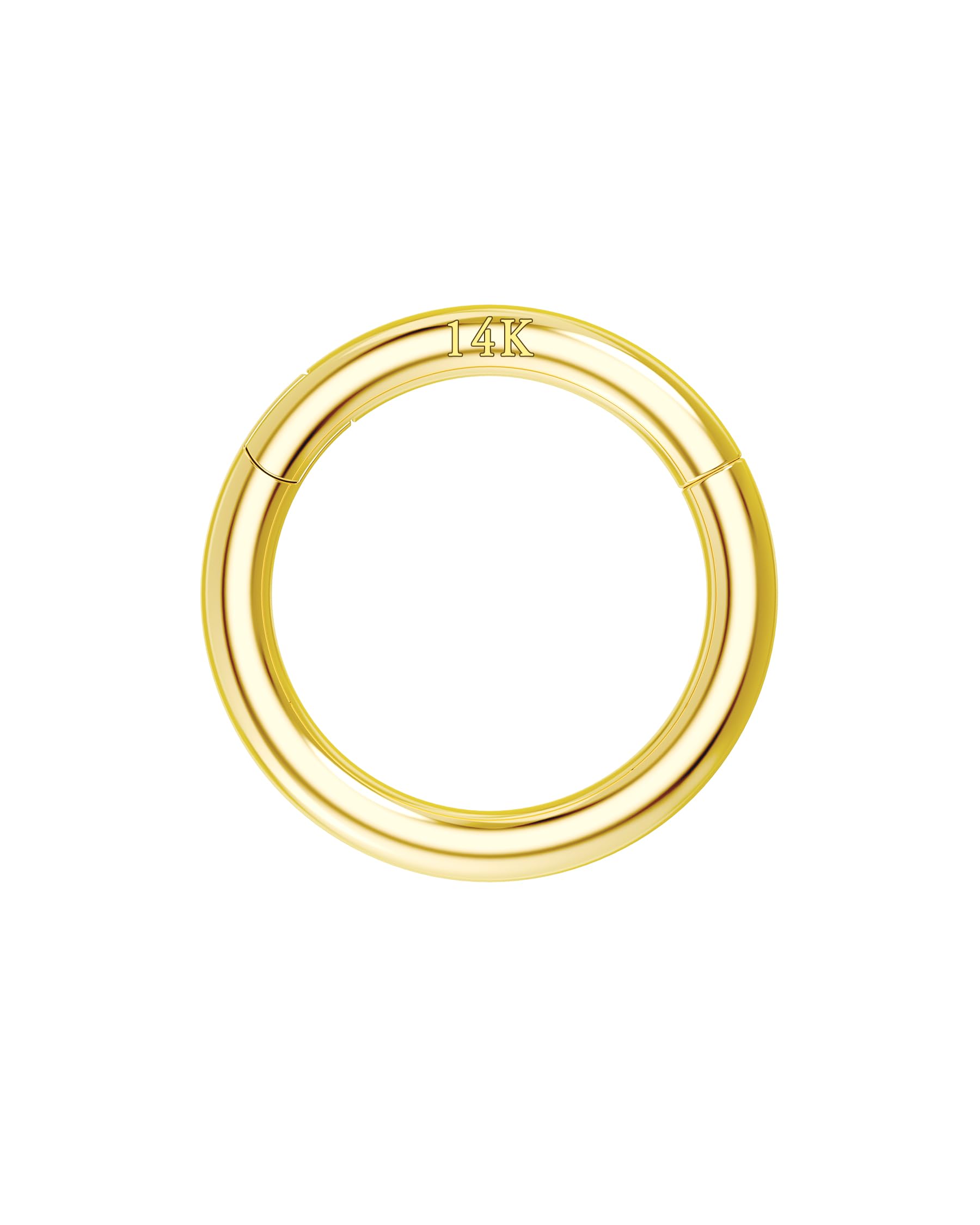
This hinge-clicker hoop solves the single biggest pain point of gold body jewelry: difficult insertion. Multiple users confirm the clasp clicks shut with minimal force, unlike many competing hoops that require squeezing or bending the metal until it deforms. The 14k solid gold construction eliminates irritation even in fresh cartilage piercings, and the hinge mechanism holds securely throughout daily wear.
Sizing flexibility is a standout feature — the hoop is available in 18g and 16g thicknesses, which means it fits both standard nostril and thicker septum piercings without stretching. The 6mm and 8mm diameter options let you match the hoop size to your anatomy rather than forcing a one-size-fits-all approach. For a helix or conch piece you intend to leave in for months, this is the set-and-forget choice.
The only recurring note from users is that the hinge can feel stiff the first few times you open it, and a small number of units arrived with the clasp already broken from handling. But when the mechanism functions correctly, it stays locked without the thread-alignment frustration common to screw-style hoops.
Why it’s great
- Easy snap-in hinge eliminates threading hassle
- Solid 14k gold prevents discoloration and irritation
- Available in both 18g and 16g for nostril or septum use
Good to know
- Hinge mechanism can break with rough handling
- First few closures require more finger pressure than expected
2. Forbidden Body Jewelry 14k Gold Nose Ring

If you want a nostril stud with genuine sparkle at a mid-range price, this 14k solid gold piece with a simulated diamond is the strongest contender. The 2mm cubic zirconia catches light noticeably more than plain ball ends, yet the stud sits flush enough to avoid snagging on masks or towels. The 20g post is standard for healed nostrils, and the internal-thread design keeps the gem end seated tight once screwed in.
Skin compatibility is excellent — multiple sensitive-skin users report zero irritation even when wearing the stud 24/7 for months. The combination of solid gold and a small CZ means the aesthetic holds up without the clouding or peeling that plagues plated brass studs. The screw-on end stays secure enough that no user reports losing the gem during sleep or exercise.
The single downside is thread precision: a few buyers note that the ball end’s threading doesn’t feel perfectly smooth, requiring gentle alignment to avoid cross-threading. This is typical of mass-produced gold studs at this price tier, but careful installation should prevent long-term issues.
Why it’s great
- 14k solid gold with CZ gives a refined look without irritation
- Internal threading keeps the gem locked in place
- 20g thickness fits standard healed nostril piercings perfectly
Good to know
- Threading can feel slightly rough and requires careful alignment
- Ball end is larger than expected, may feel bulky in some nostrils
3. Body Candy 14k Gold Nose Hoop
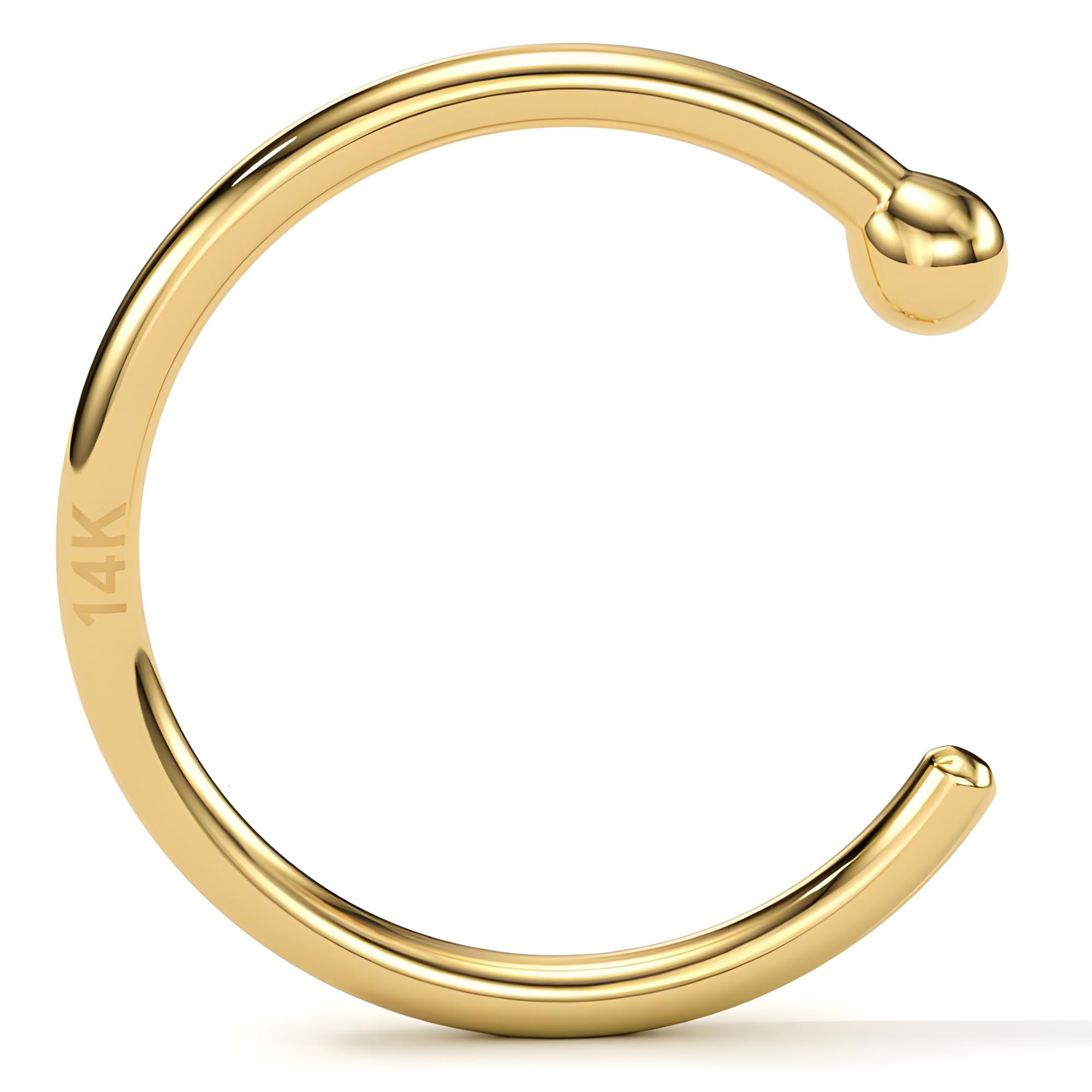
This seam-style hoop is purpose-built for low nostril piercings and smaller noses — the 6mm diameter is noticeably tighter than standard 8mm or 10mm hoops, which is an advantage for those whose piercings sit close to the nostril edge. The 14k solid gold build gives it a genuine weight and luster that plated hoops lack, and the seam closure, once maneuvered into place, holds firmly without popping open during daily activity.
Users with partially closed piercings report being able to gently guide this hoop through without forcing, thanks to the thin 20g wire. The gold color remains consistent after months of continuous wear — no fading, no green tint. The snug fit also prevents the hoop from flipping forward or migrating upward, a common annoyance with larger-diameter rings.
The trade-off is that the tiny size makes insertion genuinely fiddly. A few buyers with average nose anatomy found the hoop too small, causing it to pull at the piercing channel. If your piercing is above the nostril crease, this hoop will likely sit too tightly and create irritation.
Why it’s great
- 6mm diameter is ideal for low nostril and small nose anatomy
- Solid 14k gold resists irritation and stays bright
- Seam holds securely once in place, no accidental loss
Good to know
- Too small for standard or high nostril piercings — measure first
- Insertion requires careful maneuvering; not a quick swap
4. Solid 14KT Yellow Gold 1.5mm Ball Nose Ring
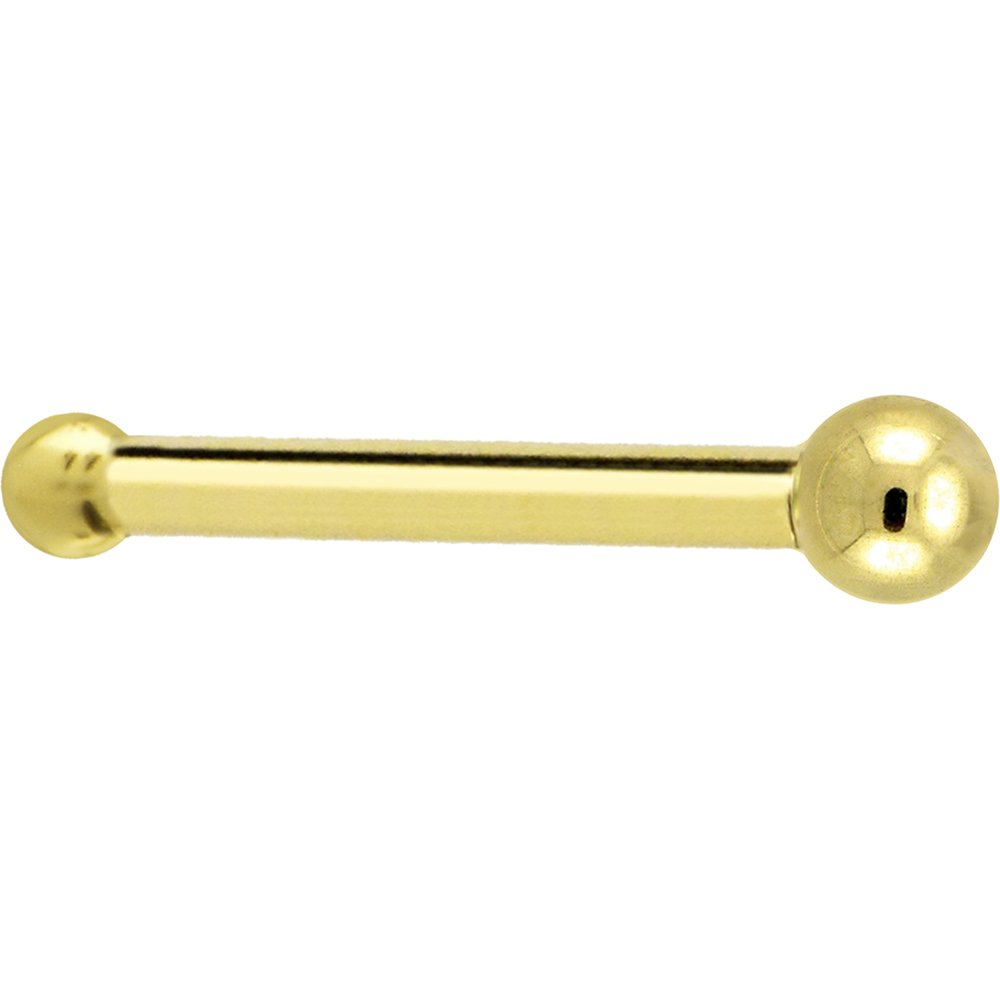
At this price point, finding a genuine solid 14k gold nose ring is rare — most options are either gold-plated or karat-clad. The 1.5mm ball is subtle enough for professional settings but still visible against most skin tones.
The L-bend design is polarizing: when the bend matches your piercing angle, the stud stays locked in place without a backing. Users who found the right fit report the stud never fell out. The simple form factor also makes it easy to clean with saline spray without removing it, reducing the risk of irritation from repeated handling.
The ball size is genuinely smaller than it appears in product photos — a few buyers expected a more substantial 2mm look. Additionally, the L-bend works best for nostrils with a downward angle; if your piercing is more horizontal, the stud may rotate and require frequent readjustment.
Why it’s great
- True solid 14k gold at an entry-level-friendly price
- Hypoallergenic for sensitive skin — no nickel reaction
- L-bend stays secure without a separate backing
Good to know
- Ball is smaller than expected — 1.5mm may look too delicate for some
- L-bend fit depends on piercing angle; can rotate on horizontal holes
5. FINE4U ASTM F136 Titanium Flat-Back Stud
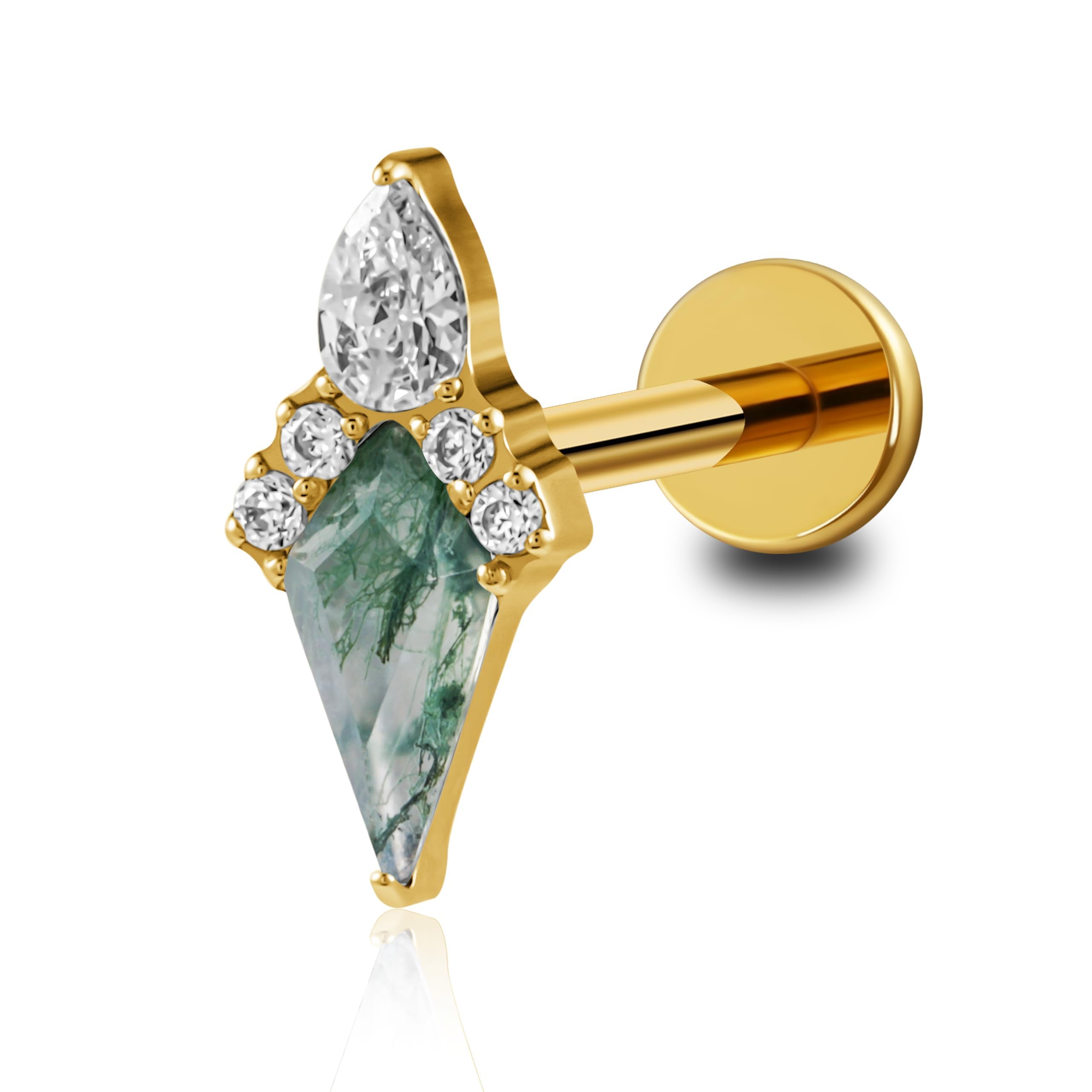
For any cartilage placement — conch, helix, flat, or tragus — this titanium flat-back labret is the medically safest option in this lineup. ASTM F136 titanium is the same grade used in surgical implants, and it contains no nickel, no chrome, and no cobalt. The flat disc back eliminates the snagging and pressure points that screw-ball posts create on the inner ear, making it comfortable for extended wear with AirPods or over-ear headphones.
The two included post lengths (6mm and 8mm) accommodate both fresh piercings with swelling and healed ones where you want a flush fit. The gem is securely seated in the threaded top — users confirm it doesn’t wobble or loosen during daily wear. The blue stone option offers a colorful alternative to plain metal without sacrificing material safety.
Thread alignment is the main friction point. The internal-thread system is precise, but multiple users mention needing tweezers or strong fingernails to start the thread. Once seated, the stud stays tight, but the initial installation is more finicky than push-fit alternatives.
Why it’s great
- ASTM F136 implant-grade titanium — zero nickel exposure
- Flat-back disc prevents snagging on hair, masks, and headphones
- Two post lengths let you adjust fit for swelling or healed anatomy
Good to know
- Threading requires fine motor skill to align; tweezers help
- Some units arrive with loose or cross-threaded tops — inspect before use
6. OUFER 14k Solid White Gold Heart Belly Ring

Belly button jewelry at this tier often substitutes silver or plated brass, but this OUFER piece is solid 14k white gold throughout, including the curved bar. The heart-shaped cubic zirconia is securely prong-set and shows no wobble even after months of daily wear. It fits both standard navel and inverse navel piercings — the curved bar length accommodates the upward angle of an inverse without excessive pressure.
Users with healed belly piercings report the threading screws on smoothly and stays tight, unlike cheaper bars that unscrew after a few days. The white gold finish is bright and doesn’t develop the yellowish patina that can happen with low-karat white gold. The overall weight feels substantial but not heavy enough to pull on the piercing channel.
The heart shape is smaller than many expect — it reads as a dainty pendant rather than a statement piece. The replacement ball (sold separately) has been noted to have weaker threading that can fall off, so handle the original carefully.
Why it’s great
- Solid 14k white gold — not plated, no fading risk
- Works for both standard and inverse navel piercings
- Threaded ends screw on securely and stay tight
Good to know
- Heart charm is smaller and more delicate than product images suggest
- Replacement ball threading is inconsistent; keep the original parts
7. Oveta 150-151PCS Body Piercing Jewelry Lot

If you’re stocking up on backup jewelry for multiple healed piercings and want variety over individual quality, this 150-piece kit offers an economical mix of 14g, 16g, and 20g pieces covering nose, lip, tongue, cartilage, tragus, eyebrow, industrial, and belly button. The surgical-grade stainless steel construction is appropriate for fully healed piercings with no history of nickel sensitivity.
The real utility lies in the replacement parts — many users specifically bought this kit to recover lost barbell balls and nose stud ends. For the price, you get enough individual pieces to keep every piercing in your set-up fitted without buying single replacements. The 20g pieces fit standard nostril and cartilage holes snugly, and the variety of spike and gem ends allows for easy aesthetic changes.
The major quality caveat is thread inconsistency: several bars and ends in the kit arrived with cross-threaded threading, causing spike tops to fall off easily. A few eyebrow and labret bars didn’t lock securely even when fully screwed in. This kit is best treated as a functional spare-parts bin rather than a daily-wear main set.
Why it’s great
- Covers 14g to 20g across all common piercing types in a single buy
- Useful as a backup and replacement parts kit
- Stainless steel is suitable for healed, non-reactive piercings
Good to know
- Threading is inconsistent — some bars don’t lock the ball ends securely
- Not safe for fresh piercings or nickel-sensitive skin
FAQ
Can I wear 14k gold body jewelry in a fresh piercing?
What gauge should I buy for a standard nostril piercing?
How do I keep a screw ball from falling off my nose stud?
Are stainless steel body jewelry kits safe for sensitive skin?
Final Thoughts: The Verdict
For most users, the best body jewelry winner is the COCHARM 14k Solid Gold Hoop because it combines genuine solid gold material safety, an easy hinge closure that solves daily insertion headaches, and flexible sizing for both nostril and cartilage use. If you want a labret stud that won’t cause a reaction in sensitive cartilage, grab the FINE4U ASTM F136 Titanium Flat-Back Stud. And for a budget-friendly solid gold pick that disappears comfortably into your nostril, nothing beats the Solid 14KT Yellow Gold 1.5mm Ball Nose Ring.