
Our readers keep the lights on and the weekend projects moving. As an Amazon Associate, I earn from qualifying purchases.
A PC headset’s job sounds simple: deliver game audio and let you talk to teammates. The reality is that most headsets fail at one of those tasks. They either muddy the soundstage where enemy footsteps should be crisp, or they transmit keyboard clicks and background noise as if they were part of the conversation. Serious PC gaming and remote work demand a headset that solves both problems without introducing new ones.
I’m Rikta — the founder and writer behind FitlyFast. I analyze the engineering decisions behind PC audio hardware — driver architecture, microphone polar patterns, frame materials, and connectivity protocols — to separate real performance from marketing claims.
Choosing the right model means understanding where your priorities sit: competitive audio clarity, all-day comfort, mic quality, or wireless freedom. This guide breaks down the best options for every use case, from budget-friendly wired units to premium multi-platform headsets, all to help you find the best audio headset for pc.
How To Choose The Best Audio Headset For PC
Not all PC headsets are built for the same job. A competitive FPS player needs positional audio precision. A remote worker needs a mic that filters out ambient noise. A casual gamer wants comfort and decent sound without spending heavily. Understanding the engineering trade-offs in each category helps you pick the right tool for your actual daily use.
Driver Architecture and Soundstage
The driver is the speaker inside each ear cup. Larger drivers (40mm and 50mm) can move more air, producing deeper bass and higher volume ceilings. The more important factor is how the driver is chambered. Standard single-chamber drivers mix frequencies inside one enclosure, causing distortion at higher volumes. Dual-chamber designs physically separate the bass-producing rear wave from the mid and high frequencies, resulting in cleaner audio separation. If you play competitive shooters or strategy games where positional audio matters, prioritize headsets with dedicated chamber engineering.
Microphone Polar Patterns and Pickup Quality
A headset microphone is only as good as its ability to reject background noise. Omnidirectional mics pick up sound equally from all directions — your voice plus every fan, keyboard, and conversation in the room. Cardioid mics are shaped to capture sound primarily from the front, attenuating noise from the sides and rear. Retractable or detachable boom mics offer the best pickup because the capsule sits close to your mouth. Fixed in-line mics on budget headsets often fail this test, picking up room echo and causing teammates to complain.
Connectivity and Platform Compatibility
Wired USB headsets offer the lowest latency and easiest plug-and-play setup on Windows and macOS. Analog 3.5mm headsets work across more platforms, including consoles and mobile devices, but depend on your motherboard’s built-in audio chipset for quality. Wireless headsets using 2.4GHz radio frequency (Lightspeed, HyperX, SteelSeries) deliver near-zero latency, while Bluetooth adds the convenience of mixing phone calls with game audio. For pure PC use, USB wired or 2.4GHz wireless are the most reliable options. Avoid Bluetooth-only headsets for competitive gaming due to higher latency.
Build Materials and Long-Session Comfort
A headset that hurts after 30 minutes is useless regardless of sound quality. Memory foam ear cushions wrapped in breathable fabric or protein leather distribute pressure around the ear rather than on it. Fabric cushions breathe better during long sessions, while leatherette provides better passive noise isolation. The headband frame matters equally — steel-reinforced or aluminum frames withstand daily flexing and drops, while all-plastic frames can crack at the hinge points. Adjustable suspension bands distribute weight more evenly than fixed headbands, reducing hot spots on top of the skull.
Quick Comparison
On smaller screens, swipe sideways to see the full table.
| Model | Category | Best For | Key Spec | Amazon |
|---|---|---|---|---|
| HyperX Cloud Alpha | Wired | Competitive Audio Clarity | Dual Chamber 50mm Drivers | Amazon |
| Logitech G522 Lightspeed | Wireless | Multi-Device Flexibility | PRO-G 48kHz/24bit Drivers | Amazon |
| SteelSeries Arctis Nova 7P | Wireless | Multi-Platform + Mobile Mixing | Neodymium 40mm Drivers | Amazon |
| Razer Kraken V4 X | Wired | Retractable Mic + RGB | TriForce 40mm Drivers | Amazon |
| FIFINE AmpliGame H13BP | Wired USB | USB Plug-and-Play with RGB | 50mm Dynamic Drivers | Amazon |
| EKSA E900 Pro | Wired USB/3.5mm | Dual Interface Flexibility | 50mm Dynamic Drivers | Amazon |
| JBL Quantum 100M2 | Wired 3.5mm | Entry-Level Budget Pick | 40mm QuantumSOUND Drivers | Amazon |
In‑Depth Reviews
1. HyperX Cloud Alpha

The Cloud Alpha earns its reputation through a single engineering decision: dual chamber drivers. By separating the bass-producing rear wave from the mids and highs, HyperX eliminates the frequency smearing that plagues single-chamber headsets. Footsteps in Valorant sound distinct from gunfire, and explosion rumble doesn’t drown out dialogue cues. The 50mm drivers deliver a frequency response from 15Hz to 25kHz, giving them sub-bass extension that most PC gaming headsets in this tier lack.
The build uses a durable aluminum frame that survives drops and daily flexing without creaking. The memory foam ear cushions are wrapped in leatherette, providing strong passive noise isolation that blocks out room fans and ambient chatter. The detachable braided cable includes an inline audio control box for volume and mute, which reduces cable noise at the connection point. At 309 grams, the headset is light enough for multi-hour sessions without neck strain.
The detachable noise-cancellation microphone uses a cardioid pickup pattern that keeps voice transmission clear while filtering keyboard clicks and mouse taps. The mic arm is flexible and holds position without sagging. The frequency response of the mic is optimized for vocal clarity rather than full-range recording, which is exactly what team communication requires. For PC players who want the best audio separation and durable build without paying for wireless features they don’t need, this is the standard.
Why it’s great
- Dual chamber drivers deliver unmatched audio separation for competitive gaming
- Aluminum frame is more durable than plastic competition
- Detachable braided cable and mic reduce failure points
- Comfortable memory foam for long sessions
Good to know
- Leatherette ear cushions can get warm during extended use
- Microphone quality is good but not broadcast-grade
- No virtual surround sound included by default
2. Logitech G522 Lightspeed

The G522 uses Logitech’s PRO-G audio drivers, which are engineered to deliver synchronized 48kHz/24-bit audio with low distortion and deep bass. The sound signature is balanced — bass hits have weight without bloat, and treble details like reload sounds and distant footsteps remain clear. The addition of DTS Headphone X virtual surround sound expands the soundstage for immersive single-player titles, though competitive players may prefer stereo for precision.
Connectivity is the headline feature here. The headset supports Lightspeed wireless for low-latency PC gaming, Bluetooth 5.0 for mobile devices, and wired USB-A to USB-C for uninterrupted play when the battery runs out. The 60-hour battery life (with RGB turned off) means you can game for a full work week on a single charge. The 30-meter wireless range lets you walk to the kitchen without dropping audio, a convenience that wired headsets simply can’t offer.
The mic is a full-bandwidth 48kHz/16-bit unit that captures voice with significantly more detail than typical gaming headset microphones. Blue VO!CE software provides EQ presets, noise reduction, and compression filters that clean up the signal before it reaches your teammates. The lightweight 280-gram build uses a washable suspension band and rounded cushion ear cups that reduce pressure on the ears. The LIGHTSYNC RGB is customizable through G HUB, though the lighting is side-facing rather than on the ear cups, which keeps it subtle.
Why it’s great
- Tri-connectivity (Lightspeed, Bluetooth, wired) covers every scenario
- Full-bandwidth mic with Blue VO!CE software is best-in-class for wireless
- 60-hour battery life eliminates daily charging anxiety
- Lightweight design with washable suspension band
Good to know
- Audio quality is excellent for gaming but not for critical music listening
- RGB lighting drains battery faster
- Requires G HUB software for full EQ customization
3. SteelSeries Arctis Nova 7P

The Arctis Nova 7P uses neodymium magnetic drivers that produce an ultra-detailed soundscape with elevated clarity across the frequency range. The highs are crisp without being harsh, the mids are detailed enough to pick up environmental dialogue, and the bass is present but controlled. The headset supports 360° spatial audio and is fully compatible with Tempest 3D Audio on PlayStation 5, making it a strong choice if you split your gaming time between PC and console.
The dual-wireless design is the differentiator here. A 2.4GHz USB-C dongle delivers lossless, low-latency audio to your PC or PlayStation, while simultaneous Bluetooth 5.0 connects your phone. You can take a Discord call or play Spotify on your phone while maintaining game audio from your PC — a hard-to-find convenience that other wireless headsets implement poorly. The USB-C fast charging gives six hours of play from a 15-minute charge, so a quick top-up before a session is genuinely useful.
The retractable microphone uses SteelSeries’ Gen 2 AI-powered noise cancellation, which filters out background sounds like keyboard clatter and air conditioning hum without making your voice sound processed. The mic hides completely into the ear cup when not in use, which is a cleaner solution than detachable mics that get lost. The AirWeave memory foam ear cushions use a fabric weave that breathes better than leatherette, reducing heat buildup during long sessions. The adjustable steel headband adds durability that the all-plastic competition lacks.
Why it’s great
- Simultaneous 2.4GHz + Bluetooth audio mixing is a genuine workflow upgrade
- Neodymium drivers deliver detailed, balanced sound
- Retractable AI-powered mic is clean and effective
- AirWeave cushions stay cool during extended use
Good to know
- White ear pads show stains over time
- Maximum volume may not satisfy hearing-impaired users
- Relies on USB-C dongle for wireless — no dedicated charging dock included
4. Razer Kraken V4 X

The Kraken V4 X uses Razer’s TriForce 40mm drivers, which separate the driver into three distinct parts for highs, mids, and lows. This three-part design prevents frequency overlap, so treble details remain distinct from bass notes even at higher volumes. The 7.1 surround sound is handled by Razer’s software, which processes positional audio for competitive titles. The result is a soundstage that feels wide enough to track enemy movement without sounding artificially processed.
The retractable HyperClear cardioid microphone is the most convenient implementation on this list. It slides into the ear cup when not gaming, eliminating the need to store a detachable mic elsewhere. The cardioid pickup pattern rejects side and rear noise effectively, so your teammates hear your voice clearly even if you have a mechanical keyboard or a loud fan running nearby. The microphone quality is a step above the simple in-line mics on budget headsets but falls short of the dedicated broadcast mics on premium wireless units.
The hybrid fabric and leatherette ear cushions strike a balance between breathability and noise isolation. Memory foam padding conforms to the shape of your ears without applying excessive clamping force. The convertible USB Type-C to Type-A cable means the headset works out of the box with PC, Mac, PS5, Nintendo Switch, and mobile devices without needing an adapter. The Chroma RGB lighting is customizable through Razer Synapse, but it’s confined to the outer ear cup rings rather than being overly flashy.
Why it’s great
- TriForce driver design reduces frequency bleed for cleaner audio
- Retractable cardioid mic is convenient and effective
- Works across multiple platforms with included USB-C to Type-A cable
- Comfortable memory foam cushions
Good to know
- Software EQ required to get the most from 7.1 surround sound
- Build uses more plastic than the aluminum-frame competition
- Wired only — no wireless variant at this feature level
5. FIFINE AmpliGame H13BP
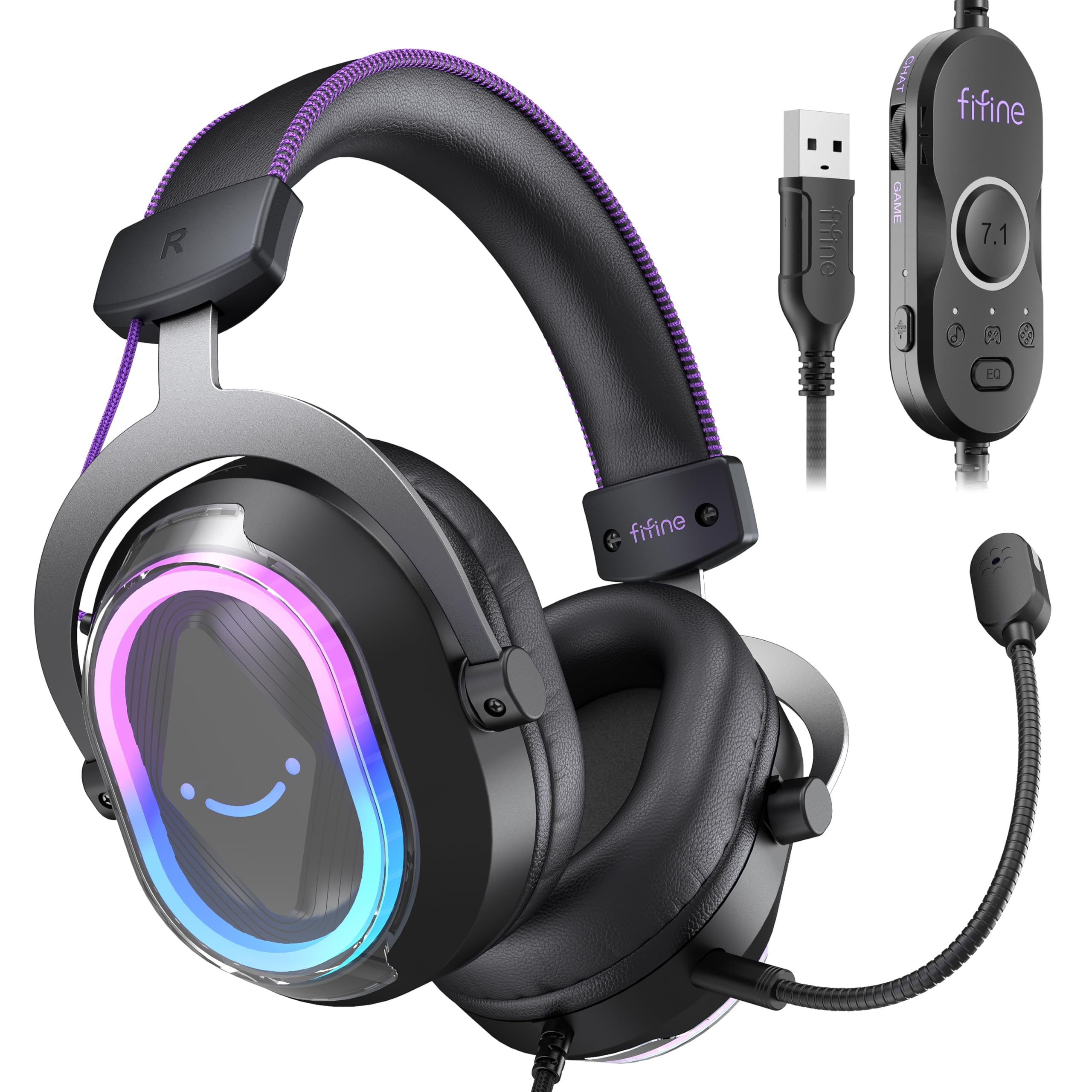
The FIFINE AmpliGame H13BP punches above its price tier with 50mm dynamic drivers that deliver clear audio across the frequency spectrum. The bass is present but not overwhelming, mids are clean for dialogue and game effects, and high frequencies retain detail without becoming harsh. The 7.1 virtual surround sound creates a noticeable sense of space, which helps in tracking enemy positions in games like Apex Legends or Call of Duty. The USB-A connection means plug-and-play on PC, Mac, PS5, and PS4 with no additional software required.
The in-line USB control box is the standout feature at this price point. It gives you dedicated buttons for 7.1 surround sound toggle, EQ mode switching, volume control, game/chat audio balance, and one-click mute. The mic mute button has a red indicator light that confirms mute status, which eliminates the guesswork that plagues in-line mute switches on other budget headsets. The noise-canceling microphone uses a cardioid pickup pattern that filters out background noise reasonably well for the price, though it doesn’t match the clarity of the dedicated HyperX or Razer mics.
The rhombus-frame design with transparent ear cups and dynamic RGB lighting aims squarely at streamers and gamers who want visual flair. There are 11 lighting modes toggled by long-pressing the switch button, which makes it easy to match your setup without opening software. The protein skin ear pads and soft memory foam cushions are comfortable for multi-hour sessions, though the closed-back design with passive noise cancellation means they run slightly warmer than fabric ear cups. The 7.55-foot braided cable gives you room to move without cable snag.
Why it’s great
- In-line control box with dedicated game/chat balance and EQ is rare at this price
- 50mm drivers deliver fuller sound than similarly-priced 40mm headsets
- RGB lighting with 11 modes adds visual polish for streamers
- Sturdy metal frame construction
Good to know
- USB-only connection means no console or mobile compatibility via 3.5mm
- RGB lighting cannot be disabled independently of the control box
- Ear cup swivel is limited, reducing adjustability
6. EKSA E900 Pro

The EKSA E900 Pro addresses a specific need: platform flexibility. It includes both a USB audio interface and a separate 3.5mm analog cable in the box, letting you switch between PC, PlayStation, Xbox, and mobile devices without buying adapters. The 7.1 surround sound is available only through the USB connection on PC, while the 3.5mm cable provides standard stereo audio for console or mobile use. The 50mm dynamic drivers produce clean sound with strong bass impact, though the audio separation is not as precise as the dual-chamber HyperX design.
The detachable noise-canceling microphone uses a unidirectional pickup pattern that effectively reduces background noise. The mic arm is flexible with a gooseneck design that stays in position even during intense sessions. One-key mute and volume adjustment controls on the ear cup let you make quick adjustments without hunting for an in-line remote. The microphone quality is solid for in-game chat and voice calls, but the unidirectional design means you need to keep the boom close to your mouth for optimal clarity.
Comfort is handled by soft memory protein ear muffs and an adjustable headband that balances weight distribution. The clamping force is moderate — not too tight to cause discomfort, but tight enough to provide good passive noise isolation. The touch control method for volume is a curious design choice; some users prefer physical dials that provide tactile feedback. EKSA backs the headset with a 2-year warranty, which is longer than most competitors at this price point and signals confidence in the build quality.
Why it’s great
- Dual USB and 3.5mm cables cover PC, console, and mobile out of the box
- 50mm drivers provide strong bass for immersive gaming
- 2-year warranty is longer than most competitors
- Comfortable memory foam ear pads for extended sessions
Good to know
- 7.1 surround sound only works via USB on PC — not available on consoles
- Touch volume control lacks the precision of a physical knob
- Some users report non-functional RGB lights on certain units
7. JBL Quantum 100M2

The JBL Quantum 100M2 is an entry-level wired headset that focuses on getting the fundamentals right without upselling features most beginners don’t need. The 40mm drivers are tuned with JBL QuantumSOUND Signature, which emphasizes clarity for footsteps and in-game effects over booming bass. The frequency range of 20Hz to 20kHz is standard for this tier, but the tuning makes dialogue and positional audio cues more distinct than similarly-priced generic headsets. The lightweight design at roughly 250 grams means you can wear it for hours without fatigue.
The detachable omnidirectional boom microphone includes a mute switch on the cable, which is a practical feature that budget headsets often omit. The mic captures voice clearly enough for team communication, but the omnidirectional pickup means it will transmit keyboard noise and room echo alongside your voice. This is a limitation of the price tier rather than a design flaw — budget-friendly headsets rarely include cardioid mics. The fabric-covered memory foam ear cushions breathe better than leather alternatives, reducing sweat buildup during warmer gaming sessions.
Compatibility is broad thanks to the 3.5mm jack: PC, PlayStation, Xbox, Nintendo Switch, Mac, mobile devices, and VR headsets all work without adapters. The inline mute feature on the cable is practical for quick silence without navigating in-game settings. The build uses plastic throughout with a lightweight headband, so it won’t survive the same drops as aluminum-frame headsets, but for the price, the trade-off is acceptable. For a first gaming headset, a child’s setup, or a backup headset, the Quantum 100M2 delivers adequate performance without wasted expenditure.
Why it’s great
- Lightweight design with breathable fabric ear cushions
- Detachable mic with mute switch is practical for beginners
- JBL QuantumSOUND tuning makes footsteps and dialogue clear
- Works across all platforms with a standard 3.5mm jack
Good to know
- Omnidirectional microphone picks up background noise
- All-plastic build is less durable than metal-frame competitors
- No virtual surround sound capability
FAQ
What driver size gives the best audio clarity for PC gaming?
Should I get a wired or wireless headset for PC gaming?
How can I tell if a microphone will sound clear to my teammates?
Does virtual 7.1 surround sound actually help in competitive games?
What is the difference between passive noise cancellation and active noise cancellation in PC headsets?
Final Thoughts: The Verdict
For most users, the audio headset for pc winner is the HyperX Cloud Alpha because its dual-chamber drivers deliver the cleanest audio separation at a price that doesn’t waste features. If you want wireless freedom with multi-device connectivity, grab the Logitech G522 Lightspeed. And for a budget-friendly option that respects the fundamentals, nothing beats the JBL Quantum 100M2.