
Our readers keep the lights on and the weekend projects moving. As an Amazon Associate, I earn from qualifying purchases.
Finding a single sewing machine that handles denim just as smoothly as silk, offers enough stitches to grow into, and doesn’t cost a second mortgage is the real needle-in-a-haystack challenge. The wrong pick jams on layered fabrics or lacks the throat space for quilting, turning a creative outlet into a frustrating chore.
I’m Rikta — the founder and writer behind FitlyFast. I’ve spent thousands of hours analyzing sewing machine catalogs, service manuals, and industry QC reports to separate the cosmetic upgrades from the genuine durability and stitch-quality improvements that matter most.
Whether you are mending hems or piecing quilts, your choice comes down to frame construction, feed-dog design, and motor torque, which is why this guide narrows the field to the best all around sewing machine for your specific workspace and budget.
How To Choose The Best All Around Sewing Machine
An all around machine needs to bridge the gap between daily mending, garment construction, and occasional quilting without sacrificing stitch quality or breaking the bank. Pay close attention to four key areas before committing.
Frame Construction and Motor Power
A heavy metal inner frame dampens vibration and keeps the needle aligned through thick seams. Look for a machine that weighs at least 12 to 14 pounds — anything lighter tends to shift across the table when sewing denim or multiple fleece layers. The motor should deliver strong piercing power without slowing down; a machine that stalls on four layers of denim will frustrate you repeatedly.
Stitch Selection and Buttonhole Versatility
While a high stitch count looks impressive on the box, focus on the variety of utility stitches (straight, zigzag, stretch, blind hem) plus at least one one-step automatic buttonhole. For quilting, ensure the machine offers a walking foot and a drop feed mechanism. A computerized machine with a clear LCD screen helps you dial in stitch length and width precisely, which is crucial for decorative work.
Bobbin System and Throat Space
A jam-resistant drop-in bobbin system is easier to monitor and change mid-project than a front-loading vertical oscillating hook. For quilters, the throat space (the distance from the needle to the machine body) determines how easily you can maneuver a large quilt. Anything less than 6.5 inches makes free-motion quilting cramped. Also check that the free arm is accessible for sewing cuffs and sleeves.
Accessories and Support
A good package includes at least a walking foot, quarter-inch piecing foot, zipper foot, and an extension table. Hard covers protect the machine from dust, and a clear bilingual manual saves setup headaches. Machines that use standard accessories (like Class 15 bobbins and low-shank feet) are cheaper to maintain and easier to expand over time.
Quick Comparison
On smaller screens, swipe sideways to see the full table.
| Model | Category | Best For | Key Spec | Amazon |
|---|---|---|---|---|
| Janome JW8100 | Computerized | Garment sewing and quilting | 7-piece feed dog system | Amazon |
| Brother CP100X | Computerized | Beginner-to-intermediate projects | Fixed needle bar | Amazon |
| Brother CS7205 | Computerized | Decorative stitching and garments | 150 built-in stitches | Amazon |
| Singer 6700C | Computerized | Heavy fabrics and thick layers | 411 stitch applications | Amazon |
| Janome 2212 | Mechanical | Routine sewing and simplicity | Front-loading vertical hook | Amazon |
| Bernette B35 | Mechanical | Crafting and everyday garments | 23 built-in stitches | Amazon |
| Singer 9985 | Computerized | Decorative stitching and monograms | 1,000+ stitch applications | Amazon |
| Juki TL-2010Q | Semi-Industrial | High-speed straight stitch and quilting | Automatic thread trimmer | Amazon |
| Juki HZL-F600 | Computerized | Advanced quilting and heavy fabrics | 255 built-in stitches | Amazon |
In‑Depth Reviews
1. Janome JW8100

The Janome JW8100 delivers a rare combination of computerized convenience and build quality that feels solid without being overly heavy. Its 7-piece feed dog system moves fabric evenly, preventing puckering on knits and slippery materials. With 100 built-in stitches and seven one-step buttonholes, you have enough range for garment sewing, home decor, and patchwork without navigating an overwhelming menu.
The included extension table and even-feed foot make quilting manageable straight out of the box. Users consistently report that the machine sews through multiple layers of denim without hesitation, and the jam-resistant drop-in bobbin eliminates mid-project frustration. The needle up/down control and start/stop button add precision for detailed work.
Build quality is above average for this tier, with a metal interior frame that keeps vibration low at higher speeds. The stitch quality is consistent across a wide range of fabrics, and the LCD screen simplifies selection. The only recurring note is that the built-in light could be brighter for detailed quilting, but that is a minor trade-off for the overall value.
Why it’s great
- Excellent stitch quality across cotton, knits, and denim
- Comes with extension table and walking foot
- Quiet and stable at higher speeds
Good to know
- Lighting could be brighter for close work
- Needle height is moderate for very thick stacked projects
2. Brother CP100X

The Brother CP100X is built around a fixed needle bar that keeps the needle centered, ensuring clean, even stitching on everything from quilt layers to denim. With 100 unique built-in stitches and eight auto-size buttonholes, it offers the versatility needed for garment construction and home decor without the complexity of higher-end models.
The metal frame construction adds stability, and the wide table included in the package gives extra support for larger quilting projects. Users appreciate the one-step automatic needle threader, though some note that it can be a bit bulky to operate. The machine handles cotton, webbing, and medium-weight denim with consistent tension, making it a solid all-rounder.
Bobbin winding on this model occasionally requires manual guidance to prevent uneven spooling. The machine is noticeably quieter than older Brother generations, and the sliding speed control is helpful for users who cannot or prefer not to use the foot pedal. Overall, a capable mid-range option with good accessory support.
Why it’s great
- Stable metal frame minimizes vibration
- Fixed needle bar ensures consistent stitch alignment
- Includes walking foot and quilting foot
Good to know
- Bobbin winding can be inconsistent
- Needle threader is somewhat bulky
3. Brother CS7205
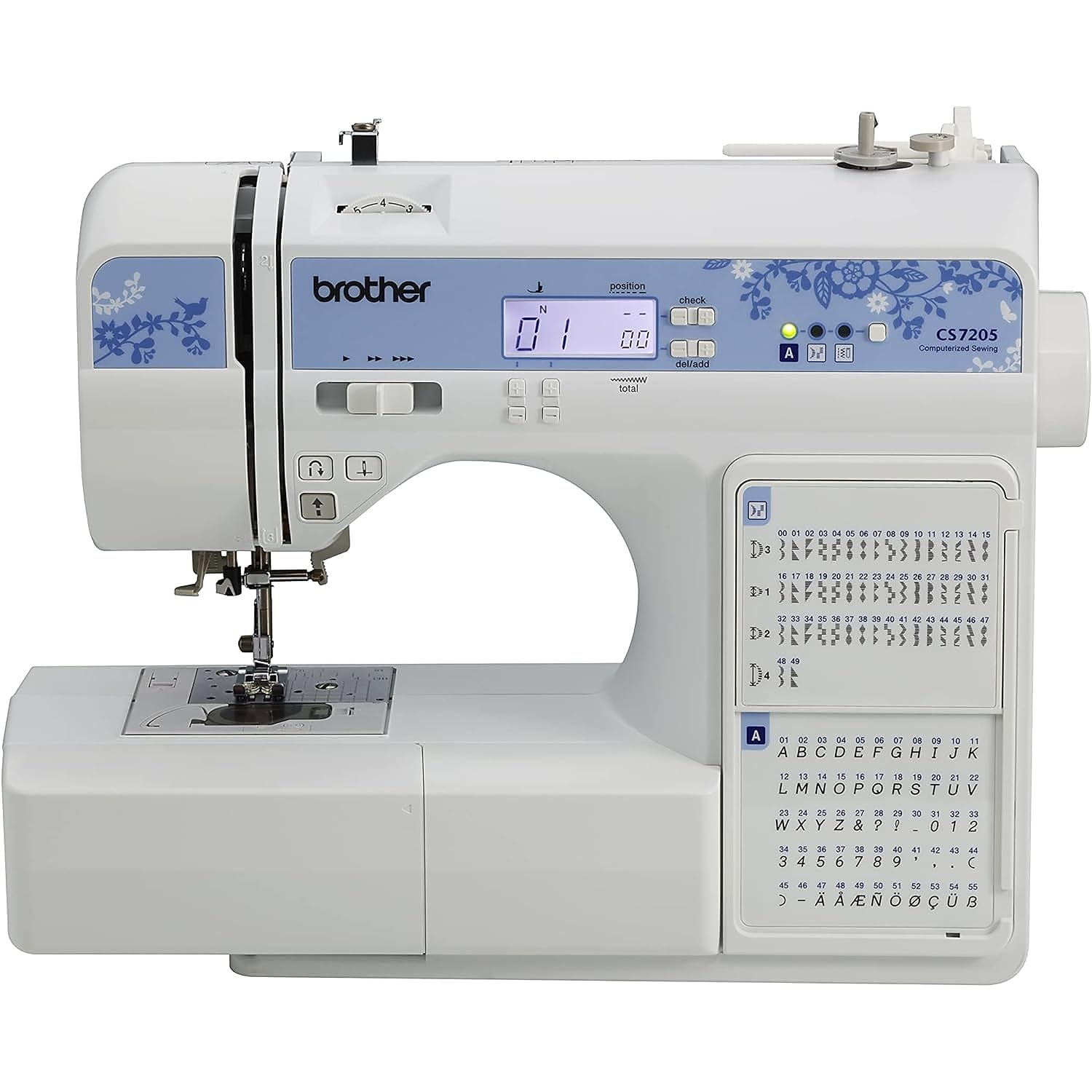
The Brother CS7205 stands out for its generous 150 built-in stitches, including one alphanumeric font and eight one-step auto-size buttonholes. This makes it a strong choice for sewists who want to experiment with decorative stitching, monogramming, and heirloom techniques without stepping into a specialist machine.
The automatic needle threader and jam-resistant drop-in bobbin simplify setup, and the LCD screen shows your stitch selection clearly. The machine is lightweight at just over 2 pounds (the listed weight appears to be a data error; the actual unit feels sturdy but portable). It comes with eleven sewing feet and a wide table, providing good value from the start.
Users transitioning from older mechanical machines find the CS7205 intuitive and quiet. It performs best on light to medium-weight fabrics, though it can handle moderate layers with the walking foot. The main limitation is that the plastic housing, while lightweight, requires careful handling during transport. A solid option for those prioritizing stitch variety.
Why it’s great
- Wide stitch library with lettering font
- Includes 11 sewing feet and wide table
- Quiet operation with automatic threading
Good to know
- Lightweight build may not suit heavy-duty use
- Best suited for light to medium fabrics
4. SINGER Heavy Duty 6700C

The Singer 6700C focuses on piercing power with a motor that powers through denim, leather, and multiple quilting layers. Its 411 stitch applications include basic, stretch, decorative, and lettering options, giving you creative flexibility without sacrificing the muscle needed for tough materials.
The LCD screen with speed control lets you set a maximum pace, which is especially useful when working on delicate sections of an otherwise heavy project. The seven different one-step buttonhole styles add versatility for garment closures. The included walking foot, satin stitch foot, and cording foot expand your capabilities immediately.
Some users note that the throat space is relatively small for free-motion quilting on large quilts, so it is better suited to garment sewing and smaller home decor projects. The digital manual is thorough, but a printed version would be welcome. Overall, a strong performer for those who regularly work with heavy fabrics.
Why it’s great
- Powerful motor for thick fabrics and layers
- 411 stitch applications with lettering
- Seven one-step buttonhole styles
Good to know
- Throat space is limited for large quilt maneuvering
- Manual is digital-only
5. Janome 2212

The Janome 2212 is a no-frills mechanical machine that prioritizes reliability over bells and whistles. With 12 built-in stitches and a four-step buttonhole, it covers the essentials for mending, basic garment sewing, and beginner quilting without the potential electronic issues of a computerized unit.
The front-loading vertical oscillating hook bobbin system is a traditional design that, while not as convenient as a drop-in, is known for durability and consistent tension. The free arm and drop feed feature allow you to sew cuffs and sleeves easily. At nearly 15 pounds, the metal-and-plastic construction keeps the machine stable during use.
Users frequently mention that the machine sews through four layers of fleece and multi-fold denim without issue. The reverse requires holding a switch, and the foot pedal cord could be longer, but these are minor compromises for the price. A solid, honest machine for those who want simplicity and longevity.
Why it’s great
- Simple, reliable mechanical operation
- Heavy and stable for consistent stitching
- Sews through multiple layers of denim
Good to know
- Four-step buttonhole is slower than one-step
- Reverse requires holding a switch
- Foot pedal cord is short
6. Bernette B35

The Bernette B35 brings Swiss engineering and Bernina quality control to a fully mechanical platform. With 23 built-in stitches including a reliable stretch stitch and a one-step automatic buttonhole, this machine is built for sewists who want durable, consistent stitches without dealing with software updates or electronic failures.
The drop-in bobbin system is jam-resistant, and the manual thread tension control allows fine adjustments based on fabric type. The LED light provides clear illumination of the work area, and the extension table included expands the workspace for larger projects. The metal frame ensures stability, though some users note vibration at higher speeds on lighter tables.
The automatic buttonhole runs slightly large by default, so testing on a scrap first is advisable. Accessories and extra feet can be harder to find online than for Brother or Singer models. Overall, a well-made mechanical machine that suits those who value tactile control and long-term reliability.
Why it’s great
- Solid mechanical build with Bernina quality
- One-step automatic buttonhole
- LED light for clear workspace visibility
Good to know
- Buttonhole runs slightly large
- Accessories can be harder to source
- Vibrates at higher speeds
7. SINGER Quantum Stylist 9985

The Singer Quantum Stylist 9985 is a feature-packed computerized machine offering over 1,000 stitch applications including mirror imaging and 60 memory slots. The color touchscreen displays stitch previews in actual size, and tutorials guide you through threading and bobbin setup, making the machine surprisingly accessible despite its vast capabilities.
The 13 one-step buttonhole styles cover everything from bartack to keyhole, and the presser foot pressure can be adjusted for techniques like applique and basting. Users praise the automatic needle threader and the ability to sew without the foot pedal using the start/stop button. The metal frame keeps the 14-pound unit steady during fast sewing.
Some drawbacks include the lack of a hard carrying case and a learning curve for the enclosed top spindle and bobbin winding mechanism. The machine requires Singer brand Class 15 bobbins (not 15J), and the manual’s small print is a minor frustration. For creative sewists who want endless stitch options, this is a compelling choice.
Why it’s great
- Extensive stitch library with mirror imaging
- Color touchscreen with real-size previews
- Automatic tension and needle up/down
Good to know
- Requires specific Singer Class 15 bobbins
- No hard case included
- Bobbin winding requires some practice
8. Juki TL-2010Q

The Juki TL-2010Q is a semi-industrial straight-stitch machine designed for speed, precision, and durability. The automatic thread trimmer cuts both needle and bobbin threads with a button press, and the knee lifter lever allows hands-free presser foot control, a huge productivity boost for quilters and tailors.
The machine sews at high speeds with exceptional smoothness, handling thick layers like upholstery vinyl and multiple denim seams effortlessly. The 12mm presser foot lift accommodates heavy materials easily. Users consistently describe the stitch quality as buttery, and the aluminum construction keeps the 38-pound machine stable at full speed.
The TL-2010Q is a straight-stitch specialist with no zigzag capability, so you will need a separate machine for decorative stitches and buttonholes. The needle threader can be finicky, and some users recommend an aftermarket LED lighting kit to improve visibility. Worth the investment for serious quilters and production sewists.
Why it’s great
- Incredible speed and stitch quality
- Automatic thread trimmer
- Knee lifter for hands-free operation
Good to know
- Straight stitch only — no zigzag or decorative stitches
- Needle threader is finicky
- Lighting may need an aftermarket upgrade
9. Juki HZL-F600

The Juki HZL-F600 combines the brand’s industrial heritage with the convenience of a computerized machine. With 255 built-in stitches including basic, stretch, decorative, and buttonhole options, it offers broad versatility while maintaining the robust build quality Juki is known for. The separate bobbin winder motor is a standout feature that lets you wind a bobbin without interrupting sewing.
The large work surface with an extension table provides ample space for quilting, and the intuitive LCD screen makes stitch selection straightforward. The machine handles heavy fabrics like denim and canvas as easily as lightweight jerseys, with consistent tension across the range. The automatic needle threader and easy bobbin winding reduce setup time significantly.
Users who have upgraded from mid-range machines consistently report a noticeable improvement in stitch quality and machine stability. The accessory tray stores feet conveniently, and the soft-sided dust cover keeps the unit clean. The HZL-F600 represents a significant investment, but for quilters and garment sewists who want a do-everything machine, it delivers exceptional performance.
Why it’s great
- Separate bobbin winder motor
- Handles everything from silk to canvas
- Large throat space for quilting
Good to know
- Premium price point
- Soft cover only, no hard case
FAQ
Is a mechanical or computerized machine better for all around use?
Can a beginner use a machine with hundreds of stitches?
What is the minimum throat space needed for quilting?
Final Thoughts: The Verdict
For most users, the best all around sewing machine winner is the Janome JW8100 because it combines a sturdy metal frame, 7-piece feed dog system, and 100 versatile stitches at a reasonable price. If you want extensive stitch variety and touchscreen control, grab the Singer Quantum Stylist 9985. And for high-speed straight stitching and serious quilting, nothing beats the Juki TL-2010Q.