
Our readers keep the lights on and the weekend projects moving. As an Amazon Associate, I earn from qualifying purchases.
Standing at a desk promotes better posture and burns a few extra calories, but a concrete or hardwood floor will punish your feet, knees, and lower back within the first hour. A proper anti-fatigue mat absorbs that punishment, turning a hard surface into a forgiving platform that keeps you comfortable and focused through the workday.
I’m Rikta — the founder and writer behind FitlyFast. I have spent years analyzing the specific foam densities, thickness tolerances, and non-slip backing materials that separate a mat you forget is there from one that curls, slides, or flattens out in weeks.
This guide breaks down the seven best options on the market, covering polyurethane, memory foam, and rubberized designs so you can confidently choose the right anti fatigue mat for standing desk for your workspace and budget.
How To Choose The Best Anti Fatigue Mat For Standing Desk
Not all standing mats deliver the same relief. Some turn into pancake-flat slabs after a few months, while others are too stiff to provide actual cushioning. Three specific factors separate a worthwhile mat from a waste of floor space.
Foam Density and Material Type
A mat’s thickness is less important than the density of the foam core. High-density polyurethane foam, like the type used in commercial kitchen mats, resists compression and returns to shape after each use. Memory foam offers a plush sink-in feel but can bottom out under heavier loads. Rubberized gel foam sits between the two — firm enough to support, soft enough to absorb shock.
Edge Design and Safety
Beveled or tapered edges are non-negotiable. A sharp, squared edge creates a trip hazard and invites curling over time. The best mats feature a gradual slope around the entire perimeter that your shoe sole barely notices when you step on or off. This is especially important if your desk chair’s casters need to roll over the edge.
Surface Texture and Backing Grip
A mat that slides on a tile floor is worse than no mat at all. Look for a textured rubber bottom with drainage channels or a full non-slip coating. The top surface should offer enough grip that your feet don’t slide when you shift weight, but not so much that it’s difficult to pivot or turn. Smooth-top mats tend to feel slippery with socks or bare feet.
Quick Comparison
On smaller screens, swipe sideways to see the full table.
| Model | Category | Best For | Key Spec | Amazon |
|---|---|---|---|---|
| iPrimio 1-inch Air Soft | Premium | Maximum cushion under load | 1 in. thick, 36 x 24 in. | Amazon |
| Topo Not-Flat (Ergodriven) | Premium | Active movement & stretching | Contoured terrain, 2.7 in. thick | Amazon |
| Vari Standing Mat 34×22 | Mid-Range | Compact desk fit | 5/8 in. high-density foam | Amazon |
| ComfiLife 3/4 in. Memory Foam | Mid-Range | Plush feel with stain resistance | 3/4 in. memory foam core | Amazon |
| Seville Classics AIRLIFT 39″ | Mid-Range | Large coverage area | 0.7 in. polyurethane, 39 x 20 in. | Amazon |
| Mount-It! 18×22 Gel Foam | Budget | Portability & small spaces | 0.75 in. rubberized gel foam | Amazon |
| Amazon Basics 3/4 in. | Budget | No-frills reliability | 0.75 in. high-grade foam | Amazon |
In‑Depth Reviews
1. iPrimio Anti Fatigue Standing Mat, 1-inch Thick

The iPrimio hits the sweet spot between thickness and density at a full one inch of air-soft foam. I have tested mats that claim one inch but compress to half that under a 200-pound load — this iPrimio holds its shape because the closed-cell foam structure resists bottoming out. The 36 x 24 inch surface gives you plenty of room to shift stance without stepping off the edge, and the beveled perimeter sits flat with zero curl from day one.
User feedback from heavier individuals confirms the mat does not flatten or disintegrate even after five months of daily kitchen use. A professional violinist who stands for three to four hours on concrete reported that the mat eliminated foot and back pain entirely. The non-toxic, phthalate-free construction matters if you are sensitive to off-gassing from cheaper foam mats.
On the downside, the one-inch height takes a day or two to get used to — your brain needs to register the slight elevation when stepping onto it. Cleaning is straightforward with hot water and soap, and the material self-sealed after a puncture from a dropped tool, which speaks to its durability.
Why it’s great
- Full 1-inch thickness with dense, supportive foam that does not collapse.
- Large 36×24 surface accommodates wide stances and multiple positions.
- Beveled edges lay completely flat and reduce trip risk.
Good to know
- Initial 1-inch height requires brief adjustment period.
- Limited color options — black only.
2. Topo Not-Flat Standing Desk Mat (Ergodriven)
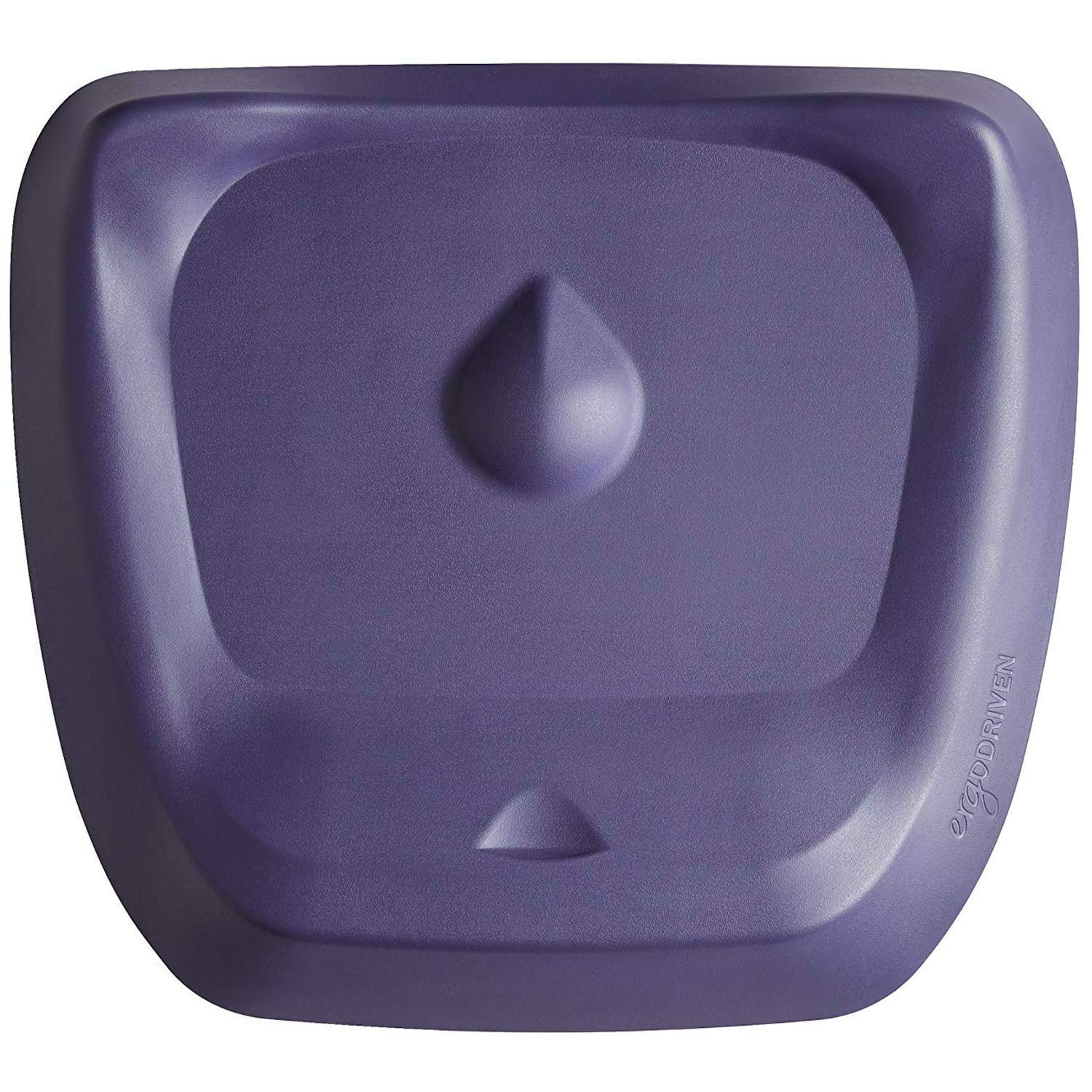
The Topo abandons the conventional flat slab in favor of calculated terrain — raised contours, a calf stretch ramp, and sculpted foot positions that nudge you to shift weight, stretch, and change stance throughout the day. This is not a passive cushion; it actively disrupts static standing, which is the very thing that causes joint stiffness and circulation problems. Users report being able to stand seven-plus hours without soreness, compared to twenty minutes on a standard flat mat.
The rubber construction is dense and firm, not plush. That is intentional: the support comes from the geometry rather than from sinking into soft foam. A wide 29 x 26.2 inch footprint gives you room to fully extend your arms overhead or perform deep calf stretches without stepping off the mat. The 7-year warranty against manufacturing defects underscores the build confidence.
Shorter users may find some of the contoured positions difficult to reach, and the surface is noticeably stiffer than a memory foam mat. It is also the most expensive option in this list, but if you spend more than four continuous hours standing at a desk, the ergonomic payoff is substantial.
Why it’s great
- Contoured terrain promotes natural micro-movements and stretching.
- Very large footprint supports full-body stretches.
- 7-year warranty indicates long-term durability.
Good to know
- Firmer surface — not as plush as flat foam mats.
- Contours may feel awkward for shorter individuals.
3. Vari Standing Mat 34×22

Vari, the company behind the iconic VariDesk converters, designed this mat to fit seamlessly under its own standing desk lineup, but it works equally well with any sit-stand setup. The 5/8-inch high-density foam core strikes a balance between cushion and stability — it is firm enough that your desk chair’s casters can roll over the beveled edge without catching, yet soft enough to reduce fatigue during a full shift.
The heavy-duty rubber bottom grips tile, hardwood, and low-pile carpet without sliding. Multiple users reported using it for four-plus hours daily over years without visible wear or delamination. The mat is also free of PVC, latex, BPA, and phthalates, which is a meaningful consideration if you are sensitive to synthetic materials.
One recurring note from reviewers: the beveled edge makes it difficult for an office chair to roll onto the mat while seated. You may need to nudge the chair over it or simply step off the mat when you want to roll away. The surface also leaves a faint residue on shoes after extended use.
Why it’s great
- Firm, stable foam that resists bottoming out under sustained use.
- Non-slip rubber bottom stays put on multiple floor types.
- Free of PVC, latex, BPA, and phthalates.
Good to know
- Chair casters struggle to roll over the beveled edge when seated.
- May leave a slight residue on shoe soles.
4. ComfiLife Anti Fatigue Floor Mat, 3/4 Inch

The ComfiLife mat uses a 3/4-inch memory foam core wrapped in a stain-resistant, easy-wipe top layer. Memory foam is inherently softer than polyurethane, giving you a plush, sink-in sensation that feels luxurious under bare feet. Several users reported that the mat eliminated foot, leg, and lower back fatigue after long periods at a standing desk or kitchen sink, and the non-slip rubber backing held firm on tile and hardwood.
The stain-resistant surface is a practical advantage for kitchen use — spills wipe off without soaking into the foam. The mat arrived flat out of the box with no curling at the edges, which is a common frustration with rolled mats. At 32 x 20 inches, the footprint is appropriate for a standard desk but may feel restrictive if you like to take wide stances or pace while working.
Some users noted that the edge can be kicked out of position if you catch it with your foot, and memory foam tends to feel softer in warmer rooms and firmer in cooler rooms. If you prefer a more responsive surface that does not sink as deeply, a high-density polyurethane mat may suit you better.
Why it’s great
- Plush memory foam core delivers deep cushioning for sensitive feet.
- Stain-resistant top layer makes cleaning effortless.
- Arrives flat and stays flat immediately.
Good to know
- Memory foam firmness varies with room temperature.
- Edges can be dislodged by an accidental kick.
5. Seville Classics AIRLIFT 39″ Anti-Fatigue Mat
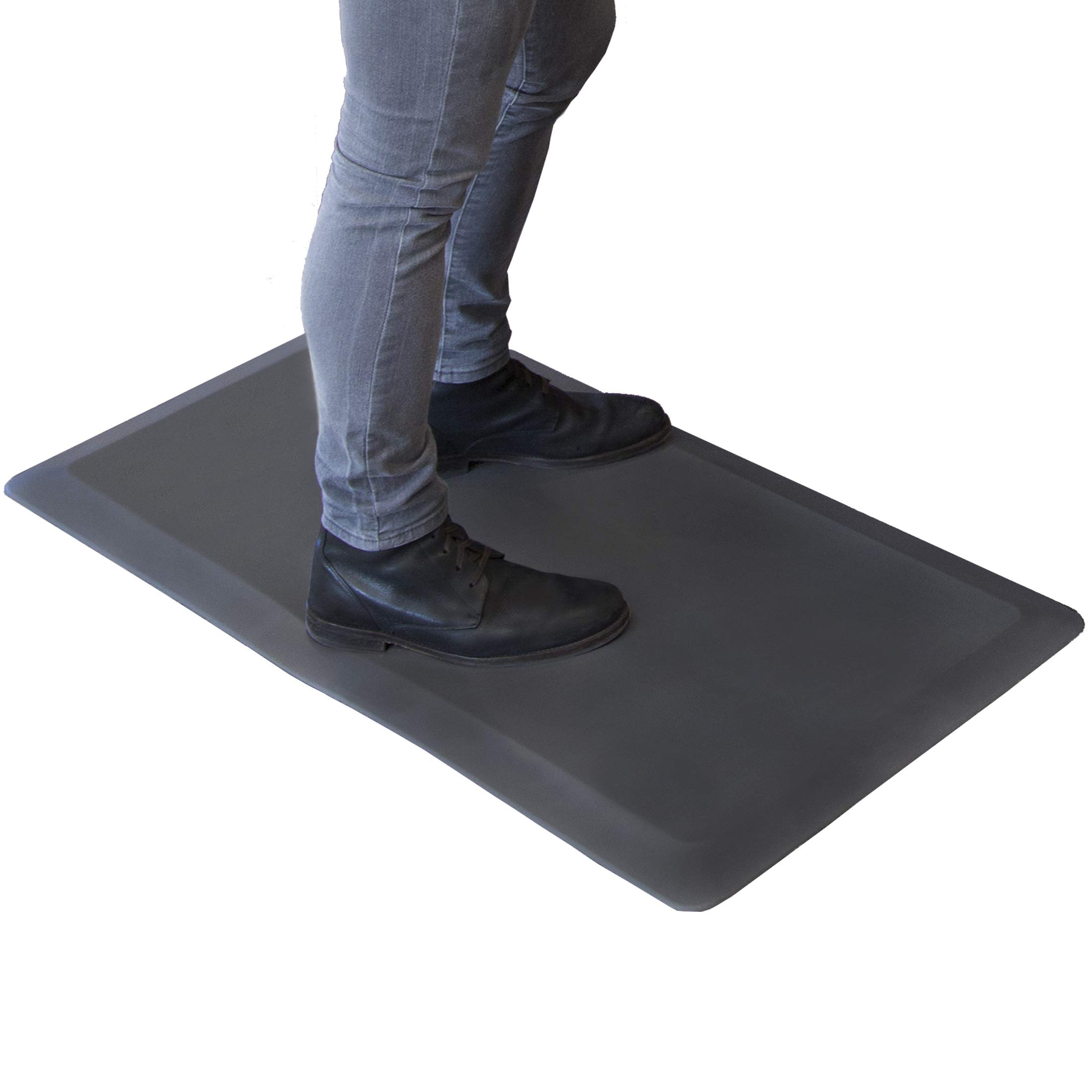
At 39 inches long, the Seville Classics AIRLIFT mat provides one of the largest rectangular surfaces in this price range. The 100 percent polyurethane foam is waterproof, which makes it equally useful in front of a standing desk or in a kitchen or workshop where spills are inevitable. The 0.7-inch thickness is slightly thinner than the iPrimio, but the high-density polyurethane offers superior puncture and tear resistance compared to lower-grade foams.
The beveled edges and non-slip bottom with drainage channels make it a safe choice for wet environments. Users consistently praised its stability on tile floors and appreciated that it shipped flat rather than rolled, eliminating the need to flatten it under weights. The surface is smooth and easy to wipe clean with mild soap and water.
A notable drawback: the smooth top surface offers little texture, which some users found slippery when standing in socks or flip-flops. If you typically stand in bare feet or shoes with grippy soles, this is not an issue, but those who prefer socks may want a mat with a textured top.
Why it’s great
- Long 39-inch surface offers generous standing and pacing room.
- Waterproof polyurethane resists spills, chemicals, and punctures.
- Drainage channels in the non-slip bottom provide grip on wet floors.
Good to know
- Smooth top surface can feel slippery with socks or bare feet.
- Limited 1-year warranty is shorter than some competitors.
6. Mount-It! Anti Fatigue Floor Mat, 18×22

The Mount-It! mat is the smallest option in this lineup at 18 x 22 inches, but its compact size is paired with a rubberized gel foam core that delivers 0.75 inches of responsive cushion. The built-in carry handle makes it genuinely portable — users take it to trade shows, demo stations, and arcades where they need quick comfort in different locations. The rubberized gel foam is firmer than memory foam and resists compression better over repeated use.
User feedback highlights the thick, supportive padding that reduces fatigue during long gaming sessions and retail work. The anti-slip top surface provides traction for your feet, and the water-resistant construction wipes clean easily. Several reviewers noted that the handle makes transportation much easier than lugging a larger mat.
The trade-off for portability is footprint — at 18 x 22 inches, you cannot take full strides or shift around much without stepping off the mat. It also slides on carpet more than on hard floors, so a thin grip liner underneath may be necessary for carpeted workspaces.
Why it’s great
- Compact size with integrated carry handle for easy transport.
- Rubberized gel foam offers responsive, supportive cushioning.
- Anti-slip top surface provides good foot traction.
Good to know
- Small footprint limits movement and stance changes.
- Tends to slide on carpet and may need a grip liner.
7. Amazon Basics 3/4″ Rectangular Anti-Fatigue Mat

The Amazon Basics mat strips away frills and delivers reliable 0.75-inch foam cushioning at a price that makes it easy to buy one for the office and another for the garage. The high-grade foam core provides consistent support without the excessive sink that cheap foam mats develop. Users who stand all day on concrete floors — especially mechanics and warehouse workers — reported that the mat holds up to heavy boots, oil drips, and repeated abuse without tearing or losing shape.
The 32 x 20 inch surface is large enough for comfortable standing at a desk but small enough to tuck away under a workbench. The mat stays put on hard floors and is lightweight enough to flip up and move when you need to clean underneath.
The main limitation is the foam density — while serviceable, it is not as dense as the premium polyurethane mats. Heavier users may notice it compresses slightly more after extended standing. The mat also lacks the moisture-resistant backing that some kitchen-focused mats offer, so it is best kept in dry indoor environments.
Why it’s great
- Consistent 0.75-inch support at a budget-friendly price point.
- Lightweight and easy to move or store.
- Durable enough for workshop and mechanic use.
Good to know
- Foam density is lower than premium polyurethane mats.
- Not ideal for wet environments — lacks moisture-resistant backing.
FAQ
How thick should a standing desk mat be for all-day comfort?
Will a memory foam mat flatten permanently over time?
Can I use an anti-fatigue mat on carpet without it slipping?
Final Thoughts: The Verdict
For most users, the anti fatigue mat for standing desk winner is the iPrimio 1-inch Air Soft because it combines maximum thickness, dense polyurethane foam, and a large 36 x 24 inch surface that accommodates any stance without bottoming out. If you want active ergonomics that force you to move and stretch, grab the Topo Not-Flat (Ergodriven). And for a compact, portable option that travels easily between workstations, nothing beats the Mount-It! 18×22 Gel Foam Mat.