
Our readers keep the lights on and the weekend projects moving. As an Amazon Associate, I earn from qualifying purchases.
A shower door seal that fails turns your daily routine into a floor-drying chore. The adhesive you choose determines whether water stays inside the shower or creeps onto your bathroom floor, leading to mold, subfloor damage, and constant frustration. Most adhesives simply aren’t designed for the dual punishment of moisture and the flexing movement of a shower door.
I’m Rikta — the founder and writer behind FitlyFast. I have spent years analyzing construction-grade sealants, peel-and-stick barriers, and frameless door sweeps to understand which materials hold their bond in wet, high-movement environments.
Whether you are replacing a worn-out sweep on a glass door or sealing a walk-in threshold, the right choice comes down to material compatibility and long-term adhesion. Use this guide to find the best adhesive for shower door seal that works for your specific shower setup.
How To Choose The Best Adhesive For Shower Door Seal
Choosing the wrong adhesive means re-installing in a few weeks. Shower environments involve constant moisture, temperature swings, and physical pressure from door movement. The adhesive must be waterproof and flexible enough to handle expansion and contraction without cracking. Focus on material compatibility: silicone blends bond well to glass and tile, while acrylic or rubber-based tapes may fail on smooth, non-porous surfaces.
Surface Preparation Is Everything
No adhesive will hold if the surface is dirty or damp. Clean the area with isopropyl alcohol to remove soap scum, oils, and mineral deposits. For peel-and-stick products, many reviews confirm that warming the adhesive with a hair dryer activates the bond, especially in cold weather. Skipping this step often causes the product to lift within days.
Door Type Determines the Adhesive Form
Frameless glass doors need a snap-on sweep or a P-shaped seal that grips the glass channel using pressure, not glue. For these, you want a PVC or silicone sweep with a tight friction fit — no adhesive required. For walk-in showers or threshold barriers, a self-adhesive silicone dam or a tube of RTV silicone caulk works best. Measure your glass thickness (commonly 3/8 inch) and the gap between the door and the threshold before purchasing any seal strip.
Quick Comparison
On smaller screens, swipe sideways to see the full table.
| Model | Category | Best For | Key Spec | Amazon |
|---|---|---|---|---|
| Delamu Shower Door Bottom Seal | Snap-on Sweep | Frameless glass doors, 3/8″ thickness | 3-pack, 39-in length, PVC | Amazon |
| AmazerBath Side Seal Strip | Side Seal | Frameless vertical side gaps | Set of 2, 78-in length, 3/8″ glass | Amazon |
| Akfix 100E RTV Silicone Caulk | Silicone Sealant | Sealing gaps around door edges | 12-pack, 10.1 oz each, clear | Amazon |
| Permatex 80855 RTV Silicone | Silicone Sealant | Bonding thresholds to concrete/tile | 11 oz, clear, universal fit | Amazon |
| Vannesse Shower Threshold Dam | Self-Adhesive Dam | Curbless walk-in showers | 39-in, silicone, 0.5″ height | Amazon |
| KNEELISA Shower Dam | Self-Adhesive Dam | Threshold water blocking | 39-in, silicone, 9/16″ height | Amazon |
| cuysfead Silicone Water Dam | Self-Adhesive Dam | Kitchen counter and sink edge | 67-in, silicone, 1/2″ height | Amazon |
In‑Depth Reviews
1. Delamu Shower Door Bottom Seal
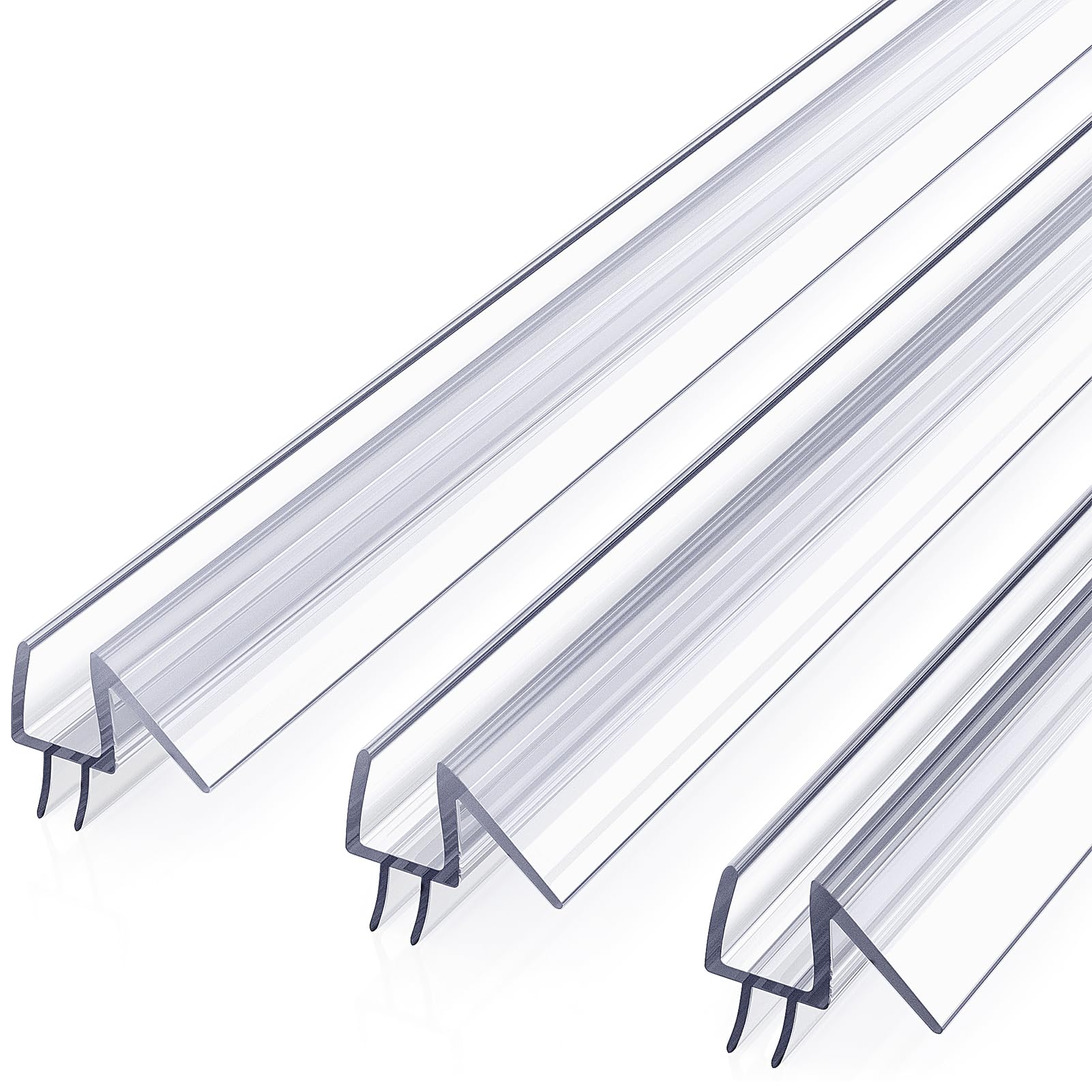
The Delamu seal is the most practical solution for frameless glass doors precisely 3/8 inch thick. It uses a PVC body with soft double sweep fins that press against the threshold to block water. The snap-on design means zero adhesive — it relies on friction and the door’s own weight, making it the easiest to install and remove without sticky residue. The 30-degree water-guiding channel is a smart addition that directs drips inward.
Customer feedback confirms it cuts flooding issues immediately after installation. A few users needed to trim the length with a hacksaw, so accurate measurement of the door gap (must be under 0.33 inches) is essential. The set includes three strips, giving you spares or allowing you to outfit multiple doors. The soft fins also reduce the scraping noise when the door swings.
For those concerned about durability, the PVC construction resists yellowing and warping better than standard rubber. The main caveat is the specific glass thickness requirement — if your door is thicker than 3/8 inch, this seal will not fit. Overall, this is a permanent, glue-free fix that outperforms most adhesive strips.
Why it’s great
- Tool-free snap-on installation leaves no adhesive residue.
- 30-degree water-guiding channel efficiently directs water into the shower.
- Soft fins reduce noise and create a tight seal against the threshold.
- 3-pack provides excellent value for multi-door homes.
Good to know
- Only fits doors exactly 3/8 inch thick with a bottom gap under 0.33 inches.
- PVC material requires careful cutting with a hacksaw, not scissors.
2. AmazerBath Shower Door Side Seal Strip

While bottom sweeps handle the threshold, water often leaks through the vertical gap between the shower door and the fixed glass panel. The AmazerBath side seal strip targets that exact weak point. It slides onto the edge of a 3/8-inch glass door and uses integrated waterproof fins that press against the adjacent panel to form a barrier. The set includes two 78-inch strips, which is enough for a standard door height with some extra to trim.
Installation takes under ten minutes: apply a wet lubricant inside the channel, then push the strip onto the glass edge. No tape or adhesive is required because the PVC channel grips the glass through tension. The internal card slot prevents the seal from slipping off after repeated door swings, which is a common failure point on cheaper designs. Customers consistently report that this stops annoying side drips that no bottom seal can fix.
The clear PVC is UV-resistant and does not yellow after weeks of exposure to hot water and steam. The only limitation is the fixed thickness compatibility — double-check that your door panel is exactly 3/8 inch thick. If your gap is wider than the fins can span, you might need to pair this with a small bead of silicone caulk for complete water-tightness.
Why it’s great
- Eliminates vertical water leaks that bottom seals cannot address.
- No adhesive or tape required; grips glass through friction fit.
- Includes a fixed card slot to prevent the seal from falling off over time.
- UV-resistant PVC does not yellow or become brittle.
Good to know
- Only compatible with doors exactly 3/8 inch thick.
- May require a small amount of silicone caulk for very wide side gaps.
3. Akfix 100E RTV Silicone Caulk

When the problem isn’t a gap in the door itself but a gap between the door frame, threshold, or wall, you need a true caulk-style sealant. The Akfix 100E is a 100 percent RTV silicone, meaning it remains permanently flexible after curing. This is critical for shower door seals because the door’s vibration and thermal expansion can crack rigid fillers. The 12-pack gives you enough sealant for a full bathroom renovation, including resealing around the door frame, the shower tray, and the side panels.
Users consistently praise its low-odor formula and smooth application. It feathers well into gaps, cures within 24 hours to a clear finish, and withstands direct water exposure without weakening. The tube cap is designed to prevent drying between uses. For thin gaps up to 0.19 inches, this is the most reliable adhesive option. It bonds strongly to glass, tile, porcelain, and even painted surfaces.
The one catch is that Akfix 100E is an acidic-cure silicone, so do not use it directly on mirrors or sensitive metals like brass or copper, as it can cause corrosion. But for sealing the edges of a shower door or caulking a threshold barrier to the floor, this delivers a waterproof bond that lasts years longer than standard acrylic caulk.
Why it’s great
- 100% RTV silicone remains flexible, preventing cracks from door movement.
- Low-odor, easy to feather and clean up during application.
- 12-pack covers multiple sealing projects around the bathroom.
- Clear finish blends invisibly on glass, tile, and metal.
Good to know
- Acidic curing formula can corrode mirrors and sensitive metals.
- Gap fill limited to 0.19 inches; not suitable for large openings.
4. Permatex 80855 Clear RTV Silicone Adhesive Sealant

When you need to bond a shower door seal directly to concrete, stone, or tile — such as gluing a rubber threshold dam to a shower floor — Permatex 80855 is the adhesive you want. This RTV silicone is formulated for industrial-strength adhesion: it vulcanizes into a tough, rubbery solid that grips even in below-freezing temperatures. One user reported applying it on a concrete garage floor in 40-degree weather, and it still cured and bonded the door seal permanently.
The 11-ounce tube is more than enough for a large threshold or multiple strip applications. It dries crystal clear, which matters for transparent silicone dams where visible glue lines look messy. Its compatibility list includes glass, metal, plastic, and vinyl, making it versatile across different shower door materials. It remains slightly flexible after curing, which helps absorb the shock of a door swinging shut.
The main consideration is application difficulty: this is a thick paste that requires a caulking gun. It is also not designed for filling narrow, hairline gaps — it works best when you need to adhere two surfaces together rather than fill a joint. For anchoring a peel-and-stick barrier that keeps lifting, a thin bead of Permatex 80855 applied to the edge will lock it down permanently.
Why it’s great
- Exceptional bond strength to concrete, tile, glass, and metal.
- Cures in cold temperatures where other adhesives fail.
- Remains flexible after curing to handle door vibrations.
- Dries completely clear, preserving the look of transparent seals.
Good to know
- Requires a caulking gun for application; paste can be messy.
- Not formulated for filling thin gaps; works best as a bonding adhesive.
5. Vannesse Shower Threshold Water Dam
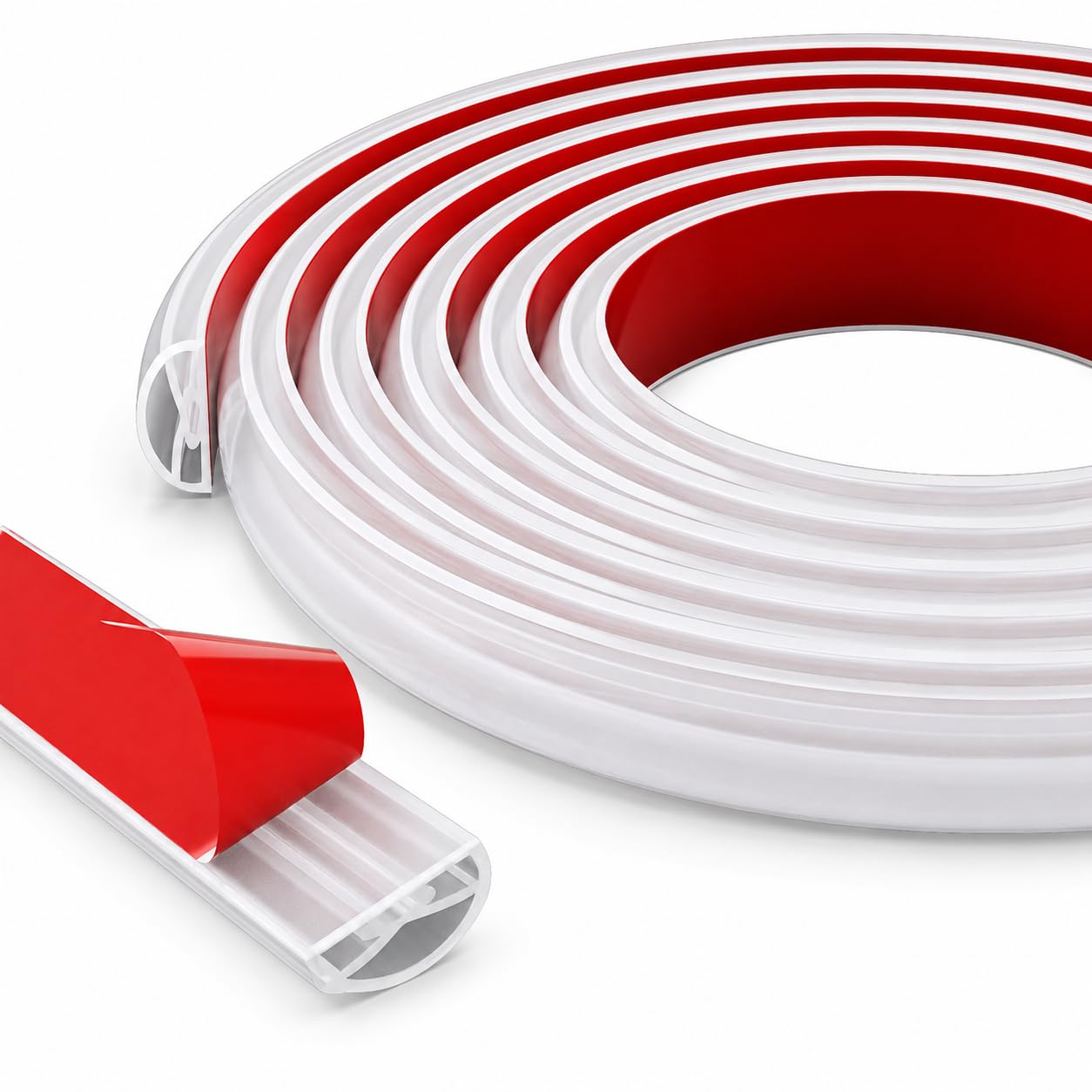
For walk-in or curbless showers where there is no door threshold to stop water, a self-adhesive silicone dam is the most practical solution. The Vannesse dam uses a collapsible silicone structure that compresses flat when stepped on and springs back to its original shape, making it safe for wheelchair access. At 0.5 inches tall and 1.2 inches wide, it sits low enough to avoid being a tripping hazard while still blocking a significant amount of water.
Installation is a peel-and-stick process that requires a clean, dry surface. Several customers recommend using liberal amounts of isopropyl alcohol for surface prep — the included alcohol pad is not enough. The silicone material is heat-resistant and does not warp, which matters for bathrooms where floor temperatures fluctuate. Users report that it contains water effectively in ADA-compliant showers and stays adhered even after months of daily use.
Some negative reviews note that the adhesive backing can fail if the floor is porous or not cleaned thoroughly. A common workaround is to run a thin bead of silicone caulk along the edges of the dam after installation. For best results, pair this with a tube of Permatex or Akfix silicone to seal the perimeter, and it will hold securely through heavy use.
Why it’s great
- Collapsible design allows wheelchair access while still blocking water.
- Low-profile height prevents tripping in zero-entry showers.
- Silicone material withstands heat and resists warping.
- Available in multiple lengths to fit various threshold sizes.
Good to know
- Adhesive may fail on porous floors without additional silicone caulk.
- Surface preparation with strong alcohol is critical for long-term adhesion.
6. KNEELISA Shower Threshold Water Dam

KNEELISA’s approach to the threshold dam adds a semicircle hollow design that provides two benefits: it is softer underfoot than solid strips, and it compresses more easily for wheelchair passage without taking a permanent set. At 9/16 inches tall, it is slightly higher than the Vannesse dam, offering a more positive water block for standard walk-in showers. The one-piece adhesive backing is 1 mm thick, which is noticeably thicker than most peel-and-stick strips.
Installation mirrors the other silicone dams: clean the floor thoroughly, apply the included primer pad, and use a hair dryer in cold conditions to activate the glue. The kit includes free adhesive aid and disposable gloves, which is a thoughtful touch for DIYers. Customer feedback highlights that the strip stays stuck for nearly a year in guest bathrooms with heavy use, especially when reinforced with clear silicone caulk at the edges.
One limitation is the height: at nearly 5/8 inch, it is more noticeable underfoot than low-profile alternatives. Some users also note that the tape backing can lift on smooth, glossy tiles if the surface is not scuffed or treated. Adding a bead of caulk along the inner edge resolves this. For wheelchair users, the hollow design does provide a softer roll-over experience compared to solid rubber dams.
Why it’s great
- Hollow core design offers superior softness underfoot and wheelchair-friendly compression.
- Thicker 1 mm adhesive backing provides stronger initial grip.
- Comes with primer pad, adhesive aid, and gloves for easy installation.
- Proven long-term adhesion in guest-use bathrooms.
Good to know
- 9/16 inch height is more prominent and may feel noticeable when stepping over it.
- Smooth tile surfaces may still require caulk reinforcement for permanent bonding.
7. cuysfead Silicone Water Dam

When you need a long silicone barrier for a sink edge, countertop, or bathtub gap rather than a standard shower threshold, the cuysfead dam offers the longest single-piece length at 67 inches. At 0.6 inches high, it sits in the same range as the Vannesse dam but is explicitly designed for kitchen counter edge sealing as well as bathroom use. The silicone is thick, waterproof, and easy to clean with a damp cloth.
The adhesive backing is 1 mm thick, matching the KNEELISA in terms of initial stickiness. However, multiple customer reports indicate that the red protective tape can peel up the adhesive if removed too quickly, so you must take extreme care during installation. The product’s best use case is on smooth, flat surfaces like granite or quartz countertops where water pools near the sink. A few users found that the strip stretches during cutting, so sharp scissors are essential.
Long-term adhesion varies: some users report failure after four months of daily shower use, while others find it stays rock-solid when caulked at the edges. The manufacturer explicitly recommends caulking the strip edges for firmness. For a pure budget option that covers a longer run, this is a viable choice, but plan to reinforce the edges with a silicone sealant for permanent wet-area installation.
Why it’s great
- Longest single strip at 67 inches, ideal for large counters or bathtubs.
- Thick silicone material feels durable and resists cutting damage.
- Versatile design works for kitchen sink splash guards and bathroom thresholds.
- Smooth surface wipes clean easily without scrubbing.
Good to know
- Red protective tape can lift adhesive if removed hastily.
- Edges should be caulked with silicone for reliable long-term water blocking.
FAQ
Can I use regular super glue to reattach a shower door seal strip?
Why does my peel-and-stick shower dam keep peeling up at the edges?
How do I measure my frameless glass door for a new bottom sweep?
Is silicone caulk or a self-adhesive strip better for a shower door seal?
Final Thoughts: The Verdict
For most users, the adhesive for shower door seal winner is the Delamu Shower Door Bottom Seal because it requires no glue at all — its snap-on friction fit works immediately and lasts indefinitely on 3/8-inch glass doors. If you want a flexible silicone caulk for sealing gaps and anchoring strips, grab the Permatex 80855 Clear RTV Silicone Adhesive Sealant. And for a curbless walk-in shower with zero threshold, nothing beats the Vannesse Shower Threshold Water Dam paired with a bead of silicone caulk at the edges.