
Our readers keep the lights on and the weekend projects moving. As an Amazon Associate, I earn from qualifying purchases.
A barbell isn’t a piece of cardio equipment you swap out seasonally — it’s the foundation of your strength training rig, often the single largest metal object in your home gym. Your squat, deadlift, bench press, and Olympic lifts all depend on its knurling bite, shaft flex, and sleeve rotation. Pick the wrong one, and you’ll fight grip fatigue on every set, feel the bar whip unpredictably during cleans, or watch the zinc coating flake off within weeks.
I’m Rikta — the founder and writer behind FitlyFast. I’ve spent years analyzing tensile strength ratings, bearing configurations, and finish durability across hundreds of barbell models to understand what separates a lifetime bar from a bending disappointment.
This guide covers nine carefully selected bars spanning compact training bars to IPF-spec powerlifting monsters, so you can buy with confidence. Finding the best barbell for your home gym means matching shaft diameter, knurl aggression, and load capacity to your specific lifting discipline.
How To Choose The Best Barbell
Before you add a bar to your cart, you need to understand three core variables: tensile strength, knurling profile, and shaft diameter. Each variable directly affects how the bar performs in specific lifts and how it ages under repeated loading.
Tensile Strength and Weight Capacity
Tensile strength, measured in PSI (pounds per square inch), tells you how much force the steel can withstand before permanently deforming. Entry-level bars often sit around 150,000 PSI, while premium power bars push past 200,000 PSI. A higher PSI rating means less whip under load, which is critical for powerlifters who need a stiff bar path on heavy squats and bench presses. For Olympic weightlifting, some whip is desirable for the clean and snatch — look for bars in the 190,000 PSI range with moderate flex.
Knurling Depth and Grip Pattern
Knurling is the textured pattern carved into the steel shaft. A shallow knurl (0.8 mm to 1.0 mm) is more comfortable for high-rep workouts but can feel slippery during heavy deadlifts without chalk. An aggressive knurl (1.2 mm to 1.5 mm) locks your hands in place for max-effort pulls but can tear skin during Olympic lifts that involve rapid hand rotation. Some bars include dual knurl marks — one set for powerlifting grip width and another for Olympic lifting — so you can train multiple disciplines on one bar.
Shaft Diameter and Sleeve Rotation
Most general-purpose bars use a 28 mm shaft diameter, which balances comfort and hand size accommodation. Powerlifting bars are thicker at 29 mm, reducing whip and providing a more stable feel for bench and squat. Sleeves should rotate independently via needle bearings (snappier spin for Olympic lifts) or bushings (more durable and quieter for powerlifting). If you plan to drop the bar from overhead, prioritize needle bearings — they absorb the rotational shock better and keep your wrists aligned during the catch phase.
Quick Comparison
On smaller screens, swipe sideways to see the full table.
| Model | Category | Best For | Key Spec | Amazon |
|---|---|---|---|---|
| Synergee Rhino Power Bar | Premium | Powerlifting & Heavy Squats | 190K PSI, 29mm, 1500lb cap | Amazon |
| Bells of Steel Powerlifting Bar 2.0 | Premium | IPF-Spec Competition Training | 210K PSI, 29mm, bare steel | Amazon |
| Valor Fitness OB-86-V | Premium | CrossFit & Olympic Lifts | 28mm, needle bearings, 1000lb cap | Amazon |
| Steelbody IWF Olympic Bar | Premium | Olympic Weightlifting | 190K PSI, 28mm, 1500lb cap | Amazon |
| Mikolo 7ft Olympic Barbell | Mid-Range | High-Volume General Training | 190K PSI, 28mm, 8 needle bearings | Amazon |
| E.T. ENERGIC Olympic Bar | Mid-Range | All-Purpose Heavy Lifting | 205K PSI, 28mm, 1500lb cap | Amazon |
| XMARK Lumberjack | Mid-Range | Squat/Bench/Deadlift Hybrid | 28mm, medium knurl, 1000lb cap | Amazon |
| Synergee Open Barbell | Mid-Range | Olympic & Functional Training | 150K PSI, 28mm, 1000lb cap | Amazon |
| RitFit Olympic Bar 4ft | Budget | Compact Home Gym & Curls | 25mm grip, 350lb cap, no knurl | Amazon |
In‑Depth Reviews
1. Synergee Rhino Power Bar
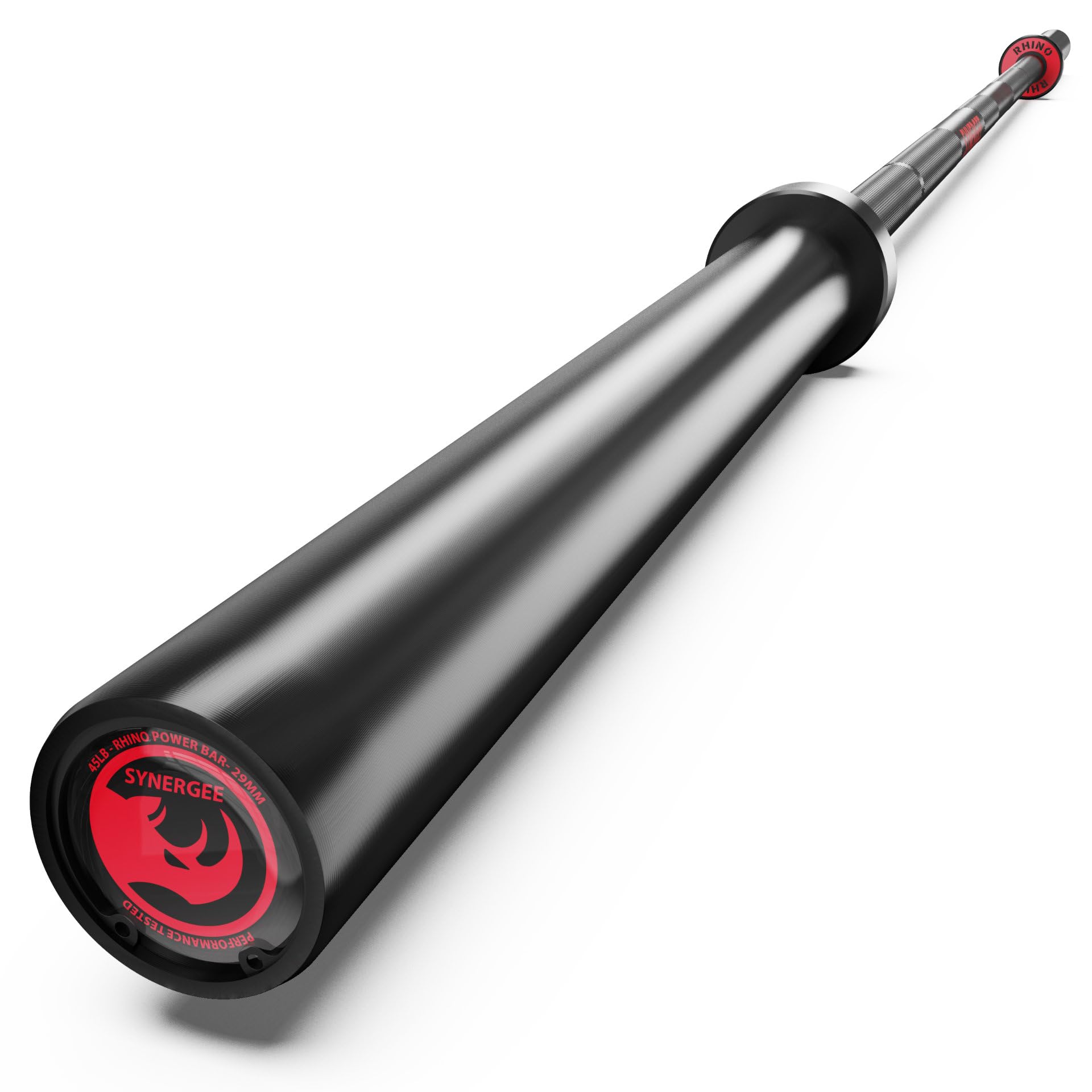
The Rhino is built exclusively for powerlifting — zero compromise on stiffness. At 29 mm diameter with a tensile strength of 190,000 PSI, it resists whip under heavy squats and deadlifts where a general-purpose bar would wobble. The aggressive volcano knurling locks into your hands with or without chalk, and the Cerakote-coated shaft resists rust far better than standard chrome or zinc finishes.
This bar uses bushings instead of bearings, which means the sleeves spin slower and more quietly — exactly what powerlifters want for a stable bench press or squat unrack. The 16.4 inches of loadable sleeve space accommodates large plate stacks without crowding. Customers consistently report preferring this bar over Rogue and Hammer Strength options at a significantly lower investment.
Packaging is robust, and the 1,500-pound capacity leaves headroom for anyone not competing at an elite level. The only trade-off is that the aggressive knurl can feel harsh during high-rep Olympic lifts — but this bar isn’t designed for snatches. It’s designed to crush PRs.
Why it’s great
- Cerakote finish provides superior rust resistance versus phosphate or zinc
- 29 mm shaft with aggressive volcano knurl for powerlifting grip security
- 190,000 PSI tensile strength for minimal whip under heavy loads
Good to know
- Bushing-based sleeves spin slower than needle bearings, limiting Olympic lift use
- Knurling is too sharp for high-rep cleans or snatches
2. Bells of Steel Powerlifting Bar 2.0

If you train for powerlifting meets, this bar removes the guesswork. The Bells of Steel Powerlifting Bar 2.0 meets IPF specifications — 29 mm shaft diameter, bare steel finish, and a 210,000 PSI tensile rating that creates a near-zero-whip feel during squats and bench press. The cheese-grater knurling is among the most aggressive available on a sub- bar, providing deadlift grip that borders on adhesive.
Bare steel means no coating to chip or wear off, but it also requires maintenance — monthly oiling and occasional wire brushing prevent surface rust, especially if you train in a humid garage. The bar weighs 44 pounds and holds up to 1,500 pounds, so it handles elite-level loads without deflection. The sleeves use bushings for a controlled, quiet spin that matches competition standards.
Customer feedback highlights the bar’s longevity: after months of daily use, the knurling remains sharp and the shaft stays straight. The trade-off is maintenance commitment. If you want a rust-free bar that never needs oil, consider a stainless steel option at a higher cost.
Why it’s great
- 210,000 PSI tensile strength — among the highest in this price range
- IPF-spec dimensions allow competition-specific practice
- Bare steel finish won’t chip or peel over time
Good to know
- Requires regular oiling and brushing to prevent rust
- Aggressive knurling may feel too sharp for high-rep deadlift sessions
3. Valor Fitness OB-86-V

The OB-86-V from Valor Fitness targets athletes who need fast sleeve rotation for Olympic lifts. Each sleeve houses two needle bearings and a bushing, delivering a snappy spin that lets you drop under the bar quickly during snatches and cleans. The 28 mm shaft with medium knurling provides a balanced grip — aggressive enough for deadlifts but not so sharp that it chews up your hands during high-rep WODs.
The black zinc coating on the shaft offers moderate corrosion resistance, though some users report minor chipping where plates slide against the finish. The bar includes a center knurling — helpful for squats — but some lifters tape it over during cleans to avoid scraping their thighs. At 1,000-pound capacity with 150,000 PSI tensile strength, it handles most home gym loads without issue.
Packaging has been a point of criticism; the box is thin, and some bars arrive with minor cosmetic damage. The bar itself holds up well under regular use — customers using it 4x per week for months report no bending or sleeve play, making it a reliable choice for CrossFit and general strength training.
Why it’s great
- Needle bearings provide fast sleeve rotation for Olympic lifts
- Center knurling improves squat grip under heavy loads
- Medium-depth knurling suits both powerlifting and functional training
Good to know
- Black zinc coating can chip with aggressive plate loading
- Packaging is thin — inspect bar upon delivery for cosmetic dings
4. Steelbody IWF Olympic Bar

Steelbody’s IWF bar is designed for lifters who want a competition-grade tool for snatches, clean and jerks, and presses. It meets International Weightlifting Federation standards with a 28 mm shaft, 190,000 PSI tensile strength, and four needle bearings per sleeve for rapid, quiet rotation. The hardened chrome finish on the sleeves resists corrosion, and the ceramic-infused knurling on the shaft increases friction without being overly abrasive.
The bar carries a 1,500-pound capacity, but its true value is the well-balanced whip — enough flex to store energy during the second pull of a clean, but stable enough for pressing and squatting. The 16.25-inch loadable sleeve length fits standard bumper plates comfortably, and the snap rings keep the bearings secure during drops. Customers using bumper plates and dropping the bar regularly report the finish holds up well.
Delivery packaging varies; some units arrive pristine, others show cosmetic wear from thin box construction. The bar itself is consistently praised as a “best value” alternative to Eleiko or Rogue WL bars, offering 90% of the performance at a fraction of the investment.
Why it’s great
- IWF-compliant dimensions for competition practice
- Four needle bearings deliver smooth, fast sleeve rotation
- Ceramic-infused knurling improves grip without excess abrasion
Good to know
- Chrome sleeves show smudges and wear over time
- Packaging is inconsistent — inspect carefully upon arrival
5. Mikolo 7ft Olympic Barbell

Mikolo packs more bearings into this bar than most competitors at twice the price — eight needle bearings total, four per sleeve, combined with brass bushings for reduced friction. The result is a sleeve rotation that feels near-instantaneous, making this an excellent choice for lifters transitioning from general weightlifting into Olympic-style movements. The 28 mm shaft with 1.2 mm volcano diamond knurling provides a secure grip that won’t slip during sweaty sessions.
The hardened chrome surface resists corrosion, and the 190,000 PSI tensile strength supports up to 1,500 pounds. The bar includes both powerlifting and Olympic knurl marks, so you can train both disciplines without guessing hand placement. After a year of regular use, customers report the bearings maintain smooth operation with no sleeve rattle or wobble.
The bar weighs 45 pounds and fits standard 2-inch plates, power cages, and Smith machines. The only notable drawback is the lack of center knurling — some squat-focused lifters may miss the additional friction on their back during heavy low-bar squats.
Why it’s great
- Eight needle bearings provide exceptionally smooth sleeve rotation
- Dual knurl marks support both powerlifting and Olympic lifts
- 190,000 PSI tensile strength for heavy loads without flex
Good to know
- No center knurling — may feel slippery during low-bar squats
- Volcano knurling may be too aggressive for some grip preferences
6. E.T. ENERGIC Olympic Barbell

The E.T. ENERGIC bar stands out for its 205,000 PSI tensile rating — higher than many bars costing twice as much. This heat-treated alloy steel shaft resists bending even under repeated heavy deadlifts, and the dual knurl marks help you lock in consistent hand placement. The 1.2 mm medium-depth knurling offers a strong bite without tearing calluses, and the knurled center adds stability during squats.
Each sleeve uses four needle bearings plus a bushing, producing a smooth spin that sits between a pure Olympic bar and a power bar — versatile enough for clean and jerks, yet controlled enough for bench press. The friction-welded sleeves are stronger than standard welds, reducing the risk of sleeve separation under dynamic loads. After two years of use, customers describe it as rock-solid with no performance degradation.
The bar arrives heavily oiled to protect the chrome finish, so you’ll want to wipe it down before first use. Some users note metal flakes in the oil from machining — normal for this price tier, but wash the bar thoroughly before loading your first plates.
Why it’s great
- 205,000 PSI tensile exceeds many mid-range and premium bars
- Knurled center improves squat grip and stability
- Friction-welded sleeves last longer than standard welded designs
Good to know
- Arrives heavily oiled — requires thorough cleaning before use
- Metal flakes may be present from manufacturing machining
7. XMARK Lumberjack

The XMARK Lumberjack is built around one principle: a knurling profile that grips securely without tearing your hands. The medium-depth knurling and 28 mm shaft create a feel that works for squats, bench, deadlifts, and even light Olympic lifts without requiring chalk on every set. The chrome finish resists corrosion, and the 1,000-pound capacity with moderate whip makes it a strong hybrid bar for general strength training.
The sleeves spin smoothly via a bushing system — not as fast as bearing-based bars, but quieter and more durable for long-term use. The bar lacks center knurling, which may be a downside for low-bar squatters, but the 16.25-inch loadable sleeve length provides plenty of room for plate variation. Customers consistently rate the Lumberjack as a bar that punches above its weight, with several calling it the best bar they’ve owned for home gym use.
Like many bars in this tier, the packaging is minimal. Some units arrive with cosmetic scratches from shipping, but the bar itself is straight and true. If you’re a beginner to intermediate lifter who wants one bar for everything — without an aggressive knurl that chews your hands — this is a strong candidate.
Why it’s great
- Medium-depth knurling provides secure grip without excessive hand abrasion
- Sleeve rotation is smooth and quiet for a bushing design
- Versatile enough for all major lifts in a home gym
Good to know
- No center knurling for squat stability
- Packaging is thin — inspect for shipping cosmetic damage
8. Synergee Open Barbell
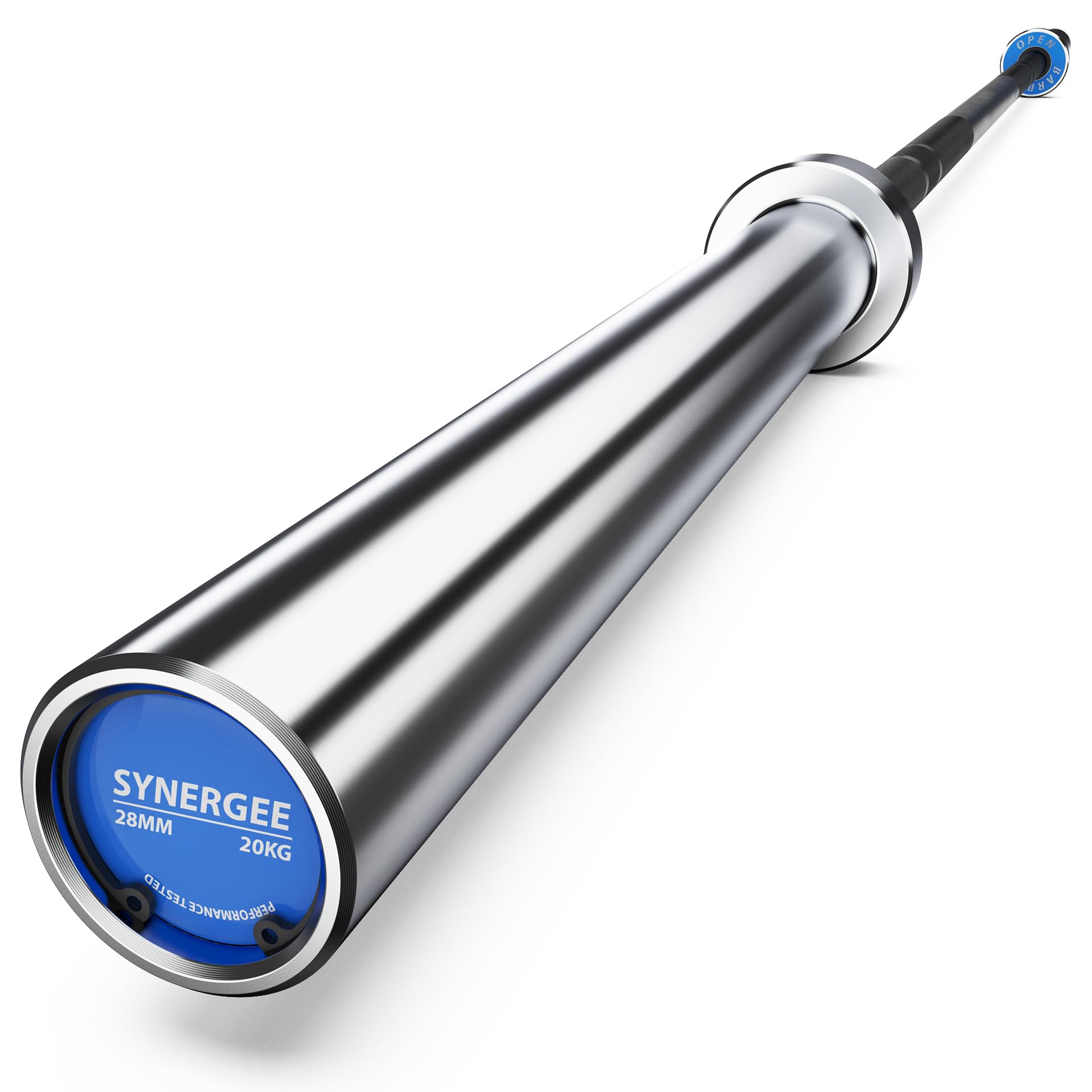
The Synergee Open Barbell is one of the best-reviewed sub- bars on the market, and for good reason. It features four needle bearings (two per sleeve) for smooth, fast rotation that rivals IWF-certified bars costing five times as much. The black phosphate-coated shaft offers decent corrosion resistance, while the chrome sleeves slide easily when loading and unloading plates. The 28 mm diameter with aggressive knurling provides a locked-in feel for deadlifts and presses.
With a 150,000 PSI tensile strength and 1,000-pound capacity, this bar handles most home gym lifter profiles comfortably. The dual knurl marks accommodate both powerlifting and Olympic grip widths. Customers with experience using Eleiko and Rogue competition bars note that the spin quality is comparable, though the steel density feels slightly lighter under max loads. The bar weighs 44 pounds and measures 86.4 inches — standard for a 7-foot Olympic bar.
The main concern is packaging durability. Multiple customers report damaged boxes and minor scratches during transit. The bar itself is consistently straight and functional. For the investment, this bar delivers performance that typically requires a much higher spend.
Why it’s great
- Needle bearing rotation rivals premium Olympic bars
- Aggressive knurling eliminates need for chalk on most lifts
- Dual knurl marks for powerlifting and Olympic hand positioning
Good to know
- Packaging is fragile — bars may arrive with minor cosmetic marks
- Black phosphate coating can wear over high-contact areas
9. RitFit Olympic Barbell 4ft

The RitFit 4-foot bar fills a niche that full-length bars can’t: tight home gym spaces, curl bars for accessory work, and landmine or hip thrust setups where a 7-foot bar is too long to maneuver. The 25 mm grip diameter is noticeably thinner than a standard 28 mm Olympic bar, making it more comfortable for bicep curls and shoulder raises but less stable for heavy deadlifts or squats. The bar has no knurling — a smooth shaft that won’t tear your hands during upper-body isolation work but offers minimal grip security for pulling exercises.
The needle bearings produce a smooth, quiet spin that’s surprising for a compact bar. The oxide finish provides basic rust protection, but this is not a bar designed for high-load, high-volume training — its 350-pound capacity limits you to light-to-moderate loads. The bar weighs only 20 pounds, so loading plates feels noticeable lighter on the shelf. Customers using it for RDLs, landmine work, and hip thrusts in small apartments appreciate the space savings.
RitFit also offers 5-foot, 6-foot, and 7-foot versions of this bar, so you can scale up length and capacity if needed. The 4-foot bar comes with a lifetime warranty against bending, though at 350 pounds capacity, bending is unlikely under normal use. This is not a primary bar for a serious lifter — it’s a specialist tool for constrained spaces and specific exercises.
Why it’s great
- Compact 4-foot length fits tight home gym spaces and small rooms
- No knurling prevents hand abrasion during curl and press exercises
- Lifetime warranty against bending provides peace of mind
Good to know
- 25 mm grip is thinner than standard Olympic bars — feels different under load
- No knurling offers minimal grip security for deadlifts or pulls
FAQ
What tensile strength do I need for deadlifting over 500 pounds?
Should I choose a bar with needle bearings or bushings?
What does the knurling depth number actually mean?
Can I use a 29 mm powerlifting bar for Olympic lifts?
How should I care for a raw steel or bare steel barbell?
Final Thoughts: The Verdict
For most users, the best barbell winner is the Synergee Rhino Power Bar because its Cerakote finish, 29 mm aggressive knurl, and 190K PSI tensile strength deliver powerlifting-grade performance without the premium price. If you want competition-specific specs with a 210K PSI rating, grab the Bells of Steel Powerlifting Bar 2.0. And for budget-minded lifters who need versatile performance, nothing beats the Synergee Open Barbell.