
Our readers keep the lights on and the weekend projects moving. As an Amazon Associate, I earn from qualifying purchases.
Apartment living means limited square footage, shared walls, and windows that may not accommodate a bulky central unit. The right cooling system has to fit your window, stay quiet enough for neighbors, and handle humidity without turning your kitchen into a sauna. Portable and window-mounted ACs designed for apartments solve these exact problems — but picking the wrong one means wasted energy, constant noise, and a room that never fully chills.
I’m Rikta — the founder and writer behind FitlyFast. I spend my weeks comparing BTU ratings, decibel curves, and self-evaporating systems to separate apartment-ready designs from glorified fans with exhaust hoses.
After testing the specs and real-world performance of nine models built for tight spaces, this guide lands on the ac for apartment that balances noise, cooling speed, and installation ease for renters and homeowners alike.
How To Choose The Best AC For Apartment
Apartment cooling isn’t about raw power — it’s about matching the unit to your window type, floor plan, and noise tolerance. Pouring 14,000 BTU into a 200 sq ft studio creates short-cycling that wastes electricity and leaves the room clammy. The right choice starts with your square footage, then layers in installation and maintenance demands that matter when you rent.
Window Type and Installation Limits
Most apartment ACs assume a standard double-hung window between 23 and 36 inches wide. Sliding windows, casement windows, or unusually tall openings need either a portable unit with an adjustable window kit or a specific window-mounted model that includes extra bracket hardware. Before you buy, measure your window opening’s width and height — many return policies don’t cover “didn’t fit my window.”
Noise Compatibility and Sleep Mode
Apartments place the AC closer to the bedroom than a house would. Look for a unit that advertises a sleep mode or a decibel rating below 52 dB — this is quieter than a normal conversation. Loud compressor cycling wakes light sleepers, so models with inverter technology that ramp the compressor instead of turning it off and on fix this issue entirely.
Humidity Control and Drainage
Small apartments trap humidity from cooking and showers. A unit with a dehumidifier mode that pulls at least 40 pints per day keeps the air from feeling sticky. Self-evaporating systems are ideal — they recirculate condensate through the exhaust to evaporate it, so you never empty a bucket. In humid climates, ensure the unit has a continuous drain option for high-moisture days.
Quick Comparison
On smaller screens, swipe sideways to see the full table.
| Model | Category | Best For | Key Spec | Amazon |
|---|---|---|---|---|
| DREO 515S | Premium Portable | Smart apartment cooling | 45 dB, Drainage-free up to 90% RH | Amazon |
| Whynter ARC-1230WN | Premium Inverter | Large bedrooms / living areas | 14,000 BTU, 87 pts/day dehumidify | Amazon |
| Gasbye Dual Hose | Inverter Portable | Energy savings + quiet inverter | 13.6 CEER, 45 dB inverter mode | Amazon |
| ZAFRO Inverter 14K | Dual Hose Inverter | Ultra-quiet multi-room cooling | 42 dB, 72-hour drainage-free | Amazon |
| DREO 318S | Smart Portable | Small/medium smart bedrooms | 45 dB, self-evaporating algorithm | Amazon |
| Line Blaster 12K | Mid Portable | Open concept / large rooms | 52 dB sleep mode, 12,000 BTU | Amazon |
| ZAFRO Window 8K | Window Mount | Simple window installation | 45 dB low, 7 modes + 4 speeds | Amazon |
| Line Blaster 8.5K | Value Portable | Budget-friendly small rooms | 8,500 BTU, 52 dB sleep mode | Amazon |
| Uhome 8K Portable | Entry Portable | Compact spaces under 350 sq ft | 55 dB, 40 pts/day dehumidify | Amazon |
In-Depth Reviews
1. DREO Portable Air Conditioner 515S
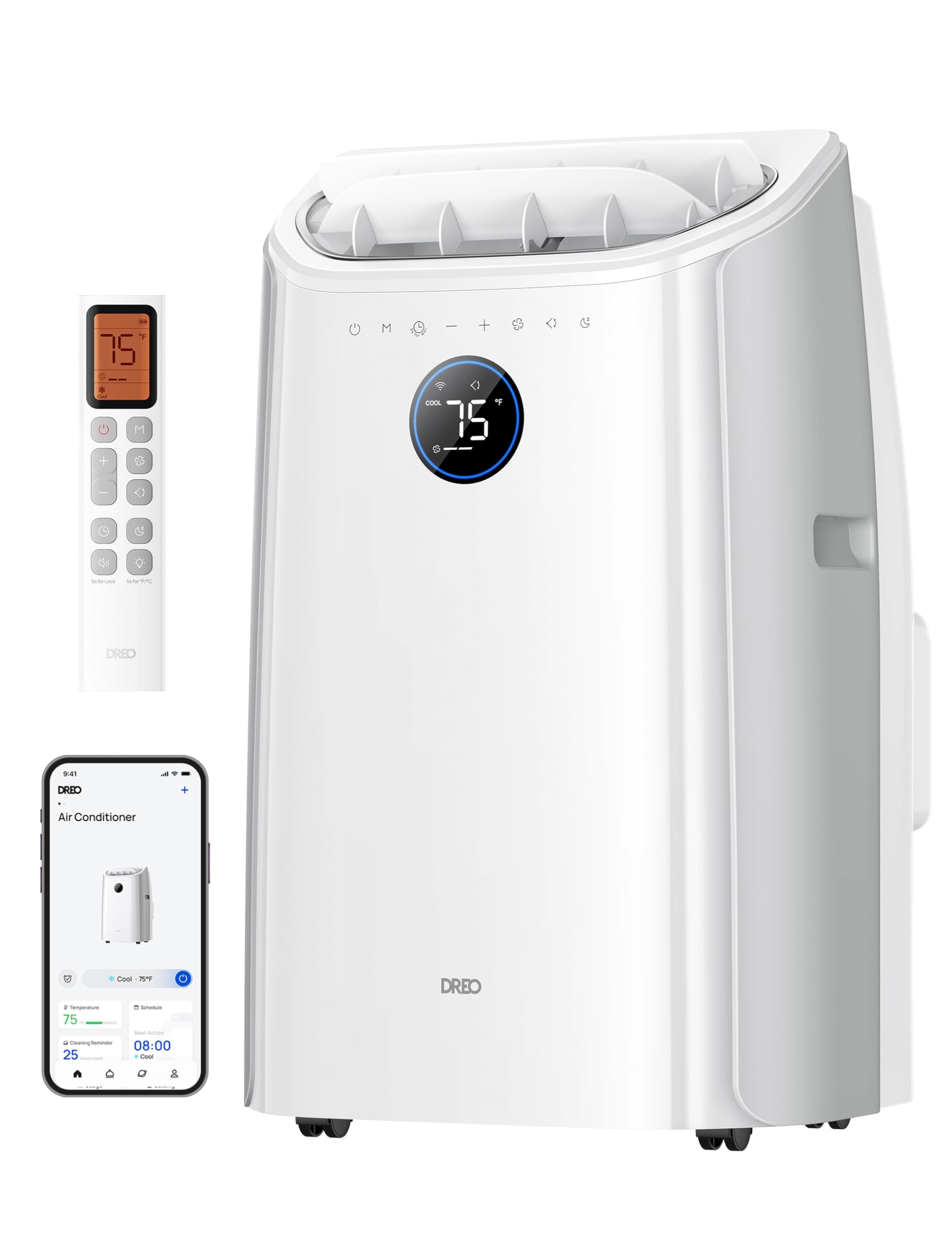
The DREO 515S delivers 12,000 BTU (ASHRAE) / 8,000 BTU (SACC) from a standing portable chassis that stays quiet enough for shared-wall apartments. Its IceCool system pushes air up to 16 feet across the room, and the patented noise isolation system holds the compressor at 45 dB — quieter than most window units. This unit is the clear choice if you want app-based scheduling, voice control via Siri or Alexa, and a self-evaporating system that never requires bucket emptying below 90% humidity.
Setup takes about ten minutes using the included window slider kit, and the 3-in-1 modes (cool, fan, dry) cover summer heat and seasonal humidity. The fan mode alone circulates air on mild days without running the compressor, saving electricity. Owners consistently note that the magnetic remote holder and dimmable display light make bedside use convenient, and the build quality feels solid compared to plastic-heavy entry-level units.
One caveat: the window kit can be tricky to seal perfectly on older frames, and the unit weighs enough that you’ll want a second person for carrying up stairs. The dehumidification is decent but not class-leading — in very humid climates, you may still need a dedicated dehumidifier for peak muggy days.
Why it’s great
- Whisper-quiet inverter compressor at 45 dB won’t disturb sleep
- True drainage-free cooling eliminates bucket emptying
- Smart app and voice control for pre-cooling before you arrive home
Good to know
- Window kit seal can be finicky on non-standard frames
- Heavy unit requires two people for safe carrying
2. Whynter ARC-1230WN

For apartments with open-concept living areas or oversized master bedrooms, the Whynter ARC-1230WN uses a dual-hose inverter system to cool up to 600 square feet without creating negative pressure. The “hose-in-hose” exhaust design prevents heat from leaking back into the room — a common problem with single-hose portables. At 14,000 BTU (ASHRAE) / 12,000 BTU (SACC), this unit runs about 40% more efficiently than non-inverter counterparts in the same class.
The NetHome Plus app lets you adjust temperature, switch modes, and set schedules from anywhere, and it integrates with Alexa and Google Assistant. Owners report that the compressor stays nearly silent once the target temperature is reached — only the fan noise remains audible. The auto-drain function removes up to 87 pints of condensate per day, so you never touch a bucket even during Florida-level humidity.
At roughly 80 pounds, this is not a unit you’ll move between rooms casually. The window kit requires extension panel cutting for wider openings, and some users find the remote’s range finicky. If your apartment has a single large room or a combined living-dining space, the Whynter earns its premium price through raw cooling reliability.
Why it’s great
- Dual-hose design prevents hot air infiltration and cools faster
- Smart app control with scheduling for pre-cooling
- Powerful dehumidification handles high-humidity climates easily
Good to know
- Very heavy — plan for permanent or semi-permanent placement
- Window kit may need cutting or modification for non-standard widths
3. Gasbye Dual Hose Portable Air Conditioner
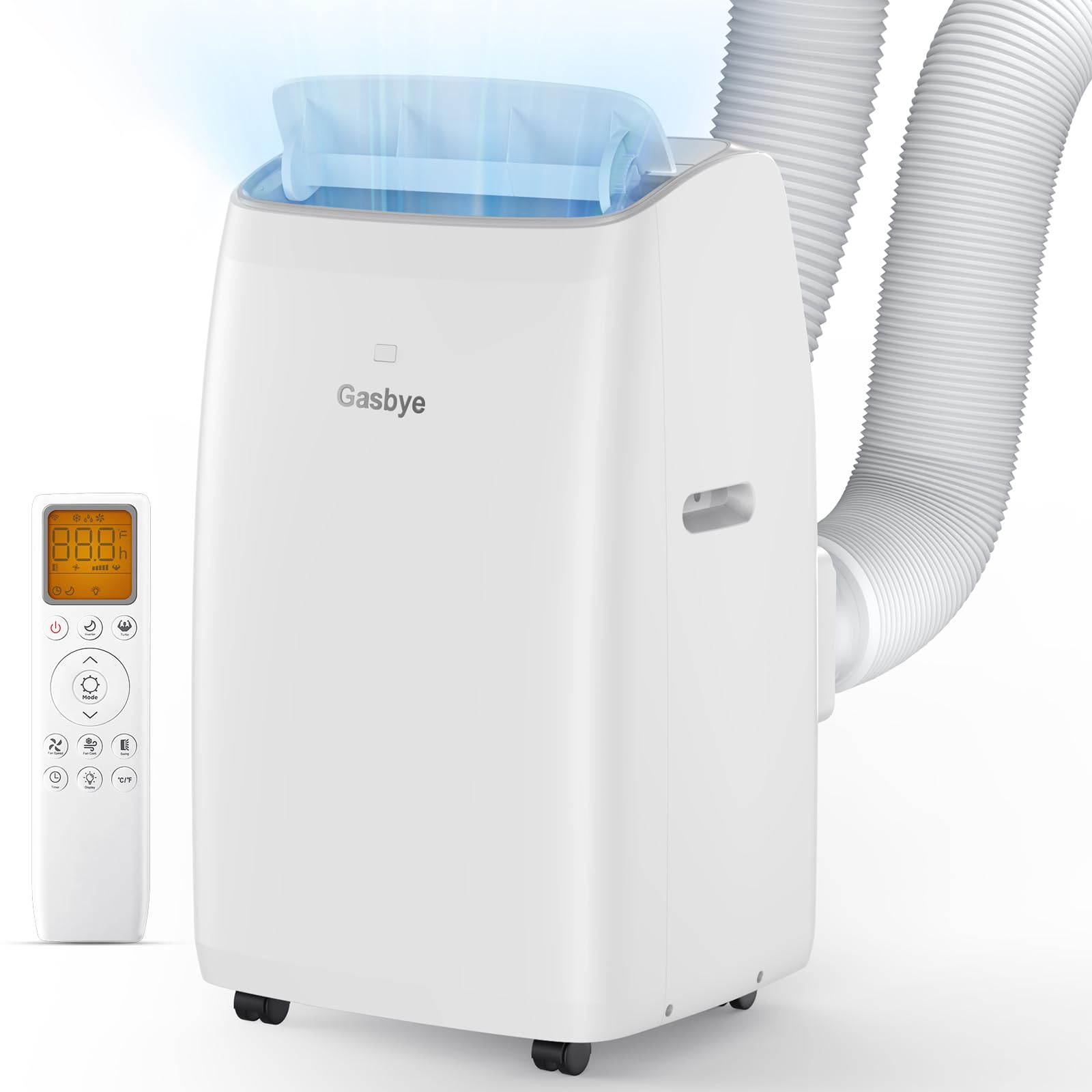
The Gasbye 14,000 BTU (ASHRAE) / 10,500 BTU (SACC) dual-hose portable AC uses a full DC inverter compressor to achieve a 13.6 CEER rating — well above the federal minimum and among the highest in its category. In turbo mode, it draws 800–1,300 watts for fast cooling; in inverter mode, it drops to 500–800 watts, saving significant energy during milder nights. The dual-hose architecture maintains balanced indoor air pressure, so cool air isn’t sucked out through window cracks.
Noise drops to about 45 dB in inverter mode because the compressor reduces frequency to 50% load within two minutes of reaching the set temperature. The backlit remote and display-off feature keep the bedroom dark while still allowing midnight adjustments. Owners report dependable performance over two summers, with no manual drainage required in typical humidity — the self-evaporating system handles condensate automatically.
The unit is physically large — 15.5 inches deep, 17.7 inches wide, 29.3 inches tall — so it needs floor space. The thermostat sits near the hot discharge line, which can cause overcooling by a few degrees unless you add a small foil deflector. Gasbye includes a 3-year quality coverage and responsive customer support that ships brand-new replacements, not refurbished units.
Why it’s great
- Top-tier 13.6 CEER energy efficiency lowers electric bills
- DC inverter compressor is whisper-quiet in low-power mode
- Self-evaporating system needs no manual drainage in normal humidity
Good to know
- Large footprint requires dedicated floor space
- Thermostat placement can cause overcooling; may need DIY deflector fix
4. ZAFRO Smart Inverter Portable Air Conditioner 14K
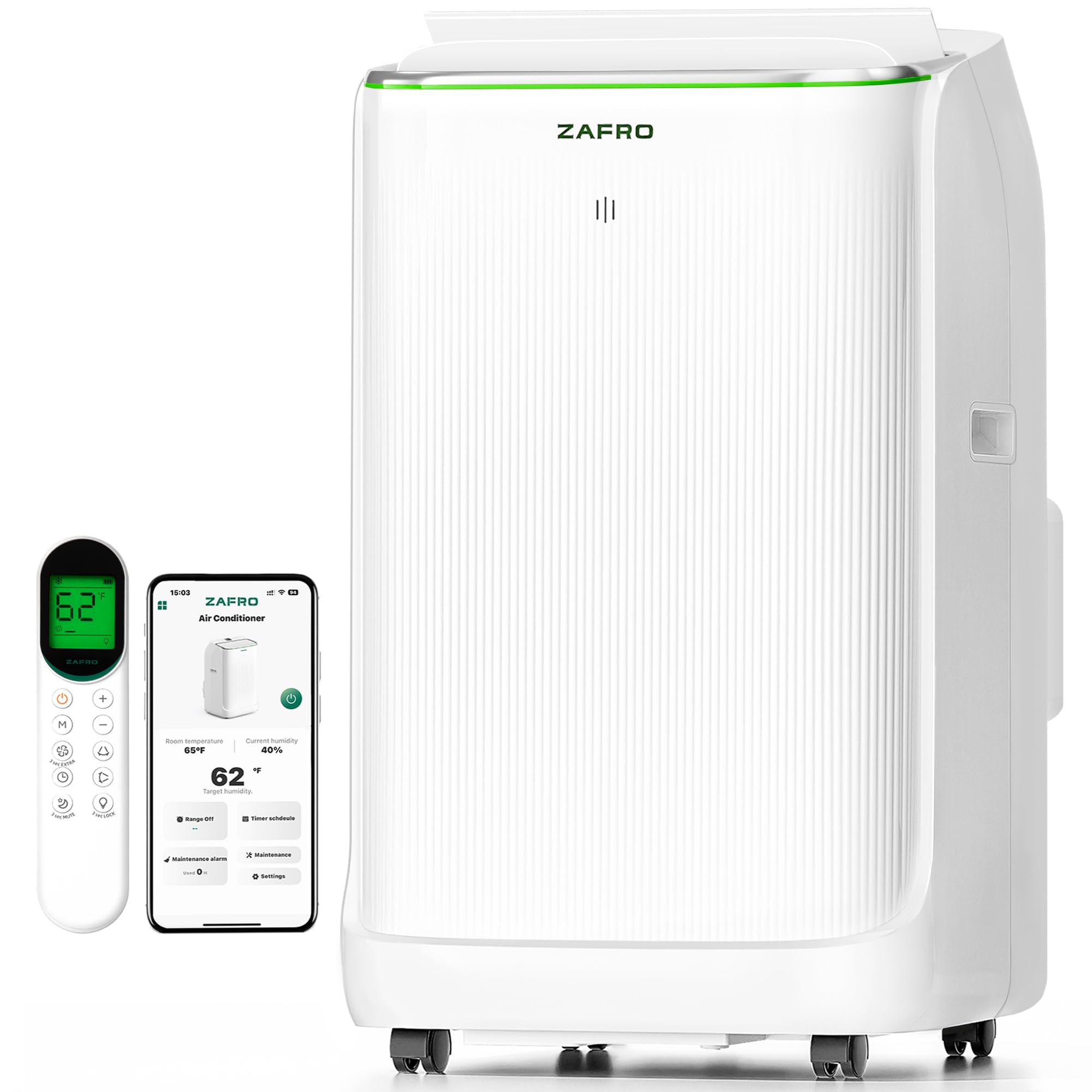
The ZAFRO inverter portable AC packs 14,000 BTU (ASHRAE) / 10,000 BTU (SACC) into a dual-hose system that operates as low as 42 dB — one of the quietest ratings in the portable category. The inverter compressor maintains a stable temperature by adjusting frequency rather than cycling on and off, eliminating the jarring restart noise that wakes light sleepers. The four-way oscillation (horizontal and vertical swing) distributes air evenly across the room, avoiding the cold-spot/hot-spot problem common with stationary portable units.
Six operating modes — Cool, Dry, Fan, Sleep, Extra, and Eco — adapt to any season. The Extra mode locks temperature at 61°F and runs at full power for instant relief during heat waves. The self-evaporating condensate system claims up to 72 hours of drainage-free operation in environments below 90% humidity. Owners consistently mention the easy 15-minute setup, the clean minimalist design, and the reliable app control for scheduling.
The unit covers up to 700 square feet, which is overkill for a small studio but perfect for a one-bedroom apartment where you want one unit to cool the main living space. Some users note that the rubber window seals could be thicker for a more airtight fit, and in extreme humidity above 90%, the included drain hose becomes necessary. Overall, the ZAFRO delivers premium quiet performance at a mid-premium price point that undercuts Whynter and Dreo flagships.
Why it’s great
- Ultra-quiet 42 dB operation is perfect for bedrooms
- Dual-hose inverter design is efficient and stable
- Four-way oscillation eliminates uneven cooling
Good to know
- Window seal kit could be thicker for better insulation
- Drain hose needed for sustained humidity above 90%
5. DREO Portable Air Conditioner 318S
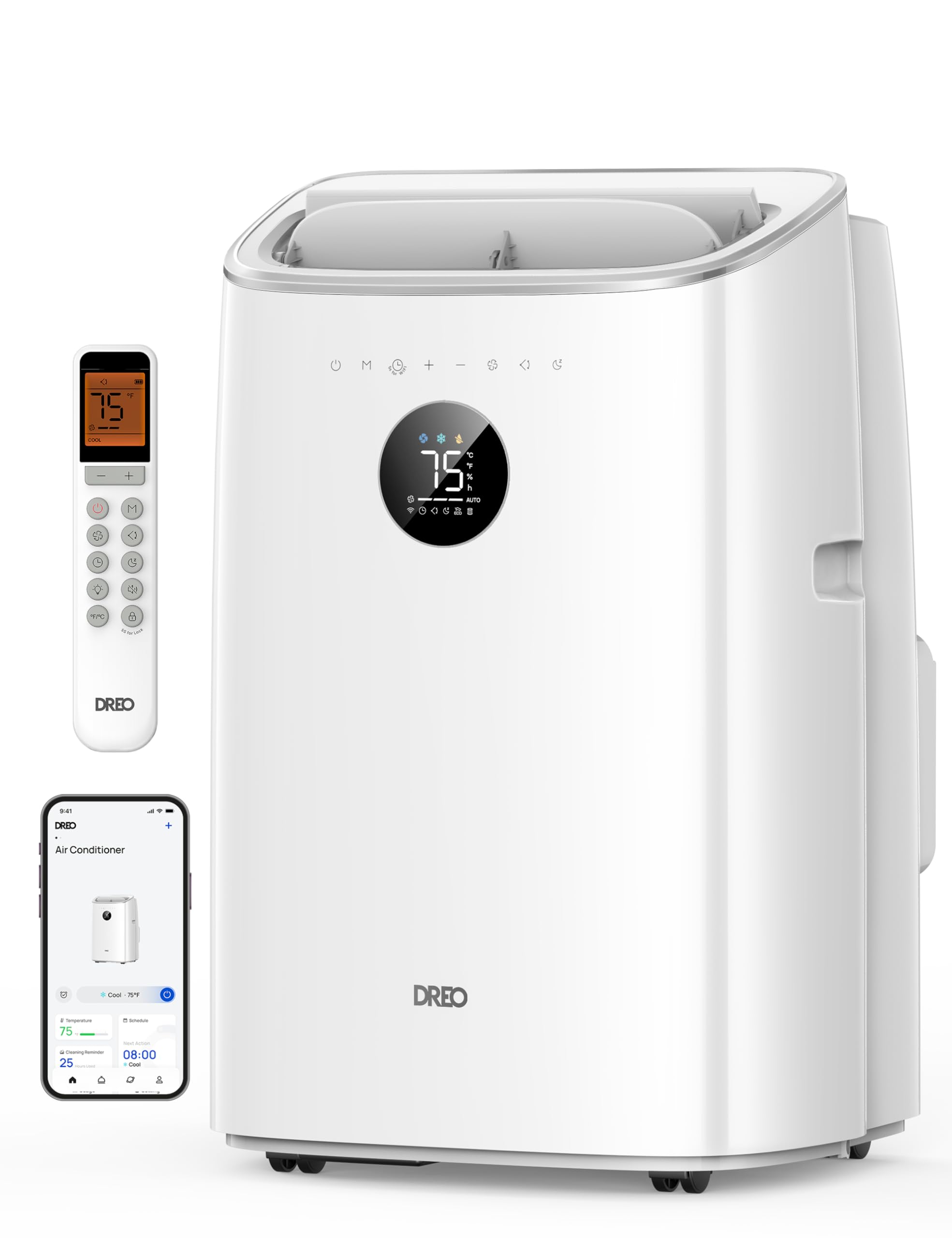
The DREO 318S brings the same patented noise isolation system and drainage-free algorithm as the 515S but in a smaller 8,000 BTU ASHRAE (5,000 BTU SACC) package. This makes it ideal for a bedroom or small home office up to 150 square feet where you don’t need the extra capacity of a 12K unit. The IceCool system pushes chilled air up to 14 feet, and the 45 dB noise level stays below most window AC hums.
Smart control runs through the DREO app, and voice commands work with Siri, Alexa, and Google Home. You can monitor temperature and humidity and customize a sleep curve — the unit gradually adjusts temperature and fan speed throughout the night. Owners report that the display and chime can be turned off completely, which is a rare courtesy for light-sensitive sleepers. The self-evaporating system requires a drain hose only when humidity exceeds 90%.
The window panels are adjustable and can be cut to size, but some users note that the exhaust grate leaves gaps large enough for insects to enter — adding a nylon mesh screen solves this. The unit is heavier than it looks, so plan for a stable surface rather than a flimsy table. For the price, the DREO 318S delivers smart features and real quiet that entry-level portables can’t touch.
Why it’s great
- Smart app with sleep curve customization adjusts cooling overnight
- True self-evaporating system eliminates bucket emptying
- Dim display and mute chime support undisturbed sleep
Good to know
- Exhaust grate may need mesh screen to block insects
- Heavier than comparative BTU units — needs sturdy placement
6. Line Blaster 12,000 BTU Portable AC
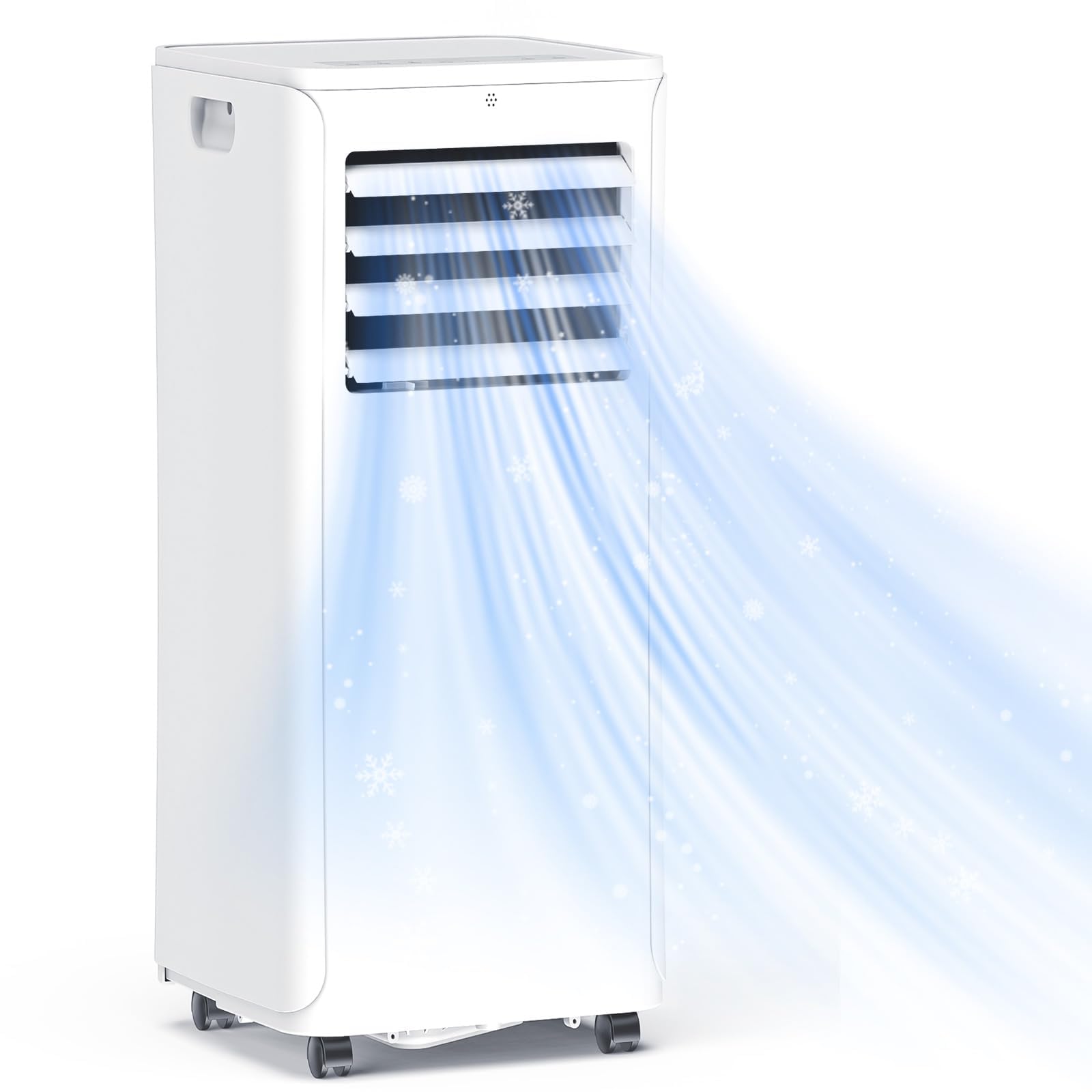
The Line Blaster 12,000 BTU portable AC uses eco-friendly R32 refrigerant and a self-evaporating system to cool rooms up to 550 square feet. The 3-in-1 design covers cooling, dehumidification (up to 45 pints per day), and fan-only mode for mild days. The 52 dB sleep mode is quiet enough for most bedrooms, though users note a slight gurgling sound from the self-evaporation process on humid days.
Dual control options — a touch panel and a remote with 25-foot range — let you adjust the temperature between 61°F and 88°F from across the room. Four 360-degree wheels and side handles make it easy to roll from the bedroom to the living room. Owners consistently report that the unit cools a 12×12 room in about 15 minutes and that the quick-cool mode delivers noticeable relief even during humid 90°F weather.
The unit is not a true dual-hose design, so some air pressure loss occurs in tightly sealed apartments. The included window kit works with standard double-hung windows but may leave gaps in sliding or casement frames. For the price, the Line Blaster 12K offers strong mid-range cooling for apartment layouts where you want one portable unit to serve two adjacent rooms.
Why it’s great
- Strong 12,000 BTU cooling covers larger apartment rooms
- Self-evaporating system needs minimal manual drainage
- Rolls easily between rooms with 360-degree wheels
Good to know
- Single-hose design can cause slight negative air pressure
- Occasional gurgling noise in dehumidifier mode
7. ZAFRO 8,000 BTU Window Air Conditioner
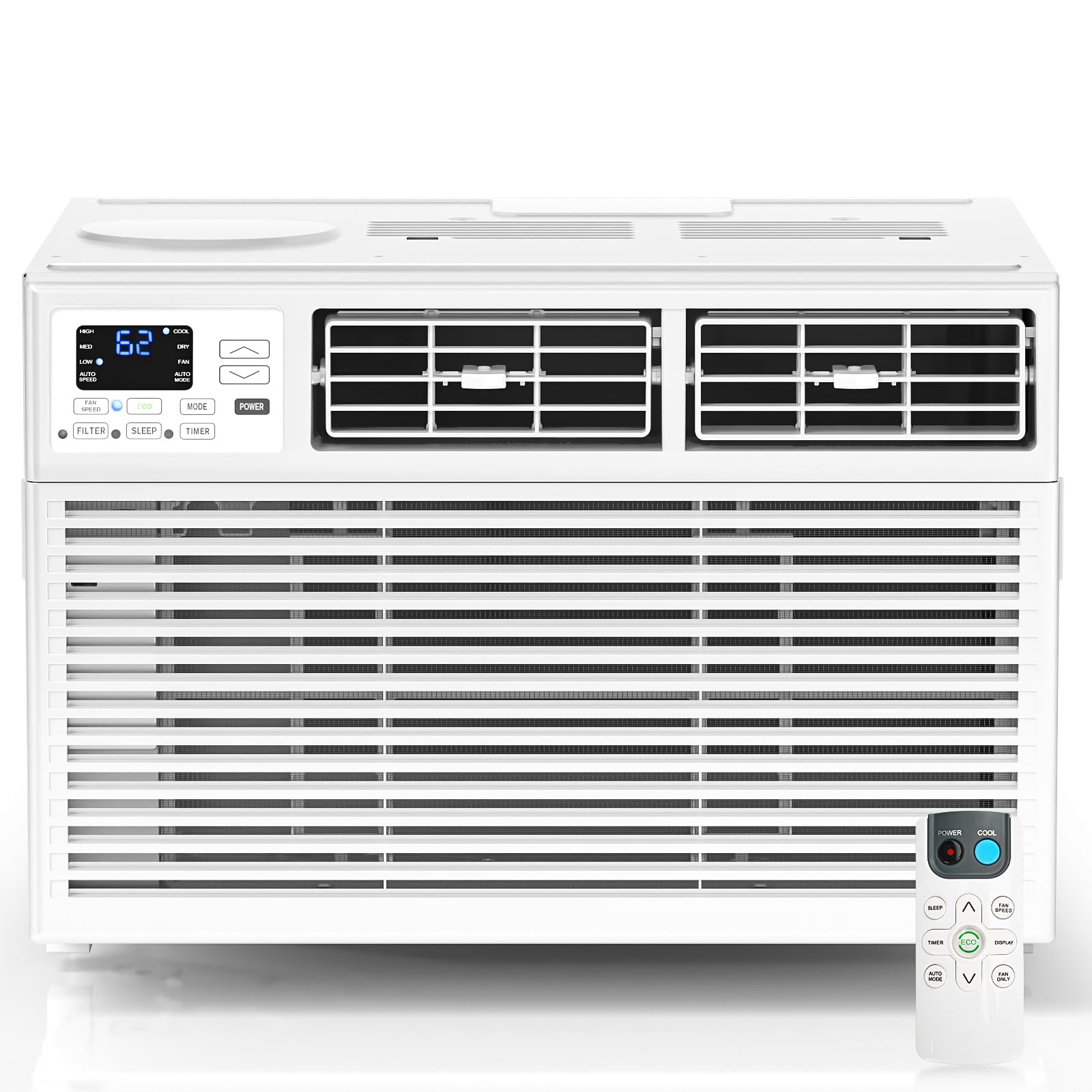
The ZAFRO window AC packs 8,000 BTU into a compact frame (13.3 x 18.6 x 15.6 inches) that fits standard double-hung windows between 23 and 36 inches wide. Seven operating modes and four fan speeds give you granular control over airflow, and the low-speed fan operates as quietly as 45 dB — competitive with portable units at half the price. The high-density pre-filter traps dust and debris, and the filter-check light reminds you when cleaning is due.
Installation takes about 15 minutes using the included hardware and illustrated manual. The unit uses R32 refrigerant, which has a lower global warming potential than R410A and cools more efficiently. Owners report that the ZAFRO cools a 12×12 room down from 90°F to comfortable levels within 20 minutes, and the swing louvers direct air where you want it rather than blasting straight ahead.
On the low fan setting, the noise is noticeable but not intrusive — a gentle hum that most people find sleepable. The high fan is louder and better suited for daytime use. The price point is reasonable, but some owners note that the price dropped within weeks of purchase, so timing matters. If you want the simplicity of a window unit with modern features, the ZAFRO is a strong choice.
Why it’s great
- Quiet 45 dB low-speed fan suits bedroom use
- 7 modes and 4 speeds offer fine-grained comfort control
- Compact size fits most standard double-hung windows
Good to know
- High fan speed is noticeably louder for daytime use
- Price can fluctuate — watch for sales
8. Line Blaster 8,500 BTU Portable AC
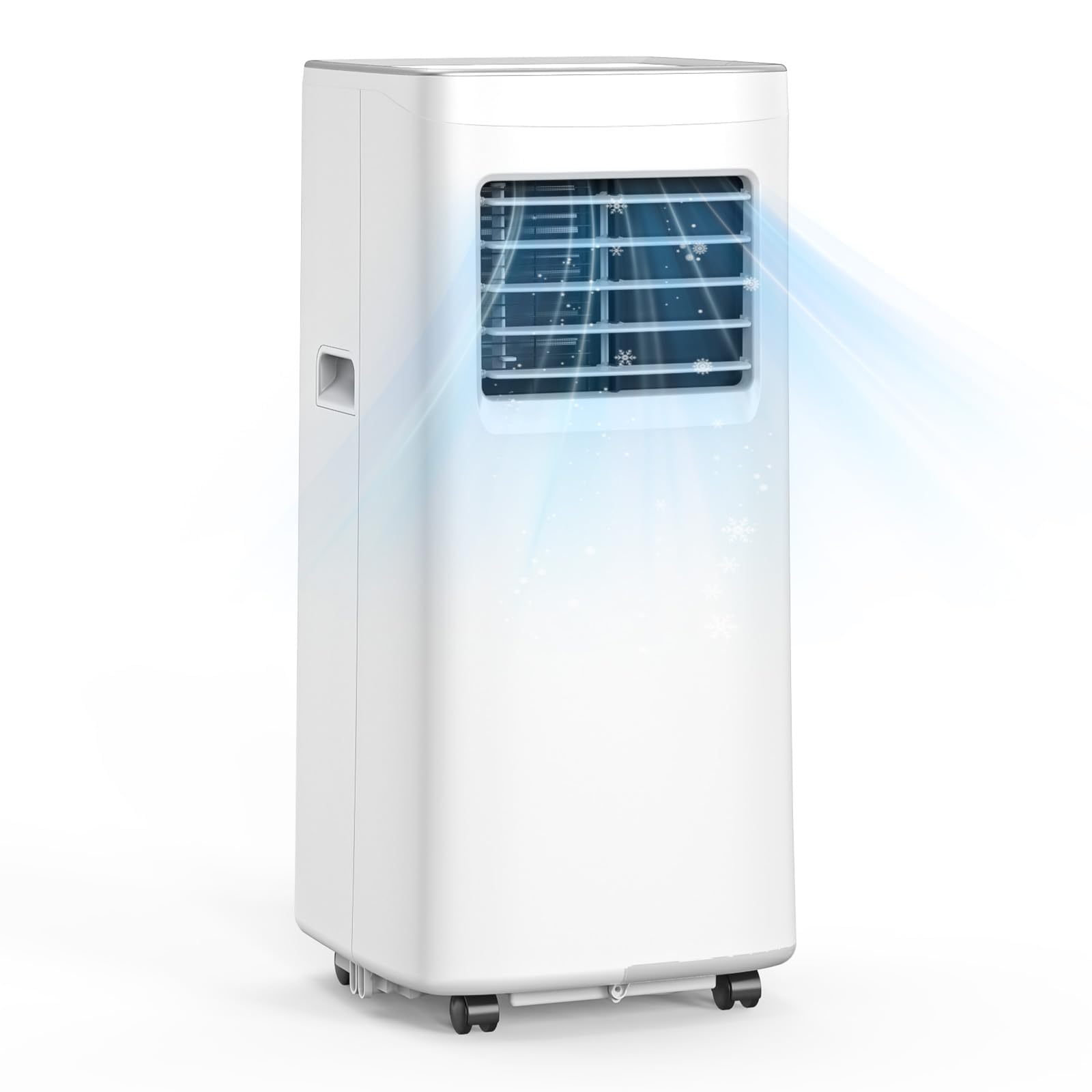
The Line Blaster 8,500 BTU portable AC delivers entry-level cooling for rooms up to 450 square feet at a price that won’t strain a renter’s budget. The 3-in-1 system covers cooling, dehumidification, and fan-only circulation. The sleep mode operates below 52 dB, which is acceptable for light sleepers but not as quiet as the premium inverter models. Setup takes about 5 minutes using the included window slide bar and adapter.
Owners consistently praise the cooling speed — the dual-turbo airflow technology drops the temperature by up to 61°F within 8–15 minutes in smaller rooms. The adjustable temperature range spans 61°F to 104°F, giving you flexibility across seasons. Users also appreciate that the unit recycles most of its condensate through the exhaust, so dripping onto the floor is rare.
On very hot days (above 95°F), the unit struggles to pull the room below 71°F even with a ceiling fan running. The window panel kit is functional but thin — some owners reinforce it with foam weatherstripping for a tighter seal. For a studio apartment or a single bedroom where you need basic cooling without breaking the bank, the Line Blaster 8.5K gets the job done.
Why it’s great
- Quick 5-minute setup with included window kit
- Self-evaporating design minimizes dripping and maintenance
- Affordable entry point for renters on a budget
Good to know
- Struggles to cool below 71°F on extreme 95°F+ days
- Window panel is thin; may need extra seal reinforcement
9. Uhome 8,000 BTU Portable Air Conditioner

The Uhome 8,000 BTU portable AC is the most budget-conscious option in this lineup, targeting small rooms up to 350 square feet. It includes three modes — cool, dehumidify (up to 40 pints per day), and fan — plus a 24-hour timer and remote control. The cooling temperature range spans 60°F to 86°F with 1-degree increments, and the compressor stops when the set temperature exceeds ambient to save power.
Self-evaporating operation means you rarely need to empty a bucket, and the washable filter slides out for easy cleaning under a faucet. Built-in rolling wheels make it portable enough to move between rooms. Owners note that the Uhome gets very cold — ice-cold air in a 10×10 room within minutes — and that the white noise from the fan is acceptable background sound for sleeping.
The noise level is the main compromise: at 55 dB, this unit is louder than the DREO or ZAFRO inverter models. The bright LED display cannot be dimmed or turned off, which can be annoying in a dark bedroom. Some users report that the window kit doesn’t seal well on all window types, requiring additional foam or tape. For the lowest upfront cost, the Uhome works best as a daytime cooler or a secondary unit for a small home office.
Why it’s great
- Lowest entry price for basic apartment cooling
- Gets very cold in small rooms quickly
- Self-evaporating operation reduces maintenance
Good to know
- 55 dB noise level is louder than premium portable models
- LED display cannot be dimmed for nighttime use
- Window kit may need extra sealing for a tight fit
FAQ
What size window AC do I need for a 400 square foot apartment?
Is a portable AC or window AC better for a rental apartment?
How often should I clean the filter on my apartment AC?
Can I use a portable AC in a room without a window?
What does the Energy Star rating mean for apartment ACs?
Final Thoughts: The Verdict
For most users, the ac for apartment winner is the DREO 515S because it combines whisper-quiet 45 dB operation with true drainage-free cooling and smart app control — the complete package for a bedroom or small living space. If you want raw cooling power for a large open-concept apartment, grab the Whynter ARC-1230WN. And for a budget-friendly portable that still cools quickly and rarely needs draining, nothing beats the Line Blaster 8,500 BTU.