
Our readers keep the lights on and the weekend projects moving. As an Amazon Associate, I earn from qualifying purchases.
The particles you cannot see — mold spores hovering at 1–10 microns, invisible dust mite waste, and the fine particulates that trigger sinus pressure and itchy eyes — are the real enemies in a home with allergies. A general fan with a filter won’t cut it. You need a machine engineered to trap biological allergens and fungal matter at the source, with a sealed HEPA system that prevents recirculation and a carbon bed thick enough to adsorb the musty VOCs mold leaves behind.
I’m Rikta — the founder and writer behind FitlyFast. I spend my time dissecting certification standards (AHAM Verifide, CARB, Energy Star) and comparing real-world CADR numbers against claimed room coverage to separate genuine allergy relief from marketing airflow.
The most effective units pair a high Clean Air Delivery Rate with a multi-stage filter that specifically targets sub-micron allergens and mold spores. This guide helps you select the air purifier for allergies and mold that matches your room size and sensitivity level without overpaying for unnecessary features.
How To Choose The Best Air Purifier For Allergies And Mold
Selecting an air purifier for allergies and mold is about matching the machine’s filtration capabilities to the specific particle sizes and chemical byproducts these contaminants produce. Generic units without sealed HEPA systems or sufficient carbon mass will leave mold spores and their musty odors circulating in your room.
Prioritize True HEPA or UltraHEPA Filtration
True HEPA media must capture 99.97% of particles at 0.3 microns. For mold spores (typically 1–30 microns) and common allergens (dust mite debris, pollen), this grade is sufficient. If you need to trap bacteria or viruses, look for UltraHEPA filters that capture 99.99% of particles down to 0.003 microns. Avoid units labeled “HEPA-type” or “HEPA-style” — these lack independent certification.
Check the CADR for Smoke, Dust, and Pollen
CADR (Clean Air Delivery Rate) tells you how many cubic feet of air per minute the unit cleans for smoke, dust, and pollen. For mold and allergy control, the smoke CADR is most relevant because fine particulates behave like smoke particles. A good rule: the smoke CADR should be at least two-thirds of your room’s square footage to achieve four air changes per hour.
Assess the Carbon Filter’s Role Against Odors
Mold produces MVOCs (microbial volatile organic compounds) that create that unmistakable musty smell. Thin, mesh-style carbon filters found in budget purifiers saturate quickly and do little against these gases. A dense, pelletized activated carbon filter — ideally 1 pound or more — is necessary to adsorb mold-related odors and chemical off-gassing. Some premium units combine carbon with potassium permanganate for enhanced gas breakdown.
Evaluate Washable Pre-Filters for Mold-Prone Environments
In humid or mold-prone homes, the pre-filter catches large spores and dust before they reach the HEPA layer. A washable pre-filter reduces the frequency of expensive HEPA replacements and prevents mold from colonizing the filter media. Look for units with easy-remove pre-filters that can be vacuumed or rinsed monthly.
Quick Comparison
On smaller screens, swipe sideways to see the full table.
| Model | Category | Best For | Key Spec | Amazon |
|---|---|---|---|---|
| Coway Airmega AP-1512HH | Mid-Range | Overall allergy & mold control | Smoke CADR 233 CFM | Amazon |
| Winix 5520 | Mid-Range | Large room coverage | AHAM Verifide at 392 sq ft | Amazon |
| Blueair Blue Signature SP3i | Premium | Smart odor removal | OdorFence bio-enzyme carbon | Amazon |
| Coway Airmega 250 | Premium | Max coverage for large homes | Covers 1,860 sq ft in 1 hour | Amazon |
| Air Oasis iAdaptAir 2.0 | Premium | Medical-grade mold reduction | H13 HEPA + UV + Ionization | Amazon |
| AirDoctor AD3500 | Premium | Hospital-grade UltraHEPA | Captures 0.003 micron particles | Amazon |
| GoveeLife H7129 | Budget | Smart features on a budget | CADR 150 CFM + PM2.5 sensor | Amazon |
| Whirlpool WPT60B | Budget | Small room odor & mold | Whishield anti-bacteria filter | Amazon |
| Levoit Core 300-P | Budget | Entry-level value | AHAM Verifide 143 CFM smoke | Amazon |
In‑Depth Reviews
1. Coway Airmega AP-1512HH(W)
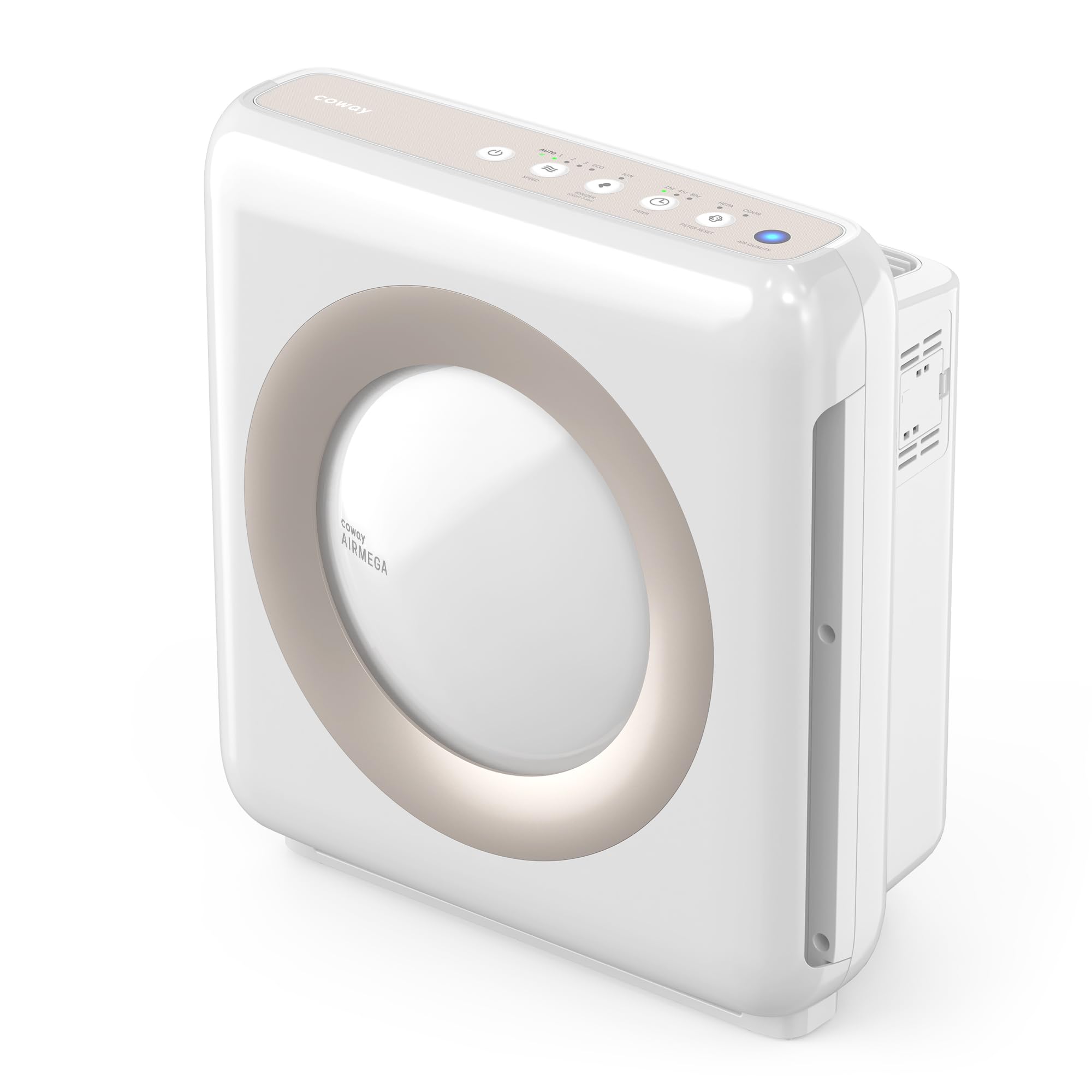
The Coway Airmega AP-1512HH remains the mid-range benchmark for allergy and mold control because its 4-stage system — washable pre-filter, deodorization carbon filter, True HEPA, and Vital Ion — addresses both particulate and odor issues. With a smoke CADR of 233 CFM, it can cycle a 361 sq ft room over four times per hour, which is the minimum threshold for effective allergen removal. The pollution sensor with colored LED feedback gives you real-time air quality data without needing a phone app.
Users consistently report that the auto mode responds quickly to cooking fumes and dust events, dropping from red to blue within minutes. The Eco Mode automatically shuts off the fan when the air is clean for 30 minutes, which saves energy during long idle periods. At 24.4 dB on the lowest setting, it is nearly silent for bedroom use — the fan noise only becomes noticeable at speed 3 (53.8 dB), which is similar to a desk fan on high.
The pre-filter slides out for easy vacuuming, extending the life of the main HEPA filter that typically needs replacement every 12 months. One minor limitation is that you cannot set a default medium speed in auto mode — it jumps between low and high based on sensor readings. Some users also note that the ionizer (Vital Ion) can produce trace ozone if left enabled, though the unit meets CARB standards for safe indoor use.
Why it’s great
- Excellent smoke CADR (233 CFM) for allergen capture
- Washable pre-filter reduces maintenance cost
- Eco Mode saves energy when air is clean
- Real-time sensor with clear color display
Good to know
- Cannot set a default medium speed in auto mode
- Ionizer may produce trace ozone if left active
- No Wi-Fi or app control for remote monitoring
2. Winix 5520
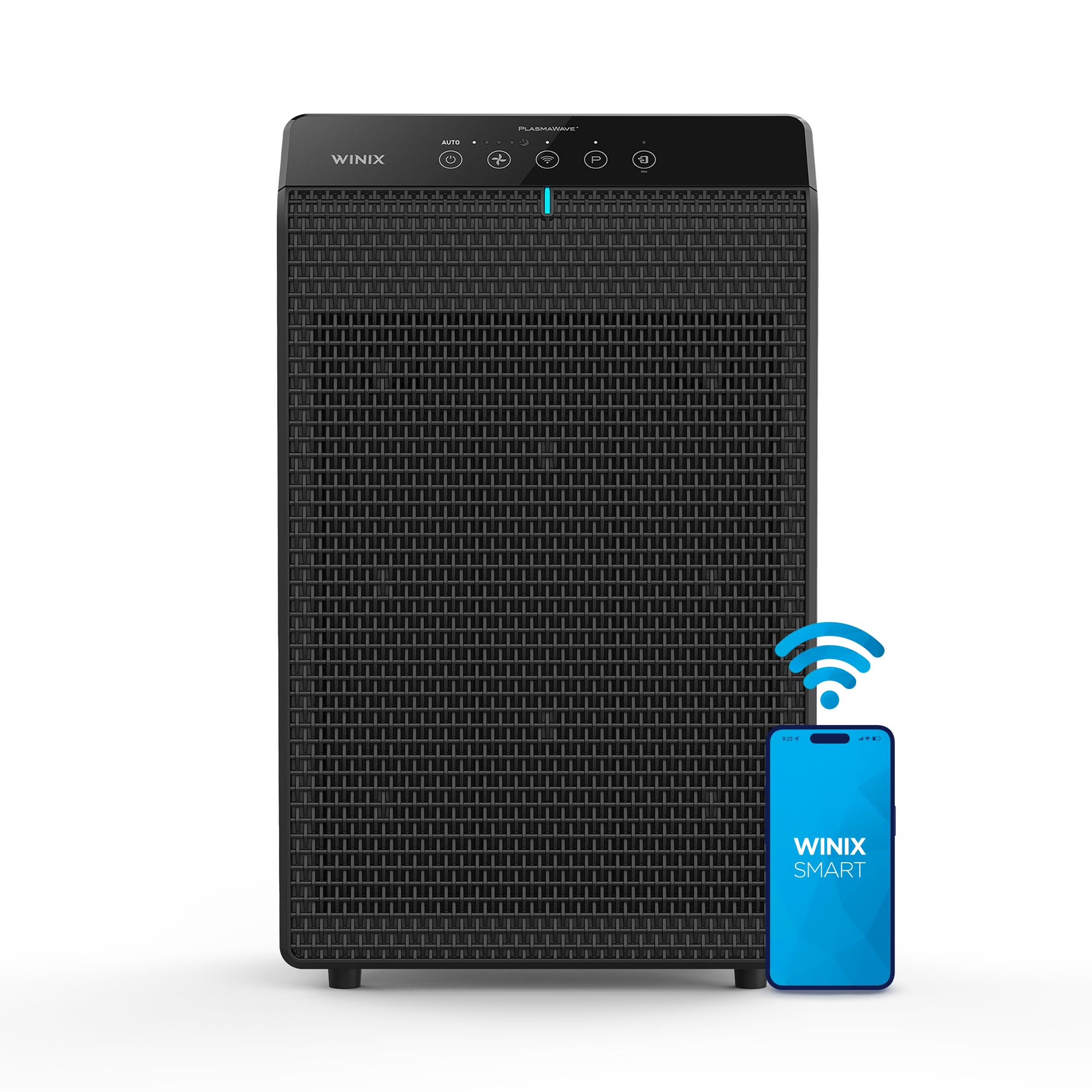
The Winix 5520 is designed for larger spaces, earning AHAM Verifide certification at 392 sq ft while capable of cleaning up to 1,882 sq ft in one hour. Its three-stage system uses a washable fine mesh pre-filter, an AOC (Advanced Odor Control) carbon filter, and a True HEPA filter rated to capture 99.99% of particles down to 0.01 microns. The carbon filter is pelletized rather than a thin mesh sheet, giving it better capacity for adsorbing mold-related VOCs and cooking odors.
Built-in smart sensors measure PM2.5 levels in real time and display air quality with a color-coded LED (blue, orange, red). The Auto Mode adjusts fan speed based on sensor readings, and the Light Automated Sleep Mode dims the display and slows the fan when the room goes dark. Users report that the unit detects gas stove emissions and alcohol-based cleaning products from several feet away, showing high sensor sensitivity. The Winix Smart App adds remote control, though the Wi-Fi setup requires a 2.4 GHz network.
At 23.5 dB on the lowest speed, it is one of the quietest units in its class, though the turbo setting is noticeably louder (comparable to a box fan). The washable pre-filter catches pet hair and large dust particles, extending the life of the HEPA filter, which typically lasts 12 months. Replacement filters are reasonably priced compared to other premium brands. The vertical air intake slots on the sides can be less efficient if placed too close to a wall.
Why it’s great
- Covers up to 1,882 sq ft in one hour
- Pelletized carbon filter for better odor adsorption
- Smart sensors with real-time PM2.5 display
- Auto sleep mode dims display and slows fan
Good to know
- Vertical intake slots need clearance from walls
- Wi-Fi only supports 2.4 GHz networks
- Turbo setting is noticeably loud
3. Blueair Blue Signature SP3i
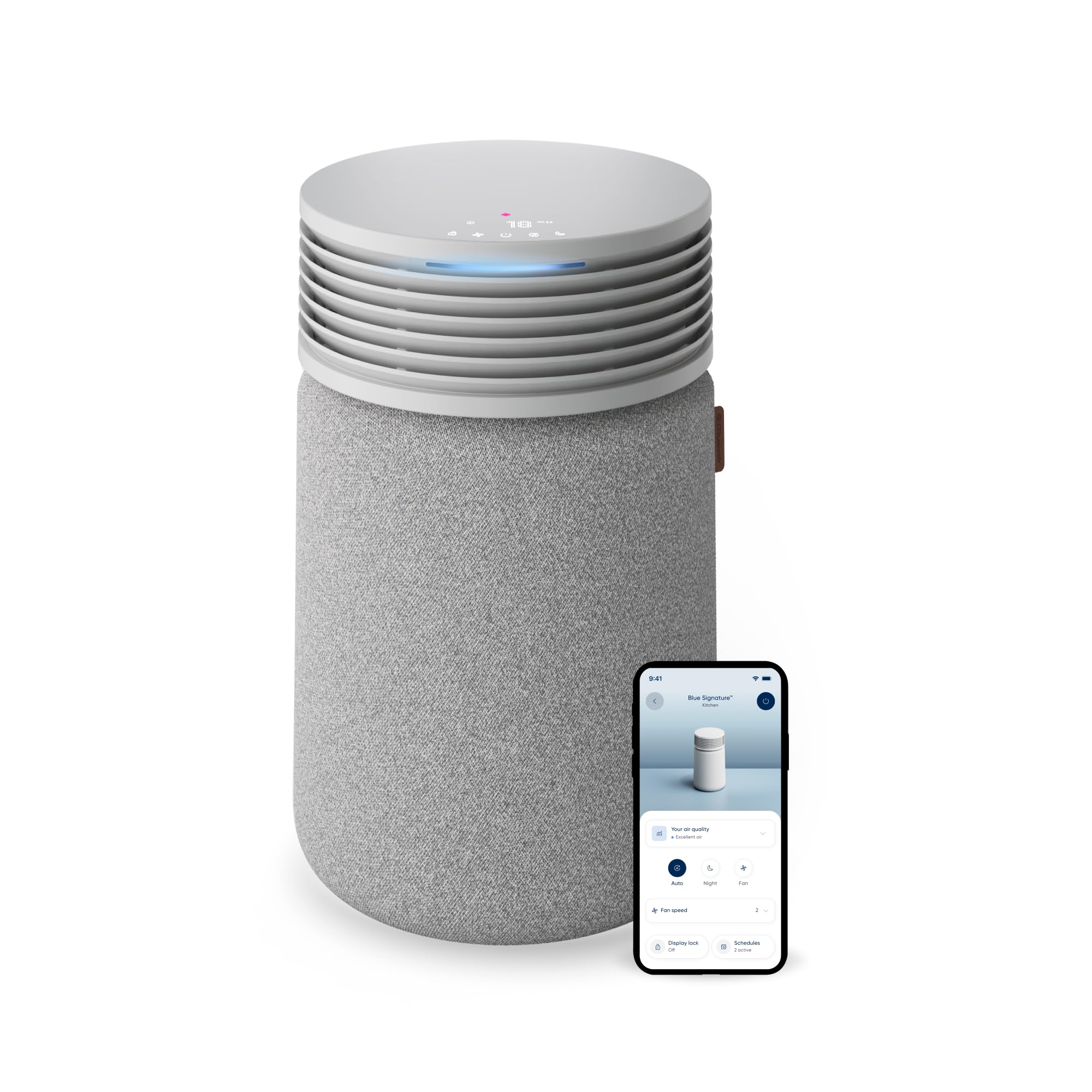
The Blueair Blue Signature SP3i uses a proprietary 7-stage HEPASilent filtration system that combines mechanical filtration with electrostatic charging to capture 99.97% of particles down to 0.1 microns. The standout feature for mold-related concerns is the OdorFence Technology — a bio-based carbon filter infused with enzymes and minerals that break down gas molecules, not just trap them. Blueair claims this removes up to 10 times more odors than standard carbon filters, making it effective for musty basements or rooms with visible mold growth.
The integrated laser sensor monitors air quality and adjusts fan speed automatically through Auto Fresh Mode, which learns your routines over time. The front air quality indicator glows five colors from blue (excellent) to red (poor) and includes a subtle animation when actively cleaning. The unit covers rooms up to 498 sq ft and is compatible with Amazon Alexa and Google Home for voice control. Users consistently praise its quiet operation, even on medium settings, and the modern tabletop design that blends into living spaces.
The main drawback is the cost of replacement filters, which are significantly more expensive than standard HEPA filters. The app interface can occasionally be slow to respond, and the unit lacks a washable pre-filter, meaning the main filter requires more frequent replacement in dusty homes. At a premium price point, the SP3i is best suited for users who prioritize smart features and advanced odor removal over raw CADR numbers.
Why it’s great
- OdorFence bio-enzyme carbon targets mold VOCs
- Near-silent operation on low and medium
- Voice control with Alexa and Google Home
- Sleek, compact tabletop design
Good to know
- Replacement filters are expensive
- No washable pre-filter for dust reduction
- App responsiveness can be inconsistent
4. Coway Airmega 250

The Coway Airmega 250 is a heavy-duty unit built for whole-home coverage, cleaning up to 1,860 sq ft in 60 minutes. Its HyperCaptive Filtration System combines a washable pre-filter, an activated carbon filter, and a True HEPA filter that captures 99.97% of 0.3-micron particles. The carbon filter is denser than most mid-range units and effectively reduces VOCs and mold-related odors. Users with severe allergies and respiratory conditions (including emphysema) report noticeable improvements in air quality within days.
The Smart Mode automatically adjusts fan speed based on the room’s pollution levels, while Rapid Mode kicks in at maximum power when air quality drops sharply — such as during cooking or if a moldy basement door is opened. The 24/7 pollution monitor displays air quality continuously, and the pre-filter is easy to remove and rinse. Many users appreciate that this model lacks Wi-Fi, as it avoids connectivity issues and potential security vulnerabilities. The two-part filter system (mesh pre-filter plus combined carbon/HEPA) makes replacements straightforward, with the main filter lasting about 12 months.
At 20.5 pounds and 19.7 inches tall, the Airmega 250 is one of the larger units in this guide, requiring dedicated floor space. Some units arrive with cosmetic damage due to inadequate packaging during shipping. The absence of app control means you cannot schedule operation remotely, though the timer and auto mode handle most daily needs. The replacement filter cost is reasonable compared to other premium brands, but the upfront investment is substantial.
Why it’s great
- Whole-home coverage up to 1,860 sq ft
- Dense carbon filter handles mold VOCs well
- Rapid Mode quickly clears pollution spikes
- Washable pre-filter reduces maintenance costs
Good to know
- Large and heavy — needs dedicated floor space
- No Wi-Fi or app for remote control
- Packaging may not prevent shipping damage
5. Air Oasis iAdaptAir 2.0

The Air Oasis iAdaptAir 2.0 is one of the few compact units that targets mold and biotoxins with a 5-stage system: medical-grade H13 True HEPA, activated carbon, silver ion screen, bi-polar ionization, and UV light. Together, these stages reduce up to 99% of mold, bacteria, and viruses in laboratory testing. The H13 HEPA captures particles down to 0.05 microns, which includes smaller mold spores and bacterial fragments that standard HEPA filters might miss. The 360-degree air intake allows flexible placement without sacrificing efficiency.
The built-in air quality sensor displays a digital particle count and color-coded levels (green, orange, red), and the Auto Mode adjusts fan speed accordingly. The Wi-Fi module is removable for users concerned about EMF exposure, a thoughtful touch for health-conscious buyers. Users consistently report that the unit is exceptionally quiet — even on medium speed, it is quieter than competing units from Dyson and Oransi. The filter lasts up to two years between replacements, which offsets the higher upfront cost over time.
The app interface has been criticized for using outdated Wi-Fi 5 with known security vulnerabilities — tech-savvy users may want to isolate the unit on a separate VLAN. The lights on the front panel are bright and cannot be dimmed or turned off, which can be disruptive in a dark bedroom. The replacement filters are expensive, though the two-year lifespan mitigates this somewhat. At a premium price, the iAdaptAir 2.0 is best for those with documented mold sensitivity or biotoxin illness who need multi-stage defense.
Why it’s great
- 5-stage system with UV targets mold and bacteria
- H13 HEPA captures particles down to 0.05 microns
- Filters last up to two years
- Removable Wi-Fi module for EMF-sensitive users
Good to know
- App uses outdated Wi-Fi 5 with security risks
- Front lights are bright and cannot be dimmed
- Replacement filters are expensive
6. AirDoctor AD3500
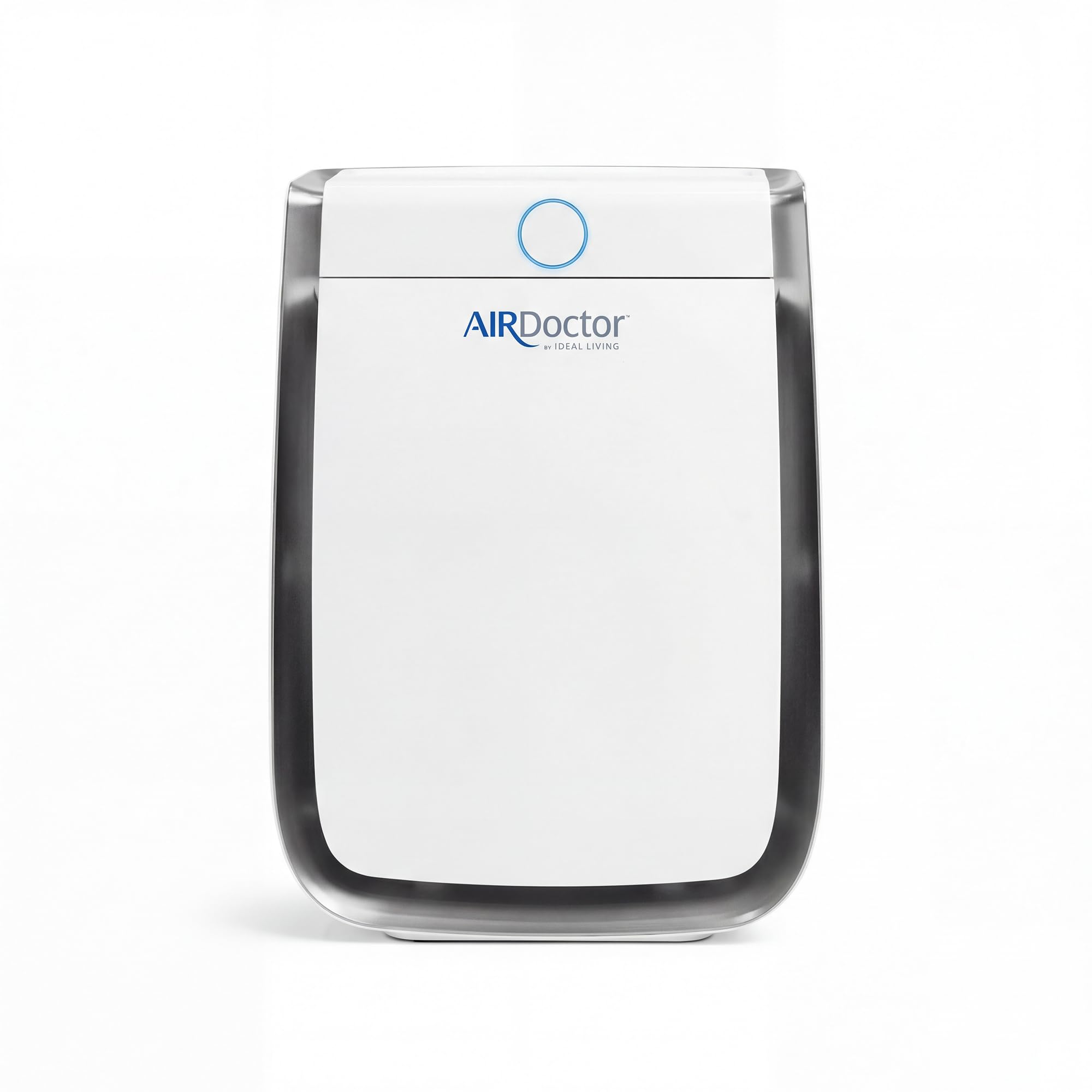
The AirDoctor AD3500 uses hospital-grade UltraHEPA filtration to capture 99.99% of airborne particles down to 0.003 microns — 100 times smaller than the standard HEPA threshold. This is overkill for common mold spores (1–30 microns) but highly effective for capturing bacteria, viruses, and ultrafine particulate matter that can trigger asthma and allergic reactions. The premium activated carbon filter is infused with potassium permanganate, which chemically breaks down VOCs and mold-related gases rather than simply adsorbing them.
The 3-stage filtration (Pre-Filter, Premium Activated Carbon, UltraHEPA) is supported by the AirDoctor Halo PM2.5 sensor that monitors air quality in real time and adjusts fan speed through Auto Mode. The Halo display shows color-coded air quality levels, and the unit includes four fan speeds plus a Boost setting for rapid cleaning. It can cover up to 2,520 sq ft in one hour, making it suitable for open-plan living spaces. Users report that the auto mode detects cooking fumes, perfume, and even nebulizer treatments, adjusting fan speed accordingly.
The unit is large (27 inches tall) and heavy (24 pounds), requiring substantial floor space. Replacement filters are expensive: the carbon filter needs replacement every 6 months, and the UltraHEPA filter every 12 months. The FSA/HSA eligibility is a nice perk for those with medical spending accounts. Some users find the white noise at higher speeds noticeable, though the night mode dims the display and operates quietly enough for use in a bedroom.
Why it’s great
- UltraHEPA captures 0.003 micron particles
- Carbon filter with potassium permanganate breaks down VOCs
- Auto Mode with real-time PM2.5 sensor
- FSA/HSA eligible for pre-tax purchase
Good to know
- Large and heavy — needs dedicated floor space
- Replacement filters are expensive
- Carbon filter needs replacement every 6 months
7. GoveeLife H7129

The GoveeLife H7129 brings smart features to a budget-friendly price point, with a built-in PM2.5 sensor that measures real-time air quality and adjusts fan speed through Auto Mode. Its CADR of 150 CFM allows it to cycle a 232 sq ft room five times per hour, and it can cover up to 1,162 sq ft in an hour for whole-home purification. The 3-in-1 filter captures 99.97% of particles down to 0.3 microns, and the detachable pre-filter can be cleaned to extend the main filter’s life.
The Govee app allows remote monitoring, scheduling, and data logging, and the unit works with Alexa and Google Assistant for voice control. Users praise the responsive sensor — it detects cooking smoke, pet odors, and dust events within seconds and adjusts fan speed appropriately. The iF Design Award-winning look features an ambient color-changing LED that doubles as a night light. At only 24 dB in Sleep Mode, it is quiet enough for nursery or bedroom use.
The main drawbacks are the reliance on 2.4 GHz Wi-Fi (no 5 GHz support) and filter replacement costs that approach those of mid-range units. Some users report that the turbo mode is loud, though it is only needed during rapid cleaning. The plastic build feels less substantial than the Coway or Blueair units, but for the price, the feature set is compelling. The app occasionally logs out or loses connection, requiring re-pairing.
Why it’s great
- Built-in PM2.5 sensor with responsive Auto Mode
- Wi-Fi and app control for remote monitoring
- Detachable pre-filter extends filter life
- Very quiet at 24 dB in Sleep Mode
Good to know
- 2.4 GHz Wi-Fi only — no 5 GHz support
- Filter replacement costs approach mid-range level
- App may occasionally lose connection
8. Whirlpool WPT60B

The Whirlpool WPT60B is a compact unit designed for small rooms up to 120 sq ft, making it a targeted solution for nursery, home office, or near a litter box. Its True HEPA filter captures 99.97% of dust and allergens down to 0.3 microns, while the activated carbon filter reduces common odors from pets, smoking, and cooking. The proprietary Whishield technology claims to eliminate 99.99% of bacteria that may grow on the filter, a useful feature in damp environments where mold can colonize filter media.
Users report that the unit operates as a calm white noise on higher settings and is nearly silent on lower settings, making it suitable for bedroom use. The Sleep Mode efficiently clears allergens at low fan speed while saving energy. The 5-year limited warranty from Whirlpool provides peace of mind, and the simple push-button controls are easy to use without a smartphone. Several users note that the unit effectively eliminates litter box odors and pet smells in small spaces.
The coverage area is limited to 120 sq ft, so this unit is not suitable for living rooms or open-plan spaces. It lacks an air quality indicator or sensor, so it runs at a fixed speed rather than adjusting to conditions. Replacement filters are available but not as widely stocked as those for Levoit or Coway units. The black plastic finish shows dust and fingerprints more readily than lighter-colored alternatives.
Why it’s great
- Whishield anti-bacteria treatment prevents filter mold
- Very quiet on low settings
- 5-year warranty from a major appliance brand
- Effective for small room odors and pet smells
Good to know
- Only covers 120 sq ft — limited application
- No air quality sensor or Auto Mode
- Replacement filters are less widely available
9. Levoit Core 300-P

The Levoit Core 300-P is one of the best entry-level units for allergy and mold control, offering AHAM Verifide certification at an accessible price. Its 56W high-torque motor delivers a smoke CADR of 143 CFM, dust CADR of 153 CFM, and pollen CADR of 167 CFM — enough to cycle a 222 sq ft room 4.8 times per hour. The 3-in-1 filter includes a pre-filter, activated carbon, and HEPA-grade media that captures 99.97% of particles from 0.1 to 0.3 microns, including pollen, dust, and animal dander.
The QuietKEAP Technology reduces noise to just 24 dB in Sleep Mode, making it one of the quietest budget units available. Users consistently report fresher air within days, noticeable reduction in pet odors, and fewer allergy symptoms. The unit offers multiple filter options including a Toxin Absorber for VOCs, a Smoke Remover for wildfire smoke, and a Pet Allergy Filter for dander and odors. The display lights can be turned off for undisturbed sleep, and the timer offers 2/4/6/8 hour settings.
Replacement filters are relatively affordable, but some users note that the filter life is shorter than advertised in dusty homes — expect 6–8 months rather than the claimed 12 months. The unit is slightly larger than expected based on product photos, and the fan on speed 3 is quite loud (comparable to a desk fan on high). The Core 300-P lacks a built-in air quality sensor, so it relies on manual speed adjustment rather than auto-response to pollution events.
Why it’s great
- AHAM Verifide certified — independently tested
- Multiple filter options for different contaminants
- Very quiet at 24 dB in Sleep Mode
- Affordable entry price with reasonable filter costs
Good to know
- No air quality sensor or Auto Mode
- Fan on speed 3 is noticeably loud
- Filter life may be shorter than claimed
FAQ
Can an air purifier remove mold spores from the air?
What CADR rating do I need for a bedroom with mold concerns?
Should I choose a unit with an ionizer or UV light for mold?
How often should I replace the HEPA filter in a mold-prone home?
Can I use an air purifier in a basement with mold issues?
Final Thoughts: The Verdict
For most users, the air purifier for allergies and mold winner is the Coway Airmega AP-1512HH because it delivers the best balance of CADR performance, filter longevity, and sensible features — including a washable pre-filter and Eco Mode — without requiring a smartphone app. If you need whole-home coverage for large spaces, grab the Coway Airmega 250. And for hospital-grade protection against ultrafine particles and mold gases, nothing beats the AirDoctor AD3500 with its UltraHEPA filtration and potassium permanganate carbon bed.