
Our readers keep the lights on and the weekend projects moving. As an Amazon Associate, I earn from qualifying purchases.
Starting a vlog channel often hits a wall before the first upload: smartphone footage looks soft and shaky indoors, and the audio is full of room echo. A dedicated vlogging camera solves all three problems at once with a larger sensor, built-in stabilization, and a proper microphone system. The question is which one fits your specific shooting style, budget, and technical tolerance.
I’m Rikta — the founder and writer behind FitlyFast. I have analyzed the specifications, customer feedback, and real-world performance data of over two dozen entry-level video cameras to isolate the models that genuinely serve a first-time vlogger rather than overwhelming them with pro-level complexity.
This guide narrows the field by evaluating sensor size, stabilization type, autofocus reliability, and ease of use to identify the most capable beginner vlogging camera for your specific needs and budget.
How To Choose The Best Beginner Vlogging Camera
Buying a first vlogging camera is about matching the camera’s core strengths to your specific shooting environment. A studio-style sit-down vlogger needs different features than someone filming outdoor adventures or travel diaries. These four criteria separate the useful options from the overwhelming ones.
Sensor Size and Low-Light Performance
A larger sensor captures more light, which directly reduces grain in dim rooms, cafes, or sunset shots. Entry-level vlogging cameras typically use 1-inch or 1/1.3-inch sensors. These sensors provide a visible improvement over smartphone cameras, especially in artificial lighting. Anything smaller than a 1-inch sensor will struggle in anything but bright daylight.
Stabilization Type — Gimbal vs. Electronic vs. Optical
Shaky footage kills viewer retention fast. Optical stabilization is built into the lens and works well for minor hand movements. Electronic stabilization crops the frame to smooth motion but can introduce a jello effect. A three-axis gimbal system physically steadies the camera and produces the smoothest walking shots without any crop. For a beginner who walks and talks, a gimbal-based camera is the most forgiving choice.
Autofocus and Subject Tracking
A vlogger is often alone, so the camera must lock onto a face and stay there without hunting. Look for phase-detection autofocus or contrast detection with reliable face and eye tracking. Models that offer object tracking also allow you to hold up a product and have the camera automatically shift focus to it — a critical feature for review or unboxing content.
Audio Input and Battery Life
Built-in microphones are acceptable up close but pick up wind, handling noise, and room echo. A standard 3.5mm microphone jack gives you the option to use a lapel or shotgun mic. Battery life should exceed the length of your typical shooting session. Cameras that support USB-C pass-through charging let you plug in a power bank and keep filming without swapping batteries.
Quick Comparison
On smaller screens, swipe sideways to see the full table.
| Model | Category | Best For | Key Spec | Amazon |
|---|---|---|---|---|
| DJI Osmo Pocket 3 | Handheld Gimbal | Stabilized walk-and-talk vlogging | 1″ CMOS, 4K/120fps, 3-axis gimbal | Amazon |
| Xtra Muse Pocket Gimbal | Handheld Gimbal | Budget-friendly pocket gimbal video | 1″ CMOS, 4K/120fps, 3-axis gimbal | Amazon |
| Canon PowerShot V10 | Compact Fixed-Lens | Ultra-portable everyday carry vlogging | 1″ CMOS, 4K/30fps, built-in stand | Amazon |
| Sony ZV-1 | Compact Point-and-Shoot | All-around content creation with zoom | 1″ 20.1MP, 4K HDR, 24-70mm F1.8-2.8 | Amazon |
| DJI Osmo Nano | Action/POV Camera | Active outdoor and wearable vlogging | 1/1.3″ CMOS, 4K/60fps, 10m waterproof | Amazon |
| Sony ZV-1F Bundle | Compact Point-and-Shoot | Studio desk vlogging with accessories | 1″ CMOS, 4K video, wide-angle F2.0 lens | Amazon |
| Canon PowerShot V1 | Hybrid Compact | Hybrid stills/video with unlimited recording | 1.4-type 22.3MP, 16-50mm F2.8-4.5, cooling fan | Amazon |
| Insta360 X5 | 360° Action Camera | Immersive 360° vlogs with invisible selfie stick | Dual 1/1.28″ sensors, 8K/30fps, waterproof | Amazon |
| Canon EOS Rebel T7 | DSLR | Learning photography fundamentals on a budget | 24.1MP APS-C CMOS, 3.0″ LCD, 9-point AF | Amazon |
In‑Depth Reviews
1. DJI Osmo Pocket 3
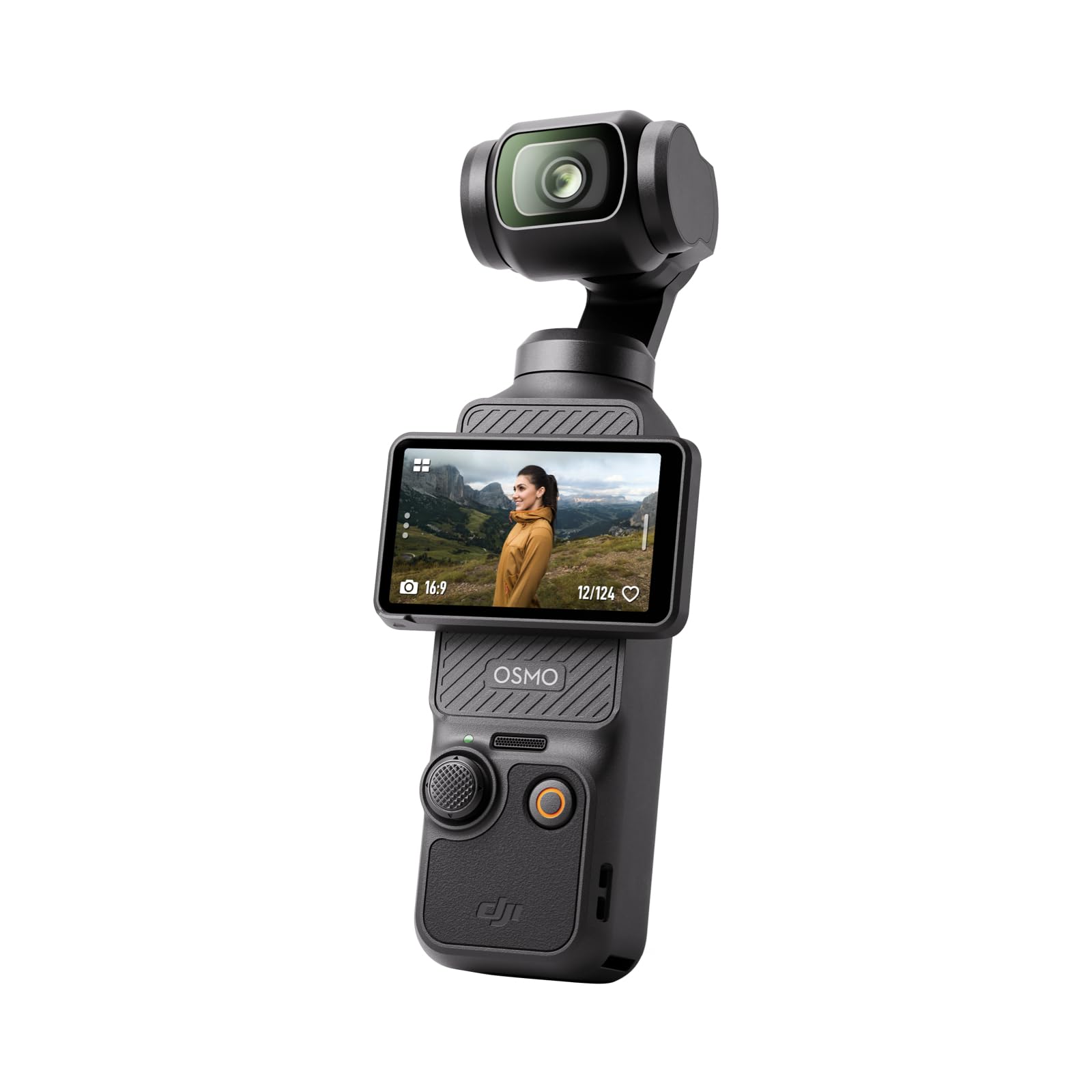
The DJI Osmo Pocket 3 is the single most forgiving camera for a beginner who wants smooth, walk-and-talk footage immediately. Its 1-inch CMOS sensor captures clean 4K video at 120 frames per second, and the built-in three-axis mechanical gimbal eliminates the need for any post-production stabilization. You can jog down a sidewalk or spin around in a room, and the footage remains buttery smooth without cropping the frame — something no electronic or optical stabilization system can replicate at this size.
The 2-inch rotatable touchscreen flips to horizontal or vertical orientation based on your platform, and the active tracking keeps your face centered even when you move around. Pocket 3 also pairs wirelessly with two DJI Mic 2 transmitters for clean audio without dangling cables. Battery life lands around 166 minutes of continuous recording, and the fast USB-C charging gets you back to full power within the hour. For a first-time vlogger, there is almost nothing to learn — you point, flip, and talk.
What you trade is the lack of a zoom lens; the fixed wide-angle view suits selfie-style vlogging or static framing but does not pull in distant subjects. There is also no waterproofing, so rain or splash requires a third-party housing. However, for the core use case of creating stable, high-quality video content with minimal gear, the Pocket 3 sets the benchmark that other beginner cameras still chase.
Why it’s great
- Three-axis gimbal delivers pro-level stabilization with zero setup
- 1-inch sensor produces clean low-light footage
- ActiveTrack 6.0 reliably follows a moving subject
- Rotatable screen switches between horizontal and vertical shooting
Good to know
- Fixed wide-angle lens limits reach for distant subjects
- Not waterproof — requires caution in wet conditions
- Battery is internal; shooting beyond two hours needs a power bank
2. Xtra Muse Pocket Gimbal

The Xtra Muse offers a 1-inch CMOS sensor and a three-axis gimbal stabilizer at a mid-range price point that undercuts most pocket gimbal cameras. It records 4K resolution at 120 frames per second, and the gimbal keeps handheld movement smooth whether you are jogging, dancing, or navigating a crowded market. For a beginner who wants the gimbal advantage without spending for the market leader, this is the most direct alternative.
The 2-inch touchscreen supports both horizontal and vertical framing, and the Master Follow mode keeps a subject centered automatically. The 10-bit X-Log color mode provides room for color grading in post-production, though beginners can ignore it and shoot in standard color profile for immediate results. Battery life hits roughly 161 minutes in our testing, and the included handle with a 1/4-inch thread allows tripod mounting for desk-based recording.
Low-light performance is decent but not as clean as the DJI Pocket 3; you will see more grain in dim environments at higher ISO values. The face tracking is reliable in good light but can lose lock under strong backlight. Still, as an entry point to gimbal-based vlogging, the Xtra Muse delivers the most important hardware features — larger sensor and physical stabilization — at a price that keeps it within reach for budget-conscious creators.
Why it’s great
- 1-inch sensor with three-axis gimbal at a competitive price
- 10-bit color profile for advanced grading options
- Master Follow mode keeps the subject framed automatically
- Includes carrying bag and wrist strap for travel
Good to know
- Face tracking occasionally loses lock in backlight
- Low-light noise more visible than premium competitors
- No onboard storage; relies on microSD card
3. Canon PowerShot V10

The Canon PowerShot V10 prioritizes pocket portability above all else. It fits into a small bag or large coat pocket, and the clever built-in folding stand lets you prop it on a table without needing a tripod. The 1-inch back-illuminated CMOS sensor captures 4K video at 30 frames per second, and the fixed 19mm wide-angle lens is generous enough to include a vlogger plus background context in a single frame. This is the camera to grab when you want to vlog spontaneously without assembling a rig.
Canon included three stereo microphones — one of which acts as a noise canceller — so the audio is noticeably better than most pocket cameras. The retractable front-facing screen makes framing easy, and the image stabilization can be toggled between three modes, though electronic IS introduces a slight crop. The camera records directly to a microSD card and charges via USB-C, both of which simplify the workflow for someone starting out.
The trade-off is the lack of a zoom lens and a relatively small battery that lasts between one and two and a half hours depending on settings. There is also no lens cover, so the unprotected glass can scratch if tossed in a bag without a case. But as a grab-and-go solution for short, daily vlogs, the V10 removes the friction of tripods, gimbals, and complex menus better than any other camera on this list.
Why it’s great
- Ultra-compact with built-in folding stand for tabletop use
- Three-microphone array reduces background noise effectively
- Retractable front screen makes selfie framing simple
- USB-C charging and microSD recording are beginner-friendly
Good to know
- Battery life is on the shorter side for long recording sessions
- No optical zoom — fixed wide-angle lens only
- No included lens cover; prone to scratches in a bag
4. Sony ZV-1

The Sony ZV-1 has been a staple in the vlogging community because it packs a bright zoom lens and professional video features into a body that fits in a jacket pocket. The 1-inch 20.1-megapixel Exmor RS sensor records 4K HDR video, and the 24-70mm equivalent F1.8-2.8 lens provides enough reach to frame a tight headshot or a wider room shot — a flexibility that fixed-lens cameras lack. The side flip-out 3-inch LCD is ideal for selfie angles, and the Real-time Eye Autofocus locks onto a subject instantly and tracks reliably.
For a beginner, the one-button background defocus and Product Showcase setting are killer features. Tapping the button blurs the background for a cinematic look, and when you hold up an object the camera transitions focus seamlessly from your face to the object. The built-in forward-directional microphone includes a detachable windscreen, and there is a standard 3.5-millimeter mic jack for upgrading audio later. The camera also functions as a high-quality webcam over USB, which is useful for streaming or video calls.
The main downside is battery life, which sits at around two hours of continuous recording — enough for a single session but not a full day of shooting without spares. Some users report overheating during extended 4K recording, though this is less common in climate-controlled environments. For someone who wants a versatile point-and-shoot with zoom and professional video features, the ZV-1 is a dependable all-rounder that grows with the creator.
Why it’s great
- Bright zoom lens (24-70mm F1.8-2.8) adds framing flexibility
- Real-time Eye Autofocus locks onto faces reliably
- Product Showcase setting automates face-to-object focus transition
- Works as a plug-and-play 4K webcam for streaming
Good to know
- Battery lasts about two hours; spares are needed for longer shoots
- Can overheat when recording 4K for extended periods
- No built-in flash for still photography in low light
5. DJI Osmo Nano
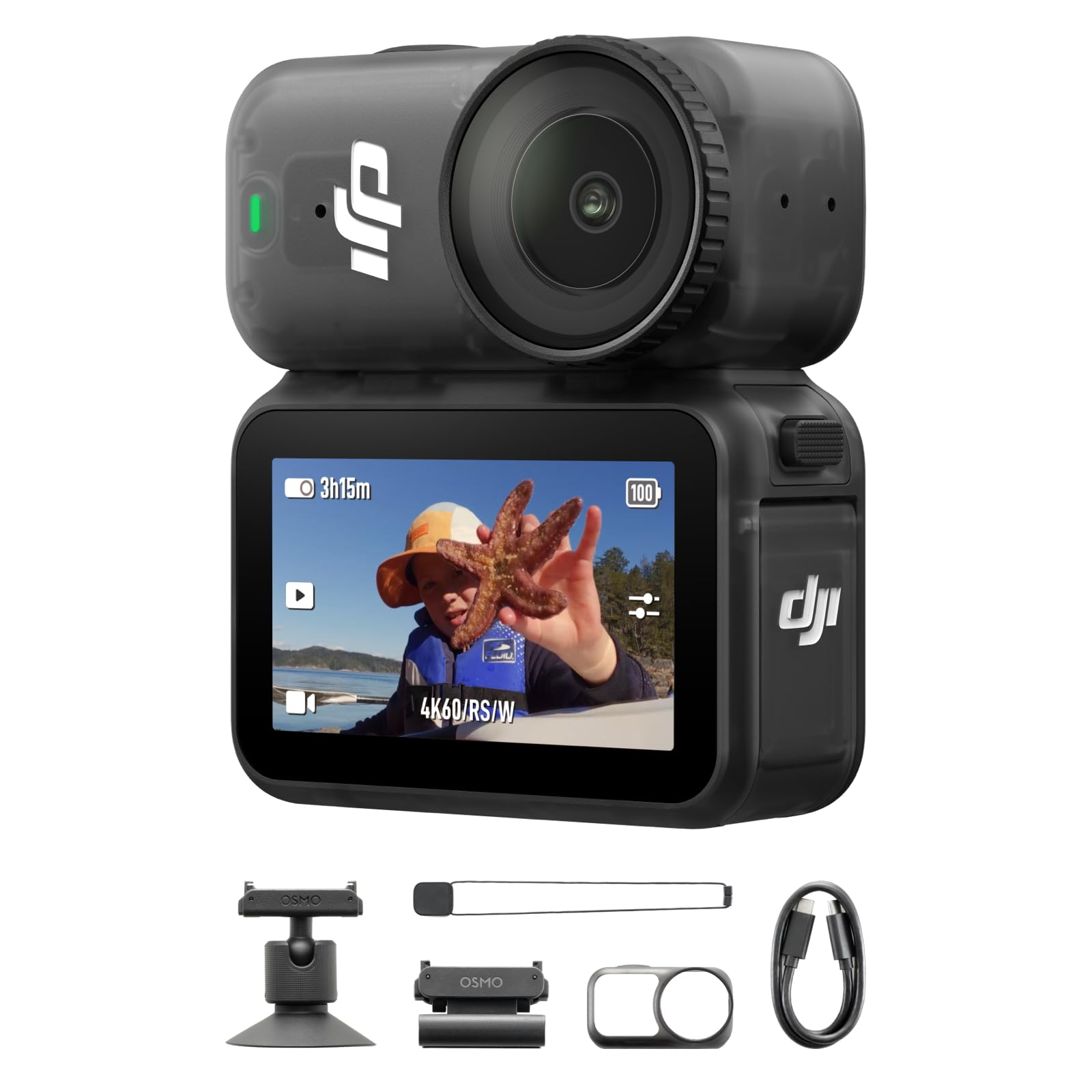
The DJI Osmo Nano is an action camera that vloggers can wear, clip, or hold, making it a strong choice for active lifestyle content. Its 1/1.3-inch sensor records 4K video at 60 frames per second with a 143-degree ultra-wide field of view, and it is waterproof to 10 meters without a housing. The magnetic mounting system lets you attach it to a hat clip, lanyard, or bike mount for hands-free first-person shots that a traditional vlogging camera cannot capture.
Built-in storage starts at 128GB, which is generous for a compact device and means you can record out of the box without buying a memory card immediately. The battery with the Vision Dock extends runtime to about 200 minutes for typical mixed shooting. Ten-bit color and D-Log M support give you latitude for color grading, though the camera also produces vibrant standard footage. The OsmoAudio feature allows direct connection to two DJI microphones for clean sound without a receiver.
Because this is an action camera, the lens is fixed and fisheye-like by default, which works well for POV content but less so for close-up talking-head shots unless you mount it on a selfie stick. Some users note that the Vision Dock drains battery even when the camera is off, so detach it when storing. For beginners planning to vlog during hikes, bike rides, or water activities, the Osmo Nano offers durability and mounting versatility that no standard pocket camera can match.
Why it’s great
- Waterproof to 10m for underwater and adventure vlogging
- Magnetic mounting system clips to hats or straps hands-free
- 128GB of built-in storage eliminates the need for a memory card
- 10-bit color and D-Log M for flexible post-production
Good to know
- Ultra-wide fisheye lens is less ideal for close-up talking-head shots
- Vision Dock drains battery when left connected
- Learning curve for framing the 143-degree field of view well
6. Sony ZV-1F Bundle

The Sony ZV-1F is a fixed-lens sibling of the ZV-1, and this bundle version packs everything a beginner needs for a desk-based studio without hunting for accessories. The camera itself features a 1-inch CMOS sensor with a built-in F2.0 wide-angle lens, perfect for including both you and your background. The bundle adds a high-quality condenser microphone, a SanDisk 128GB Extreme Pro memory card, a tripod, a U-grip handle, and video editing software — turning the camera into a complete content creation kit right out of the box.
The ZV-1F inherits the same vlogging-focused software like Background Defocus and Product Showcase Setting from its more expensive sibling. The intelligent auto mode handles exposure and focus for you, which is ideal for someone who does not want to touch manual settings. Active Mode image stabilization reduces walking shake, though it does introduce a noticeable crop. The flip-out screen and real-time eye autofocus keep you in frame and in focus without manual intervention.
The fixed lens is wide, which is fine for a static desk setup but does not zoom, so you cannot reframe without physically moving the camera. Battery life is on par with the ZV-1, meaning a single battery lasts around an hour of continuous 4K shooting. The bundled accessories offset the camera’s limitations well — the included tripod and external mic solve the two biggest beginner pain points of shaky footage and poor audio right away.
Why it’s great
- Bundle includes mic, memory card, tripod, and editing software
- Large F2.0 aperture for clean wide-angle selfie video
- Background Defocus and Product Showcase simplify filming
- Active Mode reduces walking shake for handheld shots
Good to know
- Fixed wide-angle lens offers no zoom capability
- Battery life is short for long recording sessions
- No built-in flash for low-light photography
7. Canon PowerShot V1

The Canon PowerShot V1 is built for vloggers who shoot long sessions and need a camera that will not overheat. Its larger 1.4-type sensor captures 22.3-megapixel stills and 18.7-megapixel 4K video, and the built-in cooling fan allows for extended high-resolution recording that most compact cameras cannot sustain. The 16-50mm equivalent F2.8-4.5 wide-angle zoom lens provides more range than the PowerShot V10, making it suitable for both selfie video and environmental shots.
Canon Log 3 recording delivers 10-bit color depth for professional grading, and the hybrid autofocus system with 100 autofocus points keeps subjects sharp. The camera body is slightly larger than most pocket models, which improves ergonomics for larger hands but makes it less pocketable. The lens is sharp enough for detailed shots, though the variable aperture means you lose some light at the telephoto end compared to the fixed F1.8 of the Sony ZV-1.
There is no built-in flash and the camera does not include a battery charger — it charges via USB-C. The SD card slot is under the battery door, which is inconvenient when the camera is on a tripod with a quick-release plate. For a beginner who wants the best image quality for both video and still photography and plans to shoot for extended periods, the V1 delivers where other compact cameras stop — literally.
Why it’s great
- Built-in cooling fan allows unlimited recording without overheating
- Larger sensor produces excellent stills and video
- Wide-angle zoom lens adds framing flexibility
- Canon Log 3 provides 10-bit color for professional grading
Good to know
- No built-in flash for still photography
- No OIS — electronic stabilization crops the frame
- SD card slot under battery door makes tripod access awkward
8. Insta360 X5

The Insta360 X5 is a 360-degree action camera that fundamentally changes how a beginner thinks about framing. You never have to point the camera at anything — it captures everything around you, and you choose the angle later in the editing app. This is incredibly liberating for someone who does not want to worry about composition while recording. The dual 1/1.28-inch sensors shoot 8K video at 30fps, and the invisible selfie stick effect creates third-person views that look like you had a dedicated camera operator.
The camera is waterproof to 15 meters without a case, and the FlowState stabilization combined with 360-degree horizon lock keeps footage perfectly level even during intense movement. The triple AI chip design improves low-light clarity, and the new Wind Guard microphone system captures cleaner audio outdoors than any previous Insta360 model. Battery life reaches up to 208 minutes, and fast charging brings it to 80 percent in about 20 minutes.
The learning curve is real. You must use the mobile or desktop app to reframe and export the footage, so there is an extra editing step that a standard camera does not require. Some beginners find the workflow unintuitive at first, but the creative output — tracking shots, drone-like angles, and reframed perspectives — is unmatched by any single-lens camera. For a beginner willing to learn the editing side, the X5 unlocks a visual style that stands out immediately.
Why it’s great
- Shoots 360° video so you never have to worry about framing
- Invisible selfie stick creates stunning third-person tracking shots
- Waterproof to 15m for underwater and adventure recording
- Battery lasts over three hours and fast charges to 80% in 20 minutes
Good to know
- Requires app-based reframing for every video clip
- Steeper learning curve compared to standard cameras
- Standard resolution is 8K/30fps; high frame rates are lower resolution
9. Canon EOS Rebel T7 (Renewed)

The Canon EOS Rebel T7 is a classic entry-level DSLR at a price point that appeals to budget-conscious beginners who want to learn photography fundamentals alongside video. Its 24.1-megapixel APS-C sensor is larger than any 1-inch or 1/1.3-inch sensor on this list, which gives you better dynamic range and shallower depth of field. The 18-55mm kit lens provides a versatile zoom range, and the ability to swap lenses later means you can grow into different styles of shooting without replacing the body.
The camera includes built-in Wi-Fi and NFC for transferring photos to a phone, and the Scene Intelligent Auto mode handles settings so you can focus on composition. The 9-point autofocus system is reliable for still subjects but struggles with tracking a moving vlogger — this is a DSLR from an earlier era, and the contrast-detect AF in live view is slow compared to modern mirrorless or compact cameras. Battery life is excellent, easily lasting a full day of mixed shooting.
Video resolution tops out at 1080p at 30fps, which is adequate for social media but falls short of the 4K standard that most beginners want for YouTube. The lack of in-body image stabilization means handheld video will be shaky unless you use a tripod or a separate gimbal. This is the right camera for a beginner who wants to learn photography first and vlog occasionally, not the other way around. For pure video content creation, the compact cameras on this list are simpler and more capable.
Why it’s great
- Large APS-C sensor delivers excellent still-image quality
- Interchangeable lens system allows for future upgrades
- All-day battery life outperforms every compact camera
- Renewed price makes it the most budget-friendly option
Good to know
- Only records 1080p video — no 4K
- No in-body stabilization; handheld video is shaky
- Autofocus in live view is slow for tracking a moving subject
FAQ
Is a 1-inch sensor good enough for indoor vlogging?
Do I really need a gimbal for walk-and-talk vlogging?
Can I use a vlogging camera as a webcam for streaming?
How much recording time do I need for daily vlogging?
Final Thoughts: The Verdict
For most users, the beginner vlogging camera winner is the DJI Osmo Pocket 3 because its three-axis gimbal and 1-inch sensor eliminate the two biggest beginner problems — shaky footage and poor low-light quality — without requiring any technical knowledge. If you want a zoom lens and advanced autofocus for a more traditional camera experience, grab the Sony ZV-1. And for ultra-portable, tabletop vlogging where size is the priority, nothing beats the Canon PowerShot V10.