
Our readers keep the lights on and the weekend projects moving. As an Amazon Associate, I earn from qualifying purchases.
A 48-inch gaming monitor isn’t a screen—it’s a command center that replaces your entire peripheral vision. The sheer real estate of a 32:9 ultrawide or a towering 16:9 panel fundamentally changes how you experience fast-paced shooters, sprawling RPGs, and simulation titles, demanding a powerful GPU to feed the pixel count. Choosing the wrong panel technology (VA vs. OLED vs. QD-OLED) or skimping on refresh rate can turn that immersive dream into a blurry, laggy nightmare.
I’m Rikta — the founder and writer behind FitlyFast. I’ve spent years analyzing display hardware specifications, comparing color gamut metrics, response time implementations, and adaptive sync performance across hundreds of monitors to separate genuine value from marketing noise.
This guide breaks down the top contenders to help you find the best 48 inch gaming monitor for your specific setup, whether you want the deepest blacks via OLED or the brightest HDR performance from a premium VA panel.
How To Choose The Best 48 Inch Gaming Monitor
A 48-inch gaming monitor is a significant investment in visual real estate, but the wrong panel or resolution can leave you with an expensive desk ornament. The trade-offs between contrast, speed, and brightness are sharp, and understanding them is the difference between a win and a washout.
Panel Technology: OLED vs. VA vs. QD-OLED
OLED panels deliver pixel-level lighting, resulting in infinite contrast ratios and the deepest blacks—ideal for dark-room horror games and HDR content. However, they are susceptible to permanent burn-in from static UI elements and generally cap brightness lower than VA panels. VA (Vertical Alignment) panels, common in budget-friendly ultrawides, offer strong contrast (2000:1 to 3000:1) and higher brightness, but they suffer from slower pixel response times, leading to visible black-level smearing in fast motion. QD-OLED combines quantum dots with OLED, boosting color volume and brightness beyond standard OLED while maintaining near-instant response times—making it the current gold standard for premium gaming without sacrificing color vibrancy.
Refresh Rate, Response Time, and Adaptive Sync
For a 48-inch display, a minimum of 120Hz is recommended for smooth motion, with 144Hz to 240Hz offering a noticeable advantage in competitive shooters. Response time (measured in GtG or MPRT) indicates how fast a pixel changes color; 1ms or below eliminates ghosting. OLED and QD-OLED panels achieve 0.03ms GtG, making them superior for clarity. Adaptive Sync (NVIDIA G-Sync or AMD FreeSync) matches the monitor’s refresh rate to your GPU’s frame output, eliminating screen tearing without the input lag of V-Sync. FreeSync Premium Pro adds HDR support and low frame rate compensation for a wobble-free experience in any game.
Resolution and GPU Requirements
At 48 inches, pixel density becomes critical. 1440p ultrawide (5120×1440) provides a wide field of view with manageable GPU load—a high-end card like an RTX 4070 or RX 7800 XT can drive it well. 4K (3840×2160) on a 48-inch 16:9 panel offers exceptional sharpness but is extremely demanding; you will need an RTX 4080 or better to hit 120+ fps at high settings. The lower pixel density of 1440p on a 48-inch screen can appear slightly less sharp than a smaller monitor, so consider your viewing distance—sitting further back reduces the visibility of individual pixels.
Quick Comparison
On smaller screens, swipe sideways to see the full table.
| Model | Category | Best For | Key Spec | Amazon |
|---|---|---|---|---|
| ASUS ROG Swift PG32UCDM | QD-OLED | Top-Tier 4K Gaming | 3840×2160, 240Hz, 0.03ms | Amazon |
| LG 45GX900A-B Ultragear | OLED | Immersive Wide FOV | 3440×1440, 240Hz, 0.03ms | Amazon |
| Deco Gear 49″ QD-OLED | QD-OLED | Productivity & Gaming | 5120×1440, 240Hz, 0.03ms | Amazon |
| MSI MPG 491CQP QD-OLED | QD-OLED | Color Accurate HDR | 5120×1440, 144Hz, 0.03ms | Amazon |
| INNOCN 49Q1S OLED | OLED | Multi-Device Setup | 5120×1440, 240Hz, 90W USB-C | Amazon |
| Samsung Odyssey G9 (G91F) | VA | Bright Room HDR | 5120×1440, 144Hz, HDR600 | Amazon |
| Samsung Odyssey G7 (G75F) | VA | Console & 4K Work | 3840×2160, 165Hz, 1ms | Amazon |
| CRUA 49″ Curved | VA | Large Ultrawide on a Budget | 5120×1440, 165Hz, FreeSync | Amazon |
| Gawfolk 49″ Curved | VA | Built-In Speakers for Casual Use | 5120×1440, 120Hz, HDR10 | Amazon |
| Great voell 49″ | VA | Entry-Level Ultra-Wide | 5120×1440, 165Hz, HDR400 | Amazon |
| ZZA Ultrawide 49″ | VA | Value Ultrawide with HDMI 2.1 | 5120×1440, 165Hz, FreeSync | Amazon |
In‑Depth Reviews
1. ASUS ROG Swift PG32UCDM

The ASUS ROG Swift PG32UCDM delivers peak gaming performance with its 32-inch 4K QD-OLED panel, offering the pixel density of a premium monitor combined with the smoothness of a 240Hz refresh rate. The 0.03ms response time eliminates any perceptible ghosting, making fast-paced shooters and racing simulations feel incredibly responsive. Its custom heatsink and graphene film reduce burn-in risk, a major concern for OLED longevity when used for desktop work.
Color accuracy is exceptional, covering 99% DCI-P3 with true 10-bit depth and Delta E less than 2, so HDR content looks vivid without oversaturation. The glossy panel finish improves perceived contrast and sharpness compared to matte coatings, though you’ll want to control room lighting to avoid reflections. The DisplayWidget Center software allows easy tweaking of OLED Care features and picture presets without reaching for physical buttons.
Connectivity includes HDMI 2.1, DisplayPort, and a 90W USB-C port for single-cable laptop setups. It also supports FreeSync Premium Pro despite being G-Sync Compatible, giving AMD GPU owners full adaptive sync support. The built-in tripod socket and ergonomic stand with swivel, tilt, and height adjustment round out a seriously premium package that justifies its position at the top of this list.
Why it’s great
- Exceptional QD-OLED contrast and color volume with 240Hz refresh rate.
- Comprehensive OLED Care tools and 3-year warranty with burn-in coverage.
- Versatile connectivity including 90W USB-C and HDMI 2.1.
Good to know
- Glossy screen finish requires careful room lighting to avoid reflections.
- 32-inch size may be smaller than the standard 48-inch footprint some users expect.
2. LG 45GX900A-B Ultragear
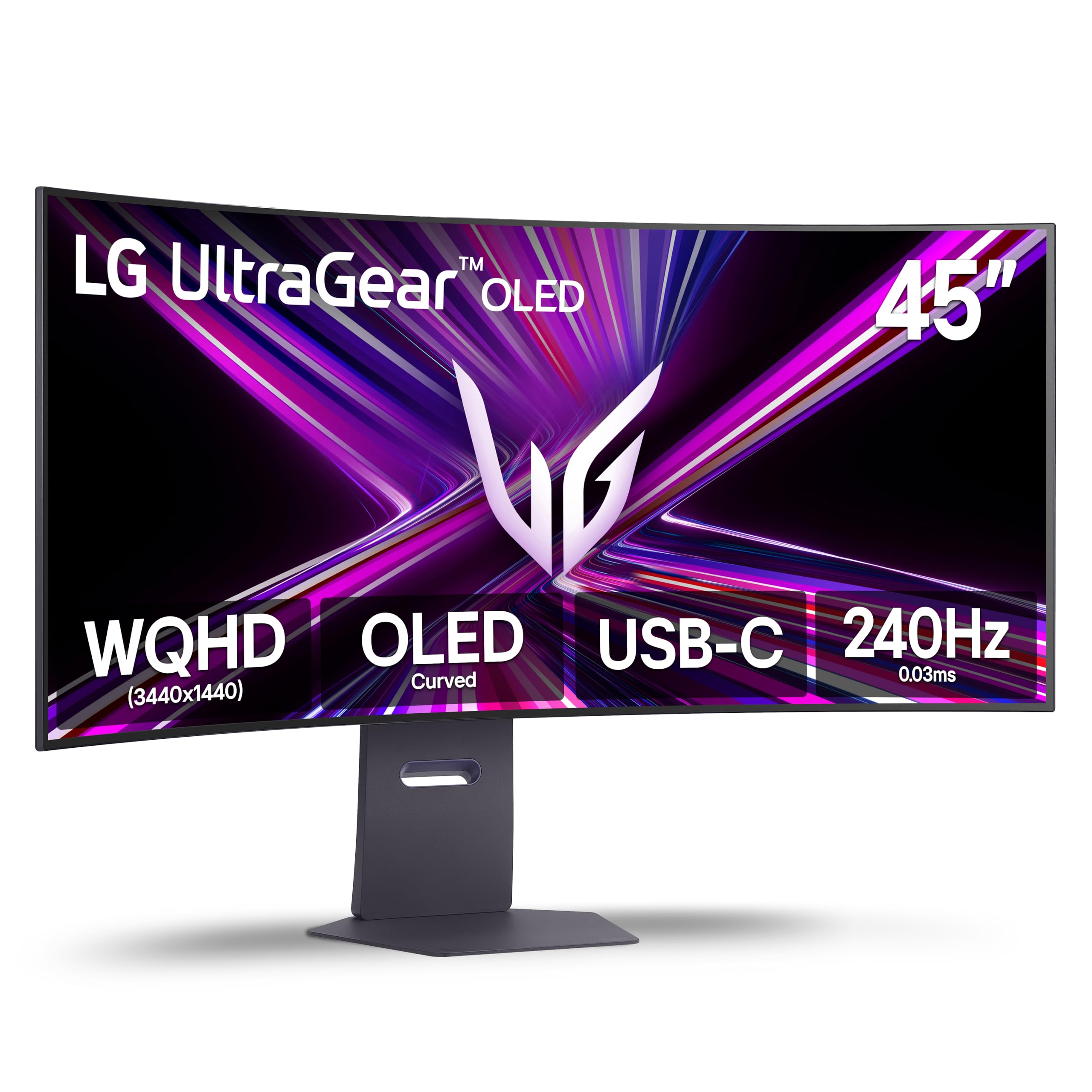
The LG 45GX900A-B takes immersion to the extreme with its massive 45-inch WQHD OLED panel and aggressive 800R curvature. At 3440×1440 resolution, it provides a wider field of view than a standard 16:9 display without the extreme pixel count of a 32:9, making it easier to drive with a single high-end GPU. The 240Hz refresh rate and 0.03ms response time ensure buttery-smooth motion in competitive titles, while VESA DisplayHDR True Black 400 delivers deep blacks and bright highlights without blooming.
Color performance is strong, covering 98.5% DCI-P3, and the anti-glare coating is UL-verified for flicker-free and low blue light, reducing eye fatigue during long sessions. The stand offers full height, swivel, and tilt adjustments, and the included HDMI 2.1 and DP 1.4 ports support next-gen consoles at 120Hz. The Dynamic Action Sync and Black Stabilizer features give a slight edge in dark or fast-moving scenes.
The built-in speakers are acceptable for casual use but won’t replace a dedicated setup. Some users report that the 800R curve can take adjustment time if you’re used to a flatter screen. The LG 45GX900A-B is an excellent choice for sim racers and flight sim enthusiasts who want a deeply immersive, single-monitor solution without the need for triple-screen setups.
Why it’s great
- Dramatic 800R curve enhances peripheral immersion in racing and flight sims.
- 240Hz OLED with VRR support ensures tear-free, responsive gameplay.
- Anti-glare and flicker-free certifications improve comfort.
Good to know
- WQHD resolution may appear less sharp than 4K on a 45-inch screen.
- Aggressive curve can cause distortion in flat productivity apps like spreadsheets.
3. Deco Gear 49″ QD-OLED
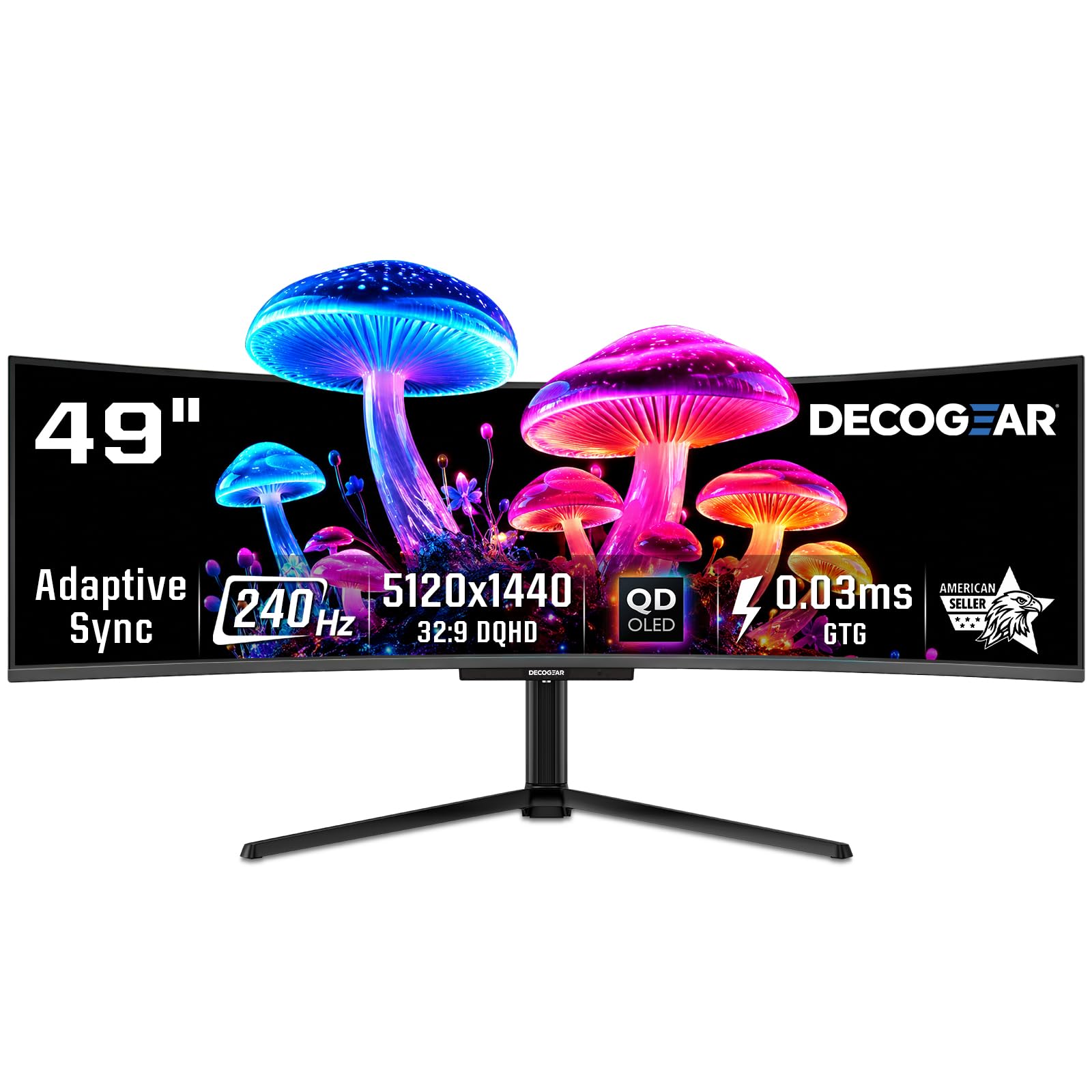
The Deco Gear 49-inch QD-OLED Ultrawide brings high-end OLED performance to the 32:9 form factor, offering a massive 5120×1440 workspace that replaces dual monitors. The QD-OLED panel delivers 1.07 billion colors with a 1,500,000:1 contrast ratio, making games look punchy and cinematic. The 240Hz refresh rate and 0.03ms response time keep motion smooth and ghost-free, matching the fastest panels on the market.
Productivity users will appreciate the built-in KVM switch, allowing control of two devices with a single keyboard and mouse, and the 90W USB-C port provides power delivery for laptops. Picture-in-Picture and Picture-by-Picture modes let you view content from two sources simultaneously, useful for streaming or monitoring chats while gaming. The included RGB lighting adds atmosphere, though the menu system could be more intuitive.
The only notable downside is the lack of comprehensive OLED burn-in prevention features compared to brands like ASUS or MSI. Some users have reported power cable issues with the included unit, so inspecting the accessories upon arrival is advised. Despite these minor caveats, the Deco Gear offers exceptional value for a QD-OLED ultrawide with its combination of resolution, refresh rate, and connectivity.
Why it’s great
- Stunning QD-OLED picture quality with true blacks and vibrant colors.
- 240Hz refresh rate and 90W USB-C power delivery in a single cable.
- Built-in KVM switch and PIP/PBP for multi-device workflows.
Good to know
- Burn-in protection features are less robust than competing OLED monitors.
- Power cable quality has been reported as inconsistent by some users.
4. MSI MPG 491CQP QD-OLED
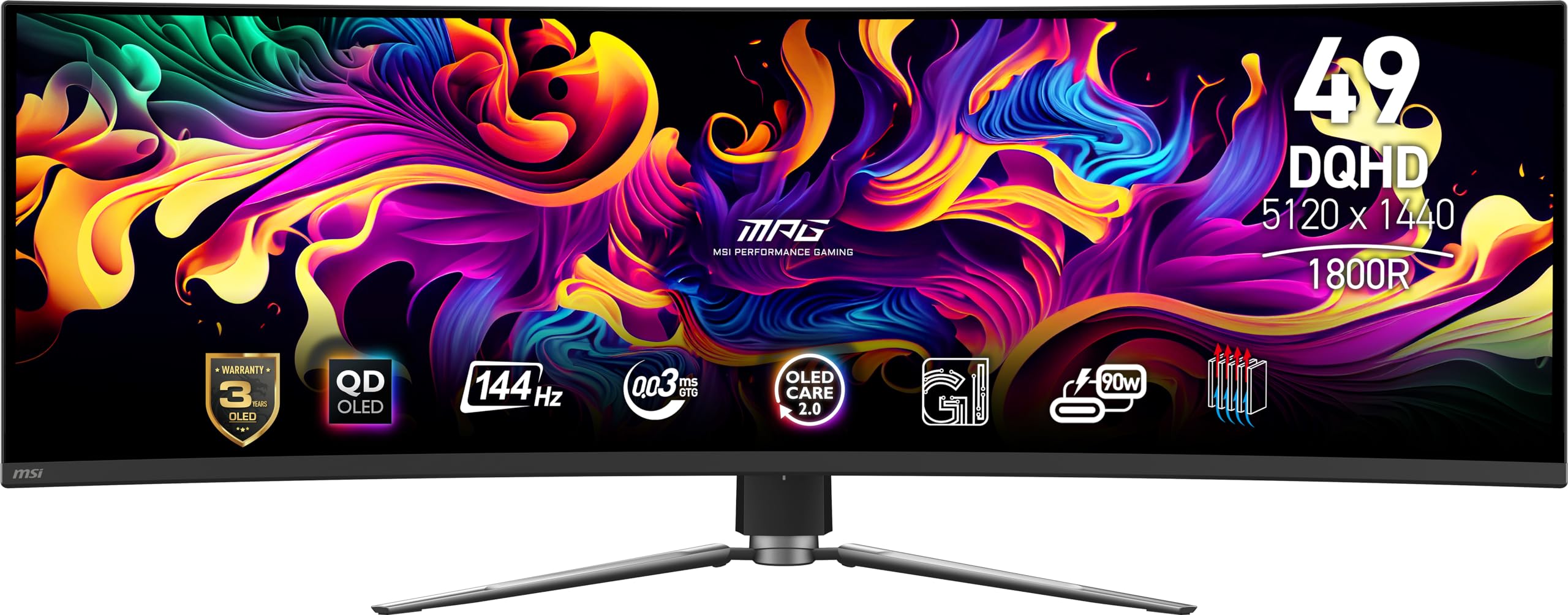
The MSI MPG 491CQP is a 49-inch QD-OLED ultrawide that targets gamers and content creators alike with its factory-calibrated Delta E≤2 color accuracy and 99% DCI-P3 coverage. Its 5120×1440 resolution provides a crisp, wide canvas, while the 144Hz refresh rate and 0.03ms response time ensure smooth motion without tearing or ghosting. The VESA DisplayHDR True Black 400 certification ensures deep blacks and highlights that pop in HDR mode.
The MSI Gaming Intelligence app is a standout feature, allowing you to create game-specific visual profiles and adjust settings with a mouse. OLED Care 2.0 actively reduces burn-in risk through pixel shift and brightness management, giving peace of mind for mixed use. The stand provides height, tilt, and swivel adjustments, and the KVM function lets you switch between devices seamlessly.
HDMI 2.1 with full 48 Gbps bandwidth supports console gamers at 4K 120Hz, while the USB-C port handles data and power delivery. Some users find the 144Hz refresh rate less future-proof than 240Hz options, but for the majority of single-player titles, the difference is negligible. The MPG 491CQP is a reliable, color-accurate choice for those who want QD-OLED quality without the absolute highest frame rate.
Why it’s great
- Factory-calibrated Delta E≤2 ensures professional-grade color accuracy.
- MSI OLED Care 2.0 provides solid burn-in mitigation for mixed usage.
- Full 48 Gbps HDMI 2.1 supports high-bandwidth console gaming.
Good to know
- 144Hz refresh rate is lower than some 240Hz competitors in this tier.
- USB-C port may not deliver full functionality without a proper USB 4 cable.
5. INNOCN 49Q1S OLED

The INNOCN 49Q1S is a 49-inch 32:9 OLED monitor that packs a 240Hz refresh rate and 0.03ms response time into a more wallet-friendly package than many competitors. Its 5120×1440 resolution and 1800R curvature create an immersive gaming experience, and the 90W USB-C port offers robust power delivery for a single-cable laptop setup. The contrast ratio of 1,000,000:1 delivers the deep blacks and vibrant colors typical of OLED technology.
The monitor features built-in speakers that are adequate for casual use, along with a generous port selection including DP 1.4, HDMI 2.1, USB-A, USB-B, and even an RJ45 Ethernet port for wired networking. PIP/PBP support allows viewing two sources simultaneously, which is useful for multitasking. The height-adjustable stand provides tilt and swivel adjustments for ergonomic comfort.
Reliability has been a mixed point in user feedback; some units have failed after a few months of use, though customer service has been responsive with replacements. The glossy OLED panel looks fantastic but can show reflections in bright rooms. The INNOCN 49Q1S is a compelling option for its feature set at the mid-range price point, as long as you purchase with an extended warranty for peace of mind.
Why it’s great
- 240Hz OLED performance at a more accessible price than premium brands.
- 90W USB-C and RJ45 Ethernet ports simplify single-cable desktop setups.
- Built-in speakers and PIP/PBP enhance multi-device usability.
Good to know
- User reports indicate some units have experienced reliability issues.
- Glossy screen finish can be distracting in rooms with uncontrolled lighting.
6. Samsung Odyssey G9 (G91F)

The Samsung Odyssey G9 (G91F) is a 49-inch 32:9 VA panel that leverages a 1000R curvature to create a deeply immersive curved field of view. Its 5120×1440 resolution and 144Hz refresh rate provide a smooth and wide gaming canvas, while VESA DisplayHDR 600 delivers higher peak brightness than OLED panels, making it ideal for well-lit rooms. The 1ms MPRT response time reduces motion blur effectively for a VA panel.
The build quality is solid with an aluminum silver finish and an ergonomic stand that offers height, tilt, and swivel adjustments. Auto Source Switch+ detects connected devices and switches inputs automatically. The screen supports Picture-in-Picture and split-screen modes, allowing you to view content from two sources at once—great for keeping a console and PC connected simultaneously.
It lacks built-in speakers, so you’ll need an external audio setup. Some users note that the VA panel, while bright, cannot match the black levels of OLED for dark-room gaming. However, for HDR gaming in a bright room, the Odyssey G9 is one of the top VA performers, offering high brightness and strong contrast without the burn-in concerns of OLED.
Why it’s great
- High brightness with HDR600 delivers impactful highlights in bright rooms.
- 1000R curve provides strong immersion without distortion for most games.
- Auto Source Switch+ simplifies multi-device switching.
Good to know
- No built-in speakers; external audio is required.
- VA panel black levels fall short of OLED, especially in dark scenes.
7. Samsung Odyssey G7 (G75F)
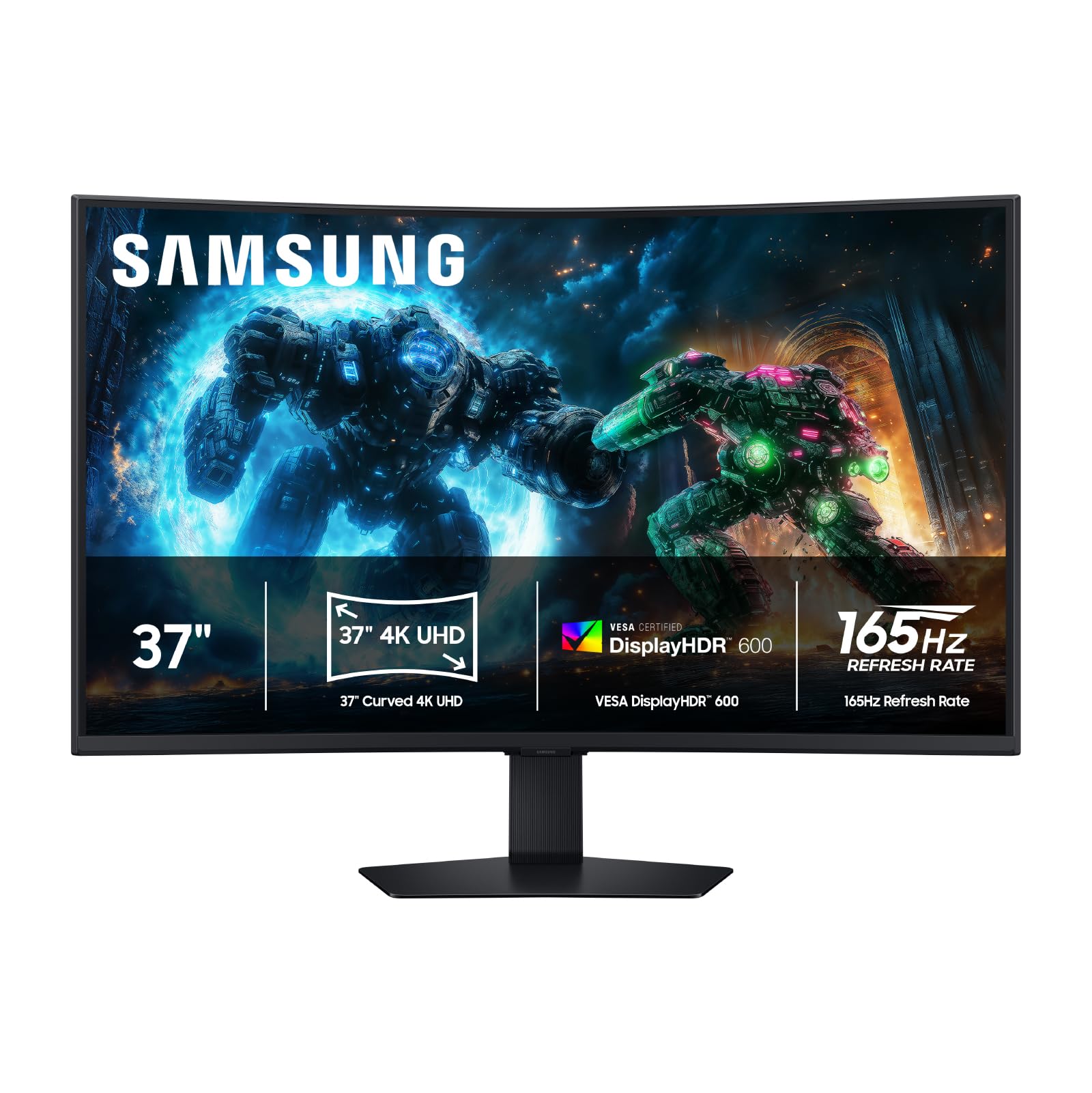
The Samsung Odyssey G7 (G75F) is a 37-inch 4K UHD VA monitor that offers a different approach to the 48-inch category by focusing on high pixel density rather than ultrawide width. Its 3840×2160 resolution on a 16:9 panel provides incredibly sharp text and detailed gaming visuals. The 165Hz refresh rate and 1ms GtG response time ensure smooth, responsive gameplay across both PC and console titles.
The 1000R curvature wraps the image around your field of view, providing a more engaging experience than a flat 4K panel. DisplayHDR 600 delivers strong brightness for HDR content, though the VA panel’s contrast is good but not OLED-level. The stand is fully adjustable with height, tilt, and swivel for comfortable viewing, and the connectivity includes HDMI 2.1 for console support at 4K 120Hz.
Some users find the 37-inch size to be a sweet spot for desk use—large enough for immersion but not so massive that it dominates the workspace. The monitor lacks built-in speakers and does not support ultrawide 21:9 modes, so black bars may appear in some games. The Odyssey G7 is a strong choice for gamers who prioritize sharp 4K resolution over an ultrawide field of view.
Why it’s great
- Sharp 4K UHD resolution with excellent pixel density for text and detail.
- 165Hz refresh rate with 1ms response time for smooth gameplay.
- Fully adjustable stand with HDMI 2.1 for next-gen consoles.
Good to know
- Does not support ultrawide 21:9 resolutions; black bars appear in some games.
- No built-in speakers require external audio for game sound.
8. CRUA 49″ Curved Gaming Monitor
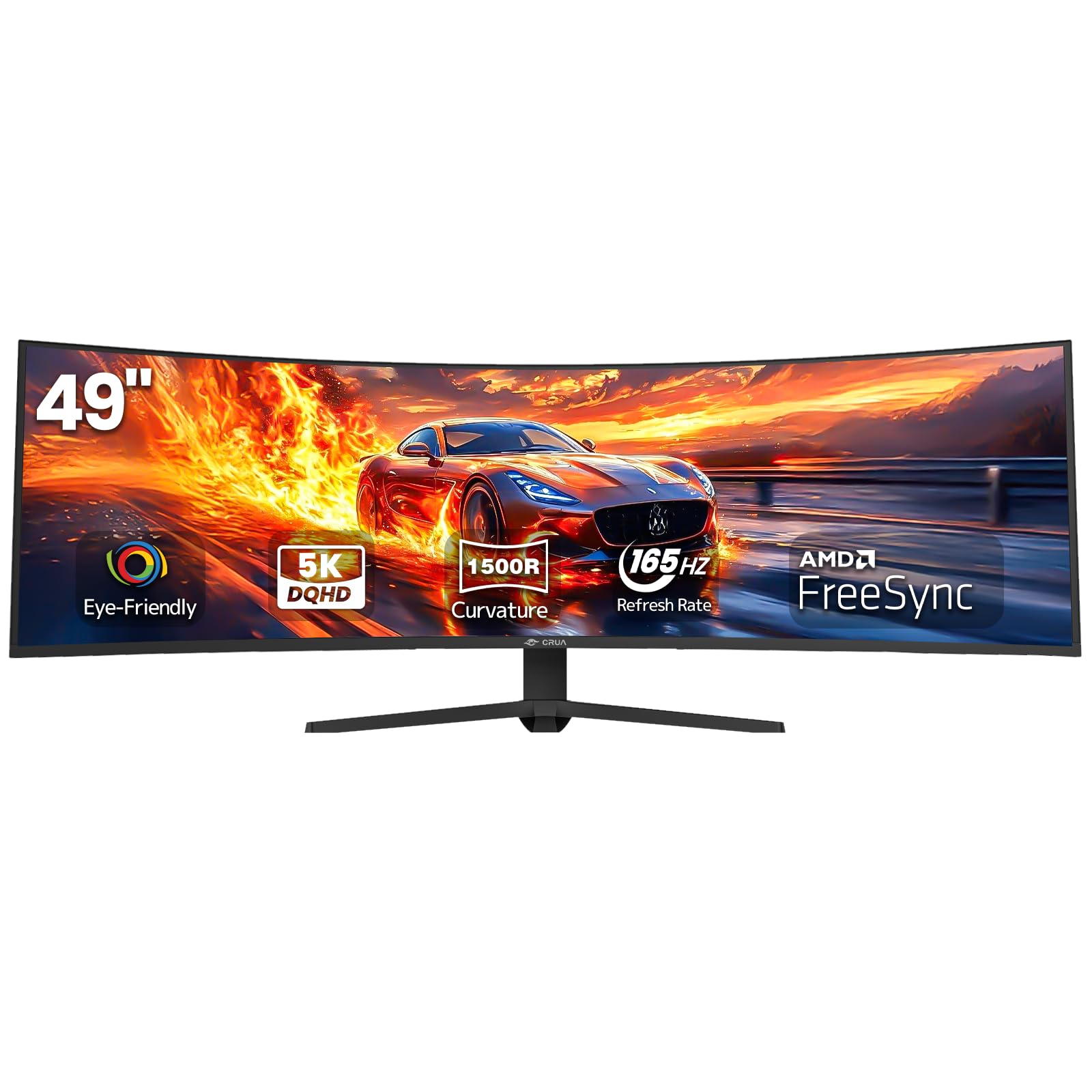
The CRUA 49-inch curved monitor provides a compelling budget-friendly entry to the 32:9 ultrawide format without sacrificing the essential specs. Its DQHD 5120×1440 resolution and VA panel deliver a 3000:1 contrast ratio with 120% sRGB coverage, creating a vibrant and immersive picture. The 165Hz refresh rate with AMD FreeSync support ensures smooth, tear-free gameplay in fast-paced esports titles.
The 1500R curvature helps wrap the screen around your field of view, and the height-adjustable stand offers tilt and lift adjustments for ergonomic comfort. Connectivity is solid with HDMI 2.1 and DP 1.4 ports, plus a 3.5mm audio jack for external speakers. The monitor does not include built-in speakers or RGB lighting, keeping costs down.
Some users report minor issues like soft screw heads or a popping sound from thermal expansion in some units, but customer service has been responsive. The CRUA 49 is an excellent choice for sim racers or productivity users who want a wide display without the premium price tag of OLED. It provides genuine immersion at a fraction of the cost of high-end competitors.
Why it’s great
- Affordable entry into 5120×1440 ultrawide gaming with 165Hz refresh rate.
- HDMI 2.1 and DP 1.4 support high-bandwidth connections.
- Height-adjustable stand for ergonomic setup.
Good to know
- No built-in speakers; requires external audio solution.
- Build quality may not match premium brands; some users report thermal noise.
9. Gawfolk 49″ Curved Gaming Monitor
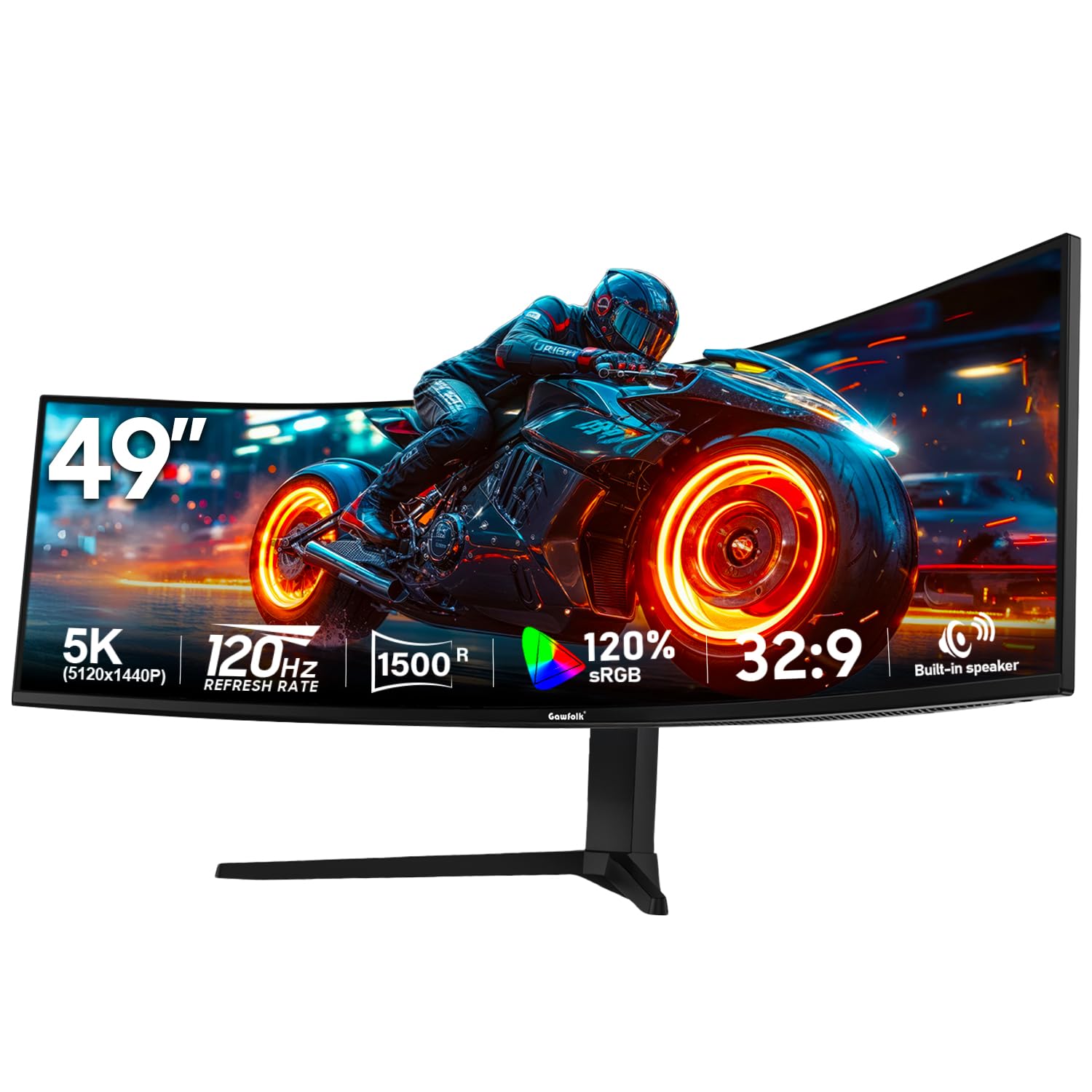
The Gawfolk 49-inch curved monitor targets users who want a large ultrawide with minimal setup hassle, featuring built-in 5W speakers for immediate audio out of the box. Its DQHD 5120×1440 resolution, 120Hz refresh rate, and 1500R curvature offer an immersive experience for both gaming and productivity. The VA panel delivers a 3000:1 contrast ratio for deep blacks, and HDR10 support adds a modest boost to dynamic range.
Color gamut is rated at 85% NTSC (1931), which translates to solid sRGB coverage good for general use, photo editing, and video work. The monitor features dual HDMI 2.1 and dual DP 1.4 ports for extensive connectivity, and PIP/PBP modes allow simultaneous viewing from two sources. RGB lighting and a crosshair overlay add to the gaming aesthetic.
The stand offers full swivel and pivot adjustments, plus VESA 100x100mm compatibility for arm mounting. However, some user reviews mention the monitor may have conflicting descriptions (like 4K vs. 1440p) and limited adjustability. The 120Hz refresh rate may feel slower to competitive gamers used to 165Hz or 240Hz panels. The Gawfolk is best suited for casual gamers or home office users who value built-in convenience over peak performance.
Why it’s great
- Built-in 5W speakers provide audio without external speakers or headphones.
- Extensive connectivity with dual HDMI 2.1 and dual DP 1.4 ports.
- Fully adjustable stand with swivel, pivot, and VESA mount support.
Good to know
- 120Hz refresh rate is lower than many competing options at this price.
- Product specifications may be confusing; verify details before purchase.
10. Great voell 49″ Curved Gaming Monitor
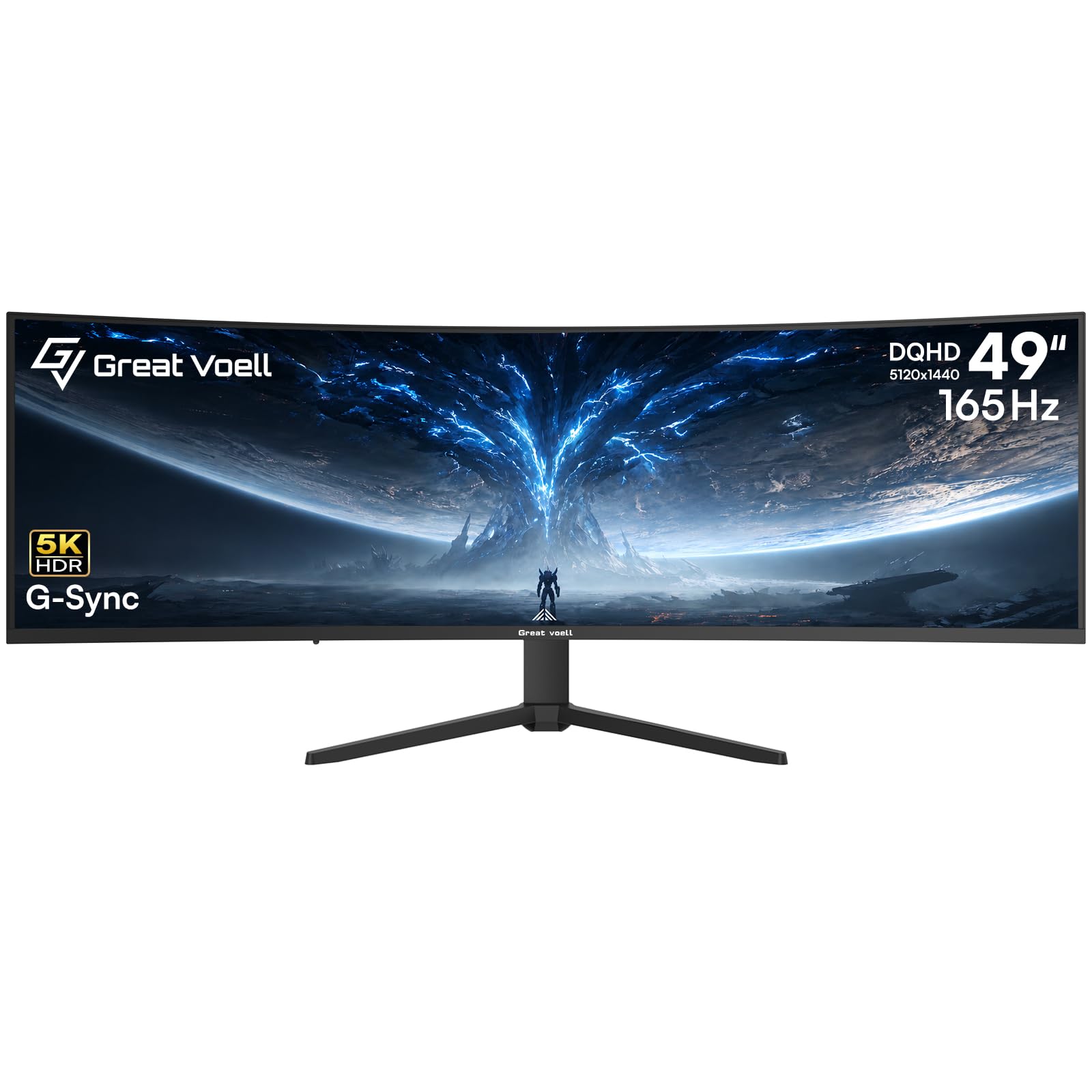
The Great voell 49-inch curved monitor provides a straightforward entry into 32:9 ultrawide gaming with a 165Hz refresh rate and 1ms MPRT response time, making it suitable for fast-paced titles. Its VA panel covers 127% sRGB and is HDR400 certified, delivering decent color vibrancy and contrast for the price point. The 5120×1440 resolution offers the same screen real estate as dual 27-inch monitors.
G-Sync and FreeSync compatibility ensures adaptive sync support for both NVIDIA and AMD GPUs, eliminating screen tearing. The 1500R curvature and 400 nits brightness create a reasonably immersive experience. The monitor includes tilt adjustment and VESA 100x100mm mounting support, though the stand lacks height adjustment. Connectivity options are HDMI 2.0 and DP 1.4, which may limit bandwidth for high refresh rates at full resolution.
Users generally praise the picture quality and value, though some report missing screws in the box and note that the stand is basic. The lack of USB ports and built-in speakers may be a dealbreaker for some. The Great voell is a reliable, no-frills ultrawide that delivers good performance for its price, making it a solid choice for gamers on a tighter budget.
Why it’s great
- 165Hz refresh rate with 1ms response for smooth competitive gaming.
- G-Sync and FreeSync compatibility works with both GPU brands.
- 127% sRGB coverage for vibrant colors.
Good to know
- Stand lacks height adjustment; VESA mount is recommended for ergonomic setup.
- No USB ports or built-in speakers for added convenience.
11. ZZA Ultrawide 49 Inch Curved Monitor
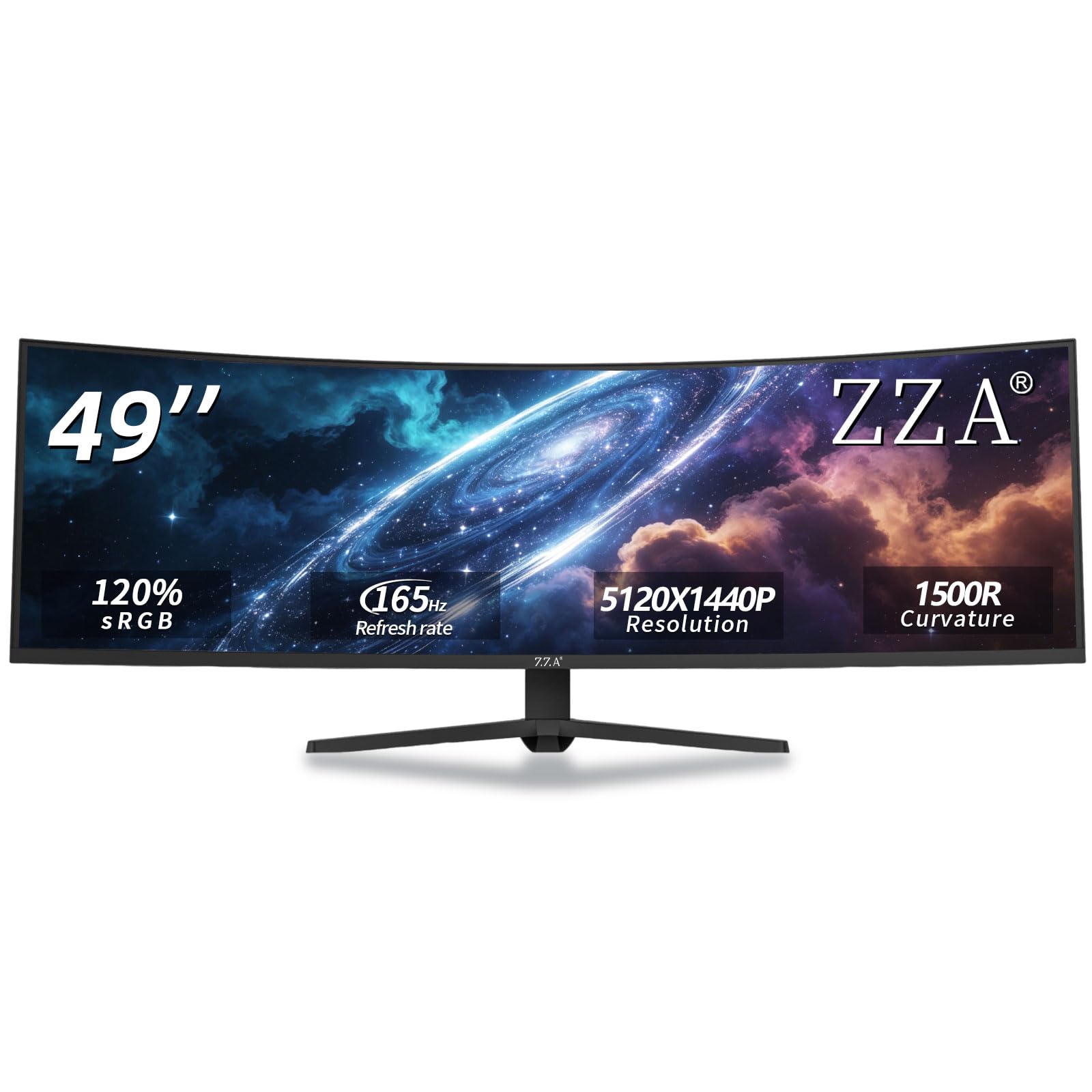
The ZZA Ultrawide 49-inch curved monitor is the most accessible entry point for users wanting a 32:9 DQHD experience without stretching the budget. Its VA panel offers a 3000:1 contrast ratio with 120% sRGB coverage and 300 cd/m² brightness, which is adequate for most gaming and productivity tasks. The 165Hz refresh rate with FreeSync support keeps motion smooth and tear-free for casual to moderate competitive gaming.
The 1500R curvature provides a decent wrap-around effect, and the height-adjustable stand with tilt and swivel is a nice inclusion at this price point. Connectivity includes HDMI 2.1 and DP 1.4, allowing high-bandwidth connections to modern GPUs and consoles. The monitor does not include built-in speakers, so external audio is required.
User feedback is largely positive, with many praising the value and picture quality for the price. However, some reports note issues like severe backlight flicker and smearing on certain units, which may be a concern for sensitive users. The ZZA is best suited for budget-conscious buyers who understand the trade-offs in panel uniformity and build quality that come with the lowest price tier.
Why it’s great
- Lowest price entry to 5120×1440 ultrawide with 165Hz refresh.
- Height-adjustable stand with tilt and swivel for ergonomic comfort.
- HDMI 2.1 and DP 1.4 for modern connectivity.
Good to know
- Potential for quality control issues like backlight flicker or smearing.
- No built-in speakers; requires external audio solution.
FAQ
Can a mid-range GPU handle a 5120×1440 ultrawide monitor at high refresh rates?
What is the main risk of buying an OLED monitor for gaming?
Is a 48-inch 16:9 monitor or a 49-inch 32:9 ultrawide better for immersive gaming?
Do all games support 32:9 ultrawide resolutions natively?
Final Thoughts: The Verdict
For most users, the 48 inch gaming monitor winner is the ASUS ROG Swift PG32UCDM because it delivers the best combination of 4K QD-OLED picture quality, 240Hz smoothness, and robust burn-in protection features. If you want a deeply immersive 32:9 ultrawide experience with OLED, grab the LG 45GX900A-B Ultragear. And for a budget-friendly entry to the 32:9 world without sacrificing a high refresh rate, nothing beats the CRUA 49″ Curved Gaming Monitor.