
Our readers keep the lights on and the weekend projects moving. As an Amazon Associate, I earn from qualifying purchases.
A -20°F sleeping bag isn’t a comfort upgrade — it’s a survival tool. When the mercury drops below zero, a bag that fails to hold its rating doesn’t just ruin a trip; it puts you at risk of hypothermia. The difference between a bag that delivers true -20°F performance and one that chills you by midnight comes down to insulation type, draft-proof construction, and honest temperature ratings.
I’m Rikta — the founder and writer behind FitlyFast. I’ve spent years analyzing thermal efficiency metrics, fill materials, and shell fabric durability across the cold-weather gear market to separate genuine subzero performers from overhyped options.
Whether you need a heavy-duty canvas bag for ice fishing or a lightweight down sack for a winter trek, choosing the right -20°f sleeping bag requires understanding insulation density, baffle construction, and packed size trade-offs that most buyers overlook.
How To Choose The Best -20°F Sleeping Bag
Picking a subzero sleeping bag involves more than looking at the temperature number on the tag. The insulation material, shape, shell fabric, and draft protection all determine whether you wake up warm or end your trip early.
Insulation Type: Fiberfill vs. Down
For true -20°F performance, fiberfill insulation like TechLoft or hollow-fiber polyester is the dominant choice. It retains warmth even when damp, costs less per pound of insulation, and is easier to manufacture in high-loft volumes. Down fill, especially 550-fill and above, offers a better warmth-to-weight ratio but loses nearly all insulating value when wet. Down bags at this temperature rating are lighter and more packable but demand a waterproof bivy or shell.
Shape and Draft Protection
A mummy cut minimizes internal air volume, so your body heats the space faster and maintains temperature longer. Rectangle cuts are more comfortable for side sleepers and larger frames but require more insulation to reach the same rating. Look for a full-length draft tube behind the zipper, a contoured hood with drawcord, and a draft collar around the neck — these features stop the cold that creeps in through gaps.
Shell Fabric and Durability
Cotton duck canvas shells (found on many high-rated rectangle bags) are rugged and quiet but heavy and slow to dry. Nylon ripstop shells are lighter, compress better, and often feature a DWR finish to repel moisture. For extreme cold use in wet snow or tent condensation, a water-resistant shell or an additional bivy cover is critical.
Quick Comparison
On smaller screens, swipe sideways to see the full table.
| Model | Category | Best For | Key Spec | Amazon |
|---|---|---|---|---|
| ALPS OutdoorZ Redwood -25 | Premium Canvas | Canvas durability & warmth | 13 lbs, 38×80 in. | Amazon |
| Browning McKinley -30 | Premium Synthetic | Two-layer insulation | 12.8 lbs, TechLoft Silver | Amazon |
| Guide Gear -30 Canvas | Mid-Range Canvas | Value & heat retention | 12.7 lbs, 9 lbs fiberfill | Amazon |
| Big Agnes Dream Island 20°F | Premium Double | Couples car camping | 6.8 lbs, 78×126 in. | Amazon |
| Naturehike Flannel Double | Mid-Range Double | Budget couple’s bag | 12.3 lbs, 2 pillows incl. | Amazon |
| Kelty Supernova Down 20°F | Premium Down | Lightweight backpacking | 3 lbs, 550-fill down | Amazon |
| U.S. Military MSS 5-Piece | Premium System | Modular extreme cold | ~9 lbs, 3 bag layers | Amazon |
| Rab Ascent 0°F Down | Premium Down | Mountaineering & trekking | 3.6 lbs, 650FP down | Amazon |
| deuter Astro Pro 400 | Ultralight Down | Minimal weight & pack size | 1.9 lbs, RDS down | Amazon |
In‑Depth Reviews
1. ALPS OutdoorZ Redwood -25

The ALPS OutdoorZ Redwood combines a rugged cotton canvas outer shell with a brushed flannel liner and TechLoft Silver insulation for a bag that feels like a heated cabin. The two-layer offset construction eliminates cold spots that plague single-layer bags, and the 38×80-inch oversized rectangle provides genuine wiggle room for side sleepers and restless campers.
Customer reports confirm comfort at 18°F with the bag fully zipped, and the thick insulation trapped heat effectively even when temperatures dropped near the -25°F rating. The canvas shell is noticeably heavier than nylon alternatives at 13 pounds, but it also resists snags from tent poles and campfire sparks much better. The roll-up straps with quick-release buckles make packing manageable despite the bulk.
This bag is not suitable for backpacking — the packed size rivals a small duffel bag. But for car camping, ice fishing, or winter emergencies at home, the Redwood delivers the warmest, most durable experience in this price tier. The cotton flannel interior stays comfortable against the skin without the clammy feel of cheaper synthetics.
Why it’s great
- Two-layer offset construction stops cold spots
- Canvas shell is rugged and spark-resistant
- Brushed flannel liner is soft and warm
Good to know
- Very heavy at 13 pounds
- Too warm for temperatures above freezing
- Not packable for hiking or backpacking
2. Browning McKinley -30

The Browning McKinley uses TechLoft Silver insulation in a two-layer offset construction that eliminates the cold spots found in cheaper rectangular bags. The 210T nylon diamond ripstop outer shell is lighter than canvas but still tough enough for brushy hunting camps. At 36 inches wide, the McKinley offers generous space without the extreme bulk of oversized models.
Users consistently report staying warm in single-digit Fahrenheit conditions, with several noting comfort at 0°F and below while wearing only silk base layers. The brushed polyester liner feels smooth and insulates well, though some reviewers mention it can feel slick against a sleeping pad. The large hood cinches down effectively to trap heat around the head and shoulders.
The McKinley packs down to 21×17 inches using its compression sack — still bulky for backpacking but manageable for canoe trips or truck camping. The separating zippers allow two bags to be zipped together for a double-wide setup. The trade-off is weight: at 12.8 pounds, this is strictly for vehicle-supported adventures.
Why it’s great
- Two-layer offset construction blocks cold spots
- Ripstop nylon shell is durable and lighter than canvas
- Oversized hood with drawcord seals in warmth
Good to know
- Heavy at 12.8 pounds
- Brushed liner can feel slick on pads
- Too bulky for backpacking
3. Guide Gear -30 Canvas

The Guide Gear -30 Canvas bag proves you don’t need to spend premium money for serious warmth. With 9 pounds of fiberfill insulation inside a cotton duck canvas shell and brushed flannel lining, this bag retains heat effectively in subzero conditions. The rectangular shape provides enough room for a 6’8″ sleeper to stretch out comfortably.
Reviewers consistently praise its performance in cold weather, with several noting they stayed warm in temperatures around 42°F — far above the bag’s rating — and felt the bag could handle much colder conditions. The attached hood with drawstring helps retain heat, though the wide head area without a second drawcord allows some heat loss if not cinched tightly.
The biggest compromise is bulk: at 12.7 pounds and a packed size roughly three times that of a standard mummy bag, this is strictly for car camping, cabin use, or truck-based winter trips. Some units show aesthetic stitching imperfections, but the structural integrity and thermal performance remain solid. The 2-way zipper operates smoothly and can be unzipped from the bottom for ventilation.
Why it’s great
- Exceptional warmth for the price point
- Canvas shell and flannel lining are durable and comfortable
- Generous size fits taller sleepers
Good to know
- Extremely bulky — not for hiking
- Wide head area loses some heat
- Stitching quality can be inconsistent
4. Big Agnes Dream Island 20°F

The Big Agnes Dream Island redefines double sleeping bags by offering true two-person comfort without the restrictive feel of zipping two bags together. At 78×126 inches, it can fit two adults up to 6’6″ with room to spare. The FireLine Max synthetic insulation uses recycled fibers that maintain loft well, and the 40D nylon ripstop shell features a PFAS-free water-repellent finish.
Each side has its own entry zipper and an integrated Pillow Barn to keep pillows in place. The top can unzip to function as a separate quilt, and the bag attaches to sleeping pads using Big Agnes’s Padlok system — though you must supply your own pad. Users report sleeping warmly in 40-50°F conditions with just a base layer, confirming the 20°F rating with proper pad insulation.
At 6.8 pounds, the Dream Island is light for a double bag, but it still packs to 12×23 inches — too large for backpacking. The cotton-polyester blend liner feels soft against the skin, and the double zippers make temperature regulation easy. The bottom of the bag lacks integrated insulation, so an insulated pad is mandatory for cold weather use.
Why it’s great
- Separate entry zippers on each side
- Recycled synthetic insulation with PFC-free DWR
- Converts to a two-person quilt
Good to know
- Requires insulated sleeping pad for cold use
- Not suitable for backpacking
- Zipping into single mode is difficult
5. Naturehike Flannel Double
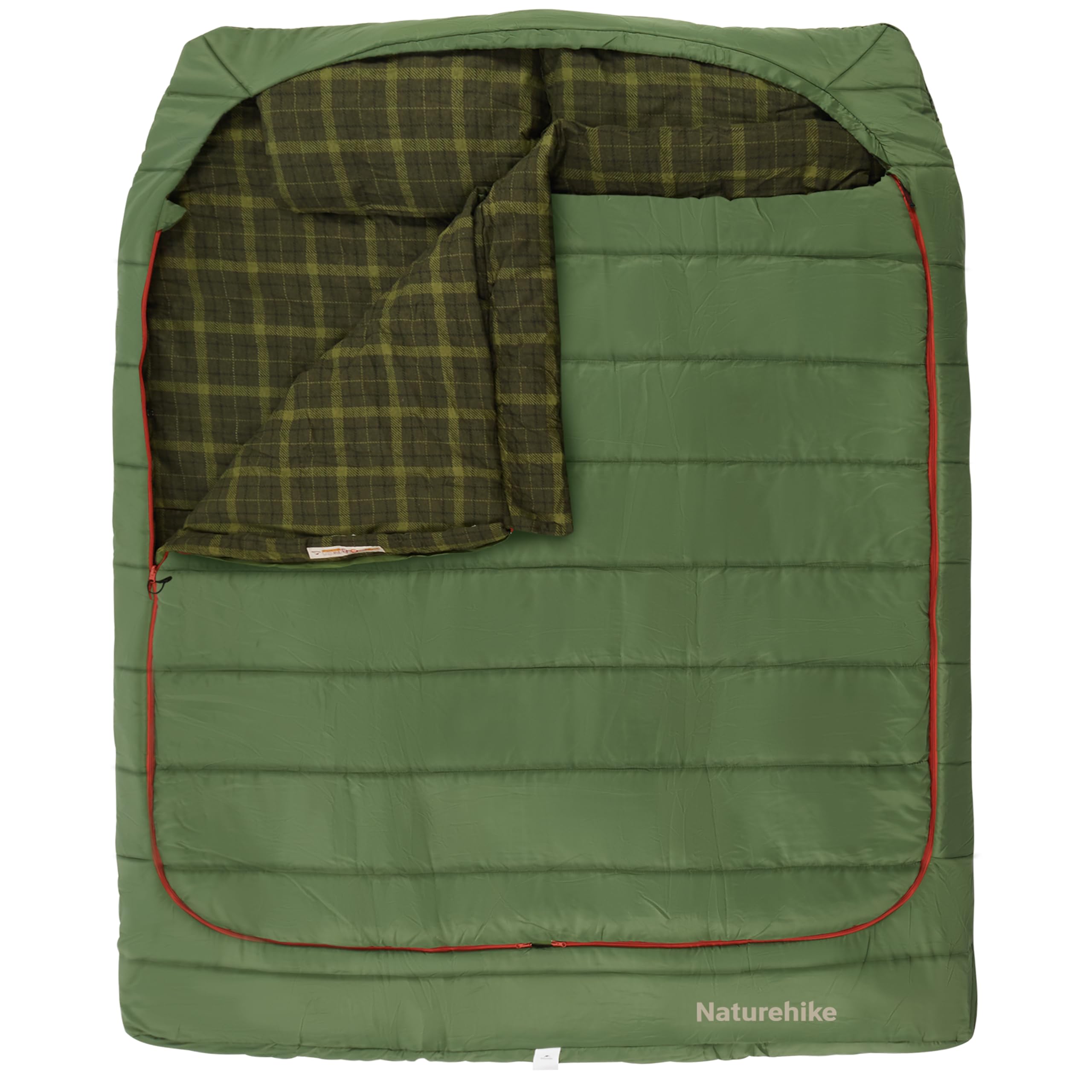
The Naturehike Flannel Double offers a unique 4-season versatility with its three-mode design: a double cover for spring and fall, a single cover with buttons for summer, and a folded four-layer configuration for winter. The outer 210T pongee fabric is splash-proof, while the flannel lining is soft and skin-friendly. At 87×63 inches unfolded, it rivals a queen mattress in size.
Two flannel pillows are included, and the bottom features a separate zipper for foot ventilation. Users report warmth down to about 32°F in winter mode, making it a practical choice for family car camping where conditions are cold but not extreme. The backpack-style storage bag, while not a true compression sack, helps carry the bulky bundle.
The main limitation is the temperature rating: at ISO 30°F, this bag is not suitable for genuine -20°F conditions without the full winter conversion and heavy clothing layers. The hollow cotton insulation is heavy and compresses poorly. But for a family camping in moderate cold who want a spacious double bag with adjustable warmth, the Naturehike delivers strong value.
Why it’s great
- Three-mode design for all-season use
- Includes two soft flannel pillows
- Splash-proof outer fabric
Good to know
- Not warm enough for -20°F without layering
- Heavy and bulky for its warmth rating
- Compression straps don’t cinch tightly
6. Kelty Supernova Down 20°F

The Kelty Supernova breaks the mummy-bag stereotype with a semi-rectangular cut that accommodates stomach sleepers and side sleepers who normally feel claustrophobic in narrow bags. The 550-fill gray duck down provides a warmth-to-weight ratio that fiberfill can’t match, with the regular size weighing just 3 pounds. The recycled nylon shell and liner reflect Kelty’s sustainability commitment without sacrificing durability.
Users consistently praise the roomy fit, with several 5’11” to 6’0″ testers noting they could roll over inside the bag without wrestling the fabric. The draft collar and cinch cord seal warmth effectively, and the bag can be zipped together with a second Supernova for a two-person setup. At 20°F rating, it’s best for spring, fall, and moderate winter trips rather than extreme subzero conditions.
The main compromise is packability: down bags with 550-fill power don’t compress as tightly as higher-fill options, so the packed size is larger than premium ultralight bags. The zipper can occasionally catch on the draft tube baffle, requiring careful operation. But for hikers who prioritize comfort over minimal weight, the Supernova offers an excellent balance.
Why it’s great
- Semi-rectangular cut is ideal for stomach sleepers
- Lightweight at 3 pounds for a down bag
- Recycled shell materials with RDS-certified down
Good to know
- Zipper can catch on the draft baffle
- 550-fill does not compress as tightly as higher fills
- Not rated for -20°F — use for moderate cold
7. U.S. Military MSS 5-Piece

The Genuine U.S. Military Improved Modular Sleeping Bag System is the gold standard for extreme cold layering. The set includes three insulation bags (lightweight, intermediate, and heavyweight), a waterproof Gore-Tex bivy cover, and a compression sack. Used together, the system is rated to -30°F and below, with the Gore-Tex bivy providing critical moisture protection in snow or rain.
The versatility is unmatched: you can use the lightweight bag alone in summer, add the intermediate bag for fall, or deploy all three for arctic conditions. The mummy shape minimizes internal air volume, and the bivy cover stops condensation and wind from robbing warmth. Users report using it comfortably in unexpected snowstorms, crediting the Gore-Tex bivy with saving their trip.
The system weighs approximately 9 pounds — heavy for backpacking but reasonable for the extreme cold protection offered. Some units are previously issued and may show minor wear, though reviewers consistently report receiving them in excellent condition with all components present. The system is designed to fit soldiers up to 76 inches tall, so taller users may find the length restrictive.
Why it’s great
- Modular bags adapt to any season
- Gore-Tex bivy blocks moisture and wind
- Proven military-grade durability
Good to know
- Heavy at ~9 pounds for the full system
- Some units are previously issued
- Best for car camping or basecamp use
8. Rab Ascent 0°F Down
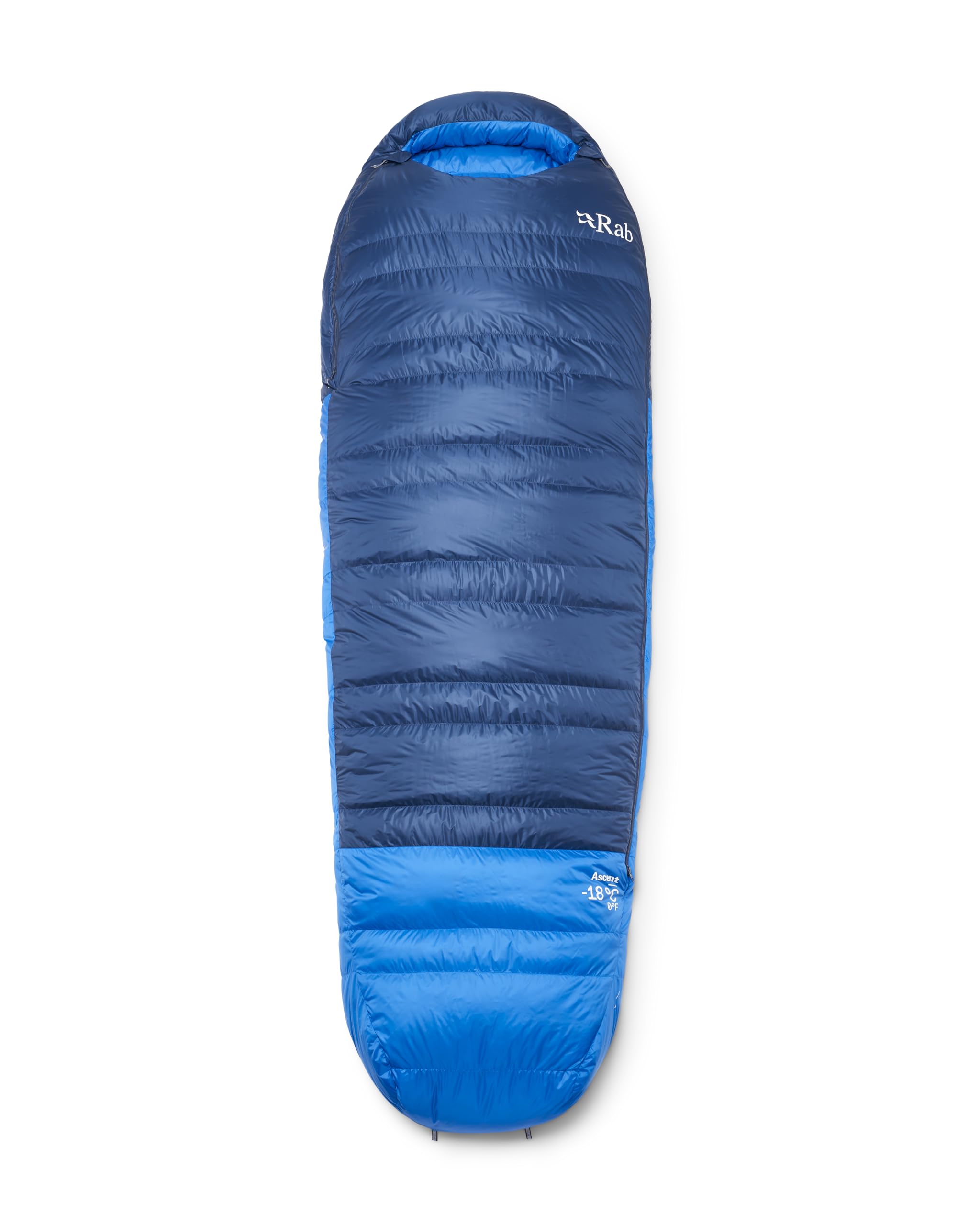
The Rab Ascent is built for serious mountaineering, with a 20D Pertex Quantum shell that is downproof, windproof, and treated with a fluorocarbon-free DWR. The 650-fill European duck down is finished with Grangers hydrophobic treatment, meaning it retains loft and insulating power even when exposed to tent condensation or damp snow. The anatomic hood with a 3D collar seals warmth around the head and neck effectively.
The bag is rated with a comfort temperature of 14°F, a lower limit of 0°F, and an extreme rating of -40°F — providing a realistic range that helps users understand exactly what conditions the bag can handle. The L.O.F.T baffling system prevents down from migrating, ensuring consistent insulation across the entire bag. At just over 3.6 pounds for the long version, it’s significantly lighter than synthetic alternatives at similar ratings.
Some users report that the 0°F rating feels optimistic, noting cold spots around 20°F when not using a high-quality sleeping pad. The 3/4-length zipper saves weight but can make entering and exiting less convenient. This is a specialized tool for cold-weather backpacking and mountaineering, not a casual car-camping bag.
Why it’s great
- Hydrophobic down maintains loft when damp
- Pertex Quantum shell blocks wind and moisture
- EN-rated temperature range provides realistic expectations
Good to know
- Temperature rating may run cold for some users
- 3/4-length zipper reduces convenience
- Requires investment in a quality sleeping pad
9. deuter Astro Pro 400
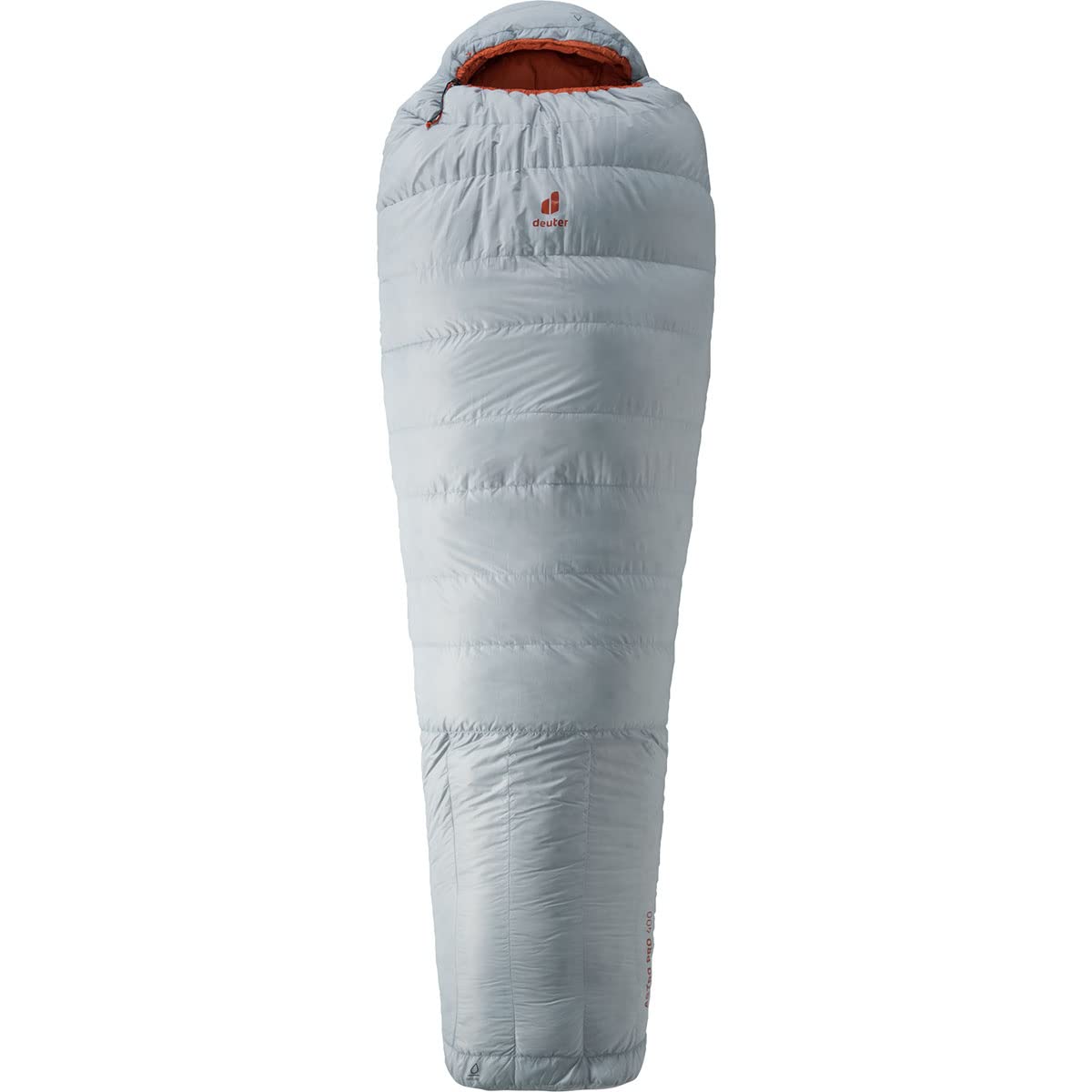
The deuter Astro Pro 400 represents the pinnacle of lightweight down sleeping bag engineering for technical mountaineering and fast-paced winter trips. Weighing just 1.9 pounds (880 grams), it achieves its low weight through high-quality down insulation certified to the Responsible Down Standard and a 20D recycled nylon shell with PFC-free DWR. The Thermo Stretch inner lining can expand 25% in width, providing rare flexibility for an ultralight bag.
The ErgoFootPro three-dimensional foot box allows natural foot positioning and better insulation for the toes, a common cold spot in mummy bags. The Bluesign certification ensures environmentally responsible manufacturing. Users report comfort down to around freezing temperatures, with the bag’s primary design focus on weight and compressibility rather than extreme cold survival.
The trade-off is clear: this bag is not designed for -20°F conditions. Its comfort rating is suitable for high-altitude summer camps and mild winter treks, not the brutal cold that canvas bags handle. The price reflects the premium materials and German engineering, making it a niche choice for gram-counting adventurers who need maximum warmth per ounce in moderate cold.
Why it’s great
- Ultralight at just 1.9 pounds
- Thermo Stretch lining for extra foot room
- Bluesign certified with RDS down
Good to know
- Not warm enough for -20°F conditions
- Premium price for ultralight niche
- Limited comfort above freezing
FAQ
How do I know if a -20°F sleeping bag actually keeps you warm at -20°F?
Is a mummy or rectangle shape better for extreme cold?
Can I use a -20°F bag for summer camping?
What sleeping pad works best with a -20°F bag?
How do I store a down -20°F bag to maintain loft?
Final Thoughts: The Verdict
For most users, the -20°f sleeping bag winner is the ALPS OutdoorZ Redwood -25 because it combines a rugged canvas shell, two-layer TechLoft insulation, and oversized comfort at a price that undercuts premium competitors while delivering verified subzero warmth. If you want a lighter, more packable option for winter backpacking, grab the Kelty Supernova Down 20°F and pair it with a warm liner. And for extreme cold versatility or tactical use, nothing beats the U.S. Military MSS 5-Piece modular system with its Gore-Tex bivy and multiple bag layers.