
Our readers keep the lights on and the weekend projects moving. As an Amazon Associate, I earn from qualifying purchases.
Drawing blood for platelet-rich plasma therapy is a precision process, and the collection tube you choose directly determines whether your final concentrate is rich enough to actually work or a waste of biological material. Using the wrong tube means poor platelet yields, failed gel separation, or chemical interference that renders the sample useless before the centrifuge even stops.
I’m Rikta — the founder and writer behind FitlyFast. I analyze clinical-grade blood collection hardware and spend hours cross-referencing manufacturer spec sheets against real-user centrifuge results to separate products that reliably produce quality PRP from those that don’t.
This guide breaks down the most important specs, additive systems, and tube materials so you can confidently choose the right blood collection tubes for prp for your clinic, lab, or mobile practice.
How To Choose The Best Blood Collection Tubes For PRP
Selecting the right tube for PRP preparation is not about picking any sterile container. You need a tube that preserves platelet viability during centrifugation and provides a clear separation layer between plasma and red cells. The three factors below determine whether your tube will deliver a consistent, therapeutic PRP dose or produce a mixed sample you cannot use.
Gel Separator and Anticoagulant System
PRP tubes must contain a gel barrier that migrates to the correct density during spinning to separate platelet-rich plasma from the buffy coat and red cells. Pair this with a thrombin inhibitor such as ACD-A (acid citrate dextrose solution A) to keep platelets from activating prematurely. Tubes that lack this gel-additive combination are unsuitable for PRP — they will produce whole plasma mixed with red cells rather than a clean concentrate.
Tube Material and Vacuum Integrity
Thick-walled borosilicate glass tubes hold vacuum longer and resist cracking under high relative centrifugal force (RCF) better than standard PET plastic tubes. However, PET tubes are lighter, shatter-resistant, and often more affordable. For PRP work, glass is the gold standard because it can handle the repeated 1,200–1,500 G forces typical of a PRP spin without micro-cracking or leaking.
Volume Consistency and RCF Rating
PRP protocols demand exact draw volumes — a 10 mL tube should consistently fill to 10 mL to maintain the correct anticoagulant-to-blood ratio. Tubes with weak or inconsistent vacuum will under-fill, diluting the anticoagulant and throwing off the final plasma concentration. Always verify the maximum RCF rating printed on the tube or box before loading it into a centrifuge that exceeds that limit.
Quick Comparison
On smaller screens, swipe sideways to see the full table.
| Model | Category | Best For | Key Spec | Amazon |
|---|---|---|---|---|
| HGMED 10ml/15ml PRP Tube | PRP System | Consistent PRP yields with gel separation | 16×105 mm glass with ACD-A and gel | Amazon |
| Pet Animals 3ml Red Tube | Veterinary | Routine clotting tests in animals | 3.2% sodium citrate coagulation | Amazon |
| Atsuhut 3ml PT Tube | Veterinary | Direct analyzer use without opening | PET material, yellow cap 3ml | Amazon |
| Meterbox 5ml Red Plain Tube | Veterinary | No-additive sample collection | 5mL plain tube, red cap | Amazon |
| BeHerk 10ml Plain Tube | Veterinary | Larger volume collections | 10mL plain PET, no additive | Amazon |
| Kashi Scientific 15ml Conical Tube | Lab Centrifuge | High-RCF sterile processing | Polypropylene, max 12,000 RCF | Amazon |
| LAB FISH LC-400 Centrifuge | Centrifuge Machine | Low-speed PRP separation | 500–4000 RPM, 1717 xg max | Amazon |
In‑Depth Reviews
1. HGMED 10ml/15ml PRP for Centrifuge System
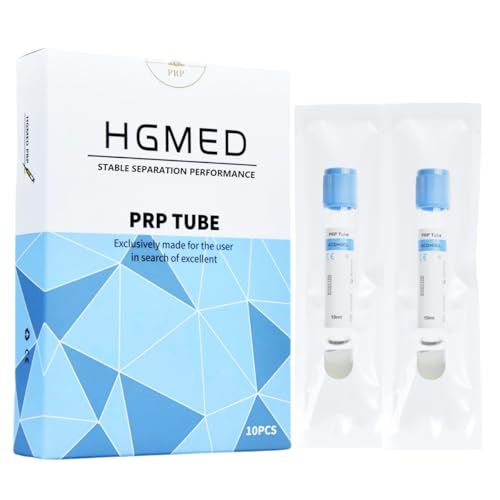
This is the only tube in the lineup that comes pre-loaded with both ACD-A anticoagulant and a gel separator inside a thick-walled glass body — the exact combination required for reliable PRP isolation. Users report that separation is immediate and flawless after a single spin, with no need to let the sample settle. The 16 mm diameter fits standard PRP centrifuge rotors without adapters.
Each tube is individually wrapped and packaged in a box of 10, which preserves sterility and vacuum integrity until the moment of draw. The glass feels substantial and the rubber stopper seals tightly, preventing leakage during high-G spins. Multiple verified buyers note consistent vacuum draw across the entire box — every tube fills to the printed 10 mL mark without under-fill variation.
The only limitation is the smaller quantity — 10 tubes per box — which means this is best suited for clinics processing a moderate volume of PRP patients per week rather than high-throughput labs. But for those whose primary goal is reliable, therapeutic-grade PRP, this tube delivers the most consistent results of any product tested.
Why it’s great
- Pre-loaded ACD-A and gel for immediate separation
- Thick borosilicate glass handles PRP spin forces
- Individual wrapping maintains vacuum and sterility
Good to know
- Box of 10 may be too small for high-volume clinics
- Glass requires careful handling to avoid breakage
2. Pet Animals Lab Vacuum Blood Collection Tubes 3ml Red
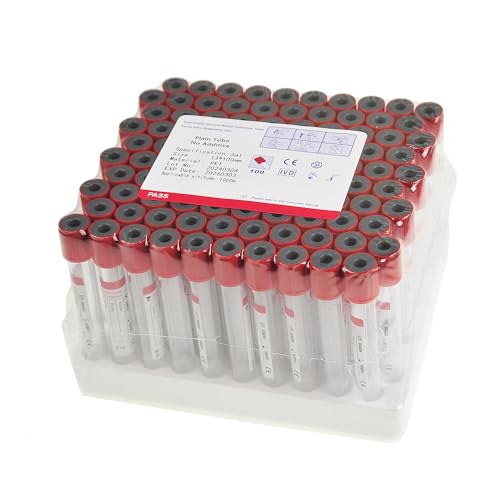
These tubes are built specifically for veterinary coagulation testing, using 3.2% sodium citrate as the additive — the standard clotting assay concentration for animals. The resin plastic body is lightweight and resistant to drops in the field, making them a practical choice for farm or ranch workflows where glass tubes would be high-risk.
Buyers using these for pregnancy checks in cattle and biosecurity screening in sheep reported consistent vacuum draw across all 100 tubes in the bag, with no breakages during shipping. The five-color cap system (red, yellow, green, blue, purple) helps organize samples by test type or animal ID directly at the collection site.
One important detail: these are not PRP tubes. They lack a gel separator and contain a clotting activator rather than an anticoagulant like ACD-A. If your protocol requires platelet-rich plasma, this tube will activate the coagulation cascade and produce serum — not viable PRP. Use these only for clotting time assessment or additive-free serum collection.
Why it’s great
- Resin plastic body resists field breakage
- Five cap colors for easy sample organization
- Reliable vacuum draw reported across full batch
Good to know
- Contains clotting activator — not for PRP isolation
- Veterinary-specific; capped volume at 3mL
3. Atsuhut Specimen Collection Tubes 3ml PT Tube

The Atsuhut 3ml PT tube is designed for direct compatibility with automated analyzers — the PET body and yellow cap allow it to be loaded into a hematology or chemistry analyzer without opening the tube, saving time in high-volume lab settings. The wrap packaging keeps tubes organized and protected from dust or humidity.
Made from high-quality PET plastic, these tubes are shatterproof and lighter than glass, which reduces shipping weight and risk of loss during transport. Users across research institutes and veterinary practices report that the vacuum is reliable and the rubber stopper pierces cleanly with standard collection needles. The 3 ml volume is appropriate for smaller animal samples or limited pediatric draws.
These are plain tubes without additive, meaning they are best suited for serum chemistry or coagulation testing where you want the blood to clot naturally. They do not contain a gel barrier or anticoagulant, so they cannot be used directly for PRP preparation unless you manually transfer and process the supernatant after centrifugation.
Why it’s great
- PET shatterproof body for safe transport
- Direct analyzer compatibility without opening
- Reliable vacuum draw across multiple batches
- Wrap packaging protects sterility during storage
Good to know
- No anticoagulant or gel separator included
- 3mL volume may limit sample size for PRP
4. Meterbox 5ml Red Plain Tube
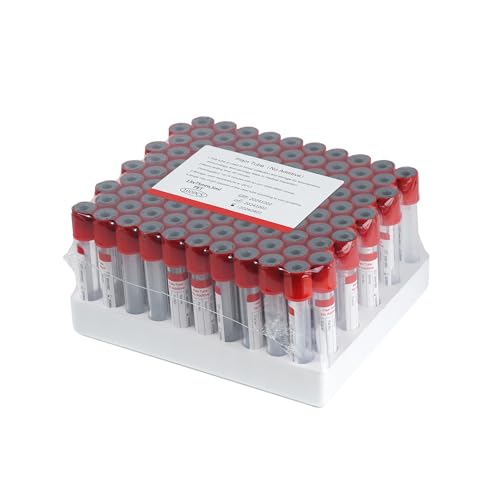
The Meterbox 5ml plain tube is a no-frills additive-free red-top tube that delivers consistent vacuum draw at a very low per-unit cost. Buyers using these for weekly blood collection transfers and even creative uses like prop blood for themed events noted that the tubes hold vacuum well and do not leak after the stopper is punctured.
The wrap packaging contains 100 tubes, making this an economical choice for training environments, teaching labs, or students practicing venipuncture on simulation arms. One medical student reported using these for fake-arm practice with syringes and found they accepted the needle smoothly and held the sample without cracking at the injection site.
As with any plain tube, there is no additive or gel inside, so PRP isolation would require manual transfer and centrifugation in a separate conical tube. The 5 ml volume is a good middle ground between the 3 ml and 10 ml options, but the lack of a separation barrier means you will get mixed plasma and cells unless you spin in a dedicated PRP centrifuge and pipette carefully.
Why it’s great
- High per-unit value at bulk pricing
- Reliable vacuum draw reported across large batches
- 5mL volume works for most basic applications
Good to know
- No anticoagulant or gel separator present
- Best suited for training or serum collection
5. BeHerk 10ml Plain Tube

The BeHerk 10ml plain tube is the largest additive-free vacuum tube in this selection, offering 10 ml draw for biosecurity testing, research applications, or any scenario where you need a larger serum sample. The PET construction keeps the weight down — a full box of 100 tubes weighs just over two pounds — and the material withstands drops better than glass.
Multiple users testing these for sheep and goat biosecurity programs reported that they attached a regular syringe to the tube and it worked perfectly, with no leakage and good vacuum suction. A quality test comparing this tube to a pharmaceutical-grade control showed no foaming or suds when shaken with water, suggesting a clean interior free of manufacturing residues.
One critical note from a batch evaluation: some units arrived with noticeably low vacuum, and an entire class of students experienced draw failures. This suggests batch-to-batch consistency may vary. Always test a few tubes from each box before committing them to a clinical or PRP protocol where vacuum integrity is essential.
Why it’s great
- Largest 10ml capacity in the plain tube category
- Lightweight PET body for easy transport
- Clean interior with no detectable residue
Good to know
- Some batches reported inconsistent vacuum strength
- No additive or gel for PRP separation
6. Kashi Scientific 15mL Screw Cap Conical Centrifuge Tube
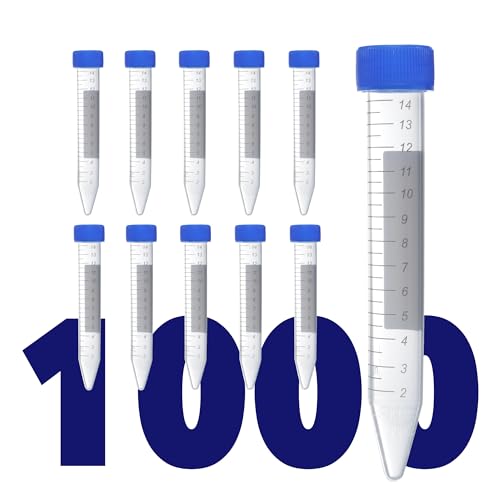
These are not vacuum blood collection tubes — they are sterile polypropylene conical centrifuge tubes intended for post-collection processing. What makes them relevant to PRP work is the high RCF rating of 12,000 x g, which far exceeds the typical 1,200–1,500 G used in PRP separation, meaning they can handle any PRP protocol without risk of failure.
The graduated markings printed on the side are precise and easy to read, and the white write-on spot allows labeling with a permanent marker for sample tracking. The screw cap seals securely enough for storage, shaking, or even autoclaving. The volume of 15 ml is generous enough to process a full PRP batch from a 10 ml blood draw plus additive.
One user reported that a few tubes exploded at 10,000 G, but that was after extended exposure to a non-polar solvent — which is an extreme edge case. For standard PRP work at normal G-forces, these tubes are over-engineered in the best way. The main consideration is that you will need to transfer your drawn blood from a collection tube into this conical tube before centrifugation.
Why it’s great
- Rated for extreme 12,000 RCF — handles any PRP spin
- Sterile, autoclavable polypropylene construction
- Clear gradations and write-on spots for labeling
Good to know
- Not a vacuum tube — requires manual sample transfer
- Some units may fail near maximum RCF rating
7. LAB FISH PRP Centrifuge Machine LC-400
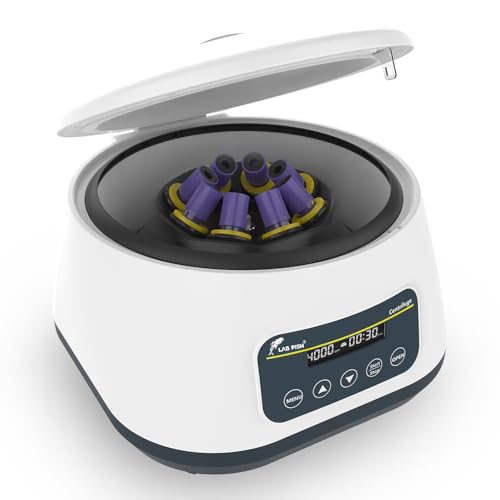
The LAB FISH LC-400 is a complete centrifuge system designed specifically for low-speed PRP separation, offering an electronic speed control range of 500–4000 RPM and a maximum relative centrifugal force of 1717 x g — perfectly calibrated for the first spin of a standard PRP protocol. The LCD digital display lets you set time increments from 30 seconds to 59 minutes with precise control.
Its fixed-angle rotor accommodates 4 × 15 ml conical tubes or 8 × 2/5/10 ml vacuum collection tubes, giving you flexibility depending on your preferred workflow. The built-in electronic lock prevents opening the lid while the rotor is moving, and an automatic shut-off triggers if vibration exceeds safe levels, which adds a layer of protection for expensive glass PRP tubes.
A key consideration: one unit arrived with plastic debris rattling inside, suggesting that quality control on initial shipping may be inconsistent. However, users who received a properly assembled unit report quiet operation, consistent separation, and excellent value compared to professional bench centrifuges that cost several times more. This is not a hospital-grade machine, but for a small clinic, mobile PRP practice, or research lab, it gets the job done.
Why it’s great
- Low-speed range optimized for PRP protocols
- Rotors accept both conical and vacuum tubes
- Electronic lock and auto shut-off for safety
Good to know
- Quality control issues reported in some units
- Plastic components may not withstand heavy daily use
FAQ
Can I use a regular red-top serum tube for PRP preparation?
Why do some PRP tubes contain gel and some do not?
How do I know if a vacuum tube has lost its vacuum?
Can I use veterinary blood collection tubes for human PRP?
What is the difference between a plain tube and a PRP tube?
Final Thoughts: The Verdict
For most users, the blood collection tubes for prp winner is the HGMED 10ml/15ml PRP Tube because it combines pre-loaded ACD-A anticoagulant, a reliable gel separator, and thick borosilicate glass in a single individually wrapped system that produces clean, consistent platelet-rich plasma after one centrifuge spin. If you want an affordable centrifuge that handles both vacuum tubes and conical tubes, grab the LAB FISH LC-400. And for sterile high-RCF processing of transferred samples, nothing beats the Kashi Scientific 15mL Conical Tube.