
Our readers keep the lights on and the weekend projects moving. As an Amazon Associate, I earn from qualifying purchases.
Securing anything to a pitted, porous cinder block surface is a different challenge than drywall or wood. The alkaline dust, irregular texture, and sheer weight of masonry projects demand an adhesive that grips deep into the pores rather than just sitting on top. Picking the wrong formula means watching your work fall in slow motion as the bond fails under load.
I’m Rikta — the founder and writer behind FitlyFast. I’ve spent years analyzing construction chemistry and comparing real-world bond-strength data across hundreds of masonry adhesives to separate formulas that merely claim adhesion from those that actually deliver it on rough block walls.
This guide ranks the top formulations for concrete block surfaces, tested against moisture, vibration, and temperature swings. Whether you’re mounting furring strips, patching spalled mortar, or anchoring heavy fixtures, here is the definitive list of the best adhesive for cinder block walls.
How To Choose The Best Adhesive For Cinder Block Walls
Not every tube in the hardware aisle works on cinder block. The block’s rough texture and alkalinity neutralize some adhesives, while others slide off vertical surfaces before they set. Focus on three factors to ensure your bond stays intact under load.
Formulation Chemistry: Epoxy Paste vs. Polymer Construction Adhesive
For cinder block, two-part epoxy pastes deliver the highest anchor strength because they chemically cure into a rigid filler that locks into microscopic pores. Single-component polymer construction adhesives (like modified silane or acrylic blends) offer easier application and better flexibility but may sag or lose grip on smooth CMU faces. Choose epoxy for structural repairs and heavy loads; choose polymer for attaching trim, furring strips, or lightweight panels.
Non-Sag and Vertical Hold Performance
A paste that runs down the wall before it grabs is useless for block work. Look for adhesives explicitly labeled “non-sag” or “vertical-grade.” These contain thixotropic additives that keep the bead in place on overhead and wall applications without dripping. For heavy items like shelf brackets or electrical boxes, the initial tack must be strong enough to hold the fixture without bracing.
Moisture and Temperature Tolerance
Cinder block walls in basements, garages, or exterior structures experience humidity, condensation, and temperature extremes. Your adhesive must resist freeze-thaw cycles and remain stable when applied to damp surfaces. Check the manufacturer’s listed service temperature range and whether the bond is waterproof after full cure. Epoxies generally handle moisture better, but some polymer formulas also include all-weather ratings for wet-block applications.
Quick Comparison
On smaller screens, swipe sideways to see the full table.
| Model | Category | Best For | Key Spec | Amazon |
|---|---|---|---|---|
| Sika AnchorFix-2 | Epoxy Anchoring | Threaded rod and heavy structural anchoring | 10.1 fl oz, two-component | Amazon |
| PC-Masonry Epoxy | Epoxy Paste | Patching and vertical masonry repairs | 8 oz, non-sag paste | Amazon |
| Liquid Nails LN903 (4‑Pack) | Polymer | Paneling and wall planks | 10 oz, Low VOC | Amazon |
| Titebond TiteGrab Plus | Polymer | Multipurpose vertical grabs | 9 oz, instant grab | Amazon |
| Gorilla Construction Adhesive (2‑Pack) | Hybrid | Gap-filling on uneven block | 7 oz, fast grab 30 sec | Amazon |
| Loctite Power Grab Crystal Clear | Polymer | Invisible bonds on visible block | 9 oz, dries clear | Amazon |
| SikaLatex R (1‑Gallon) | Liquid Admix | Mortar bonding and concrete repair | 1 gal, 500 psi bond | Amazon |
In‑Depth Reviews
1. Sika AnchorFix-2 Super Strength Anchoring Adhesive

The Sika AnchorFix-2 is the go-to when you need threaded rods, rebar, or heavy brackets anchored deep into cinder block. This two-component epoxy cures fast and achieves a rock-hard hold that meets structural-grade specifications. Its solvent-free formula also makes it safe for use near drinking water systems, a rare certification for an adhesive this strong.
Real-world users report torquing bolts to 120 ft-lbs after anchoring into concrete with no movement, which speaks directly to the load capacity required for securing machinery or stair railings onto block walls. The rapid cure time (roughly 3 minutes at room temperature) means you must work quickly, but the bond sets before the weight of the fixture can cause sagging. Clean the hole thoroughly with a brush and blow pump before injecting.
On the downside, the thick consistency demands a powered caulk gun for consistent flow, and the fast cure makes it less forgiving if you need to reposition anchors. For single-bolt installations or critical structural mounts, however, this epoxy outperforms every general construction adhesive on the list.
Why it’s great
- Solvent-free and safe for drinking-water contact
- Sets fast enough to hold without bracing
- Extremely high pull-out resistance
Good to know
- Requires a powered caulking gun
- Working time is very short
2. PC Products PC-Masonry Epoxy Adhesive Paste
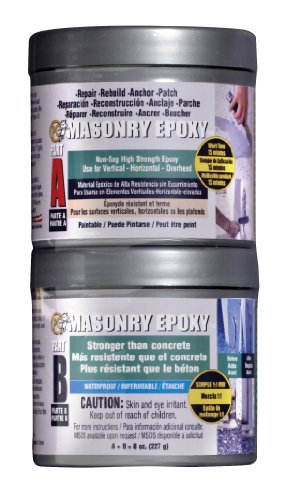
The PC-Masonry Epoxy Adhesive Paste is purpose-built for repairing spalled concrete, filling cracks, and adhering stone or brick to cinder block. Its two-part epoxy formulation creates a non-sag paste that holds its shape on vertical walls without running, making it ideal for rebuilding missing corners or setting thin pavers against a block wall.
Users note it bonds effectively even underwater when fully cured, with one reviewer reporting a patch on pool concrete that held for two months submerged. The dough-like consistency makes it easy to apply with a putty knife, and it can be smoothed with rubbing alcohol on a gloved finger for a nearly seamless finish. After full cure, the paste can be drilled, painted, or machined, so you can add hardware directly into the repair.
The main tradeoff is its stickiness during mixing — the thick paste requires some effort to blend the two parts evenly. Coverage is modest, so budget for extra material if you are patching large areas. For targeted repairs like crack filling or reattaching masonry, this epoxy delivers unmatched strength.
Why it’s great
- Holds firmly on vertical and overhead surfaces
- Moisture-resistant for damp block walls
- Can be drilled and painted after cure
Good to know
- Thick consistency makes mixing labor-intensive
- Coverage is limited per 8 oz kit
3. Liquid Nails Heavy Duty Construction Adhesive (LN903) 4‑Pack
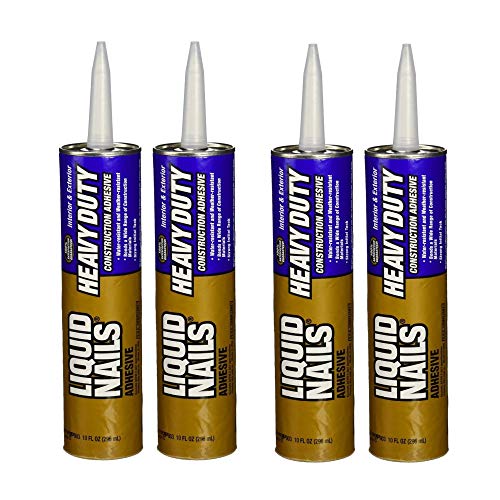
The Liquid Nails LN903 delivers a reliable, everyday bond for attaching lightweight fixtures, paneling, and wall planks to cinder block without the high cost of epoxy. Its acrylic formula offers strong adhesion to brick and masonry, and the four-pack provides enough material for multiple wall projects or a full garage.
Users have successfully used it to install 3D vinyl wall tiles and shower panels directly over block, noting that it grips well and holds fast after a 24-hour cure. The Low VOC rating makes it safer for indoor applications where ventilation is limited. For peel-and-stick wall planks, some users still needed brad nails for extra security, but the adhesive alone was sufficient for lighter materials.
The cartridge format works with standard caulk guns, and the green color may show through lighter materials if applied too thickly. For general-purpose mounting and budget-friendly coverage across large block surfaces, this set is hard to beat.
Why it’s great
- Low VOC for indoor masonry projects
- Four-pack reduces cost per tube
- Bonds well to brick and cinder block
Good to know
- Not for structural anchoring
- May require brad nails for heavy panels
4. Titebond TiteGrab Plus Construction Adhesive
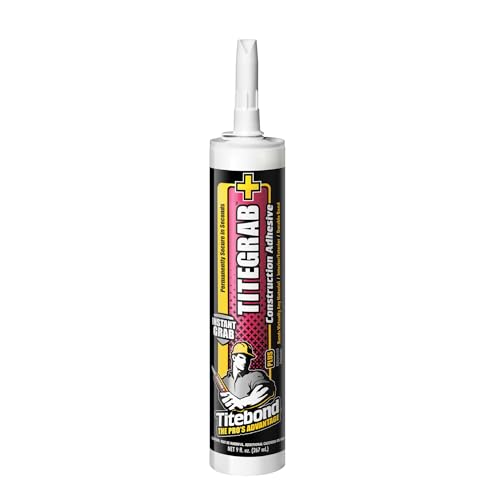
The Titebond TiteGrab Plus is a standout polymer adhesive for cinder block because it provides immediate holding power on vertical surfaces without the need for bracing or fasteners. Its creamy formula extrudes smoothly and grabs within seconds, making it an excellent choice for attaching tile backsplashes, foam board, or cement board directly onto block walls.
Users consistently praise its fast strength development — one reviewer called it the only product they use for kitchen and bath tile installations. The all-weather formula resists moisture and won’t become brittle in cold temperatures, so it works in garages and basements. While it bonds to most materials, the instant grab leaves little margin for repositioning after contact, so careful placement is essential.
The adhesive struggles somewhat with completely smooth, non-porous surfaces, but cinder block’s rough texture actually plays in its favor. For a versatile, all-purpose construction adhesive that holds tight on rough block from the moment you apply it, this is a top contender.
Why it’s great
- Instant grab reduces need for bracing
- Waterproof and all-weather rated
- Good for tile and panel mounting
Good to know
- Little working time for repositioning
- Does not bond well to smooth surfaces
5. Gorilla Heavy Duty Construction Adhesive (2‑Pack)
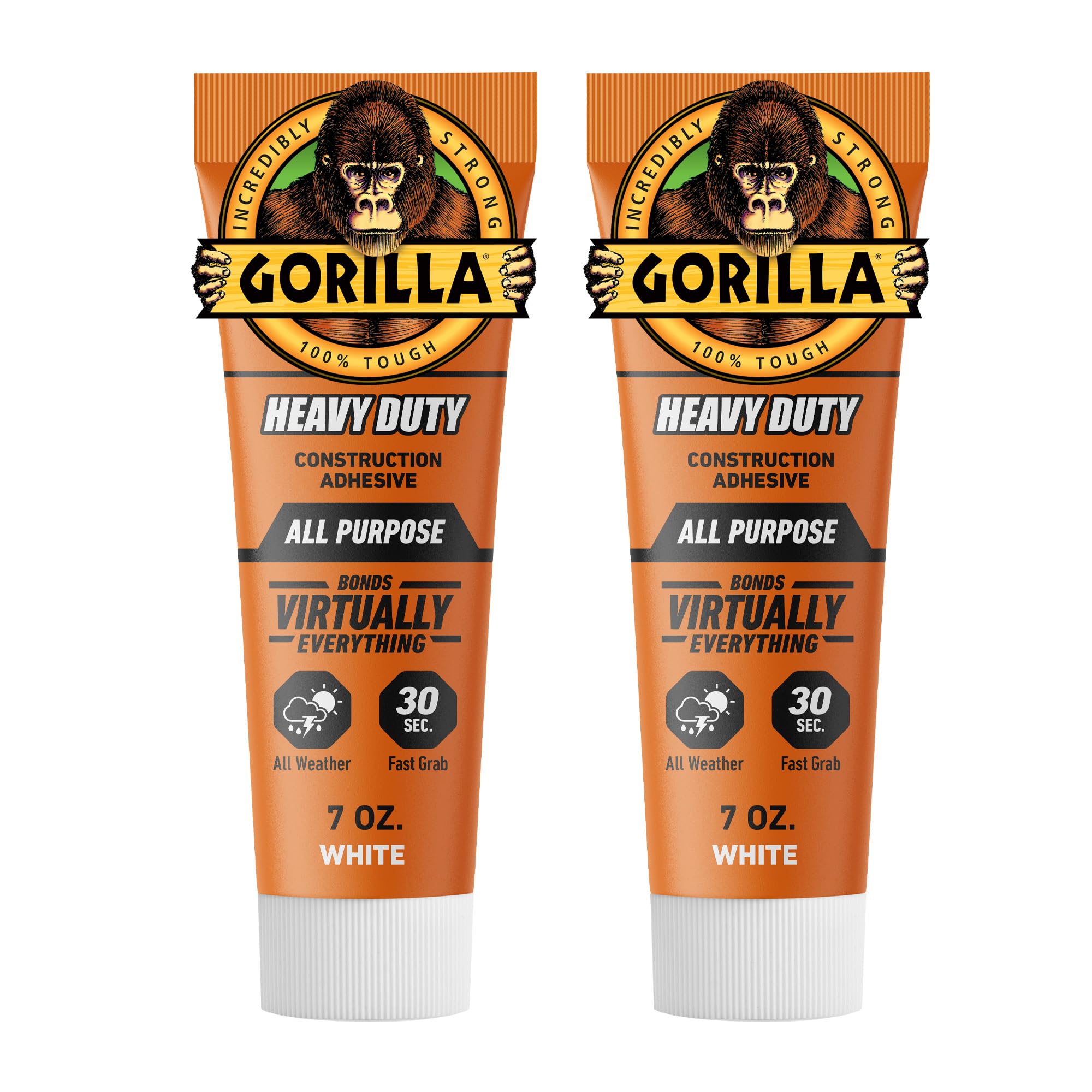
Gorilla’s Heavy Duty Construction Adhesive fills gaps and grabs fast — two traits that matter when bonding uneven materials to cinder block. Its hybrid formula cures to a waterproof, paintable finish that works on masonry, brick, and concrete. The squeeze tube format is convenient for small jobs without needing a caulk gun.
The adhesive claims a 30-second grab time, allowing you to attach trim or baseboards against a block wall without waiting. It is also gap-filling, so it compensates for the irregular pockets common on old or rough block surfaces. Some users found that on very smooth or sealed block, the hold was weaker than expected, and the white paste can be visible if it squeezes out from behind the material.
Coverage is lower than cartridge-based adhesives because the thick paste requires more material per inch of bead. For small repairs, mounting electrical boxes, or filling gaps between block and wood, this glue offers good utility in a user-friendly format.
Why it’s great
- Fills gaps between block and fixture
- Waterproof and paintable
- Quick grab reduces bracing time
Good to know
- Lower coverage per tube
- White color may show on dark block
6. Loctite Power Grab Ultimate Crystal Clear Construction Adhesive
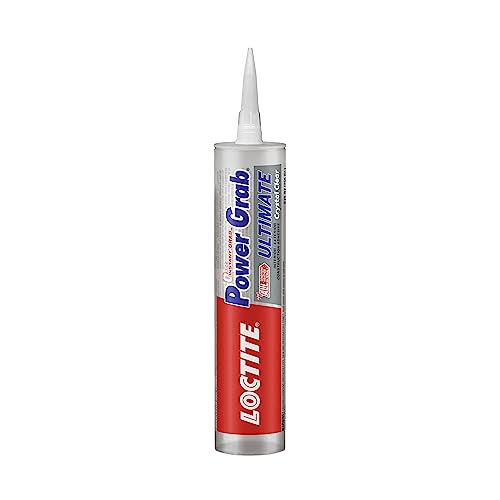
When the bond line will be visible, the Loctite Power Grab Crystal Clear provides an invisible solution that cures transparent without a yellow tint. It bonds wood, tile, metal, and plastic to cinder block with a weatherproof hold that resists temperatures from 0°F to 140°F, making it suitable for exterior block walls and uninsulated garages.
Users have used it to attach stainless steel backsplashes and decorative ceiling tiles, noting that the adhesive is low-odor and dries to a rubbery consistency that absorbs minor vibrations. The quick initial tack reduces the need for bracing, though the bond remains slightly flexible even after full cure, which can be a limitation for heavy static loads.
In freezing temperatures, the cure time extends significantly — one reviewer reported it remaining tacky after 24 hours in exterior conditions. For interior block walls or climate-controlled spaces where clarity matters, this is the best choice for a clean, invisible finish.
Why it’s great
- Dries completely transparent
- Low odor for indoor use
- Works on non-porous surfaces
Good to know
- Cure slows significantly in cold weather
- Remains slightly rubbery, not rigid
7. SikaLatex R Concrete Adhesive Glue

The SikaLatex R takes a different approach: rather than a direct bonding adhesive, it is a liquid latex admix that you add to Portland-cement mortar or concrete to dramatically increase adhesion and tensile strength. It is designed for bonding new concrete to old block, repairing spalled surfaces, and creating a denser, tougher patch that resists freeze-thaw damage.
Users report using it mixed with concrete to replace bricks and for attaching ceramic fixtures with quickset mortar, noting bonds that held for years. The acrylic-polymer formulation delivers a 500 psi bond strength when fully cured (up to 30 days for complete cure). It also serves as an acrylic primer for grout and prevents the vapor barrier issues that can plague direct-bond adhesives.
This product is not a squeeze-tube adhesive — it requires mixing with cement or mortar, so it is best suited for large-scale repairs, tuckpointing, or relaying masonry. The 1-gallon size provides substantial coverage, but the long full-cure time demands patience. For structural repairs where the adhesive becomes part of the masonry itself, this is the correct tool.
Why it’s great
- Greatly improves mortar adhesion to block
- 500 psi bond strength
- Resists freeze-thaw cycling
Good to know
- Requires mixing with cement or mortar
- Full cure takes up to 30 days
FAQ
Can I use standard construction adhesive on damp cinder block?
What is the strongest type of adhesive for cinder block walls?
How do I prepare cinder block before applying adhesive for the best bond?
Final Thoughts: The Verdict
For most users, the best adhesive for cinder block walls winner is the Sika AnchorFix-2 because it combines professional-grade anchoring strength with a solvent-free, fast-curing formula that handles structural loads on rough block. If you want a budget-friendly all-rounder for lightweight wall panels and trim, grab the Liquid Nails LN903 4‑Pack. And for patching spalled mortar or rebuilding missing corners where the adhesive becomes part of the wall, nothing beats the PC-Masonry Epoxy Paste.