
Our readers keep the lights on and the weekend projects moving. As an Amazon Associate, I earn from qualifying purchases.
A wobbly surface is the silent killer of a perfect first layer. For anyone running a 3D printer, the difference between a clean benchy and a spaghetti mess often comes down to the table beneath the machine. Standard desks flex under the rapid back-and-forth motion of the print head, introducing micro-vibrations that ruin dimensional accuracy. A purpose-built 3D printer table eliminates this variable, giving you a rock-solid foundation specifically designed to dampen vibration, organize filament, and keep your tools within arm’s reach.
I’m Rikta — the founder and writer behind FitlyFast. I’ve spent years analyzing hardware specifications for maker spaces and understand exactly which stability features separate a budget cart from a reliable workstation.
After digging through the structural specs, customer feedback, and real-world usage reports, this guide zeroes in on what actually matters when you’re shopping for the best 3d printer table for your workshop, office, or garage setup.
How To Choose The Best 3D Printer Table
A 3D printer table is not a generic side desk. The wrong choice introduces ghosting and layer shifts. These four factors separate a stable workstation from a vibration-prone shelf.
Frame Construction and Reinforcement
The frame material — usually steel tubing — determines stiffness. Look for X-bracing or a rear crossbar. Thicker steel (0.98 inch square tube versus the common 0.78 inch) resists torsional flex when the printer accelerates on the Y-axis. Tables without rear bracing rely entirely on shelf screws to resist racking, which loosens over time.
Vibration Isolation and Leveling
Fixed casters often allow subtle rolling on smooth floors. Adjustable leveling feet with rubber pads are superior because they transfer load directly to the floor and cancel small height differences on garage concrete or uneven basement slabs. Some premium tables also use X-bracket reinforcement to reduce resonance during high-speed coreXY movement.
Integrated Filament Storage Design
A table with dedicated filament rods or spool racks prevents you from stacking heavy spools on the printer frame, which throws off the center of gravity. The best designs have a top shelf for spools feeding directly into the extruder and a lower tier for bulk storage. Rod spacing and clear height matter — 1kg spools need roughly 8 inches of vertical clearance per row.
Workspace and Power Integration
Drawers for tools, built-in power strips with USB ports, and cable routing ports save you from buying separate accessories. A table with a rear grommet or cutout for the AMS/CFS cable keeps the setup clean. Confirm the table depth accommodates your printer’s bed sweep — a Bambu Lab X1C needs at least 16 inches of depth, while a Creality K2 Plus demands closer to 20 inches.
Quick Comparison
On smaller screens, swipe sideways to see the full table.
| Model | Category | Best For | Key Spec | Amazon |
|---|---|---|---|---|
| Albott 96×24 Workbench | Workbench | Ultimate stability | 6,000 lb capacity, 1.2″ rubberwood top | Amazon |
| BIQU Panda Station | Enclosed Cabinet | Bambu Lab printers | Sealed cabinet with hygrometer | Amazon |
| ARTINRACK TR44 Dual | Dual Workstation | Multi-printer farms | 47″W dual station, 580 lb capacity | Amazon |
| Anrigeail 3D Printer Stand | All-in-One | Stable mid-size setup | X-bracket reinforced frame, 39″L top | Amazon |
| AHOWPD (Power Strip Model) | Compact Station | Two printers side-by-side | Built-in 2 AC + 2 USB outlets | Amazon |
| METYERRY Large Printer Stand | Square Cart | Heavy large-format printers | 200 lb per shelf, steel tube reinforcement | Amazon |
| Fannova Printer Stand | Square Cart | Large Bambu H-Series | 23.6″ square top, industrial casters | Amazon |
| AHOWPD 3D Printer Stand | Tall Rack | High-volume filament storage | 29.2″W x 59″H, holds 60+ spools | Amazon |
| EasyCom Printer Stand | Rolling Cart | Budget-friendly office use | 5 adjustable heights, drawer basket | Amazon |
In‑Depth Reviews
1. Albott 96×24 in Adjustable Workbench
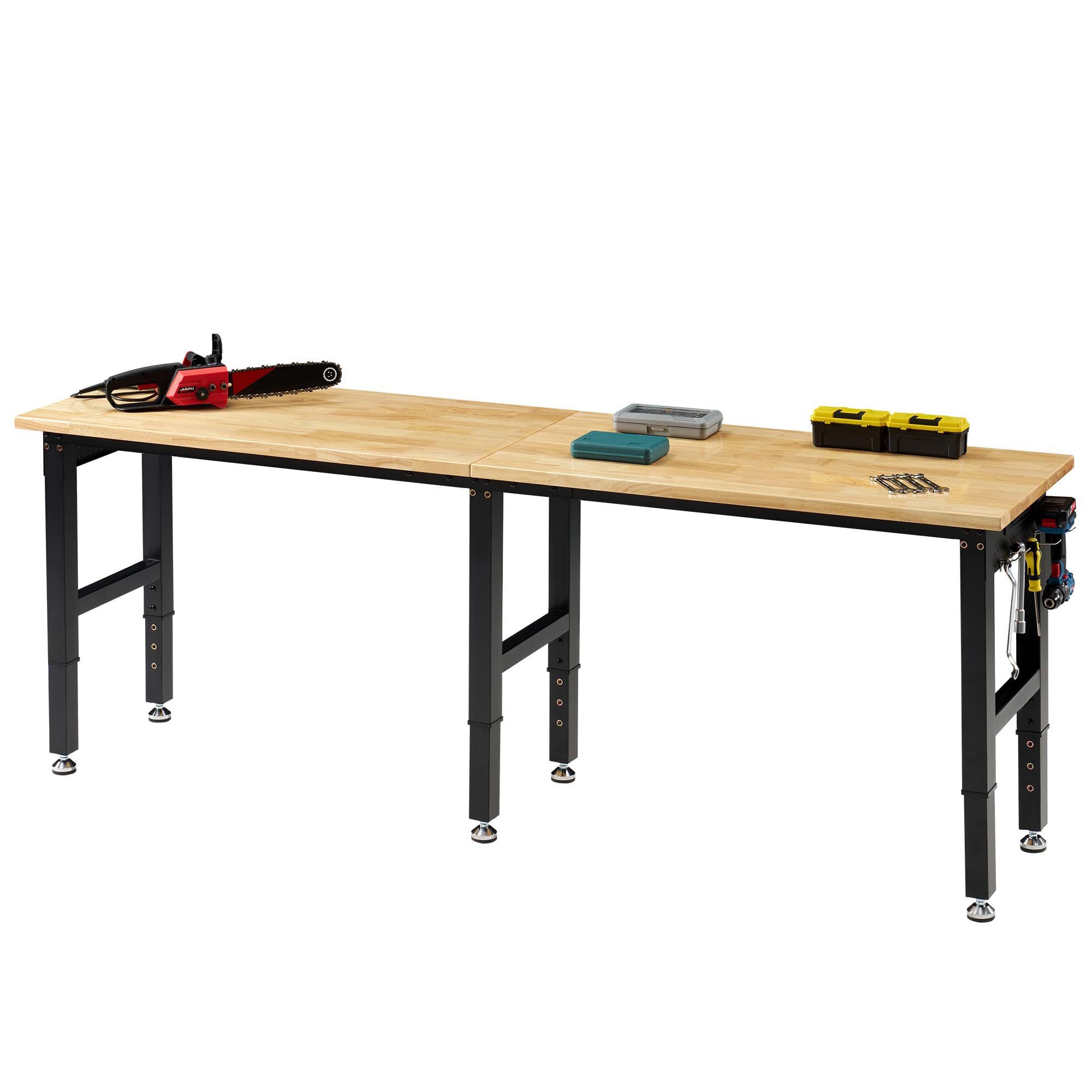
This is not a printer table — it is a proper workbench that happens to be the most vibration-resistant platform you can put a 3D printer on. The 1.2-inch thick rubberwood top absorbs resonance that thin particle board transmits directly into the print. With a 6,000-pound load capacity, the steel frame does not deflect under the weight of a heavy resin printer or a large-format FDM machine. The adjustable height range from 29 to 35 inches lets you dial in an ergonomic standing or seated position.
The ETL-certified power strip with 4 AC outlets and 2 USB ports mounts cleanly to the underside, keeping cables off the work surface. Four hooks on the hole plate offer immediate access to pliers, spatulas, and flush cutters. Assembly requires a hex wrench, but buyers consistently note the milled brass bolt receivers and clear instructions make the build straightforward. The 96-inch width gives you room for a printer, a drying chamber, and a laptop dock side-by-side without crowding.
Customer feedback highlights that the rear crossbar should be installed at the back for drawer clearance underneath. A few users note that the legs mount into the soft rubberwood with short screws, so overtightening can strip the holes. For pure overbuilt stability, this bench sets the standard.
Why it’s great
- Massively overbuilt steel frame eliminates vibration entirely.
- Thick solid rubberwood surface dampens high-frequency resonance.
- Integrated power outlets and tool hooks add convenience.
- Height-adjustable legs accommodate various ergonomic needs.
Good to know
- Leg mounting points use short screws into wood, requiring care not to strip.
- No built-in filament storage — you will need separate shelves.
- Large footprint demands dedicated floor space.
2. BIQU Panda Station
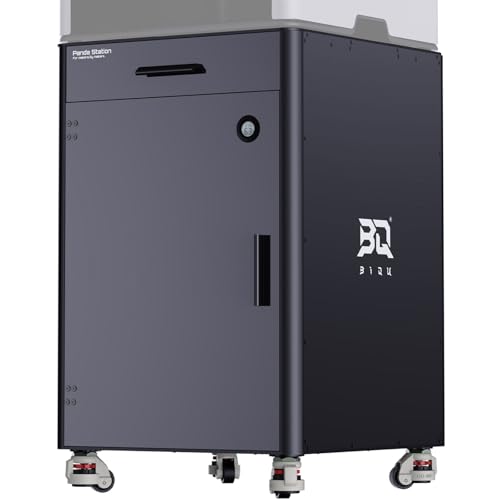
BIQU designed the Panda Station specifically around Bambu Lab printers, and it shows. The dual-layer pull-out drawers hold two AMS units or up to 20 filament spools in a sealed environment. The integrated hygrometer lets you monitor the internal humidity — a critical feature for hygroscopic materials like nylon and PETG. The top drawer is sized for tools and spare parts, and you can print custom dividers to organize nozzles, wrenches, and screws.
The aluminum and steel construction is heavy — over 70 pounds — which naturally dampens vibration. Lockable 360-degree rotating wheels let you roll the entire workstation out for maintenance and lock it down for printing. Rubber feet drop down with a twist to transfer weight off the wheels, ensuring no movement during a 12-hour print. Pre-routed ports with rubber grommets keep AMS cables tidy and dust-free.
Buyers mention that the spool holder is not included despite advertising mentions. The top clearance is also tight if you plan to mount an enclosure like the Panda Den on top. For dedicated Bambu Lab users who want a compact, sealed storage solution, this cabinet is hard to beat.
Why it’s great
- Sealed cabinet with hygrometer protects filament from moisture.
- Heavy steel and aluminum frame provides natural vibration damping.
- Dual pull-out drawers fit two AMS units or 20 spools.
- Locking casters and drop-down rubber feet ensure rock-solid stability.
Good to know
- Spool holder not included — must source separately.
- Top clearance may limit stacking enclosures.
- Premium price point aimed at Bambu Lab ecosystem users.
3. ARTINRACK TR44 Dual Workstation
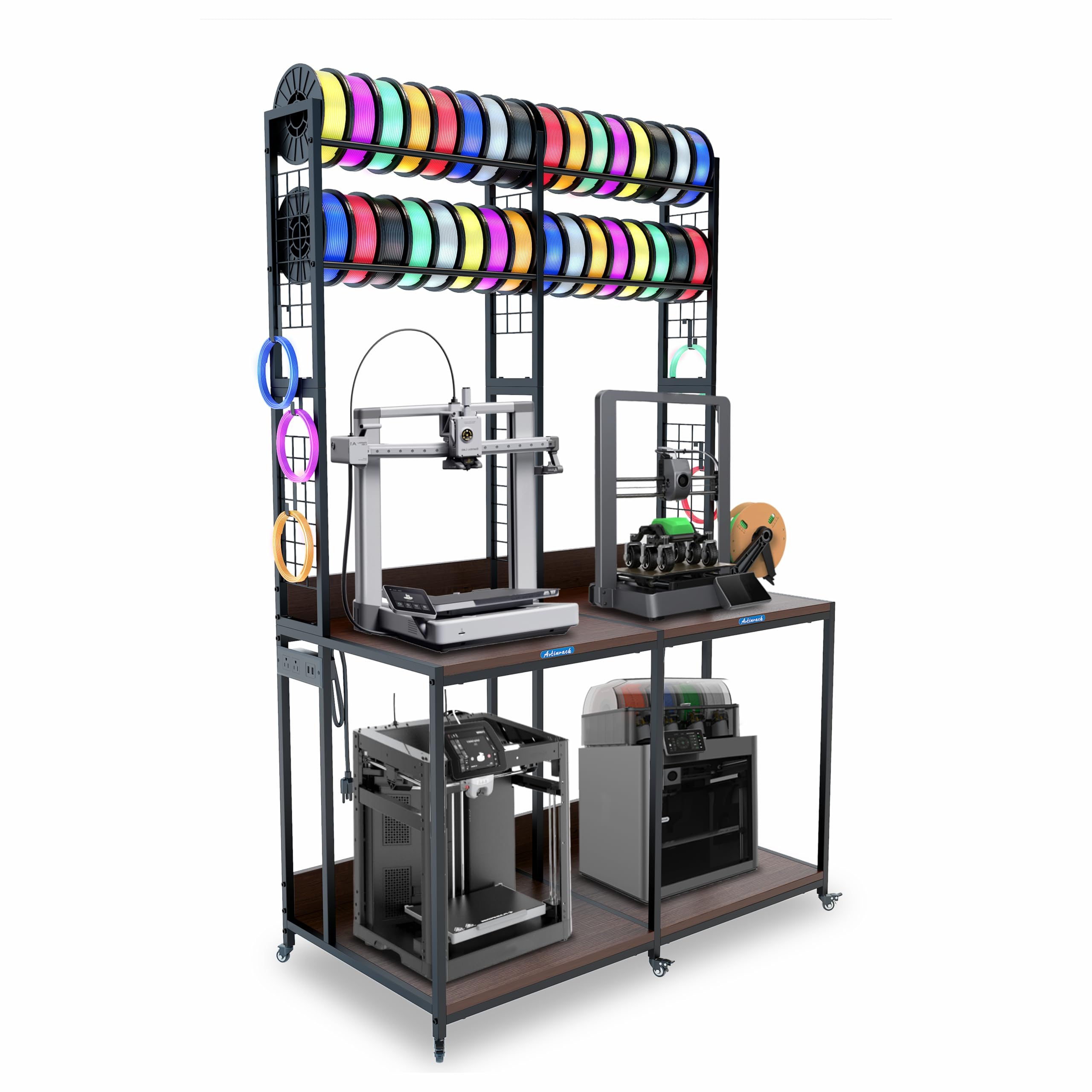
Designed for the multi-printer shop, the TR44 connects two workbenches side-by-side into a 47-inch wide continuous surface. The dual-station layout accommodates a Creality K2 Plus with a CFS unit and a second FDM or resin printer without overlap. Each station has 3 AC outlets and 2 USB ports — 6 AC and 4 USB total — enough to power two printers, a filament dryer, and a laptop without daisy-chaining power strips.
The steel frame uses thick wood panels rated for 580 pounds distributed across both stations. All six heavy-duty casters lock simultaneously, preventing creep during high-speed printing. But the standout feature is the versatility: you can run it as a single wide desk or later expand by adding another TR44 section. The 47-by-24-inch surface also leaves room for a poop chute and CFS filament rail, though users with the massive H2D report interference with the upper rack.
A common quality complaint involves power bricks arriving damaged in shipping. Amazon only offers full exchange rather than replacement parts, so inspect immediately upon arrival. The TR44 is a legitimate farm-grade solution for anyone running multiple printers in a single room.
Why it’s great
- Dual-station design supports multi-printer workflows on one surface.
- Ten total power ports eliminate the need for additional strips.
- Heavy-duty casters lock all six wheels at once.
- Modular layout allows future expansion with additional sections.
Good to know
- Power bricks vulnerable to shipping damage; only full exchange available.
- May not fit very large printers with side spool attachments.
- Assembly instructions can be confusing regarding hole alignment.
4. Anrigeail 3D Printer Stand with Filament Storage
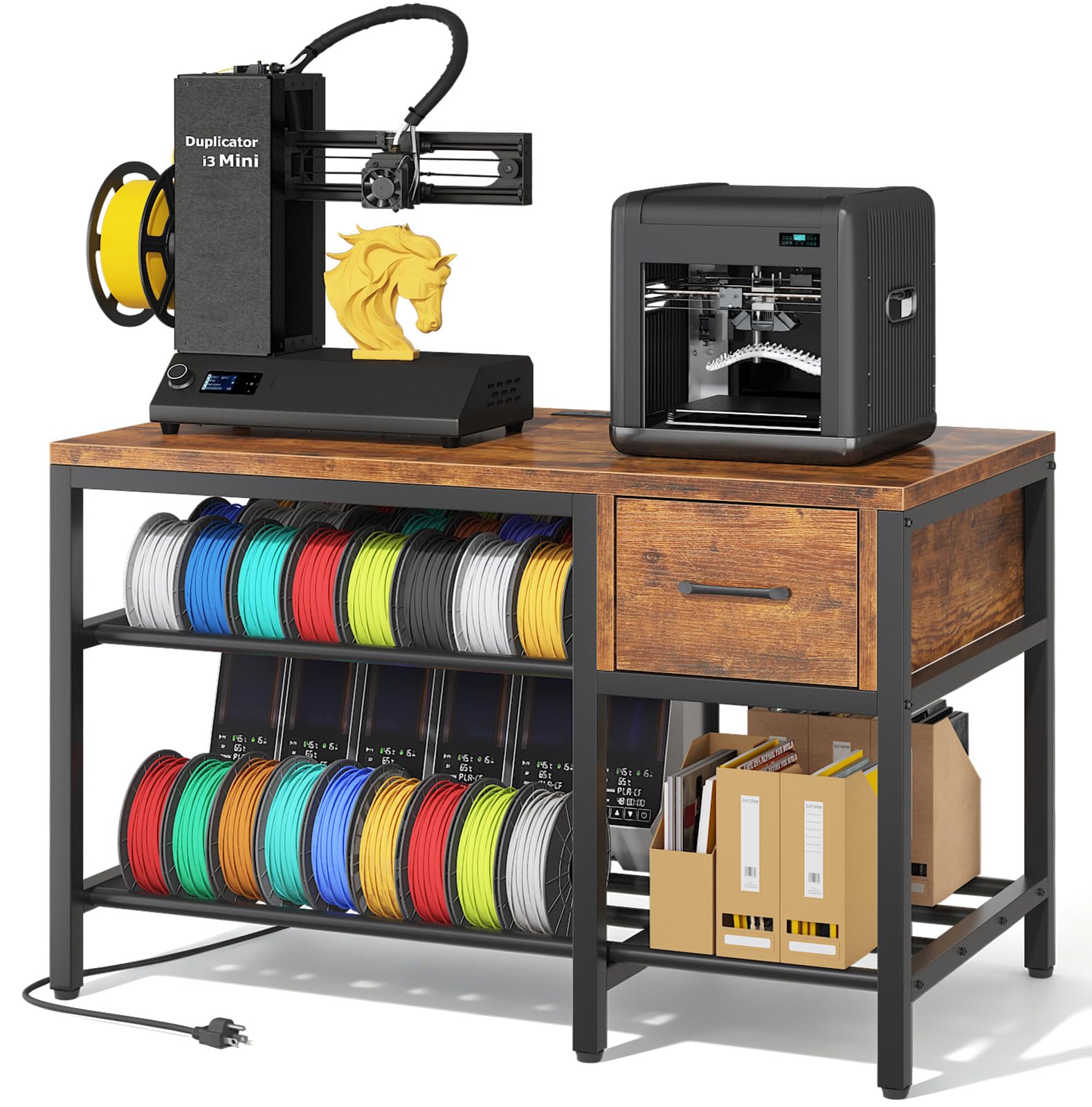
This stand strikes the best balance of stability, storage, and price for a single-printer workshop. The steel frame uses X-shaped bracket reinforcement on the rear — a structural upgrade that many tables in this price bracket omit — reducing vibration by a claimed 40% compared to standard L-bracket designs. Owners report no visible ghosting on Elegoo Centauri Carbon prints after input shaping calibration, which is a strong real-world endorsement.
The 39-by-24-inch top fits a Bambu Lab A1 Combo with room for the AMS Lite on the side. Below, the filament storage rows hold over 40 spools, and the included wooden drawer swallows tools, nozzles, and spare parts. The built-in power hub with 2 AC outlets and 2 USB ports has a long cord that reaches inconvenient outlets. Assembly is roughly 30 minutes, though several buyers note the rod threads strip easily if overtightened with a power drill.
Instructions remain the weak point — several users installed a part backward due to missing hole alignment cues. Once assembled, the stand feels solid and does not rock even on a slightly uneven garage floor thanks to adjustable leveling feet. For most mid-size 3D printers, this is the best one-stop solution.
Why it’s great
- X-bracket rear reinforcement significantly reduces print artifacts.
- Spacious top fits mid-size printers with AMS/CFS units.
- Ample storage for 40+ spools plus a dedicated tool drawer.
- Built-in power hub eliminates extra cable management.
Good to know
- Assembly instructions are unclear and require careful attention to photos.
- Rod threads prone to stripping if overtightened.
- Finish is laminated wood rather than solid, though durable.
5. AHOWPD 3D Printer Table (Power Strip Model)
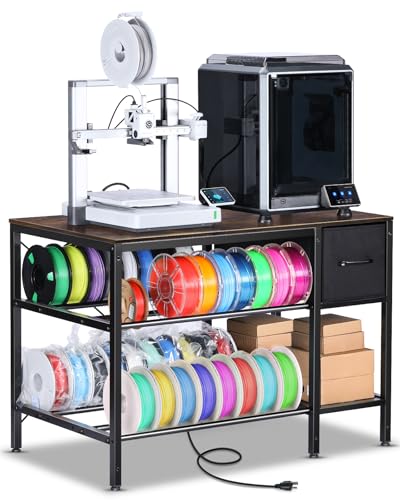
AHOWPD’s second entry adds a built-in power strip with 2 AC outlets and 2 USB ports directly into the tabletop, keeping the printer, Filament dryer, and phone plugged in without running extension cords across the room. The 39.4-inch length is wide enough for two smaller printers side by side — one reviewer fits a Prusa CORE One with spare room. The metal tube racks on the middle and bottom shelves organize filament spools, and the fabric drawers hold small parts.
Assembly takes about 30 minutes, but the included Allen wrench is cheap and strips quickly; keep a good hex set handy. A few buyers report missing screws in their kit, though the manufacturer responds within 24 hours per customer feedback. The brown metal frame and rustic wood finish look passable in a home office, not just a garage.
The standout complaint is a slight wobble on the assembled unit, which is normal for a bolted-together desk of this price. Leveling feet would help, but this model uses fixed pads. For the price, the integrated power outlets and dual-printer capacity make it a strong value play.
Why it’s great
- Integrated power strip with USB keeps cables organized.
- Wide enough for two printers or a printer plus drying station.
- Fabric drawers provide handy small parts storage.
Good to know
- Some wobble reported due to lack of leveling feet.
- Allen wrench strips during assembly; use a separate hex driver.
- Missing screws in some kits require contacting support.
6. METYERRY Large Printer Stand
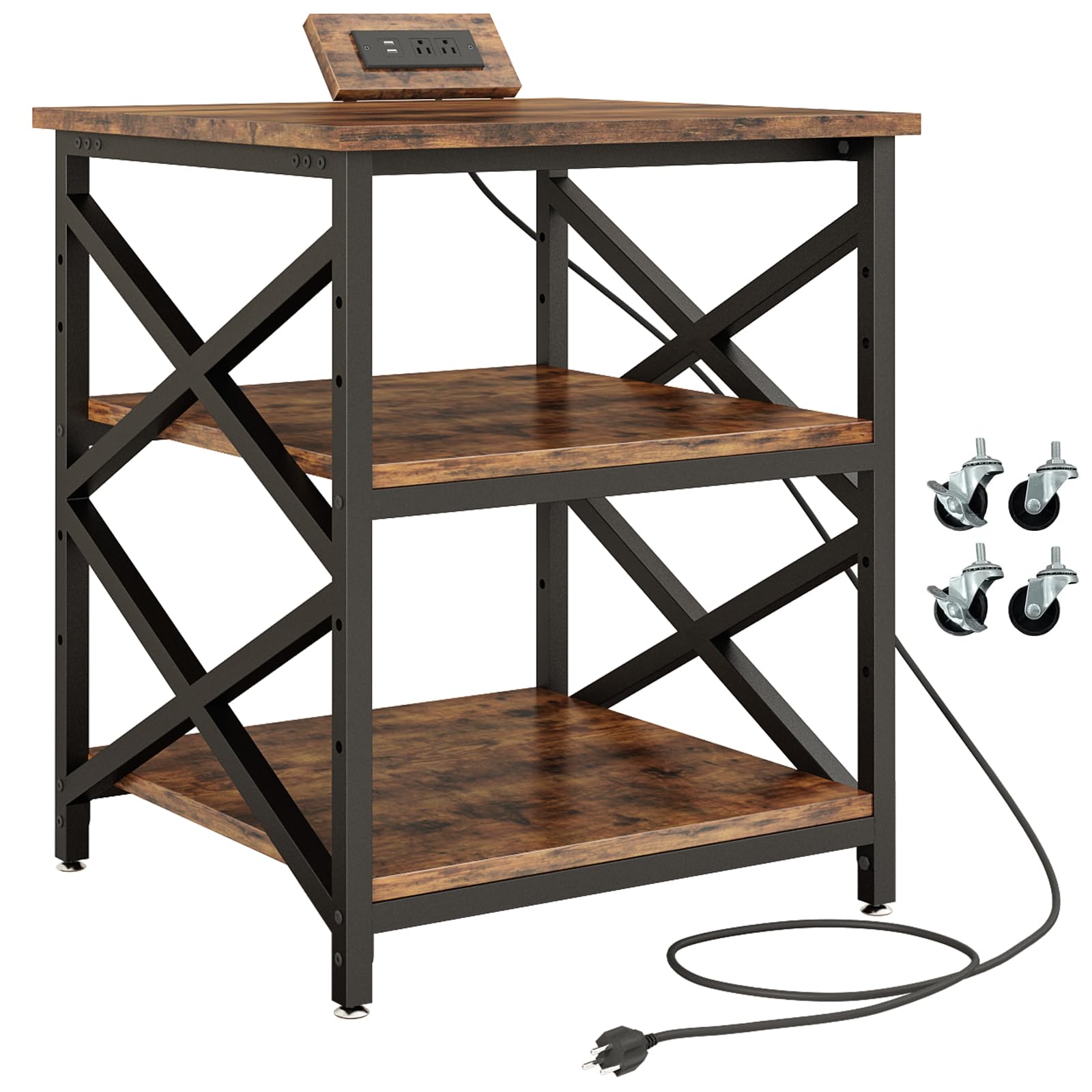
The METYERRY stand brings industrial-grade specs to the rolling cart form factor. Each of the three shelves is rated for 200 pounds — including the top — which is twice the capacity of most competitors at this size. The 23.6-inch square top provides a stable footprint for a Creality K2 Plus or other heavy large-format printer. Steel tube reinforcement underneath each shelf prevents sagging over years of use.
The built-in power station includes 2 AC outlets and 2 USB ports, and the middle shelf is removable with five height-adjustment levels. This flexibility lets you slide a resin printer or a filament dryer underneath. The industrial-grade casters roll smoothly even fully loaded, and two of the four wheels lock. For stationary setups, the included foot pads replace the wheels entirely and can be fine-tuned to prevent wobble on uneven surfaces.
Buyers note that the casters are too small for padded carpet — they may snap their bolts if forced across thick pile. On hard floors or low-pile commercial carpet, the cart glides well. Assembly is straightforward, with clear instructions and numbered parts. If you need a mobile solution for a heavy printer, this is the best option.
Why it’s great
- 200 lb capacity on every shelf, not just the top.
- Height-adjustable middle shelf accommodates taller accessories.
- Industrial casters handle loaded weight on hard floors.
- Foot pad option replaces wheels for stationary stability.
Good to know
- Casters too small for thick padded carpet — risk of snapping bolts.
- Square top may feel narrow for printers with side-mounted AMS units.
- Particle board shelves are not moisture-resistant without sealing.
7. Fannova Printer Stand
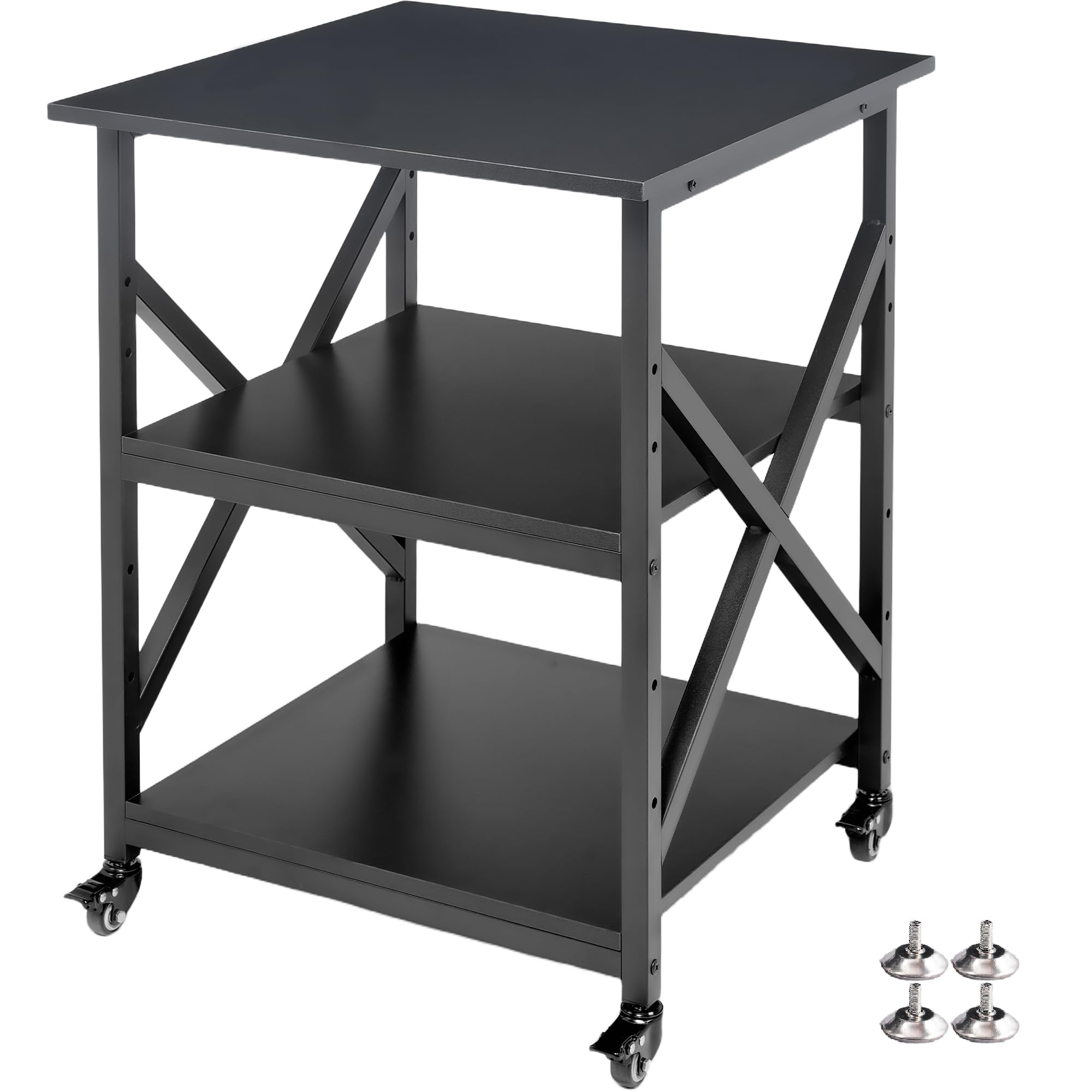
The Fannova stand uses a thicker 0.98-inch square steel tube frame — noticeably beefier than the 0.78-inch standard found on many other rolling carts. The result is a stable platform that handles a Bambu Lab H-Series printer without perceptible wobble during high-speed calibration passes. The 23.6-inch square top supports 150 pounds, while the two 20-inch square lower shelves each hold 100 pounds.
Customer feedback consistently praises the assembly experience: threaded crosspieces eliminate the need for loose nuts and bolts, numbered parts align cleanly, and the manufacturer includes spare screws for every type. The industrial-grade casters roll smoothly on most surfaces, with all four lockable. Like the METYERRY, foot pads are included for stationary use and can be adjusted to level the table on uneven floors.
One subtle advantage is the square geometry — this is one of the few stands that is the same width and depth, providing a perfectly balanced center of gravity for a large printer. The main drawback is that the particle board surface is not sealed against moisture, so filament spills or condensation need to be wiped immediately to avoid swelling.
Why it’s great
- Thicker steel frame resists torsion better than standard carts.
- Square footprint provides balanced weight distribution.
- Excellent assembly experience with threaded components and spare parts.
- Lockable casters plus adjustable foot pads for dual-use versatility.
Good to know
- Particle board surface prone to swelling if wet — seal it yourself.
- Does not include power outlets or USB ports.
- Middle shelf removal reduces stability without included metal bars.
8. AHOWPD 3D Printer Stand (Tall Rack)
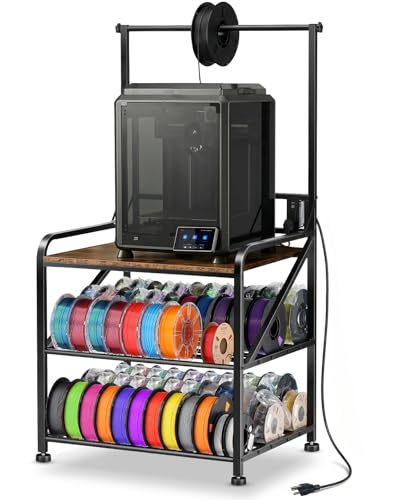
If your main pain point is filament hoarding, this 59-inch tall rack solves it. The bottom two layers handle 500g and 1kg spools, while the top shelf accommodates up to 10 spools feeding directly into the printer. Total capacity is 60+ spools, which is more than most hobbyists will ever accumulate. The 0.78-inch thick metal frame with a solid wood top supports up to 300 pounds.
The top surface is 27.5 by 23 inches — large enough for an enclosed Bambu Lab X1C or Snapmaker U1. Heavy-duty adjustable leveling feet ensure the rack sits flat on any surface, and the lack of wheels means zero rolling vibration during prints. Assembly takes under 15 minutes thanks to pre-assembled side panels.
Buyers note that the filament rod works well but can induce printer shake without Loctite on the frame bolts. A few welds are tack welds rather than full beads, but they hold adequately for the weight. The catch: at 59 inches tall, it will not fit under low workshop shelves or in a standard closet. Measure your vertical clearance before ordering.
Why it’s great
- Massive 60+ spool capacity for serious filament collections.
- Leveling feet provide wobble-free stability on uneven floors.
- Quick assembly with pre-assembled side panels.
- Solid wood top resists oil and solvents better than particle board.
Good to know
- Tall profile requires overhead clearance — does not fit under low shelves.
- Frame bolts may loosen over time without thread-locking compound.
- Tack welds are adequate but not as strong as full beads.
9. EasyCom Printer Stand
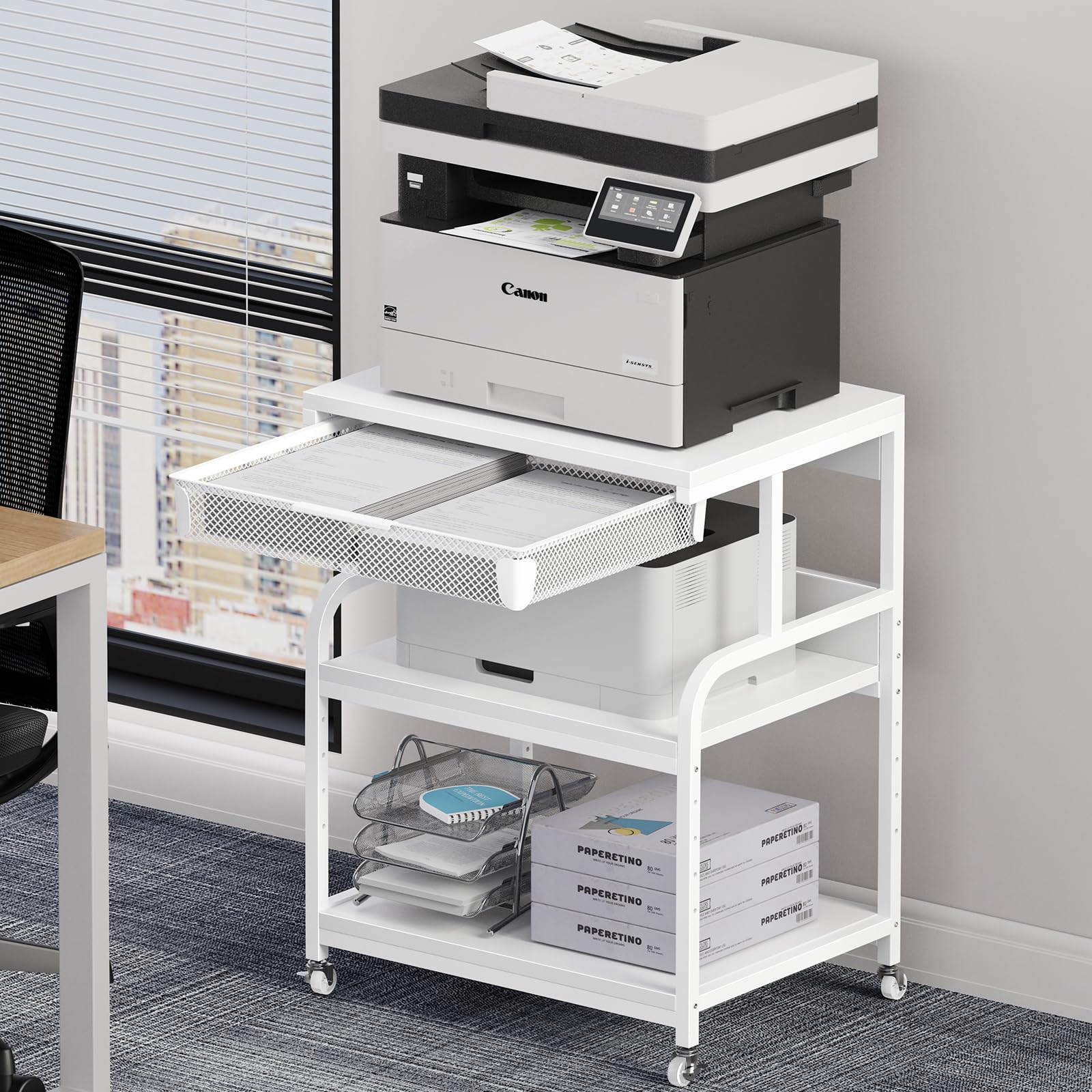
The EasyCom stand serves an entirely different buyer — someone who needs a printer table for an office and occasionally uses it for a 3D printer. The 23.6 x 18.9 inch desktop is not as wide as dedicated 3D printer tables, but it fits most small-format machines like an Ender 3 or Bambu Lab A1 Mini. Five adjustable height levels let you fine-tune shelf spacing, and the drawer basket holds ink cartridges, paper, or small tools.
The metal frame supports a reasonable load, and the three-tier design makes good use of vertical space. Assembly is manageable in 20 minutes, though two people make it easier — the frame tends to rack before all screws are tightened. The wire drawer basket is more practical for office supplies than for heavy 3D printer parts.
At this price point, the particle board surface is the main compromise — it is not designed to withstand repeated solvent spills or heavy weight over time. The stand also lacks leveling feet and power outlets. For a budget office printer table that can moonlight as a 3D printer stand, it gets the job done.
Why it’s great
- Affordable price point for entry-level setups.
- Five height adjustments offer flexible shelf spacing.
- Drawer basket keeps small supplies organized.
- Wheels or feet option allows mobile or stationary use.
Good to know
- Desktop size is tight for most mid-size 3D printers.
- No leveling feet or built-in power outlets.
- Particle board surface is not moisture-resistant.
FAQ
Can I use a standard office desk for my 3D printer?
What table size do I need for a Bambu Lab X1C?
Do wheels affect print quality on a 3D printer table?
What is the ideal height for a 3D printer workstation?
Final Thoughts: The Verdict
For most users, the 3d printer table winner is the Anrigeail 3D Printer Stand with Filament Storage because it combines X-bracket vibration control, spacious filament storage, and a built-in power hub at a price that undercuts premium competitors. If you want absolute overbuilt stability and have the floor space, grab the Albott 96×24 Workbench. And for a compact sealed solution designed around the Bambu Lab ecosystem, nothing beats the BIQU Panda Station.