
Our readers keep the lights on and the weekend projects moving. As an Amazon Associate, I earn from qualifying purchases.
Bougainvillea are notorious for being lush, green, and stubbornly bloom-free, often frustrating gardeners who expect a riot of color from these sun-loving plants. The secret to forcing those vibrant bracts isn’t more nitrogen — it’s a calculated shift in phosphorus and micronutrient balance that most all-purpose fertilizers simply don’t provide.
I’m Rikta — the founder and writer behind FitlyFast. I’ve spent years analyzing fertilizer chemistry and comparing bloom-booster formulations to understand exactly which nutrient ratios push bougainvillea into their flowering cycle.
After sorting through dozens of options, I’ve built a shortlist of the top performers. Use this guide to find the right bougainvillea fertilizer for your garden and finally get the color display you’ve been waiting for.
How To Choose The Best Bougainvillea Fertilizer
The right fertilizer for bougainvillea is less about general plant food and more about a specific nutrient push that tells the vine to stop producing leaves and start producing flower bracts. Understanding a few key concepts makes the choice much simpler.
Prioritize the Middle Number (Phosphorus)
Bougainvillea are heavy feeders that respond to phosphorus. The N-P-K ratio on any fertilizer bag lists nitrogen, phosphorus, and potassium in that order. A product with a high middle number — like 10-30-20 or 0-46-0 — delivers the phosphorus punch that drives bloom initiation. Low phosphorus formulas will only give you green growth.
Choose Between Soluble and Granular Forms
Water-soluble powders and liquids act fast, delivering nutrients directly to the root zone within hours — ideal for container plants you can water on a schedule. Granular fertilizers release more slowly, feeding the soil over weeks. Bougainvillea in ground often respond well to a controlled-release granular, while potted vines benefit from the precision of a soluble feed.
Watch for Iron and Micronutrient Content
Bougainvillea are prone to iron chlorosis, especially in alkaline soils or when grown in pots with regular tap water. A fertilizer that includes chelated iron, magnesium, or a full micronutrient suite prevents yellowing leaves and keeps the vine photosynthesizing efficiently, which in turn supports more abundant flowering.
Quick Comparison
On smaller screens, swipe sideways to see the full table.
| Model | Category | Best For | Key Spec | Amazon |
|---|---|---|---|---|
| Jack’s Classic 10-30-20 | Soluble Powder | Best Overall | 10-30-20 N-P-K | Amazon |
| Espoma Triple Phosphate 0-45-0 | Granular | High-phosphorus soil fix | 0-45-0 N-P-K, 6.5 lbs | Amazon |
| Carl Pool BR-61 9-58-8 | Soluble Powder | Extreme bloom push | 9-58-8 N-P-K | Amazon |
| Cz Garden Triple Super Phosphate 0-46-0 | Granular | Phosphorus-only supplement | 0-46-0 N-P-K, 5 lb bag | Amazon |
| Gaia Green 2-8-4 Power Bloom | Organic Powder | Organic soil health | 2-8-4 N-P-K, soil microbes | Amazon |
| Miracle-Gro LiquaFeed Bloom Booster | Liquid | Easy liquid feeding | Liquid, 64 oz total | Amazon |
| Fertilome Hi Yield Super Phosphate | Granular | Budget-friendly supplement | 0-18-0 N-P-K, 4 lbs | Amazon |
In‑Depth Reviews
1. Jack’s Classic 10-30-20 Blossom Booster
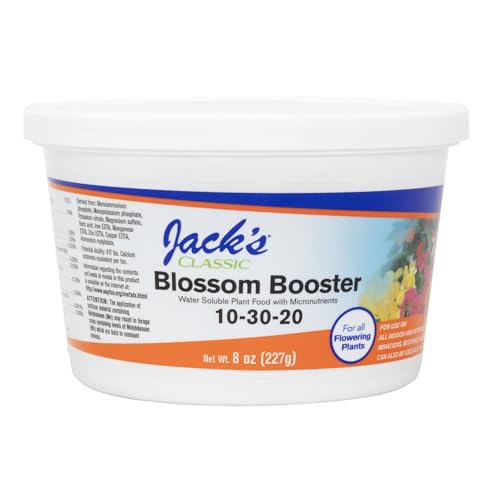
Jack’s Classic 10-30-20 is the benchmark for balanced bloom-boosting fertilizers. The phosphorus-heavy middle number directly supports bud formation, while the included micronutrients — iron, manganese, and zinc — prevent the chlorosis that often plagues bougainvillea grown in containers. This 8-ounce tub is highly concentrated: one scoop makes multiple gallons of liquid feed, so it lasts longer than the small size suggests.
Users report visible improvement in flower quantity and bract size within a week of application. The powder dissolves cleanly in water and can be applied as a root drench or foliar spray. Reviews from growers of jasmine, orchids, and hanging baskets all confirm faster, more abundant blooms compared to standard all-purpose feeds.
The only caution is handling: a few users noted mild skin irritation from direct contact with the dry powder. Wearing gloves during mixing is a simple precaution. For the money, this is the most versatile and effective soluble option for container-grown bougainvillea.
Why it’s great
- High phosphorus ratio (10-30-20) forces bloom initiation
- Micronutrient package prevents leaf yellowing
- Concentrated powder provides excellent value per gallon
Good to know
- Powder can be mildly irritating to skin — wear gloves
- Small container size requires measuring each use
2. Espoma Triple Phosphate 0-45-0

Espoma Triple Phosphate delivers a massive 45% phosphorus content with zero nitrogen or potassium, making it a pure soil amendment for gardens that need a targeted bloom trigger without encouraging leafy growth. This 6.5-pound bag of granules covers a large area and is ideal for in-ground bougainvillea plantings where the vine has already established a good canopy but refuses to flower.
The granular form is ready to use straight from the bag — just sprinkle around the drip line and water in. There is no mixing, no measuring spoons. Espoma is a well-known brand among serious gardeners, and the lack of fillers means every granule contributes to phosphorus availability in the root zone.
A common complaint is that the bag can arrive split due to the weight and paper construction. It’s wise to inspect on delivery and transfer the granules to a sealed container if you plan to store it long term. Otherwise, this is a straightforward, high-potency tool for pushing reluctant bougainvillea into bloom.
Why it’s great
- Extremely high phosphorus (0-45-0) for stubborn bloomers
- Ready-to-use granules require no mixing
- Large bag covers extensive garden areas
Good to know
- Paper bag can tear during shipping
- Not suitable for container feeding without careful measuring
3. Carl Pool BR-61 9-58-8
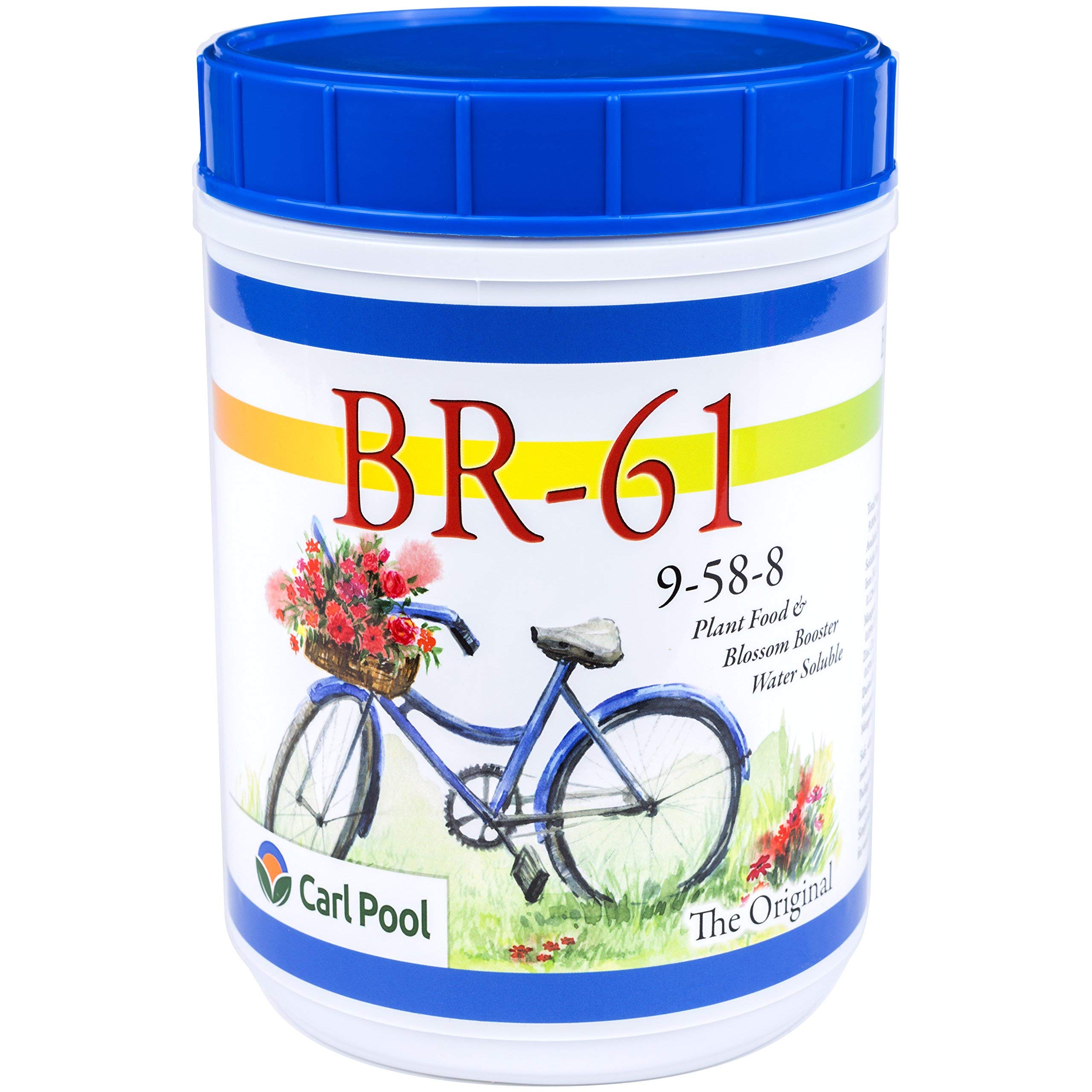
Carl Pool BR-61 is the strongest bloom-specific formulation in this lineup, with phosphorus content hitting 58%. This is a specialized product for gardeners who need maximum flower production on established vines. The 9-58-8 ratio supplies enough nitrogen to maintain green foliage but devotes nearly all its energy to bud and bract development.
It mixes as a soluble powder at a rate of one tablespoon per gallon of water. Enthusiasts using it on plumerias and bougainvillea report noticeably more flowers within two to three weeks. The larger 3-pound container offers a solid amount of feedings for a moderate collection of pots or a small in-ground planting.
The high phosphorus concentration means this should be used sparingly. Over-application can lead to nutrient lockout, so adhere strictly to the mixing instructions. For gardeners who have tried everything and still see no blooms, this is the heavy artillery.
Why it’s great
- Extremely high 58% phosphorus for maximum bloom push
- Proven results on tropical vines and flowering plants
- Good balance of nitrogen to sustain foliage health
Good to know
- Easy to over-fertilize if mixing ratio isn’t followed
- Less suitable for regular weekly feedings
4. Cz Garden Triple Super Phosphate 0-46-0

Cz Garden Triple Super Phosphate is a USA-manufactured, high-purity phosphorus supplement in a resealable 5-pound pouch. The 0-46-0 analysis is nearly identical to Espoma’s but comes in a more durable packaging that resists tearing. This is a granular product designed for mixing into the soil or broadcasting around established plants.
Gardeners using this for fruit trees, tomatoes, and flowering shrubs report larger yields and healthier root systems. For bougainvillea, using this as a soil amendment at planting time or as a top-dress in early spring gives the vine a phosphorus reservoir that feeds the bloom cycle for months.
The resealable pouch is a practical advantage over paper bags, allowing you to scoop out what you need and store the rest without mess. One minor concern: the label can be confusing, with some bags bearing a mention of potassium that appears to be a misprint.
Why it’s great
- High purity phosphorus (0-46-0) with no fillers
- Durable resealable pouch for easy storage
- Made in the USA from quality ingredients
Good to know
- Label ambiguity regarding potassium content
- Granular form takes longer to show results vs soluble
5. Gaia Green 2-8-4 Power Bloom

Gaia Green 2-8-4 Power Bloom is a slower-acting, soil-first organic fertilizer that feeds the microbial life in the root zone rather than dumping synthetic salts on the plant. The moderate phosphorus content (8) is lower than the bloom-booster synthetics, but it is paired with potassium (4) to support overall plant structure and disease resistance.
This is best for gardeners who already have decent soil biology and want to improve bloom quality over the long term. Reviews from tomato and pepper growers show dramatic size increases, and the improvement to soil health means you need to reapply less frequently once the microbial community is established.
For bougainvillea, it works best when combined with a phosphorus booster during the peak growing season. It will not produce the instant flower explosion of a high-P synthetic, but the steady nourishment leads to healthier vines that bloom more reliably year after year.
Why it’s great
- Organic formula improves long-term soil health
- Supports microbial activity and root development
- Safe for continuous use without risk of salt burn
Good to know
- Lower immediate phosphorus impact compared to synthetics
- Best results when used as part of a broader feeding program
6. Miracle-Gro LiquaFeed Bloom Booster

Miracle-Gro LiquaFeed Bloom Booster is the convenience pick for gardeners who want a no-mix liquid feed they can apply with a hose-end or watering can. The 4-pack contains 64 total ounces of concentrate, and the formulation is aimed at flowering plants, though the exact N-P-K ratio is not prominently advertised on the packaging.
Users report noticeable improvements in flower health and color within a few applications. The liquid nature means nutrients are immediately available to the roots — useful for container bougainvillea that need a quick response. LiquaFeed is gentle enough for regular weekly use during the growing season.
There is one limitation: the phosphorus content is not as high as specialized bloom boosters. Gardeners with bougainvillea that refuse to flower may find this too mild. It works best as a maintenance feed for vines that are already blooming or as a supplement between stronger applications.
Why it’s great
- Liquid concentrate is easy and fast to apply
- Suitable for frequent, gentle feeding schedules
- Good value in the multi-pack format
Good to know
- Lower phosphorus than dedicated bloom boosters
- May not be strong enough to trigger blooming in stubborn vines
7. Fertilome Hi Yield Super Phosphate 0-18-0

Fertilome Hi Yield Super Phosphate is a straightforward, low-cost granular phosphorus supplement with a modest 0-18-0 analysis. It is not as concentrated as the triple phosphate options, but that also means a lower risk of over-application for gardeners who are new to targeted phosphorus feeding.
The super phosphate source is readily available to plants during photosynthesis, and users consistently report seeing more blooms on flowering shrubs, vegetables, and wildflowers after application. It works well when worked into the soil at planting time or broadcast around established bougainvillea in early spring.
The main downside is that it can stain concrete if spilled, so apply carefully around patios and walkways. For large in-ground plantings on a tight budget, this is a practical entry point into phosphorus-focused feeding.
Why it’s great
- Low price point for budget-conscious gardeners
- Moderate phosphorus is safer for inexperienced users
- Proven to increase blooms on a variety of plants
Good to know
- Lower phosphorus concentration requires more product per application
- Can leave stains on concrete surfaces
FAQ
How often should I fertilize my bougainvillea during the growing season?
Can I use a general all-purpose fertilizer on my bougainvillea?
What is the best N-P-K ratio for forcing bougainvillea to bloom?
Final Thoughts: The Verdict
For most users, the bougainvillea fertilizer winner is the Jack’s Classic 10-30-20 Blossom Booster because it combines a proven high-phosphorus ratio with essential micronutrients in a concentrated, easy-to-use powder. If you want a pure phosphorus soil amendment for large in-ground plantings, grab the Espoma Triple Phosphate 0-45-0. And for an organic approach that builds long-term soil health, nothing beats the Gaia Green 2-8-4 Power Bloom.