
Our readers keep the lights on and the weekend projects moving. As an Amazon Associate, I earn from qualifying purchases.
Sun-bleached door panels, cracked dashboards, and chalky exterior trim turn a well-maintained vehicle into a tired-looking project car. The right auto vinyl restorer locks in color and flexibility against constant UV assault, keeping both interior and exterior surfaces from degrading before their time.
I’m Rikta — the founder and writer behind FitlyFast. I’ve spent years analyzing market trends and hardware formulation data to separate surface-level dressings from genuine polymer-based restorers that bond on a molecular level.
This guide stacks the top spray-on, wipe-on, and ceramic-infused formulas currently available, each rated for real-world durability and substrate compatibility. Whether you are battling cracked dashes or weathered trim, the goal here is to find the best auto vinyl restorer that delivers lasting protection without the greasy residue that captures airborne dust.
How To Choose The Best Auto Vinyl Restorer
Not every bottle that calls itself a “restorer” actually reverses oxidation. Many are temporary dressings that wash off in a single rain. The most effective products fall into two camps: polymer-based conditioners that soak into the vinyl’s pores, and ceramic-infused coatings that cure into a hard shell. Choosing the right one depends on exposure level, surface texture, and how many wash cycles you need it to survive.
Water-Based vs. Solvent-Based Formulations
Water-based formulas like the 303 Aerospace Protectant leave a non-greasy, matte finish that repels dust rather than attracting it. Solvent-based products can penetrate deeper into dry, porous trim but often leave a slick residue that fades fast in direct sunlight. For long-term interior protection, a water-based UV blocker with a 40-year reliability test track record is the safer bet.
Ceramic Infusion: Real Durability or Marketing Buzz?
True ceramic trim restorers—like the Griot’s Garage Ceramic Trim Restorer—use SiO2 polymers that cross-link and form a hydrophobic barrier. This layer typically withstands 10 to 200+ pressure washes before degradation begins. The key spec to look for is the wash-cycle rating, not the brand name. A product labeled “ceramic dressing” with no wash claim is likely a glossy spray with trace ceramic particles—essentially a dressing, not a coating.
Dye vs. Conditioner vs. Coating
A permanent dye such as Solution Finish penetrates and stains the plastic black again, making it ideal for severely chalked surfaces. Conditioners like Chemical Guys VRP rehydrate the vinyl with oils but require reapplication every 2 to 4 weeks. Ceramic coatings offer the longest protection interval but require a clean surface and proper cure time. Know what you are buying: a color fix, a moisturizer, or a hard shell.
Quick Comparison
On smaller screens, swipe sideways to see the full table.
| Model | Category | Best For | Key Spec | Amazon |
|---|---|---|---|---|
| 303 Aerospace Protectant | Water-Based | UV-block matte interior coating | 40-year field-tested formula | Amazon |
| Cerakote Ceramic Trim Coat | Ceramic Wipes | Severely faded exterior trim | 200+ wash durability rating | Amazon |
| Chemical Guys VRP Kit | All-in-One | Quick interior/exterior dressing | Satin, dust-repelling finish | Amazon |
| Chemical Guys HydroShield | Ceramic Spray | Durable gloss on trim and tires | Ceramic-infused water resistance | Amazon |
| Griot’s Garage Vinyl Dressing | Water-Based | Interior matte restoration | 22-ounce bottle, low-residue | Amazon |
| Solution Finish Black Restorer | Permanent Dye | Chalky, severely oxidized trim | Silicone-free polymer stain | Amazon |
| Griot’s Garage Ceramic Restorer | Ceramic Gel | Long-term exterior trim coating | SiO2 polymer, fast-dry gel | Amazon |
In‑Depth Reviews
1. 303 Products Aerospace Protectant

This 16-ounce spray has a 40-year reputation rooted in aerospace-grade UV inhibition. The formula dries to a smooth matte finish with zero tackiness, meaning dust and dirt have nothing to cling to. Customers report visible results on 18-year-old rubber seals and bicycle tires alike, with applications holding 6 to 12 months per coat in moderate climates.
The liquid’s thin viscosity spreads easily with a microfiber towel, and one bottle covers about three full interior treatments on a mid-size SUV. It is equally effective on vinyl, natural rubber, PVC, and metal. The manufacturer recommends reapplication every 3 to 5 weeks for surfaces in direct sunlight, though many users find the protection lasts much longer on sheltered interior panels.
The only real trade-off is that the spray does not hide deep scratches or severe chalkiness—it protects and conditions rather than staining. For faded trim that needs a color boost, a dye-based product would be a better fit. But for general upkeep that prevents cracking and fading before it starts, this is the most trusted baseline available.
Why it’s great
- Non-greasy matte finish resists dust
- Proven 40-year UV protection track record
- Safe on metal, rubber, vinyl, and fiberglass
Good to know
- Cannot restore color to chalked trim
- Needs reapplication every 3-5 weeks in harsh sun
2. Cerakote Ceramic Trim Coat Kit

Cerakote is a genuine ceramic coating—not a dressing—that cures directly onto the plastic. The kit includes 10 individually sealed wipes and a pair of gloves, making application practically mess-free. Users restoring a 2014 Dodge Challenger’s faded trim reported the plastic returned to a deep factory-dark gray after a single wipe, with no streaking even on overlapping passes.
The curing process is straightforward: apply to clean, dry trim, allow 20 minutes of working time, and avoid water for 24 hours. On a full-sized truck, most users go through 5 wipes to cover bumpers, trim strips, and mirror caps. The finish is matte, not glossy, and the ammonia smell dissipates quickly after curing.
This product excels on heavily weathered exterior trim where sprays fail. The 200+ wash claim holds up in real-world feedback, with trim still looking restored after one month of multiple rain exposures. The main drawback is the cost per application—each kit covers one vehicle, so it is not a cost-effective option for routine monthly upkeep.
Why it’s great
- Cures as a true ceramic coating
- Wipes apply without streaking
- Lasts through many pressure washes
Good to know
- Strong ammonia smell during application
- Not intended for frequent reapplication
3. Chemical Guys VRP Protectant & Applicator Kit
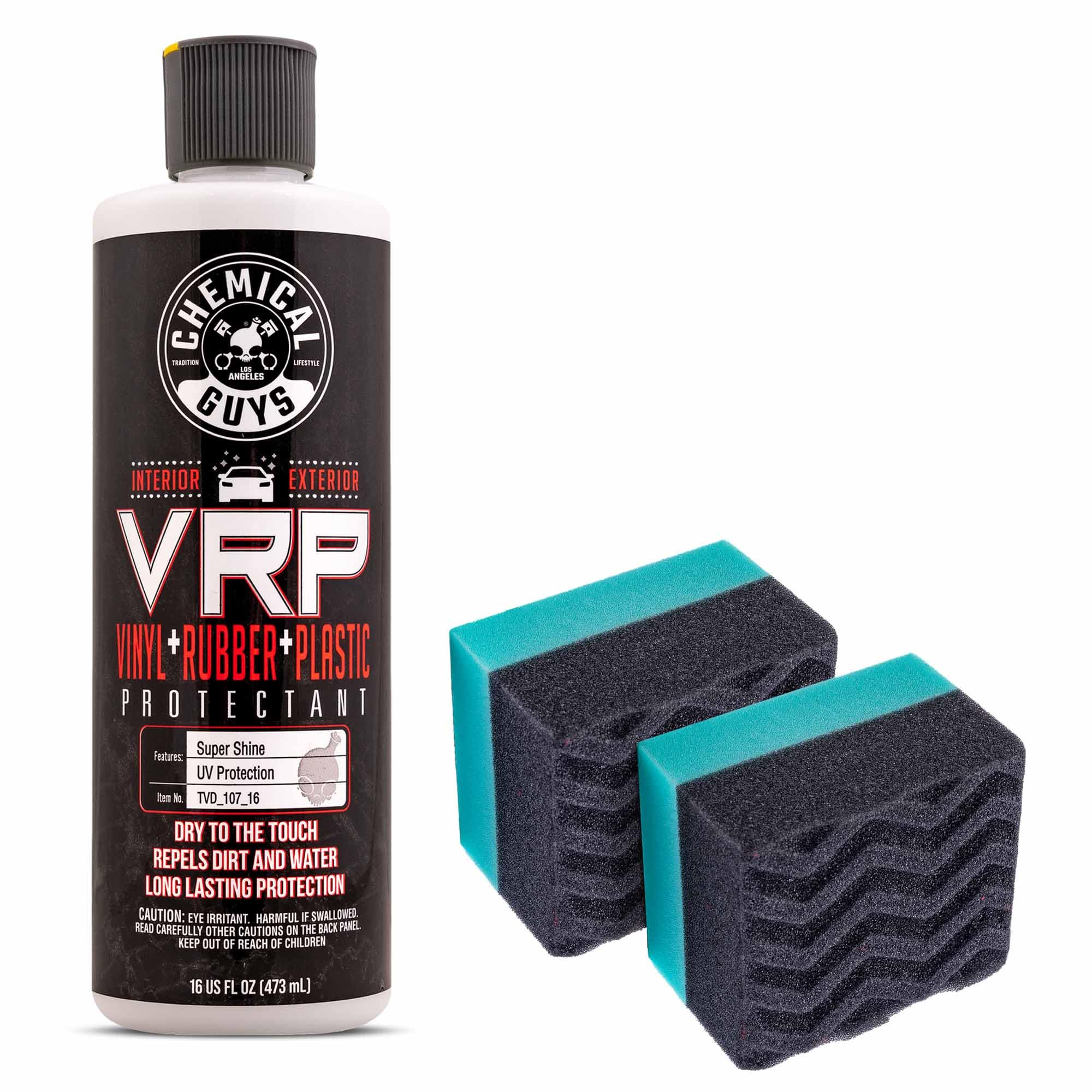
This kit bundles a 16-ounce bottle of VRP (Vinyl, Rubber, Plastic) Protectant with two WonderWave foam applicators, lowering the barrier to a perfect streak-free finish. The water-based formula delivers a satin sheen that repels dust rather than acting as a magnet for it. A reviewer in Death Valley reported that the product kept his wife’s Jeep looking restored for two weeks despite relentless sun exposure.
VRP penetrates into the surface to rehydrate dry vinyl, making it effective on 4-year-old interior panels that have started to look brittle. The scent is mild and pleasant, a welcome change from the chemical odors common in solvent-based dressings. The kit’s applicators provide even coverage and reduce product waste compared to spraying directly onto a towel.
Where this falls short of premium options is longevity—most users report needing to reapply every 2 to 4 weeks, especially on exterior trim. It is not a coating and will not withstand heavy rain without degrading. But for a quick weekly detail that restores showroom depth without residue, it is hard to beat at this price point.
Why it’s great
- Non-greasy satin finish repels dust
- Included foam applicators ensure even coverage
- Pleasant scent compared to solvent dressings
Good to know
- Durability limited to 2-4 weeks on exterior
- Not a permanent color restorer for chalked surfaces
4. Chemical Guys HydroShield Ceramic Coating

HydroShield is Chemical Guys’ ceramic-infused alternative to their standard VRP line. The 16-ounce spray deposits a thin layer of SiO2 that enhances gloss without attracting dirt. Users in harsh UV environments—including Hawaii—report excellent fade prevention on black plastic trim after months of exposure, and the coating holds up to at least three weeks of rain without degrading.
Application follows the same spray-and-buff routine as a standard dressing, making it beginner-friendly. The surface dries with a natural matte finish that has none of the slick, oily feel of old-school tire shines. A reviewer noted that the product also removed light oxidation from a Jeep Wrangler hard-top and rubber seals in a single pass.
The main limitation is depth of restoration: HydroShield works beautifully on trim that is still dark but starting to fade. For trim that has sun-bleached to white or gray, a permanent dye or a dedicated ceramic coating like Cerakote will produce better results. It is best thought of as a durable protectant rather than a corrective color restorer.
Why it’s great
- Ceramic infusion boosts wash longevity
- Easy spray-and-buff application
- No greasy residue after buffing
Good to know
- Does not restore severely chalked trim
- Requires clean surface for bonding
5. Griot’s Garage Vinyl and Rubber Dressing
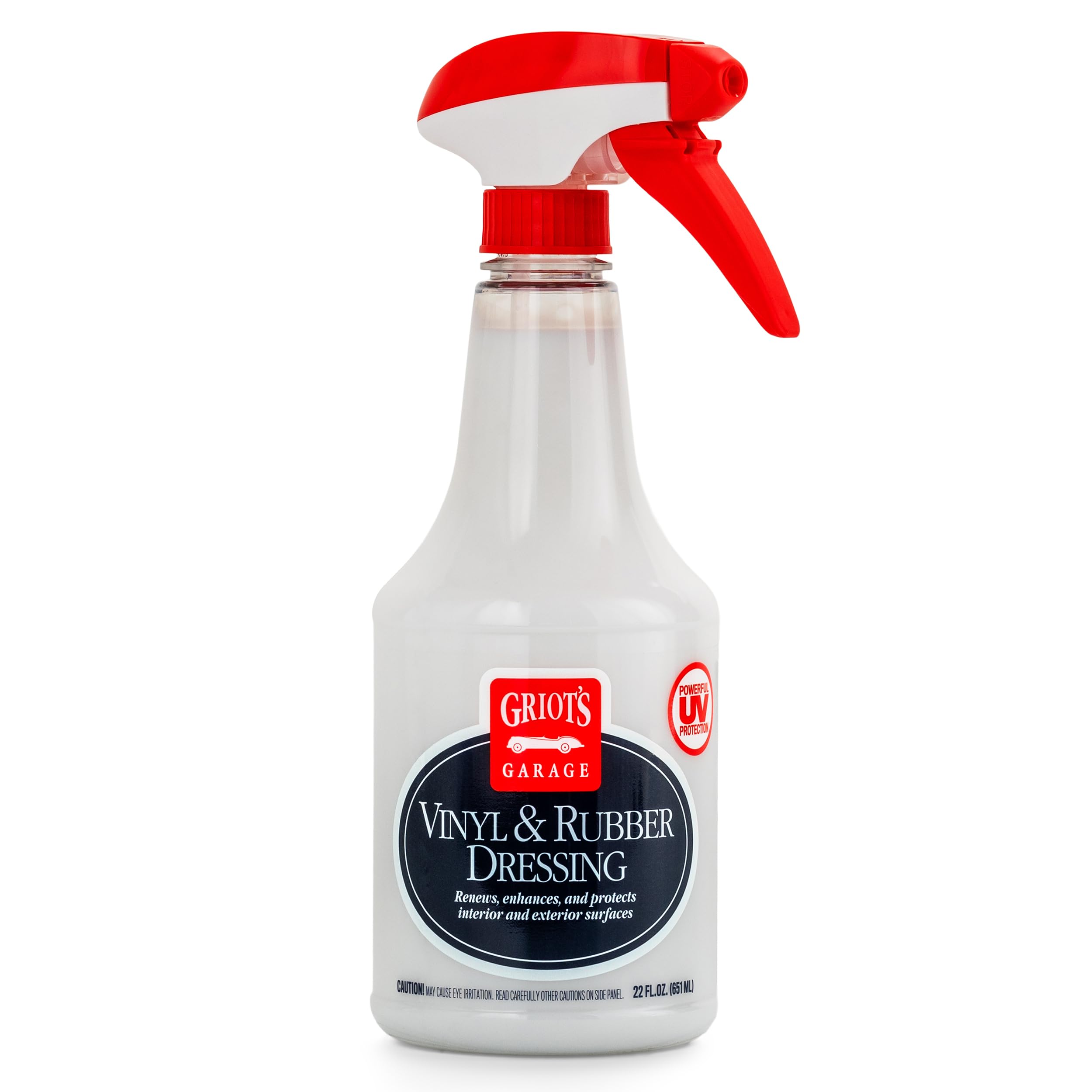
Griot’s Garage builds this dressing around a water-based carrier that avoids the greasy glare of competing brands. The 22-ounce bottle is larger than average, and users consistently report that a single application restores the original satin finish on interior panels with no residue. The formula also removes dried wax from plastic cladding, serving double duty as a cleaner and a protectant.
Application is best done by spraying onto a microfiber towel rather than directly onto the surface—this prevents overspray on windows and paint. One reviewer claimed the bottle lasted through multiple interior and tire applications over several months. The finish beading on exterior door seals and tires shows good water repellency immediately.
The product’s biggest advantage is its versatility: it works on interior dashboards, door panels, weather stripping, and even pickup bed mats. The drawback is that longevity is not its strong suit—expect to reapply every 1 to 2 weeks on exterior surfaces that face constant traffic or rain. It is an ideal choice for weekend-detailers who prioritize look and feel over maximum durability.
Why it’s great
- Large 22-ounce bottle for extended use
- Leaves a true satin, non-greasy finish
- Effective on interior and exterior surfaces
Good to know
- Durability is limited on exterior trim
- Best applied with a towel, not sprayed direct
6. Solution Finish Black Plastic & Vinyl Restorer

Solution Finish is not a dressing—it is a permanent polymer-based stain that penetrates and dyes faded plastic back to black. The 12-ounce bottle is thick and highly concentrated; a little coating goes a long way. Users have revived chalky Jeep bumpers from a whitish haze to deep black in a single pass, using only a microfiber pad and buffing cloth.
Preparation is critical: the surface must be cleaned with alcohol or a dedicated prep spray for the dye to bond. Once applied, the finish is silicone-free and VOC-compliant, so it will not rinse off in the rain. One reviewer reported three months of solid color retention on mud flaps, while another noted success restoring a laptop bezel after sticker residue damaged the original dye.
The product does stain skin and paint almost instantly—gloves are mandatory. It also leaves a residue on applicators that is difficult to wash out. For severely sun-bleached trim where sprays cannot deliver any visual improvement, Solution Finish is the most effective corrective tool in this list. Just be prepared to tape off adjacent paint and work methodically.
Why it’s great
- Permanently dyes chalked plastic black
- Silicone-free, VOC-compliant formula
- Long-lasting color on severe oxidation
Good to know
- Must tape off paint—stains on contact
- Gloves required; hard to wash off skin
7. Griot’s Garage Ceramic Trim Restorer
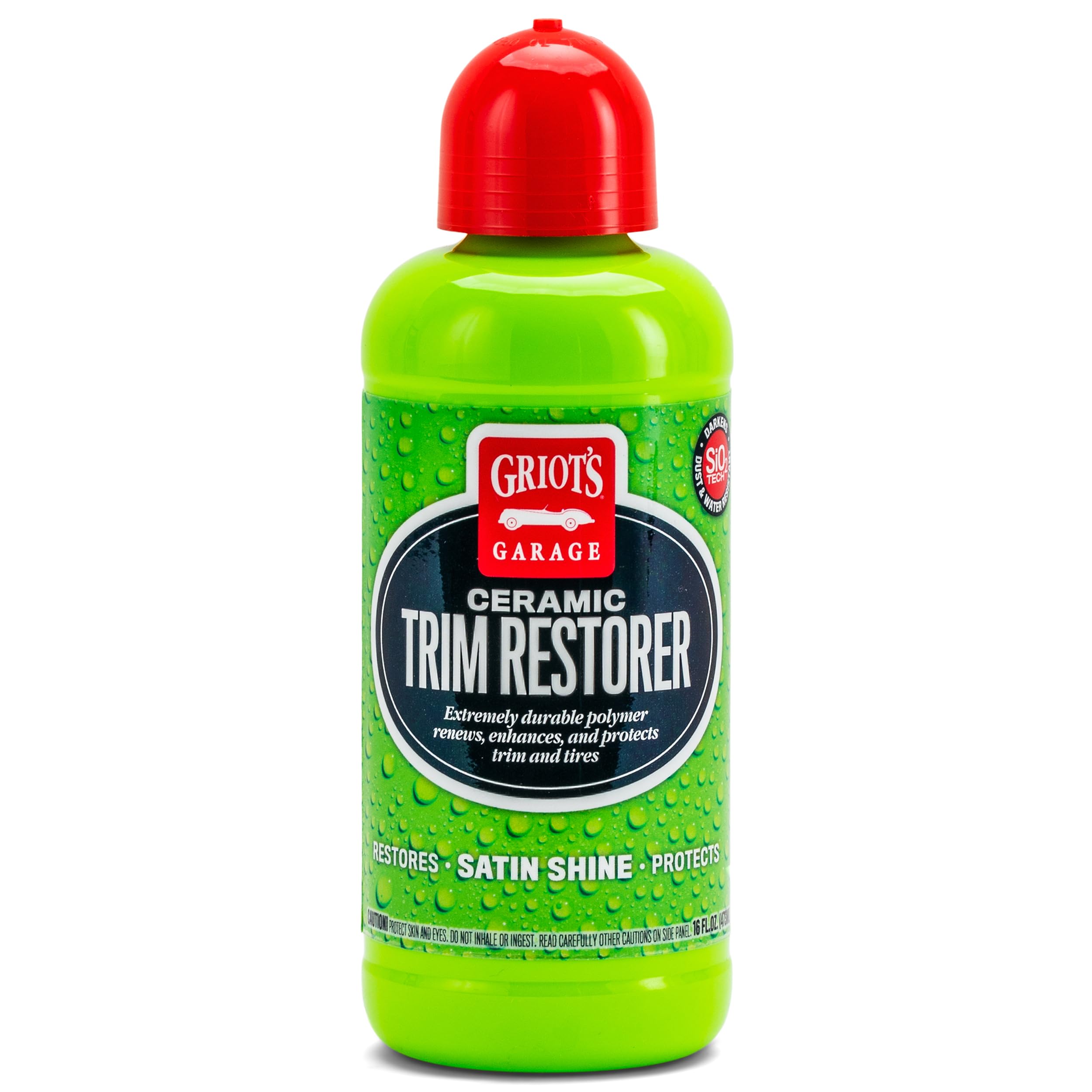
This 16-ounce gel is Griot’s answer to the ceramic coating trend. It uses SiO2 polymers that cure into a clear, hydrophobic shell that beads water on contact. The gel consistency spreads smoothly in one or two passes without dripping, and it dries to the touch in minutes. A 2006 Dodge Dually owner reported that after three weeks, the bumper trim still looked factory-fresh.
The restorer is designed for exterior surfaces—bumpers, mirror caps, bedliners—but it also works on interior panels as long as they are not handled frequently. Curing takes 12 to 24 hours for maximum water resistance, so it is best applied on a day when the vehicle will not face rain. Users note that over-application near painted surfaces can cause light streaking after rain, which wipes off easily.
The main trade-off is cure time and surface preparation. Unlike wipe-on dressings that give instant visual feedback, this product requires patient wet-look buffing and a 24-hour no-wash window. For those willing to invest the time, the durability payoff is measured in months, not weeks. It is the strongest protective option for exterior trim among the products reviewed here.
Why it’s great
- SiO2 ceramic shell for long-term durability
- Gel formula prevents drips and waste
- Hydrophobic beading resists water spots
Good to know
- Requires 12-24 hour cure for peak performance
- Can streak on paint if over-applied
FAQ
Will an auto vinyl restorer fix a cracked dashboard?
How often should I apply a vinyl restorer to exterior trim?
Can I use a vinyl restorer on my car’s tires?
Final Thoughts: The Verdict
For most users, the best auto vinyl restorer winner is the 303 Products Aerospace Protectant because it delivers reliable UV protection without changing the surface appearance, making it a perfect baseline for both interior and light exterior use. If you want a semi-permanent color fix for chalked trim, grab the Solution Finish Black Trim Restorer. And for extreme outdoor durability against 200+ washes, nothing beats the Cerakote Ceramic Trim Coat Kit.