
Our readers keep the lights on and the weekend projects moving. As an Amazon Associate, I earn from qualifying purchases.
Striking an arc for the first time is a sensory overload — the bright flash, the inability to see your puddle, and the fear of a weld flash hang over every beginner. Without a helmet that auto-darkens quickly and offers a clear view, you are fighting the equipment as much as the metal. The choice of an auto-darkening hood directly determines whether you learn to lay a clean bead or keep guessing in the dark.
I’m Rikta — the founder and writer behind FitlyFast. I’ve spent years analyzing how optical clarity ratings, sensor counts, and shade ranges translate into real-world performance for new welders who just want to see their work.
This guide breaks down the key specs that actually matter for a novice, from arc sensor responsiveness to viewing area size, so you can confidently pick a beginner welding helmet that protects your eyes and improves your learning curve.
How To Choose The Best Beginner Welding Helmet
Picking your first auto-darkening hood comes down to four pillars: optical clarity, sensor count, shade range, and viewing area. Every other feature — additional LED lights, headgear adjustment, battery type — is secondary to how well the helmet lets you see and react while you learn.
Optical Clarity Rating: The 1/1/1/1 Standard
This four-number rating (optical class, light scattering, homogeneity, angle dependence) is your window into how clear and distortion-free the lens is. For a beginner, a 1/1/1/1 rating delivers a crisp, true-color view of the weld pool without the traditional green tint. A 1/1/1/2 or lower rating introduces slight blurriness at the edges, which can lead to welds that wander off the joint. If your budget allows, prioritize 1/1/1/1 lenses — they reduce eye strain and improve consistency for learning.
Arc Sensors: 2 vs 3 vs 4
Arc sensors detect the bright light of the welding arc and trigger the lens to darken. Two sensors are the bare minimum and work fine for bench welding in a single position. Four sensors give you wider coverage, so the helmet darkens reliably even if you are welding overhead, in a corner, or holding the torch at an angle. Beginners who plan to practice different positions should lean toward 3 or 4 sensors to avoid occasional flashes when the helmet misses the arc.
Shade Range: From Light to Dark
A variable shade range, typically 4/5-9/9-13, lets you set the darkness level for the task. For stick welding, shade 10 or 11 is common; for MIG, shade 9 or 10 works; TIG at low amperage may need shade 8. A fixed shade 10 helmet (like the classic passive models) is simple and cheap but limits your ability to dial in comfort for different processes. Beginners benefit from a wider variable range so they can experiment with settings without buying a second helmet.
Quick Comparison
On smaller screens, swipe sideways to see the full table.
| Model | Category | Best For | Key Spec | Amazon |
|---|---|---|---|---|
| MIGVAN H-24 | Premium | True-color clarity for detailed TIG work | 3.94″ x 3.23″ Viewing Area | Amazon |
| YESWELDER LYG-17800F-ST | Mid-Range | Fast 1/30,000s reaction for hobbyists | 1/1/1/1 Optical Clarity | Amazon |
| ARCCAPTAIN DP-CozyCraft-BK-1 | Mid-Range | Large 3.94″x3.66″ screen for wide visibility | 4 Arc Sensors | Amazon |
| Omolith OM-17800F NEW | Mid-Range | Budget-friendly with LED work light included | 3.94”x3.66” Viewing Area | Amazon |
| TRQWH TRQWH-Lseries3 | Mid-Range | 4 sensors with solar boost for value | Shade Range 4-13 | Amazon |
| Jackson Safety 14975 | Premium | Durable passive hood for no-fuss simplicity | Fixed Shade 10 | Amazon |
| Hobart 770869 | Premium | Trusted brand with reliable auto-darkening | 3 Arc Sensors | Amazon |
In‑Depth Reviews
1. MIGVAN H-24 Welding Helmet
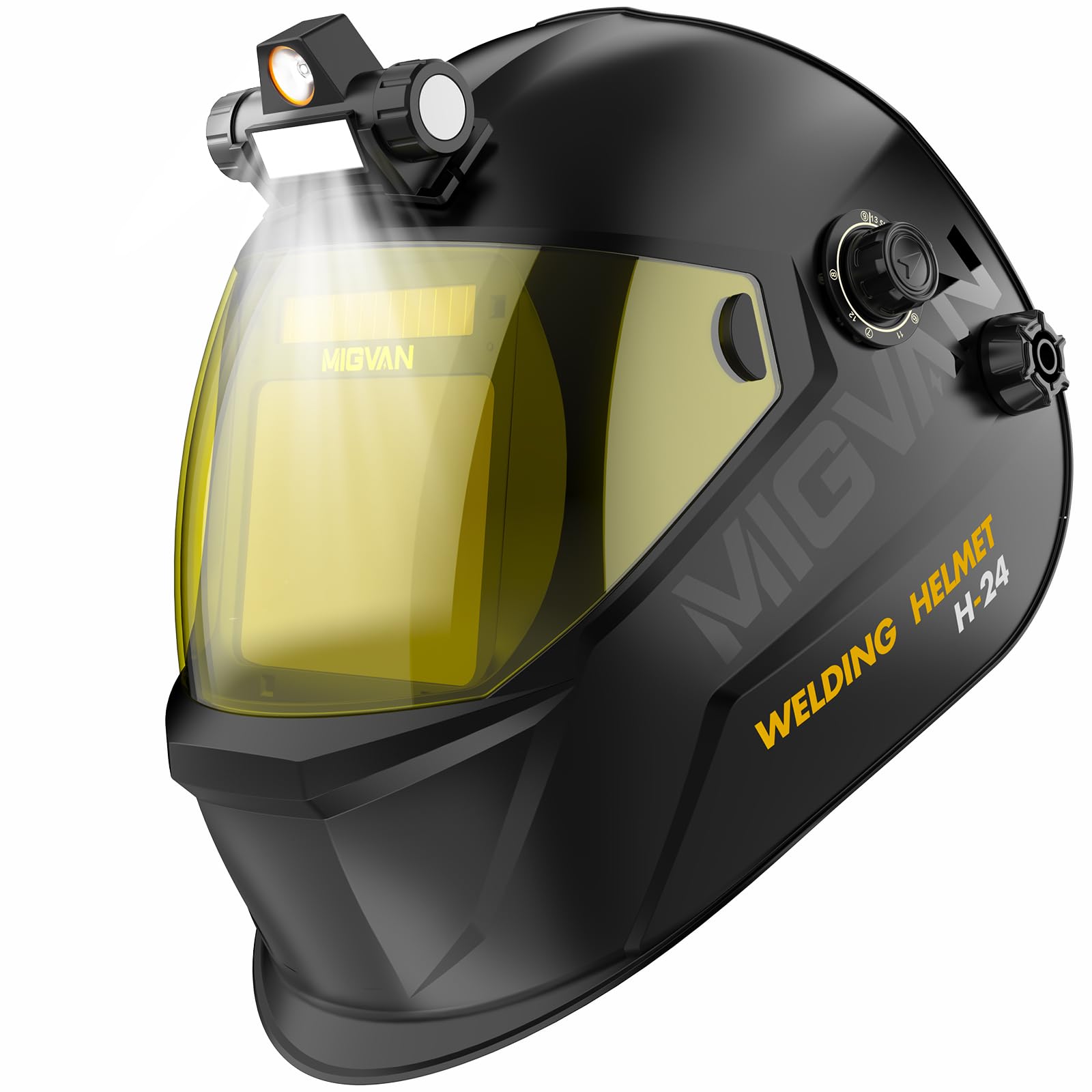
The MIGVAN H-24 sits at the top because it delivers premium-tier visibility without premium-tier complexity. The amber lens combined with a 1/1/1/1 optical clarity rating eliminates the green tint that plagues many budget hoods, giving a beginner a true-color view of the weld puddle and surrounding metal. The 3.94″ x 3.23″ viewing window is generous enough for practice joints without feeling like you are looking through a mailbox slot.
Four arc sensors cover a wide detection angle, and the shade range spans DIN4 in light state through DIN5-9 and DIN9-13 in dark state, covering every process a learner will attempt — from stick to MIG to lower-amp TIG. The dual solar panel and CR2450 battery setup means you are unlikely to run out of power mid-session, and the included LED light with USB-C cable adds convenience for dim workshops. The flexible PP material shell keeps weight low for extended wear.
User reports consistently praise the clarity and comfort, with experienced welders noting it rivals hoods costing several times more. Some users mention the full-face design limits airflow during long sessions, but for the typical hobbyist or student practicing for a few hours, this is a minor tradeoff for the visual quality.
Why it’s great
- True-color amber lens cuts eye strain for beginners learning to read the puddle
- Dual solar and battery power removes battery anxiety during practice
- Four arc sensors trigger reliably in different positions
Good to know
- Full-face design can feel stuffy without active ventilation
- LED light installation requires a few minutes of setup
2. YESWELDER LYG-17800F-ST Welding Helmet
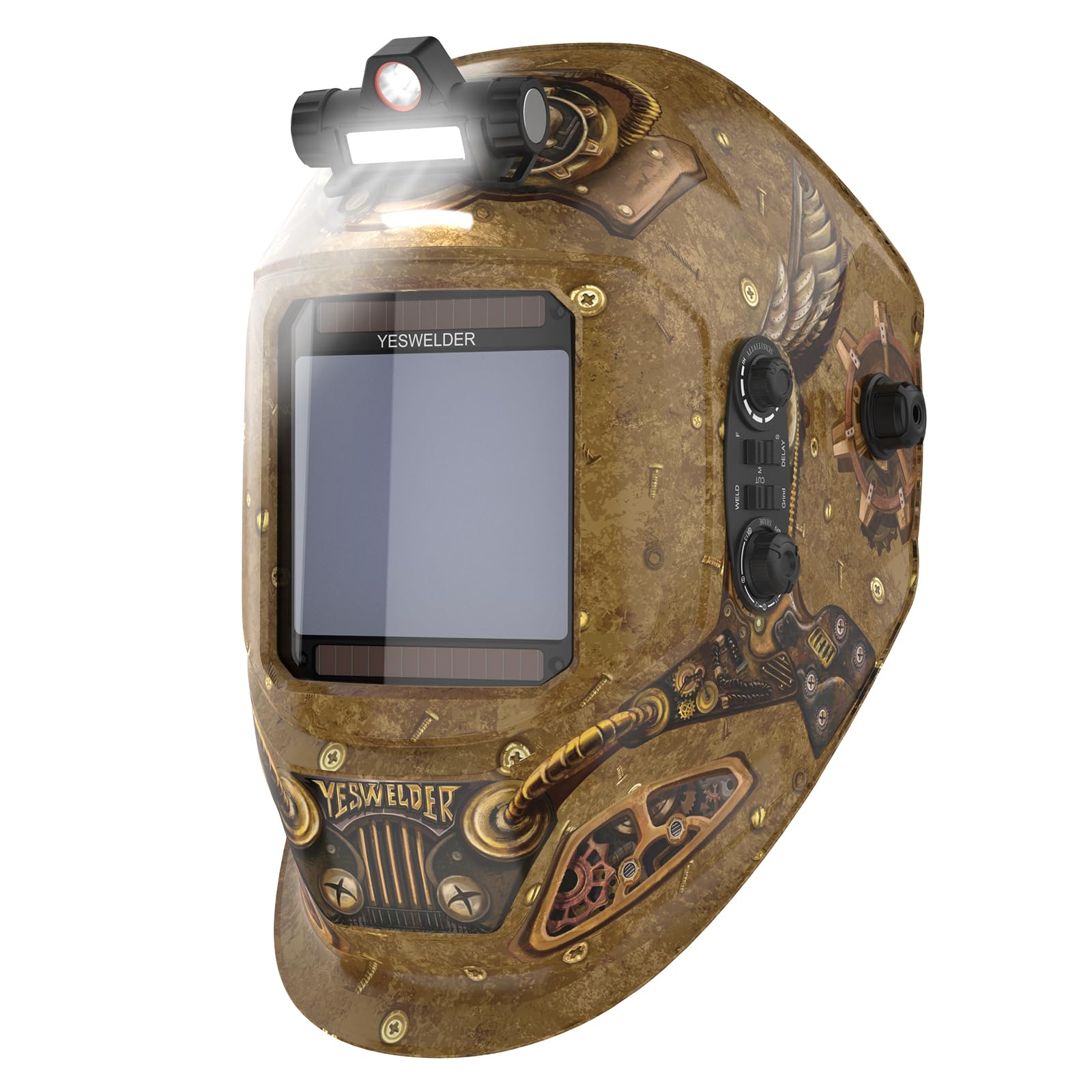
The YESWELDER LYG-17800F-ST is a mid-range champion that punches above its weight in reaction speed. A 1/30,000-second transition time is faster than many industry-standard hoods, meaning the lens darkens so quickly that your eyes barely register the flash. This is a genuine safety bonus for a beginner who may not yet have the reflex to look away during a strike.
The 3.93″ x 3.66″ viewing window paired with 1/1/1/1 optical clarity and true color technology provides a clean, wide field of view. The adjustable shade range covers DIN4/5-9/9-13, and the four arc sensors handle off-angle welding better than two-sensor models. The shell is made from thicker, recyclable PP material, and the included USB-powered LED light improves visibility in dim garages or outdoor evening work.
Customers note this helmet often replaces higher-priced units like Lincoln and Miller hoods for daily use. The main critique points to the headgear — it functions well enough but lacks the premium feel of the lens itself. Included spare lenses, a battery, and a charging cable make this a complete package for the beginner who wants to set up and start welding immediately.
Why it’s great
- Blazing 1/30,000s reaction adds a margin of safety for novice welders
- Large true-color viewing area reduces fatigue during practice
- Comes with LED light, spare lenses, and battery out of the box
Good to know
- Headgear is functional but feels less durable than the lens assembly
- Decals may show minor imperfections from packaging
3. ARCCAPTAIN DP-CozyCraft-BK-1 Welding Helmet
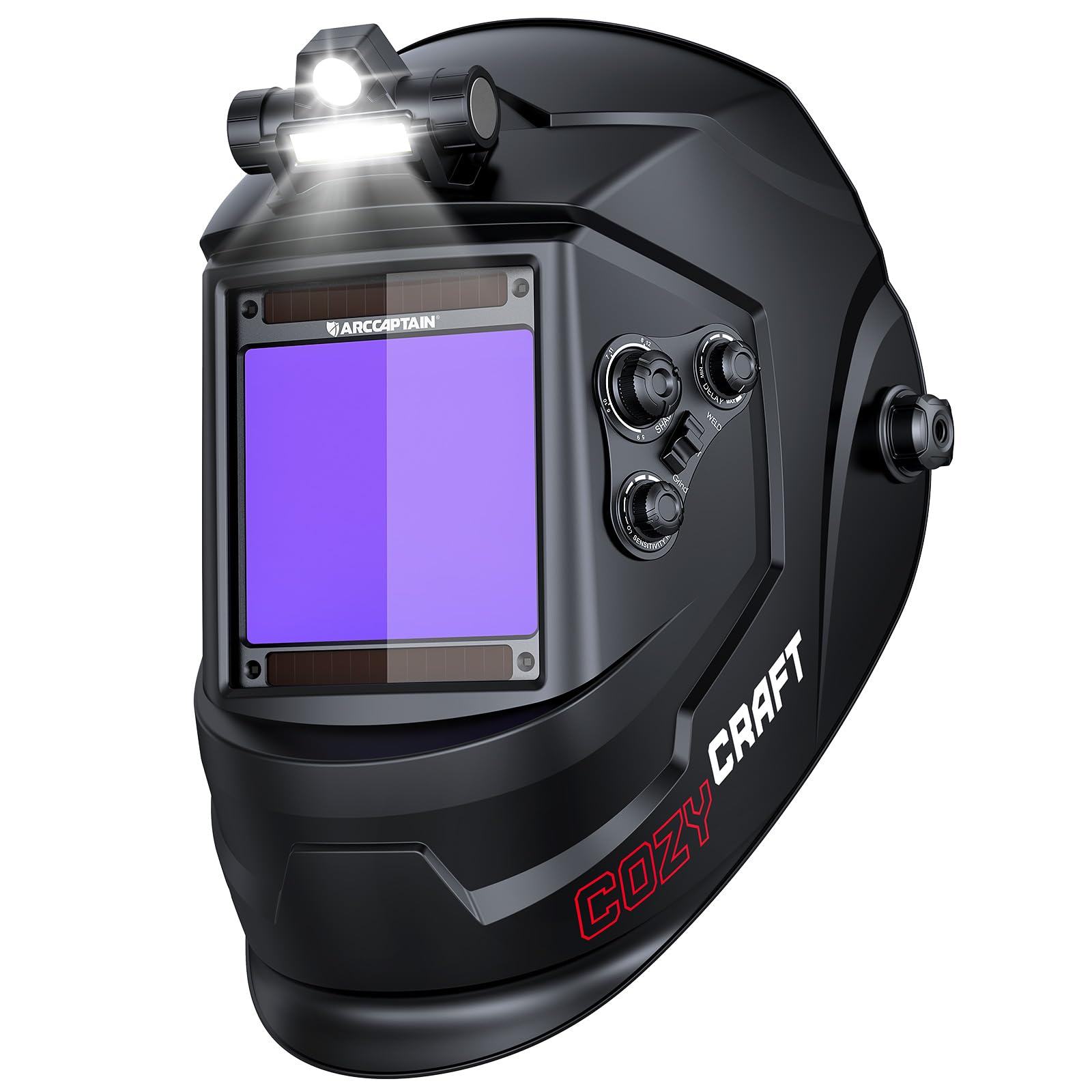
The ARCCAPTAIN puts an emphasis on viewing real estate, and for a beginner, a larger window means less head movement and more attention on the weld joint. The 3.94″ x 3.66″ screen is among the largest in this tier, and combined with 1/1/1/1 optical clarity, it delivers crisp edges and natural colors across the full field of view. The 12-in-1 smart filter automatically provides permanent DIN16 UV/IR protection regardless of the shade setting.
Four arc sensors switch the lens in 1/25,000 seconds, and the shade range covers DIN4/5-8/9-13, giving flexibility from grinding through heavy stick welding. The helmet weighs only about 1 lb, and the adjustable headgear uses two top straps to eliminate single-point pressure headaches — a common complaint with budget hoods. The external controls for shade and sensitivity are easier to adjust while wearing the helmet than internal knobs.
Reviews from students and casual welders highlight the excellent visibility and comfort. The shell is made of flexible PP material that some users describe as thinner than pro-grade hoods, but for occasional use this is not a structural concern. The included LED light is functional with two brightness levels, but the attachment uses double-sided tape and a short microUSB cable, which feels less refined than the rest of the helmet.
Why it’s great
- Extra-large screen improves situational awareness for new welders
- Two-strap suspension system prevents pressure point headaches
- External adjustment knobs allow quick setting changes on the fly
Good to know
- Shell plastic feels light, less suited for heavy industrial abuse
- Included LED light uses tape and microUSB — not a permanent solution
4. Omolith OM-17800F NEW Welding Helmet
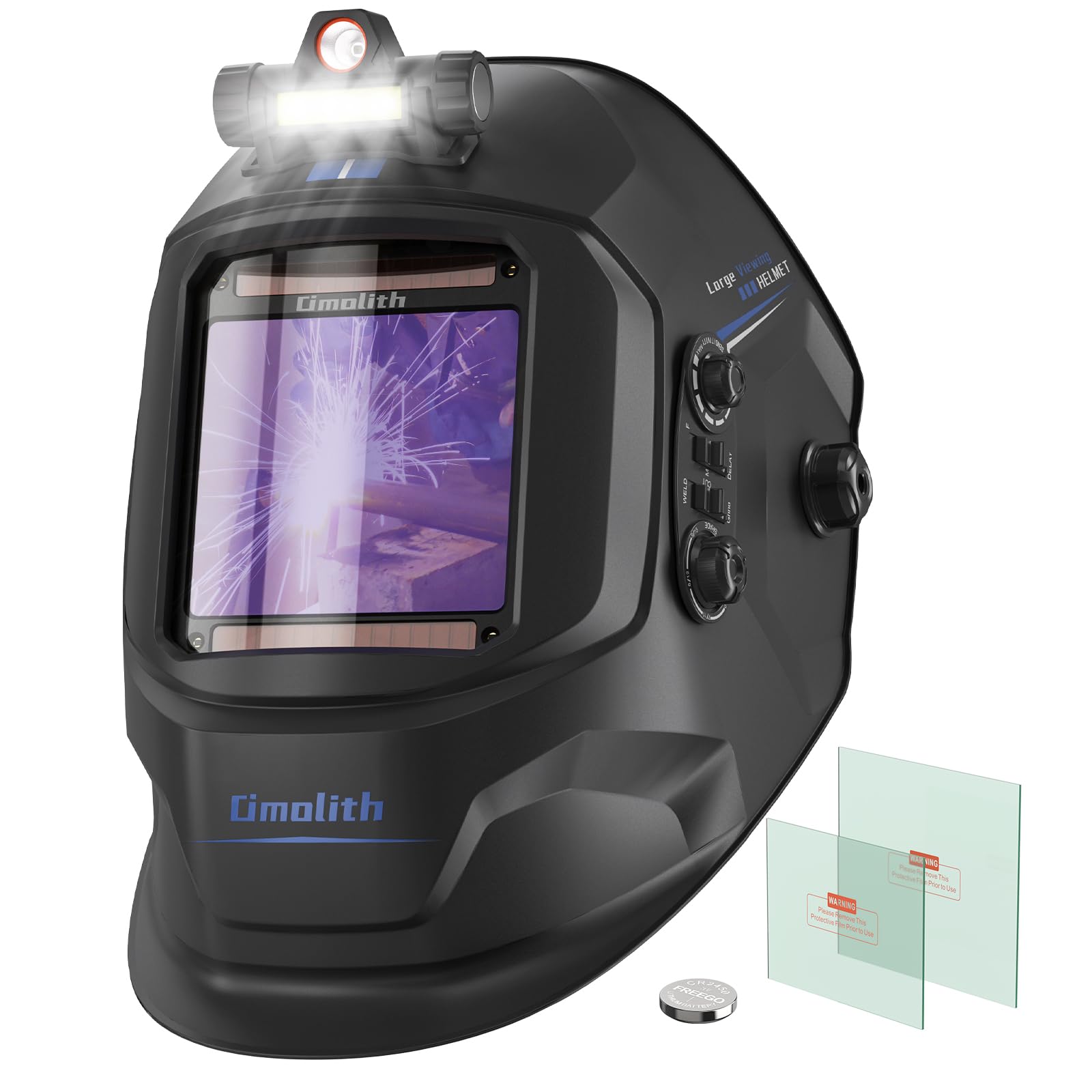
The Omolith OM-17800F NEW enters the ring with a strong feature-to-cost ratio, aimed directly at home users and garage welders. The 1/1/1/1 optical clarity rating is the same standard found on the higher-priced models, and the 3.94” x 3.66” viewing area is generously large for a hood at this level. The true-color lens reduces the green haze, making it easier to track the puddle on thin sheet metal or small-diameter rod.
Four arc sensors provide a 1/25,000-second response time, and the shade range spans DIN4/5-9/9-13, covering the basics from grinding mode through stick and MIG. The helmet operates on a lithium-ion battery with solar assist, so it stays ready to go after sitting in a toolbox between sessions. The included LED light attaches to the top and runs on USB power, which helps when working under a car or in a shaded corner of the shop.
User feedback is positive for the price, with many upgrading from older passive hoods and appreciating the large window and clear optics. The headgear is adjustable and fits a range of head sizes, though the adjustment mechanism feels less precise than premium competitors. For a beginner who needs a functional, clear auto-darkening helmet with a light, this is a solid entry point that leaves room to upgrade later.
Why it’s great
- True 1/1/1/1 optical clarity in a budget-friendly package
- Large viewing window matches helmets costing twice as much
- Solar backup keeps battery running longer during practice
Good to know
- Headgear adjustments are adequate but not premium-feeling
- Some users report the shell feels slightly less robust than mid-range options
5. TRQWH TRQWH-Lseries3 Welding Helmet
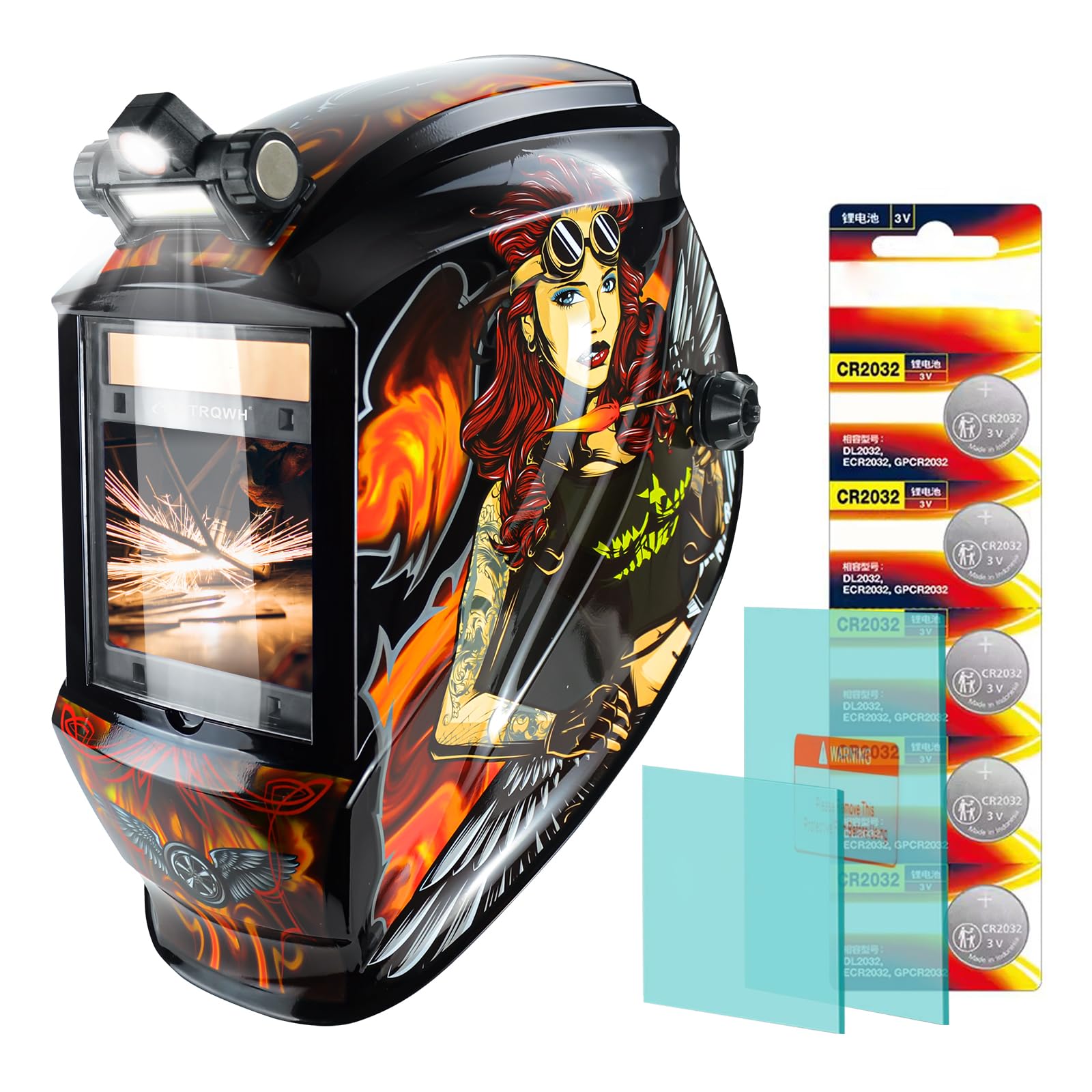
The TRQWH is an outlier in this list — it packs four arc sensors and a variable shade range into a shell that competes at a very attractive price. For a beginner with a tight budget, the primary question is whether the viewing quality is sufficient to learn on, and the answer is yes for casual stick and MIG work. The true-color lens with 1/1/1/2 optical clarity is a half-step below the 1/1/1/1 models, but still dramatically better than a fixed-shade passive hood.
The large 3.94″ x 3.15″ view screen is slightly narrower in height than the ARCCAPTAIN or YESWELDER, yet still offers a meaningful upgrade over the small portholes on old fiberglass hoods. The four arc sensors deliver a 1/25,000-second reaction, and the solar cell with a CR2450 battery powers the lens reliably. The shell is lightweight PP, and the headband adjusts with side knobs and a rear tightening dial for a custom fit. Thickened sponge padding on the forehead and ears adds comfort during longer sessions.
Customer reviews emphasize the surprisingly clear view and the solid value proposition. The main tradeoff appears in the optical clarity — the 1/1/1/2 rating means slight light scattering at extreme angles, but for a beginner primarily welding flat or horizontal joints, this will not hinder learning. Assembly instructions are minimal, so expect to spend a few minutes figuring out the battery and sensitivity settings.
Why it’s great
- Four arc sensors at an entry-level price point
- True-color lens reduces green tint compared to classic auto-darkening hoods
- Lightweight and padded for comfortable practice sessions
Good to know
- 1/1/1/2 optical clarity rating may show slight edge distortion
- No included LED light — you will need external lighting in dim shops
6. Jackson Safety 14975 Welding Helmet

The Jackson Safety HSL-100 represents the old-school approach — a passive, fixed-shade hood that never fails because it has no electronics to fail. This is not an auto-darkening helmet out of the box; it comes with a Shade 10 filter plate installed. For a beginner who wants an affordable, bombproof backup hood, or for someone learning stick welding at a fixed current where shade 10 is appropriate, this is a legitimate option. It also serves as a valuable spare when the auto-darkening helmet is charging or out of service.
The narrow shell design is useful for working in tight spaces where a bulky auto-darkening hood might hit the gas tank or pipe. The extended front lip increases throat protection from sparks and slag, a thoughtful detail for overhead welding. The headgear is notably comfortable — several reviewers mention it fits better than more expensive options. The helmet is hard hat adaptable, meaning it can be mounted to a hard hat for construction or industrial work environments.
Reviews from long-term users praise its durability, with one owner stating a previous unit lasted 23 years. The large viewing area for a passive hood and the orange-tinted shade (warmer than the typical green) are appreciated. The main limitation for a beginner is the fixed shade 10 — it is not ideal for low-amp TIG or thin-gauge MIG work, and lifting the hood to check the weld becomes a habit that auto-darkening eliminates. Consider this a reliable secondary hood or a budget-friendly entry if you are certain you will only run stick at one amperage.
Why it’s great
- Virtually indestructible with no electronics to malfunction
- Excellent headgear fit for all head sizes, including children
- Narrow shell design is ideal for confined work areas
Good to know
- Fixed shade 10 limits versatility for TIG and low-amp MIG
- Requires lifting hood to inspect weld, adding steps to the learning process
7. Hobart 770869 Auto-Darkening Welding Helmet

The Hobart 770869 brings a trusted name in welding to the beginner market. Hobart has been making welding equipment for decades, and this Creator Series hood reflects that engineering focus — polyamide nylon construction, three independent arc sensors, and a large 7.1-square-inch viewing area in a wide-screen format.
The grind mode prevents the lens from darkening, allowing clear visibility during grinding with the hood down. The shade range suits stick and MIG applications, and the large viewing window improves peripheral awareness compared to older narrow-screen hoods. The helmet weighs about 1.15 lbs, making it light enough for extended wear, and the headgear is adjustable for a personalized fit. The camouflage finish adds visual personality without affecting performance.
Long-term owners report the helmet has held up well for years of hobby and light professional use. Retired welders and active users alike praise the clarity and value, noting it competes with hoods in a much higher price bracket. The main consideration for a beginner is the three-sensor array versus four — for straight-ahead bench welding it makes no difference, but if you frequently weld in awkward positions, the extra sensor coverage on other models may darken more consistently. The included protective lens kit helps extend the life of the main filter.
Why it’s great
- Hobart brand reputation with proven long-term reliability
- Large 7.1 sq. in. viewing area improves workspace awareness
- Lightweight polyamide nylon shell for all-day comfort
Good to know
- Three arc sensors may miss arcs in extreme side positions
- Fixed shade range may not cover low-amp TIG requirements
FAQ
What shade setting should a beginner use for stick welding?
Is a solar powered welding helmet reliable for occasional use?
Can I use a fixed shade helmet to learn TIG welding?
Final Thoughts: The Verdict
For most users, the beginner welding helmet winner is the MIGVAN H-24 because it combines a true 1/1/1/1 amber lens, four arc sensors, and a large viewing window in a light package that doesn’t overwhelm a new welder with complexity. If you want the fastest reaction speed for peace of mind, grab the YESWELDER LYG-17800F-ST. And for the classic reliability of a fixed-shade hood that doubles as a backup, nothing beats the Jackson Safety 14975.