
Our readers keep the lights on and the weekend projects moving. As an Amazon Associate, I earn from qualifying purchases.
A 144Hz panel can be the single biggest upgrade to your gaming experience — but only if you pick the right one. The market is flooded with monitors that claim high refresh rates but cut corners on panel technology, color accuracy, or build quality. Knowing which compromises are acceptable and which are dealbreakers is what separates a smart purchase from a regretful one.
I’m Rikta — the founder and writer behind FitlyFast. I spent years analyzing display hardware, comparing response-time data, and parsing user feedback across hundreds of models to identify the monitors that actually deliver on their refresh-rate promises.
Whether you need a competitive edge in fast-paced shooters or smooth motion in open-world titles, choosing the right 144hz monitor requires understanding panel types, adaptive sync standards, and real-world response times — not just the numbers on the box.
How To Choose The Best 144Hz Monitor
Selecting a high-refresh monitor is about balancing resolution, panel type, and adaptive sync features against your specific hardware and budget. Here are the key factors that separate a great purchase from a mediocre one.
Panel Technology: IPS, VA, or OLED
IPS panels dominate the mid-range space because they offer strong color accuracy, wide viewing angles, and decent response times. VA panels deliver superior contrast but often suffer from darker ghosting in transitions. OLED technology, now appearing in premium models under , provides near-instantaneous pixel response and infinite contrast but requires careful brightness management and burn-in mitigation. For most buyers, a fast IPS panel remains the safest all-around choice for 144Hz performance.
Resolution and Refresh Rate Balance
At 144Hz, pairing the right resolution with your graphics card is critical. 1080p is easier to drive and ideal for competitive gaming on older hardware. 1440p (QHD) is the sweet spot — it offers significantly sharper images without the steep GPU demand of 4K, making it the most popular resolution for high-refresh gaming. A 1440p 144Hz monitor paired with a mid-range card delivers fluid motion without sacrificing visual fidelity.
Adaptive Sync Compatibility
FreeSync and G-Sync eliminate screen tearing by syncing the monitor’s refresh rate to your GPU’s frame output. G-Sync Compatible monitors are validated by NVIDIA and work seamlessly with GeForce cards. FreeSync Premium adds low-framerate compensation for smoother gameplay during dips. Ensure your monitor’s adaptive sync standard matches your graphics card for a tear-free experience.
Ergonomics and Connectivity
Height adjustment, tilt, and swivel are not luxuries — they prevent neck strain during long sessions. A stand that only tilts forces you into a fixed posture; adjustable stands or VESA mount compatibility give you control. Similarly, having at least one DisplayPort connection is essential for hitting 144Hz at 1440p, while HDMI 2.0 or 2.1 supports console gaming at high refresh rates.
Quick Comparison
On smaller screens, swipe sideways to see the full table.
| Model | Category | Best For | Key Spec | Amazon |
|---|---|---|---|---|
| LG 27GL83A-B | Mid-Range | Competitive PC Gaming | 144Hz 1ms IPS G-Sync | Amazon |
| Dell S2725DSM | Mid-Range | All-Day Productivity + Gaming | 144Hz 1ms IPS, Adjustable | Amazon |
| Samsung Odyssey G5 G53F | Mid-Range | Console Gaming | 200Hz 1ms IPS FreeSync Premium | Amazon |
| Acer Nitro KG271U | Budget-Friendly | Value at 1440p | 180Hz 0.5ms IPS | Amazon |
| Dell S2725QS | Mid-Range | Hybrid Work + Play | 4K 120Hz 0.03ms IPS | Amazon |
| Acer Predator X27U | Premium | OLED Immersion | 240Hz 0.03ms QD-OLED | Amazon |
| AOC Q27GAZDV | Mid-Range | Budget OLED Gaming | 240Hz 0.03ms QD-OLED | Amazon |
| LG 27GS93QE | Premium | True Black HDR Gaming | 240Hz 0.03ms WOLED | Amazon |
| ASUS ROG Strix XG27AQDMG | Premium | Competitive + HDR Excellence | 240Hz 0.03ms Glossy WOLED | Amazon |
In‑Depth Reviews
1. LG 27GL83A-B

The LG 27GL83A-B has earned its reputation as the gold standard for 1440p 144Hz gaming by delivering an IPS panel that hits 99% sRGB coverage with a 1ms GtG response time. NVIDIA G-Sync Compatible certification means it pairs perfectly with GeForce cards for tear-free gameplay, while FreeSync Premium covers AMD users equally well. The black stabilizer feature is genuinely useful for spotting enemies in dark corners without washing out the entire image.
The adjustable stand offers height, tilt, and pivot — a rarity at this tier — and the 3-side virtually borderless design works well in multi-monitor setups. The 700:1 contrast ratio is lower than VA panels, but the IPS glow is modest and viewing angles are excellent. HDR10 support is basic, but the monitor’s strength lies in raw gaming responsiveness rather than HDR spectacle.
User feedback consistently praises the lack of dead pixels, reliable G-Sync operation, and the intuitive joystick-based on-screen display. Some users note that a VESA mount may require washers for a flush fit, and the HDR mode introduces a purple tint at off-angles — best left disabled for Windows desktop use. For a pure gaming monitor at this price, it remains the benchmark.
Why it’s great
- Certified G-Sync Compatible and FreeSync Premium
- Fast 1ms IPS panel with excellent color accuracy
- Fully adjustable ergonomic stand
Good to know
- Contrast ratio is only 700:1
- HDR mode is not very effective
- VESA mount requires washers for some arms
2. Dell 27 Plus S2725DSM
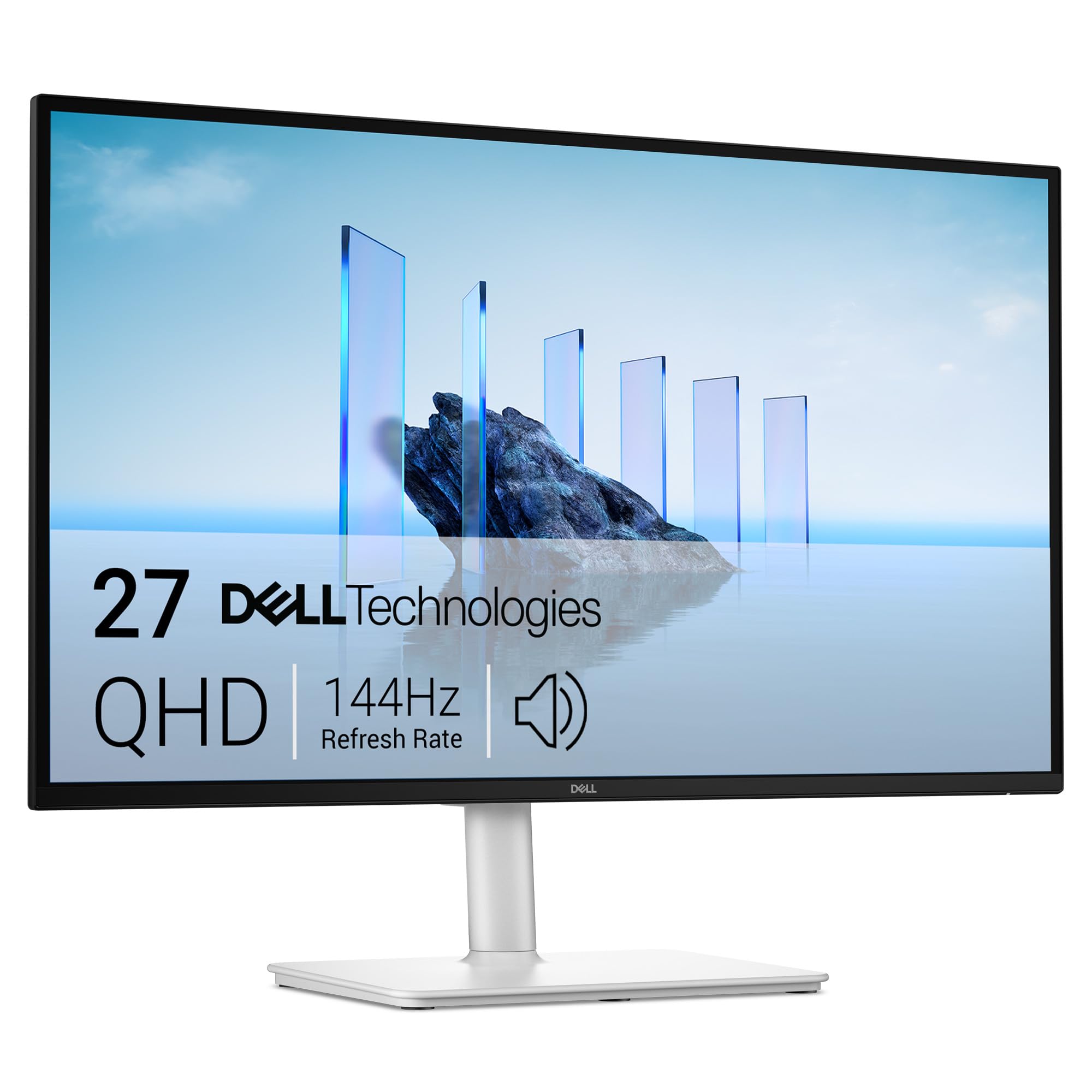
The Dell S2725DSM stands out because it treats ergonomics and build quality as core features, not afterthoughts. The stand offers height, tilt, pivot, and swivel adjustments — a full range of motion that lets you dial in perfect posture for marathon sessions. The 144Hz IPS panel with 1ms MPRT response delivers smooth motion, while the 1500:1 contrast ratio provides noticeably deeper blacks than typical IPS monitors.
The integrated dual 3W speakers are among the best built-in audio solutions on any monitor under . They produce a wider frequency range than the tiny drivers most monitors use, making them passable for casual use without dedicated speakers. The 4-star TÜV ComfortView certification reduces blue light without washing out colors, and the anti-glare coating keeps reflections manageable in bright rooms.
Owners report excellent image quality and seamless PS5 compatibility, with the HDMI 2.1 (TMDS) port supporting 1440p at 120Hz. The ash white finish is a refreshing alternative to the sea of black gaming monitors, though some users note the built-in speakers are decent but not a replacement for a proper audio setup. If you need a monitor that transitions from work to gaming without compromise, this is a strong candidate.
Why it’s great
- Full height/tilt/pivot/swivel adjustability
- 1500:1 contrast ratio for deeper blacks
- Usable integrated speakers with wide frequency range
Good to know
- HDMI is 2.1 TMDS, not full 2.1 bandwidth
- No built-in camera for video calls
- Ash white finish may not match all setups
3. Samsung Odyssey G5 G53F
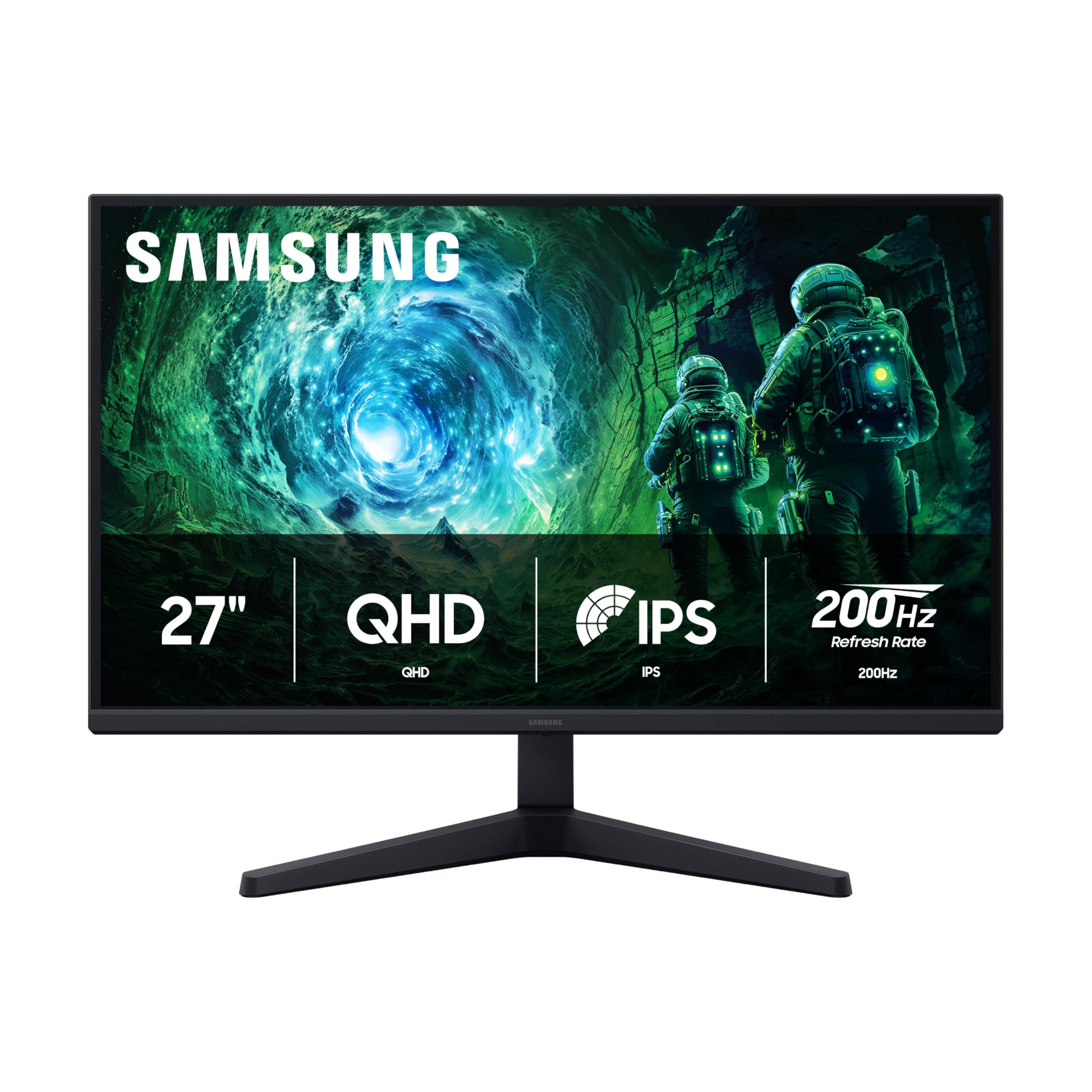
The Odyssey G5 G53F pushes beyond the typical 144Hz ceiling with a 200Hz refresh rate and 1ms MPRT response time, making it a compelling option for gamers who want headroom beyond standard specs. The QHD IPS panel delivers 300 nits brightness and a 1000:1 contrast ratio with wide 178-degree viewing angles. HDR10 support adds highlight detail, though the brightness isn’t high enough for true HDR impact.
Samsung includes Black Equalizer for lifting dark areas in games without overexposing bright zones, and Virtual Aim Point overlays a crosshair for games that lack one. Auto Source Switch+ is a practical feature for users who toggle between PC and console — it detects the active input and switches automatically. The FreeSync Premium certification with LFC ensures smooth gameplay even when frame rates drop below the refresh window.
Customer feedback highlights vibrant colors straight out of the box with minimal calibration needed. The stand only offers tilt adjustment and feels a bit lightweight, but the panel quality and responsiveness earn high marks. Some users received units with broken cable management loops, so inspect that detail on arrival. At this price, the combination of 200Hz and solid image quality is hard to beat for console or PC gamers on a mid-range build.
Why it’s great
- 200Hz refresh rate exceeds standard 144Hz
- FreeSync Premium with LFC for smooth gameplay
- Black Equalizer and Virtual Aim Point features
Good to know
- Stand is basic with only tilt adjustment
- Cable management loop can be fragile
- 72% color gamut is lower than premium IPS
4. Acer Nitro KG271U
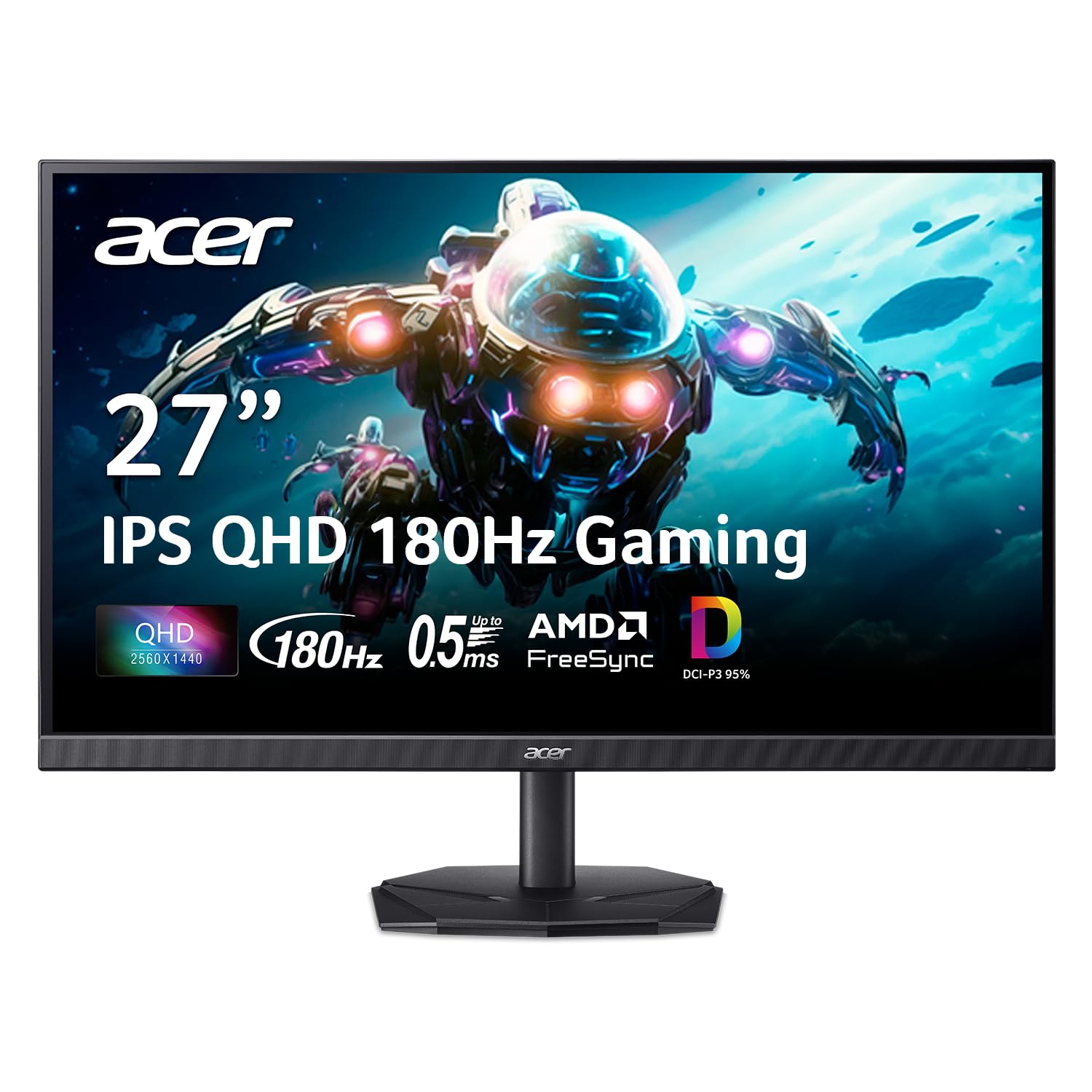
The Acer Nitro KG271U delivers an absurd amount of performance for its price tier: a 27-inch QHD IPS panel with up to 180Hz refresh rate and a 0.5ms GtG response time. The DCI-P3 95% color gamut coverage is a genuine surprise at this price point, producing richer, more saturated colors than monitors that only hit sRGB targets. HDR10 support is noted but, as expected at this tier, brightness is limited to 250 nits.
AMD FreeSync syncs the panel with compatible GPUs to eliminate tearing, and the zero-frame design maximizes screen real estate. The monitor includes built-in speakers that users describe as passable for system sounds but not primary audio. The 250 cd/m² brightness is workable in controlled lighting but struggles against direct sunlight or bright room lamps.
User reviews consistently call out the weak stand as the biggest drawback — it offers no height adjustment and causes noticeable wobble on desks with slight movement. Several owners recommend using a VESA mount or monitor arm immediately. Picture quality and responsiveness get universal praise, with PS5 owners noting it’s the best gaming monitor they’ve used at this price. If you can budget for a separate mount, the KG271U is a phenomenal value.
Why it’s great
- DCI-P3 95% color gamut for vibrant visuals
- 180Hz with 0.5ms response time
- Exceptional value for 1440p gaming
Good to know
- Stand is flimsy and non-adjustable
- Brightness limited to 250 nits
- Built-in speakers are passable at best
5. Dell S2725QS

The Dell S2725QS redefines what a high-refresh monitor can be by combining a 4K resolution with a smooth 120Hz refresh rate and an ultra-low 0.03ms response time. The IPS panel covers 99% sRGB with a 1500:1 contrast ratio, delivering crisp text and vibrant visuals that serve both creative workflows and casual gaming. The 350-nit brightness and HDR readiness provide better highlight detail than typical mid-range monitors.
AMD FreeSync Premium ensures tear-free motion, and the fully adjustable stand — height, tilt, pivot, swivel — matches the ergonomic excellence of the S2725DSM. The improved ComfortView Plus reduces blue light to ≤35% without introducing a yellow cast, making it suitable for all-day use. The re-engineered dual 3W speakers produce deeper bass and wider frequency response than the previous generation.
Users report fantastic color accuracy out of the box, though some note a slight vignetting effect on the edges and minor ghosting in fast-paced gaming. The HDMI 2.1 cable included in the box supports full 4K 120Hz. The 4K resolution requires a strong GPU for gaming, but for users who split time between creative work and lighter gaming, this is an outstanding compromise that avoids the tradeoffs of a pure productivity or pure gaming monitor.
Why it’s great
- 4K resolution with 120Hz for work and play
- Full ergonomic adjustment with height/pivot/swivel
- Excellent comfort view with minimal color shift
Good to know
- 120Hz limits competitive gaming potential
- Some users report slight vignetting on edges
- Not ideal for hardcore esports due to ghosting
6. Acer Predator X27U
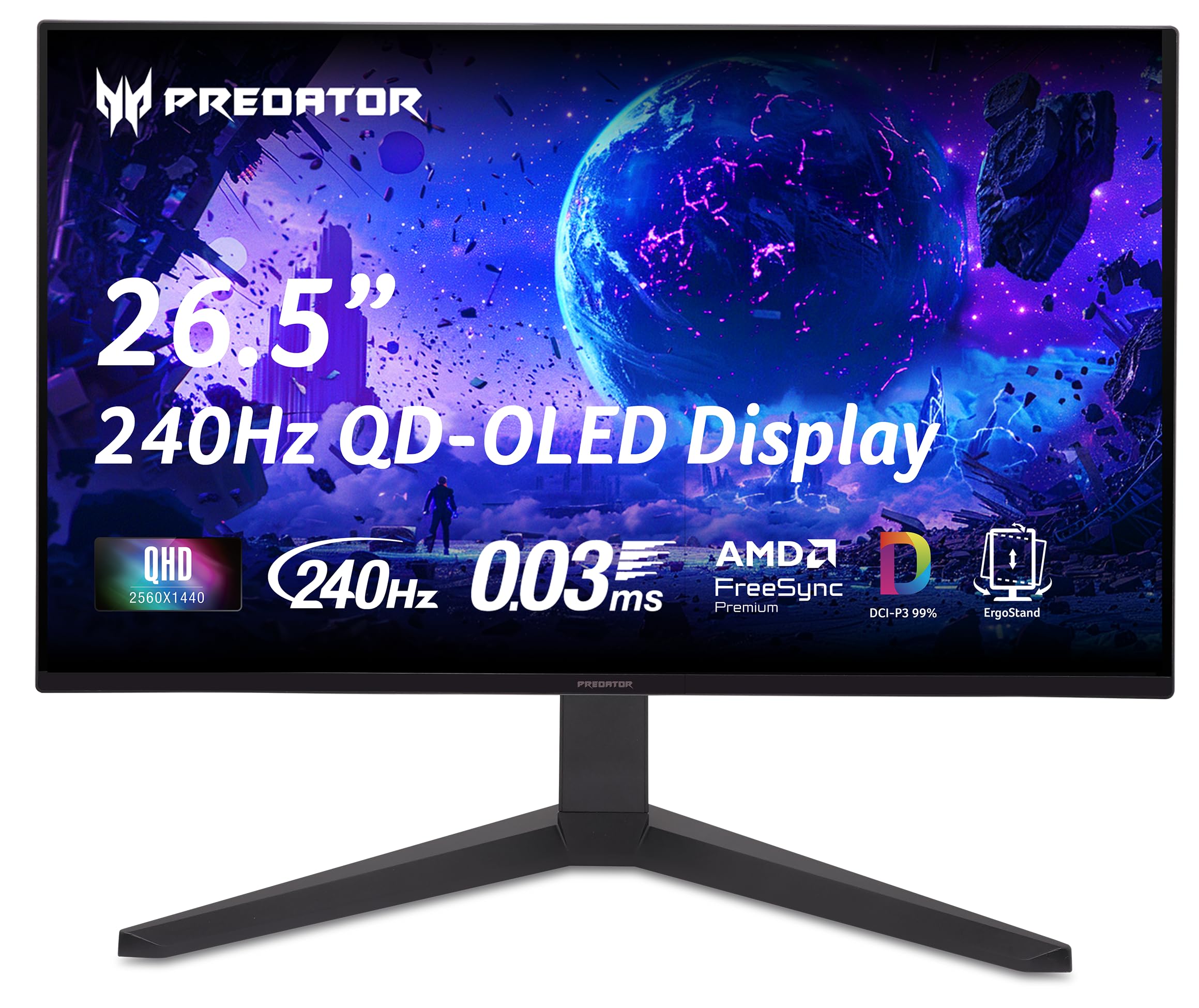
The Acer Predator X27U brings quantum dot OLED technology to a price point that was unthinkable two years ago. The 26.5-inch WQHD panel delivers true 10-bit color with DCI-P3 99% coverage and Delta E<2 accuracy, producing colors that make IPS panels look muted in comparison. The 240Hz refresh rate paired with a 0.03ms GtG response time provides motion clarity that simply cannot be matched by LCD technology — pixel transitions are virtually instantaneous.
AMD FreeSync Premium eliminates tearing, and the panel handles HDR10 content with the OLED advantage of perfect blacks and per-pixel lighting. The zero-frame design minimizes bezel distraction, and the stand offers full tilt, height, pivot, and swivel adjustment. Acer includes image retention refresh routines to mitigate burn-in risk, which is a standard but necessary feature on OLED monitors.
Owners consistently praise the transformative picture quality, with many calling it the best gaming upgrade they’ve ever made. Some note the brightness could be higher for HDR impact, and the plastic build quality doesn’t match the premium price tag completely. A small number of units arrived with cracked stands, so inspect packaging carefully. For users ready to leave LCD behind, the X27U offers OLED’s defining strengths at a mid-range price.
Why it’s great
- QD-OLED delivers infinite contrast and vibrant color
- 240Hz refresh with near-instant 0.03ms response
- Full ergonomic stand adjustment included
Good to know
- Brightness is lower than high-end LCD panels
- Plastic build feels less premium than expected
- Stand quality control issues reported by some users
7. AOC Q27GAZDV
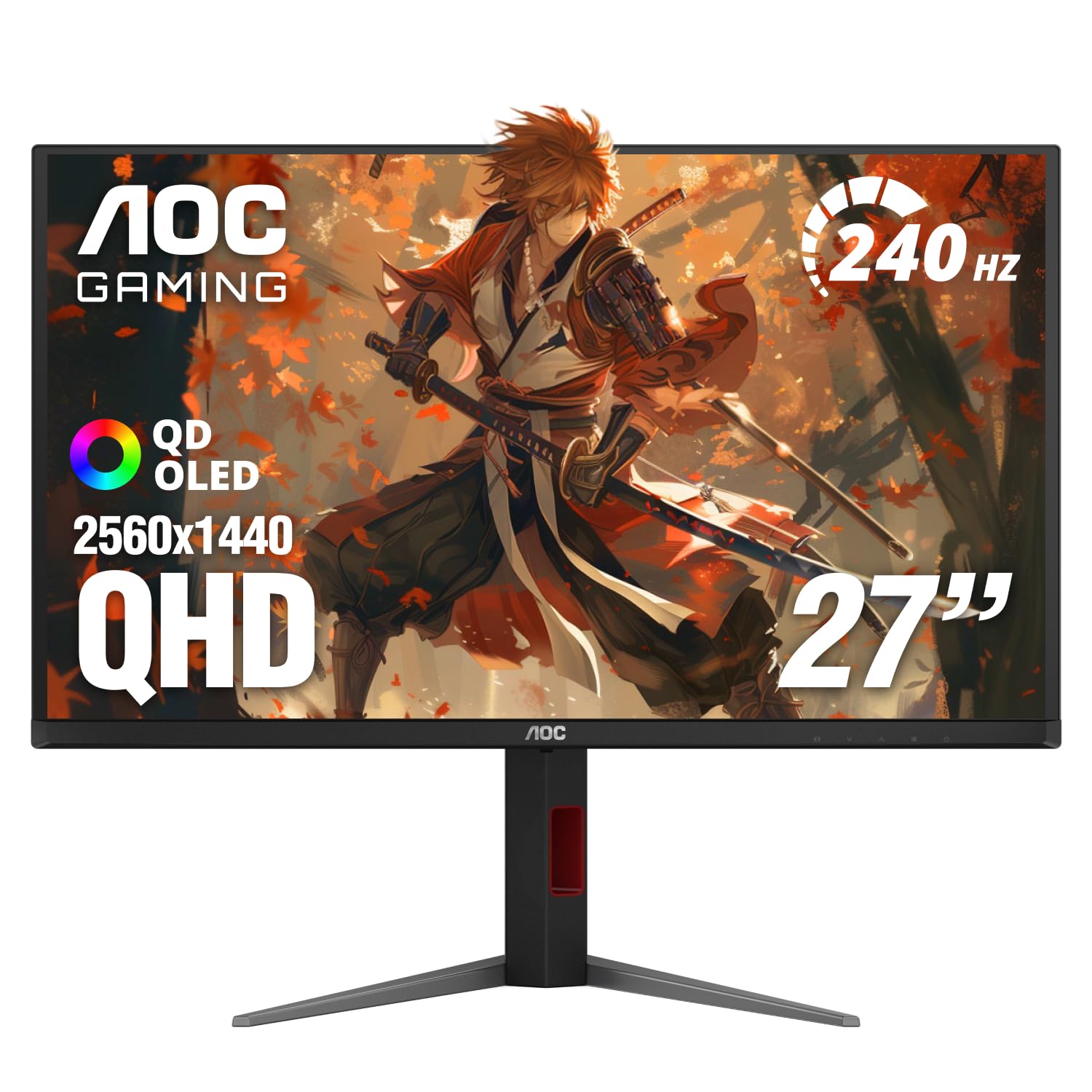
The AOC Q27GAZDV challenges the notion that OLED gaming requires a premium budget. This 27-inch QD-OLED monitor delivers 240Hz refresh, 0.03ms response time, and a 1.5M:1 contrast ratio at a price that undercuts most OLED competitors. The color coverage is exceptional — 147% sRGB and 110% DCI-P3 — producing deeply saturated visuals that feel almost hyperreal in games and HDR content.
G-Sync Compatible certification ensures smooth operation with NVIDIA GPUs, and the HDMI 2.1 port supports full 240Hz on PS5 and Xbox Series X. The stand provides height, tilt, swivel, and pivot adjustment, and a built-in USB 3.2 hub adds convenience for peripherals. There are no built-in speakers, so plan for separate audio. The Flicker-Free technology reduces eye strain during long sessions.
User feedback highlights the “inky” black levels and complete absence of ghosting as the standout features. Some users had initial challenges with muted colors, which resolved after adjusting PC settings. The ports face downward, which can be awkward with right-angle cables. For gamers who have been waiting for an affordable OLED entry point, the Q27GAZDV delivers the core OLED experience without major compromises.
Why it’s great
- Affordable QD-OLED with 240Hz and 0.03ms
- Exceptional color gamut coverage
- Full ergonomic stand and USB hub included
Good to know
- No built-in speakers
- Ports on bottom require right-angle cables for clean setup
- Initial color calibration may be needed
8. LG 27GS93QE
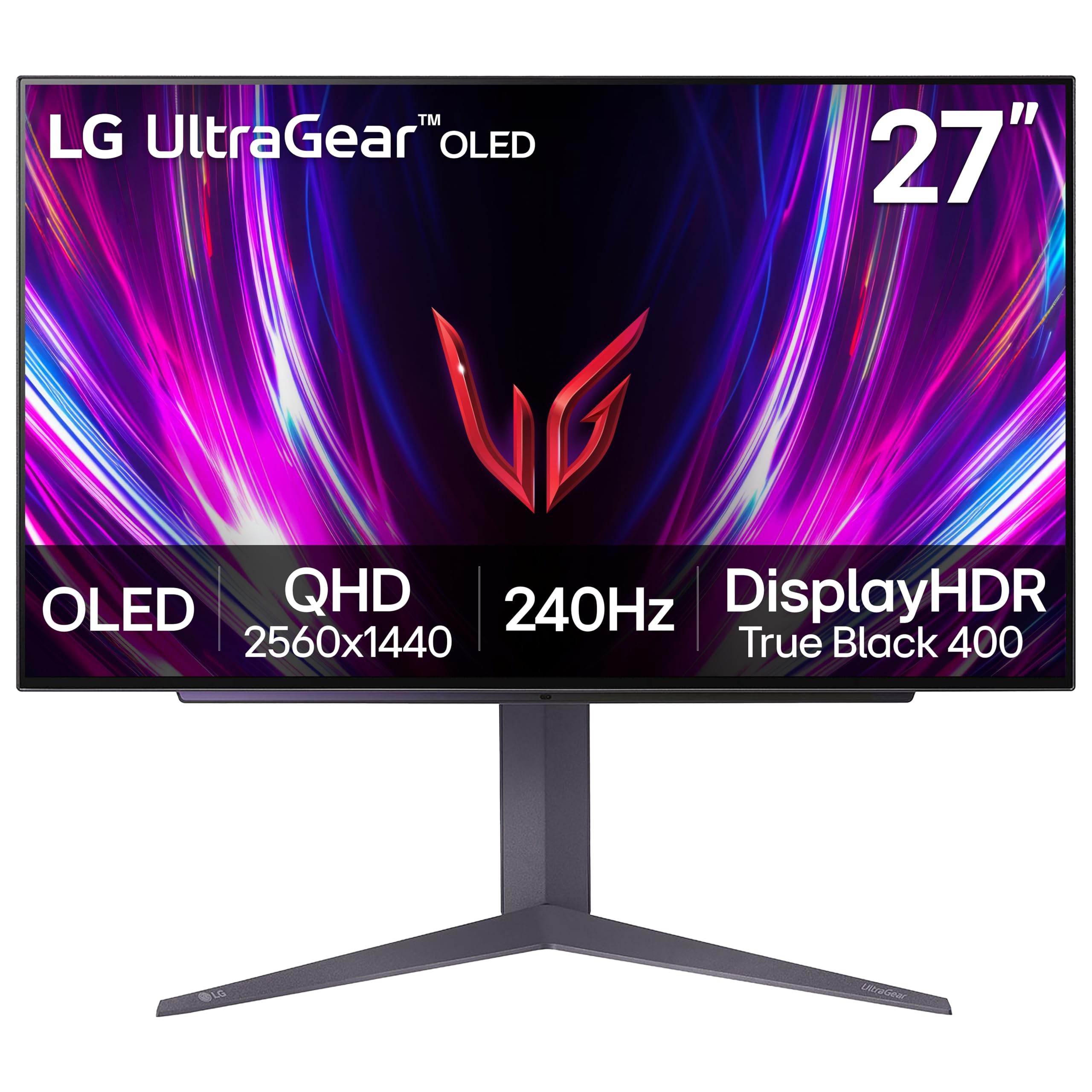
The LG 27GS93QE uses a WOLED panel that addresses two common QD-OLED complaints: purple-ish blacks in bright rooms and reflective screen coatings. The matte anti-glare finish on this WOLED panel produces true inky blacks even in ambient light, and the 1.5M:1 contrast ratio delivers the depth that makes OLED special. VESA DisplayHDR True Black 400 certification means it meets strict standards for black-level performance and brightness consistency.
The 240Hz refresh rate with 0.03ms GtG response time is standard OLED territory, but the inclusion of both G-Sync Compatible and FreeSync Premium Pro ensures compatibility across GPU ecosystems. The 98.5% DCI-P3 coverage provides excellent color saturation, and the virtually borderless design fits well in multi-monitor setups. The stand offers height, tilt, and pivot adjustment, though some users find its footprint too large for compact desks.
Owners consistently praise the accurate colors straight out of the box and the smooth G-Sync operation. The matte coating eliminates the image fuzziness that some glossy QD-OLED panels exhibit, and the WOLED panel avoids the purple-black shift issue entirely. The pixel refresh cycle takes about six minutes and is non-disruptive. For users who prioritize black-level performance in mixed-lighting rooms, this LG is a top-tier choice.
Why it’s great
- WOLED panel with true black levels in any lighting
- Matte anti-glare coating eliminates reflections
- DisplayHDR True Black 400 certified
Good to know
- Stand has a large footprint
- Pixel refresh cycle takes several minutes
- Premium price tier
9. ASUS ROG Strix XG27AQDMG

The ASUS ROG Strix XG27AQDMG is the most refined 1440p OLED monitor in this lineup, combining a glossy WOLED panel with a custom heatsink and advanced airflow design to reduce burn-in risk. The 26.5-inch display delivers 240Hz refresh, 0.03ms response time, and 99% DCI-P3 coverage with the punchy contrast that makes glossy panels look alive. The ROG-exclusive OLED Anti-flicker technology minimizes flicker during refresh-rate fluctuations, a common annoyance on OLED monitors.
G-Sync Compatible certification and FreeSync Premium ensure smooth tearing-free gameplay, and the DisplayWidget software allows quick setting adjustments without digging into the OSD menu. The uniform brightness setting locks luminance levels for consistent brightness across the screen, which is useful for productivity work. ASUS backs this monitor with a 3-year warranty that includes burn-in coverage — a significant vote of confidence in the panel’s longevity.
Owners describe the image quality as a “crazy difference” from IPS, with colors and blacks that transform the gaming experience. The glossy finish produces deeper contrast than matte panels, though it reflects light sources more readily. Some users experienced flickering that resolved with a quality DisplayPort 1.4 cable. The VESA mount installation is reportedly finicky. For gamers who want the best possible image quality and long-term peace of mind, the XG27AQDMG is the premium pick.
Why it’s great
- Glossy WOLED with vibrant, lifelike image quality
- Custom heatsink and 3-year burn-in warranty
- OLED Anti-flicker technology for smooth transitions
Good to know
- Glossy finish reflects ambient light
- No built-in speakers
- VESA mount installation is difficult
FAQ
Can my graphics card run a 144Hz monitor at full refresh rate?
What is the difference between DisplayPort and HDMI for 144Hz gaming?
Is 144Hz noticeable compared to 60Hz?
Does a 144Hz monitor cause more eye strain?
Should I get a 144Hz 1440p monitor or a 60Hz 4K monitor for gaming?
Final Thoughts: The Verdict
For most users, the 144hz monitor winner is the LG 27GL83A-B because it delivers the ideal balance of fast IPS performance, G-Sync compatibility, and an adjustable stand at a price that doesn’t break the bank. If you want a monitor that handles productivity and gaming with equal grace, grab the Dell S2725DSM. And for the best possible image quality with OLED’s infinite contrast, nothing beats the ASUS ROG Strix XG27AQDMG.