
Our readers keep the lights on and the weekend projects moving. As an Amazon Associate, I earn from qualifying purchases.
A raised bed is a closed-loop ecosystem, and the single bag you pour into it decides whether your tomatoes swell or your roots rot. The difference between bumper squash and a wilted pepper bed often comes down to one thing: the physical structure of the bagged soil inside that frame. You can water perfectly and still fail if the organic matter ratio is off — the wrong bag compresses into a brick by July.
I’m Rikta — the founder and writer behind FitlyFast. I’ve spent seasons cross-referencing soil lab analyses, real-garden compaction tests, and bag-to-bag consistency reports to separate the fluffy, living blends from the overpriced dust.
This guide walks the fine line between moisture retention and aeration, organic certification vs. raw performance, and bag volume vs. true yield. Here are the best bagged soil for raised beds that actually hold structure from planting to harvest.
How To Choose The Best Bagged Soil For Raised Beds
Raised beds are not ground soil. The walls trap water, limit root spread, and accelerate nutrient burn. A bagged mix formulated for in-ground gardens often suffocates a raised bed within one growing cycle. You have to match three variables: texture, feed schedule, and organic certification.
Texture First — Never Buy Dense Soil
Your hands are the best tool. Squeeze a handful of the dry mix: if it clumps into a hard ball that doesn’t crumble when you poke it, the bag is too heavy. Raised beds require a loamy, chunky structure with perlite, aged bark, or coco coir to keep air channels open. Dense soil turns into concrete after two months of watering, choking root tips and inviting fungal diseases.
Organic Certification vs. Raw Performance
OMRI-listed bags guarantee no synthetic chemicals, but not all organic blends feed the same. Some rely on slow-release composted manure; others spike growth with worm castings and fish emulsion. If you are growing leafy greens or fast-maturing crops, you want a mix with a higher nutrient density upfront. For perennials or long-season tomatoes, a leaner base that you can top-dress is safer against nitrogen burn.
Volume Truth — Cubic Feet vs. Quarts vs. Weight
A 40-pound bag sounds like a deal until you realize it’s mostly moisture and rocks. The real measure is volume: 1.5 cubic feet fills roughly a standard 4×4 foot raised bed to a depth of 3–4 inches. Quarts are trickier — 20 quarts is about 0.67 cubic feet. Know your bed’s dimensions before you buy, and always buy 10–15 percent more than your calculation to account for settling after the first watering.
Quick Comparison
On smaller screens, swipe sideways to see the full table.
| Model | Category | Best For | Key Spec | Amazon |
|---|---|---|---|---|
| Espoma Organic Raised Bed Mix | Premium | All-in-one raised bed fill | 1.5 cu ft, Myco-Tone blend | Amazon |
| FoxFarm Ocean Forest Potting Soil | Premium | Container & raised bed vigor | 1.5 cu ft, Aged forest products | Amazon |
| Wiggle Worm Raised Bed Mix | Premium | Worm-casting fed beds | 40 lbs, Worm egg material | Amazon |
| Coast of Maine Veggie Mix | Mid-Range | Tomato & vegetable beds | 20 Qt, Composted manure | Amazon |
| Coast of Maine Acid-Loving Mix | Mid-Range | Blueberry & berry beds | 20 Qt, Low pH formulation | Amazon |
| MODELLOR Coco Coir Brick | Budget | DIY custom soil base | 10 lb brick, Expands to 20 gal | Amazon |
| Wakefield Biochar Blend | Budget | Water retention booster | 4 Qt, CarbonBoost Technology | Amazon |
In‑Depth Reviews
1. Espoma Organic Raised Bed Mix

The Espoma Raised Bed Mix is the closest thing to a plug-and-play formula for a new raised bed. It comes out of the bag with a chunky, crumbly texture that resists compaction through multiple watering cycles — the Myco-Tone blend of endo and ecto mycorrhizae colonizes root zones quickly, giving transplants a measurable head start. Gardeners report successful germination for everything from watermelon to celery in this mix alone, without any separate seed-starting medium.
The organic feed comes from earthworm castings, alfalfa meal, kelp meal, and feather meal, which release nitrogen on a gentle schedule. This means you don’t need to fertilize for the first 30 days. Bags arrive sealed inside a box, so you won’t open a torn pouch full of dry, dusty particles. The volume — 1.5 cubic feet — covers a 4×4 bed to a depth of about 4 inches, which is the ideal starting layer before topping off with compost or mulch.
One consistent note from long-term users is that the price per bag is higher than generic blends, but the results justify the investment for growers who want a single-bag solution. If you are filling multiple large beds, you can stretch this mix by blending it with a cheaper base like topsoil or coco coir without losing its structural benefits.
Why it’s great
- Mycorrhizae inoculant built in — roots establish faster without additional supplements.
- No synthetic chemicals, OMRI-listed, and smells clean like fresh compost.
- Consistent texture across multiple bags; no large wood chunks or gravel.
Good to know
- Higher upfront cost per bag compared to store-brand raised bed mixes.
- Best used in combination with a cheaper filler for large-scale beds to manage budget.
2. FoxFarm Ocean Forest Potting Soil
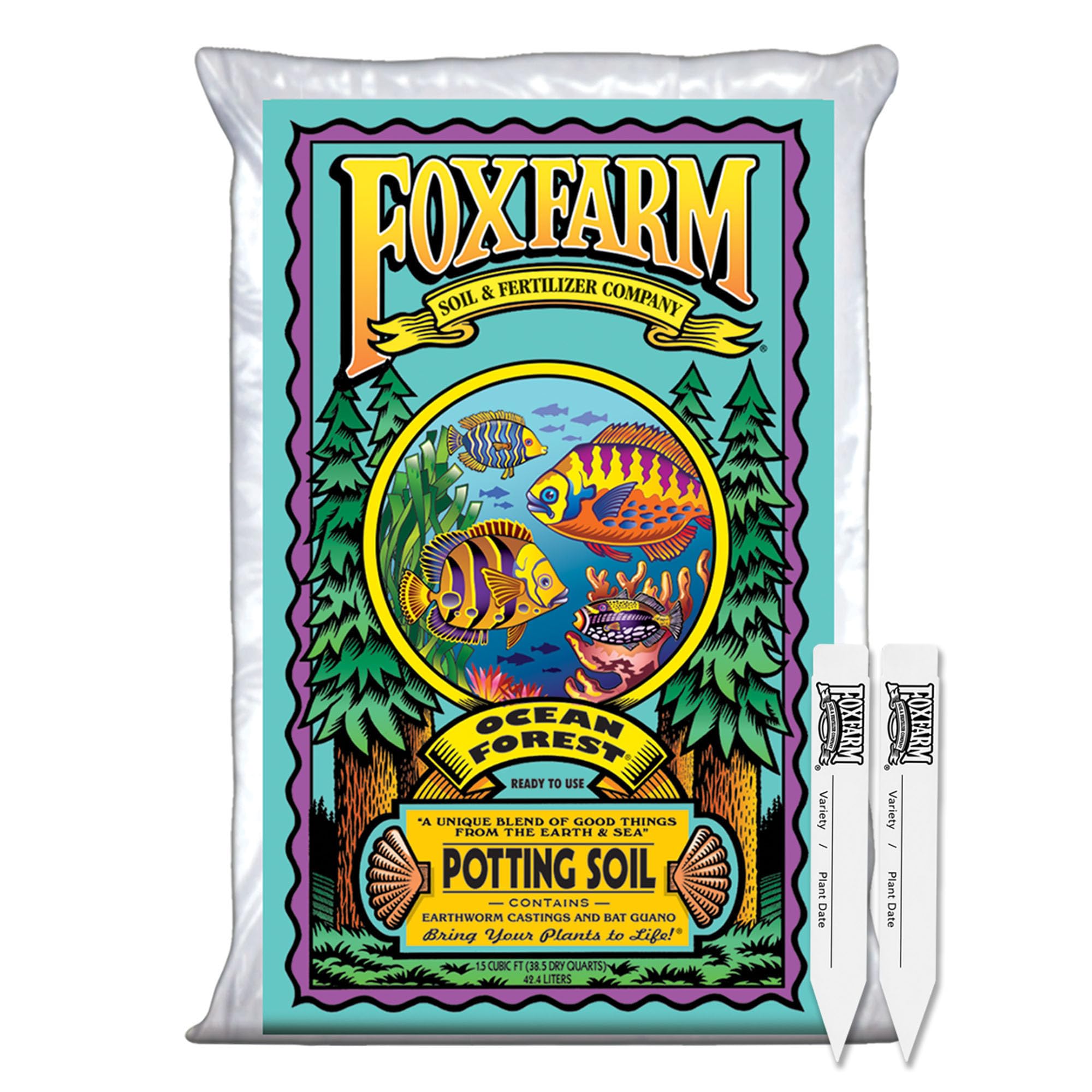
FoxFarm Ocean Forest has built a cult following among serious vegetable growers, and the reason is visible in a side-by-side germination test. The mix contains 50–60 percent aged forest products, sphagnum peat moss, perlite, and sandy loam, which creates a light, aerated texture that water penetrates instantly. Unlike denser bagged soils that bead water on the surface, Ocean Forest absorbs moisture on contact, reducing the risk of dry pockets inside a raised bed.
The nutrient profile is aggressive: fish emulsion, crab meal, shrimp meal, earthworm castings, kelp meal, and oyster shell. This feeds heavy feeders like tomatoes, peppers, and squash for roughly 6 to 8 weeks without additional fertilizer. Some users note that the mix can support mushroom growth in humid conditions — a sign of living fungal activity, not a defect. The bag includes two customizable plant tags, a minor touch that helps track planting dates.
Because it is a potting soil rather than a dedicated raised bed mix, it drains faster than blends designed for beds. For growers in hot, dry climates, this drainage is an advantage; for cooler, wet regions, you may need to mix in extra compost or topsoil to slow water loss. FoxFarm also comes in a 1.5-cubic-foot bag, and the price has been climbing, making it a better choice for smaller beds or top-dressing rather than filling an entire 8×4 bed.
Why it’s great
- Immediate water absorption — no dry spots after first irrigation.
- Rich organic nutrient load supports heavy feeders for weeks without supplementing.
- Loose, fluffy structure promotes aggressive root branching.
Good to know
- Potting soil formulation drains faster than dedicated raised bed mixes.
- Higher price point encourages blending with a cheaper base for larger beds.
3. Wiggle Worm Raised Bed Mix
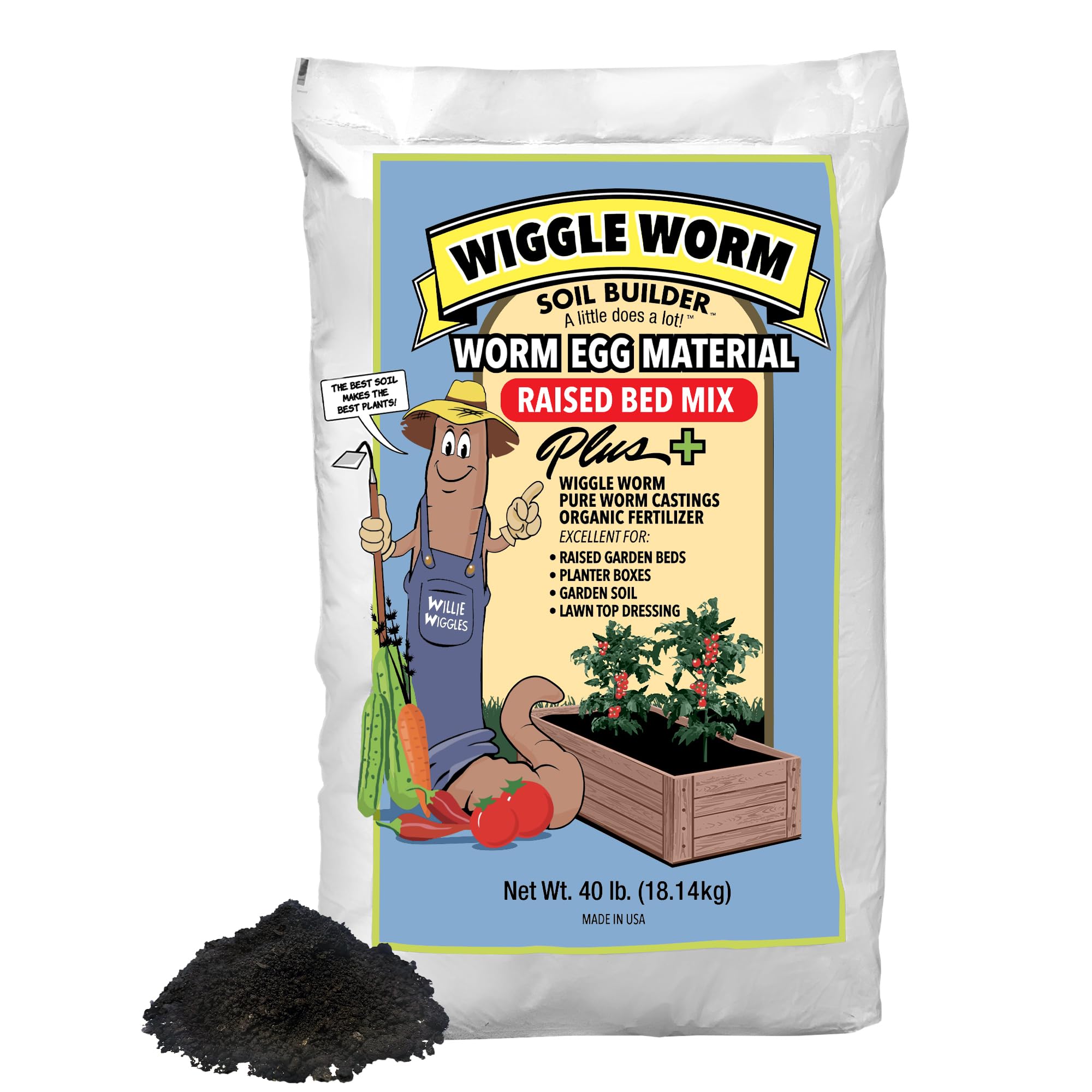
Wiggle Worm takes a different approach: instead of loading the bag with peat and bark, they blend high-quality compost soil with worm castings and actual worm egg material. The eggs may hatch after you spread the mix, introducing live worms directly into your raised bed. Those worms then tunnel, aerate, and produce fresh castings, creating a self-sustaining fertility cycle. Gardeners consistently report that transplants hit with this mix develop faster and show deeper green coloration within the first week.
The 40-pound bag is heavier than a volume-based cubic-foot bag because it contains dense compost and castings rather than fluffy peat. That weight translates to concentrated nutrition — a small scoop at the bottom of a planting hole is often enough to boost a single plant. The mix works both as a straight fill for small beds and as an amendment stirred into existing soil. Worm tunnels improve oxygen flow and prevent the waterlogging that plagues deep raised beds during rainy weeks.
One caution: a few buyers have reported rocks and woody debris in their bags, which suggests batch inconsistency at the processing level. Sifting the mix before planting is a safe practice if you are direct-sowing small seeds. For transplanting mature seedlings, the occasional pebble causes no issue.
Why it’s great
- Live worm eggs can establish a self-aerating, self-fertilizing bed ecosystem.
- Concentrated nutrition means a single bag covers more area when used as a booster.
- Excellent for heavy clay soil amendment — adds organic structure and microbial life.
Good to know
- Occasional rocks or wood chunks require sifting for fine seed beds.
- Heavy bag — 40 lbs — makes handling and transport harder than lighter cubic-foot bags.
4. Coast of Maine Organic Vegetable & Tomato Planting Soil

Coast of Maine’s vegetable blend is formulated specifically for tomatoes and heavy feeders, but it works across the board for raised bed vegetables. The mix uses composted manure, sphagnum peat moss, and a touch of perlite to balance moisture retention and drainage. Gardeners note that heirloom tomato varieties — which are notoriously sensitive to root rot — thrive in this blend because the drainage is aggressive enough to prevent standing water but retentive enough to avoid midday wilt.
The 20-quart bag is smaller than the cubic-foot options, making it ideal for topping off existing beds or filling a single 2×4 raised bed to a depth of about 3 inches. The dark, rich color signals high organic matter content, and the presence of cedar or aromatic wood particles helps deter soil-borne insects. A few users reported fungus gnats after opening the bag, which is common with compost-heavy organic soil; a neem oil drench resolves the issue quickly.
For large-scale raised bed builds, the price per quart is higher than bulk options. This mix shines as a premium top-dressing or a dedicated medium for a small, intensively planted vegetable bed. The OMRI listing ensures organic compliance, and the lightweight texture makes it easy to pour and spread without breaking your back.
Why it’s great
- Good drainage structure — critical for heirloom tomatoes prone to root rot.
- Aromatic wood content adds natural pest deterrence in closed raised beds.
- Rich color indicates high microbial activity and nutrient availability.
Good to know
- 20-quart volume may require multiple bags for a full 4×4 bed.
- Fungus gnats possible on initial opening — treat with neem oil as precaution.
5. Coast of Maine Organic Acid-Loving Planting Soil

If your raised bed is dedicated to blueberries, strawberries, rhododendrons, or azaleas, standard vegetable soil will slowly raise the pH and stunt growth. Coast of Maine’s acid-loving formula uses a low-pH blend of composted manure, sphagnum peat moss, and aged bark to keep the soil in the 4.5–5.5 range that berry bushes demand. The bag includes perlite for moisture retention without creating the soggy conditions that cause root suffocation in acid-sensitive plants.
Gardeners report that this mix revitalizes tired blueberry planters that had stopped producing. The pH balance is consistent across multiple bags — a rare trait in organic acid mixes — and the texture remains open and crumbly even after a full season of watering. The 20-quart size is practical for a pair of large blueberry pots or for amending a small raised bed dedicated to strawberries. It is OMRI-listed and uses no synthetic pH adjusters.
One limitation: this mix is not a general-purpose raised bed soil. Use it only for beds or containers where you know the plants require acidic conditions. For mixed vegetable beds that include both tomatoes and blueberries, it is better to segregate them into separate containers with tailored soils rather than compromise with a single neutral mix.
Why it’s great
- Reliable low pH range (4.5–5.5) without chemical acidifiers.
- Light, open texture prevents compaction even in plastic blueberry pots.
- Perlite inclusion ensures moisture stays accessible without saturation.
Good to know
- Not suitable for neutral-pH crops like tomatoes, peppers, or leafy greens.
- 20-quart bag is small for large raised beds filled exclusively with acid lovers.
6. MODELLOR Premium Super Washed Coco Coir Brick
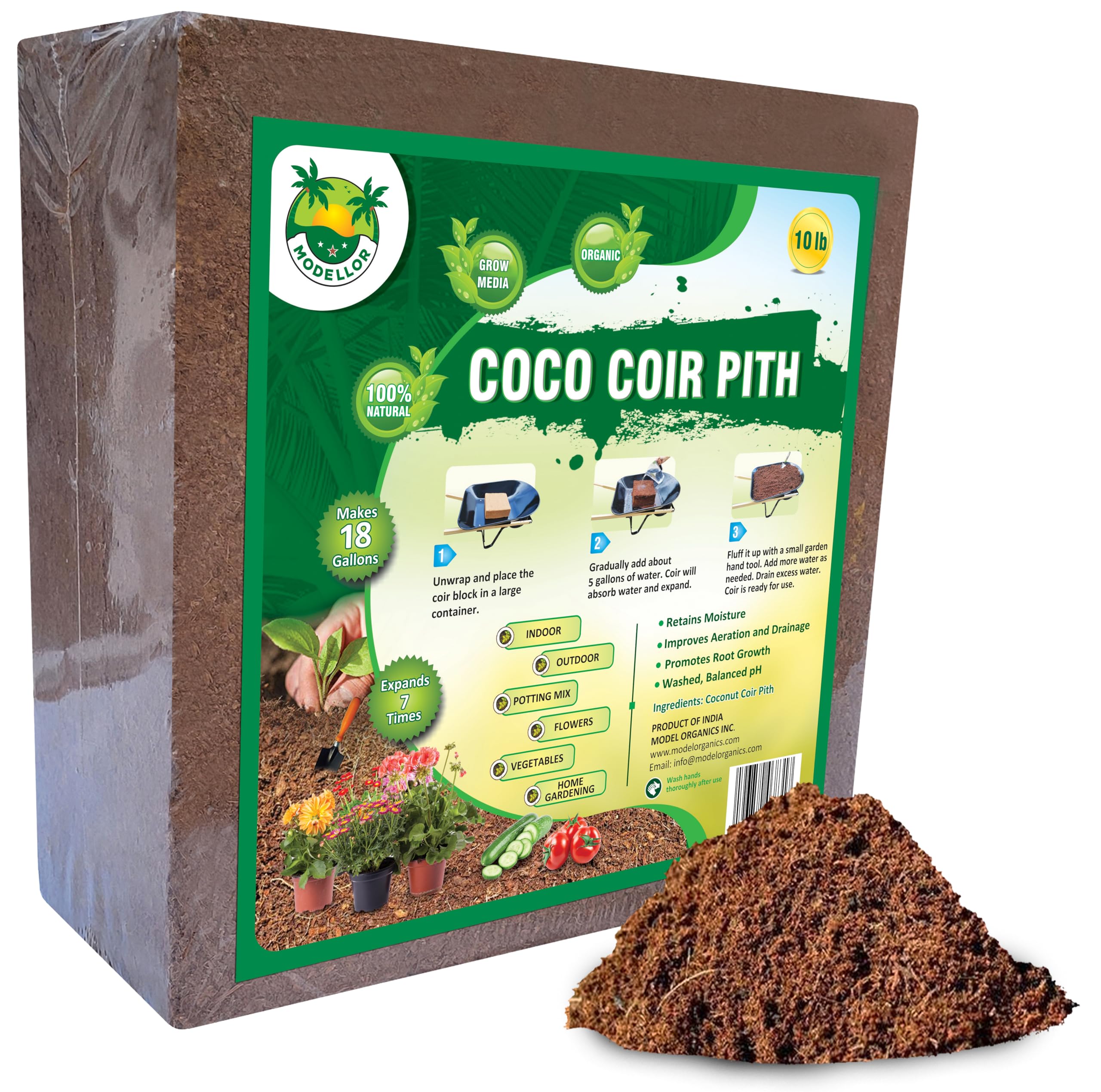
MODELLOR’s coco coir brick is not a complete raised bed soil — it is the structural foundation for a custom mix. A single 10-pound brick expands into 18 to 20 gallons of fluffy coir after you add water. This is a clean, triple-washed product with low salt content, so you don’t need to rinse it before use. The pH is pre-balanced to around 5.8–6.5, making it a neutral base that works with any fertilizer regimen.
Experienced raised bed growers use coco coir to replace or supplement peat moss because coir rehydrates faster and resists compaction longer. When blended with compost, worm castings, and perlite, this brick creates a custom raised bed mix at a fraction of the cost of premium bagged blends. The texture after expansion is light and fluffy, with excellent capillary action that pulls water upward, reducing the frequency of watering in hot weather.
The trade-off is effort: you have to hydrate the brick in a large container or wheelbarrow and manually break it apart. The expansion volume can catch first-timers off guard — half a brick fills a standard wheelbarrow. This product rewards growers who want control over their soil recipe and are willing to invest 15 minutes of mixing for a season of customized performance.
Why it’s great
- Low salt content means no pre-rinsing — hydrate and use directly.
- Massive expansion ratio: one 10-pound brick yields 18–20 gallons of medium.
- Ideal base for DIY raised bed blends with customized NPK ratios.
Good to know
- Not a complete soil — requires mixing with compost, castings, or fertilizer.
- Hydration requires a large container and physical effort to break apart.
7. Wakefield Biochar Blend with CarbonBoost Technology
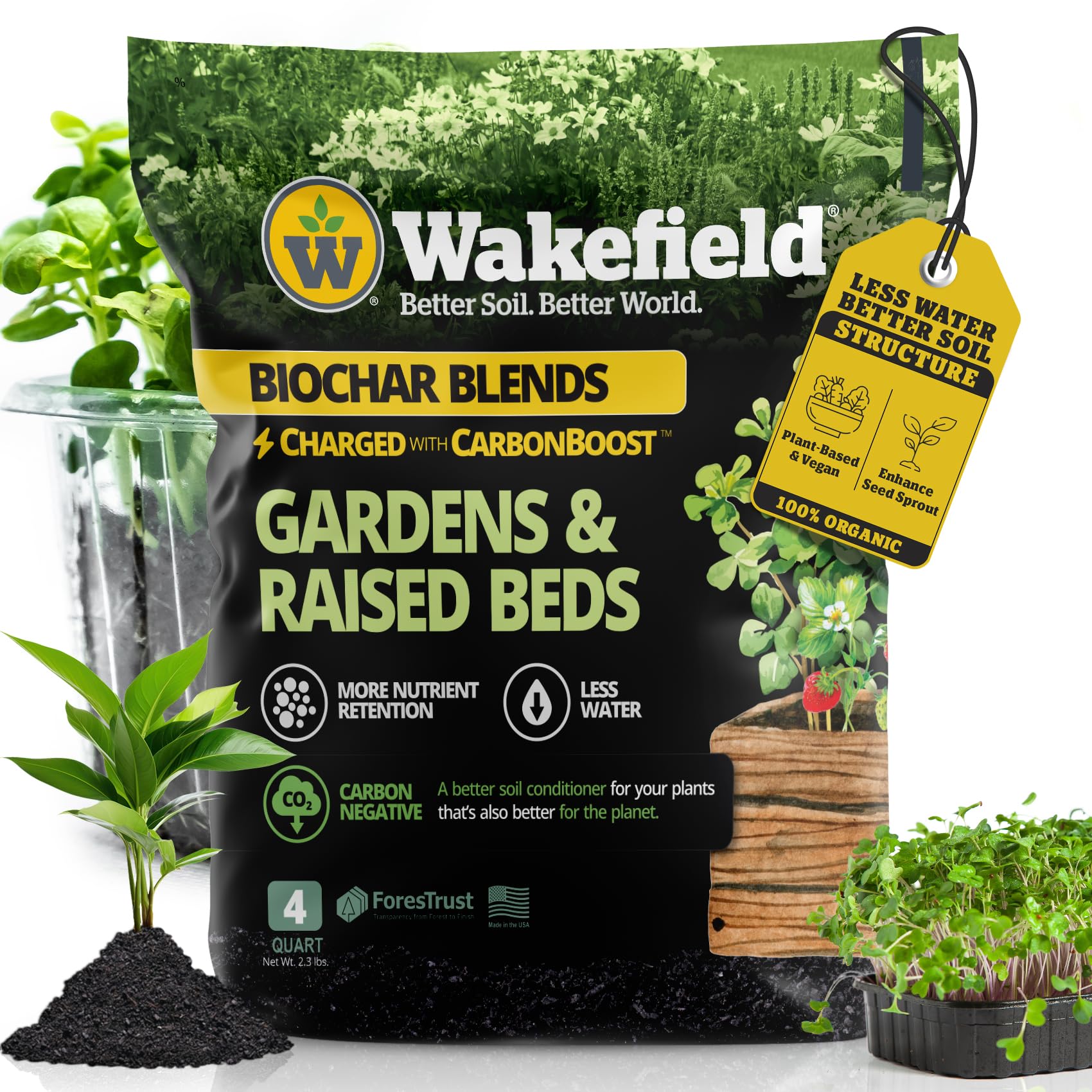
Wakefield Biochar is not a standalone raised bed fill — it is a soil amendment engineered to solve two specific problems: water loss and nutrient leaching. The carbon-negative biochar is infused with CarbonBoost technology and a probiotic-mycorrhizae blend that creates a porous sponge structure inside your existing soil. Gardeners using this in raised beds report cutting watering frequency by up to 50 percent while seeing greener foliage from better fertilizer retention.
The 4-quart bag is compact and best used as a concentrate. For a standard 4×4 raised bed, mixing in two or three bags before planting season boosts the soil’s cation exchange capacity, meaning the nutrients you add stay accessible to roots rather than washing out the bottom. The product also contains mycorrhizae that form symbiotic relationships with root systems, particularly beneficial for transplants that experience transplant shock.
Because the bag is small relative to its price, this is not a low-cost solution for filling large beds. It works best as a top-dressing or a targeted amendment for poor native soil or clay-heavy raised bed mixes. A few users noted that the bag arrives smaller than expected, so read the volume — 4 quarts — before ordering for large-scale projects.
Why it’s great
- Biochar structure holds water and nutrients in the root zone, reducing irrigation needs.
- Probiotic and mycorrhizae blend boosts root colonization speed for new transplants.
- Carbon-negative manufacturing aligns with sustainable gardening practices.
Good to know
- 4-quart volume is small — multiple bags needed for large beds.
- Higher cost per volume than bulk soil amendments like compost or peat.
FAQ
How much bagged soil do I need for a 4×4 raised bed?
Can I use potting soil instead of raised bed mix?
What does OMRI listed mean for bagged soil?
Should I mix coco coir with my bagged soil for raised beds?
Final Thoughts: The Verdict
For most users, the bagged soil for raised beds winner is the Espoma Organic Raised Bed Mix because it combines a ready-to-use texture, mycorrhizae inoculation, and OMRI-listed ingredients in one balanced bag — no mixing, no guessing, just pour and plant. If you want a living soil that builds its own ecosystem over time, grab the Wiggle Worm Raised Bed Mix. And for budget-minded growers who prefer to craft their own blend, nothing beats the MODELLOR Coco Coir Brick as a fluffy, clean base that stretches every dollar.