
Our readers keep the lights on and the weekend projects moving. As an Amazon Associate, I earn from qualifying purchases.
A snowboarder’s camera faces a unique enemy — not just the cold draining your battery before the first run, but the constant vibration and low-angle light that turns trophy footage into a blurry, washed-out mess. Choosing an action camera for this sport means prioritizing three things the marketing specs bury: cold-weather battery endurance, high-bitrate stabilization that handles edge-to-edge chatter, and lens coatings that fight glare off white snow at noon.
I’m Rikta — the founder and writer behind FitlyFast. I’ve spent years analyzing sensor readout speeds, gyro algorithms, and battery chemistry to separate real-world performance from spec-sheet hype in the action camera market.
For riders who want their POV to actually look like it felt on the mountain, the right action camera for snowboarding must balance stabilized 4K or 8K capture with a battery that doesn’t quit after three runs in sub-zero temperatures.
How To Choose The Best Action Camera For Snowboarding
Snowboarding footage fails in three predictable ways: the camera shuts off when the temperature drops, the stabilization washes out during chatter on hardpack, or the footage looks good until you hit a shadow and the sensor can’t recover the highlights. Fixing these means reading beyond the headline megapixels.
Cold-Weather Battery Chemistry
Standard lithium-ion cells lose significant capacity below freezing. Look for cameras that ship with a cold-resistant battery or an “Enduro”-style cell — these use an electrolyte formulation that maintains voltage down to -10°C or -20°C. The DJI Osmo Action 5 Pro and GoPro HERO13 Black both advertise sub-zero endurance because of this chemistry. If a camera lists only a generic battery life at room temperature, expect half that on a lift-served mountain at 8 AM.
Stabilization That Handles Hardpack Chatter
Not all electronic image stabilization is equal at 30 mph over frozen ruts. The best snowboarding cameras pair gyro data with horizon-locking algorithms — like DJI’s HorizonSteady at 360° roll-axis correction or GoPro’s HyperSmooth with its dedicated GP2 chip. A 6-axis gyro with 4K/60fps minimum frame rate gives the software enough temporal data to interpolate clean frames. Anything less tends to introduce jutter or cropped, soft edges when the board chatters through a cat track.
Lens Coating and Dynamic Range for Snow Glare
White snow at noon creates extreme luminance values — the camera must expose for both shadowed trees and bright powder without blowing out the highlights. A sensor with 12+ stops of dynamic range helps, but lens coatings matter too. Water-repelling lens covers (GoPro’s HERO13 Black has one) reduce flare artifacts. A color temperature sensor, like the one in the DJI Osmo Action 5 Pro, helps maintain natural white balance as you transition from shaded tree runs to open faces.
Quick Comparison
On smaller screens, swipe sideways to see the full table.
| Model | Category | Best For | Key Spec | Amazon |
|---|---|---|---|---|
| Xtra Edge Pro | Mid-Range | Dusk riders on a budget | 1/1.3″ sensor, Night View Mode | Amazon |
| DJI Osmo Action 5 Pro | Premium | All-day backcountry filming | 4 hrs battery, -20°C rated | Amazon |
| GoPro HERO13 Black | Premium | 5.3K resolution purists | 5.3K60 HDR video | Amazon |
| DJI Osmo Action 6 | Premium | Variable-aperture creative control | 8K video, f/2.0-f/4.0 aperture | Amazon |
| GoPro MAX2 | Premium | 360° reframing on the mountain | 8K spherical, 6 mics | Amazon |
| Insta360 X5 | Premium | Third-person snow selfies | Dual 1/1.28″ sensors, 8K30 | Amazon |
| AKASO Brave 6 Plus | Budget | First-time helmet POV | 4K30, 2x batteries included | Amazon |
| SJCAM C300 | Budget | Entry-level dual-screen framing | 6-axis gyro, 30m waterproof | Amazon |
| XbotGo Falcon | Niche | Team-training analysis | AI auto tracking, IPX5 | Amazon |
In‑Depth Reviews
1. DJI Osmo Action 5 Pro Adventure Combo

The 1/1.3-inch sensor with 2.4 µm pixels gives the Action 5 Pro a genuine edge in flat snow light — you get usable detail in the shadows of tree runs without blowing out the bright face. The 13.5-stop dynamic range handles the transition from shaded gully to open bowl better than any camera at this price tier.
The 1950mAh Enduro-style battery is the real story for snowboarders: DJI rates it for 3.6 hours of continuous recording at -20°C. In practice, that means a full day of lift-served riding without swapping cells. The Adventure Combo includes two spare batteries and a charging case, pushing total runtime well past what any single-camera shoot needs.
HorizonSteady eliminates 360° roll-axis shake — if you mount this on a helmet, the horizon stays level even through a 180° spin. The front OLED touchscreen makes framing selfie-style shots intuitive with gloves on, though the interface is responsive enough that you may still need a nose-tap for mode changes.
Why it’s great
- Longest cold-weather battery life in its class at -20°C rating
- HorizonSteady holds level through full spins and hardpack chatter
- Color temperature sensor prevents snow from shifting blue/green
Good to know
- Generates noticeable heat after extended 4K recording in warm conditions
- DJI Mimo app requires sideload on some Android devices
2. GoPro HERO13 Black

GoPro’s latest flagship offers 5.3K video at 60 fps with 91% more resolution than standard 4K — this is meaningful for snowboarders who crop or reframe in post, because you can pull a stable 4K clip from a 5.3K master without losing sharpness. HyperSmooth stabilization on the GP2 chip remains one of the most aggressive in the market, smoothing hardpack chatter effectively at high frame rates.
The Enduro battery included with the HERO13 Black handles cold starts better than previous generations, though the 79-minute average runtime at 5.3K is shorter than DJI’s Action 5 Pro. The HB-Series lens compatibility, including an Ultra Wide Lens Mod with a 177° field of view, is useful for chest-mounted POV shots where you want to include both your board and the horizon.
A water-repelling lens cover helps shed snow melt and reduces flare artifacts when the sun bounces off white terrain. The mount system uses GoPro’s standard fingers, meaning any existing helmet or board mount works without adapters.
Why it’s great
- Burst Slo-Mo at 13x normal speed captures fine powder spray detail
- 5.3K resolution allows heavy reframing without quality loss
- Water-repelling lens cover handles snow melt on the lens
Good to know
- Battery runtime at 5.3K lags behind the DJI competitor
- Runs warmer in moderate temps compared to previous models
3. DJI Osmo Action 6 Enhanced Combo
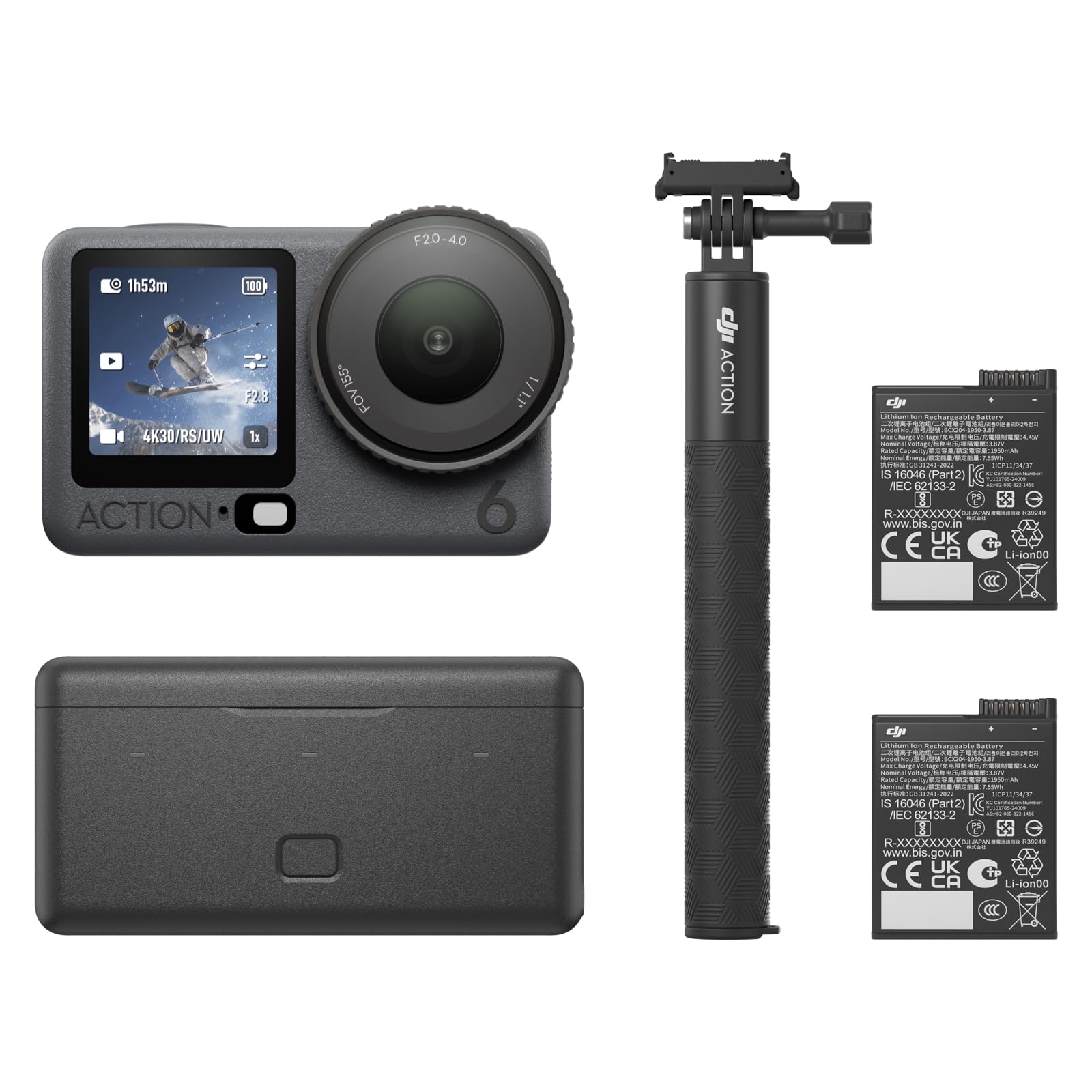
DJI’s latest iteration introduces a 1/1.1-inch square sensor with a variable aperture ranging from f/2.0 to f/4.0 — a first for action cameras. On a snowboard, this lets you stop down to f/4.0 on a bright day to reduce overexposure on powder, then open to f/2.0 in the afternoon shadows of a treed gully without swapping ND filters.
The 8K capture at 30 fps gives you significant headroom for cropping into a 4K timeline — useful when you want to punch in on a grab or board flex without losing definition. RockSteady 3.0 and HorizonSteady support 4K/60fps with full 360° roll-axis correction, which is the sweet spot for snowboarding POV where the board rotates underneath the camera mount.
Cold-weather performance mirrors the Action 5 Pro’s 1950mAh cell, with similar 4-hour rated endurance. The Enhanced Combo includes two batteries and a multifunctional charging case, plus the 1.5m extension rod for follow-cam shots.
Why it’s great
- Variable aperture (f/2.0–f/4.0) handles snow glare without external ND filters
- 8K resolution allows extreme reframing into 4K for detail shots
- 50GB internal storage means no card worries in the cold
Good to know
- Internal microphone picks up wind even with the wind guard
- Larger sensor adds slight weight compared to Action 5 Pro
4. GoPro MAX2
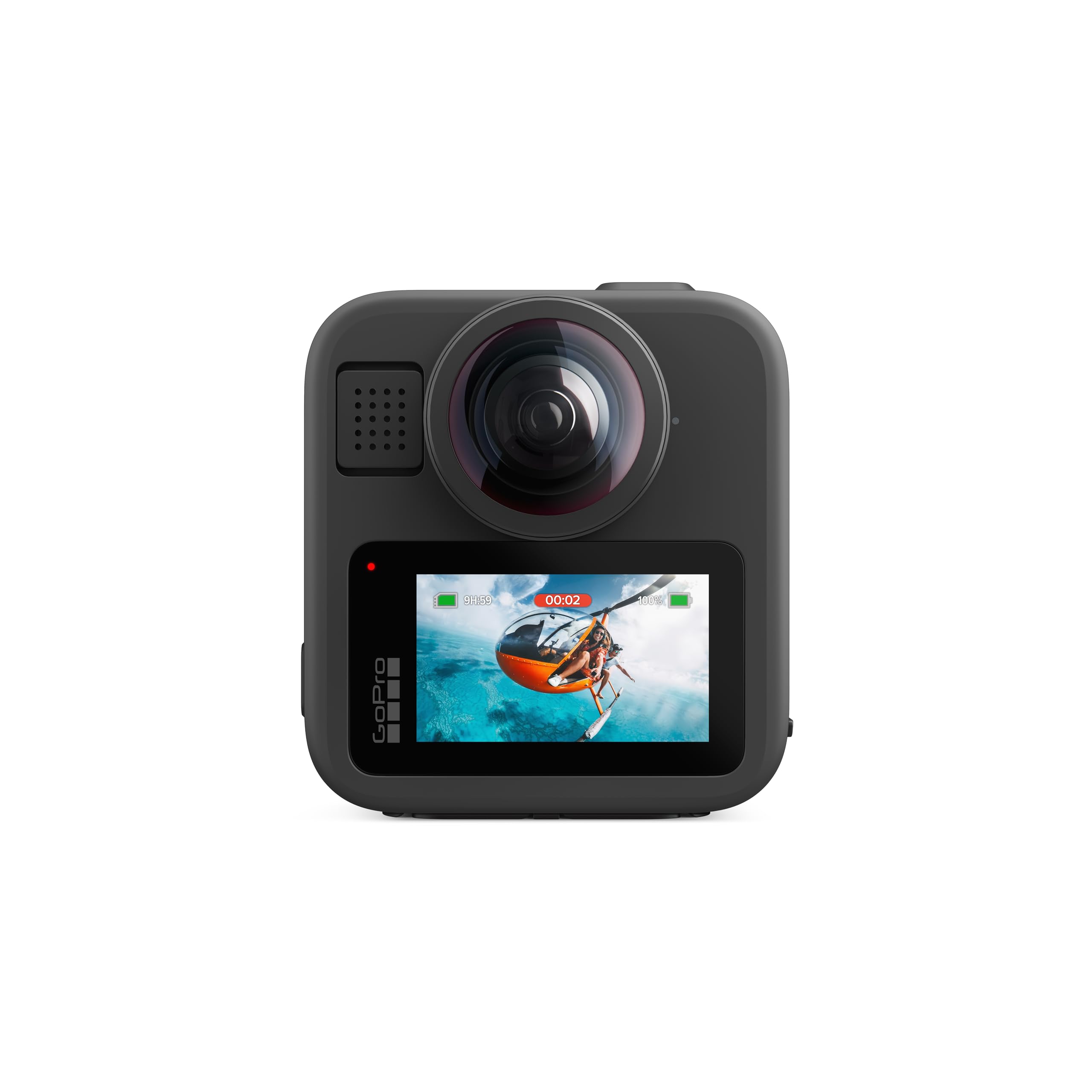
The MAX2 captures true 8K 360° spherical video, which eliminates the need to aim the camera while snowboarding — you just mount it on your helmet or pole, hit record, and reframe the shot after the run. The 21% resolution bump over competing 360 cameras means the reframed 4K export retains more detail, especially when cropping into a rider’s upper body or board.
Invisible mounting works well with a selfie stick for follow-cam POV where the pole disappears from the frame. The 6-microphone array captures ambisonic audio that shifts perspective with the reframed view — useful for capturing board-snow interaction sounds from the correct spatial position. HyperSmooth horizon leveling stays locked even during a full 360° spin on the board.
The replaceable glass lenses are a practical upgrade: if you scrape a lens against ice or snowpack, you swap the glass rather than the whole camera. The 1960mAh Enduro battery handles cold reasonably well, though 8K 360 recording drains faster than standard Hero mode.
Why it’s great
- True 8K spherical means no aiming needed while riding
- Replaceable lenses survive ice scrapes without replacing the camera
- Ambisonic audio shifts perspective with reframed video
Good to know
- Battery drains faster in 360 mode than standard Hero mode
- Can run warm in extended 8K recording sessions
5. Insta360 X5 Essentials Bundle

The X5 uses dual 1/1.28-inch sensors to capture 8K30 360° video with significantly better low-light performance than its predecessor. For snowboarders, this means usable footage in the flat light of an overcast day or during the golden hour at the bottom of the mountain. The triple AI chip design powers noise reduction that keeps snow texture clean rather than blocky in dim conditions.
The invisible selfie stick effect is the most compelling feature for solo riders — mount the X5 on a pole and it disappears from the frame, creating a third-person follow-cam perspective that looks like another person is filming you from 10 feet away. FlowState Stabilization combined with 360° Horizon Lock keeps the horizon level even when the board rotates through a 360° spin.
The upgraded battery delivers up to 208 minutes of runtime and fast charges to 80% in 20 minutes — useful for lift-served days where you’re back on the chair before you know it. Waterproof to 49 feet without a case means you can submerge it in slush or a snowmelt puddle without worry.
Why it’s great
- Invisible selfie stick creates pro third-person POV for solo riders
- Fast charging to 80% in 20 minutes for chairlift top-ups
- AI-assisted reframing automatically tracks the rider
Good to know
- Learning curve for editing 360 footage in the Insta360 app
- Battery life in cold conditions is shorter than the rated 208 minutes
6. Xtra Edge Pro Standalone Bundle
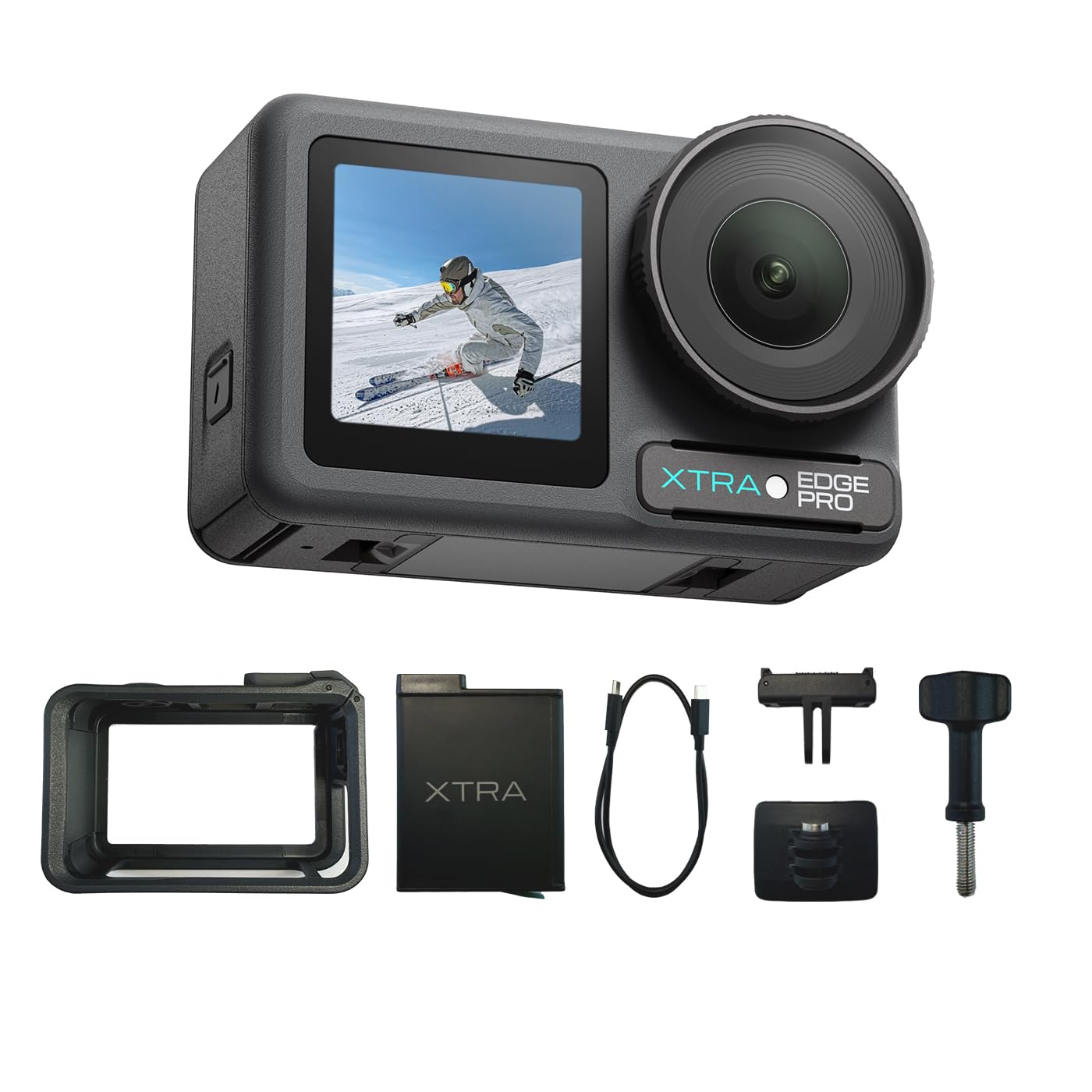
The Xtra Edge Pro packs the same 1/1.3-inch sensor size found in premium action cameras but at a significantly lower entry point. This sensor gives you genuine dynamic range headroom — bright snow doesn’t clip as aggressively as on smaller sensors in this price tier, and the Night View Mode lets you push into late-afternoon laps without the footage turning into noise.
The 4K/60fps video with 360 Lock, TiltGuard, and MotionMaster stabilization keeps the horizon stable during moderate speed runs and board slides, though the stabilization isn’t as aggressive as DJI’s HorizonSteady at full spin angles. The bundle includes a cold-resistant battery and a dual-facing mount adapter, which is useful for helmet-mounted POV where you want both forward and rear-facing angles.
Waterproof to 65 feet without a case is a practical advantage — you don’t need a bulky housing that adds thermal mass and slows heat dissipation. The 240-minute rated battery life at lower resolutions gives you all-day coverage, though 4K filming will reduce that window.
Why it’s great
- 1/1.3-inch sensor outperforms budget-tier camera sensors in snow glare
- No waterproof housing needed down to 65ft
- Cold-resistant battery included in the bundle
Good to know
- Stabilization less aggressive than premium competitors at full spin
- Microphone quality is usable but not vlog-grade
7. AKASO Brave 6 Plus

The Brave 6 Plus is an entry-level option for riders who want 4K capture without investing in a premium ecosystem. The 4K/30fps video with EIS 2.0 (6-axis stabilization) smooths out moderate chatter on groomed runs, but the stabilization lacks the horizon-lock algorithms found in higher-tier cameras — expect some roll-axis drift during aggressive carving or spins.
The bundle includes two 1350mAh batteries and a remote control, which helps in cold conditions because you can swap cells on the chairlift. The voice control feature (“AKASO Video Start”) works when you’re gloved up and can’t press the shutter button. The 131-foot waterproof depth with the included case is generous for snowboarders who might submerge the camera in slush or creek crossings.
The 2-inch touchscreen is responsive but the AKASO Go app is reported to have connection latency. The plastic case feels less premium than aluminum-bodied cameras, but for the price, it provides a functional POV recording platform.
Why it’s great
- Two batteries included for hot-swap on the chairlift
- Voice control works with heavy gloves on
- 4K30 with 6-axis EIS for a budget-friendly POV
Good to know
- Plastic case feels fragile in comparison to metal-bodied cameras
- App connectivity issues and microphone quality are below average
8. SJCAM C300
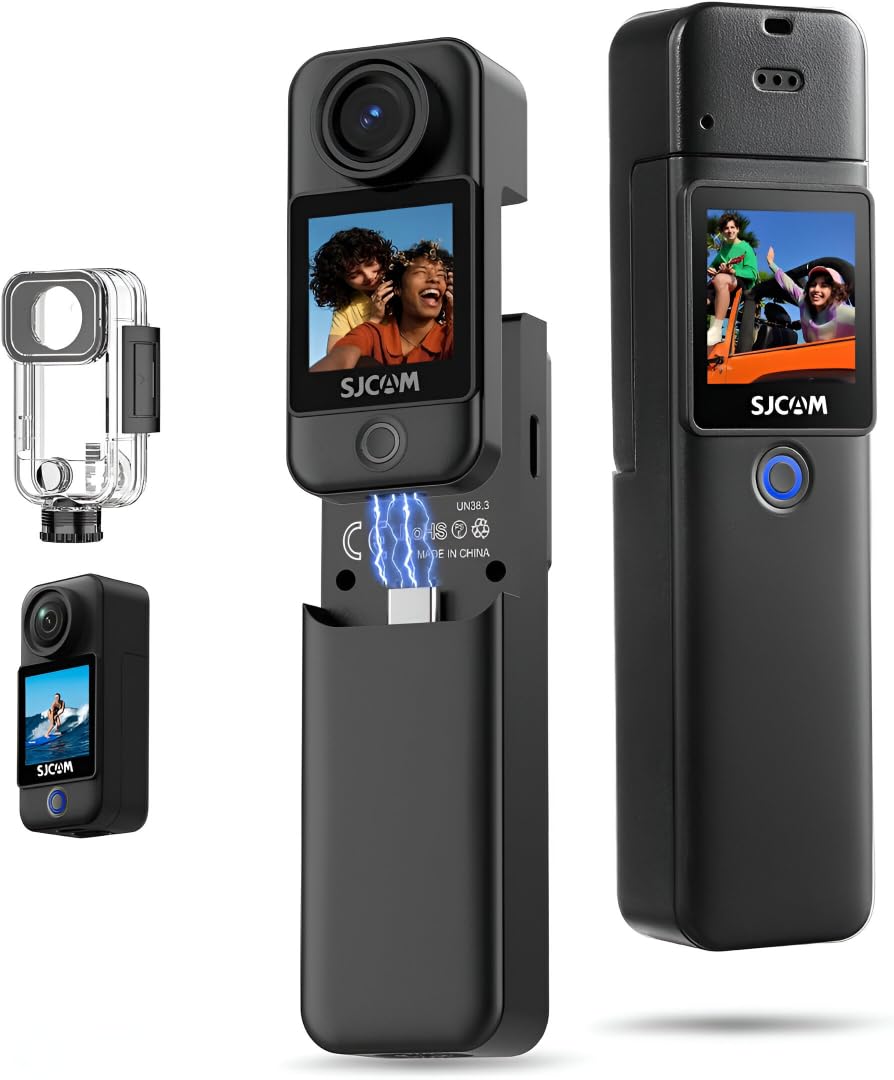
The SJCAM C300 enters the snowboard market with a 1.3-inch dual touchscreen design — a front-facing screen for selfie framing and a rear screen for standard navigation. The 4K/30fps output with 6-axis gyro stabilization handles moderate motion, though the stabilization isn’t as computational as the premium competitors, so expect some cropping and residual roll on hardpack chatter.
The 154° wide-angle lens with an aspherical element helps control barrel distortion — useful for helmet-mounted POV where you want the full run visible without the fisheye warping the edges. The waterproof case allows 30-meter submersion, which is more than any snowboarder needs but provides confidence in wet snow conditions.
Customer feedback notes that the rear display can become unresponsive when the large battery module is attached, and the lack of an external microphone jack limits audio quality in windy mountain environments. The camera works best as a budget option for fair-weather spring riding.
Why it’s great
- Front-facing touchscreen helps frame helmet selfie shots
- 6-axis gyro stabilization at a low entry price
- Wide 154° lens with reduced barrel distortion
Good to know
- Rear touchscreen can become unresponsive with large battery attached
- No external microphone port limits audio quality in wind
9. XbotGo Falcon
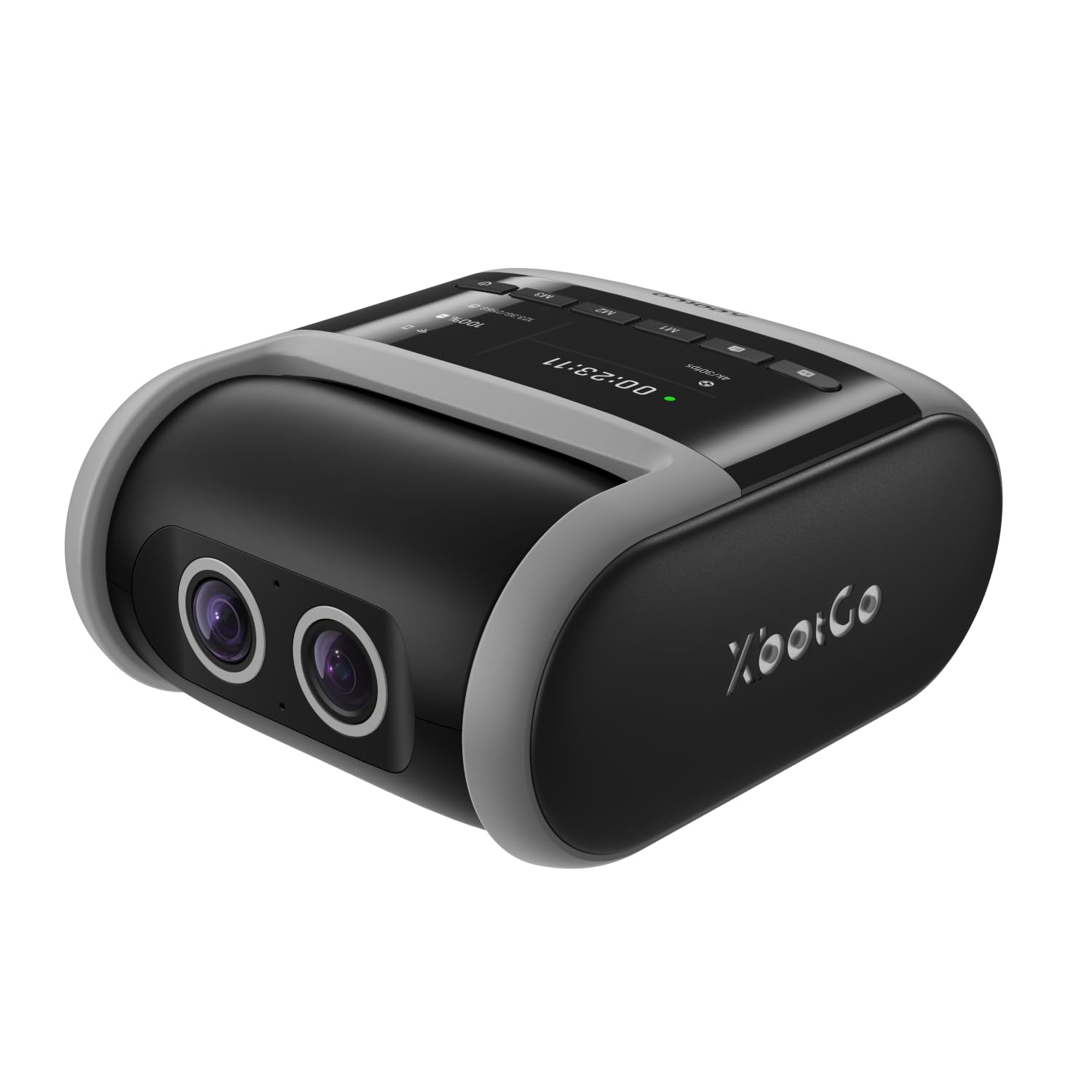
The XbotGo Falcon is a niche tool for snowboard coaches and parents filming team training — not a traditional helmet-mounted POV camera. The AI-powered auto tracking uses a dual-lens system (one 4K recording lens and one AI assistance lens) to follow a designated rider or ball in real time, keeping the subject centered in the frame without a human operator.
The 6 TOPS AI processor and 8-core chip handle tracking decisions on the fly, and the camera supports live streaming over Wi-Fi directly from the mountain. The IPX5 water resistance is designed for sideline conditions, meaning it handles light snow and mist but isn’t designed for deep submersion.
The standard 1/4-inch screw mount works with tripods for a fixed sideline position. Battery life covers a full game or training session according to user reports, though the AI tracking can hesitate in dim indoor gym or overcast conditions. The Falcon is not a replacement for a helmet-mounted POV camera — it’s a specialized tool for recording a rider from the side of the run.
Why it’s great
- AI auto tracking keeps a rider centered without manual panning
- Live streaming from the mountain without subscription fees
- IPX5 weather resistance for light snow and mist
Good to know
- AI tracking can hesitate in dim overcast or indoor conditions
- Designed for sideline recording, not helmet POV mounting
FAQ
Will a standard action camera battery drain faster in freezing temperatures?
What frame rate should I shoot for snowboarding to get smooth slow motion?
Is a 360-degree camera worth it for a snowboarder?
Final Thoughts: The Verdict
For most riders, the action camera for snowboarding winner is the DJI Osmo Action 5 Pro because its -20°C battery endurance and 13.5-stop dynamic range directly solve the two biggest problems of mountain filming — cold shutdown and snow glare. If you want 8K resolution with variable aperture control for creative depth-of-field, grab the DJI Osmo Action 6. And for solo riders who want third-person follow-cam shots without a dedicated filmer, nothing beats the Insta360 X5.