
A lat pulldown bar that slips, bends, or forces your wrists into an unnatural angle doesn’t just ruin a set—it kills the mind-muscle connection and risks real shoulder pain. Choosing the right bar means matching handle length, grip orientation, and build material to your specific cable machine and your body’s mechanics.
I’m Rikta — the co-founder and writer behind FitlyFast. I’ve spent years analyzing the construction specs, grip ergonomics, and real-world durability of cable attachments, cross-referencing hundreds of customer reports to separate the genuinely effective bars from the ones that will loosen or rust after a few sessions.
Whether you are outfitting a home gym or upgrading a commercial rack, this breakdown of the best bar for lat pulldown covers the specific steel grades, grip dimensions, and swivel mechanisms that determine whether your back day actually hits the lats.
How To Choose The Best Bar For Lat Pulldown
Picking the wrong bar often means missing the lat activation you are paying for. The key decisions come down to handle width, grip angle, and the type of steel used underneath the coating. Ignore marketing buzzwords and focus on these three pillars.
Handle Width and Your Anatomical Match
Lat fiber recruitment shifts with grip spacing. Extra-wide bars (40–48 inches) bias the upper lats and teres major, while medium-width bars (18–28 inches) allow more scapular retraction and hit the mid-back. Narrow V-bars (9–12 inches) emphasize the lower lats and demand a neutral wrist position. Measure the distance between your cable pulleys before buying—a bar that is too wide for your rack will hit the frame on every rep.
Grip Geometry: Straight Bar vs. Neutral vs. Rotating
Standard straight bars force a pronated (overhand) grip, which can strain the wrist and elbow if you lack mobility. Neutral-grip handles keep the palms facing each other, aligning the forearm bones and reducing joint torque. Rotating swivel handles add a few degrees of natural wrist movement during the pull, which can dial in better lat engagement, though they introduce more mechanical points that can loosen over time.
Steel Thickness and Coating Integrity
Thin steel bars under 0.7 inches in diameter can flex under moderate loads, and powder-coated or chrome surfaces tend to chip at contact points. Solid alloy steel with a knurled finish provides the most durable grip texture, but rubber or EVA coatings offer better sweat absorption and warmth in cold gyms. Check the weight rating—any bar rated below 400 pounds may be too light for heavy rows.
Quick Comparison
On smaller screens, swipe sideways to see the full table.
| Model | Category | Best For | Key Spec | Amazon |
|---|---|---|---|---|
| KORIKAHM Adjustable Bar | Adjustable Width | Versatile home gym pulling | Adjusts 18″ down to 9″ | Amazon |
| qibylift Multi-Exerciser | Rotating Chrome | Smooth rotation and grip | 30-inch length, 880 lb rating | Amazon |
| CAP Barbell 48-Inch Bar | Classic Wide Bar | Traditional pronated lat work | 48-inch length, knurled grip | Amazon |
| Angles90 Original Grips | Dynamic Handles | Joint-friendly varied grip | 4-in-1 grip positions | Amazon |
| VEVOR LAT Pulldown Bar | Rubber Coated V-Bar | Neutral grip shoulder relief | 23-inch frame, 0.7″ thick steel | Amazon |
| Kipika LAT Bar | 5-Size Range | Multiple length options | 12″ to 32″ sizes available | Amazon |
| Homwiz Detachable Bar | Swivel Joint | Portable storage, light use | 33-inch curved, 300 lb max | Amazon |
In‑Depth Reviews
1. KORIKAHM Adjustable Lat Pulldown Bar

This KORIKAHM bar solves the single biggest space problem in home gyms: one bar that does the job of three. You can dial the width from 18 inches down to 9 inches in one-inch increments, so the same attachment covers wide-grip lat pulldowns, medium-grip rows, and narrow-grip tricep work. The alloy steel build carries an unusually high weight rating that will not flex under heavy cable stacks.
The smooth finish coating resists rust better than raw steel, and the design pairs directly with revolving chest grip handles for flye and low-row variations. Customer reports consistently note the versatility—users have swapped between lat pulls, low rows, cable flys, and shrugs without changing attachments. The ergonomic curved handles also aid grip endurance during high-rep sets.
That said, the adjustment mechanism relies on a pin-and-hole system that could loosen slightly after months of aggressive use if not periodically tightened. It is also slightly heavier than a fixed-width bar, which may matter if you carry your attachments between stations. For a single do-it-all accessory that removes the need for three separate bars, this is the premium pick.
Why it’s great
- Adjustable width from wide to neutral/narrow grip without tools
- Rated for heavy loads well above standard cable stacks
- Versatile enough for pulldowns, rows, flys, and tricep extensions
Good to know
- Pin adjustment may require periodic retightening
- Slightly heavier than single-width bars
2. qibylift Barbell Multi-Exerciser Cable Attachment

The qibylift bar stands out for its dual rotating mechanism—both the center hanger and the handles rotate independently, giving your wrists unencumbered movement during the pull. The 30-inch chrome-plated alloy steel bar supports up to 880 pounds, so even heavy rowers and lat pullers get no flex. The textured rubber grip adds warmth and sweat absorption compared to cold knurled metal.
Customers highlight the smooth rotational action as a major upgrade over fixed-angle bars, particularly for bicep curls and tricep pressdowns where natural wrist articulation reduces joint strain. The rotating center also helps the bar self-center as you pull, preventing one side from dipping lower. It comes with a carabiner that matches most home gym hooks.
One trade-off: the rubber grip material collects chalk and dust more readily than knurled steel, and the chrome finish can show water spots if you do not dry it after use. The bar is also wider than standard 18-inch attachments, which can be an issue in very narrow cable towers. For lifters wanting smooth, joint-friendly rotation for multiple cable exercises, this mid-range bar delivers clear performance.
Why it’s great
- Independent rotating handles and center swivel for natural wrist motion
- High 880-pound rating ensures zero flex under heavy loads
- Textured rubber grip prevents slipping even with sweaty hands
Good to know
- Rubber grip attracts chalk and dirt
- May be too wide for very narrow cable towers
3. CAP Barbell 48-Inch LAT Bar Attachment

CAP Barbell’s 48-inch bar is the standard for lifters who want a traditional pronated-grip lat pulldown with aggressive knurling. The full-length alloy steel bar weighs over 11 pounds, giving it a commercial-gym heft that resists vibration during heavy sets. The knurled handgrips provide secure purchase even without chalk, and the revolving hanger rotates freely to keep the bar balanced through the movement’s full range.
Reviewers consistently call it a gym-quality upgrade over the thin bars that come standard with most home cable cages. The 48-inch length covers the widest lat pull position, maximizing upper lat and teres major activation. The end caps are threaded metal rings that screw on tightly—a detail cheaper bars skip, leading to loose rubber caps mid-set.
The main drawback is that the deep knurling may feel too aggressive for lifters with sensitive palm skin, and the black finish can show minor peeling at contact points if the bar is slid against metal racks frequently. It also lacks a neutral-grip option, so it is limited to overhand pulls. For the traditional wide-grip lat pulldown, this is the premium bar.
Why it’s great
- Commercial-grade 48-inch knurled bar with heavy-duty steel build
- Smooth revolving hanger keeps the bar balanced during pulls
- Screwed metal end caps prevent common rubber-cap failures
Good to know
- Deep knurling may feel too aggressive for sensitive hands
- Black finish can peel if dragged against metal racks
4. Angles90 Original Pull-Up Grips
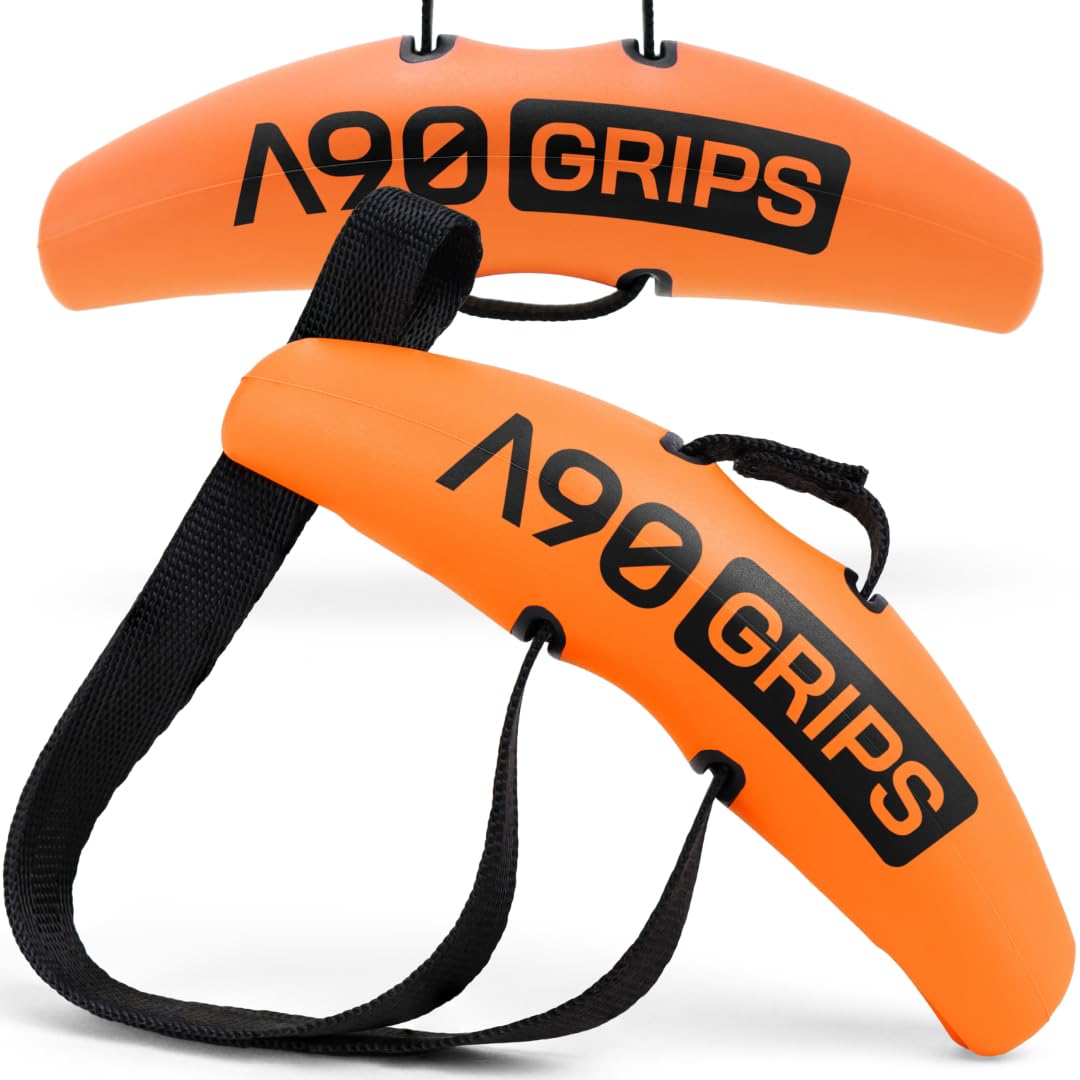
The Angles90 grips are not a traditional bar—they are dynamic handles that attach to carabiners, letting you pull in pronated, neutral, or hybrid grip positions within the same set. The patented banana shape cradles your palm and allows the handle to rotate freely during the pull, reducing wrist, elbow, and shoulder stress. This makes them particularly useful for lifters dealing with chronic joint issues from fixed-angle bars.
The thermoplastic polyurethane construction is dense and hygienic—wiping them down after use prevents bacterial buildup better than rubber or foam. Users report deeper lat activation because the free rotation lets the arms track a natural arc rather than fighting a fixed bar. The four grip modes (Ergo, Power, Power+, and without loop) adapt to lat pulldowns, rows, deadlifts, and pull-ups.
The maximum rating of 400 pounds also means very heavy rowers may exceed the safe margin. For lifters prioritizing joint health and varied grip angles, the Angles90 set is a smart mid-range investment.
Why it’s great
- Dynamic rotation reduces wrist and elbow strain during pulls
- 4-in-1 grip modes adapt to multiple exercises beyond lat work
- Hygienic TPU material is easy to clean and durable
Good to know
- Higher price point for a non-traditional bar system
- 400-pound max rating may be limiting for heavy pullers
5. VEVOR LAT Pulldown Attachment
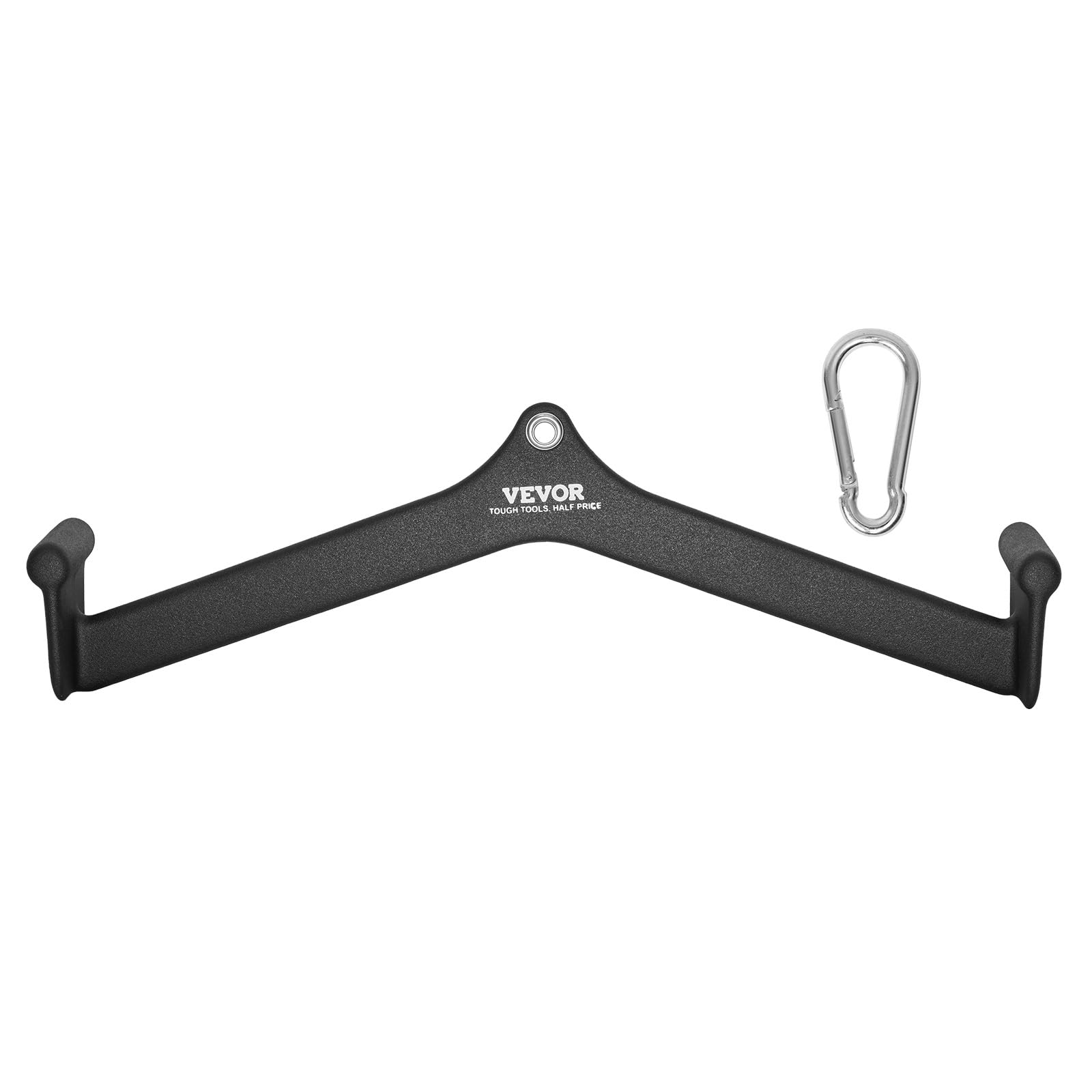
The VEVOR V-bar features a thick rubber-coated frame that prioritizes comfort and shoulder-friendly neutral-grip pulling. At 0.7 inches thick at its widest point, the solid steel core handles up to 1,212 pounds without bending, so the coating is purely for grip and joint comfort—not a structural crutch. The V-shape design lets you pull with palms facing each other, which significantly reduces internal shoulder rotation compared to a straight pronated bar.
Customer feedback consistently praises the non-slip coating and the longer-than-standard carabiner, which reaches hooks that cheaper bars miss. The 23-inch width is generous enough for a medium-width lat pull yet compact enough for tight home gym spaces. Users with prior shoulder injuries specifically note that the neutral-grip V-bar allows them to pull heavy without the clicking and crunching they experienced on straight bars.
The downside is that the V-frame does not offer an adjustable width—you are locked into one V-angle. The welded joints are robust, but the rubber coating can tear if the bar is dropped on rough concrete. For lifters seeking a neutral-grip bar that will not aggravate shoulder or elbow issues, the VEVOR delivers a high-value solution in the mid-range.
Why it’s great
- Thick rubber coating provides warm, non-slip grip without gloves
- Neutral V-angle reduces shoulder strain during heavy pulls
- Extremely high weight rating for the price
Good to know
- Fixed V-angle does not offer width adjustment
- Rubber coating may tear if dropped on rough surfaces
6. Kipika LAT Pull Down Bar
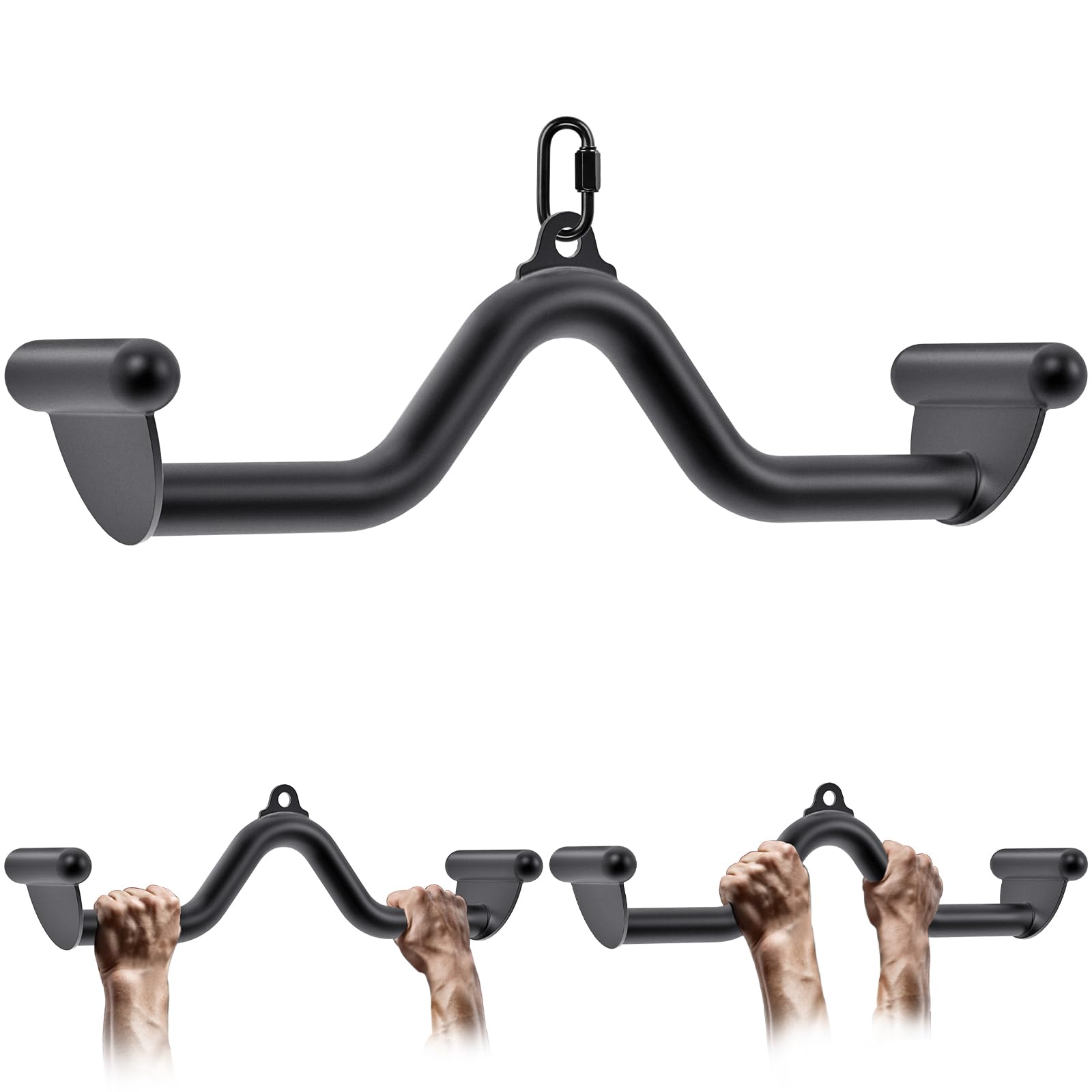
The Kipika bar system covers five separate lengths—12, 20, 24, 28, and 32 inches—so you can buy exactly the width that matches your lat pulldown stance without paying for an adjustable mechanism. Each bar is built from solid steel with a powder-coated black finish that resists rust, rated to 1,000 pounds. The V-bar style uses 1.3-inch diameter grips that feel full in the hand, and the quick-connect buckle snaps onto most cable carabiners instantly.
Customer reports highlight the sturdy build and the clean fit of the steel eyelets, which slide smoothly without binding. The wrap-around packaging also earned praise for preventing dents during shipping. The 20-inch and 28-inch lengths are the most popular for lat work, hitting the medium to wide stance most lifters need without going to the extreme 48-inch length.
The limitation of this range is that you must buy multiple bars if you want different widths—there is no single adjustable unit here. The powder-coated finish, while durable, will chip if the bar is banged against a steel rack repeatedly. For lifters who know their ideal grip width and want a solid, no-frills, budget-friendly bar, the Kipika delivers reliable performance.
Why it’s great
- Five distinct lengths let you choose your exact grip width
- Solid steel construction with a 1,000-pound rating
- Quick-connect buckle speeds up attachment swaps
Good to know
- Requires buying separate bars for multiple widths
- Powder-coated finish can chip with metal-on-metal contact
7. Homwiz Detachable LAT Pull Down Bar

The Homwiz bar breaks down into three detachable sections, making it the most portable lat pulldown option for lifters who stash their gear in a duffel bag or small closet. Assembled, it spans 33 inches with a curved profile and a swivel joint at the center, allowing natural wrist rotation during pulls. The alloy steel core is chrome-coated for corrosion resistance, and the EVA foam handles absorb sweat and prevent slipping.
Customer feedback notes that the curved shape fits comfortably across the back of the neck during pulldowns, and the foam grips remain comfortable even after long sets. The included screw-nut assembly lets you put it together without tools, although a few users reported that the sections loosened after repeated use and needed to be re-tightened with a drill. The weight rating is 300 pounds, which suits most home gym stacks but is lower than the competition.
The main drawbacks are the loosening issue—some units required thread-locking compound to stay tight—and the fact that the chrome finish on cheaper steel can show micro-pitting over time. For travelers or apartment dwellers who need a compact, lightweight bar that packs small, the Homwiz is a practical entry-level choice.
Why it’s great
- Detachable into three compact pieces for easy storage and travel
- Curved design with EVA foam grips for comfortable pulling
- Tool-free assembly with included screw nuts
Good to know
- Sections can loosen over time; thread-lock may be needed
- Maximum weight rating lower than most solid-steel bars
FAQ
How long should a lat pulldown bar be for my body height?
Is a V-bar or straight bar better for lat pulldowns?
Why does my lat bar slip off the carabiner mid-set?
Final Thoughts: The Verdict
For most users, the bar for lat pulldown winner is the KORIKAHM Adjustable Lat Pulldown Bar because it replaces three separate bars with one adjustable unit, saving rack space while covering wide, medium, and narrow pulling stances. If you want smooth rotation and joint-friendly motion without the bulk, grab the qibylift Multi-Exerciser. And for the classic wide-grip pronated pulldown that feels like a commercial gym bar, nothing beats the CAP Barbell 48-Inch LAT Bar.