
Our readers keep the lights on and the weekend projects moving. As an Amazon Associate, I earn from qualifying purchases.
Flat feet cause a chain reaction of strain that travels from your arches up through your knees, hips, and lower back. The right insole interrupts that chain by providing rigid arch support that repositions the foot into neutral alignment, reducing overpronation and relieving plantar fascia tension.
I’m Rikta — the co-founder and writer behind FitlyFast. I’ve spent years analyzing foot biomechanics, reviewing arch support materials from EVA to TPU, and comparing how different insoles handle the specific collapse pattern of flat feet across various activities and body types.
This guide breaks down the top-rated insoles for fallen arches, covering materials, arch height, heel cup depth, and durability so you can find the right arch support insoles for flat feet for your daily wear, work boots, or running shoes.
How To Choose The Best Arch Support Insoles For Flat Feet
Flat feet lack the natural arch that absorbs shock and stabilizes your gait. Without external support, the plantar fascia overstretches and the ankle rolls inward. The right insole must provide rigid arch support, a deep heel cup, and a stable material that doesn’t compress flat over a few weeks of use.
Arch Height and Rigidity
For flat feet, a medium-to-high arch profile is ideal because it fills the void left by the collapsed arch. Soft foam insoles compress and lose support quickly. Look for insoles with a rigid or semi-rigid arch shell made from TPU, polypropylene, or dense EVA that won’t collapse under your body weight.
Heel Cup Depth and Alignment
A deep U-shaped heel cup cradles the calcaneus (heel bone) and prevents excessive inward rolling. Shallow heel cups allow the foot to shift, reducing the insole’s corrective effect. A heel cup depth of at least 10-15mm provides meaningful stability for flat feet.
Material Durability and Activity Match
Memory foam feels comfortable initially but packs out quickly under heavy use. For daily wear or work boots, dense EVA or Poron foam layered over a rigid base offers longer-lasting support. Runners and hikers should prioritize insoles with impact-absorbing heel pads and moisture-wicking top covers to prevent blisters and odor.
Quick Comparison
On smaller screens, swipe sideways to see the full table.
| Model | Category | Best For | Key Spec | Amazon |
|---|---|---|---|---|
| PowerStep Pinnacle Insoles | Podiatrist Recommended | Moderate pronation & daily relief | Dual-layer cushioning, no trim needed | Amazon |
| MOVE All Day Comfort Insole | Extra Plush Foam | All-day standing & shock absorption | X-Frame Torsional Support system | Amazon |
| PowerStep Bridge Insoles | Adaptable Arch | Neutral arches & flexibility | Two layers of energizing memory foam | Amazon |
| Fit Geno Heavy Duty Insoles | Heavy Body Support | 220lbs+ frames & long shifts | Rigid high arch with removable TPU plate | Amazon |
| Superfeet Run Cushion Low Arch | Runner Specific | Low arch runners & walkers | Adaptive Comfort Technology, trim-to-fit | Amazon |
| Copper Fit Arch Relief Orthotics | Adaptive Cushion | Everyday comfort & shock absorption | Memory foam, low-profile design | Amazon |
| Archepaid Plantar Fasciitis Inserts | Value Orthotic | Budget-friendly arch correction | 3.5cm arch, deep U-shaped heel cup | Amazon |
In‑Depth Reviews
1. PowerStep Pinnacle Insoles

PowerStep Pinnacle is the most recommended arch support insole by podiatrists, and for good reason — it uses a semi-rigid orthotic shell that supports moderate pronation without the extreme rigidity of a custom device. The dual-layer cushioning (a firm EVA base with a softer top layer) absorbs shock while keeping the arch locked in position. Users with flat feet report significant reduction in heel pain and lower back strain within the first week of wear.
The full-length design fits athletic, walking, and work shoes without trimming, which eliminates the guesswork of cutting. The deep heel cup cradles the calcaneus and prevents the foot from rolling inward during gait. Customers who switched from custom orthotics found the Pinnacle provided comparable correction at a fraction of the cost, with many noting it was the first insole to deliver real plantar fasciitis relief after years of failed attempts.
One trade-off is the firm arch — users with sensitive or very flat arches may experience pressure during the first few days. PowerStep recommends a gradual break-in period of 2-4 hours on the first day. The top fabric liner also shows wear after heavy use, but the structural support remains intact for 6-9 months of daily wear. Made in the USA and eligible for HSA/FSA accounts.
Why it’s great
- Podiatrist recommended with proven arch support for moderate pronation
- No trimming required — fits most athletic and work shoes out of the box
- Dual-layer cushioning balances support and shock absorption
Good to know
- Firm arch may require a gradual break-in period for sensitive feet
- Top fabric liner can peel after several months of heavy use
- Not ideal for shoes with non-removable factory insoles
2. MOVE All Day Comfort Insole
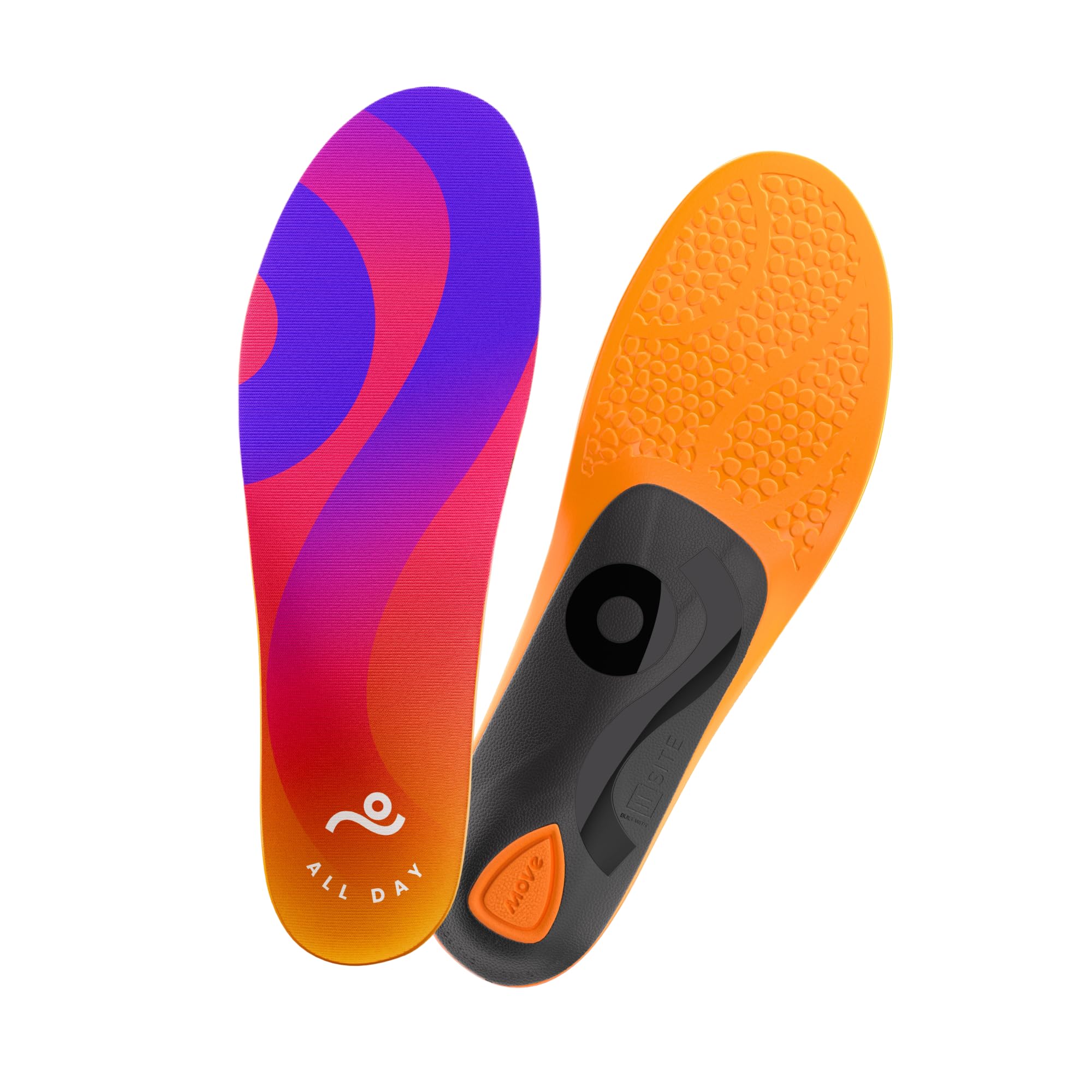
MOVE All Day Comfort Insole was designed by a professional basketball player, which explains why it prioritizes both impact protection and midfoot stability. The X-Frame Torsional Support system is a rigid polymer skeleton embedded in the foam that prevents the foot from collapsing into overpronation while still allowing natural toe splay. For flat feet, this hybrid approach delivers arch correction without the board-like feel of fully rigid orthotics.
The extra plush foam (Move Recharge Foam) provides noticeable shock absorption at the heel and forefoot, which reduces stress on knees and lower back during long standing hours. The Active Heel Technology uses a contoured pocket that minimizes pressure points around the calcaneus — a feature that matters for flat-footed users who often experience heel pain from collapsed arches. The insole fits athletic shoes and work boots comfortably, though it runs slightly thick and may not suit low-profile sneakers like Adidas Sambas.
Customer feedback highlights the immediate reduction in foot fatigue, with many users reporting they could stand for 10+ hour shifts without the usual arch pain. The price reflects the premium materials and proprietary support system, but users consider it worthwhile for those who spend all day on their feet. The X-Frame does add some weight compared to foam-only insoles, and the arch support is moderate — severe overpronators may need a more rigid option.
Why it’s great
- X-Frame Torsional Support prevents arch collapse without full rigidity
- Extra plush foam absorbs impact effectively for long standing hours
- Active Heel Technology reduces pressure on sensitive heel areas
Good to know
- Thicker profile may not fit low-profile or dress shoes
- Moderate arch support may be insufficient for severe overpronation
- Premium price compared to standard foam insoles
3. PowerStep Bridge Insoles
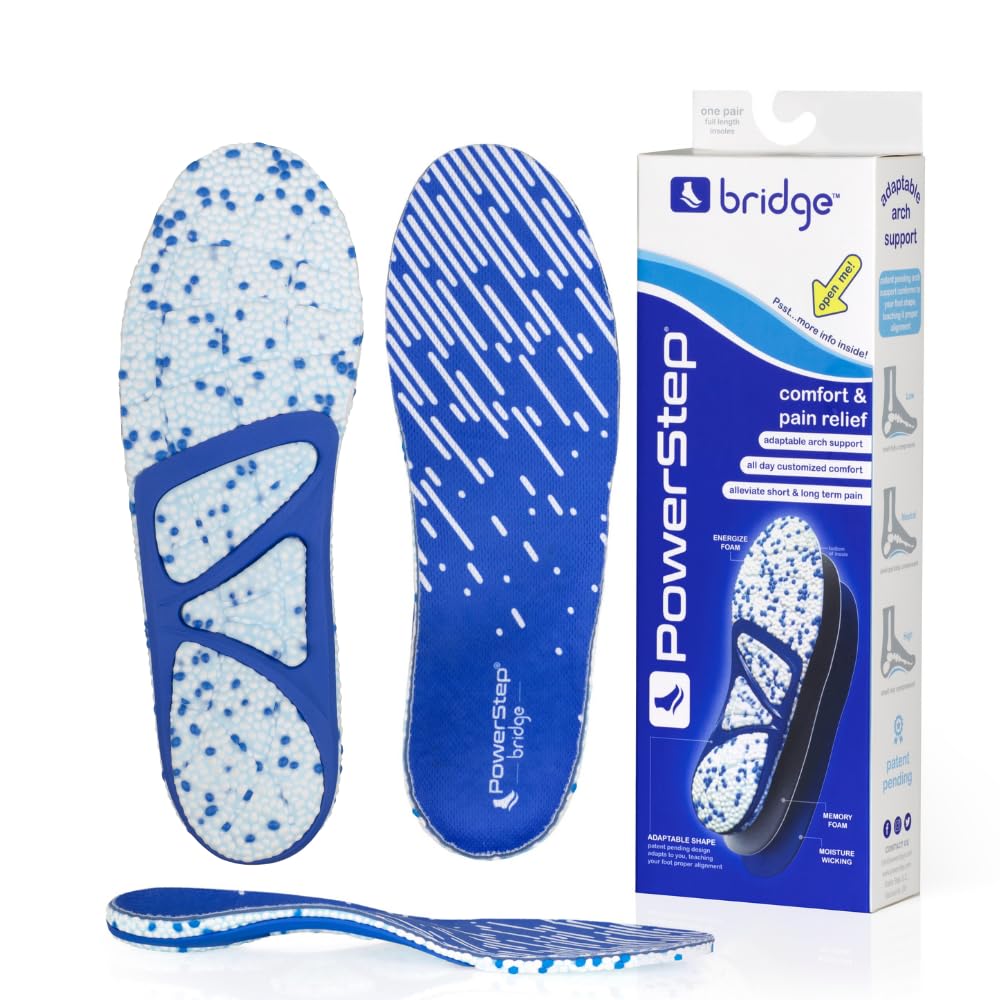
PowerStep Bridge sits between a comfort insole and a true orthotic, making it a strong choice for flat-footed users who find rigid insoles too aggressive. The key innovation is the flexible arch frame — it provides support but bends with the foot during heel-to-toe transitions, which mimics the natural motion of a healthy arch. The two layers of energizing memory foam add a responsive bounce that reduces fatigue during walking and running.
The underside features special channels that allow the foam to conform to the foot’s unique shape, creating a custom-like fit over time. For flat feet, this means the insole gradually fills the collapsed arch space without creating pressure points. The moisture-wicking top fabric keeps feet dry during all-day wear, a practical benefit for users prone to sweaty feet in work boots or athletic shoes. The low-profile design fits most sneakers and casual shoes without crowding the toes.
Some users report that the cloth liner on the heel can peel after a month of heavy use (20,000+ steps per day), but the structural support remains intact. The arch support is medium — it works well for neutral arches and mild flat feet but may not provide enough lift for severe fallen arches. Athletes using the Bridge in basketball shoes noted improved shooting accuracy due to better foot stability, though they recommended sizing up half a size to accommodate the insole thickness.
Why it’s great
- Flexible arch frame adapts to foot motion for natural gait
- Dual-layer memory foam provides responsive cushioning and bounce
- Low-profile design fits most sneakers and casual shoes
Good to know
- Medium arch support may be insufficient for severe flat feet
- Heel fabric liner can peel with high-mileage daily use
- Some users need to size up half a size for proper fit
4. Fit Geno Heavy Duty Insoles
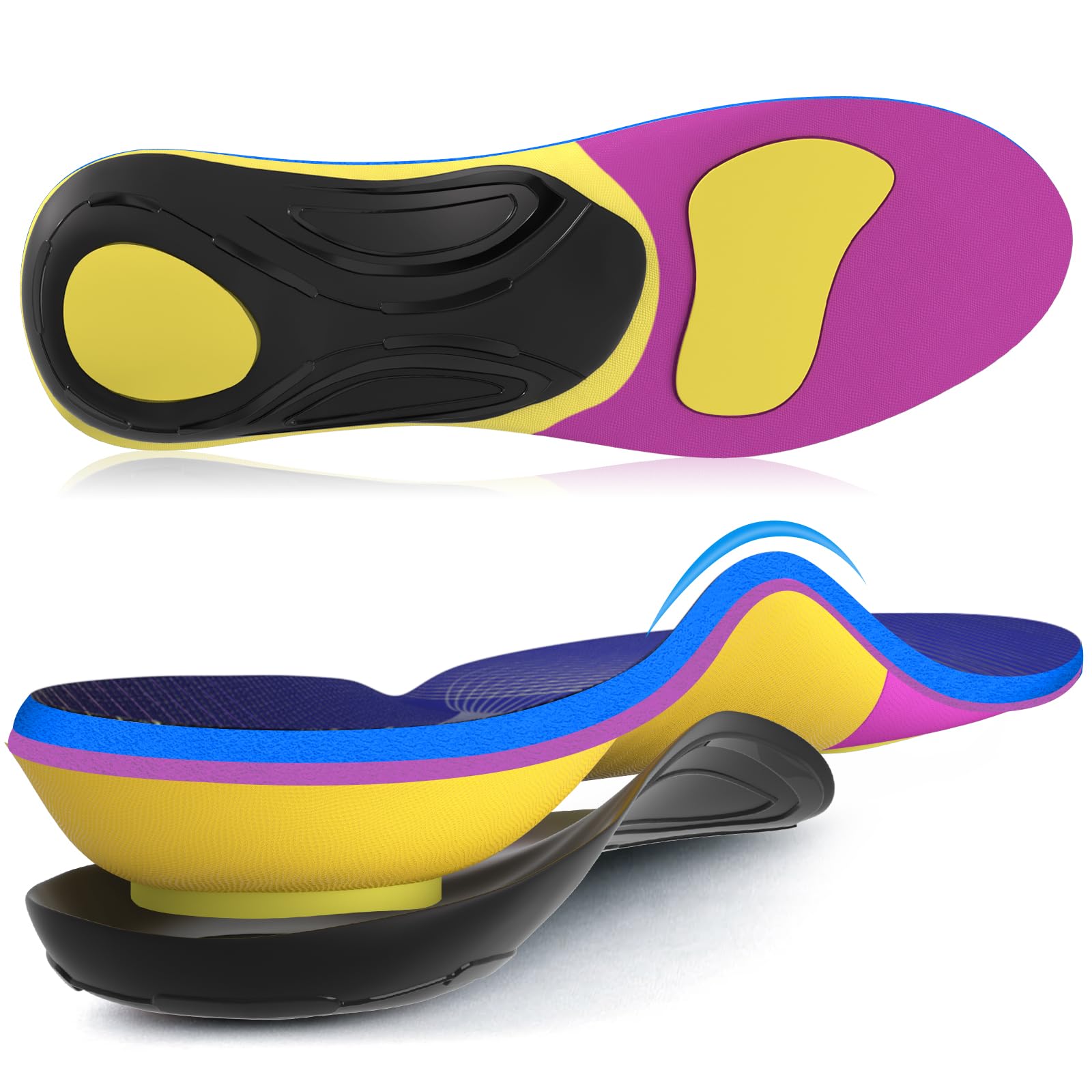
Fit Geno designed these insoles specifically for heavier body frames (220lbs+), where standard foam orthotics compress and lose support within weeks. The rigid high arch is built from a dense polymer that maintains its shape under sustained load, lifting the collapsed arch and relieving tension on the plantar fascia. A removable TPU arch plate adds extra rigidity for users who need maximum correction, and can be taken out for a slightly lower profile when desired.
The heel and forefoot are lined with Poron foam, a premium cushioning material used in medical-grade orthotics that retains 95% of its thickness after repeated impact. This matters for flat-footed users who experience heel pain from overpronation — the Poron layer absorbs shock without bottoming out. The breathable fabric top reduces odor through full workdays, a practical consideration for nurses, retail workers, and teachers who stand for 8-12 hour shifts.
One user noted the insoles felt too rigid for Hokas and removed the hard plastic brace after 7-8 miles of walking. This highlights that the Fit Geno works best in supportive shoes like work boots or stability running shoes, not minimalist footwear. The rigid arch also requires a break-in period of a few days. For heavier individuals with flat feet, however, these insoles provide the most durable, load-bearing arch support in this list.
Why it’s great
- Built for 220lbs+ frames with dense arch that resists compression
- Removable TPU arch plate allows customizable rigidity
- Poron foam heel pad retains shock absorption under heavy load
Good to know
- Very rigid arch may feel uncomfortable in minimalist or soft shoes
- Requires a break-in period of several days
- Best suited for work boots and stability sneakers
5. Superfeet Run Cushion Low Arch Insoles

Superfeet Run Cushion Low Arch insoles (formerly the ADAPT line) are engineered specifically for runners with low arches. The patented Adaptive Comfort Technology uses a foam core that flexes with the foot during heel strike and toe-off, promoting efficient heel-to-toe turnover — critical for maintaining running economy without fighting against a rigid orthotic. The arch profile is lower than neutral or high-arch insoles, which matches the anatomical reality of flat-footed runners who don’t need extreme lift.
The moisture-wicking top cover helps control odor and keeps feet dry during long runs, while the medium heel cup depth provides enough stability for overpronation without forcing the foot into an unnatural position. Users who measured their arches at specialty running stores found these insoles closely matched custom orthotics costing three times more. The trim-to-fit design allows customization for different shoe models, and the insoles fit well in ASICS, Nike, and Adidas running shoes without needing to size up.
Some users with very flat arches experienced a burning sensation on the soles after longer walks, which may indicate the arch profile is still slightly higher than ideal for some foot shapes. The insoles are also on the firmer side compared to plush foam options — they prioritize support over pillow-like comfort. For runners specifically seeking arch correction without sacrificing ground feel and energy return, Superfeet Run Cushion is the most category-specific option available.
Why it’s great
- Adaptive Comfort Technology flexes with the foot for efficient running gait
- Low arch profile specifically designed for flat-footed runners
- Moisture-wicking top cover reduces odor during long miles
Good to know
- Trim-to-fit design requires careful cutting before first use
- Firm cushioning may not suit users who prefer plush footbeds
- Some users report sole burning sensation during longer walks
6. Copper Fit Arch Relief Orthotics
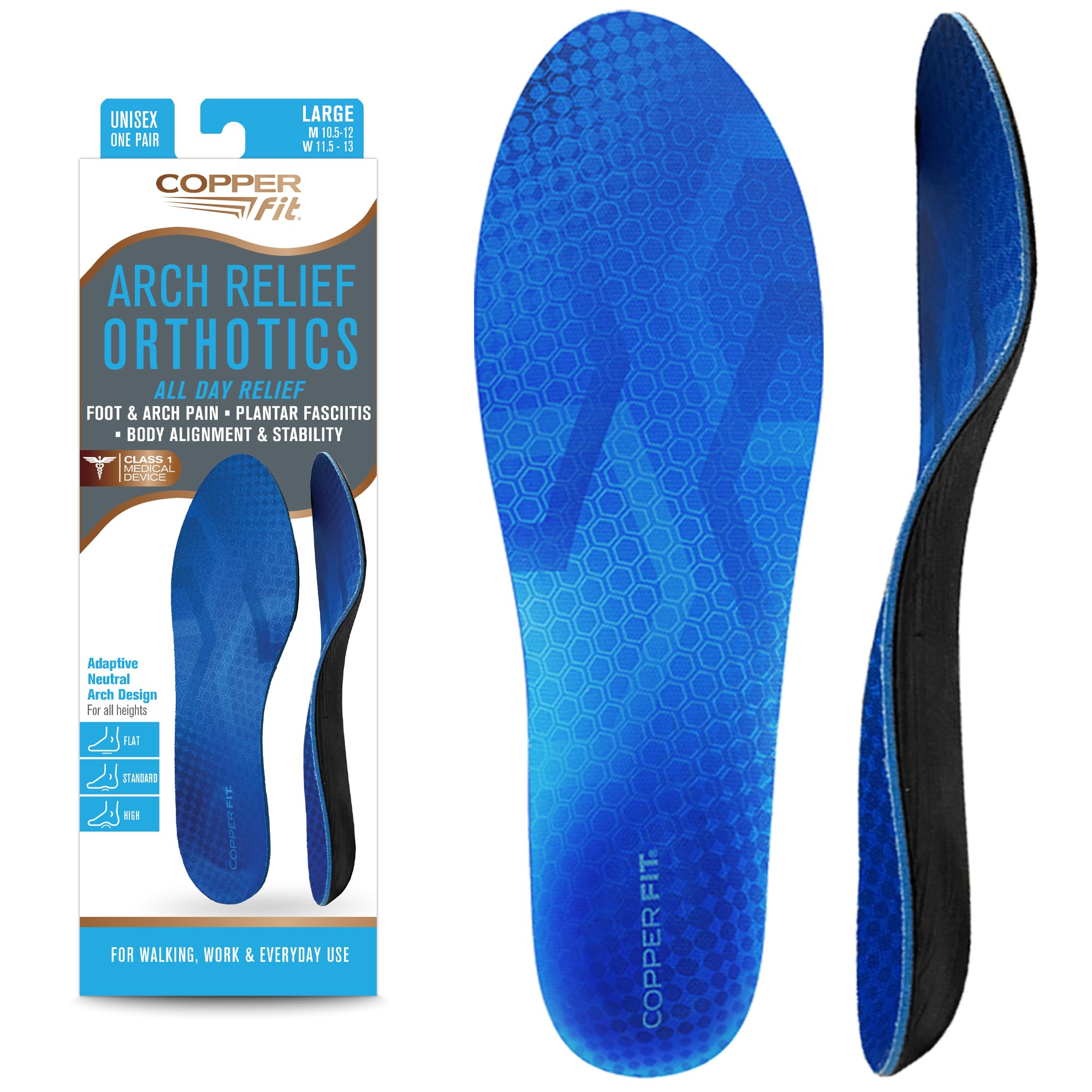
Copper Fit Arch Relief Orthotics use an adaptive arch design that molds to the shape of your foot over time, providing a customized fit for flat feet, medium arches, and even high arches. The memory foam construction delivers immediate comfort without a stiff break-in period, making these a great entry point for users new to orthotic insoles. The stabilizing heel cup helps maintain proper foot alignment, which reduces strain on the ankles and knees during daily walking.
The low-profile design fits into dress shoes, casual shoes, and athletic footwear without taking up too much volume, which is a practical advantage for users who need arch support across multiple shoe types. A shock-absorbing heel pad cushions impact during walking and running, protecting the plantar fascia from further strain. Users with plantar fasciitis and fallen arches reported these insoles provided significant relief compared to standard factory insoles, with many buying additional pairs for all their shoes.
While the memory foam offers excellent initial comfort, it does compress over time faster than denser materials like Poron or TPU. Heavy users (220lbs+) may find the support degrades after 3-4 months of daily wear, requiring replacement sooner than premium options. The arch support is also more moderate than rigid orthotics — users with severe flat feet or significant overpronation may need a firmer base. For the price, however, Copper Fit delivers reliable arch support with minimal adjustment.
Why it’s great
- Adaptive arch molds to foot shape for a personalized fit
- Low-profile design fits dress shoes, casual, and athletic footwear
- Shock-absorbing heel pad cushions impact during walking
Good to know
- Memory foam compresses faster than premium orthotic materials
- Moderate arch support may not correct severe overpronation
- Heavy users may need replacement every 3-4 months
7. Archepaid Plantar Fasciitis Inserts
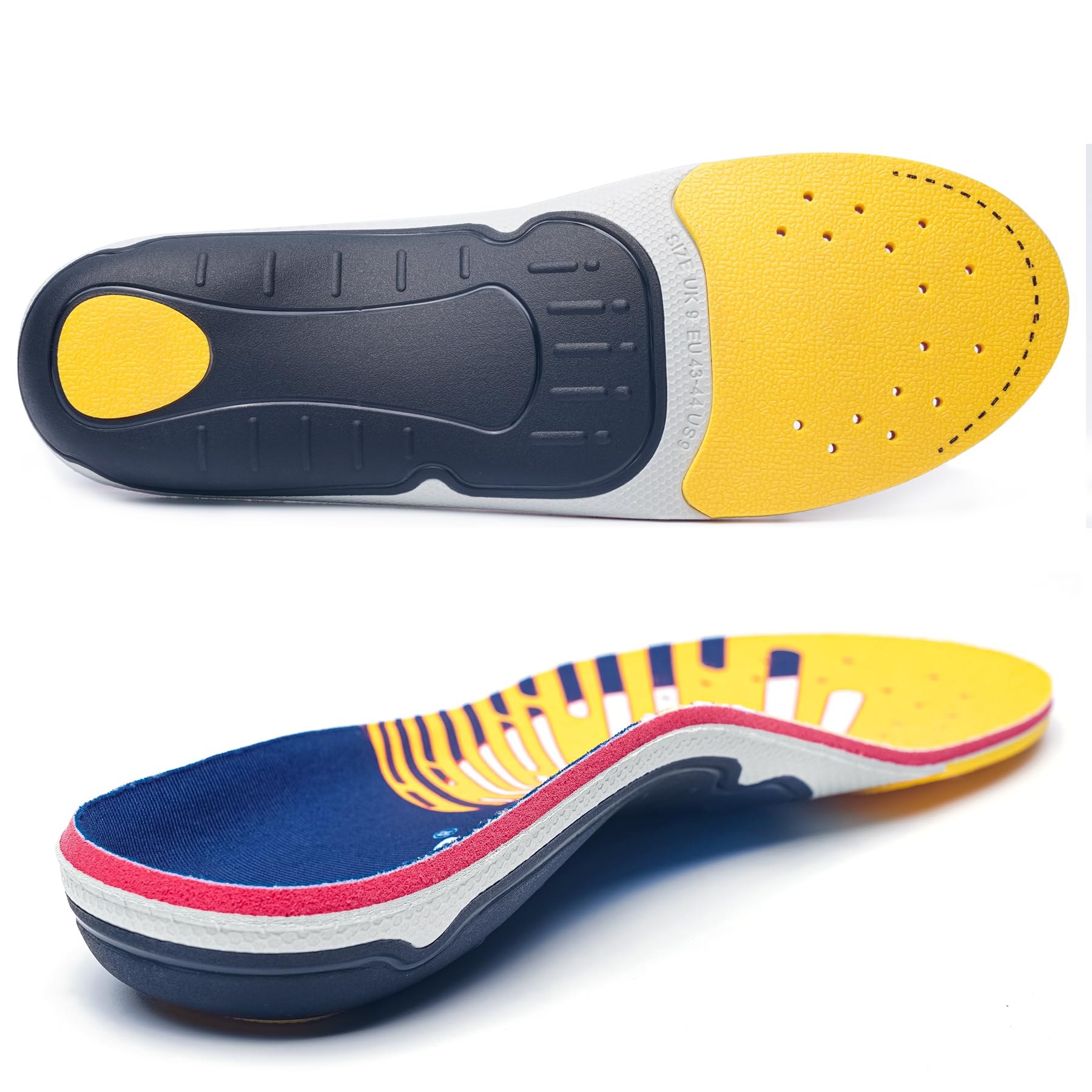
Archepaid inserts deliver a surprising amount of arch support for their price point, featuring a 3.5cm arch profile that lifts fallen arches more aggressively than most budget insoles. The deep U-shaped heel cup wraps the calcaneus to maintain heel neutrality and reduce the supination/pronation issues common in flat feet. A combination of EVA foam with TPU pads provides both cushioning and structural stability, creating a hybrid that performs closer to mid-range orthotics than typical entry-level options.
Users who struggled with flat feet and plantar fasciitis for months reported significant pain reduction within days of switching to Archepaid. The insoles fit well in work boots, hiking shoes, and casual sneakers without needing extensive trimming — they are cuttable for size adjustment but many users found the standard size matched their shoe perfectly. The bottom TPU pads add durability and prevent the insoles from sliding inside the shoe, a common issue with budget foam inserts.
The arch support is higher than expected for this tier, which can feel initially aggressive for users accustomed to flat insoles. Some users noted the material is initially stiff and requires a few days of wear to soften. The EVA foam, while supportive, may not retain its shape as long as denser materials — expect 4-6 months of daily use before noticeable compression. For anyone entering the world of orthotic insoles on a tight budget, Archepaid offers the best arch correction per dollar.
Why it’s great
- 3.5cm arch aggressively lifts fallen arches for significant correction
- Deep U-shaped heel cup maintains heel neutrality during gait
- TPU bottom pads prevent sliding and add structural durability
Good to know
- Initially stiff and requires a few days of break-in wear
- EVA foam may compress after 4-6 months of heavy daily use
- High arch may feel too aggressive for users with very sensitive feet
FAQ
How do I know if I need arch support insoles for flat feet?
Can arch support insoles fix flat feet permanently?
How long does it take to adjust to new arch support insoles?
Final Thoughts: The Verdict
For most users, the arch support insoles for flat feet winner is the PowerStep Pinnacle because it provides the reliable arch correction and dual-layer cushioning that flat-footed users need for daily relief, backed by podiatrist recommendations and a no-trim design. If you want maximum shock absorption for all-day standing, grab the MOVE All Day Comfort Insole with its X-Frame support system. And for heavy body frames needing durable arch support that won’t compress, nothing beats the Fit Geno Heavy Duty Insoles with their removable TPU plate and Poron foam padding.