
Our readers keep the lights on and the weekend projects moving. As an Amazon Associate, I earn from qualifying purchases.
Waking up with a stuffy nose, sneezing fits, and itchy eyes is the classic signature of a dust mite allergy. These microscopic pests thrive in bedding, upholstery, and carpets, triggering year-round misery that many mistake for a persistent cold. The right antihistamine or nasal spray can shut down that immune response and give you your mornings back.
I’m Rikta — the co-founder and writer behind FitlyFast. I’ve spent years analyzing clinical data and consumer feedback on OTC allergy products, focusing specifically on how active ingredients like cetirizine, loratadine, and fluticasone perform against dust mite allergens.
After comparing dozens of options, I’ve narrowed the field to the seven most effective treatments. This guide breaks down how each one tackles dust mite symptoms so you can find the best allergy medicine for dust mites that fits your routine and severity.
How To Choose The Best Allergy Medicine For Dust Mites
Dust mite allergy isn’t seasonal — it’s a 24/7 problem because these mites live in your bed, couch, and carpet all year. The right medicine depends on whether your dominant symptom is nasal congestion, sneezing, or itchy eyes. Here are the three factors that matter most.
Oral Antihistamines vs. Nasal Sprays
Oral antihistamines (cetirizine, loratadine) block histamine systemically, stopping sneezing, runny nose, and itchy eyes within an hour. They are convenient but may not fully relieve nasal congestion. Nasal sprays (fluticasone, triamcinolone, cromolyn) deliver corticosteroids or mast cell stabilizers directly to the inflamed nasal tissue, making them more effective for congestion and post-nasal drip. Many allergy sufferers combine both for complete relief.
Understanding Non-Drowsy Formulations
First-generation antihistamines (diphenhydramine) cause sedation because they cross the blood-brain barrier. Modern options like cetirizine, loratadine, and fexofenadine are designed to stay in the peripheral system, drastically reducing drowsiness. For dust mite allergies that require daily medication, non-sedating formulas are the only practical choice for adults and children over six.
Tablet vs. Liquid Gel vs. Spray
Tablets are the most cost-effective and have the longest shelf life. Liquid gels absorb faster because the active ingredient is already in solution, which can mean quicker symptom relief. Sprays bypass the digestive system entirely, offering targeted treatment with minimal systemic exposure — a major advantage for those who want to avoid any drug interaction or for treating young children (cromolyn is approved from age two).
Quick Comparison
On smaller screens, swipe sideways to see the full table.
| Model | Category | Best For | Key Spec | Amazon |
|---|---|---|---|---|
| Nasacort 24HR | Nasal Spray | Congestion & sneezing | Triamcinolone 55 mcg/spray | Amazon |
| Flonase Sensimist | Nasal Spray | Congestion & watery eyes | Fluticasone 27.5 mcg/spray | Amazon |
| Zyrtec Liquid Gels | Liquid Gel | Fast-acting all-day relief | Cetirizine HCl 10 mg | Amazon |
| Zyrtec Tablets | Tablet | Value & trusted brand | Cetirizine HCl 10 mg | Amazon |
| Claritin | Tablet | Gentle non-drowsy | Loratadine 10 mg | Amazon |
| WELMATE | Tablet | Budget bulk supply | Cetirizine HCl 10 mg | Amazon |
| NasalCrom | Nasal Spray | Steroid-free prevention | Cromolyn Sodium 5.2 mg/spray | Amazon |
In‑Depth Reviews
1. Nasacort 24HR Allergy Nasal Spray
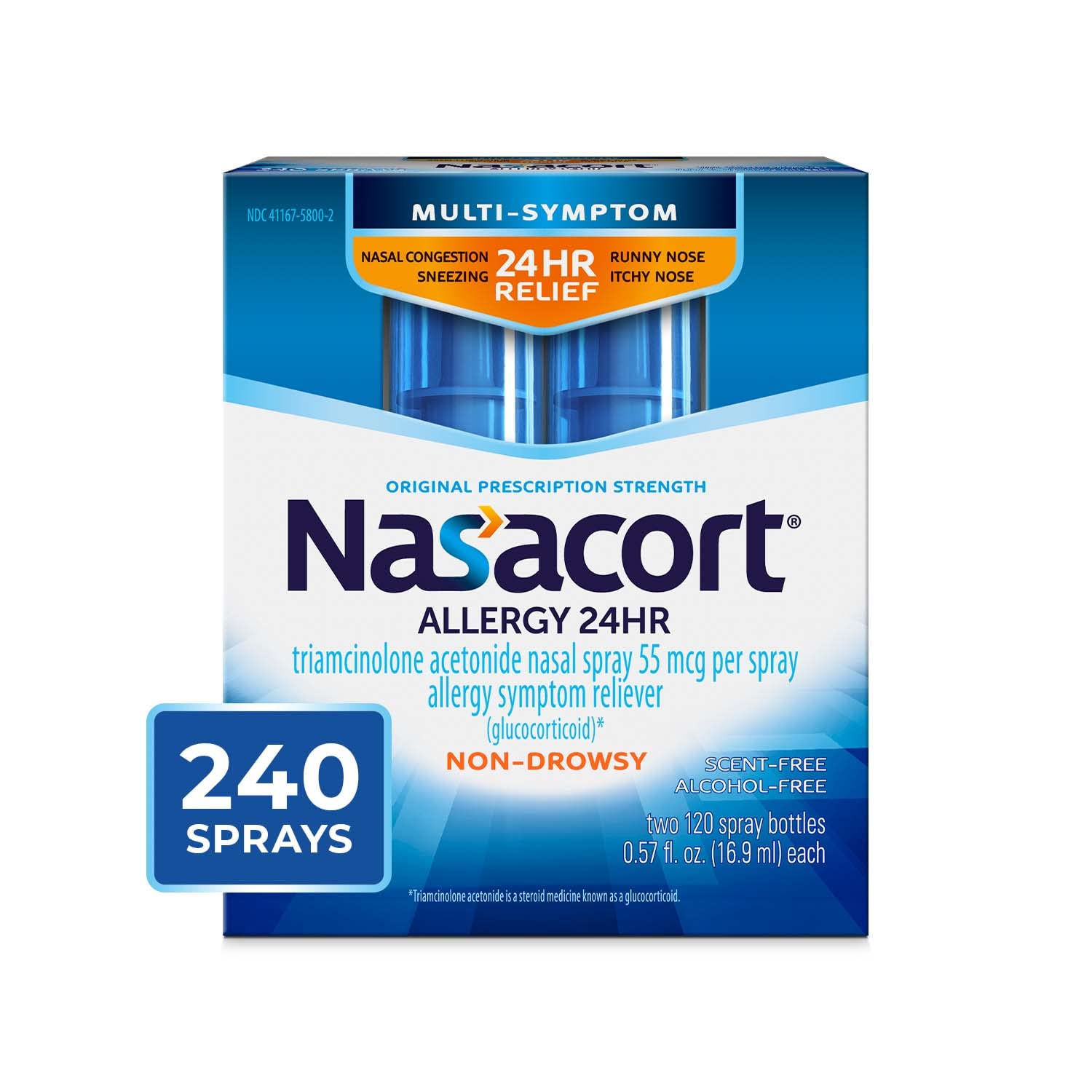
Nasacort delivers 55 mcg of triamcinolone acetonide per spray, a corticosteroid that directly reduces inflammation in the nasal passages caused by inhaled dust mite debris. Users report noticeable relief from congestion and sneezing within 24 to 48 hours, with full effect after a few days of consistent use. The two-bottle pack provides 240 total sprays, which translates to roughly two months of daily treatment.
Unlike oral antihistamines, Nasacort addresses the underlying inflammatory response rather than just blocking histamine after release. This makes it especially effective for the stubborn nasal congestion that often accompanies dust mite allergies. The fine mist applicator has no scent, no harsh taste, and produces no stinging sensation, so compliance is high even for sensitive users.
The compact bottle fits easily in a medicine cabinet or travel bag. For anyone whose primary dust mite symptom is waking up congested, this spray is the most targeted single solution on the list. It is non-drowsy and alcohol-free, making it safe for daily use without interfering with work or sleep.
Why it’s great
- Directly reduces nasal inflammation at the source
- No drowsiness, scent, or unpleasant taste
- Two bottles offer excellent duration of use
Good to know
- May take 2-3 days to reach full effect
- Not ideal for acute eye itching without an oral antihistamine
2. Flonase Sensimist Allergy Relief Nasal Spray
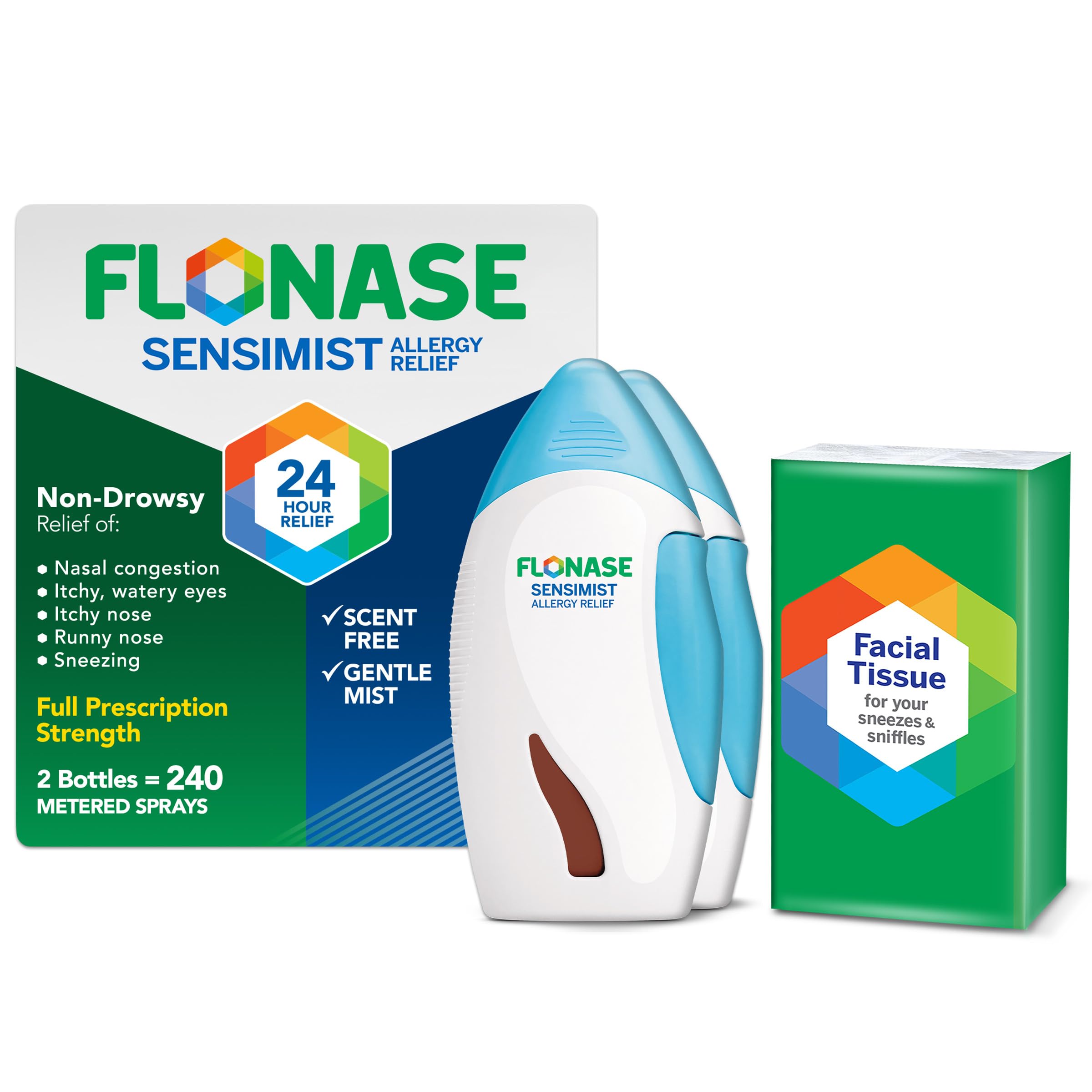
Flonase Sensimist is the gentler evolution of the standard Flonase formula, using a finer, scent-free mist that users barely feel. Each spray delivers 27.5 mcg of fluticasone propionate, and the two-bottle pack provides 240 total sprays — roughly 8 weeks of daily use. Most users feel relief within 8 hours, with maximum benefit after 3 to 4 days of consistent application.
What sets Sensimist apart from other nasal sprays is its ability to treat six allergy symptoms, including nasal congestion and itchy, watery eyes — a claim single-ingredient oral antihistamines cannot make. For dust mite sufferers, this means one product can replace two separate treatments. The no-drip, fine-mist design also eliminates the post-nasal drip and unpleasant taste that some users report with older spray designs.
It is FSA/HSA eligible, and the manufacturer recommends it for year-round use, which aligns perfectly with the chronic nature of dust mite exposure. For those who found standard Flonase too intense, the Sensimist version provides the same active ingredient with a noticeably more comfortable delivery system.
Why it’s great
- Treats both nasal congestion and itchy, watery eyes
- Gentle, fine mist with no scent or taste
- 8-week supply from a single pack
Good to know
- Not instant relief — requires 3-4 days for full effect
- Higher upfront investment compared to tablets
3. Zyrtec 24 Hour Allergy Relief Liquid Gels
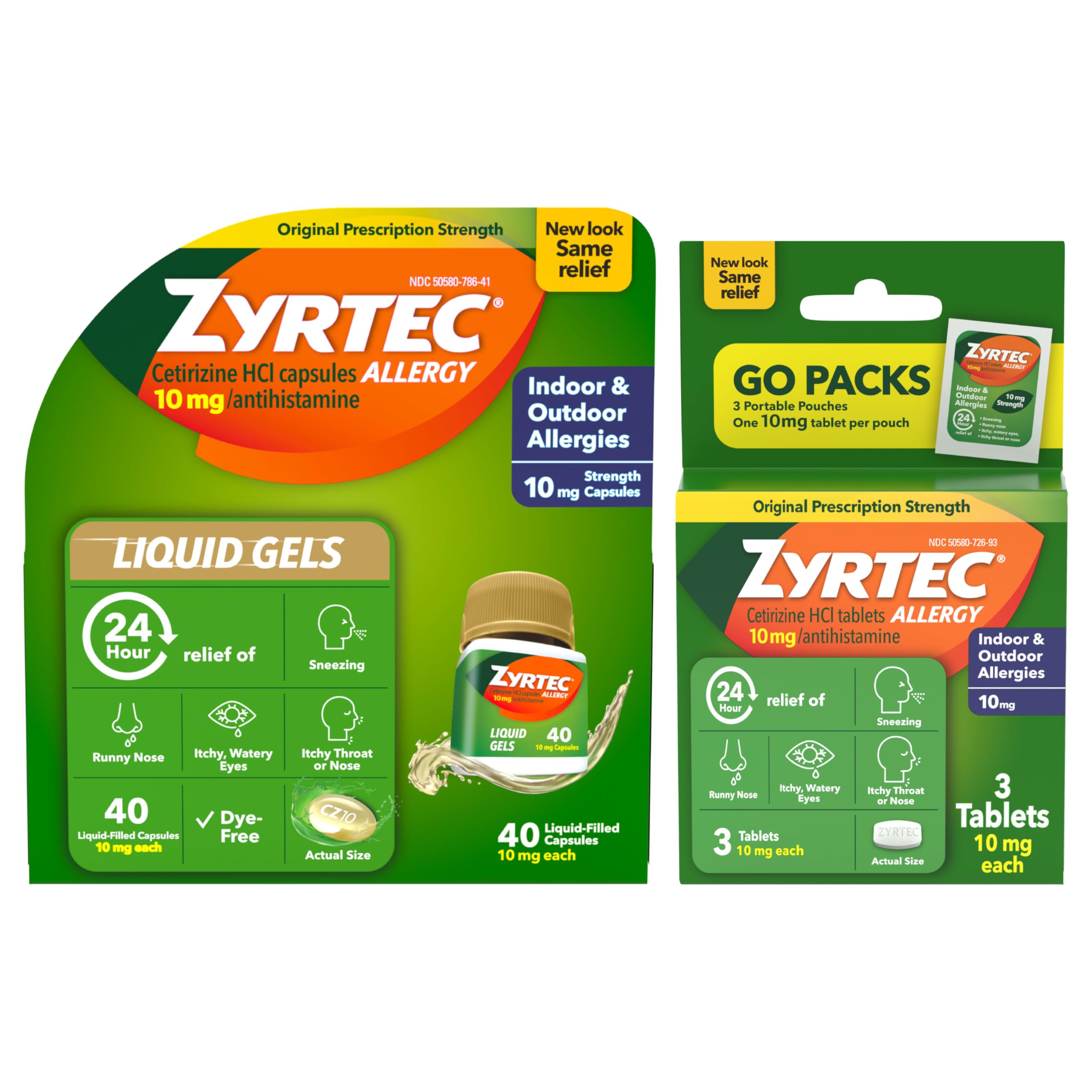
These liquid gels contain 10 mg of cetirizine HCl in a pre-dissolved form, which means the active ingredient enters your system faster than a compressed tablet. For dust mite allergy sufferers who wake up with immediate symptoms, this translates to noticeably quicker relief from sneezing, runny nose, and itchy eyes — often within 60 minutes.
The pack includes a 40-count bottle plus three single-dose travel capsules, making it practical for home and on-the-go use. Cetirizine is the same active ingredient found in Zyrtec tablets, but the liquid gel format eliminates the need for the body to break down a solid pill first. This is a meaningful advantage for people with slow digestion or those who want symptom control to kick in before they walk out the door.
Users consistently report that the liquid gels are easy to swallow and cause no stomach discomfort. Because cetirizine is a second-generation antihistamine, drowsiness is rare but possible for some individuals — testing the first dose on a weekend is a smart precaution.
Why it’s great
- Faster absorption than standard tablets
- Includes travel packs for portability
- Prescription-strength antihistamine without a script
Good to know
- Does not treat nasal congestion as effectively as a spray
- Some users may experience mild drowsiness
4. Zyrtec 24 Hour Allergy Relief Tablets
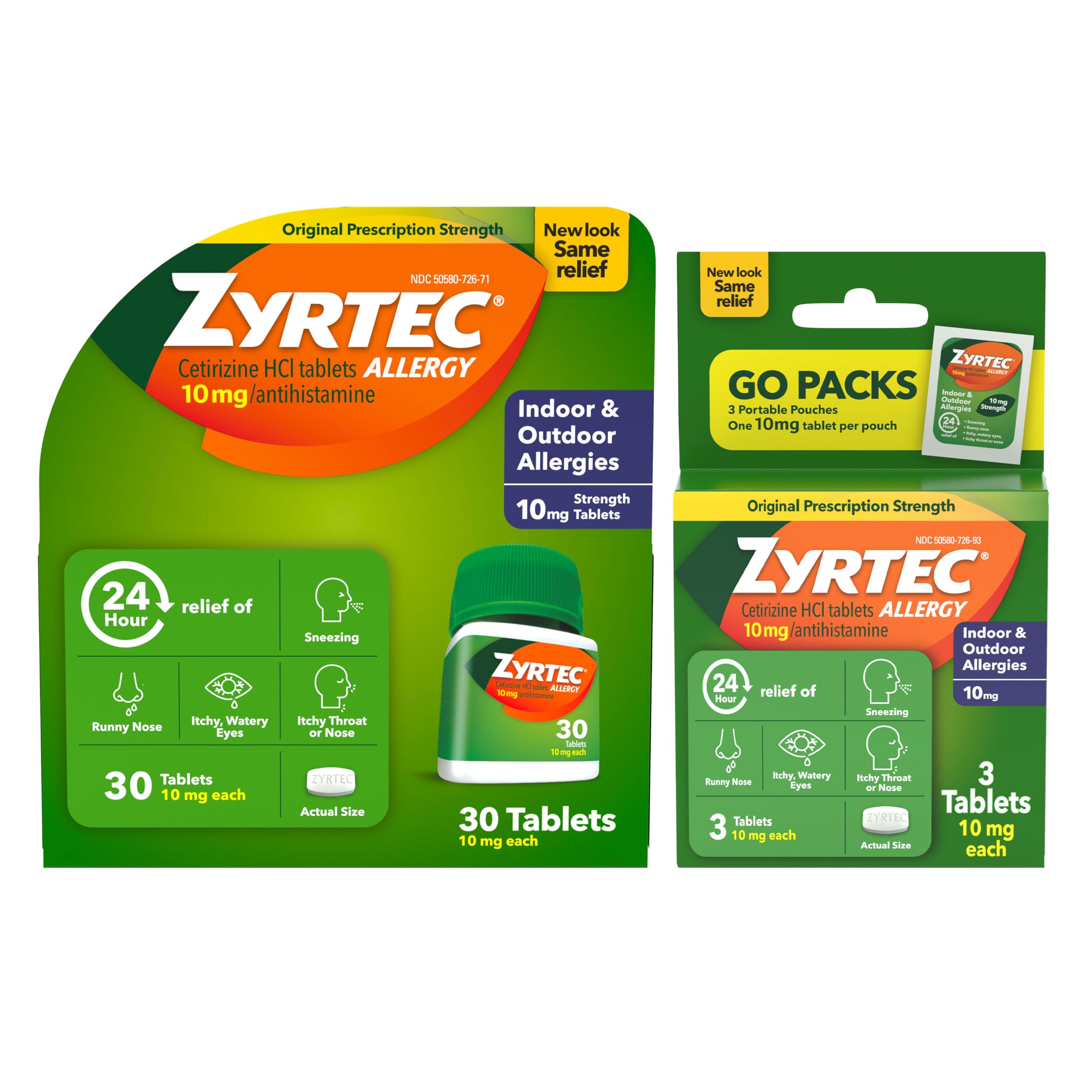
This bundle pairs a 30-count bottle of Zyrtec tablets with three single-dose travel packs, giving you a full month of daily treatment plus purse-friendly backups. Each 10 mg cetirizine HCl tablet delivers the same prescription-strength relief that made Zyrtec the #1 allergist-recommended OTC antihistamine brand. For dust mite allergies, this means 24-hour control over sneezing, runny nose, and itchy eyes with a single daily dose.
The tablet format is the most proven delivery method for cetirizine — it is stable at room temperature, easy to split for a 5 mg half-dose if symptoms are mild, and has the longest shelf life of any format. Users consistently praise its effectiveness against indoor triggers like dust and pet dander, and the non-drowsy profile makes it suitable for daily use during work or school.
Compared to the liquid gels, the tablets take slightly longer to kick in (about 60-90 minutes vs. 45-60 minutes), but they cost less per dose and are easier to buy in larger quantities. For established routines, the tablet form remains the standard by which other OTC antihistamines are measured.
Why it’s great
- #1 allergist-recommended OTC antihistamine
- Travel packs included for on-the-go relief
- Non-drowsy for reliable daily use
Good to know
- Slightly slower onset than liquid gel format
- 30 tablets may run out quickly for families
5. Claritin 24 Hour Allergy Medicine

Claritin uses loratadine 10 mg, the antihistamine with the lowest incidence of drowsiness among all OTC options. For dust mite allergy sufferers who are sensitive to medication side effects or need to remain alert for demanding work, loratadine offers reliable symptom control without the grogginess that even cetirizine can occasionally cause. The 70-tablet bottle provides over two months of daily treatment.
Loratadine is effective against over 200 allergens, including dust mites, and it targets sneezing, runny nose, itchy eyes, and itchy throat or nose. The tablets are small and easy to swallow. While loratadine is slightly less potent than cetirizine for some individuals, its side effect profile is unmatched, making it the go-to for people who typically react poorly to other antihistamines.
It is worth noting that Claritin has been on the market since the 1990s and is available as a generic (loratadine) at even lower prices. The brand name commands a premium, but the formulation is identical to store-brand versions. For first-time allergy medication users, Claritin is the safest starting point.
Why it’s great
- Lowest drowsiness rate among OTC antihistamines
- 70 tablets provide excellent per-dose value
- Proven safety profile for long-term use
Good to know
- Less potent than cetirizine for moderate-to-severe allergies
- Does not relieve nasal congestion on its own
6. WELMATE Allergy Relief Tablets

WELMATE offers 500 tablets of 10 mg cetirizine HCl — the exact same active ingredient and dosage as Zyrtec — at a fraction of the per-tablet cost. Founded by former pharmacy employees who were frustrated with OTC pricing, WELMATE strips away brand marketing and delivers the same prescription-strength antihistamine for day-in, day-out dust mite symptom control. At this quantity, one bottle can last over a year.
The tablets are non-drowsy for most users, provide 24-hour relief, and can be halved for a 5 mg dose if symptoms are mild. Customer reviews consistently note that the product works just as well as the national brand, with no difference in effectiveness or side effects. For families managing multiple dust mite allergies, the cost savings here are substantial without any compromise on active ingredient quality.
The only trade-off is packaging — the bottle is basic and lacks the travel-friendly extras that brand-name products include. But for home use where value is the priority, WELMATE represents the most efficient way to maintain daily antihistamine therapy for dust mite allergies.
Why it’s great
- 500 tablets at the industry’s lowest per-dose cost
- Identical active ingredient to Zyrtec
- Non-drowsy formula for daily use
Good to know
- Basic packaging with no travel packs
- Not suitable if you prefer brand-name consistency
7. NasalCrom Nasal Spray Allergy Symptom Controller

NasalCrom uses cromolyn sodium, a mast cell stabilizer that prevents the release of histamine and other inflammatory mediators before symptoms start. Unlike steroids or antihistamines, it has zero systemic side effects, no drowsiness, and no jitters — just localized prevention in the nasal lining. The three-pack provides 600 total sprays, making it the longest-lasting option on this list.
For dust mite allergy sufferers who want to avoid steroids altogether, or for parents treating children as young as two years old, NasalCrom is the safest preventive tool available. The trade-off is that it must be started before symptoms peak — ideally a week before heavy exposure — and requires more frequent dosing (3-4 times daily). This makes it less convenient for people who forget midday doses.
Users who commit to the regimen report dramatic reductions in sneezing, runny nose, and stuffiness without any of the side effects associated with oral antihistamines or corticosteroids. It can also be used alongside other allergy medications without risk of interaction, making it an excellent add-on for comprehensive dust mite management.
Why it’s great
- Zero steroids, safe for long-term use
- Approved for children as young as 2 years old
- No drowsiness, jitters, or systemic side effects
Good to know
- Requires 3-4 daily doses for full protection
- Must be started before symptoms appear to be effective
FAQ
Can I take both an oral antihistamine and a nasal spray for dust mite allergies?
How long does it take for dust mite allergy medicine to start working?
Is it safe to use dust mite allergy medicine every day long term?
Final Thoughts: The Verdict
For most users, the best allergy medicine for dust mites winner is the Nasacort 24HR Allergy Nasal Spray because it directly targets the nasal inflammation that dust mites cause, with no drowsiness and a full 24 hours of relief per dose. If you want fast-acting systemic coverage for sneezing and itchy eyes, grab the Zyrtec Liquid Gels. And for a steroid-free, kid-safe preventive option, nothing beats the NasalCrom Nasal Spray.