
Our readers keep the lights on and the weekend projects moving. As an Amazon Associate, I earn from qualifying purchases.
An air purifier built on American soil carries a distinct promise: rigorous quality control, domestic sourcing of critical components, and adherence to standards that often exceed the baseline. For anyone dealing with persistent allergies, urban smog, or volatile organic compounds seeping from new furniture, the “Made in USA” label isn’t a marketing badge — it signals a higher bar for material selection and assembly integrity.
I’m Rikta — the co-founder and writer behind FitlyFast. Over the past decade, I’ve broken down the engineering specs, CADR ratings, and filter media grades of hundreds of home appliances to help readers separate genuine performance from clever advertising.
This guide isolates only the models assembled or manufactured in the United States, evaluating HEPA class, carbon density, room coverage, and real-world noise data you need to make an informed buy. This is your complete resource for finding the best air purifier made in usa that matches your space, your budget, and your health priorities.
How To Choose The Best Air Purifier Made In USA
Not every purifier sold by an American brand is actually assembled here. The “Made in USA” claim changes the calculus on filter replacement availability, long-term customer support, and regulatory oversight. The following criteria help you separate domestic quality from simple brand marketing.
Filter grade and particle capture efficiency
Domestic manufacturers typically use H13 True HEPA or better. Look for a minimum 99.97% capture at 0.3 microns. Models targeting smoke or VOCs often add pounds of activated carbon plus zeolite — a feature cheap import units skip entirely. The Austin Air HealthMate line, for instance, uses a 15-pound carbon blend that no sub- unit can match.
Room coverage and air changes per hour
CADR (Clean Air Delivery Rate) tells you how quickly a unit scrubs a given square footage. For a 300-square-foot bedroom, you want at least 4 air changes per hour. For open-concept living spaces exceeding 1,000 square feet, look at units rated for 1,500+ square feet at 2 changes per hour. The Air Oasis iAdaptAir 2.0 delivers 530 CFM — enough for a whole floor in one cycle.
Noise floor and fan motor quality
US-made purifiers often use Japanese or German DC motors that maintain torque at low speeds. Check decibel ratings: below 25 dB is library-quiet; 35-45 dB is acceptable for a bedroom at medium speed. The RabbitAir MinusA2 and the Puraclenz Core both operate in the low 20 dB range on sleep mode, making them invisible companions overnight.
Filter lifespan and replacement cost
Long-life filters reduce your total cost of ownership. Austin Air claims up to 5 years on its 4-stage cartridge; Air Oasis offers 2 years between changes. Budget units with thinner media may need replacement every 3-6 months, erasing their upfront savings. Always factor the annual filter cost into your decision.
Quick Comparison
On smaller screens, swipe sideways to see the full table.
| Model | Category | Best For | Key Spec | Amazon |
|---|---|---|---|---|
| Air Oasis iAdaptAir 2.0 | Premium | Whole-home mold & VOC control | 530 CFM / 5-stage H13 | Amazon |
| Austin Air HealthMate+ B450 | Premium | Heavy smoke & chemical neutralization | 15 lb carbon + zeolite | Amazon |
| Austin Air HealthMate B400 | Premium | Pet dander & allergy heavy-duty | 4-stage up to 1,500 sq ft | Amazon |
| BLUEAIR Classic Pro CP7i | Mid-Range | Large rooms with smart controls | HEPASilent + 5-yr warranty | Amazon |
| Puraclenz Core C750 | Mid-Range | Mold & surface pathogen defense | PCO + UVC + H13 HEPA | Amazon |
| RabbitAir MinusA2 SPA-780N | Mid-Range | Allergy bedrooms with WiFi control | AAFA certified / 815 sq ft | Amazon |
| RabbitAir MinusA2 SPA-780A | Mid-Range | Germ defense & versatile mounting | 6-stage / wall-mountable | Amazon |
| AIRDOCTOR AD1000 | Mid-Range | Small bedrooms & nurseries | UltraHEPA / 0.003 micron | Amazon |
| Alen BreatheSmart 35i | Entry-Level | Budget-friendly large room coverage | SmartSensor / 1,000 sq ft | Amazon |
In‑Depth Reviews
1. Air Oasis iAdaptAir 2.0

The iAdaptAir 2.0 uses a 5-stage filtration suite — true H13 HEPA, high-density carbon, silver ion screen, bi-polar ionization, and UV-C light — to deliver the highest CADR in this lineup at 530 CFM. That airflow translates to 5 air changes per hour in a 795-square-foot room, making it the fastest scrubber in the list. The filter pack lasts up to 2 years, significantly lowering annual cost.
Users consistently report dramatic reductions in allergy symptoms, dust accumulation, and cooking odors within hours. The real-time particle count display and auto-adjusting fan speed keep the unit whisper-quiet during low-load periods, only ramping up when sensors detect a spike. The Wi-Fi module is detachable for buyers concerned about EMF exposure, a thoughtful design touch.
On the downside, the companion app feels dated and relies on older Wi-Fi standards, so security-conscious owners should isolate it on a guest network. The front intake grille can attract dust onto nearby surfaces if placed on a dresser. But for pure cleaning power and made-in-USA engineering, this unit outpaces everything in its class.
Why it’s great
- Highest CFM in the guide — clears large spaces fast
- Long filter life cuts long-term cost
- UL-listed ozone-free and CARB certified
Good to know
- App interface feels dated; Wi-Fi is 802.11n only
- Front intake can settle dust on nearby surfaces
2. Austin Air HealthMate Plus B450

The HealthMate Plus B450 packs 15 pounds of activated carbon and zeolite into a steel body — the heaviest carbon load in this roundup. That massive adsorbent bed targets VOCs, smoke, and chemical off-gassing that standard HEPA-only units leave untouched. The 4-stage system also includes a pre-filter, medical-grade HEPA, and a final carbon layer for thorough polishing.
Real-world feedback from owners battling neighbor smoke infiltration shows a 90%+ reduction within days of running on high. The unit covers up to 1,500 square feet, and the filter life reaches 5 years under normal use. The low setting produces a gentle air movement sound that many find helpful as white noise; the high setting is loud enough to mask a television.
Drawbacks include a 47-pound weight that makes room-to-room relocation impractical, a short power cord, and zero smart features. The mid-to-high fan speeds produce noticeable noise — this is not a bedroom unit for light sleepers. But for raw chemical and smoke filtration, the B450 stands alone.
Why it’s great
- 15 lbs of carbon/zeolite unmatched for VOC removal
- 5-year filter life keeps upkeep minimal
- Heavy steel build with 360° intake for uniform airflow
Good to know
- Loud at high speed — better suited for basements or living areas
- No app, no air quality display, basic 3-speed switch
3. Austin Air HealthMate Standard B400

The HealthMate Standard B400 shares the same 4-stage architecture as the B450 but with a slightly lower carbon/zeolite weight, making it a better match for general household allergens rather than extreme smoke scenarios. The pre-filter captures large particles, while the HEPA and carbon layers handle pollen, dust mites, pet dander, and everyday cooking odors.
Customer reports highlight a noticeable dust reduction within days — one owner noted their cleaning service commented on the difference after just one week. The unit runs silently on the low setting, making it viable for open living areas. The all-steel enclosure resists dents and scratches, and the 5-year filter interval means you set it and forget it.
The trade-off is the same as the B450: bulk, weight, and noise at higher speeds. There is no auto mode, no particle sensor, and no remote control. The 1,500-square-foot coverage rating assumes a standard 8-foot ceiling, so taller rooms may need a second unit.
Why it’s great
- Bulletproof steel construction built to last decades
- 5-year filter lifespan reduces replacement waste
- Low setting is near silent for living room use
Good to know
- Heavier than any competitor — plan for a permanent spot
- No smart features; manual speed knob only
4. BLUEAIR Classic Pro CP7i
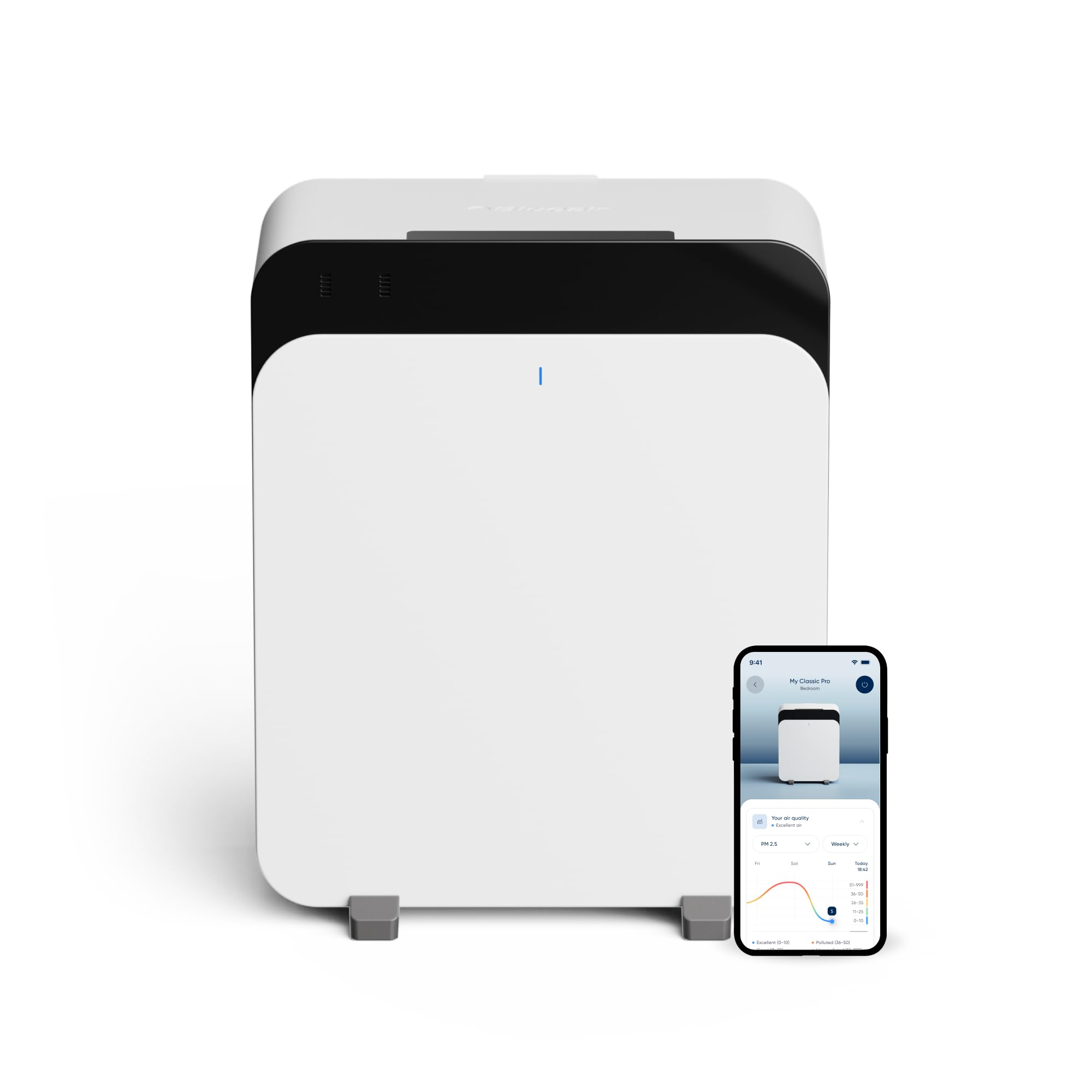
Blueair’s Classic Pro CP7i brings electrostatic HEPASilent filtration to the large-room category, combining mechanical capture with an electrostatic charge to pull in 99.97% of particles down to 0.1 microns. The dual-fan, dual-intake design moves air at enough volume to clean a 1,413-square-foot space in 30 minutes on the highest setting.
The unit features a 5-color AQI display, a numeric particle density readout, and full smartphone control via the Blueair app. The HINS Pure technology cycles on every 10 minutes, shining a visible 405nm light for 10 seconds to sterilize captured bacteria — a differentiation from standard UV towers that run continuously. The steel body carries a 5-year warranty.
Yearly filter replacement is the main recurring cost, though the filter media is simple to swap without tools. At speeds 1-3 the CP7i is genuinely quiet; speed 4 introduces audible fan noise but is rarely needed for more than short burst cycles. The premium steel chassis resists scratches and looks more like furniture than an appliance.
Why it’s great
- Rapid 30-minute room turnover at high speed
- HEPASilent technology balances airflow with low noise
- HINS sterilization cycle adds antimicrobial protection
Good to know
- Filters require annual replacement
- App setup can be slightly finicky during initial pairing
5. Puraclenz Core C750
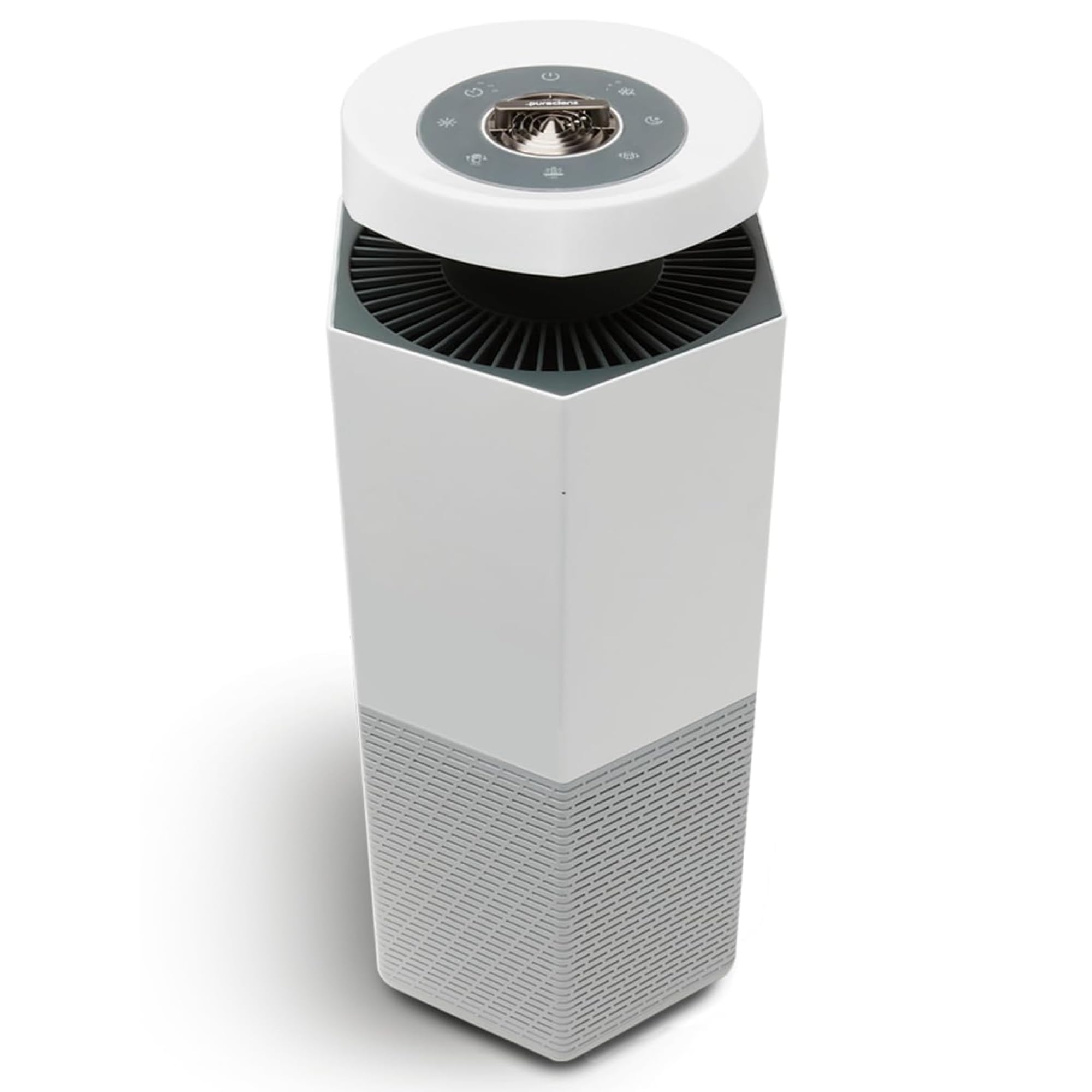
The Puraclenz Core C750 differentiates itself with Photocatalytic Oxidation (PCO) technology, which releases ozone-free ions to neutralize mold spores, viruses, and bacteria on exposed surfaces — not just in the air. This gives it a unique advantage for basements, bathrooms, or any space with moisture concerns. The H13 True HEPA filter handles airborne particulates down to 0.1 microns, while the UV-C lamp provides germicidal backup.
Owners report dramatic odor elimination — one buyer documented the removal of a 25-year-old moldy closet smell in three days. The sleep mode drops to 23 dBA, turning off all indicator lights for undisturbed rest. The intelligent sensor adjusts fan speed automatically based on real-time air quality readings, though some users mention the sensor can feel less responsive with very light particles like smoke.
The recharge cell that generates the ions needs periodic replacement, adding a consumable beyond the standard filter. The 15-pound unit is compact for its coverage claim but slightly tall for tight shelving. For mold-prone homes, the Core C750 offers a layer of protection no passive filter can match.
Why it’s great
- PCO technology neutralizes surface mold and bacteria
- 23 dBA sleep mode is genuinely silent
- Ozone-free certification safe for continuous use
Good to know
- Air quality sensor response can be inconsistent
- Recharge cell adds an extra maintenance item
6. RabbitAir MinusA2 SPA-780N
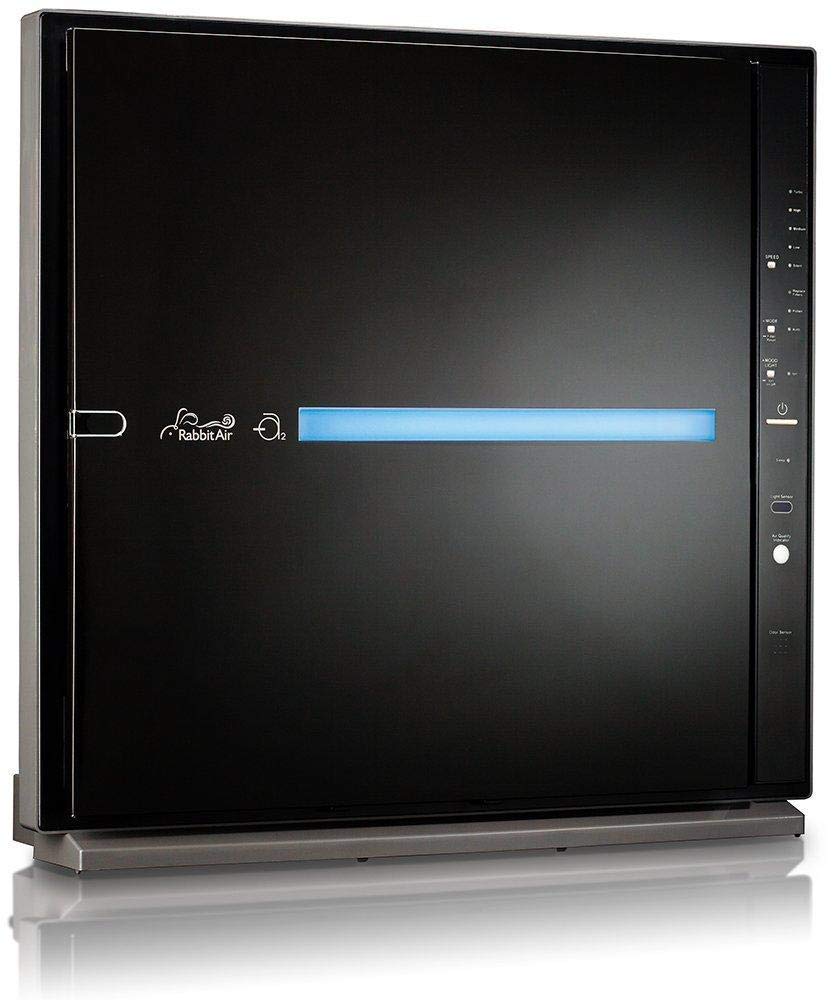
The MinusA2 SPA-780N is certified asthma and allergy friendly by the AAFA, using a 6-stage filtration process that combines a pre-filter, medium filter, HEPA-type main filter, activated carbon, ion generator, and negative ion charger. The “Asthma and Allergy Friendly” variant includes a specialized filter that meets the strict particle-reduction criteria required for the certification mark.
Smart app control lets you adjust settings from anywhere, including scheduling, fan speed, and filter life tracking. The wall-mountable design saves floor space and makes it a favorite for nurseries or office spaces. Owners consistently praise the whisper-quiet operation on lower settings and the adjustable face plate that can be customized to match decor.
The 815-square-foot coverage is adequate for a master bedroom or open living area, but the unit struggles to keep up in rooms above 1,000 square feet without running near maximum. The price point is premium, and you’re paying for design and medical certification as much as raw air-moving power. For allergy sufferers who want a beautiful, certified solution, the SPA-780N delivers.
Why it’s great
- AAFA certified for asthma and allergy relief
- Wall-mountable with customizable face plate
- WiFi app control for remote monitoring
Good to know
- Premium price reflects design and certification, not CFM output
- Replacement filters are brand-specific and expensive
7. RabbitAir MinusA2 SPA-780A

The SPA-780A is the “Germ Defense” variant of RabbitAir’s MinusA2 line, equipped with a filter that specifically targets airborne bacteria, mold spores, and particles that carry viruses. Like the SPA-780N, it uses 6 stages of filtration including a HEPA-type main filter and activated carbon, but the germ-defense pre-coating adds an extra layer of antimicrobial protection.
The unit can stand alone or mount flush on a wall, and the 23.99-pound weight makes it manageable for one-person installation. Owners report noticeably less dust accumulation on furniture and a fresh air feel even in closed-off rooms. The 5-year warranty is generous for a unit in this price tier, reflecting RabbitAir’s confidence in the DC motor and electronics.
Filter replacements run around – per set depending on the variant, and the 815-square-foot coverage is realistic at medium fan speeds. The auto mode uses an optical sensor to detect particle loads but can occasionally misinterpret ambient light as a particle event. For those prioritizing germ reduction in a stylish, mountable package, the SPA-780A is a smart fit.
Why it’s great
- Germ Defense filter targets airborne bacteria and mold
- Wall-mountable with customizable faceplates
- 5-year warranty backs durable DC motor
Good to know
- Optical sensor can misinterpret ambient light
- Room coverage drops in very high ceilings
8. AIRDOCTOR AD1000
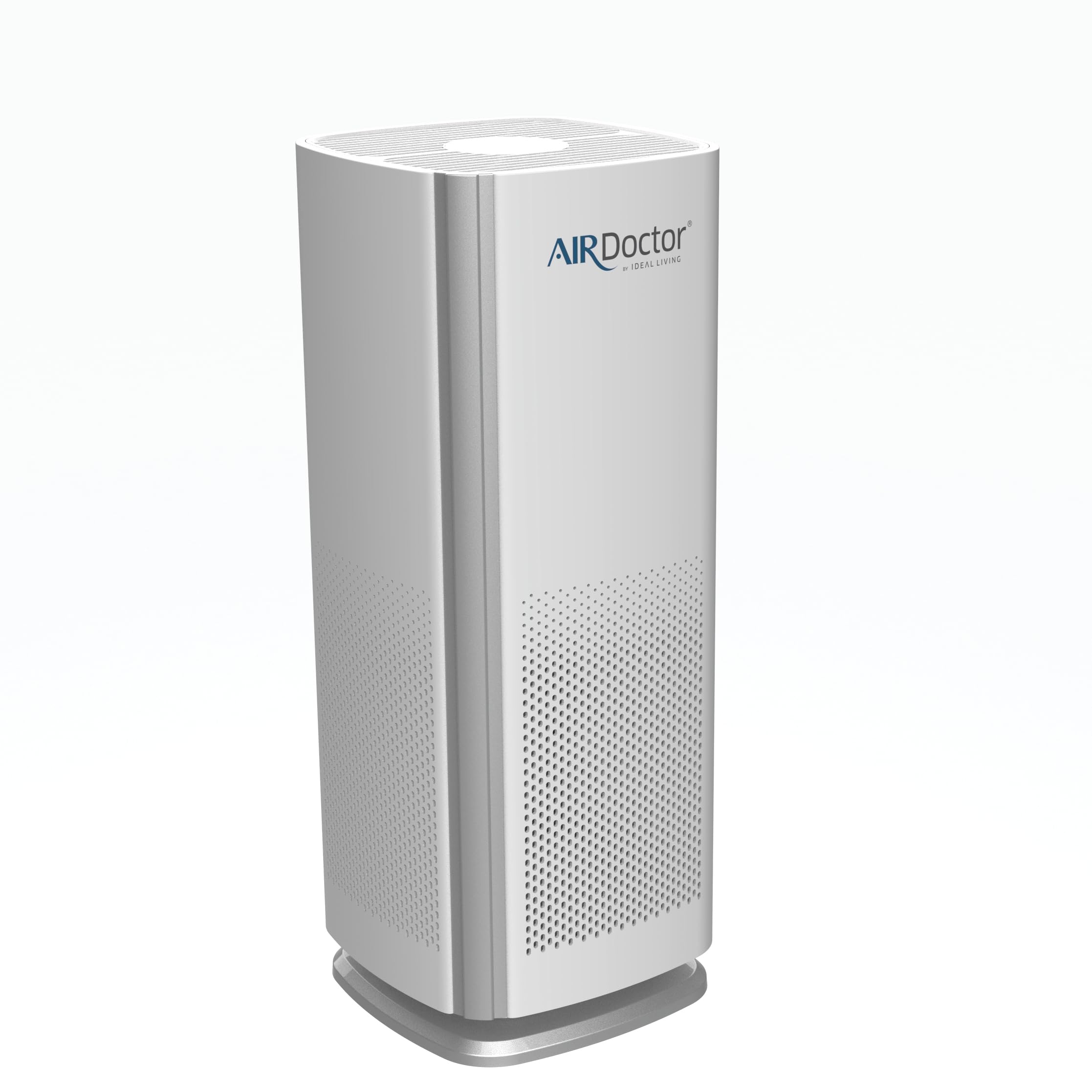
The AIRDOCTOR AD1000 uses UltraHEPA media that captures particles 100 times smaller than the HEPA standard — down to 0.003 microns. For a nursery, guest bedroom, or home office at 285 square feet, the 3-stage filtration (pre-filter, UltraHEPA, dual-action carbon VOC filter) provides high-efficiency cleaning without taking up too much floor space.
The auto mode uses an air quality sensor to adjust fan speed in real time, and the whisper-jet fans are 30% quieter than traditional designs at the same CADR. Owners highlight the compact 3.33 kg weight and the clean tower shape that fits beside desks or nightstands. The carbon VOC layer is specifically effective against formaldehyde and other chemical off-gassing from new furniture or paint.
At higher speed settings, the fan noise becomes noticeable — this is not a “disappear into the background” unit on turbo. The 285-square-foot coverage at 4 air changes per hour means it’s optimized for smaller spaces; using it in a larger room will require running it continuously at higher speeds, which increases noise and filter wear.
Why it’s great
- UltraHEPA captures particles as small as 0.003 microns
- Compact footprint ideal for small rooms or desks
- Quieter than traditional HEPA units at low-to-medium speeds
Good to know
- Auto mode may not trigger quickly with light pollution loads
- Turbo speed introduces noticeable fan noise
9. Alen BreatheSmart 35i
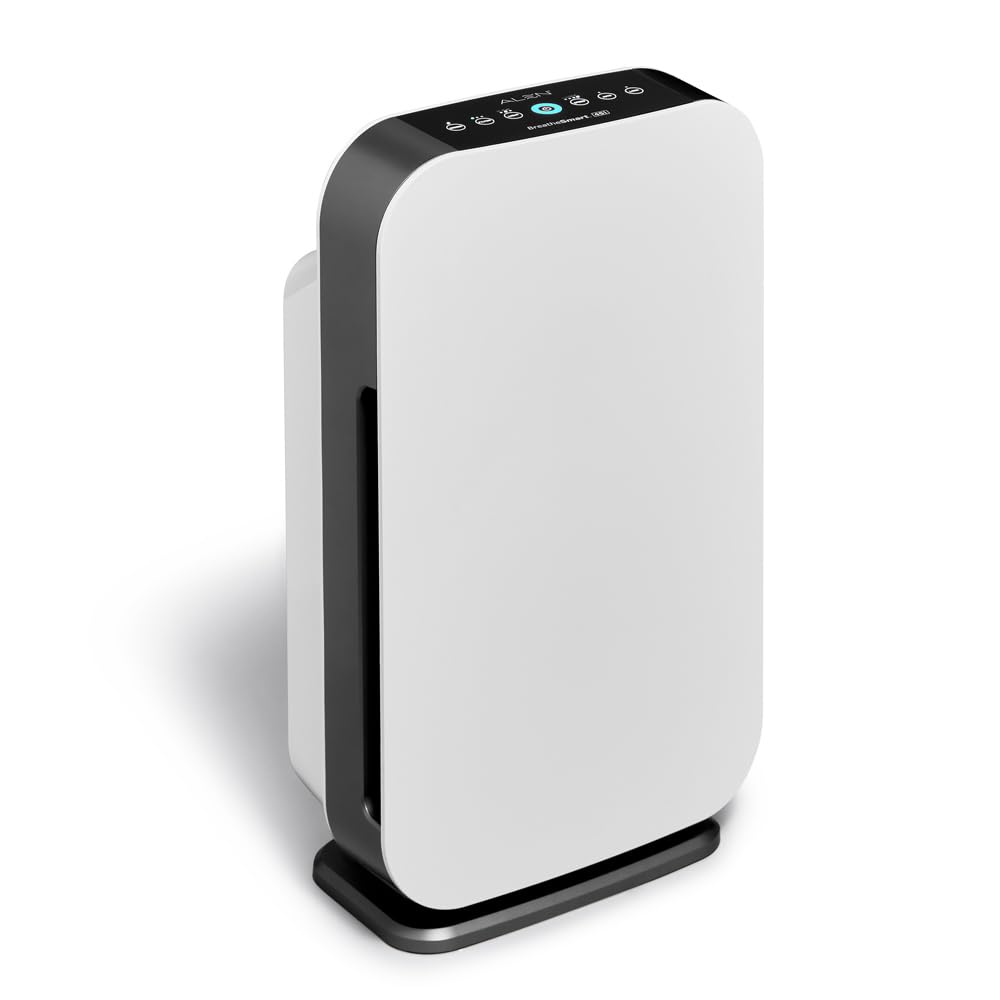
The Alen BreatheSmart 35i offers the best entry point for buyers who want US-based engineering without the premium price tag. The H13 Pure HEPA filter captures 99.9% of allergens, germs, and pollutants down to 0.1 microns, and the SmartSensor adjusts fan speed based on real-time particle counts. The 1,000-square-foot coverage rating makes it competitive with units costing twice as much.
SleepScore Labs validated the 35i’s ability to improve sleep quality through pink noise optimization — the unit’s quiet operation blends low-frequency tones to create a calming acoustic environment. The color-coded air quality ring (blue for good, purple for elevated particles) provides immediate visual feedback without needing an app. Owners also appreciate the child lock and the lack of an app requirement for basic operation.
Filter packs last around 4-6 months under constant use, which means annual filter costs can add up compared to long-life competitors. The LED ring cannot be fully turned off on non-Auto modes, which may bother some light-sensitive sleepers. For the price and coverage, however, the BreatheSmart 35i delivers solid domestic performance.
Why it’s great
- Covers 1,000 sq ft at a competitive entry price
- SmartSensor auto-adjusts without requiring an app
- Pink noise design improves sleep quality
Good to know
- Filters require replacement every 4-6 months
- LED ring cannot be fully dimmed in some modes
FAQ
What does “Made in USA” mean for an air purifier?
How often should I replace the filter on a US-made purifier?
Are US-made air purifiers quieter than imported ones?
Do all US-assembled purifiers produce ozone?
Final Thoughts: The Verdict
For most users, the best air purifier made in usa winner is the Air Oasis iAdaptAir 2.0 because it combines a class-leading 530 CFM CADR with medical-grade H13 filtration and a 2-year filter cycle. If you need heavy smoke and chemical neutralization, grab the Austin Air HealthMate Plus B450 with its 15-pound carbon bed. And for a budget-friendly entry into US-assembled purification without sacrificing coverage, nothing beats the Alen BreatheSmart 35i at 1,000 square feet of coverage.