
Our readers keep the lights on and the weekend projects moving. As an Amazon Associate, I earn from qualifying purchases.
You are chasing a clean line from source to speaker, but the wrong audio cable introduces hiss, hum, and a noise floor that ruins every quiet passage. The real gap between a muddy mix and a transparent soundstage is often just a few feet of properly shielded copper.
I’m Rikta — the co-founder and writer behind FitlyFast. After researching dozens of bulk spools, terminated RCA pairs, optical runs, and heavy-gauge stage cords, I can tell you that conductor purity, shielding density, and connector plating separate the signal savers from the noise injectors.
This guide breaks down the key specs and real-world performance of the best audio cable options for home stereo, car audio, guitar rigs, and long-distance digital links.
How To Choose The Best Audio Cable
Selecting an audio cable isn’t just about plugging things together. The wrong choice introduces noise, impedance mismatch, or physical failure at the worst moment. Focus on three core areas: conductor material and gauge, shielding and geometry, and connector quality.
Conductor Purity and Gauge
Oxygen-free copper (OFC) with 99.99% purity minimizes resistance and oxidation over time. For speaker-level signals, gauge determines current capacity — 12 AWG handles high-power pro audio runs over long distances, while 16 AWG suits home theater or short car speaker wires. For line-level RCA signals, stranded OFC in 28-24 AWG is standard; the twist and shield matter more than raw thickness at those voltage levels.
Shielding Type and Geometry
Braided or spiral shielding blocks electromagnetic interference (EMI) and radio-frequency interference (RFI) better than foil alone, but foil is lighter and cheaper. Twisted-pair geometry cancels hum from magnetic fields, making it essential for RCA interconnects near power cables or alternators. Digital optical cables like Toslink bypass electrical interference entirely by transmitting light, but they are fragile and must be routed without sharp bends.
Connector Plating and Strain Relief
Gold-plated connectors resist corrosion and maintain consistent contact over years of insertion cycles. Nickel plating is cheaper but slightly less conductive. Molded or metal-bodied strain relief prevents the wire from fracturing inside the plug — a common failure point on cheap cables. Split-tip RCA designs on some brands ensure a tight mechanical fit that doesn’t loosen with vibration.
Quick Comparison
On smaller screens, swipe sideways to see the full table.
| Model | Category | Best For | Key Spec | Amazon |
|---|---|---|---|---|
| Elite Audio PRM17 | Premium RCA | Car audio clarity | 99.9% OFC / Triple shielding | Amazon |
| Primeda Audiophile 2RCA | High-End Interconnect | HiFi system soundstage | 4N OFC / 3U gold plating | Amazon |
| Monoprice Toslink Optical | Digital Optical | EMI-free digital link | Mesh jacket / 10ft run | Amazon |
| RECOIL RCI66 6-Channel RCA | Multi-Channel RCA | 5- or 6-channel amp builds | 99.99% OFC / Twisted pair | Amazon |
| Yoico Pro 12AWG 50ft | Pro Speaker | Stage PA and subwoofers | 12 AWG / 50ft heavy-duty | Amazon |
| Amazon Basics 16-Gauge Wire | Bulk Speaker | General speaker runs | 16 AWG / 100ft spool | Amazon |
| Kxable 3.5mm AUX 50ft | Long Aux Cord | Long-distance phone-to-speaker | OFC core / 50ft length | Amazon |
In‑Depth Reviews
1. Elite Audio Premium Series PRM17

The Elite Audio PRM17 uses 99.9% pure oxygen-free copper conductors paired with a triple-layer shielding system that includes tinned copper braid, foil, and a copper drain wire. This configuration effectively blocks alternator whine and EMI in car audio installations, a common complaint with budget RCA cables. The precision-machined brass quad-clamp connectors lock onto RCA jacks without loosening over time, even under vehicle vibration.
Users report a noticeable drop in the noise floor compared to generic store-brand cables — specifically the elimination of a low-frequency hum when paired with a ground loop isolator. The 17-foot length is practical for routing from a trunk-mounted amplifier to a head unit without needing extension couplers that degrade signal integrity. The cable remains flexible enough to tuck under carpeting despite the dense shielding layers.
Corrosion resistance is built into every contact point. The tinned copper braid resists oxidation in humid climates, and the machined brass connectors hold up better than stamped nickel alternatives. While the outer jacket is thicker than entry-level RCA cables, this added girth is the trade-off for industrial-grade shielding performance. For anyone serious about car audio or near-speaker interference environments, this is a reliable, long-term solution.
Why it’s great
- Triple-layer shielding eliminates alternator whine and EMI effectively
- 99.9% OFC for minimal signal loss over long runs
- Machined brass connectors resist vibration loosening
Good to know
- Thicker jacket requires a bit more effort for tight bending
- Overkill for short, low-noise home stereo setups
2. Primeda Audiophile 2RCA to 2RCA

The Primeda Audiophile interconnect is built around a 4N (99.99%) oxygen-free copper core and a high-density OFC shielding layer that provides effective EMI protection. The 3U gold plating on the RCA connectors is ultra-thick compared to the standard flash plating found on budget cables, which drastically slows corrosion and maintains consistent contact resistance over years of use.
Reviewers consistently describe a wider soundstage and increased body in the midrange when swapping from generic cables to this Primeda. The split-tip design on the positive pin ensures a tight fit into female RCA jacks without being so stiff that insertion becomes difficult. The directional markings on the metal rings (CD to Amplifier) help beginners align the shield orientation correctly, though this matters most in single-ended high-gain systems.
Available in 3, 4.5, and 10-foot lengths, the cable uses a braided outer jacket that feels substantial without excessive stiffness. The red/white color-marked connectors make left-right channel identification instant. For a modest mid-range investment, this cable delivers the measurable improvements in channel separation and noise floor that budget interconnects often mask.
Why it’s great
- Ultra-thick 3U gold plating resists corrosion far longer than standard plating
- 4N OFC core and shielding for very low noise floor
- Directional arrows simplify proper installation
Good to know
- Braided jacket may not match all aesthetic preferences
- No significant benefit for very short patch cords under 1 foot
3. Monoprice Premium Toslink Optical
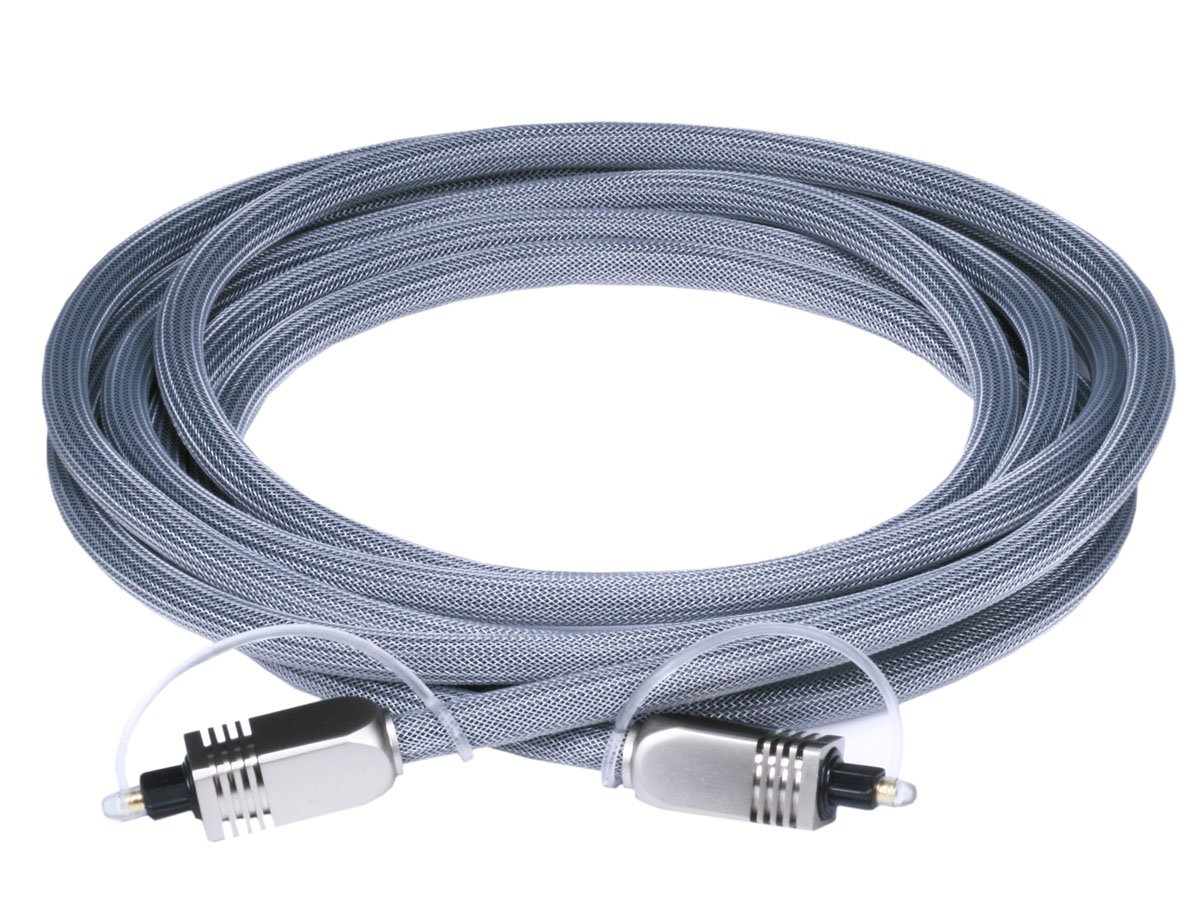
The Monoprice Premium Toslink cable uses precision-polished fiber optic tips inside heavy-duty metal connector heads, with a mesh metal jacket protecting the entire 10-foot run. Because it transmits light rather than electricity, this cable is completely immune to EMI and RFI — a major advantage when routing audio alongside power cables or network gear in a home theater cabinet.
The metal connector heads and gold-plated ferrule provide mechanical protection at the vulnerable tip where many optical cables fail after repeated insertions. The 8.0mm outside diameter feels robust, though the stiffness means it cannot make tight-radius bends without risking internal fiber damage. Users have reported surviving a decade of use across multiple moves, which speaks to the build quality compared to bargain-bin optical cables that fracture at the strain relief within months.
Compatibility is universal with standard Toslink ports found on game consoles, soundbars, TVs, and DACs. The mesh jacket resists kinks that can occlude the light signal, ensuring a stable digital lock without dropouts. If your gear supports optical S/PDIF, this is the most reliable way to transmit uncompressed 5.1 audio without introducing any electrical noise.
Why it’s great
- Mesh metal jacket provides extreme physical durability
- 100% immune to electrical interference (EMI/RFI)
- Polished fiber tips minimize signal loss at the connection point
Good to know
- Stiff cable won’t bend around tight corners without risk
- D-shaped connector requires careful orientation before insertion
4. RECOIL RCI66 6-Channel RCA

The RECOIL RCI66 packs six RCA channels into a single cable with 99.99% oxygen-free multi-strand copper conductors and twisted-pair geometry. This design cancels electromagnetic hum introduced by nearby power wires — critical when running three separate stereo pairs (front, rear, sub) through a car’s transmission tunnel alongside the main power cable.
The nickel-plated split-tip connectors provide a mechanically secure grip that resists vibration loosening in vehicle installations. The frosted PVC jacket remains flexible even in cold weather, allowing easy routing behind dash kits and under carpet. Users report dead-quiet operation with zero engine noise bleeding through, even in systems where alternator whine was previously noticeable with generic RCA cables.
Available in lengths from 6 to 20 feet, this cable simplifies the wiring loom by consolidating six channels into one manageable harness. The color-coded channels (red/white per pair) prevent miswiring during installation. For serious car audio competitors or anyone building a 3-way active system, this is a clean, high-value solution.
Why it’s great
- 6-channel consolidated design keeps wiring neat and organized
- Twisted-pair geometry cancels EMI from power cables effectively
- Flexible PVC jacket is easy to route in tight spaces
Good to know
- Nickel plating is less corrosion-resistant than gold
- Single-cable failure means losing all six channels at once
5. Yoico Pro 12AWG 50ft Speaker Cable
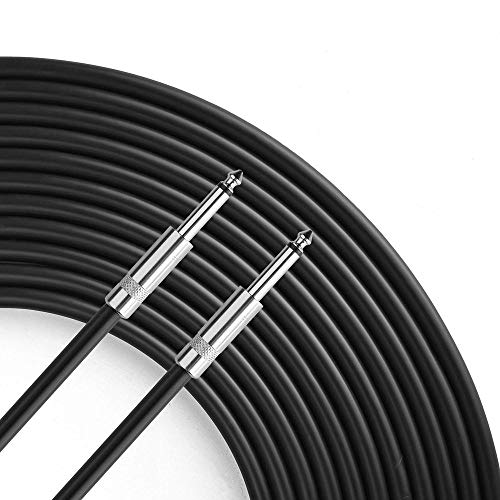
The Yoico Pro is a heavy-duty 12 AWG speaker cable terminated with 1/4-inch TS male connectors, designed for high-power applications like stage monitors, PA subs, and powered loudspeakers. The 12-gauge copper conductor minimizes resistance and power loss over the full 50-foot run, delivering maximum current to demanding speakers without overheating or signal drop.
The spring-loaded quick-lock latches on the 1/4-inch jacks provide a secure connection that won’t accidentally pull loose during performances, but the mechanism is easy to release when breaking down gear. The black/blue color-coded connectors help distinguish left from right in a dark rack. The cable’s wear-resistant PVC jacket stands up to being stepped on, dragged across stages, and coiled repeatedly without cracking or exposing the copper.
Users running long distances in live sound environments note very minimal signal degradation compared to thinner gauge alternatives. The cable retains enough flexibility to coil easily for transport despite the thick conductor. For any musician, DJ, or sound tech needing a reliable 1/4-inch instrument or speaker cable for high-SPL applications, this delivers professional-grade durability at a sensible mid-range price.
Why it’s great
- 12 AWG gauge carries high current for powerful pro audio gear
- Spring-lock connectors prevent accidental disconnection on stage
- Wear-resistant jacket survives repeated stomping and coiling
Good to know
- 1/4″ TS connectors are unbalanced, not suitable for long-run line-level
- Stiffness makes tight-radius bends difficult
6. Amazon Basics 16-Gauge Speaker Wire

The Amazon Basics 16-gauge speaker wire provides a no-frills solution for wiring home theater surround channels, ceiling speakers, or car door speakers. The 100-foot spool gives enough length for two stereo runs in a medium-sized room or a full car audio build. The black polarity stripe on one conductor simplifies phase-correct hookups without a multimeter — just keep the striped side consistent at both ends.
The copper-clad aluminum (CCA) construction is a budget compromise: it conducts well enough for standard home and car speaker loads up to around 100W RMS, but pure copper alternatives offer lower resistance for longer runs or high-power subwoofer applications. At this price point, the plastic jacket provides adequate insulation for in-wall or under-carpet routing where physical abuse is minimal.
Users consistently confirm the gauge is true to spec, and the spool dispenses without tangling. While audiophiles may prefer a pure copper 14 or 12 AWG for critical main-channel duty, this spool is the most cost-effective way to wire distributed audio systems where long-term corrosion resistance is less critical than immediate budget savings. A sensible entry-level pick for large installations.
Why it’s great
- 100-foot length covers large installations in one purchase
- Polarity marking prevents wiring mistakes
- Low cost per foot for budget-conscious builds
Good to know
- Copper-clad aluminum, not pure copper — higher resistance per foot
- 16 AWG limits safe power handling for very long runs
7. Kxable 3.5mm AUX 50ft

The Kxable 3.5mm auxiliary cable stretches 50 feet, making it ideal for situations where a phone or laptop needs to connect to a distant powered speaker — think outdoor events, classroom audio, or running audio across a room without Wi-Fi streaming lag. The core uses oxygen-free copper (OFC) conductors with double shielding to minimize interference over the long analog run.
The 24k gold-plated plugs and aluminum shells resist oxidation and signal degradation at the connector interface. The step-down ladder design on the plugs ensures compatibility with protective phone cases that can otherwise block a standard 3.5mm plug. Kxable includes five cable ties to manage the excess length, which is a practical touch for installations where only 15-20 feet are needed.
Users acknowledge that at 50 feet, there is a measurable signal-level drop typical of long unbalanced analog connections — this is physics, not a defect. For high-impedance inputs or short-run scenarios, the cable performs flawlessly with zero static. If you need to bridge a long distance with a standard headphone jack and cannot use Bluetooth, this is a purpose-built, well-constructed solution.
Why it’s great
- 50 ft length covers long distances no standard cable can reach
- Gold-plated plugs and aluminum shells resist corrosion
- Includes 5 cable ties for neat management of excess length
Good to know
- Long analog runs will have some signal-level attenuation
- Unbalanced 3.5mm cable can pick up interference in electrically noisy areas
FAQ
Is there a noticeable sound quality difference between cheap and premium audio cables?
What gauge speaker wire do I need for my system?
Can I use a 3.5mm AUX cable for a subwoofer connection?
Final Thoughts: The Verdict
For most users, the best audio cable winner is the Elite Audio PRM17 because its triple shielding and 99.9% OFC construction clean up the noise floor in both car and home environments without breaking the bank. If you want the widest soundstage and premium connector longevity for a HiFi system, grab the Primeda Audiophile 2RCA. And for a completely interference-free digital link, nothing beats the well-armored Monoprice Toslink Optical.