
Our readers keep the lights on and the weekend projects moving. As an Amazon Associate, I earn from qualifying purchases.
Nothing kills a campsite evening faster than endlessly cranking a batwing antenna, hoping for a pixel-free broadcast. For RVers who want reliable over-the-air TV and FM radio without crawling on the roof, the right antenna needs to handle variable terrain, trees, and distance from towers.
I’m Rikta — the co-founder and writer behind FitlyFast. I’ve spent years analyzing amplifier gain, omni-directional vs directional performance, and build quality in the RV antenna space to separate gimmicks from genuine signal catchers.
The best antenna for rv brings 4K-ready reception, a 4G LTE filter to block interference, and a low-profile design that survives highway speeds.
How To Choose The Best Antenna For RV
RV antennas face a unique challenge: you park in a new spot every few days, trees and hills shift the signal landscape, and wind exposure demands a rugged build. The right choice comes down to a few category-specific specs.
Omni-Directional vs Directional (Batwing) Design
An omni-directional antenna picks up signals from 360 degrees without requiring manual rotation — ideal for quick set-ups and changing campsites. Directional batwing designs like the Winegard Sensar III capture signals farther away but you must aim them at the broadcast tower, a chore that gets old fast on multi-stop trips.
Amplifier Gain and 4G LTE Filtering
A built-in preamplifier boosts weak signals, but too much gain near strong towers can overload the tuner. More critical is the 4G LTE filter: without it, nearby cellular signals create static and dropped channels. Look for an antenna that mentions a dedicated LTE filter in its specs.
Low-Profile vs Wing-Style Form Factor
Low-profile dome antennas (like the Winegard Air 360+) sit flush on the roof, cutting wind noise and clearing low branches. Traditional wing-style models like the Magnadyne TV-1W offer better reception at the cost of added height. For highway speeds and tight clearances, a low-profile dome is the safer choice.
Quick Comparison
On smaller screens, swipe sideways to see the full table.
| Model | Category | Best For | Key Spec | Amazon |
|---|---|---|---|---|
| 1byone Outdoor TV Antenna | Omni-Directional | Budget-friendly omni for basic setups | 100+ mile range, 39ft coax | Amazon |
| Five Star HDTV Antenna | Motorized Directional | Campers wanting remote-controlled aiming | 150 mile range, 40ft coax, remote | Amazon |
| Channel Master Omni+ 50 | Omni-Directional | Seamless city and suburban reception | 50 mile range, separate VHF dipole | Amazon |
| Antop PL-414BG | Omni-Directional | Waterproof anti-UV mount on roof or mast | 65 mile range, 15″ diameter | Amazon |
| Magnadyne TV-1W | Wing-Style | Direct replacement for broken factory RV antennas | AM/FM + TV, pre-assembled connectors | Amazon |
| Winegard Sensar III RV-3095 | Directional Batwing | RVers wanting proven batwing reliability | 55 mile range, 4K ready, 21″ wingspan | Amazon |
| Winegard Air 360+ AR2-V2S | Low Profile Dome | Full-featured dome with satellite and WiFi prep | 55 mile range, built-in WiFi & cellular ports | Amazon |
In‑Depth Reviews
1. Winegard Air 360+ AR2-V2S
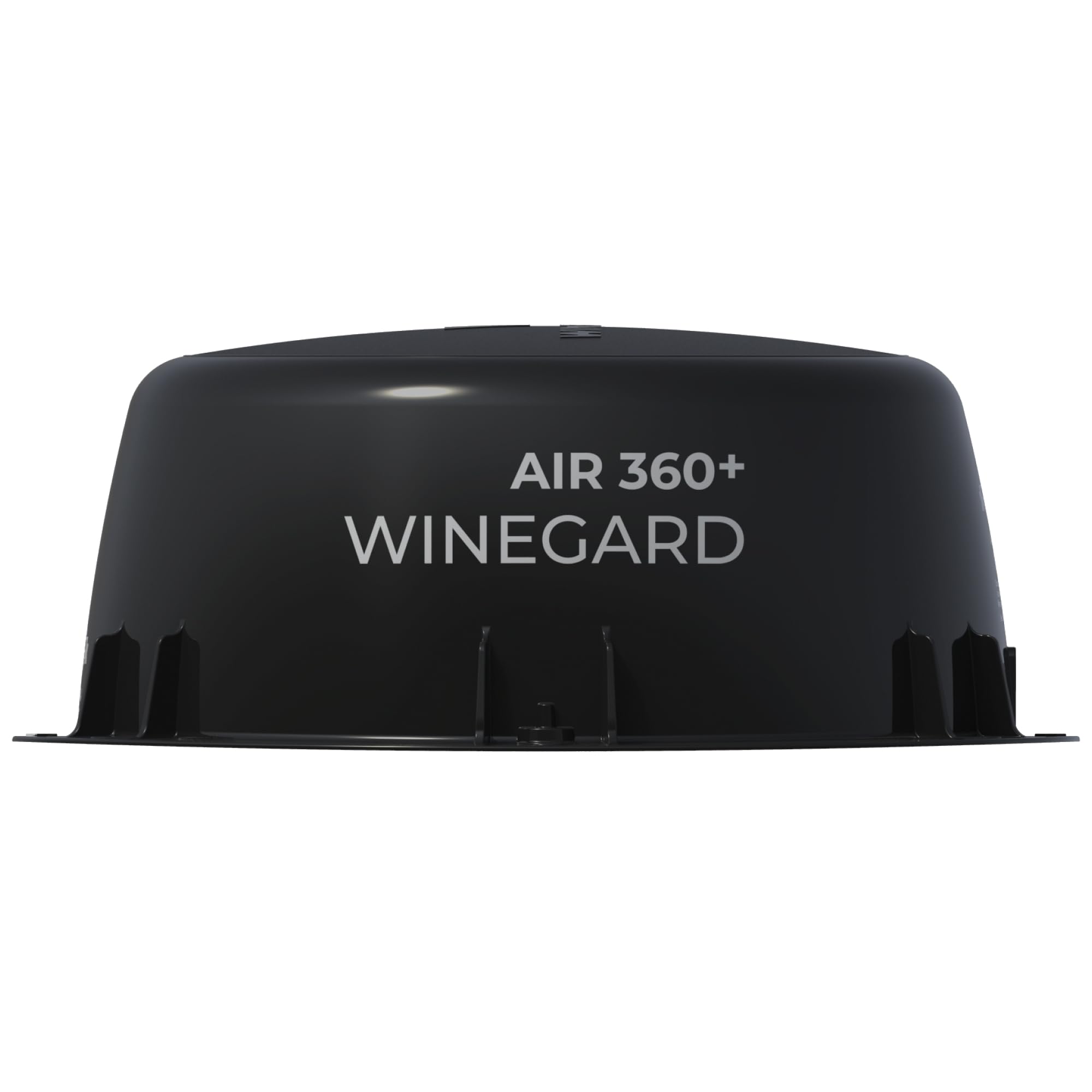
The Winegard Air 360+ V2.S is the most future-proof antenna for the modern RVer. Its low-profile dome sits under seven inches tall, eliminating wind drag and collision risk with low branches. The omni-directional design grabs OTA HDTV and FM radio up to 55 miles out without any manual aiming, which matters when you pull into a crowded campground after dark.
What sets this model apart is its satellite pass-through port and built-in antennas for Wi-Fi and cellular connectivity. If you plan to add a Winegard Gateway 4G router later, the antenna already has the pre-installed elements ready. The integrated 4G LTE filter blocks cell tower interference that causes static on weaker channels during setup.
Installation is straightforward for a DIY owner — the mounting base seals cleanly and the waterproof housing survives highway driving at 70 mph. Users report picking up 50-70 channels at typical distances of 25 to 40 miles. The trade-off is that you lose the longer reach of a directional batwing, but the convenience trade saves you minutes at every new campsite.
Why it’s great
- No aiming needed; 360° omni reception saves setup time
- Integrated satellite port and WiFi/cellular antenna prep
- Sleek, weatherproof dome resists highway wind and rain
Good to know
- Range maxes around 55 miles; not ideal for deep rural parks
- Requires the separate Gateway hub for WiFi/LTE use
2. Winegard Sensar III RV-3095
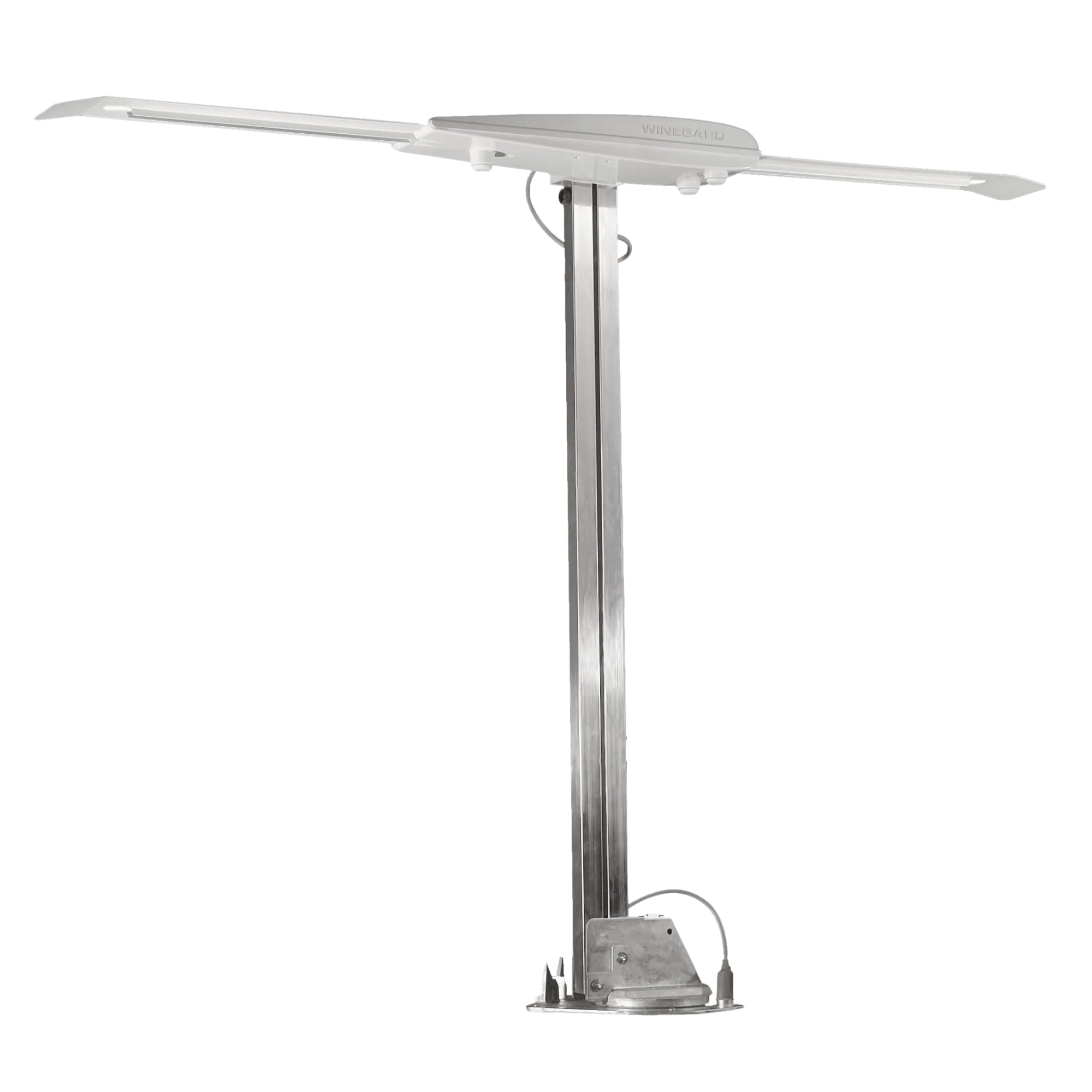
The Winegard Sensar III is the batwing design that over two decades of RVers trust. Its directional VHF/UHF elements extend to a 48.5-inch wingspan, providing superior gain over omni models when you are 55 miles from towers. The amplified booster in the base powers signal through long cable runs to the TV without degradation.
Owners consistently report pulling in 50 to 60 channels in moderate terrain. The crank-down mechanism lowers the antenna flush for travel, protecting it from branches and wind. The Sensar III requires you to manually aim it toward broadcast towers, but that trade buys you stronger reception in fringe areas where omni antennas drop out.
Build quality is the standout trait here — many replacements are 10-15 year old units whose amplifiers finally gave out. The included power supply and amplifier work with 4K tuners, though there is no 4G LTE filter built in. For RVers who already know their TV tower bearings and want maximum signal, this is a durable and proven choice.
Why it’s great
- Proven 20+ year design with strong directional gain
- Folds down flat for highway travel
- Exact fit replacement for older Winegard batwings
Good to know
- Requires manual aiming at each new site
- No built-in 4G LTE filter; may need external filter
3. Channel Master Omni+ 50

Channel Master’s Omni+ 50 is a smart, modular omni solution built for urban and suburban RV parks. The antenna splits into a VHF dipole and UHF element, letting you rotate or remove the VHF section independently. This flexibility helps in scenarios where VHF towers sit in a different direction than UHF transmitters.
At 28.75 inches long with a slim profile, it mounts easily on a wall, mast, or existing satellite dish bracket — a common rooftop install in older RV rigs. The 50-mile range is realistic for flat terrain with clear sight lines. Users consistently report 50 to 60 channels plus FM reception in areas 10 to 35 miles from broadcast towers.
The build quality is noticeably sturdier than budget omni antennas, with thick plastic and metal joints that survive rain without water ingress. Some owners add an external preamp for extra gain on distant stations. This unit does not come with an amplifier in the box, so budget another component if you camp in fringe signal zones.
Why it’s great
- Versatile VHF+UHF design with adjustable dipole
- Compact form mounts on satellite brackets
- Better build quality than most budget omnis
Good to know
- No built-in amplifier; external preamp needed for long range
- Not designed for 100+ mile claims
4. Antop PL-414BG

The Antop PL-414BG brings a sleek 15-inch diameter disc design that looks better than typical Yagi-style antennas while still delivering omni-directional 65-mile reception. The grey anti-UV coating prevents sun damage, and the waterproof housing keeps electronics dry even during rainstorms. RVers find it easy to mount on a roof vent or mast without complex hardware.
Its built-in amplifier and 4G LTE filter work together to clean up signals when cellular towers are nearby. Owners in suburban areas at distances of 9 to 35 miles report 46 to 105 reliable channels. The signal holds steady through light wind and rain, though severe storms can cause brief dropouts on weaker stations.
The main limitation is that the omni pickup is effective up to about 40 miles; beyond that, directional competitors can pull in weaker channels the Antop misses. Some users found the amplifier overloaded a strong local signal and had to switch to unamplified mode, which is not documented in the manual. Despite this quirk, the Antop is a solid mid-range option for RVers prioritizing looks and easy setup.
Why it’s great
- Sleek low-profile design with UV and weather resistance
- Built-in amplifier and 4G LTE filter
- Toolless installation with included mounting hardware
Good to know
- Effective range drops significantly past 40 miles
- Amplifier may overload in strong signal zones
5. 1byone Outdoor TV Antenna

The 1byone outdoor antenna is an affordable entry-level option for RVers who want to test cord-cutting without a major investment. Its 360-degree omni reception eliminates the need for aiming, and the 32-foot RG6 coax cable lets you place the antenna up high on an RV ladder or portable mast. The built-in preamplifier and 4G LTE filter handle moderate interference from campsites near cell towers.
In real-world use, owners in suburban settings 20 miles from transmitters report 50 to 60 channels including major networks. The advertised 100+ mile range only applies under perfect line-of-sight conditions — in average wooded or hilly terrain, expect reliable reception up to 35-40 miles. The moisture-proof and flame-retardant materials survive occasional rain but are not fully waterproof for continuous outdoor exposure.
Long-term durability is the main concern: some users report amplifier failure after two years of outdoor mounting due to water seepage. This antenna works best as a temporary or attic-mounted solution for occasional RV trips rather than a permanent roof install. For the price-conscious RVer, it delivers solid short-term performance.
Why it’s great
- Affordable omni option with built-in amplifier and LTE filter
- Easy to set up on a portable mast or RV ladder
- Captures 50-60 channels in suburban zones
Good to know
- Not fully waterproof; avoid permanent outdoor roof mount
- Advertised range is optimistic in real terrain
6. Magnadyne TV-1W

The Magnadyne TV-1W is a direct replacement wing-style antenna for RV owners whose factory unit broke off on a low branch. It receives both TV (UHF/VHF) and AM/FM radio through separate pre-assembled connectors, which simplifies swapping without cutting or splicing wires. The included WS-B1 wall plate provides dual TV outputs and a selectable shore cable input for cable-ready campgrounds.
Installation is remarkably straightforward — it mounts using the same four bolt pattern as many factory RV antennas. Users report picking up 50 to 80 channels at 30-40 miles from the transmitter. The wing design is taller than a dome, so you need to lower it before driving or risk catching it on branches and overpasses.
The built-in 4G LTE filter helps clean up interference from campers’ cell boosters. The white aerodynamic shell blends with most RV rooftops. This unit lacks the amplification strength of premium models, but for a straightforward OEM-like replacement that restores TV and radio fast, this is the most efficient path.
Why it’s great
- Exact fit replacement for common RV factory antennas
- Pre-wired connectors and wall plate included
- Covers AM/FM and TV with LTE filtering
Good to know
- Wing must be lowered before highway driving
- Amplifier gain is moderate; not for fringe reception
7. Five Star HDTV Antenna

The Five Star antenna is a motorized directional model that lets you rotate the antenna from inside your RV using a remote control. This solves the main pain point of directional designs — you don’t have to climb on the roof to aim it. The 150-mile range claim is based on clear line-of-sight; realistic performance in mixed terrain delivers 60 miles with strong signal.
The kit comes complete with a 40-foot RG6 coaxial cable, mounting J-pole, and a 5-way splitter so you can feed up to five TVs. The 2020 smart chip provides automatic gain control that tries to compensate for signal fluctuation. Users in metropolitan zones report 50 to 80 channels, while those relying on distant towers 60+ miles out sometimes lose specific stations.
Build quality is average — the remote requires AAA batteries and some units have reported remote failure. The antenna body is lightweight and the motor mechanism is exposed to weather, so longevity in heavy rain is a question mark. For RVers who want remote aiming without crawling on the roof, this is a functional middle-ground choice.
Why it’s great
- Remote controlled 360° rotation from inside the RV
- Comes with a J-pole mount, coax, and 5-way splitter
- Supports up to 5 TVs with included splitter
Good to know
- Motor and remote reliability varies between units
- 150-mile range is unrealistic; expect less than half that
FAQ
Should I choose an omni-directional or directional batwing antenna for my RV?
Do I need to remove my RV antenna before driving?
Final Thoughts: The Verdict
For most users, the best antenna for rv winner is the Winegard Air 360+ AR2-V2S because its zero-aiming omni design works at every campsite, the satellite pass-through port future-proofs your setup, and the low-profile dome survives highway driving without removal. If you want the maximum possible signal in fringe areas and don’t mind manual aiming, grab the Winegard Sensar III RV-3095. And for a quick, cost-effective replacement of a broken factory wing antenna, the Magnadyne TV-1W gets you back on air with minimal effort.