
Our readers keep the lights on and the weekend projects moving. As an Amazon Associate, I earn from qualifying purchases.
Driving a fastener into fiber-cement board is a unique challenge. The dense, brittle material dulls standard screws instantly and can snap cheap hardware mid-install, leaving you with a stripped hole and a half-driven shank. Finding anchors that bite without cracking the board is the difference between a clean professional finish and a frustrating mess.
I’m Rikta — the co-founder and writer behind FitlyFast. I’ve spent years analyzing the specific tensile and shear requirements of attaching items to HardiePlank and HardieBacker, focusing on how thread design, drive system, and coating affect holding power.
This buying guide breaks down the best-performing fasteners for the material, from non-damaging siding hooks to high-count collated screws. Whether you are mounting holiday lights or tiling a steam shower, our curated list provides the anchors for hardie board that deliver reliable, long-term results.
In this article
How To Choose The Best Anchors For Hardie Board
Fiber-cement board is abrasive and contains silicate crystals that wear down standard steel fasteners. Selecting the correct anchor means prioritizing drive compatibility, coating durability, and thread geometry. The wrong choice leads to rust streaks, popped heads, or fasteners that simply won’t seat flush.
Drive System Matters
A Phillips drive can cam-out under high torque, rounding the screw head. Torx (star) drives provide full bit engagement, allowing you to drive the fastener without slipping. For high-volume work, a collated square-drive system offers speed without sacrificing bite.
Corrosion Resistance Is Non-Negotiable
HardieBoard is often used in wet areas like showers, kitchens, and exterior siding. A ceramic-coated or Type 316 stainless steel fastener resists the moisture and alkaline environment of cement board. Uncoated steel will corrode, leading to rust staining the board surface.
Thread Count and Point Style
A sharp, self-piercing point eliminates the need for a pilot hole, preventing the board from cracking. Fine threads grab dense material better than coarse threads, reducing the risk of the screw pushing the board away from the substrate.
Quick Comparison
On smaller screens, swipe sideways to see the full table.
| Model | Category | Best For | Key Spec | Amazon |
|---|---|---|---|---|
| Jake Sales Torx #10 x 1-5/8″ | Screws | Tile underlayment fastening | T-25 Torx drive | Amazon |
| Rock-On #9 x 1-1/4″ | Screws | High-volume cement board jobs | Serrated head / Climacoat | Amazon |
| Senco DuraSpin #8 x 1-1/4″ | Collated Screws | Production speed with screw gun | 1,000-count coil | Amazon |
| Jake Sales Torx #10 x 1-1/4″ | Screws | Thinner cement board to wood | 166 screws per pound | Amazon |
| Simpson Strong-Tie T6PCS1 | Nails | Exterior siding installation | Type 316 stainless steel | Amazon |
| NoDamageHooks Original | Hooks | Seasonal decor on siding | 3.5 lb weight capacity | Amazon |
| Hard-To-Find Fastener Phillips #8 | Screws | Budget-friendly cement board tasks | Self-piercing tip | Amazon |
In‑Depth Reviews
1. Jake Sales 10×1-5/8 Sharp Point Torx Screws
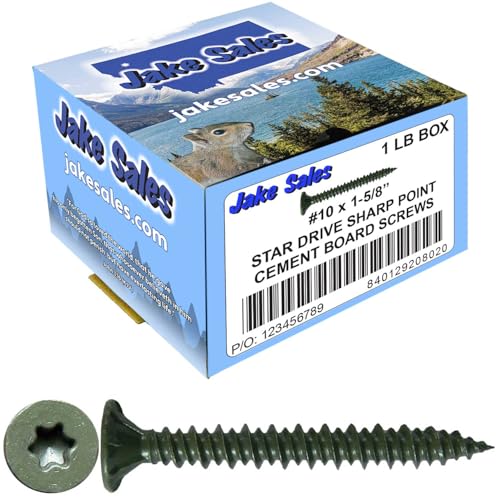
The Jake Sales #10 x 1-5/8″ screw is the strongest performer in this lineup for attaching cement board to wood. The T-25 Torx drive completely eliminates cam-out, allowing you to sink the head flush without stripping. Users report driving hundreds without a single snapped shank, which is critical when working with dense HardieBacker.
The ceramic coating resists the alkaline corrosion that eats uncoated steel screws in tile and shower environments. Cutting nibs under the head countersink the fastener neatly, leaving a smooth surface for thinset application. Each pound box contains roughly 133 screws, making it a solid mid-project value.
For professional tilers and serious DIYers who want zero frustration on a large floor or wall install, this screw delivers the consistency that cheaper fasteners simply lack. The deep Torx slot provides reliable bit engagement even when driving at awkward angles near corners.
Why it’s great
- Heat-treated steel with ceramic coating for corrosion resistance
- Sharp self-piercing tip eliminates walk and pre-drilling
Good to know
- Only available in a 1-pound box
- Some users report occasional incomplete star cut on a few screws
2. Rock-On #9 x 1-1/4″ Serrated Head Star Drive Screws

The Rock-On #9 screw uses a serrated head design that cuts into the cement board surface for a flush flush finish. This prevents the screw from sitting proud and interfering with tile or siding. The T-25 star drive provides the same stripping resistance as the Jake Sales screws but in a slightly smaller diameter.
Climacoat corrosion-resistant finish offers protection against moisture, though it is not as robust as a full ceramic coating. The hi-low thread pattern helps grab the board immediately without cracking, which reviewers confirm worked well on Hardie board for a greenhouse project. The 750-count pack covers large areas without needing to reorder mid-job.
For contractors or ambitious homeowners laying down dozens of sheets of backer board, the serrated head feature is a genuine time-saver. The screws seat reliably, and the high count means fewer trips to the hardware store.
Why it’s great
- Serrated head provides flush seating without stripping
- 750-count bulk pack reduces per-screw cost
Good to know
- #9 diameter is slightly less common than #8 or #10
- Climacoat finish is less durable than ceramic coating in wet areas
3. Senco DuraSpin #8 x 1-1/4″ Cement Board Collated Screws

The Senco DuraSpin is a specialty collated screw designed specifically for use with a Duraspin or similar auto-feed screw gun. At 1,000 screws per coil, it is the clear winner for production speed. The square-drive head provides solid engagement, though it is less forgiving than Torx if the bit wears.
These #8 x 1-1/4″ fasteners are uncoated steel, so they are best suited for interior cement board installation where moisture is not a primary concern. The spoon point helps guide the screw into the material without jamming the collated strip. Professionals report cutting installation time on HardieBacker by roughly two hours per project.
If you own or can rent a collated screw gun, this coil is the most efficient way to fasten cement board. The time savings alone justify the premium over loose screws for large-scale tiling or underlayment jobs.
Why it’s great
- 1,000-screw coil for rapid-fire installation
- Runs smoothly through Senco Duraspin and compatible guns
Good to know
- Uncoated steel is not suited for exterior or high-moisture use
- Requires a collated screw gun; manual driving is impractical
4. Jake Sales 10×1-1/4 Sharp Point Torx Screws

This shorter variant of the Jake Sales screw is ideal when substrate depth is limited, such as fastening cement board over in-floor heating tubes. At 1-1/4 inches, you get the same T-25 Torx drive and ceramic coating in a more compact package. The 1-pound box contains roughly 166 screws, giving you more fasteners per box than its longer sibling.
The sharp point and cutting nibs perform identically to the 1-5/8 version, countersinking flush without pre-drilling. One reviewer specifically noted they used the shorter screws to avoid hitting radiant heating lines, a critical safety consideration. The ceramic coating protects the screw in the same harsh cement-board environment.
For any installation where you cannot afford to penetrate deeper, this screw provides the holding power of a #10 fastener without the risk of puncturing pipes or electrical runs below the subfloor.
Why it’s great
- Shorter length prevents damage to underlying systems
- Same high-quality ceramic coating and Torx drive as the longer version
Good to know
- Fewer threads of engagement in thicker substrates
- Some screws may have incomplete star cuts per user reports
5. Simpson Strong-Tie T6PCS1 Fiber-Cement Siding Nail
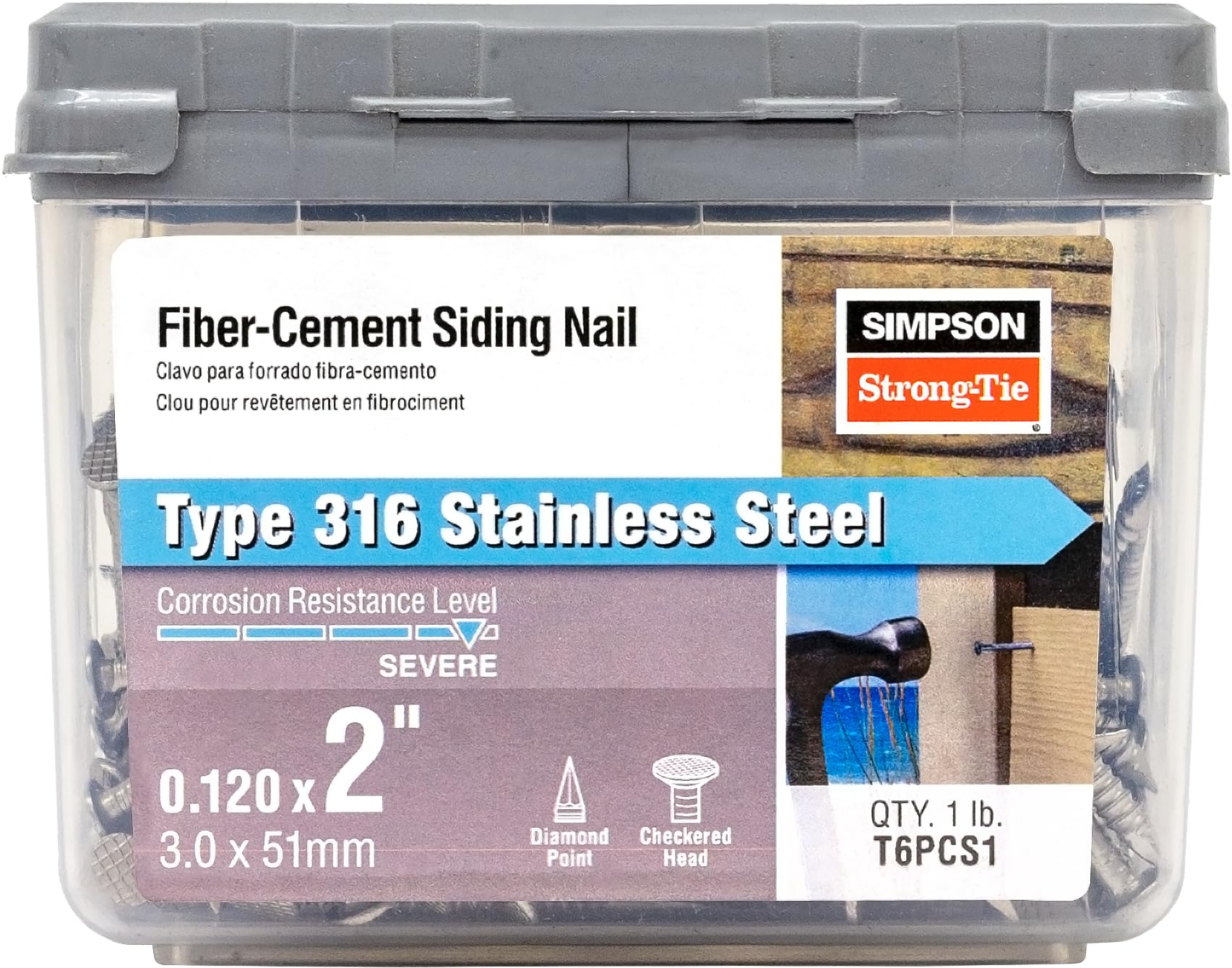
For exterior HardiePlank siding, a nail is often the preferred fastener over a screw because it allows the board to float with thermal expansion. The Simpson Strong-Tie T6PCS1 is a 2-inch Type 316 stainless steel nail with an annular ring shank that provides exceptional withdrawal resistance. The diamond point drives cleanly through fiber-cement without splitting.
Type 316 stainless steel is the gold standard for coastal applications, resisting salt spray corrosion far better than standard galvanized nails. The checker-pattern head reduces glare and accepts paint or stain, blending into the siding’s faux wood grain. Reviewers confirm these nails hold tight on Hardie siding and do not bend if hit squarely with a hammer or siding nailer.
For any exterior project within a few miles of saltwater, this fastener is the only reliable choice. The annular rings lock into the wood substrate, ensuring the siding stays secure even in high-wind conditions.
Why it’s great
- Type 316 stainless offers maximum corrosion resistance
- Annular ring shank provides excellent holding strength
Good to know
- Nails can bend if not driven squarely
- 1-pound box provides fewer fasteners than a screw box
6. NoDamageHooks Original for Fiber Cement Board
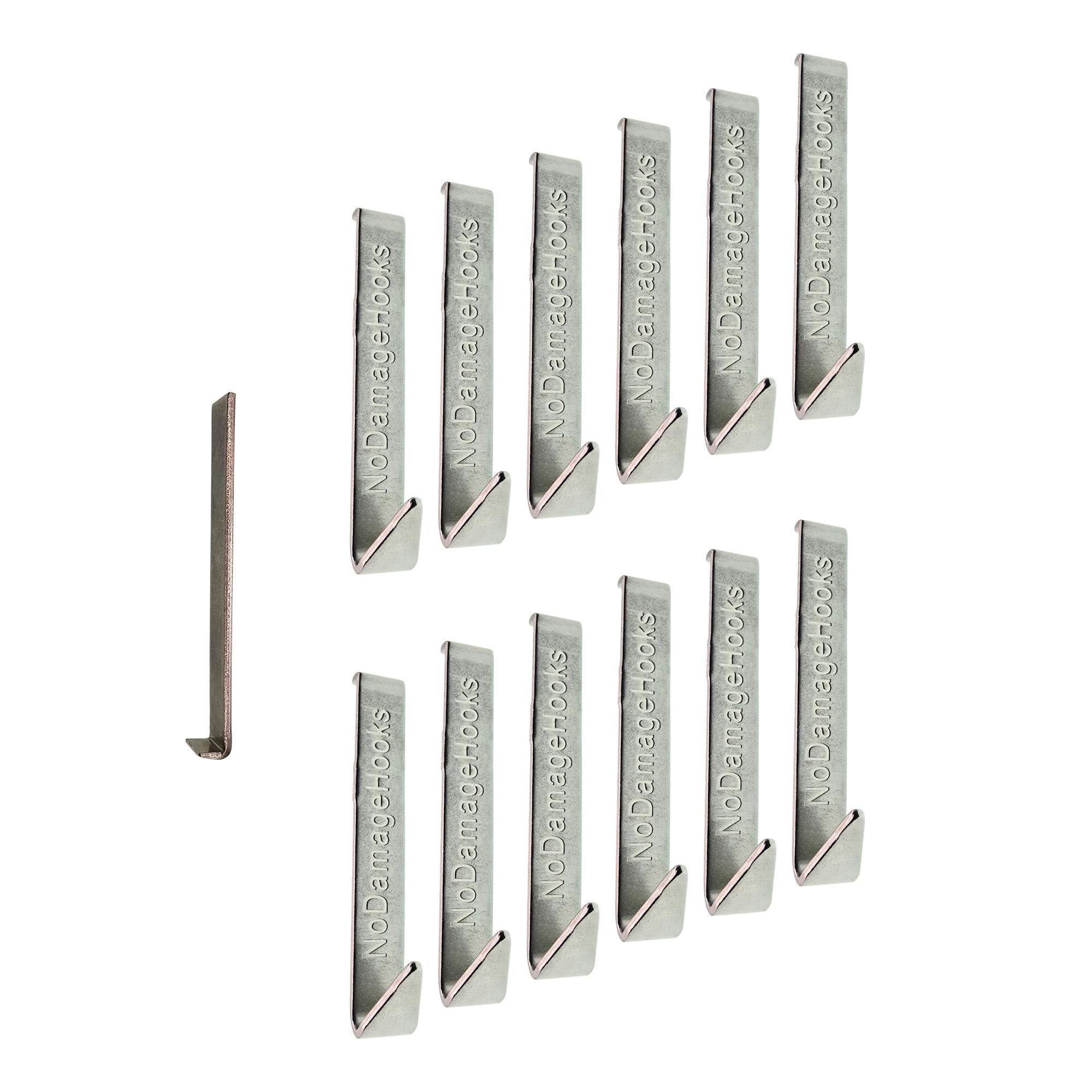
The NoDamageHooks system is specifically designed for fiber-cement siding. The kit includes 12 aluminum hooks and a tool that wedges the hook under the overlapping siding panel. This method requires no drilling, no screws, and creates no holes in the Hardie board, preserving the factory finish and warranty.
Each hook supports up to 3.5 pounds, making them ideal for lightweight items like net lights, small planters, or seasonal banners. Reviewers highlight that the hooks stay in place year-round because they are invisible from the street. The aluminum construction resists rust, which is essential for exterior use.
If you rent a home with Hardie siding or simply want to decorate without creating permanent damage, this is the only solution on the list that guarantees zero wall repair when the decor comes down. The included installation tool makes the process straightforward.
Why it’s great
- Zero damage to fiber-cement siding
- Aluminum hooks resist outdoor corrosion
Good to know
- 3.5 lb weight limit per hook
- Requires overlapping siding panels to install
7. Hard-To-Find Fastener Phillips Self-Piercing Cement Board Screws
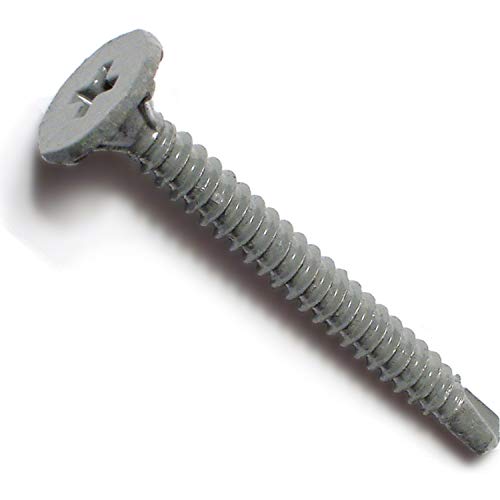
The Hard-To-Find Fastener #8 x 1-5/8″ screw is the most entry-level option in this roundup. It features a self-piercing tip with a fine ceramic coating for basic corrosion resistance. The Phillips drive works with standard drivers, though users note it does not countersink fully on its own and may require a bit of pilot tapping.
For light-duty projects on a budget, these screws get the job done. Reviewers successfully used them to attach Hardie panel, and the steel construction offers decent holding power. However, the Phillips head is prone to cam-out at high torque, making it less suitable for production work or fastening thick panels to metal studs.
If you only have a small repair or a single sheet of cement board to fasten, this pack of 131 screws offers an accessible price point. For larger jobs, the Torx-drive options above will save time and frustration.
Why it’s great
- Low entry cost for small cement board tasks
- Sharp point reduces walking on start
Good to know
- Phillips drive may strip under high torque
- Does not fully countersink without extra force
FAQ
Can I use drywall screws for Hardie board?
What size screw should I use for HardieBacker on a wood subfloor?
Final Thoughts: The Verdict
For most users, the anchors for hardie board winner is the Jake Sales 10×1-5/8 Torx Screw because the T-25 drive eliminates stripping, the ceramic coating prevents corrosion, and the self-piercing tip reduces installation time. If you need high speed for a production job, grab the Senco Duraspin collated coil. And for damage-free seasonal decor on siding, nothing beats the NoDamageHooks Original system.