
Our readers keep the lights on and the weekend projects moving. As an Amazon Associate, I earn from qualifying purchases.
Choosing a basic digital camera feels like a trap—do you grab a budget-friendly point-and-shoot and risk soft images, or overspend on a feature-packed model that never leaves Auto mode? The best options sit right in the middle: they prioritize sensor quality, lens reach, and everyday usability over marketing jargon like “8K interpolation” that beginners don’t need. You just want one tool—not three—that reliably captures sharp, vibrant memories without a heavy manual.
I’m Rikta — the co-founder and writer behind FitlyFast. Across hundreds of hours of market research, I’ve cross-referenced sensor specifications, optical zoom ranges, stabilization systems, and customer feedback to separate cameras that genuinely deliver from those that merely pack flashy specs.
This guide focuses exclusively on truly accessible models—pocket-sized, intuitive, and priced fairly for their real-world output—to help you identify the most honest basic digital camera for your needs, whether that’s travel, family snapshots, or your first step into photography.
How To Choose The Best Basic Digital Camera
Finding the right entry-level camera requires looking past inflated resolution numbers and focusing on three fundamentals: the optical zoom range, the image stabilization method, and the sensor’s low-light tolerance. These specs, more than any “4K” or “88MP” sticker, determine how much real-world memory you can actually capture.
Optical Zoom vs. Digital Zoom: The Real Reach
Every camera in this guide uses optical zoom—actual glass moving inside the lens to magnify a scene without losing image quality. Digital zoom, on the other hand, simply crops and enlarges pixels, resulting in grainy, useless shots at any distance. When reading a camera’s zoom spec, always look for the “X” optical number (e.g., 12X, 25X, 30X) and ignore any added “digital” multiplier that follows it. A 25X optical zoom on the Kodak PIXPRO AZ255 genuinely pulls in distant subjects cleanly; a digital-only zoom on a entry model cannot.
Image Stabilization: Why a Steady Frame Matters
At budget and mid-range price points, stabilization comes in two forms: optical (OIS) and electronic (EIS). OIS physically shifts a lens element to counteract your hand’s natural micro-movements—extremely effective at full telephoto reach. EIS uses software to crop slightly into the frame and stabilize the remaining image, which can introduce a mild jello effect. The Canon PowerShot ELPH 360 HS uses OIS, making it far more forgiving for handheld shooting at 12X zoom. Always prioritize a camera with OIS if you take unsupported shots.
Sensor Real Estate: The One True Image Metric
Entry-level point-and-shoot cameras commonly use the 1/2.3-inch sensor. It’s a physically small chip that delivers adequate daytime color but struggles in dim restaurant or indoor lighting. Premium compact models like the Panasonic LUMIX ZS99 use this same small sensor, but pair it with faster lens apertures and better processor tuning to yield cleaner shadows. If you plan to shoot mostly in broad daylight or well-lit interiors, a 1/2.3-inch sensor performs just fine—just don’t expect phone-like night mode results.
Quick Comparison
On smaller screens, swipe sideways to see the full table.
| Model | Category | Best For | Key Spec | Amazon |
|---|---|---|---|---|
| Panasonic LUMIX ZS99 | Premium Compact | Pocket travel zoom | 30X optical zoom, 20-720mm lens | Amazon |
| Panasonic LUMIX FZ80D | Bridge | Long-distance nature/action | 60X optical zoom, 20-1200mm lens | Amazon |
| Canon EOS 2000D / Rebel T7 Bundle | DSLR (Renewed) | Learning interchangeable lenses | 24.1MP APS-C sensor, 18-55mm lens | Amazon |
| Canon PowerShot ELPH 360 HS | Premium Point-and-Shoot | Everyday carry with zoom | 12X optical zoom, OIS | Amazon |
| Kodak PIXPRO AZ255 | Mid-Range Bridge | Budget superzoom | 25X optical zoom, 24mm wide angle | Amazon |
| Monitech 8K 64MP Camera | Mid-Range Vlog | Vlogging with flip screen | 16X optical + 4X digital, 180° flip screen | Amazon |
| Minolta 48MP Digital Camera | Entry-Level | Simple family snapshots | 48MP interpolation, F2.2 aperture | Amazon |
| LOUM 88MP Digital Camera | Budget Vlog | Teens and first-time creators | 16X digital zoom, 2.8″ touchscreen | Amazon |
| Saneen 8K 88MP Camera | Budget Selfie | Self-portraits and webcam use | 18X digital zoom, 180° flip screen | Amazon |
In‑Depth Reviews
1. Panasonic LUMIX ZS99

The Panasonic LUMIX ZS99 represents the modern compact ideal: a pocketable body housing a Leica 24-720mm lens with 30X optical zoom. Its 5-Axis HYBRID O.I.S.+ stabilization is among the best in its class, allowing sharp telephoto shots without a tripod in good light. The 1,840k-dot tiltable touchscreen makes composing low-angle or overhead shots intuitive, and USB-C charging means one less cable to carry while traveling. Battery life checks in around six hours of mixed use—impressive for a camera this slim.
Image quality is consistent with a 1/2.3-inch sensor: vibrant, well-exposed photos in daylight, but noise creeps in at higher ISOs indoors. The 4K video mode captures at 30fps with no time limit beyond file size constraints, but the sensor can overheat during extended recording in direct sun. The dedicated Send Image button paired with Bluetooth v5.0 makes wireless transfers effortless, a feature lacking in many competitors. The ZS99 is the go-to for anyone who wants one camera that lives in a jacket pocket and covers every holiday scenario from cathedral interiors to concert stages.
What holds it back from perfection is the sensor size—an enthusiast’s first complaint will be visible grain in dim settings. The lens housing also dented easily for one reviewer after a minor drop, so a basic case is recommended. For a pure point-and-shoot that prioritizes portability and optical reach over sensor size, the ZS99 leads the pack.
Why it’s great
- Truly pocketable with an exceptional 30X Leica lens
- 5-Axis HYBRID O.I.S. keeps telephoto shots steady
- USB-C charging and Bluetooth v5.0 for modern convenience
Good to know
- Small sensor struggles in low-light conditions
- 4K video may overheat in direct sun after extended use
- Lens housing is slightly fragile without a case
2. Panasonic LUMIX FZ80D

The Panasonic LUMIX FZ80D is a bridge camera built for one task: pulling distant subjects into clear view. Its 60X optical zoom (20-1200mm equivalent) is unmatched at this price tier, making it a viable option for wildlife, airshows, and nature hikes where you cannot physically approach the subject. The POWER O.I.S. does a respectable job of counteracting hand shake at full telephoto, and the 2,360k-dot live viewfinder eliminates the glare issue that plagues LCD-only cameras in bright sun.
The 18.1-megapixel MOS sensor delivers 4K video at 30fps and an 8-megapixel 4K Photo burst mode that lets you extract perfect frames from motion. Post Focus is another standout: you can tap the area you want sharp after taking the shot, which reduces the pressure of nailing focus on a fast-moving animal. The FZ80D is not pocketable—it’s a chunky body that stays in a bag—but the tradeoff is reach that no smartphone can touch. Battery life is modest; reviewers note the pack drains faster when zoom is used heavily, so a spare battery is advised.
The biggest caveat is low-light performance. The small sensor and narrow aperture at the tele-end produce grainy images after ISO 800. The interface also takes time to learn—not as streamlined as a Canon point-and-shoot. This is a specialized tool for daylight-long situations where you need a superzoom on a budget.
Why it’s great
- Massive 60X optical zoom for distant subjects
- POWER O.I.S. keeps 1200mm shots usable
- Post Focus lets you adjust sharpness after capture
Good to know
- Small sensor produces grain in low light
- Battery drains fast during heavy zoom use
- Bulkier design won’t fit in a pocket
3. Canon EOS 2000D / Rebel T7 Bundle

The Canon EOS 2000D (Rebel T7) is the most approachable entry into interchangeable-lens photography. This renewed bundle includes the body, an 18-55mm f/3.5-5.6 IS II lens, a 64GB memory card, a tripod, and a camera bag, providing everything needed to start shooting. Its 24.1-megapixel APS-C sensor is dramatically larger than any point-and-shoot’s 1/2.3-inch chip, offering noticeably better image quality in low light, natural background blur, and the ability to crop aggressively without losing detail.
The 9-point autofocus system is basic by modern mirrorless standards, but the center cross-type point is reliable for still portraits and landscapes. The DIGIC 4+ processor keeps operation snappy for JPEG bursts at 3 fps, and Full HD 1080p video at 30 fps covers casual recording. The optical viewfinder provides a direct, lag-free view—something that teaches composition better than an electronic screen. The camera also supports Canon’s EOS Webcam Utility, turning it into a high-quality streaming webcam with a simple USB connection.
On the downside, the 3 fps burst rate and 9 AF points feel dated for action or kids sports. The 2.7-inch LCD is low resolution and fixed, making it harder to frame above crowds or from the ground. This is not a pocket camera—it requires a bag and a willingness to carry. For anyone who wants to genuinely learn photography, the T7 bundle provides the sensor and lens ecosystem that pays off for years, unlike disposable entry-level point-and-shoots.
Why it’s great
- Large APS-C sensor for superior low-light shots
- Interchangeable lens mount opens creative options
- Renewed bundle includes essential accessories
Good to know
- Basic 9-point AF and 3 fps burst feels dated
- Fixed, low-resolution 2.7-inch LCD screen
- Requires a bag; not pocketable
4. Canon PowerShot ELPH 360 HS
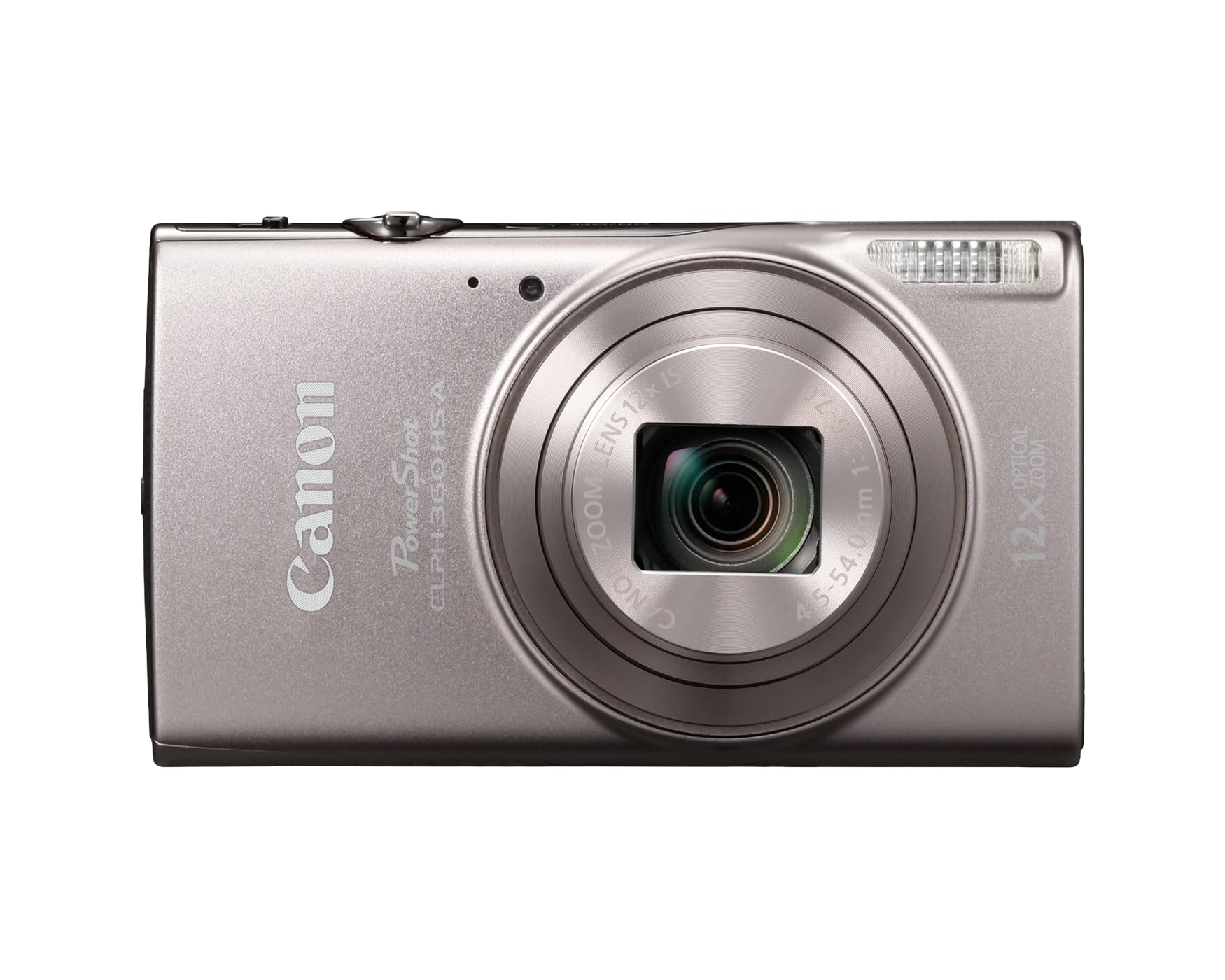
The Canon PowerShot ELPH 360 HS is the definition of a reliable basic digital camera: slim, light, and immediately familiar. Its 20.2-megapixel CMOS sensor and DIGIC 4+ processor produce clean, well-balanced JPEGs straight out of the camera—no post-processing needed for family albums. The 12X optical zoom with Optical Image Stabilizer covers a useful range from 25mm wide angle to 300mm telephoto, and the OIS makes those telephoto frames sharp even in shaky hands. Built-in Wi-Fi with NFC means a quick tap against your phone transfers photos for social sharing.
The 3-inch LCD screen is clear and wide-angle-friendly, though it’s fixed at standard resolution. Hybrid Auto mode records a 4-second video clip before each still image and compiles them into a daily recap—a fun, effortless way to capture movement alongside photos. At this price, the ELPH 360 HS sits in the premium zone for basic cameras, and that shows in build quality: the metal body feels dense and precise, not plasticky. The battery lasts about an hour of active shooting, typical for a compact, but a spare is worth considering for a full day out.
The only true drawback is the lack of a built-in flash in this model, making low-light indoor shots wholly reliant on the available light. The lens also has no ring for manual zoom, using a rocker switch instead—fine for casual use but slower for precise framing. For a no-fuss pocket companion that shoots vibrant, shareable photos, the ELPH 360 HS remains a standard.
Why it’s great
- Compact metal build with 12X OIS zoom
- Wi-Fi + NFC for instant phone transfers
- Consistent JPEG color straight out of camera
Good to know
- No built-in flash for dim indoor scenes
- Battery life limited to about one hour of use
- Fixed, standard-resolution LCD screen
5. Kodak PIXPRO AZ255

The Kodak PIXPRO AZ255 delivers a 25X optical zoom and a 24mm wide-angle lens at a price that undercuts most bridge cameras by a significant margin. This combination makes it a compelling choice for beginners who want versatility—landscapes at the wide end, moon shots or wildlife at the tele end—without spending on premium glass. The 16-megapixel CMOS sensor is adequate for online sharing and 4×6 prints, and the 1080p Full HD video covers casual recording needs. The Optical Image Stabilization (OIS) helps keep 25X zoom shots usable, which is a necessity at this magnification.
The camera runs on AA batteries, which is a double-edged sword: you can buy power anywhere in the world in a pinch, but alkaline cells drain quickly under heavy zoom or video use. Eneloop rechargeable NiMH batteries are a wise purchase alongside this camera. The 3-inch LCD is not touch-enabled, and the autofocus uses contrast detection, which can hunt in low light. The interface is simple enough for a grandparent or a child to navigate, but it lacks manual controls beyond scene modes.
Image quality is solid in bright daylight, but the small sensor shows its limits indoors or at dusk. One reviewer also noted that the microphone is prone to finger noise during video. For a first-time buyer on a tight budget who needs optical reach, the AZ255 offers genuine zoom utility that no smartphone can replicate.
Why it’s great
- 25X optical zoom at a very accessible entry price
- AA battery system for emergency power anywhere
- Wide 24mm angle lens for landscapes
Good to know
- AA batteries drain fast; requires rechargeables
- Contrast-detect AF hunts in low light
- Microphone placement picks up finger noise
6. Monitech 8K 64MP Camera
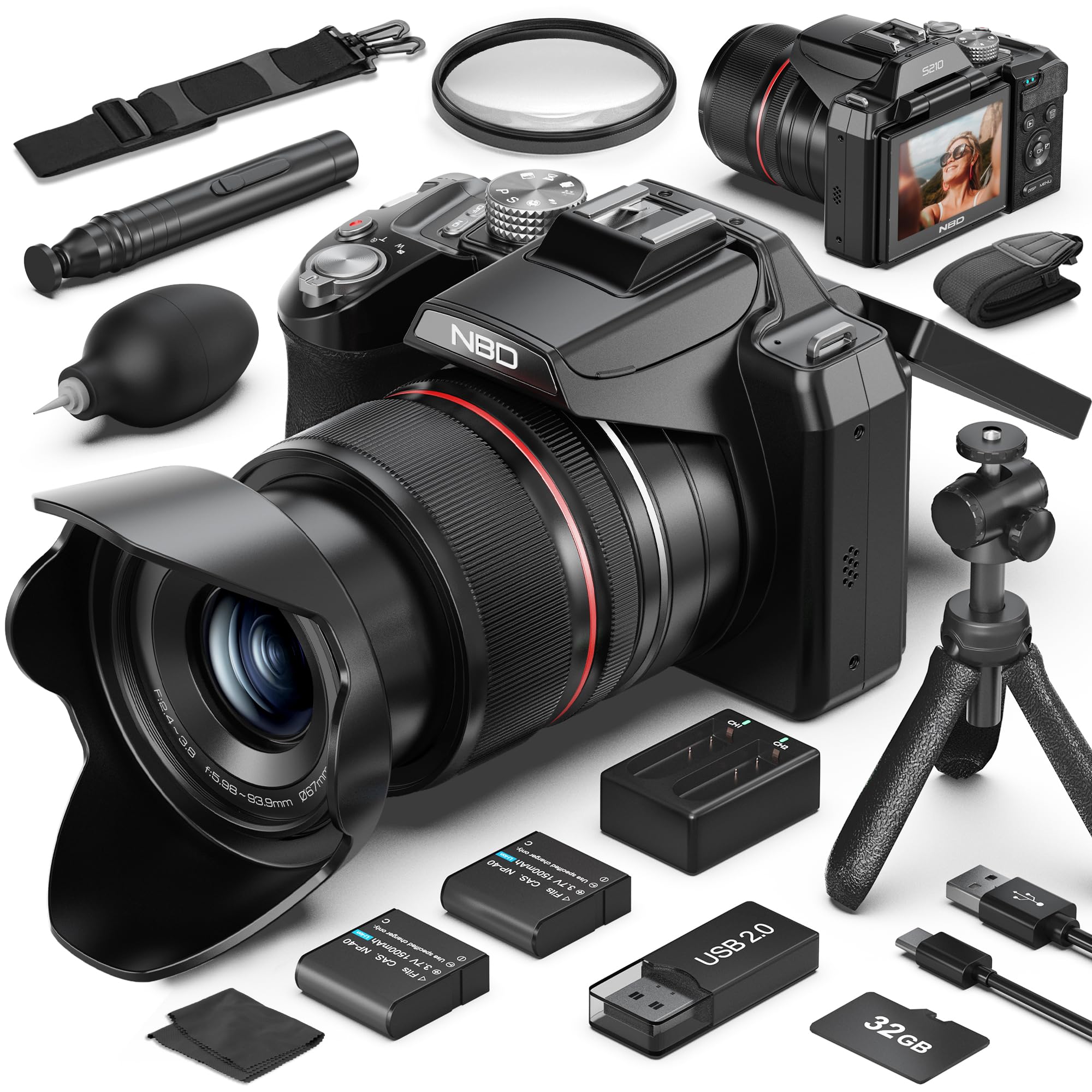
The Monitech 8K camera attempts to strike a balance between beginner vlogging and distance photography. Its primary claim is the 16X optical zoom combined with a dedicated Moon Mode, which tweaks exposure and focus for lunar shots—a novelty that works surprisingly well for a mid-range camera. The 64MP sensor (interpolated) is backed by a 180° flip screen and an external microphone jack, both of which are essential for serious vloggers who need clean audio and self-framing capability. WiFi sharing and Micro HDMI output round out the connectivity suite.
The build quality feels above average for this tier, with a solid metal-and-plastic chassis that doesn’t creak. The autofocus is responsive in good light, and the H.264/H.265 encoding keeps file sizes manageable. Two included rechargeable batteries are welcome, as the camera’s power consumption is high during 8K recording. The menu system is dense—reviewers noted it takes a few days to navigate without the manual, but once configured, the camera handles well.
Negative feedback highlights overheating during extended 4K/8K recording and one report of battery overheating. A minority of users found the photo quality soft compared to a phone, an expected outcome given the interpolation driving the “64MP” claim. For a beginner who wants a flip screen, optical zoom, and a microphone port in one box, the Monitech delivers on the spec sheet where phones cannot.
Why it’s great
- 16X optical zoom with Moon Mode for night scenes
- 180° flip screen and external mic jack for vlogging
- Two batteries and Micro HDMI output included
Good to know
- Interpolated 64MP results; true resolution is lower
- Can overheat during prolonged 4K recording
- Dense menu system requires time to master
7. Minolta 48MP Digital Camera

The Minolta 48MP Digital Camera is a pure entry-level point-and-shoot designed for absolute beginners and children. Its standout feature is a secondary rear selfie lens—a physical second lens on the back of the camera dedicated to self-portraits, avoiding the electronic flip-screen mechanism. The F2.2 aperture is relatively fast for this class, letting in more light than the typical F2.8, which helps in dim indoor settings. The 2.8-inch LCD is simple but responsive, and the 16X digital zoom serves as a framing aid rather than a serious magnification tool.
Image quality is best described as adequate for small prints and social media. The 48MP resolution is interpolated from a smaller sensor; pixel-peepers will see softness. One reviewer noted noticeable shutter lag, making it less suitable for pets or active children. Battery life was rated at roughly 140 shots from a full charge with flash off, which is below the category average. On the positive side, the camera comes with a 32GB card, rechargeable battery, and a pouch—everything needed out of the box.
This camera shines for its intended audience: a six-year-old or a grandparent who wants a dedicated, simple device without handing over a smartphone. The inclusion of scene modes, filters, and slow motion adds playful value. For anyone beyond the beginner stage, the shutter lag and resolution ceiling will feel limiting.
Why it’s great
- Dedicated rear selfie lens for easy portraits
- F2.2 aperture aids low-light snaps
- Complete kit with card, battery, and case
Good to know
- Noticeable shutter lag; not for action shots
- Battery life below average at ~140 shots
- 48MP is interpolated, not true resolution
8. LOUM 88MP Digital Camera
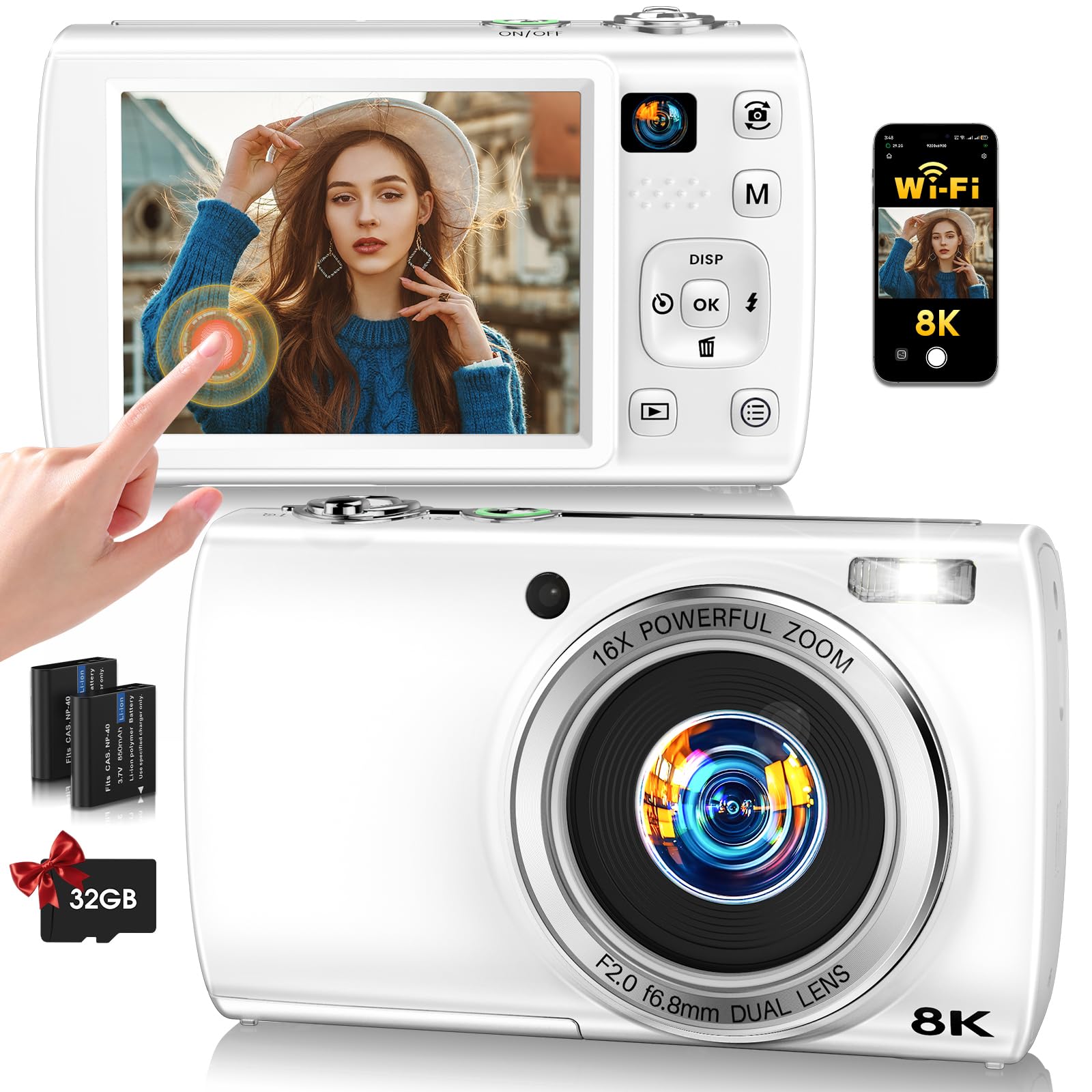
The LOUM 88MP Digital Camera positions itself as a modern vlogging tool for the budget-conscious. The 2.8-inch IPS touchscreen is a genuine convenience—it allows tap-to-focus and swipe-through menus, making the camera more approachable than button-only alternatives. Built-in WiFi enables wireless transfer of photos and videos straight to a smartphone, bypassing the need for a card reader. The kit includes a 32GB memory card and two rechargeable batteries, a thoughtful addition that removes the immediate accessory cost.
The dual-lens design uses a 48MP front sensor for the main lens and a 13MP rear sensor, though the headline “88MP” figure is interpolated. The 16X digital zoom is best treated as a crop tool; images degrade quickly past half zoom. In good lighting, the LOUM produces vibrant, shareable JPEGs that outperform a typical phone’s ultrawide camera. The 5-axis anti-shake reduces hand blur during video, but it’s electronic, not optical, so it cuts into the frame slightly.
Customer feedback is overwhelmingly positive for its price point, with users praising the sharpness and color for beginners. The biggest compromises are low-light noise and the digital zoom’s limits. The LOUM is an ideal first camera for a teen or a travel comp for someone who doesn’t want to risk an expensive device. It’s functional, modern, and arrives ready to shoot.
Why it’s great
- Intuitive 2.8-inch IPS touchscreen interface
- Built-in WiFi for fast phone photo transfer
- Includes 32GB card and two batteries
Good to know
- 88MP resolution is interpolated, not native
- 16X digital zoom degrades image quality quickly
- Low-light performance is limited
9. Saneen 8K 88MP Camera
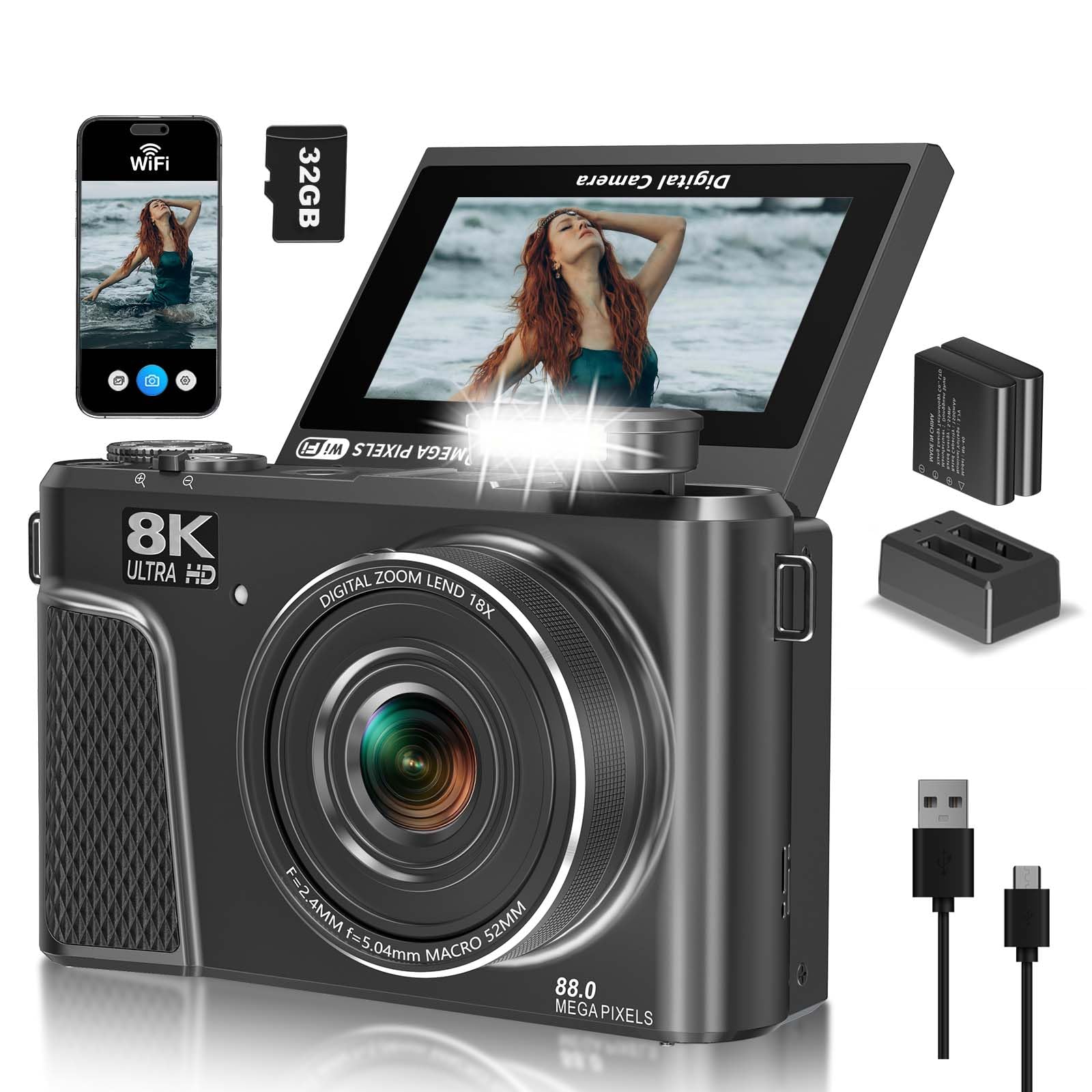
The Saneen 8K camera targets the selfie and vlogging crowd with a 180° flip screen and a built-in fill light. The flip screen makes front-facing composition natural, and the fill light helps overcome dim environments where the small sensor would otherwise produce muddy footage. It records at 8K (interpolated, 15fps) and captures stills at 88MP (interpolated). The 18X digital zoom provides framing flexibility at the cost of resolution, but for social media content, the output is sufficient.
The camera also functions as a webcam via USB, covering live streaming and video calls. Beauty Mode smooths skin tones in-camera, a feature that eliminates the need for separate editing steps for casual vloggers. Included in the box are a 32GB micro SD card and two rechargeable batteries, which together solve the two biggest starter pain points: storage and runtime. The gunmetal finish looks more premium than the price suggests, and the build feels solid in hand.
Low-light performance, as expected from a 1/2.3-inch sensor, is mediocre, but the fill light helps keep faces clear. The battery life is listed at 50 minutes, which is short, so the second battery is essential for a day out. Autofocus works well in bright conditions but hunts in dim spaces. For a young creator or a child stepping into content creation, the Saneen provides the essential tools—flip screen, fill light, and webcam mode—in one affordable package.
Why it’s great
- 180° flip screen plus built-in fill light for selfies
- Webcam function for streaming and calls
- Beauty Mode with two batteries and 32GB card included
Good to know
- 8K and 88MP figures are interpolated
- Battery lasts only ~50 minutes per charge
- AF hunts in low light without fill light
FAQ
What does “interpolated resolution” mean on budget cameras?
Can a basic digital camera replace my smartphone camera?
How many optical zoom X do I actually need for travel?
Final Thoughts: The Verdict
For most users, the best basic digital camera winner is the Panasonic LUMIX ZS99 because its pocket-friendly body and 30X Leica zoom cover every daily scenario without compromise. If you want a large APS-C sensor to genuinely learn photography, grab the Canon EOS 2000D / Rebel T7 Bundle. And for extreme reach on a budget, nothing beats the Panasonic LUMIX FZ80D.