
Our readers keep the lights on and the weekend projects moving. As an Amazon Associate, I earn from qualifying purchases.
Deciding to cut the cable on your in-ear monitors is a major shift in your audio chain. The challenge is that most true wireless earbuds force you to accept their driver, tuning, and fit. A Bluetooth IEM adapter or wireless IEM system gives you the freedom to keep your preferred earphones while ditching the wires, but finding a reliable option with stable connectivity, low latency, and enough battery life for daily use requires separating real engineering from marketing claims. The wrong choice here introduces dropouts, audio lag, or a fit that compromises the sound isolation you depend on.
I’m Rikta — the co-founder and writer behind FitlyFast. I focus on the specific hardware specs that determine whether a wireless audio upgrade actually delivers: Bluetooth chipset generation, codec support, battery architecture, and the physical design of adapters that must securely mate with your existing IEMs.
After researching the market for stable, low-latency wireless solutions that preserve the sound quality of high-fidelity earphones, I’ve built this guide to the best bluetooth iems currently available. Each finalist here passed scrutiny on connection reliability, driver integration, battery endurance, and real-world usability for both music listening and stage monitoring.
How To Choose The Best Bluetooth IEMs
Bluetooth IEMs aren’t one type of product. Some are adapters that let you keep your existing detachable earphones. Others are complete body-worn receiver systems for live performance. A few are dedicated true wireless earbuds built with IEM-style nozzles and secure over-ear hooks. Understanding the architecture — what stays in your ear and what carries the battery — determines whether your choice aligns with your listening habits and environment.
Adapter vs. Dedicated System vs. Wireless IEM
The most common mistake is buying a complete true wireless unit when you already own high-quality wired IEMs. A Bluetooth adapter like the Shure RMCE-TW2 lets you slot your existing earphones (with MMCX or 0.78mm 2-pin connectors) into a wireless neckband or earpiece module, preserving your preferred sound signature. Dedicated wireless IEM systems, such as the Xvive U4, use a bodypack receiver clipped to your belt and are designed for stage monitoring with near-zero latency. Complete true wireless IEMs like the Shure AONIC 215 combine the earphone and adapter into one package. Choose the form factor that matches your primary use case: commuting, desk listening, or live performance.
Latency and Codec Support
Latency is the gap between audio signal input and what you hear. For music listening, anything under 100ms is acceptable. For gaming or live monitoring, you need under 20ms to avoid perceptible delay. Check whether the Bluetooth IEM system uses a 2.4GHz RF connection (like the Xvive U4 with sub-5ms latency) or standard Bluetooth with AptX Low Latency support. Standard SBC or AAC codecs add 150-200ms of latency — fine for podcasts but disastrous for real-time monitoring. Look for AptX LL, AptX Adaptive, or LDAC codec support in Bluetooth adapters, or dedicated RF systems for performance use.
Battery Architecture and Endurance
True wireless adapters that sit in your ear must balance battery weight against runtime. Expect 8 hours per charge for premium adapters like the Shure TW2, with the charging case adding another 24 hours. Bodypack receivers like the Xvive U4 hold 5 hours per charge — plenty for a gig but requiring mid-day charging for all-day use. If you need uninterrupted daily listening, prioritize systems where the charging case can top up the ear units multiple times. For stage work, factor in whether the receiver uses standard USB-C charging or a proprietary dock, and whether you can swap a power bank into your setup mid-show.
Quick Comparison
On smaller screens, swipe sideways to see the full table.
| Model | Category | Best For | Key Spec | Amazon |
|---|---|---|---|---|
| Shure AONIC 215 TW2 | TWS IEM | All-day wireless with deep bass | 32-hour total battery, IPX4 | Amazon |
| Xvive U4 | Wireless IEM | Live stage monitoring | Less than 5ms latency, 90ft range | Amazon |
| Shure RMCE-TW2 Adapter | Bluetooth Adapter | Converting existing Shure IEMs | 32-hour total, Bluetooth 5 | Amazon |
| Sennheiser IE 200 | Wired IEM | Neutral reference listening | 7mm TrueResponse transducer | Amazon |
| Sennheiser IE 100 PRO | Wired IEM | Professional stage monitoring | 10mm dynamic transducer | Amazon |
| TRUTHEAR x Crinacle Zero:BLUE2 | Wired IEM | Dual-driver value with detail | 10mm + 7.8mm dual dynamic | Amazon |
| Linsoul Kiwi Ears Cadenza II | Wired IEM | Neutral tuning on a budget | 10mm titanium-coated diaphragm | Amazon |
In‑Depth Reviews
1. Shure AONIC 215 TW2

The Shure AONIC 215 TW2 delivers a complete true wireless experience built around Shure’s proven sound isolating earbuds. The Gen 2 adapter module provides Bluetooth 5 connectivity with a 30-foot range, and the integrated dynamic driver produces clear mids with deep, controlled bass. The combination of secure over-ear hooks and foam ear sleeves blocks up to 37 dB of ambient noise, making this a serious option for commuters and gym-goers who need isolation without ANC circuitry.
The battery architecture is generous: 8 hours per charge on the earpieces, with the premium charging case (not IP-rated) adding three full recharges for 32 hours total. The ShurePlus PLAY app provides a customizable hardware EQ, button control mapping, and Environment Mode that pipes in outside sound with a button press. The detachable MMCX connection also lets you swap the wireless adapter for a wired cable or even different Shure earphones.
Connection glitches on startup and a bulky case that doesn’t slip easily into a jeans pocket are the main trade-offs. The finicky click-to-seat connection between the earphone and adapter requires deliberate attention until you get the feel. For users who prioritize sound clarity, battery endurance, and the option to upgrade earphones separately, this is the most complete wireless IEM package available.
Why it’s great
- 32-hour total battery life
- Detachable MMCX connection for upgrades
- Customizable EQ and button controls via app
Good to know
- Bulky case is not pocket-friendly
- Finicky earphone-to-adapter connection
- Occasional Bluetooth startup glitches
2. Xvive U4 Wireless IEM System

The Xvive U4 is not a consumer Bluetooth IEM — it is a professional 2.4GHz wireless in-ear monitoring system purpose-built for live musicians. The transmitter plugs into a mixer’s aux output or headphone jack, sending audio to a beltpack receiver over a range of up to 90 feet. The standout spec is sub-5ms latency, which is imperceptible for real-time vocal monitoring — a requirement standard Bluetooth cannot meet. With six selectable channels, a band can run multiple systems simultaneously without interference.
Each receiver provides 5 hours of battery life, which covers most shows but requires discipline to recharge between sets. The included 1/4-inch to XLR adapter, carry bag, and belt clip make this a turnkey solution for musicians who want to ditch floor wedges. Setup is simple: connect the transmitter to your PA aux send, clip the receiver to your strap, and plug in your standard IEM earphones via the 3.5mm output.
The 1/4-inch adapter on the transmitter does not lock mechanically, so it can loosen over time and cause connection dropouts during a performance — a known design vulnerability. Users with multiple band members will need separate units as the sets don’t mount side-by-side on a cramped pedalboard without spacing. For gigging musicians, the combination of zero-perceptible latency, reliable RF stability, and affordable entry cost makes the U4 the top choice in its category.
Why it’s great
- Sub-5ms latency for live monitoring
- Simple setup via PA aux output
- Six channels for band-wide use
Good to know
- 1/4-inch adapter can loosen over time
- 5-hour battery requires mid-show charging discipline
- Units need spaced placement on pedalboards
3. Shure True Wireless Adapter Gen 2
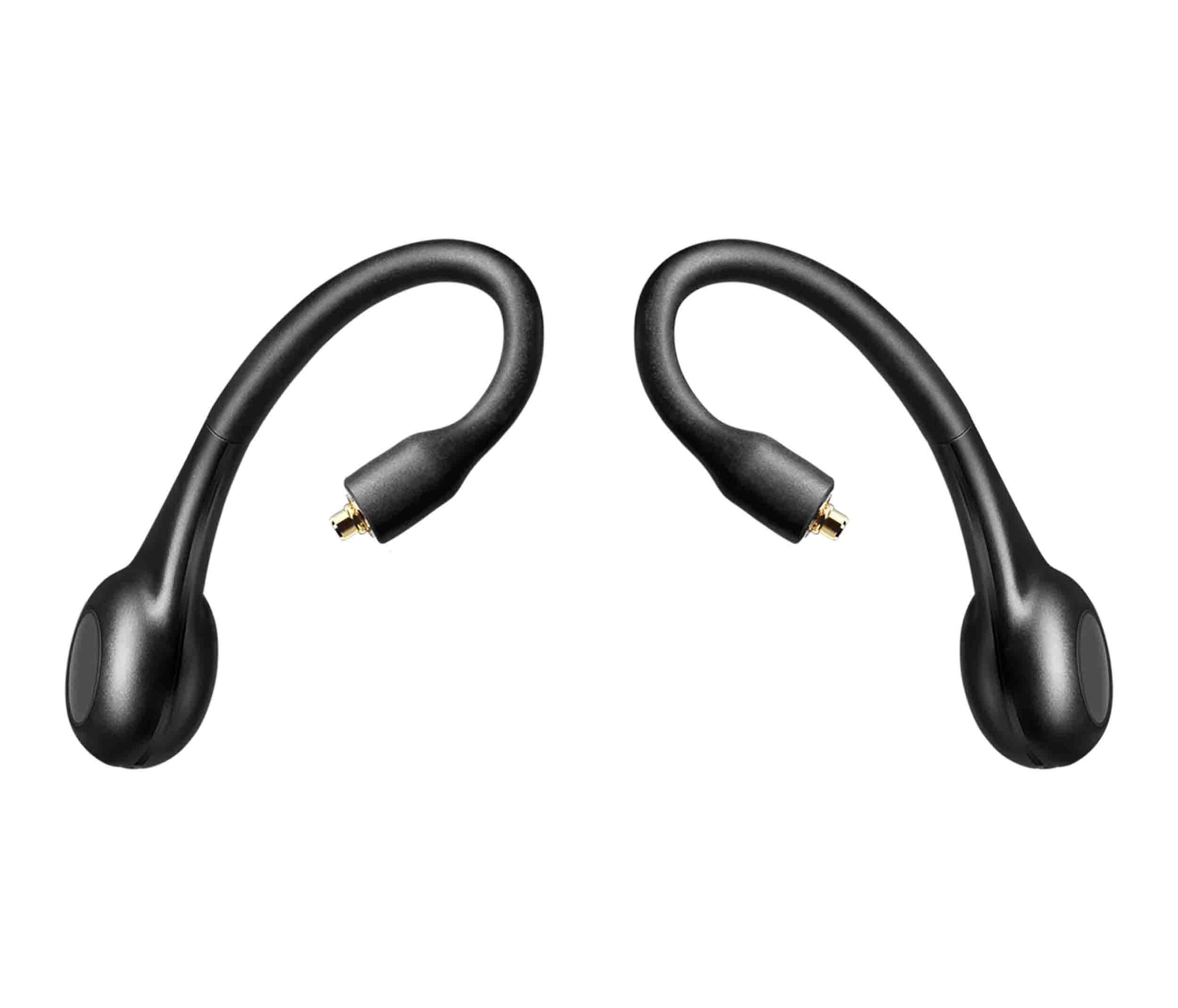
The Shure RMCE-TW2 Gen 2 adapter is the modular upgrade path for anyone who already owns Shure SE215, SE425, SE535, or SE846 earphones. The adapter module replaces the wired cable, converting your existing sound isolating earphones into true wireless earbuds while preserving their exact sound signature. Bluetooth 5 provides solid connectivity up to 10 meters, and the IPX4 sweat and water resistance rating (when paired with Shure earphones) allows for athletic use without concern.
Battery life hits 8 hours per charge on the adapters themselves, with the charging case delivering three additional charges for a 32-hour total. The environment mode button activates the external microphones so you can hear announcements or conversations without removing the earpieces — a practical touch for commuters. The ShurePlus PLAY app enables full EQ customization, button remapping, and firmware updates, giving you granular control over the listening experience.
The adapter lacks active noise cancellation, relying entirely on the passive isolation of your earphones, so ANC enthusiasts will need to adjust expectations. The charging case is large and not IP-rated, meaning it should stay in a bag rather than a pocket during rain exposure. For users with existing high-end Shure earphones, this adapter delivers the most faithful wireless reproduction available, matching wired sound quality while eliminating the cable.
Why it’s great
- Preserves original Shure IEM sound signature
- 32-hour total battery life
- IPX4 sweat and water resistant
Good to know
- No active noise cancellation
- Large, non-IP-rated charging case
- No multipoint connectivity
4. Sennheiser IE 200

The Sennheiser IE 200 is a wired IEM designed around the brand’s 7mm TrueResponse transducer, delivering a neutral sound signature with expressive mids and controlled bass that reveals recording artifacts without exaggerating them. The dual-bass tuning system allows you to adjust the nozzle position for either tighter, more analytical bass or a fuller, warmer low-end — a genuinely useful feature for matching the response to your music genres. The ergonomic shell is among the most comfortable for extended wear, with the over-ear memory wire holding the cable securely in place.
The MMCX connector allows cable upgrades, though the included braided cable is functional with minimal handling noise. The package includes silicone and memory foam ear tip sets in three sizes, plus a carry pouch. Precision-matched drivers reduce unit-to-unit variation, so the pair you receive will sound consistent with another IE 200 — a quality control detail that matters for critical listeners who rely on repeatable tonal balance.
Sound quality depends heavily on your source: a dedicated USB DAC or high-output player reveals the IE 200’s resolution, while a standard phone jack can leave it sounding flat. The stock cable is prone to tangling and has proprietary MMCX connectors that limit upgrade options. The plastic housing feels less substantial than metal-bodied alternatives at similar price points. For listeners seeking an uncolored, neutral reference that can be upgraded to wireless via a Bluetooth adapter, the IE 200 is an ideal wired starting point.
Why it’s great
- Dual-bass tuning for tailored low-end
- Precision-matched drivers for consistency
- Extremely comfortable for long sessions
Good to know
- Stock cable tangles easily
- Requires a good DAC for full performance
- Plastic housing feels less premium
5. Sennheiser Professional IE 100 PRO
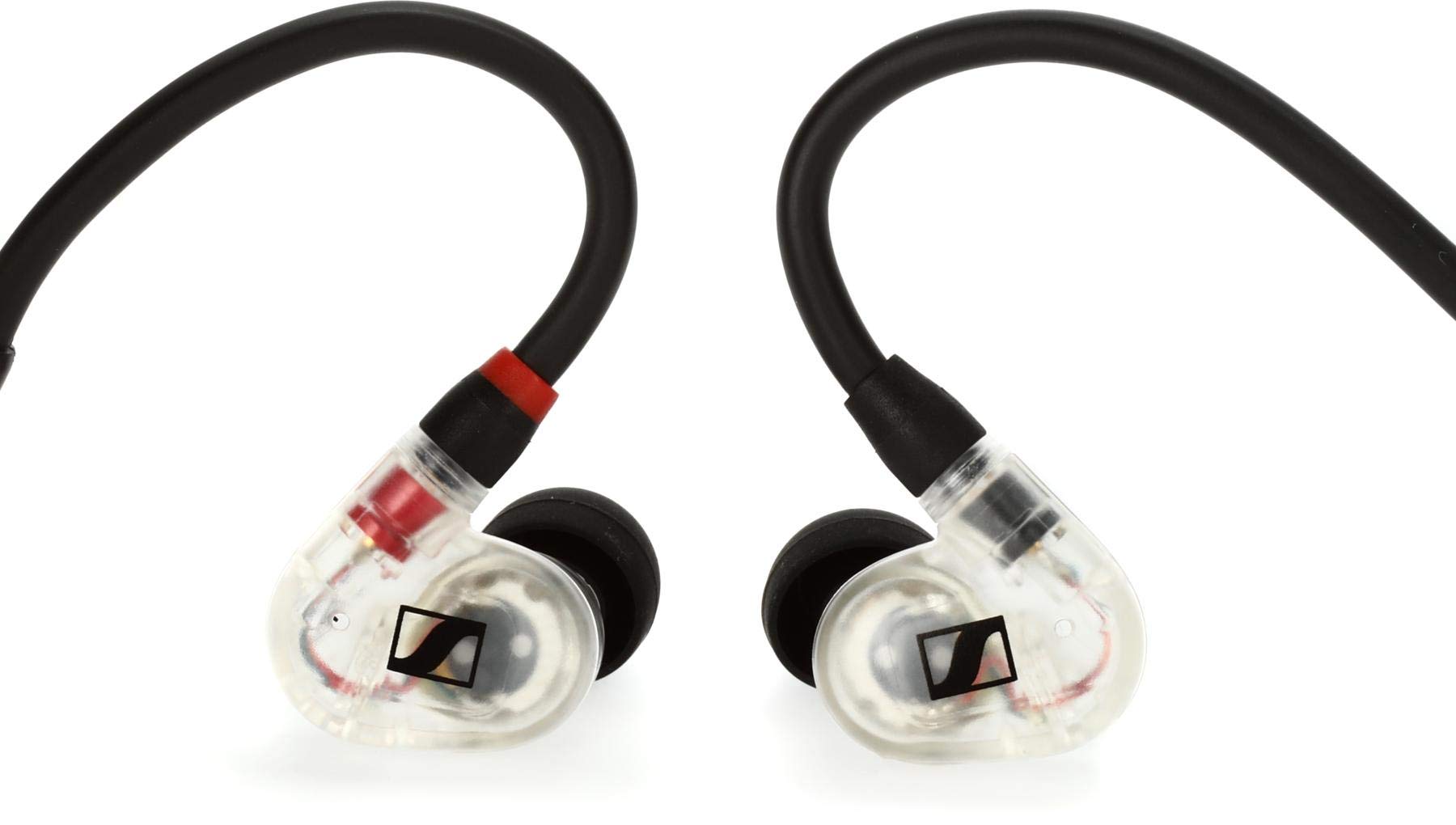
The Sennheiser IE 100 PRO is a wired stage monitoring IEM that prioritizes durability, fit, and detailed reproduction under on-stage noise conditions. The 10mm dynamic transducer delivers powerful, precise monitoring with distortion-free reproduction even at high SPLs — essential for live musicians who need to hear their mix clearly during a performance. The slim ergonomic shell and flexible silicone/foam tips achieve excellent shielding against stage bleed, and the included cleaning tool and protective case reflect the pro-audio target market.
The detachable cable with an internal cable duct is designed to survive the rigors of stage use, including sweat exposure and repeated wrapping. The frequency range extends to 41kHz, offering headroom for high-resolution content, though the driver is tuned for balanced monitoring rather than consumer-friendly bass emphasis. Foam tips provide superior passive noise isolation compared to silicone, but swapping tips changes the frequency response noticeably, so you can tune the sound by tip selection.
The treble-forward tuning can cause sibilance on “S” and “T” sounds with some recordings, and vocalists may find the upper-mid emphasis fatiguing over a full set. The sound quality scales dramatically with your audio source — a USB-C dongle or dedicated headphone amp unlocks detail that a phone jack obscures. For musicians looking for a robust, reliable wired monitor that can be paired with a wireless bodypack system like the Xvive U4, the IE 100 PRO is purpose-built for that workflow.
Why it’s great
- Stage-durable construction with detachable cable
- Excellent passive noise isolation with foam tips
- Distortion-free reproduction at high SPLs
Good to know
- Treble-forward tuning can cause sibilance
- Sound quality heavily source-dependent
- Tip swapping changes frequency response
6. TRUTHEAR x Crinacle Zero:BLUE2

The TRUTHEAR Zero:BLUE2 is a dual dynamic driver IEM co-tuned with Crinacle, featuring a 10mm driver with an N52 magnet for bass and a 7.8mm liquid crystal polymer dome for mid and high frequencies. The DLP-3D printing process for the cavity and silicone capping technique are manufacturing methods typically reserved for high-end multi-driver customs, giving the Zero:BLUE2 a precision-fit cavity that minimizes resonance. The sound is detailed and balanced with a slight bass boost that responds well to EQ, and the included +5 ohm resistor adapter adds low-end weight for those who prefer a bassier presentation.
The upgraded stock cable is a two-strand, 294-core copper silver-plated coaxial design with a 0.78mm 2-pin connector, reducing tangling and improving signal integrity. The package includes three foam and three silicone eartip sets, and the optional microphone cable variant makes this suitable for calls and gaming. The nozzle is narrow, accepting standard eartips, and the shell is lightweight despite the dual-driver configuration.
The plastic casing feels durable but not premium, and the ear loops are large enough that small-eared users may find the over-ear fit uncomfortable after an hour. The sound is thin out of the box without the included impedance adapter, and the cord length may be short for some desktop setups. A report of a defective unit with resonant driver noise and difficulty contacting the manufacturer is a quality-control flag to note, though the replacement unit performed well.
Why it’s great
- Dual-driver configuration with high-end manufacturing
- Included +5 ohm adapter for bass tuning
- Excellent detail retrieval and imaging
Good to know
- Large ear loops may not fit small ears
- Sound is thin without impedance adapter
- Potential quality control issues reported
7. Linsoul Kiwi Ears Cadenza II
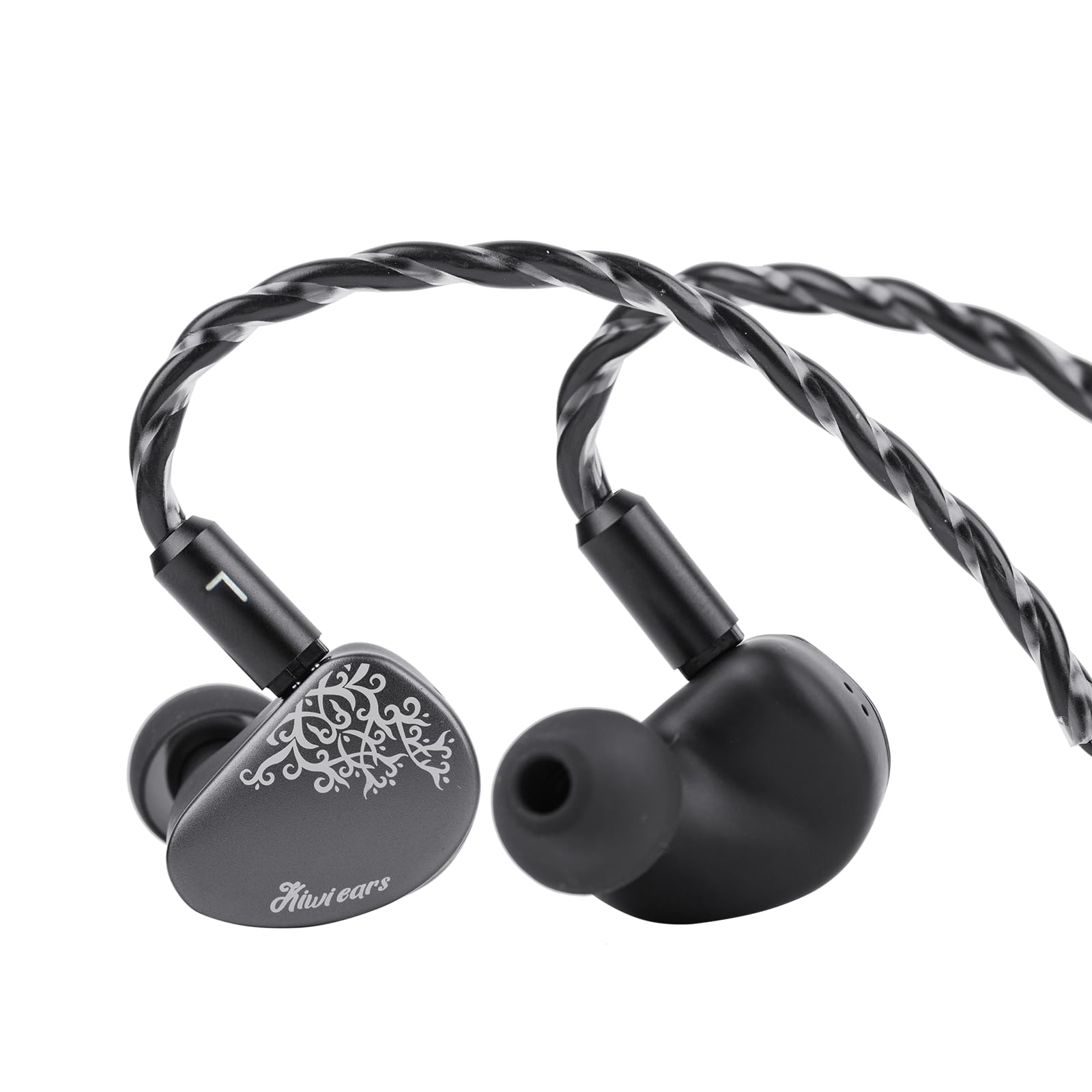
The Linsoul Kiwi Ears Cadenza II sets a new reference point for single-dynamic-driver budget IEMs, debuting the KARS 2.0 acoustic resonance system alongside a titanium-coated polyethylene terephthalate diaphragm driver. The tuning targets a neutral-bright signature with an 8dB sub-bass shelf that cuts off cleanly at 200Hz, avoiding mid-bass bleed into the vocals. The 300-400Hz bump in the low-midrange adds vocal warmth without sounding colored, and the treble peak is precisely engineered at 3kHz for articulation without harshness.
The shell uses a durable polycarbonate composite with a velvet-like texture, paired with a CNC-machined aerospace-grade aluminum faceplate with a laser-etched honeycomb pattern. The detachable 0.78mm 2-pin cable is single-crystal oxygen-free copper, delivering noise-free transmission. The 10-29kHz frequency response extends high enough for Hi-Res content while maintaining a smooth treble decay that reduces listening fatigue over long sessions.
No L/R markings on the earpieces and silicone tips that aren’t pre-attached require initial fiddling and a few minutes of YouTube guidance for first-time IEM users — a minor assembly hurdle. The right-angle 3.5mm jack may not fit some phone cases without an extender. For listeners entering the wired IEM space who intend to eventually pair with a Bluetooth adapter, the Cadenza II’s neutral tuning and comfortable lightweight shell make it an excellent wired foundation.
Why it’s great
- Near-perfect neutral tuning with engaging warmth
- Premium CNC aluminum faceplate and polycarbonate shell
- Wide, 3D soundstage for the price
Good to know
- No L/R markings on shells
- Tips not pre-attached; initial setup required
- Right-angle jack may interfere with phone cases
FAQ
Can I use the Shure RMCE-TW2 adapter with non-Shure IEMs?
What is the actual latency difference between Bluetooth 5 and 2.4GHz wireless IEM systems?
How do I choose between wired IEMs and Bluetooth IEMs for daily commuting?
Final Thoughts: The Verdict
For most users, the bluetooth iems winner is the Shure AONIC 215 TW2 because it combines proven earphone design, 32-hour battery life, and full app customization into a single cohesive package. If you need sub-5ms latency for live stage performance, grab the Xvive U4 Wireless IEM System. And for existing Shure IEM owners who want the most faithful wireless conversion, nothing beats the Shure True Wireless Adapter Gen 2.