
Our readers keep the lights on and the weekend projects moving. As an Amazon Associate, I earn from qualifying purchases.
That nagging knot between your shoulder blades, the forward slump at your desk, or the sharp twinge from a rotator cuff strain — a back and shoulder support brace addresses these directly by mechanically guiding your spine and shoulders into a healthier alignment. Whether your goal is post-injury immobilization, daily posture retraining, or targeted pain relief, the fit, material, and support system of the brace determine whether it actually works or just becomes a nuisance you stop wearing.
I’m Rikta — the co-founder and writer behind FitlyFast. I’ve spent years analyzing the biomechanics of support braces, evaluating how different strap configurations, rod placements, and fabric densities translate into real-world pressure relief for the upper back and shoulder girdle.
After comparing dozens of models across cold-therapy wraps, rod-stabilized correctors, and heated massager braces, these seven picks represent the most effective best back and shoulder support brace options for distinct needs ranging from acute injury recovery to all-day posture improvement.
How To Choose The Best Back And Shoulder Support Brace
Selecting the right brace means matching its support architecture and therapy mode to your specific condition. A posture corrector with rigid rods works for slouching, while a cold-therapy wrap is better for acute rotator cuff inflammation. These three criteria narrow the field fast.
Support Rod Design & Spinal Engagement
The rods embedded in a back brace dictate correction power. Models with 4 to 5 flexible ABS or aluminum rods curve along the spine to resist hunching and distribute pressure across the upper and lower back. Braces with a single central rod or no rods at all rely solely on strap tension, which can slacken over hours of wear and allow the shoulders to roll forward again.
Armpit Clearance & Strap Routing
A poor-fitting brace that digs into the armpit is the most common reason users abandon it. Look for designs with contoured underarm panels or straps that route across the shoulder blade rather than through the axilla. Braces labeled “armpit-friendly” or featuring wide, padded straps at the axilla reduce chafing and enable longer daily wear without irritation.
Breathability & Moisture Management
Back and shoulder braces trap heat against the torso. Mesh-ventilated panels and 3D hollow-knit fabrics allow airflow and wick sweat, preventing the sticky, overheated feeling that makes users remove the brace early. Neoprene offers insulation for cold-therapy wraps but should be reserved for short-duration ice sessions rather than all-day correction.
Quick Comparison
On smaller screens, swipe sideways to see the full table.
| Model | Category | Best For | Key Spec | Amazon |
|---|---|---|---|---|
| BigRose DualGuard | Posture Corrector | All-day posture & lumbar support | Dual-layer lumbar + shoulder retraction | Amazon |
| NEENCA Pro Corrector | Medical Back Brace | Thoracic scoliosis & herniated disc support | 2 aluminum rods + X-strap system | Amazon |
| Kepwaa 5-Rod Corrector | Posture Corrector | Hunchback correction with full-spine rods | 5 flexible ABS support rods | Amazon |
| KNXWALT 4-Rod Corrector | Posture Corrector | Gentle posture adjustment for desk workers | 4 removable support rods + mesh | Amazon |
| POAGL Shoulder Brace | Injury Immobilizer | Rotator cuff & dislocation recovery | Adjustable spica-style with bicep cinch | Amazon |
| REVIX Ice Wrap | Cold Therapy | Post-workout & injury cold compression | Neoprene wrap + reusable gel (-13°F) | Amazon |
| WOLOYHEATIE Heat+Massage | Therapy Brace | Chronic shoulder pain with heat & vibration | Cordless 5000mAh 3-level heat + 3 modes vibration | Amazon |
In‑Depth Reviews
1. BigRose DualGuard Full-Back Support Pro
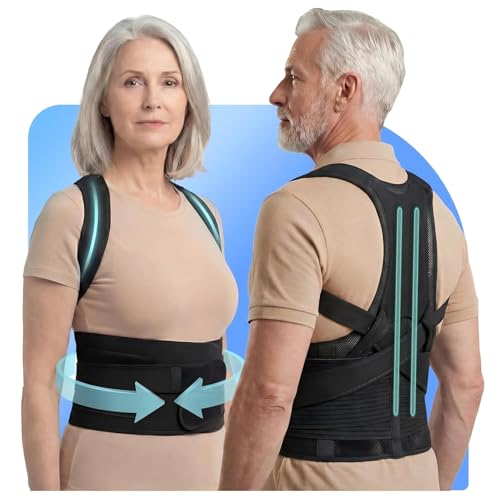
The BigRose DualGuard earns the top spot because its architecture prioritizes two things most braces neglect: lower-back stability during shoulder retraction and underarm-friendly routing. The dual-layer lumbar panel wraps the waist in a wide, non-slip band that anchors the brace below the ribcage, allowing the shoulder straps to pull the clavicles back without riding up. The open-back design leaves the spine exposed for natural movement while the side panels provide lateral stiffness.
In practice, this means you can sit at a desk for six hours without the brace migrating or the lumbar support losing contact. The lightweight mesh fabric breathes well enough for extended wear under shirts, and the hook-and-loop closure lets you micro-adjust tension throughout the day. Customer reports from desk workers and active seniors confirm that the brace stays in place during bending and walking, which is rare in this category.
The main tradeoff is that the shoulder pull-back tension is moderate rather than aggressive — it guides rather than forces. Users needing maximum thoracic rigidity for conditions like severe kyphosis may prefer a rod-heavy design, but for daily posture maintenance and lower-back pain relief, the DualGuard delivers the most balanced, comfortable support available.
Why it’s great
- Dual-layer waistband prevents upward migration during movement.
- Underarm-friendly cut eliminates armpit chafing even after hours of wear.
- Breathable construction stays cool under clothing for full-day use.
Good to know
- Shoulder tension is moderate, not rigid — not ideal for aggressive scoliosis correction.
- Available in limited sizing per waist measurement; measure carefully.
2. NEENCA Professional Posture Corrector
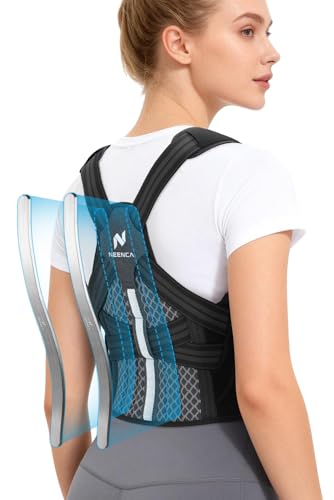
The NEENCA is a Class 2 medical device, and that regulatory classification matters: it means the brace’s structural claims — including its two memory aluminum spinal support rods and the X-strap fixing system — have been evaluated for therapeutic intention. The aluminum rods are the standout feature, as they can be manually bent to conform to your specific thoracic curve, then hold that shape through daily wear. This custom contouring delivers more precise vertebral support than pre-molded plastic stays.
The 3D hollow-knit fabric uses a 16-hole airflow mesh pattern that feels noticeably cooler than standard foam-lined braces. The wide waistband distributes lower-back pressure across a broad surface, and the double X-strap configuration on the upper back creates a mechanical advantage that retracts the shoulders without concentrating force on a single point. Users recovering from herniated discs or managing thoracic scoliosis report tangible pain reduction within the first week of consistent use.
The primary drawback is armpit clearance: some users with broad torsos find the wide upper straps cut into the axilla during forward-bending tasks like yard work or laundry. The brace also runs slightly short in the torso for very tall individuals, so height should be considered alongside waist measurement when selecting size. For office use and controlled movement, however, the NEENCA provides the most medically credible correction in the lineup.
Why it’s great
- Moldable aluminum rods allow custom spinal contouring not possible with plastic stays.
- Class 2 medical device classification ensures therapeutic-level build quality.
- Patented X-strap system distributes retraction force evenly across the upper back.
Good to know
- Wide upper straps may dig into armpits during dynamic movement like bending.
- Torso length is limited; taller users should verify fit before purchase.
3. Kepwaa 5 Full Back Support Brace Rods
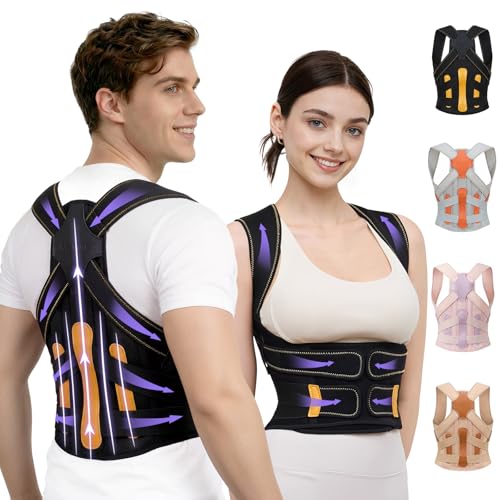
The Kepwaa brace packs five flexible ABS support rods into a surprisingly lightweight frame, making it the most rod-dense option in this roundup. Those rods run vertically along the entire spine, providing resistance against slouching from the lumbar region up through the thoracic spine. The ergonomic cut is specifically contoured to avoid compressing the armpits, and the jacket-style design — you put it on like a vest — makes self-application straightforward even if you have limited shoulder mobility.
The wide waist strap is a practical advantage: it sits below the belly button and wraps around the hips rather than the ribs, which prevents the brace from riding up when you sit down. The front-adjustable straps let you dial in tension without reaching behind your back, and the hook-and-loop material holds securely through a full day of shifting positions. Breathability is decent thanks to the mesh fabric, though some users report sweating during extended wear in warm environments.
The tradeoff is that the five-rod system adds stiffness. This brace is excellent for structural posture correction — training your back to hold a straighter position — but it may feel restrictive for activities requiring overhead arm movement or deep forward bending. If you need a rigid framework to counteract a habitual hunch, the Kepwaa delivers unmatched rod-based support at a mid-range budget entry point.
Why it’s great
- Five ABS rods provide the highest column strength for resisting thoracic slouching.
- Jacket-style donning and front straps make self-application easy.
- Waist strap anchors below the navel to prevent riding up when seated.
Good to know
- Rod stiffness limits overhead reach and deep forward flexion.
- Mesh fabric can trap heat in warm climates or during physical activity.
4. KNXWALT 4-Rod Posture Corrector
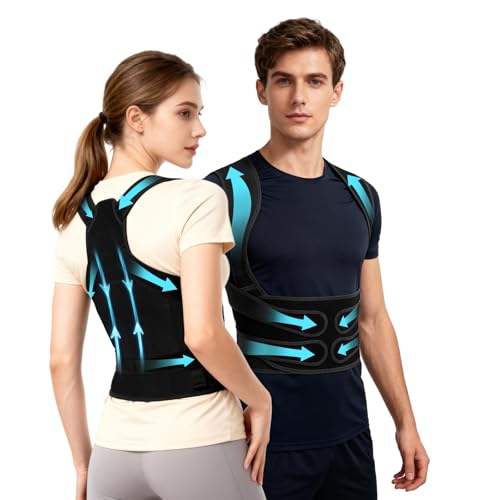
The KNXWALT corrector prioritizes comfort without sacrificing correction. Its four support rods are removable, meaning you can start wearing the brace with rods engaged for active correction, then remove them for lighter support as your posture improves. This modular approach allows a gradual transition from structured retraining to muscular independence. The mesh fabric is among the most breathable in the test group, and the lightweight build makes it easy to forget you are wearing it.
Feedback from long-term users highlights the absence of armpit digging as a key reason they stuck with this brace. The rods curve to follow the natural S-shape of the spine rather than forcing a flat-back position, which reduces the jarring sensation that can make rigid braces feel punishing. The lower-back panel extends far enough down to provide lumbar support, a feature often missing in posture correctors that only target the upper spine.
The compromise is that the removable rods are thinner and less rigid than the aluminum stays in the NEENCA or the five rods in the Kepwaa. For mild to moderate slouching — particularly for desk workers who need gentle, all-day reminding — this is the most wearable option. For severe kyphosis or post-surgical support, a brace with thicker, non-removable rods would be more appropriate.
Why it’s great
- Removable rods let you adjust correction intensity as posture improves.
- Breathable mesh prevents overheating during extended office wear.
- Natural-curve rod shaping avoids flat-back discomfort.
Good to know
- Rods are thinner than aluminum alternatives — suited for mild correction only.
- Straps may show under thin or tight-fitting clothing.
5. POAGL Adjustable Shoulder Brace
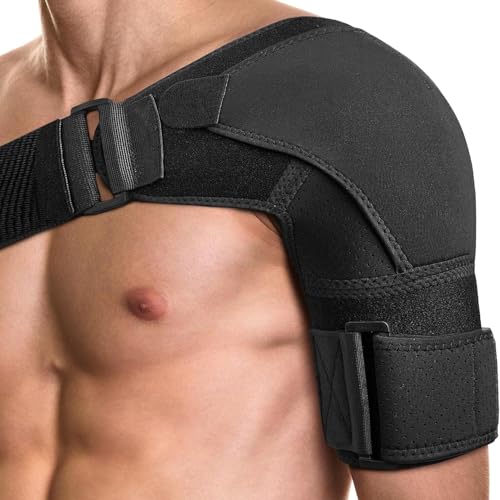
This is not a posture corrector — it is a shoulder immobilization brace designed for torn rotator cuffs, dislocations, bursitis, and tendonitis. The spica-style wrap immobilizes the humeral head against the glenoid, limiting arm motion while providing compression to reduce swelling. The bicep strap uses a belt-style cinch that can be tightened one-handed, which is critical when your injured arm has limited mobility.
The nylon-polyester-spandex blend delivers firm compression without being abrasive, and the brace can be worn on either arm. Users recovering from rotator cuff surgery report that the brace allows enough range of motion for basic daily tasks — typing, light walking — while preventing the painful abduction and external rotation that aggravate the tear. The slim profile fits under a loose shirt, making it viable for return to light work during recovery.
The downsides are installation difficulty and armpit irritation. Putting the brace on independently while your shoulder is painful requires some contortion, and the crossbody strap that wraps around the torso can dig into the opposite armpit on individuals with shorter torsos. The brace is not intended for sleep use despite some marketing references, as the manufacturer’s own instructions advise against it. For daytime injury management with proper fit, however, the POAGL provides reliable targeted support.
Why it’s great
- Spica wrap design effectively immobilizes the glenohumeral joint after injury.
- Belt-style bicep cinch enables one-handed tension adjustment.
- Compression fabric suits rotator cuff, dislocation, and bursitis recovery.
Good to know
- Self-application is difficult when the injured shoulder lacks full range of motion.
- Crossbody strap may irritate the opposite armpit on shorter torsos.
6. REVIX Shoulder Ice Pack Wrap

The REVIX wrap takes a different approach: instead of mechanical correction, it delivers targeted cold therapy to reduce inflammation in the shoulder joint and rotator cuff. The reusable gel pack stays pliable at -13°F, conforming around the deltoid and upper bicep without leaving rigid cold spots. The Neoprene outer shell with a soft inner lining prevents frostbite by insulating the skin from direct gel contact, and the adjustable straps keep the pack pressed firmly against the shoulder.
What sets this wrap apart is the coverage area. The gel pack extends from the top of the shoulder down over the bicep and wraps around both the front and back of the joint, covering the full rotator cuff territory. Users report that the cold penetrates deep enough to numb acute pain within 15 minutes, and the wrap holds temperature for roughly 30 minutes before needing rotation. The included storage bag makes freezing and organization straightforward.
The main limitation is the strap placement for women: the adjustable strap that crosses the chest rests across the bust line, which some female users find uncomfortable. The wrap also starts stiff when removed from the freezer and requires a few minutes of flexing before it conforms. For post-workout recovery, acute injury flare-ups, or frozen shoulder management, the REVIX is the most effective cold-therapy tool in this list — just not a posture or structural support device.
Why it’s great
- Gel stays pliable at deep-freeze temperatures for conforming coverage of the rotator cuff.
- Double-sealed edges and Neoprene insulation prevent leaks and frostbite risk.
- Covers shoulder front, back, and upper bicep in a single wrap.
Good to know
- Chest strap placement is uncomfortable for some women due to bust interference.
- Gel pack is stiff when first frozen; needs flexing for 1-2 minutes before application.
7. WOLOYHEATIE Shoulder Heating Pad with Massage
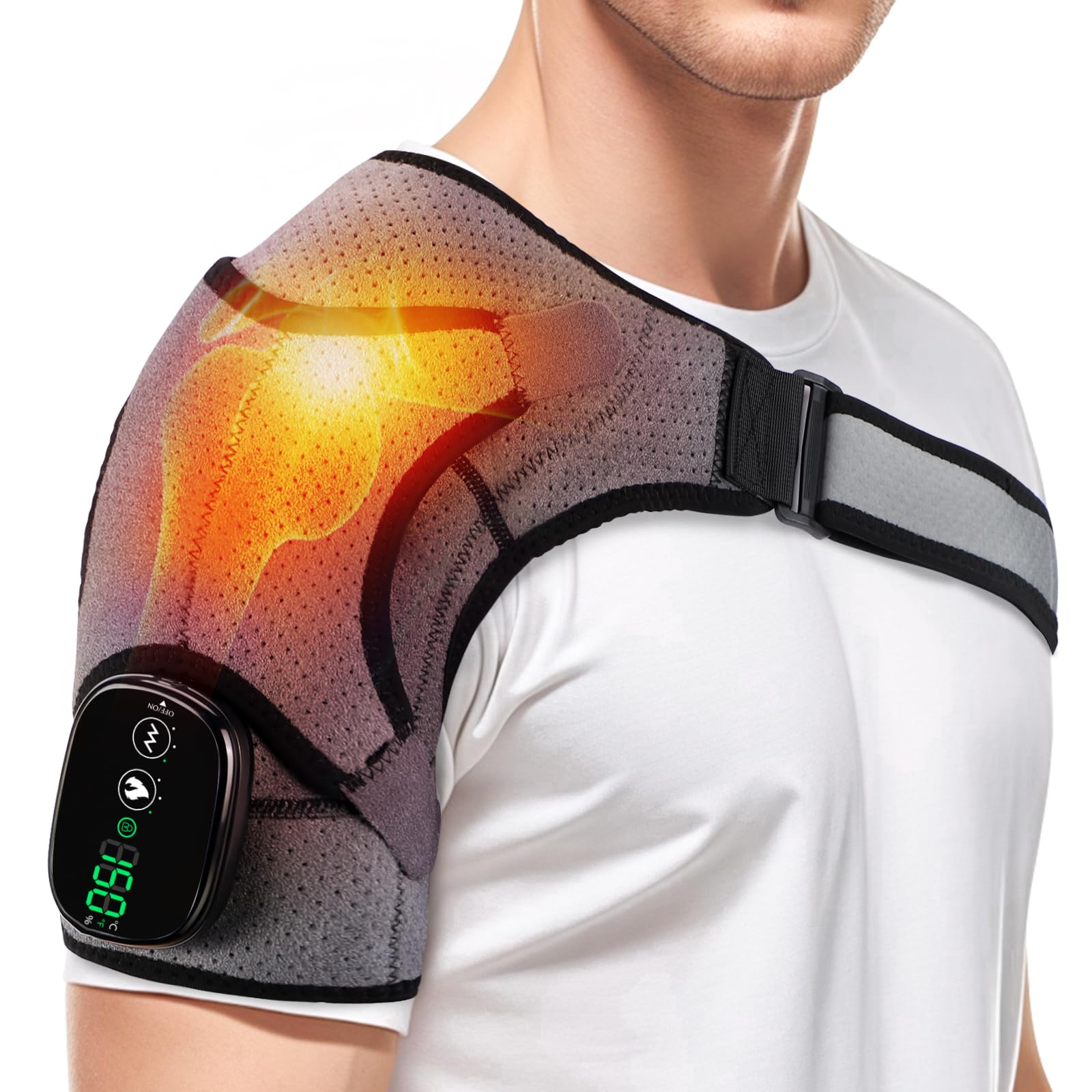
The WOLOYHEATIE combines heat therapy up to 167°F with three vibration modes in a cordless, rechargeable shoulder wrap. The 5000mAh battery delivers roughly two hours of continuous use on low heat, which is enough for a focused therapy session during work or while commuting. The Type-C charging means you can top it up from a laptop or power bank, and the low-battery alert prevents surprise shutdowns mid-session.
The Neoprene shell is lined with soft fabric, and the adjustable straps accommodate chest circumferences from 27 to 55 inches — an unusually wide range that fits both petite and plus-size frames. Users managing chronic frozen shoulder, arthritis, or tendonitis report that the combination of heat and vibration provides more sustained relief than either modality alone. The LED display and touch-button controls are intuitive, and the wrap works on both left and right shoulders by simply rotating the pad.
The battery runtime is the primary constraint. On high heat (167°F), the battery drains in roughly an hour, and charging takes three-plus hours. The controller is permanently attached to the wrap, so you cannot use the device while it charges. The vibration function also receives mixed feedback — some users find it relaxing, others describe it as irritating. If consistent background heat is your goal, this wrap delivers, but the cordless convenience comes with the tradeoff of limited endurance and a non-removable controller.
Why it’s great
- Cordless operation with rechargeable battery enables use away from wall outlets.
- Heat range up to 167°F provides therapeutic-level warmth for chronic stiffness.
- Wide chest fit range (27-55 inches) accommodates diverse body types.
Good to know
- Battery lasts about one hour on high heat; three-plus hours to recharge fully.
- Vibration mode may feel irritating rather than soothing for some users.
FAQ
How long should I wear a back and shoulder support brace each day?
Can I sleep in a back and shoulder support brace?
Will a posture corrector fix my hunched back permanently?
Final Thoughts: The Verdict
For most users, the best back and shoulder support brace winner is the BigRose DualGuard Full-Back Support Pro because it combines dual-layer lumbar anchoring with effective shoulder retraction in a comfortable, breathable package that stays put through a full workday. If you need medical-grade correction with moldable aluminum rods for thoracic scoliosis or disc issues, grab the NEENCA Professional Posture Corrector. And for acute rotator cuff pain requiring immediate cold therapy, nothing beats the REVIX Shoulder Ice Pack Wrap.