
Our readers keep the lights on and the weekend projects moving. As an Amazon Associate, I earn from qualifying purchases.
A loose cement board panel means a failed tile installation, a buckled shower wall, or a peeling backsplash. The wrong adhesive leaves you fighting gravity as the board sags before the thinset cures — the right one locks it in place immediately, saving hours of frustration and rework.
I’m Rikta — the co-founder and writer behind FitlyFast. I’ve spent years analyzing construction adhesive formulations, testing grab times across diverse substrates, and studying how cement board interacts with polymer and latex-based binders to help you avoid a costly redo.
Whether you are tiling a tub surround or anchoring a kitchen backsplash, making the right call on your adhesive for cement board determines whether your project survives the test of moisture, weight, and daily use.
How To Choose The Best Adhesive For Cement Board
Cement board is dense, porous, and alkaline — three traits that make ordinary construction adhesive fail. You need a formula designed to penetrate the board’s surface, resist moisture degradation, and maintain a strong grip without becoming brittle over time. The categories below break down the decision by installation scenario.
Grab Time and Vertical Hold
The single most practical test for an adhesive used on cement board is how fast it grabs on a vertical surface. Slow-cure formulas allow gravity to pull the board down, creating gaps you’ll never fix with thinset. Look for a “high grab” or “instant grab” rating, meaning the bond sets fast enough to hold the panel in place without temporary bracing on walls and ceilings.
Water and Freeze-Thaw Resistance
Cement board is common in showers, steam rooms, and exterior applications. An adhesive that absorbs moisture loses tensile strength and invites mold between wall layers. Choose a waterproof, all-weather formula that specifically states it resists repeated freeze-thaw cycles — standard latex glues will crack and separate in damp environments.
Flexibility vs. Rigid Bond
Cement board and the tile above it expand and contract differently with temperature changes. An adhesive that cures into a rigid, inflexible layer transfers stress to the tile grout and can cause hairline fractures. A flexible, elastomeric bond — typical of MS polymer or polyurethane-based adhesives — accommodates slight movement without compromising the joint.
Compatibility with Thinset and Mortar
Some adhesives are intended as a temporary bonding agent to hold panels while thinset cures, while others serve as the final bonding layer. Check whether the product is compatible with portland cement-based thinset. If your project calls for tile directly over the board, the adhesive must not create a vapor barrier that prevents the thinset from curing properly.
Quick Comparison
On smaller screens, swipe sideways to see the full table.
| Model | Category | Best For | Key Spec | Amazon |
|---|---|---|---|---|
| Titebond TiteGrab Plus | Construction Adhesive | Instant vertical hold | Waterproof, all-weather | Amazon |
| ROMAN PRO-515 Ultra | MS Polymer | Flexible, high-strength bond | UV-resistant, paintable | Amazon |
| SIKA SikaLatex R | Concrete Admixture | Bonding old to new concrete | 500 psi bond strength | Amazon |
| Custom Building Products AP Thin Set | Thinset Mortar | Tile over cement board | ANSI A118.4 & A118.11 | Amazon |
| Mapei Adesilex-P10 | Thinset Mortar | Mosaic & glass tile | Nonsag performance | Amazon |
| RH Adhesives HH-66 TF | Vinyl Cement | Vinyl repair over cement board | Flexible from -30°F to 150°F | Amazon |
| FEWELL Masonry Drill Bits | Drill Bits | Drilling pilot holes in board | High cobalt alloy, 118° tip | Amazon |
In‑Depth Reviews
1. Titebond TiteGrab Plus Construction Adhesive
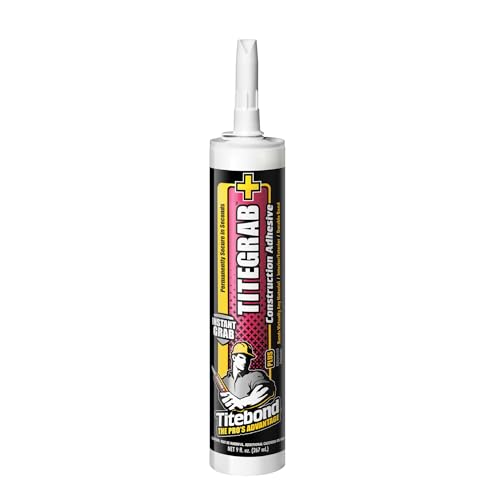
The Titebond TiteGrab Plus uses an advanced polymer formula that locks cement board in place immediately, eliminating the need for temporary bracing on vertical walls. Its creamy consistency extrudes smoothly from a standard caulk gun and holds fast even on smooth painted surfaces where other adhesives slide. The formula remains flexible after full cure, so thermal expansion across the cement board won’t crack the bond line.
This product is explicitly rated for cement board, concrete, tile, and foam — making it a true multipurpose adhesive that handles the full substrate stack of a typical tile installation. The all-weather waterproof rating means it works equally well behind a shower wall and on an exterior cement board soffit. Users consistently report that it holds ceiling panels in place while thinset cures, a tough test for any construction adhesive.
One limitation: the instant grab gives you a working window of only two to three minutes, so you need to align the panel before pressing it home. On extremely smooth non-porous surfaces, some users note reduced performance compared to porous materials like wood or cement board itself — but for direct cement board bonding, this is a minor edge case.
Why it’s great
- Instant grab eliminates bracing on vertical cement board installations
- Waterproof and weather-resistant for wet areas
- Bonds cement board directly without thinset for certain applications
Good to know
- Short working window requires fast alignment
- Not ideal for extremely smooth, non-porous surfaces
2. ROMAN PRO-515 Ultra MS Polymer Adhesive
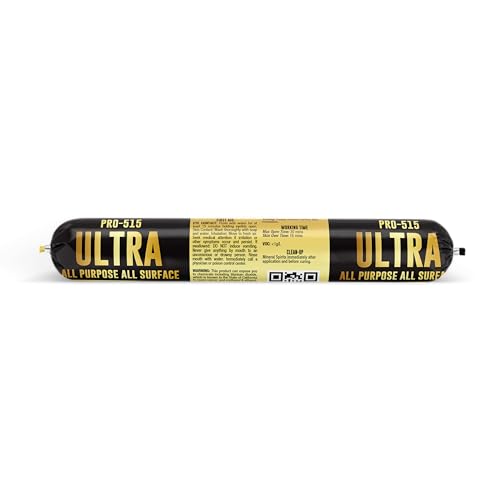
The ROMAN PRO-515 Ultra is a single-component, solvent-free MS polymer adhesive that delivers the flexibility of silicone with the strength of a construction adhesive. Its low-viscosity, high-grab formula penetrates cement board’s porous surface better than standard acrylic caulks, creating a bond that remains elastic after cure — a critical property when the board is exposed to temperature swings behind a dark exterior tile.
With a VOC content below 1 g/L, this is one of the cleaner options for indoor use, and its UV resistance makes it equally suitable for exposed outdoor cement board joints. Users report successful bonding of stone veneer directly to cement board, a demanding scenario that requires both immediate tack and long-term weather tolerance. The sausage pack format requires a 22:1 thrust ratio caulk gun, which is a minor tool investment but delivers smoother flow than standard cartridges.
The MS polymer chemistry remains watertight even in submerged conditions, though the full cure takes longer than polyurethane alternatives. For large-area cement board repairs like a spalled driveway edge, a concrete patch product would be more appropriate — the PRO-515 excels at seam bonding and panel attachment rather than bulk gap filling.
Why it’s great
- Flexible bond accommodates board movement without cracking
- UV and waterproof for exterior cement board applications
- Low VOC content suitable for indoor use
Good to know
- Requires a sausage-type caulk gun (not a standard gun)
- Full cure takes longer than polyurethane adhesives
3. SIKA SikaLatex R Concrete Adhesive

SikaLatex R is not a standalone adhesive — it is an acrylic latex admixture designed to be mixed into portland cement mortar or concrete to create a bonding grout. When used as a primer coat brushed onto cured cement board before applying fresh mortar, it delivers a documented 500 psi bond strength that resists freeze-thaw damage far better than plain water-mixed thinset. This makes it a go-to product for structural repairs where the cement board must act as a shear wall or load-bearing substrate.
The gallon pail mixes with an entire 60-pound bag of mortar, and the resulting blend cures into a denser, less permeable surface that rejects moisture. For patching a cement board backer that has cracked or delaminated, painting SikaLatex R onto the old surface and then troweling a latex-fortified mortar on top creates a monolithic connection that doesn’t depend on mechanical fasteners. Users report holding power lasting years even on rough, mediocre masonry work.
One practical downside: the open time of latex-fortified mortar is shorter than standard mixes, so you need to work in manageable sections. The 30-day full cure time is conservative — the bond reaches usable strength within 24 to 48 hours — but maximum freeze-thaw resistance develops slowly.
Why it’s great
- Creates a structural bond between old and new cement layers
- 500 psi bond strength exceeds most construction adhesives
- Freeze-thaw and moisture resistant for exterior use
Good to know
- Requires mixing with mortar; not a ready-to-use adhesive
- Reduced open time compared to standard thinset
4. Custom Building Products AP Thin Set Mortar

The Custom Building Products AP Thin Set Mortar is the standard for embedding cement board into a mortar bed or for bonding tile directly to cement board. This polymer-modified formula exceeds ANSI A118.4 and A118.11 standards without requiring any liquid latex additive — you just mix with water and trowel. It cures fast even in cold weather, a real advantage when working on an unheated basement or garage tile project in fall temperatures.
The 25-pound bag covers roughly 50 to 60 square feet of cement board at a standard 1/4-inch notch trowel. The extended open time allows you to back-butter large-format porcelain tiles and adjust alignment before the mortar skins over. For interior or exterior cement board floors, walls, and countertops, this thinset delivers consistent grab without slumping on vertical faces.
The trade-off is that this is a cementitious product — it requires a margin trowel, a mixing paddle, and cleanup before the mortar hardens. It is not a grab-and-go adhesive from a caulk tube. For small repair jobs like resetting a single loose tile on cement board, a tube-grade construction adhesive may be more practical.
Why it’s great
- Polymer-modified without needing extra additives
- Fast cure in cold conditions
- Exceeds ANSI standards for tile over cement board
Good to know
- Cementitious; requires mixing and troweling
- Not ideal for quick small-patch repairs
5. Mapei Adesilex-P10 Premium Mosaic & Glass Tile Mortar

Mapei Adesilex-P10 is a premium, nonsag thinset mortar formulated specifically for sheet-mounted mosaics and glass tiles installed over cement board backer. Its bright white color eliminates shadowing behind translucent glass and marble tiles, a common aesthetic problem with gray thinset. The nonsag performance means the mortar holds mosaics in place on vertical cement board walls without the tiles sliding down during cure.
When mixed with Keraply additive, Adesilex-P10 gains increased bond strength for submerged installations like a shower floor or steam-room bench over cement board. The 10-pound pail covers 11 to 24 square feet depending on trowel notch size, making it a practical size for a single bathroom wall or kitchen backsplash. Users report that it trowels smoothly and stays workable long enough to embed full mosaic sheets without rushing.
The trade-off is that this product is narrow in scope — it is optimized for mosaics and glass, not for large-format tiles or natural stone. For a standard 12×24-inch porcelain tile over cement board, a general-purpose thinset like the Custom Building Products AP Thin Set performs equally well at a lower per-square-foot cost.
Why it’s great
- Bright white formulation for glass and light-colored mosaics
- Nonsag performance holds mosaics on vertical cement board
- Can be fortified for submerged applications
Good to know
- Optimized for mosaics and glass, not large-format tile
- Higher per-square-foot cost than multipurpose thinsets
6. RH Adhesives HH-66 Toluene Free Vinyl Cement

HH-66 Toluene Free Vinyl Cement from RH Adhesives is an industrial-grade contact adhesive designed for flexible vinyl, PVC, and coated fabrics. While not a direct cement board adhesive, it excels at bonding vinyl membranes, corner beads, and waterproofing sheets to cement board. The toluene-free formulation is safer for indoor use than traditional solvent-based cements, and the built-in brush cap allows precise application on narrow flanges.
Once cured, HH-66 TF remains flexible from minus 30°F to 150°F, which is critical when bonding vinyl window flashing or pool liner over cement board in extreme temperature environments. The 4-ounce can is small, but the concentrated formula spreads thin — a little goes far on seam repairs. Users report strong bonds even on unclean vinyl test strips when proper surface prep with alcohol is performed.
This product is not intended for direct cement board-to-cement board bonding or for structural panel attachment. Its narrow compatibility window excludes polyethylene tarps and extremely thin vinyl wraps. For the specific job of bonding vinyl accessories to cement board, however, it outperforms general-purpose adhesives that lack flexibility.
Why it’s great
- Superior flexible bond for vinyl-to-cement board applications
- Toluene-free formulation reduces indoor VOCs
- Wide temperature tolerance for exterior use
Good to know
- Not for structural cement board panel attachment
- Incompatible with polyethylene and very thin vinyl
7. FEWELL Masonry Drill Bits 10 Pcs

Drilling into cement board is a necessary first step for mechanical fastening, and the FEWELL Masonry Drill Bits set covers the full range of pilot hole sizes from 1/8 inch up to 1/2 inch. The high cobalt alloy construction is harder than standard carbide, reducing bit wear when cutting through the cementitious core that quickly dulls general-purpose bits. The 118-degree split-point tip prevents walking on the slick cement board surface, giving you a clean, centered hole every time.
With 10 bits in 7 sizes, the set includes duplicates of the most commonly used diameters — 3/16 inch and 1/4 inch — so you have spares when one dulls mid-project. The 1/4-inch hex shank fits into quick-change chucks without slipping, allowing fast bit swaps when you need to switch between pilot holes and screw driving. Users report that these bits cut through porcelain tile as well as cement board, making them a dual-purpose kit for tiling projects.
The set is not designed for hard tile or reinforced concrete slabs — the cobalt alloy can handle occasional ceramic, but a dedicated carbide-tipped hammer drill bit is required for rebar-heavy concrete. For typical cement board fastener holes, however, these bits deliver clean entry and long life.
Why it’s great
- High cobalt alloy withstands abrasive cement board material
- Split-point tip prevents bit wandering on slick surfaces
- Includes duplicate sizes for common diameters
Good to know
- Not for reinforced concrete or extremely hard tile
- Cool with water when drilling very dense cement board
FAQ
Can I use regular construction adhesive on cement board?
Should I use thinset or construction adhesive for cement board?
How long does adhesive take to cure on cement board?
Final Thoughts: The Verdict
For most users, the adhesive for cement board winner is the Titebond TiteGrab Plus because its instant grab holds panels vertically without bracing and its waterproof formula works in wet areas behind tile. If you want a flexible, UV-stable bond for exterior cement board seams or stone veneer, grab the ROMAN PRO-515 Ultra with its MS polymer elasticity. And for setting mosaic or glass tile directly over cement board, nothing beats the Mapei Adesilex-P10 with its nonsag, bright-white finish.