
Our readers keep the lights on and the weekend projects moving. As an Amazon Associate, I earn from qualifying purchases.
Android health watches have evolved past simple step counters into full-spectrum wellness hubs that track everything from sleep stages and HRV to body composition and VO2 max. The problem? Most buyers grab a cheap screen without checking the sensor array, companion app quality, or battery endurance — and end up with a watch that bleeds power or delivers bogus metrics.
I’m Rikta — the co-founder and writer behind FitlyFast. I’ve spent years analyzing fitness wearables, cross-referencing sensor accuracy studies against user reports, and breaking down battery chemistry, GPS chipset quality, and display technologies across hundreds of models.
Whether you train for a triathlon, monitor chronic conditions, or just want reliable recovery data, this guide cuts through the noise to help you find the absolute best android health watch for your specific needs and budget.
How To Choose The Best Android Health Watch
An Android health watch is only as useful as its sensor stack and the ecosystem it feeds data into. You need to match the device to your primary activity — whether that’s daily wellness, serious running, or rugged outdoor navigation — and weigh trade-offs between screen brightness, battery life, and software support.
Sensor Array & Accuracy
The core of any health watch is its sensor package. Models with curved BioActive sensors (like Samsung’s) sit closer to the skin, reducing optical noise during movement. For reliable HRV and SpO2 readings, look for multi-LED arrays and a dedicated infrared channel. Budget watches often use single photodiodes that struggle during high-intensity interval training.
Battery Endurance & Charging
AMOLED displays are beautiful but power-hungry. A watch with at least 350mAh capacity typically delivers 7–10 days of mixed use. Solar-assisted models, like the Garmin Instinct 2X, can extend battery indefinitely with daily sun exposure. If you track GPS activities for hours, check battery life in GPS mode — 18–30 hours is a solid mid-range floor.
Operating System & App Ecosystem
Wear OS watches (Pixel Watch 3, Samsung Galaxy Watch series) offer the best app integration with Android phones, including Google Assistant, Google Wallet, and third-party apps via the Play Store. Proprietary systems (Amazfit’s Zepp OS, Garmin’s Connect IQ) are more streamlined and battery-friendly but have a smaller app library. For pure health analysis, Garmin Connect and Zepp are deeper than Samsung Health’s native metrics.
Quick Comparison
On smaller screens, swipe sideways to see the full table.
| Model | Category | Best For | Key Spec | Amazon |
|---|---|---|---|---|
| Amazfit Balance 2 | Premium | Multi-sport athletes | 658 mAh, 21-day battery | Amazon |
| Google Pixel Watch 3 (45mm) | Premium | Fitbit running insights | Fitbit Premium integration | Amazon |
| Samsung Galaxy Watch Ultra | Premium | Titanium durability + LTE | Titanium case, 590 mAh | Amazon |
| Garmin Forerunner 570 | Premium | Runners & triathletes | Training readiness, 10-day battery | Amazon |
| Garmin Instinct 2X Solar Tactical | Mid-Range | Outdoor & field use | Solar charging, military standard 810 | Amazon |
| Samsung Galaxy Watch 5 Pro (45mm) | Mid-Range | Advanced health metrics | Sapphire crystal, BIA sensor | Amazon |
| Tensky 1.85″ Smart Watch | Budget | Budget health tracking | 1.85″ AMOLED, 120+ sports | Amazon |
In‑Depth Reviews
1. Amazfit Balance 2

The Amazfit Balance 2 earns the top spot because it marries premium build — a 1.5-inch sapphire crystal display and aluminum body — with the deepest battery in its class: 658 mAh delivers up to 21 days of typical use. That’s more than double the endurance of most Wear OS rivals, making it ideal for travelers and multi-sport athletes who don’t want a nightly charge.
Its sensor package is equally serious: dual-band GPS with six satellite systems locks quickly on trails, and the advanced PPG sensor provides continuous heart rate, SpO2, stress, and HRV tracking. The Zepp app offers detailed sleep staging (REM, light, deep) and recovery metrics like HRV balance, rivaling Garmin’s analytics depth at a lower ecosystem cost. Industry-first HYROX mode and downloadable golf course maps add niche value for race-day athletes.
The Zepp OS is notably stable and responsive, though its third-party app library is smaller than Wear OS. Call quality from the dual speakers is usable but not flagship-level. For the vast majority of Android users seeking a health-first smartwatch with true battery freedom, the Balance 2 is the clear champion.
Why it’s great
- Industry-leading 21-day battery life with real-world GPS longevity
- Premium sapphire crystal and aluminum chassis at a mid-range price point
- Advanced recovery metrics (HRV, sleep staging) usually found on much pricier Garmins
Good to know
- Zepp app store is limited compared to Wear OS
- AI-powered food tracking is not editable — use a third-party app instead
2. Samsung Galaxy Watch 5 Pro (45mm) LTE
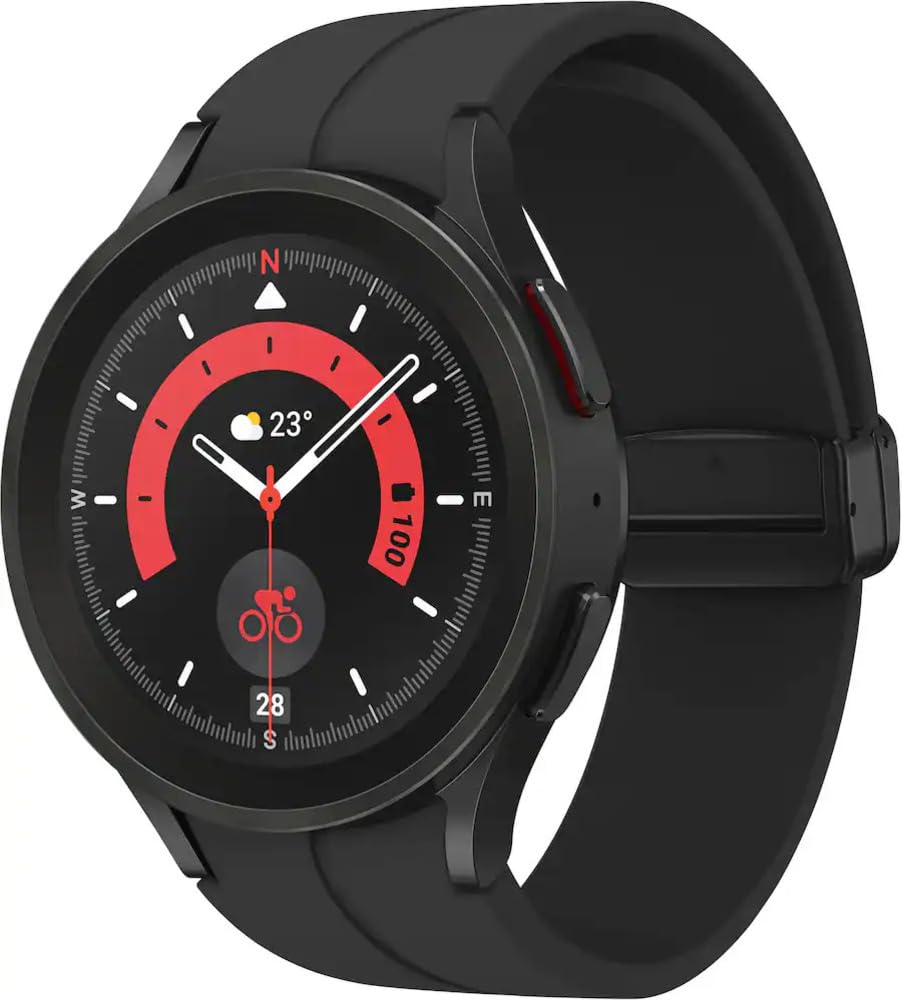
The Galaxy Watch 5 Pro delivers the full Wear OS experience with a titanium case and sapphire crystal glass — materials normally reserved for watches costing twice as much. Its curved BioActive sensor provides industry-leading heart rate and SpO2 accuracy, plus a unique BIA sensor for body composition analysis (body fat, skeletal muscle, BMI) directly from your wrist.
Battery endurance is solid at ~3–4 days with typical use, besting most Wear OS peers but falling short of the Amazfit Balance 2. The LTE variant allows calls, texts, and streaming without your phone, a genuine freedom for runners and swimmers. GPS tracking with route guidance and track-back navigation works well for outdoor hikes, though the rotating touch bezel (a fan favorite) is replaced by a digital touch bezel on this model.
US owners should note the blood pressure sensor is disabled due to FDA regulations, and Samsung Health lacks the advanced recovery analytics (HRV status, training readiness) found on Garmin or Zepp. For Pixel phone users, the Google Pixel Watch 3 offers tighter integration, but for sheer hardware value — sapphire, titanium, BIA, LTE — the Watch 5 Pro is unmatched.
Why it’s great
- Titanium case and sapphire crystal glass for exceptional durability
- BIA sensor provides body composition data on your wrist
- Full Wear OS ecosystem with Google Play Store, LTE, and Google Wallet
Good to know
- Blood pressure sensor is disabled in the US
- Battery life is 3–4 days, not the 7+ days of competitor models
3. Google Pixel Watch 3 (45mm) LTE

The Pixel Watch 3 is the ultimate Android companion for users deep in the Google ecosystem. Its 45mm AMOLED display is 40% larger than the previous generation and hits 2,000 nits peak brightness — among the brightest health watches on the market. The polished aluminum case and domed glass design make it the most fashion-forward option here, with a comfortable silicone band that swaps easily.
Health tracking is powered by Fitbit’s algorithms, offering readiness scores, cardio load analysis, and personalized run recommendations via Fitbit Premium. Advanced running features include real-time form tracking and custom workout building directly from the watch. The heart rate sensor is accurate during steady-state runs but can lag during high-intensity intervals compared to the Samsung BioActive array.
The Achilles’ heel remains battery life. With the always-on display enabled and LTE active, you’ll charge daily — the 420mAh cell manages about 24 hours with mixed use. That’s acceptable for a full-featured Wear OS watch but far behind the Amazfit or Garmin options. For Pixel users who prioritize seamless connectivity, Google Assistant integration, and Fitbit’s gentle coaching over multi-week endurance, the Pixel Watch 3 is the premium pick.
Why it’s great
- Brightest display in class (2,000 nits) for outdoor running visibility
- Best Fitbit integration with readiness scores and personalized run coaching
- Seamless pairing with Pixel phones and full access to Google services
Good to know
- Battery life requires daily charging with always-on display and LTE use
- Occasional UI lag observed in complex notification management
4. Garmin Forerunner 570 (42mm)

The Forerunner 570 is Garmin’s brightest AMOLED running watch, designed specifically for runners and triathletes who want button control with a crisp touchscreen. The 42mm case and aluminum bezel fit smaller wrists comfortably, while the 10-day smartwatch battery (18 hours in GPS mode) ensures it lasts through race week without constant charging.
Garmin’s training ecosystem is the star here. Training readiness scores combine sleep quality, HRV status, and recovery data to tell you if today is a hard day or a recovery day. The built-in Garmin Coach creates adaptive training plans for 5K, 10K, and half-marathon goals that adjust based on your performance and recovery. VO2 max estimates and workout benefit scores give granular feedback that casual watches simply don’t offer.
The downsides are typical Garmin trade-offs: the companion app is data-rich but not as polished as Fitbit or Google, and third-party apps are limited to Connect IQ. The 42mm screen is smaller than the 45mm+ panels on other flagships, though the 326 PPI resolution keeps text sharp. For dedicated runners who coach from their wrist, the Forerunner 570 is the best in class.
Why it’s great
- Garmin Coach provides adaptive, personalized running and triathlon plans
- Training readiness and HRV status guide daily workout intensity
- Lightweight 42mm design with bright AMOLED and button+touch control
Good to know
- Music app experience is poor; better to load your own audio files
- App interface is data-dense and less intuitive than some competitors
5. Garmin Instinct 2X Solar Tactical Edition

The Instinct 2X Solar Tactical Edition is built for environments where most health watches would fail. It meets U.S. military standard 810 for thermal shock, humidity, and water immersion, and its fiber-reinforced polymer case with a 50mm solar lens can run indefinitely in smartwatch mode with three hours of daily sun exposure (50,000 lux). The built-in LED flashlight with variable intensity and strobe is a genuine survival tool, not a gimmick.
Health tracking covers the essentials — wrist-based heart rate, sleep monitoring, Pulse Ox, and respiration — but the sensor accuracy isn’t as refined as the BioActive array on the Galaxy Watch 5 Pro. Garmin’s Firstbeat Analytics provide HRV tracking for recovery insights, but the Instinct’s display is a low-resolution MIPS panel, not an AMOLED. You trade screen quality for extreme battery and ruggedness.
The Tactical Edition adds a ballistics calculator, stealth mode that clears memory, and jumpmaster functions — features designed for military and field work. For civilians, the dual-band GPS with multi-GNSS support delivers accurate trail tracking even in dense canyons. If your daily reality involves mountains, construction zones, or any scenario where a broken screen means a broken watch, the Instinct 2X Solar is the health companion that won’t quit.
Why it’s great
- Unlimited battery life with regular solar exposure, no charging anxiety
- Built to military standard 810 for extreme temperature, shock, and water resistance
- Integrated LED flashlight with strobe mode for emergency visibility
Good to know
- MIPS display is low-resolution and not as vibrant as AMOLED panels
- Health sensor accuracy is decent but not best-in-class for HRV and SpO2
6. Samsung Galaxy Watch Ultra (2024) 47mm LTE
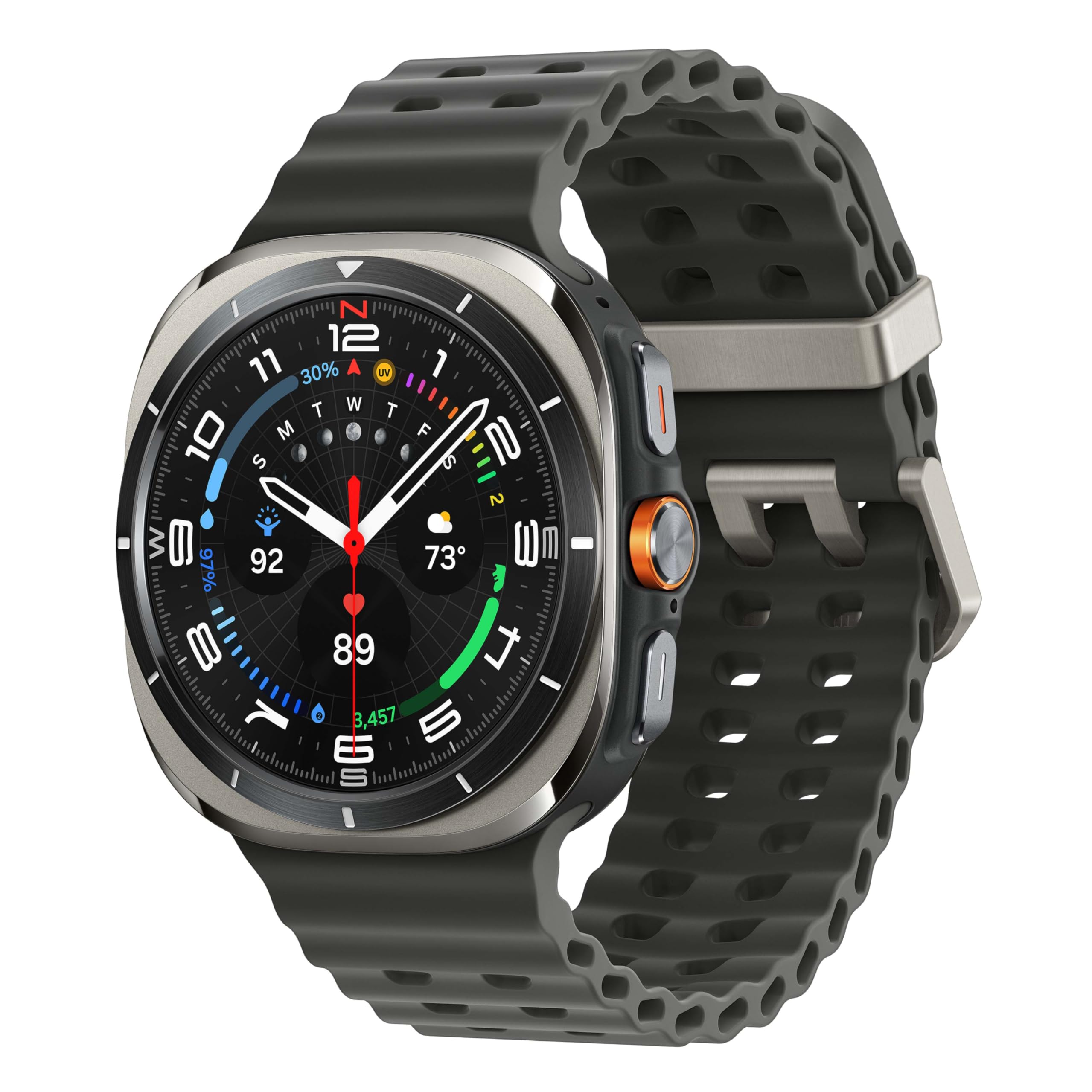
The Galaxy Watch Ultra is Samsung’s titanium-clad answer to the rugged wearable market, combining a 47mm AMOLED display with a 590 mAh battery that delivers ~60 hours of heavy use. The Energy Score with Galaxy AI calculates your physical readiness each morning based on overnight sleep, resting heart rate, and steps, giving you a clear go/no-go signal for high-intensity training. Health tracking is comprehensive — heart rate, ECG, blood oxygen, sleep stages, stress — and the BioActive sensor is enhanced with AI to filter out motion noise during workouts.
The LTE connectivity is genuinely useful: you can leave your phone at home for runs, hikes, or ocean swims (it’s rated for saltwater) while still receiving calls, texts, and SOS alerts. The rotating bezel is replaced by a programmable button system that works well for quick app launches, and the leather-free trail band is comfortable for all-day wear.
Where the Ultra falls short is software polish for health metrics. While Samsung Health is improving, it still lacks the training load, HRV status, and recovery scores that Garmin and Zepp owners rely on. The bulk (47mm, 60g) may overwhelm smaller wrists, and third-party workout apps are often needed for serious athletes. It’s a premium smartwatch first and a health tracker second — excellent if you want rugged design and LTE, less ideal if pure training analytics are your priority.
Why it’s great
- Titanium case and 10 ATM water resistance for ocean swimming and extreme conditions
- Energy Score with Galaxy AI provides daily readiness insights
- Strong LTE battery endurance (60 hours heavy use) for phone-free activity
Good to know
- Health tracking analytics are less deep than Garmin or Zepp Offerings
- Large 47mm case may feel bulky on smaller wrists
7. Tensky 1.85″ HD AMOLED Smart Watch
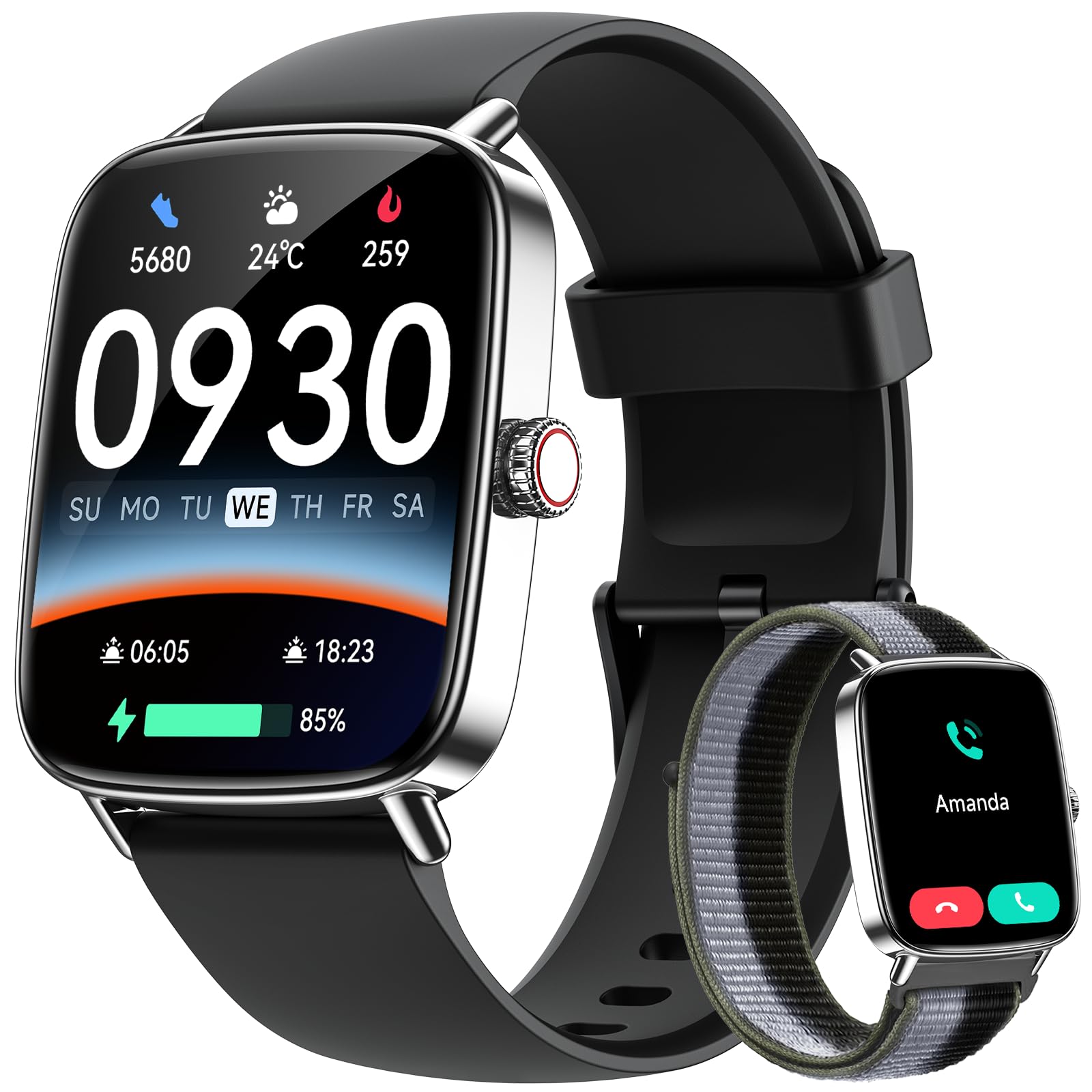
The Tensky smart watch is the entry-level champion for anyone who wants the look and feel of a premium health watch without the premium price. Its 1.85-inch HD AMOLED display with a 60Hz refresh rate rivals the vibrance of watches costing four times as much, and the included two-band kit (silicone and woven) covers both gym and casual wear right out of the box.
Health tracking covers 24/7 heart rate, SpO2, sleep analysis (REM, light, deep), and stress monitoring via the Veryfit app. The 120+ sports modes are generous, and the IP68 water resistance handles pool swims and hand washing without issue. Battery life hits 7 days of heavy use and 30 days on standby, which is remarkable for a 350 mAh cell running an AMOLED panel. Call quality via Bluetooth 5.3 is clear enough for quick conversations, and smart notifications sync with WhatsApp, Facebook, and iMessage.
Accuracy is the obvious trade-off. Step counts can overreport due to hand motion, and the SpO2 sensor is less consistent than medical-grade alternatives. The Veryfit app is functional but not as polished as Samsung Health or Zepp — you won’t get HRV trending or readiness scores. For budget-conscious buyers, commuters, or seniors who want basic health metrics and a beautiful screen without breaking the bank, the Tensky delivers extraordinary value for the category.
Why it’s great
- Vibrant 1.85″ AMOLED display looks far more expensive than it is
- Solid 7-day battery life with IP68 water resistance for pool use
- Bluetooth 5.3 call capability and dual-band kit included
Good to know
- Step counting can overreport with hand movement; accuracy is average
- Veryfit app lacks advanced analytics like HRV, training load, or readiness scores
FAQ
Can an Android health watch measure blood pressure accurately?
How long should the battery last on a serious health watch?
Which app ecosystem provides the deepest health analytics?
Final Thoughts: The Verdict
For most users, the best android health watch winner is the Amazfit Balance 2 because it delivers premium sapphire build, advanced sensor analytics, and industry-leading battery endurance at a mid-range price. If you want tight integration with your Pixel phone and Fitbit’s coaching style, grab the Google Pixel Watch 3. And for rugged outdoor adventures where solar charging keeps you powered indefinitely, nothing beats the Garmin Instinct 2X Solar Tactical Edition.