
Our readers keep the lights on and the weekend projects moving. As an Amazon Associate, I earn from qualifying purchases.
The jump from a standard 60Hz or 144Hz panel to a 240Hz 1080p monitor is the single most noticeable upgrade for competitive gaming. Fast-moving enemies become crisp, motion blur nearly vanishes, and your reaction time is no longer held back by display lag. For PC and console players chasing every millisecond, this refresh rate is the real threshold between good and great.
I’m Rikta — the co-founder and writer behind FitlyFast. I’ve spent years tracking panel technology, analyzing motion handling specs, and comparing how different 240Hz implementations affect real-world clarity in FPS and esports titles.
Whether you’re an esports grinder or a casual player upgrading your rig, the best 1080p 240hz monitor combines blistering refresh rates with low response times and solid color reproduction for a fluid, competitive experience that won’t break your GPU budget.
How To Choose The Best 1080p 240Hz Monitor
Not all 240Hz monitors deliver the same motion clarity. Panel type, Adaptive Sync support, and response time handling vary widely between budget and premium models. Focus on these three areas to avoid buying a monitor that introduces blur or tearing at high frame rates.
Panel Type: Fast IPS vs TN vs OLED
Fast IPS panels dominate the 1080p 240Hz category because they offer the best balance of speed and color. TN panels are rare now but deliver the lowest input lag, at the cost of washed-out colors and poor viewing angles. OLED panels provide perfect blacks and 0.03ms response times, but they cost significantly more and are typically found in higher-resolution models at this refresh rate.
Adaptive Sync and Variable Refresh Rate
FreeSync Premium and G-Sync Compatible are the two main standards. FreeSync Premium reduces stuttering and tearing without a performance hit, while G-Sync Compatible uses NVIDIA’s frame-smoothing algorithm. Both depend on your GPU — pair FreeSync with AMD cards and G-Sync Compatible with NVIDIA for best results. Avoid monitors without any Adaptive Sync at 240Hz; tearing becomes very noticeable at high frame rates without it.
Response Time and Overdrive Tuning
A 1ms GtG (Gray-to-Gray) response time is the baseline for 240Hz. However, some monitors use aggressive overdrive that introduces overshoot or inverse ghosting. Look for models with adjustable overdrive settings so you can dial in the best balance between pixel speed and visual artifacts. ELMB (Extreme Low Motion Blur) Sync is a premium feature that combines backlight strobing with VRR for ultra-crisp motion.
Quick Comparison
On smaller screens, swipe sideways to see the full table.
| Model | Category | Best For | Key Spec | Amazon |
|---|---|---|---|---|
| ASUS ROG Strix XG259CMS | Premium 240Hz IPS | Competitive FPS + esports | 310Hz, 1ms GtG, 110% sRGB, USB-C | Amazon |
| ASUS ROG Strix XG259QNS | Premium 380Hz Fast IPS | Extreme motion clarity | 380Hz OC, 0.3ms, ELMB Sync | Amazon |
| KTC H25X7 | Mid-Range 400Hz | High-refresh value | 400Hz, Fast IPS, HDR400, 128% sRGB | Amazon |
| LG 27G640A-B | Premium QHD 300Hz | QHD + high refresh hybrid | 300Hz, IPS, 95% DCI-P3, HDMI 2.1 | Amazon |
| Acer Predator X27U | Premium QD-OLED | Color accuracy + 240Hz | WQHD QD-OLED, 0.03ms, 99% DCI-P3 | Amazon |
| BenQ Zowie XL2746K | TN Esports | Tournament-level speed | 240Hz, 1ms, DyAc+, S-Switch | Amazon |
| Samsung Odyssey OLED G6 | Premium QD-OLED | Immersive single-player/competitive | 240Hz, 0.03ms, QD-OLED, glare-free | Amazon |
| LG 45GX900A-B | Ultrawide OLED | Ultra-immersive 21:9 gaming | 240Hz, 0.03ms, 800R curve, USB-C PD 65W | Amazon |
| Dell S2522HG | Budget-Friendly 240Hz | Entry-level 240Hz experience | 240Hz, 1ms GtG, 99% sRGB, height adjustable | Amazon |
In‑Depth Reviews
1. ASUS ROG Strix XG259CMS

The ASUS ROG Strix XG259CMS is a 24.5-inch Fast IPS panel that overclocks to 310Hz while maintaining a 1ms GtG response time. It covers 110% of the sRGB gamut, delivering punchy colors that are rare at this refresh rate tier. ELMB Sync technology combines backlight strobing with variable refresh rate support, virtually eliminating both ghosting and tearing in fast-paced scenes.
Build quality is excellent, with a sturdy metal stand that offers full ergonomic adjustments — height, pivot, swivel, and tilt. Connectivity includes HDMI 2.0, DisplayPort, and USB-C with DP Alt mode, allowing a single-cable connection for compatible laptops. Multiple reviews confirm minimal IPS glow and excellent black uniformity, a standout at this price.
The bundled DisplayWidget Center software lets you adjust OSD settings via mouse, a convenience feature for frequent tweakers. The lack of built-in speakers keeps the bezel slim, but competitive gamers typically use headsets anyway. Three years of warranty coverage adds peace of mind for long-term use.
Why it’s great
- 310Hz overclock yields extra fluidity over standard 240Hz
- ELMB Sync eliminates ghosting without disabling VRR
- Excellent black uniformity and minimal IPS glow
- USB-C with DP Alt simplifies cable management
Good to know
- No built-in speakers
- Plastic OSD buttons feel slightly cheap
- Boot-up indicator light can be intrusive
2. ASUS ROG Strix XG259QNS

The ASUS ROG Strix XG259QNS pushes refresh rate boundaries with a 380Hz overclock on its 24.5-inch Fast IPS panel. With a minimum 0.3ms response time, this monitor is purpose-built for esports athletes who need the lowest possible motion blur. ELMB Sync is supported alongside FreeSync Premium, ensuring tear-free frames even during sudden frame rate dips.
Color coverage hits 110% sRGB, and the 400-nit peak brightness provides sufficient HDR10 support for competitive titles where visibility matters more than cinematic contrast. The ergonomic stand offers full height, pivot, swivel, and tilt adjustments, so you can dial in the perfect view for long tournament sessions. Connectivity includes DisplayPort 1.4, HDMI 2.0, and a USB hub.
User feedback highlights the smooth motion and lack of dead pixels out of the box. Some reviewers note that overclocking to 380Hz may not be worth the minimal gain over a stable 360Hz without overclocking. The monitor also includes a three-year warranty and a three-month Adobe Creative Cloud subscription.
Why it’s great
- 380Hz OC with 0.3ms response is class-leading speed
- ELMB Sync + FreeSync Premium for tear-free gameplay
- Full ergonomic stand with height, pivot, swivel
- Includes DisplayPort cable and ROG pouch
Good to know
- Some users skip the 380Hz OC due to stability concerns
- No built-in speakers
- Premium pricing for a 1080p panel
3. KTC H25X7

The KTC H25X7 offers an eye-catching 400Hz refresh rate and a Fast IPS panel at a price point that undercuts most premium competitors. With 128% sRGB coverage and HDR400 certification, colors are vivid and bright enough for both gaming and general productivity. The 1ms response time keeps motion blur minimal even at this extreme refresh rate.
Connectivity includes dual HDMI 2.0 ports supporting 240Hz and Dual DP 1.4 ports capable of the full 400Hz at 1080p. Adaptive Sync supports both FreeSync Premium Pro and G-Sync Compatible, making it flexible for AMD and NVIDIA GPU users alike. The stand is tilt-adjustable only, but VESA mount compatibility solves ergonomic limitations.
Customer reviews praise the picture quality and ease of setup. Some users note that out-of-box calibration can be improved, with slight backlight bleed and dull SDR colors — a calibrated ICC profile resolves both issues. The monitor also includes a headphone jack but no built-in speakers, which is standard at this tier.
Why it’s great
- 400Hz at a mid-range price is unmatched value
- 128% sRGB and HDR400 for vibrant colors
- FreeSync Premium Pro + G-Sync Compatible
- Dual DP 1.4 ports for full 400Hz support
Good to know
- Out-of-box calibration needs tweaking
- Stand is tilt-only; VESA recommended
- No built-in speakers
4. LG 27G640A-B
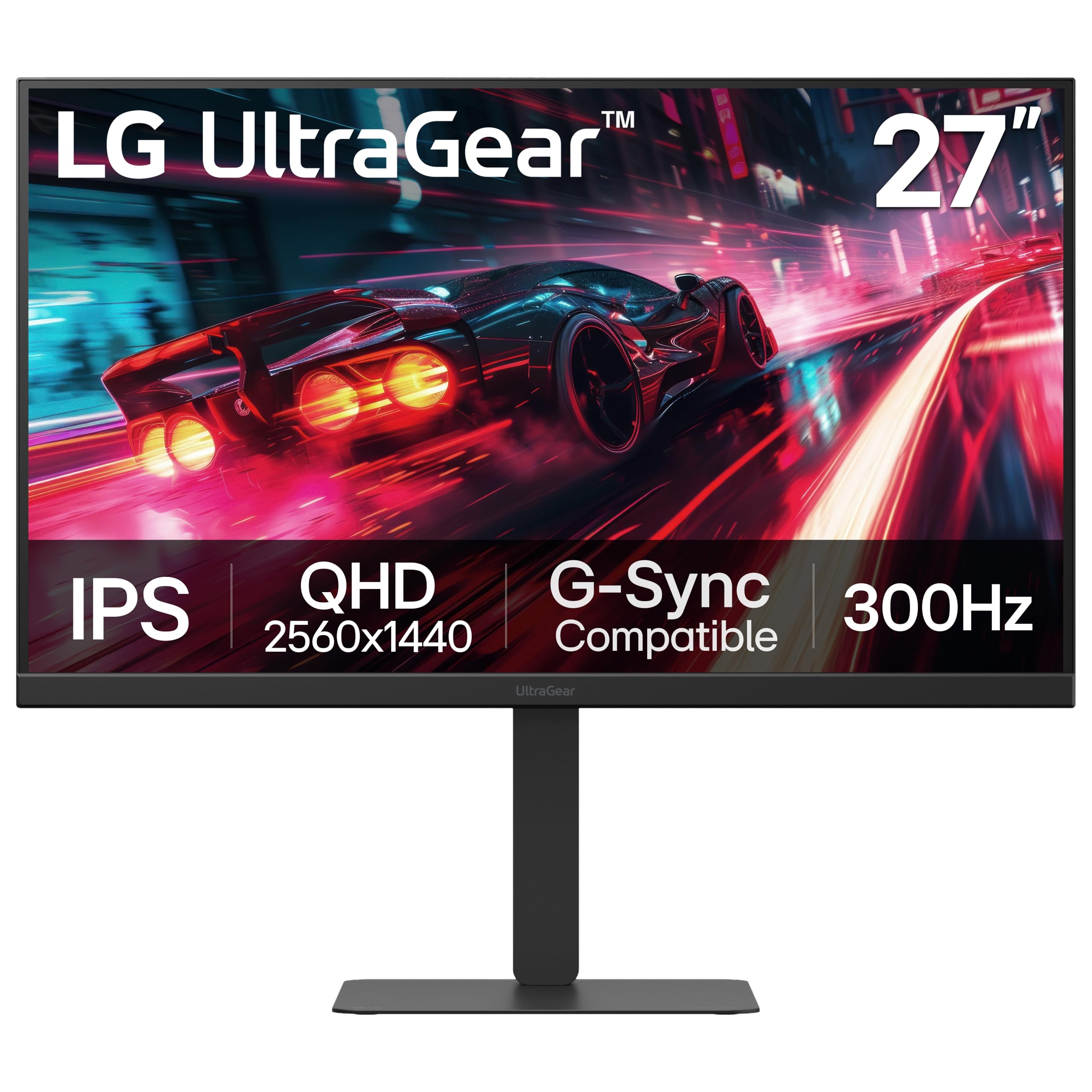
The LG 27G640A-B is a 27-inch QHD IPS monitor with a 300Hz refresh rate, bridging the gap between high refresh and higher resolution. It offers a 1ms GtG response time and covers 95% of DCI-P3, making it suitable for both competitive gaming and immersive single-player titles. VESA DisplayHDR 400 certification ensures decent brightness and contrast for SDR and HDR content.
Adaptive Sync support includes both FreeSync Premium and G-Sync Compatible, covering all GPU brands. The stand provides height, pivot, swivel, and tilt adjustments, built around a slim bezel design. Connectivity is robust with dual HDMI 2.1 ports (perfect for next-gen consoles), DisplayPort 1.4, and USB Type-C with 15W power delivery.
Built-in speakers are present but weak — useful for system sounds, but a headset or external speakers are recommended for gaming. Reviews highlight excellent out-of-box color and brightness for an IPS panel. The aggressive sleep mode may require adjustment in the OSD to prevent unwanted power-offs.
Why it’s great
- QHD resolution + 300Hz hybrid for versatile use
- Dual HDMI 2.1 for PS5/Xbox at high frame rates
- USB-C with 15W PD for laptop convenience
- 95% DCI-P3 coverage with DisplayHDR 400
Good to know
- Built-in speakers are very weak
- Aggressive sleep mode may require OSD tweaks
- Included DP cable may be defective in some units
5. Acer Predator X27U
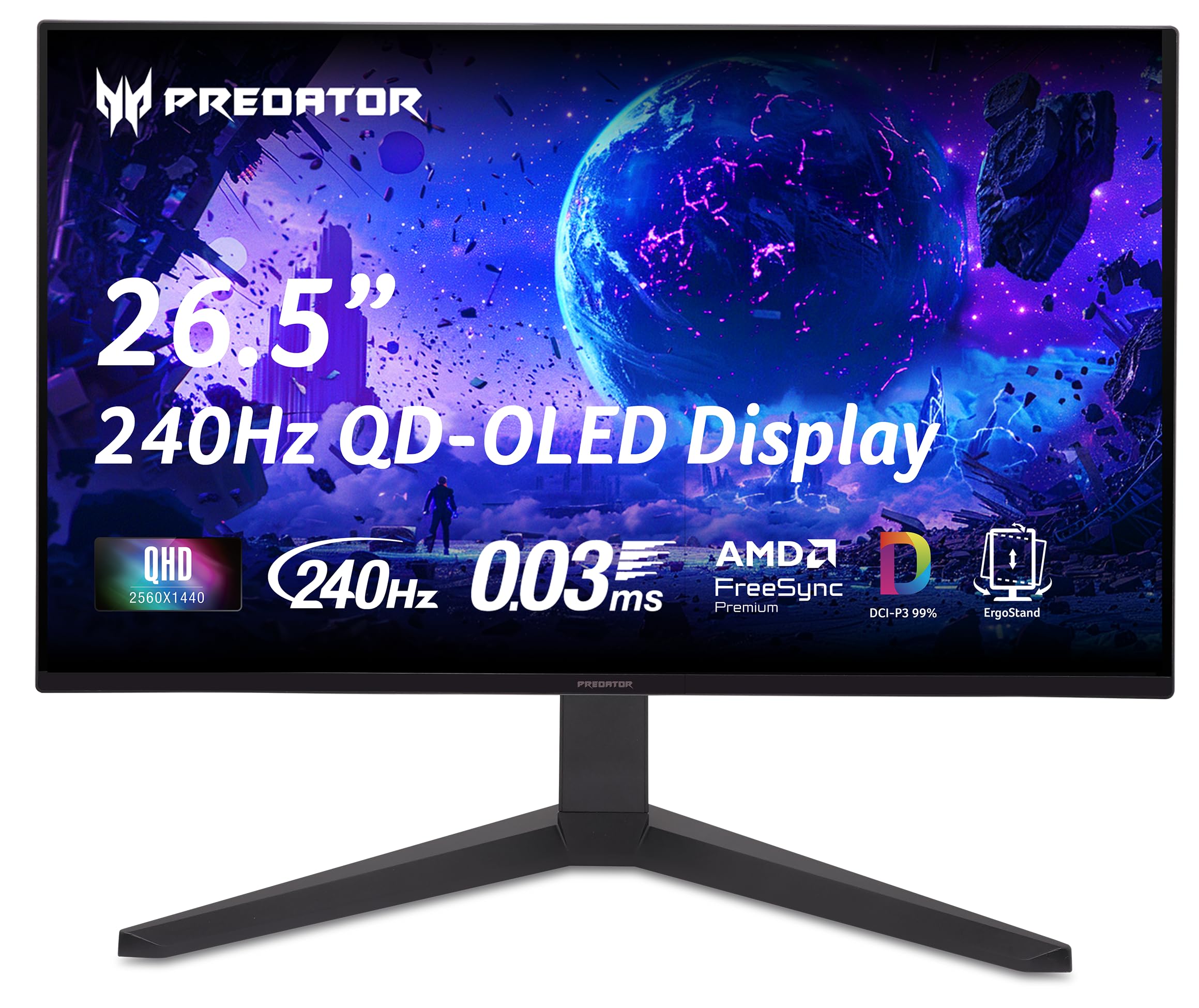
The Acer Predator X27U uses a 26.5-inch WQHD QD-OLED panel that delivers true 10-bit color depth and stunning contrast. With a 240Hz refresh rate and 0.03ms GtG response time, motion clarity is essentially perfect — no ghosting, no blur. The 99% DCI-P3 color gamut and Delta E<2 calibration make it equally impressive for content creation.
AMD FreeSync Premium is supported, and G-Sync Compatible works flawlessly via DisplayPort. The ZeroFrame design keeps the bezels minimal, while the stand offers height, pivot, swivel, and tilt adjustments. Connectivity includes two DisplayPort 1.4 and two HDMI 2.1 ports, giving you plenty of options for multi-device setups.
Some users note that the plastic build feels less premium than pricier OLEDs, and the front finish easily catches fingerprints. Brightness is lower than typical IPS panels, but this is inherent to OLED technology. The included stand arrived cracked in a few reported cases, so inspect packaging carefully on delivery.
Why it’s great
- QD-OLED delivers unmatched contrast and perfect blacks
- 0.03ms response time eliminates all motion blur
- 99% DCI-P3 with Delta E<2 for color work
- Full ergonomic stand with HDMI 2.1 x2
Good to know
- Plastic build feels less premium than competitors
- Brightness lower than IPS; fingerprints show easily
- Stand damage reported in some units
6. BenQ Zowie XL2746K

The BenQ Zowie XL2746K is the reference standard for competitive esports, featuring a 27-inch TN panel with 240Hz refresh rate and 1ms response time. DyAc+ technology reduces motion blur during fast in-game actions like spraying, giving you clearer visuals during critical moments. The Black eQualizer and Color Vibrance settings enhance visibility in dark scenes without washing out bright areas.
The stand offers full height, tilt, and base adjustments, plus a redesigned S-Switch remote for quick profile switching. The included shield blocks side reflections during tournaments. Connectivity is minimal — DisplayPort 1.2 and HDMI — reflecting the monitor’s no-frills tournament focus.
Customer reports are mixed regarding quality control: several users received units with dead pixels or artifacts, and the TN panel’s viewing angles and color accuracy trail behind modern Fast IPS options. For pure competitive speed, however, the input lag and motion clarity remain top-tier. Buy from a seller with a solid return policy.
Why it’s great
- DyAc+ motion blur reduction for competitive gaming
- Minimal input lag and fast pixel transitions
- S-Switch for easy profile swapping
- Full ergonomic adjustments with included shield
Good to know
- TN panel: narrow viewing angles, weaker color
- QC issues with dead pixels reported
- No built-in speakers and limited connectivity
7. Samsung Odyssey OLED G6
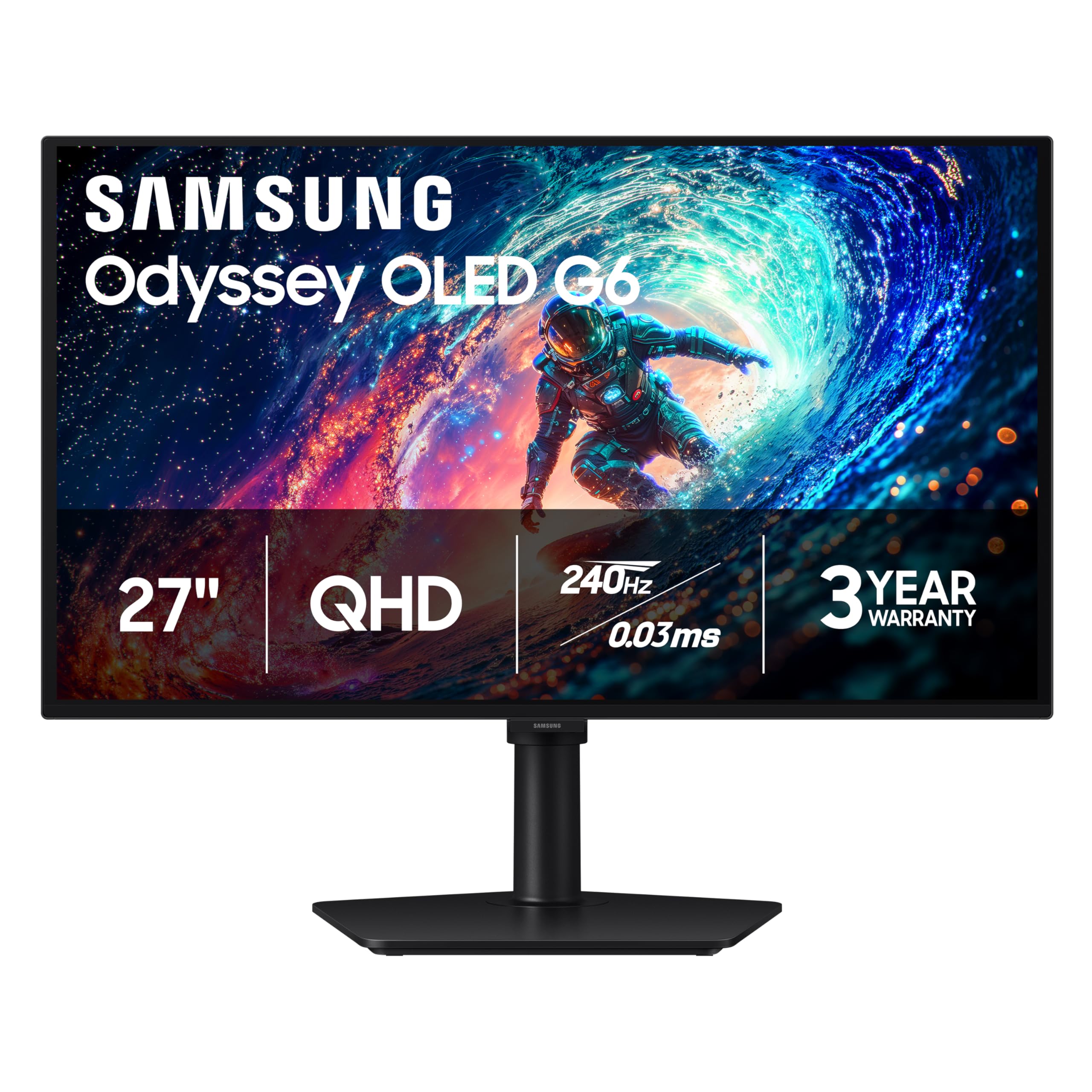
The Samsung Odyssey OLED G6 (G61SH) combines a 27-inch QD-OLED display with 240Hz refresh rate and 0.03ms response time. Pantone Validated accuracy covers over 2,100 colors and 110 skin-tone shades, making it a rare hybrid for both gaming and creative work. The Glare-Free technology keeps reflections minimal even in bright rooms.
OLED Safeguard technology actively monitors panel temperature to prevent burn-in, extending the monitor’s lifespan. The 1,000,000:1 contrast ratio delivers perfect blacks and HDR10 support for cinematic depth. The stand offers height, pivot, swivel, and tilt adjustments, and connectivity includes DisplayPort 1.4 and HDMI 2.1.
Users upgrading from 1440p 144Hz IPS panels praise the color vibrancy and black levels. Some note that brightness is a notch below high-end IPS monitors, and that power management requires keeping the monitor on a separate power strip to avoid pixel refresh warnings. Text clarity is slightly less sharp than IPS due to OLED subpixel layout, but this is barely noticeable during gaming.
Why it’s great
- QD-OLED with 1,000,000:1 contrast and perfect blacks
- Pantone Validated: excellent color accuracy
- Glare-Free coating for bright room gaming
- OLED Safeguard for burn-in prevention
Good to know
- Brightness lower than high-end IPS panels
- Power management needs separate power strip
- Text clarity slightly softer than IPS
8. LG 45GX900A-B
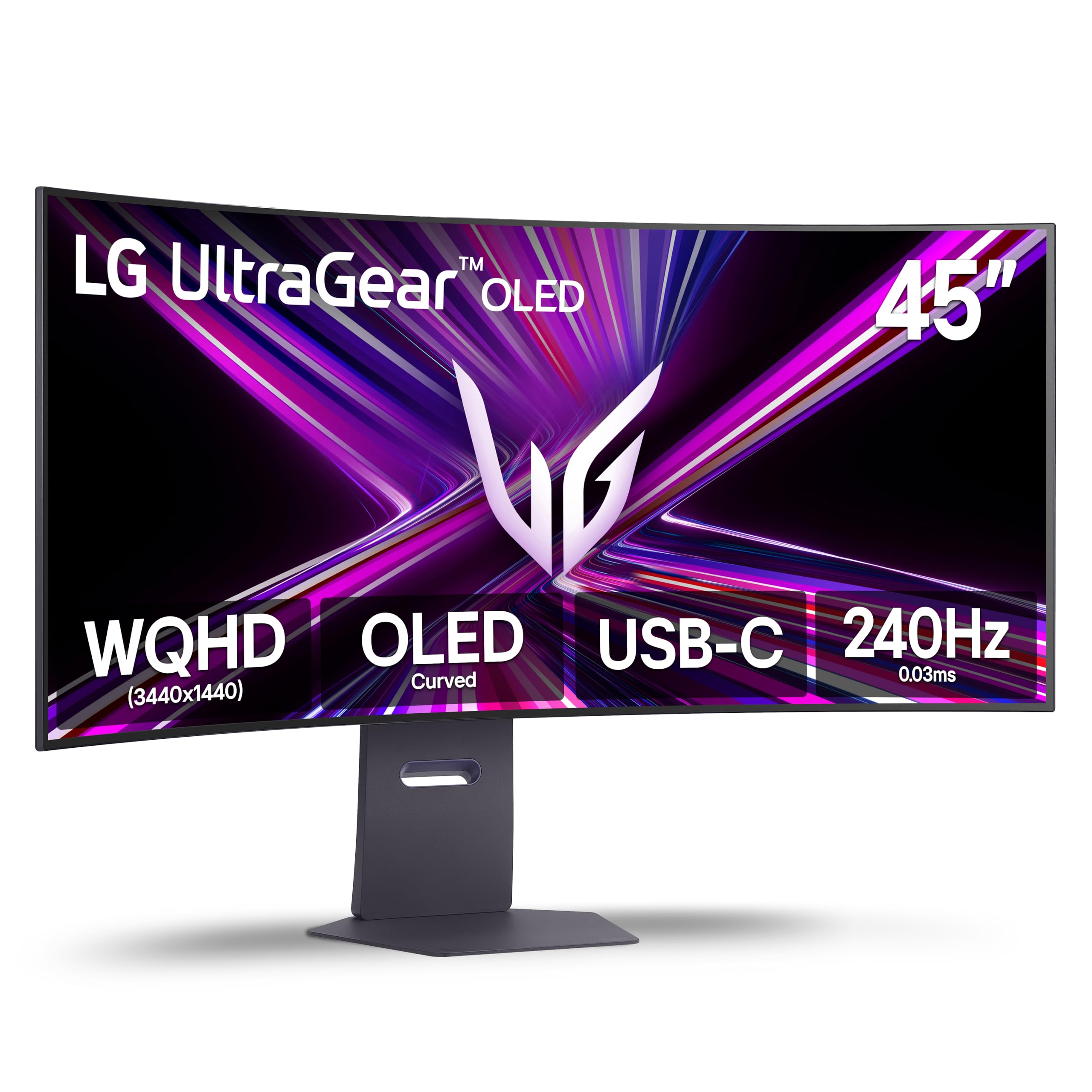
The LG 45GX900A-B is a 45-inch WQHD (3440×1440) OLED curved monitor with an aggressive 800R curvature and 240Hz refresh rate. The 0.03ms response time and 1.5M:1 contrast ratio deliver the smoothest, most immersive gaming experience in this lineup. Peak brightness reaches 1300 nits on small highlights (APL 1.5%), providing strong HDR impact despite the typical 275 cd/m² typical brightness.
It supports FreeSync Premium Pro and G-Sync Compatible, with dual HDMI 2.1, DisplayPort 1.4, and USB-C with 65W power delivery — enough to charge a gaming laptop. Dynamic Action Sync reduces input lag, and the Black Stabilizer brightens dark scenes. OLED Care tools include pixel cleaning and a two-year warranty covering the panel.
Reviews praise the immersive curved screen and excellent build quality, though the massive size won’t fit in typical desk hutches. Some users report intermittent vertical lines and unhelpful LG warranty service — a concern given the premium investment. Built-in speakers are usable but not a substitute for dedicated audio.
Why it’s great
- Immersive 800R curve and massive 45-inch screen
- 240Hz + 0.03ms OLED motion handling
- USB-C with 65W PD for laptop charging
- Two-year panel warranty included
Good to know
- Huge size requires large desk; doesn’t fit hutches
- Intermittent vertical lines reported in some units
- Warranty service quality inconsistent
9. Dell S2522HG

The Dell S2522HG is a renewed 24.5-inch FHD gaming monitor that delivers 240Hz and a 1ms GtG response time at a budget-friendly price. It covers 99% sRGB, which is solid for the tier, and includes NVIDIA G-Sync Certification alongside AMD FreeSync Premium compatibility. The anti-glare screen and flicker-free backlight reduce eye strain during long sessions.
Ergonomics are a highlight at this price: the stand offers height, pivot, swivel, and tilt adjustments — a rarity for budget 240Hz monitors. Connectivity includes DisplayPort, HDMI, and a USB 3.2 Gen 1 hub for peripheral connections. The dark metallic grey finish looks clean and professional on any desk.
Customer reviews consistently praise the color quality and brightness, noting that the panel remains bright and free of tearing even after years of use. Some users mention that the renewed unit may arrive in a generic box, and that the stand can feel slightly wobbly at maximum height. It remains a solid entry point for gamers seeking a true 240Hz experience without spending premium dollars.
Why it’s great
- Full ergonomic adjustments at a budget price
- G-Sync Certified + FreeSync Premium
- 99% sRGB with anti-glare coating
- USB hub for easy peripheral access
Good to know
- Renewed model; packaging may be generic
- Stand can feel wobbly at max height
- No built-in speakers
FAQ
Can my GTX 1060 or RTX 2060 run a 1080p 240Hz monitor effectively?
Is a 240Hz monitor worth it for non-competitive games like RPGs or strategy titles?
Does a 240Hz monitor need DisplayPort or is HDMI enough?
What is the difference between ELMB and standard motion blur reduction?
Final Thoughts: The Verdict
For most users, the best 1080p 240hz monitor winner is the ASUS ROG Strix XG259CMS because it combines a 310Hz overclock, ELMB Sync, and excellent IPS color quality at a mid-range price. If you want extreme 380Hz speed with 0.3ms response for esports, grab the ASUS ROG Strix XG259QNS. And for the ultimate immersion with OLED contrast and 240Hz fluidity, nothing beats the Samsung Odyssey OLED G6.