
Our readers keep the lights on and the weekend projects moving. As an Amazon Associate, I earn from qualifying purchases.
A robotic mower that still needs a buried perimeter wire defeats the whole purpose of automation. The new generation of AI lawn mowers uses stereo cameras, solid-state LiDAR, and 360° vision to map your yard in minutes and navigate without a single foot of boundary wire. But sensor quality, obstacle recognition accuracy, and slope-handling ability vary wildly between models.
I’m Rikta — the co-founder and writer behind FitlyFast. I’ve spent months analyzing the navigation logic, blade systems, and real-world cut quality of every major AI-driven mower on the market to separate the truly autonomous machines from the frustrating ones.
This guide breaks down the key specs, real owner experiences, and genuine trade-offs you need to know before buying the best ai lawn mower for your specific yard layout and grass type.
How To Choose The Best AI Lawn Mower
A truly autonomous mower lives or dies by its navigation system. Understanding the three core technologies — vision-only, LiDAR, and RTK — is the first step to picking a machine that won’t get lost, stuck, or leave your yard looking like a patchwork quilt.
Navigation Core: Vision, LiDAR, or RTK?
Pure vision mowers (like the eufy E15 and E18) use stereo cameras and SLAM algorithms to map your yard. They require no satellite signal and work well in fenced, well-lit spaces but can struggle in deep shade or on lawns with sparse grass. LiDAR-based mowers (Segway Navimow i215, ECOVACS GOAT O1000) spin a laser to build a 3D point cloud, working reliably day or night, even under dense tree canopy. RTK mowers (Husqvarna 410iQ, Sunseeker X7) rely on a satellite correction signal and offer centimeter-level positioning but can lose lock near tall buildings or heavy tree cover. The most premium units now fuse all three — LiDAR, RTK, and AI vision — for near-flawless coverage.
Obstacle Recognition: How Smart Is “Smart”?
Not all AI obstacle avoidance is equal. Entry-level vision mowers detect large objects like trees and furniture but may miss low-lying toys, hoses, or small pets. More advanced systems — the MOVA LiDAX Ultra’s 360° LiDAR plus dual vision, or the Segway Navimow X430’s VisionFence — recognize 200+ object types with sub-inch accuracy. If your yard has flower beds, kids’ play equipment, or irregular landscaping, prioritize a mower with at least 3D ToF LiDAR or binocular vision to avoid constant rescues.
Quick Comparison
On smaller screens, swipe sideways to see the full table.
| Model | Category | Best For | Key Spec | Amazon |
|---|---|---|---|---|
| Mammotion LUBA 3 AWD 5000H | LiDAR + RTK + Vision | Large, complex yards with steep slopes | 80% slope, 1.25 acres | Amazon |
| Segway Navimow X430 | RTK + Vision + VIO | Tough terrain with tight turns | 84% slope, zero-turn | Amazon |
| MOVA LiDAX Ultra 3000 AWD | LiDAR + AI Vision | Medium yards, wire-free simplicity | 0.75 acre, 80% slope | Amazon |
| ECOVACS Goat A3000 LiDAR PRO | Dual-LiDAR | Thick grass, fast charging needed | 3/4 acre, TruEdge trimmer | Amazon |
| Lymow One Plus | RTK + VSLAM | Maximum slope and daily area | 100% slope, 1.73 acres/day | Amazon |
| Husqvarna Automower 410iQ | EPOS RTK | Open, treeless suburban lawns | 0.5 acre, 45% slope | Amazon |
| Sunseeker X7 | Vision AI + RTK | Large 0.75-acre open yards | 70% slope, 14″ cutting width | Amazon |
| Mammotion LUBA 3 AWD 3000H | LiDAR + RTK + Vision | Mid-size yards with varied terrain | 0.75 acre, 80% slope | Amazon |
| Segway Navimow i215 | Solid-State LiDAR + Vision | Quiet, shaded yards under 0.4 acre | 0.37 acre, 45% slope | Amazon |
| ECOVACS Goat O1000 LiDAR PRO | Dual-LiDAR | Compact yards, tight corridors | 1/4 acre, 0.8m narrow pass | Amazon |
| MOVA LiDAX Ultra 2000 | LiDAR + AI Vision | Wire-free, medium flat yards | 0.5 acre, 45% slope | Amazon |
| eufy E18 | Vision SLAM | Flat, fenced 0.3-acre lawns | 0.3 acre, 18° slope | Amazon |
| eufy E15 | Vision SLAM | Entry-level, small fenced yards | 0.2 acre, 18° slope | Amazon |
In‑Depth Reviews
1. Mammotion LUBA 3 AWD 5000H
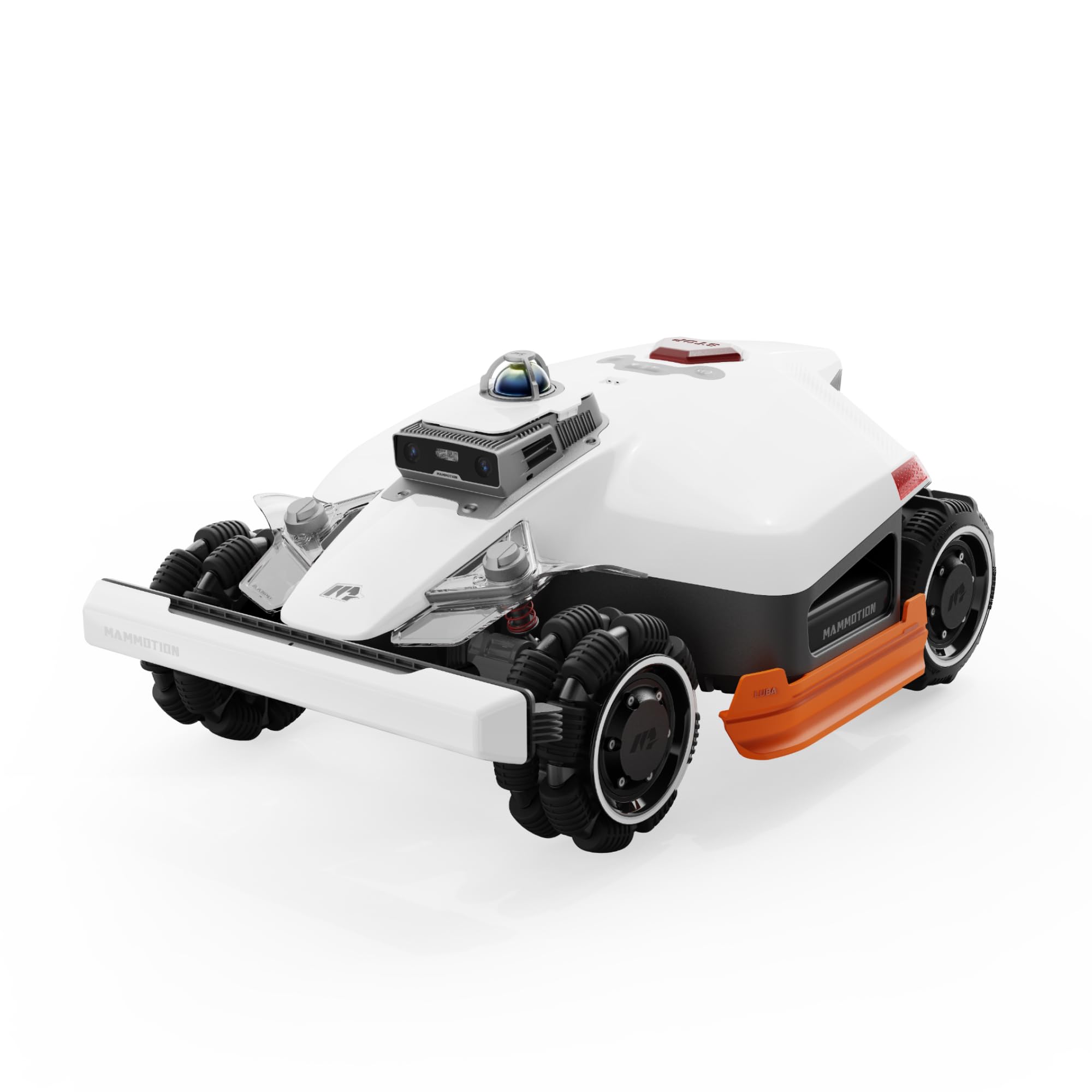
The LUBA 3 AWD 5000H fuses 360° LiDAR, NetRTK, and dual-camera AI vision into a single navigation stack. This tri-fusion approach means the mower switches sensors intelligently — using LiDAR under dense tree canopy and RTK when open sky is available — to maintain centimeter-level positioning across the entire 1.25-acre rated area. The 15Ah battery delivers up to 215 minutes of runtime per charge, covering about half an acre before needing a dock visit.
Owner reports consistently praise the cut quality on tall fescue and the ability to climb 80% slopes (around 38.6°) without getting stuck, thanks to four independently powered wheels and adaptive suspension that steps over curbs and roots up to 50 mm high. The AI processor identifies over 300 obstacle types and automatically adjusts cutting speed and motor power (165W per disc) based on grass density. Some users note that the mower uses the same travel path between zones, which can cause faint tire marks over time.
The 50-zone management and four mowing patterns (perimeter-only, zigzag, checkerboard, adaptive zigzag) give precise control for complex landscaping. Edge proximity is good but not perfect — a string trimmer every few weeks is still needed for the final inch against fences. Overall, this is the most complete AI mower for large, demanding yards that need reliable coverage without boundary wires.
Why it’s great
- Tri-Fusion navigation never loses signal under trees or near buildings
- AWD and suspension handle 80% slopes and 50 mm obstacles
- Remote height adjustment from 2.2″ to 4.0″ via app
Good to know
- Requires RTK base station for NetRTK mode (iNavi not yet available in all areas)
- Obstacle avoidance can trigger on tall, thick grass — may need disabling
- Edge proximity leaves about 1-2 inches that still need manual trimming
2. Segway Navimow X430
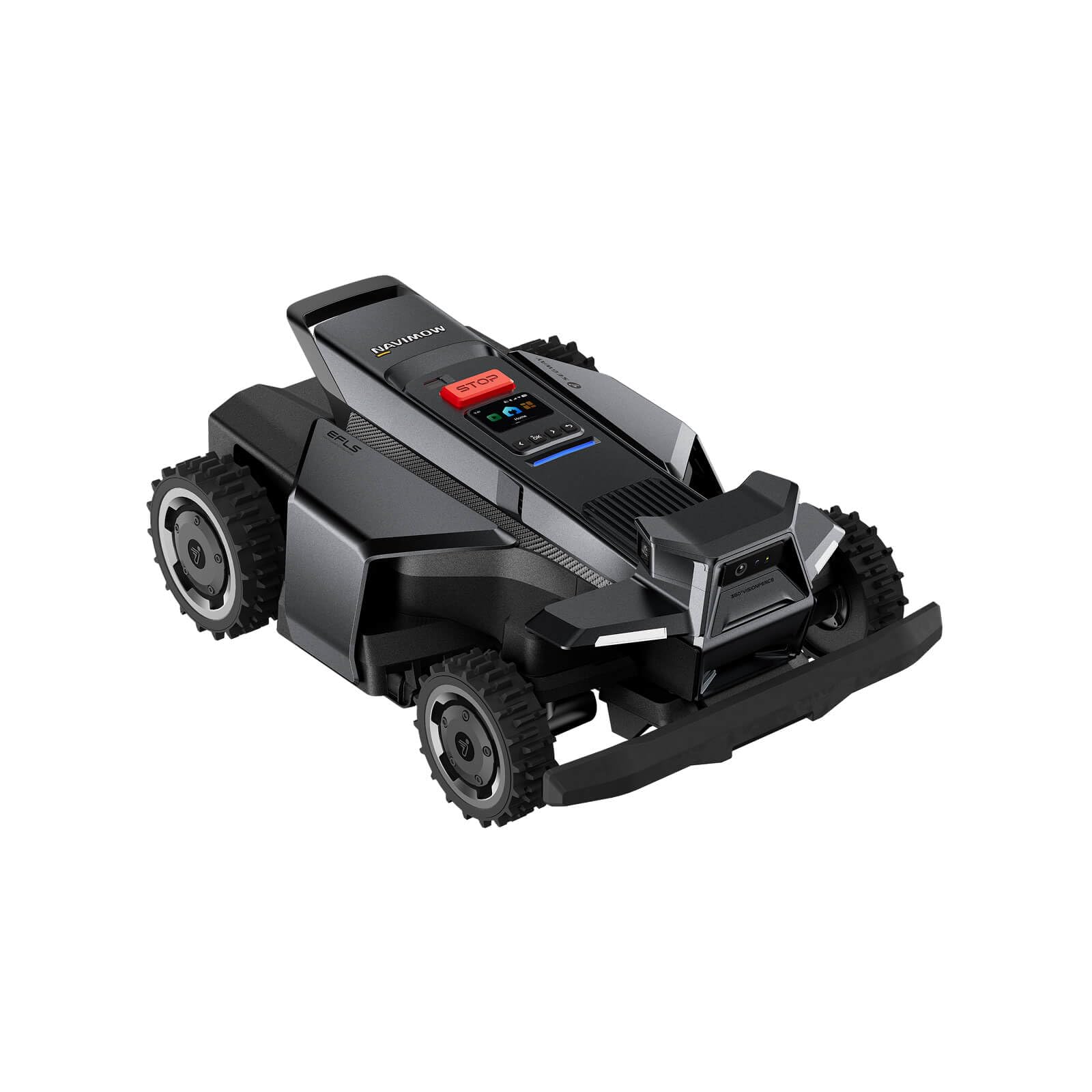
The X430 is a 4WD brute with ORV-tuned dual suspension and a unique zero-turn steering system that prevents turf scuffing — a common issue on caster-wheel mowers when pivoting on slopes. Its EFLS tri-frequency Network RTK paired with 360° Vision and VIO (Visual Inertial Odometry) maintains accuracy even when the mower passes under dense tree cover or alongside fences. The dual 180W motors and 12-blade disc system with a 17-inch cutting width make it the fastest cutter in this lineup for thick, tall grass.
Owner experiences highlight the mower’s ability to handle extreme 84% (40°) slopes where other robots lose traction and stall. The 11-position cutting height (0.75 to 4 inches) and VisionFence AI that identifies 200+ obstacle types provide premium control. However, several users reported a difficult setup process: the initial mapping had GPS drift under low satellite coverage, and the app required multiple restarts during the first week. The mower also leaves streaks of uncut grass if the schedule isn’t aggressive enough — daily mowing during peak growth is recommended.
At 63.7 pounds, the X430 is heavy and large, so lifting it over obstacles or moving it between front and back yards is a two-person job. Once dialed in, the cut quality rivals a professional crew, but expect a week-long tuning phase to get the zone boundaries and no-go areas perfect.
Why it’s great
- Zero-turn steering avoids grass tearing on angled terrain
- Dual 180W motors and 17″ cutting width clear heavy growth fast
- Network RTK holds lock under tree cover and near tall walls
Good to know
- Setup can be frustrating — GPS drift and app glitches common initially
- Grass must stay under 3 inches; struggles with overgrown lawns
- Very heavy and large — not portable between disconnected zones
3. MOVA LiDAX Ultra 3000 AWD
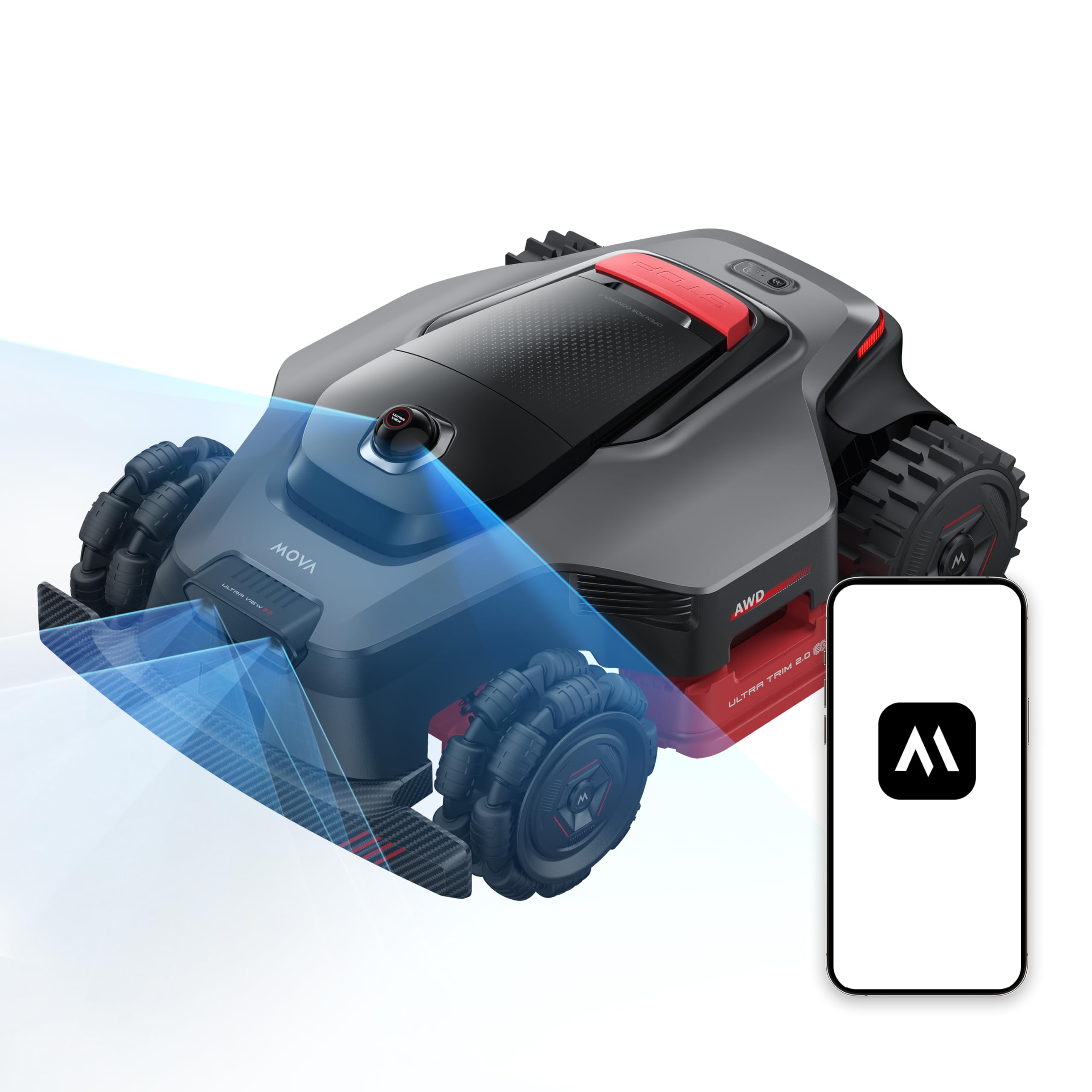
The LiDAX Ultra 3000 AWD packs four high-torque 116W hub motors and a 243Wh battery into a 52-pound package that climbs up to 80% slopes. Its navigational claim to fame is the combination of 360° 3D LiDAR with AI dual vision — no RTK base station needed — which maps the yard automatically with centimeter precision. The 15.8-inch cutting width with 12 razor-sharp blades and a floating disc deck adapts to ground contours to prevent scalping on uneven terrain.
Early owners mapped a typical 0.25-acre yard in about 20 minutes with zero boundary wire. The UltraTrim 2.0 system reduces uncut edges to roughly 1.2 inches, a noticeable improvement over first-gen robotic mowers. The AI recognizes over 300 obstacle types and the built-in 4G (3 years free) provides real-time anti-theft tracking. Some users have reported that the mower occasionally misses areas on the first pass and requires a second session to catch missed patches, especially in complex layouts with multiple islands.
The charging dock alignment can be finicky — the metal contacts sometimes need a nudge to connect. The IPX6 rating means you can hose off mud and grass paste, but the wheels can leave wet streaks on pavers after rain. This mower is an excellent choice for medium properties where you want premium navigation without the complexity of a satellite correction setup.
- True wire-free operation — no RTK station required
- Edges cut to within ~1.2 inches, reducing manual trimming
- 3-year warranty with 24/7 customer support
Good to know
- Some users report the mower needs two recharge cycles to finish a 0.75-acre yard
- Charging dock contacts may need manual alignment
- Wheels collect wet grass paste that requires periodic cleaning
4. ECOVACS Goat A3000 LiDAR PRO
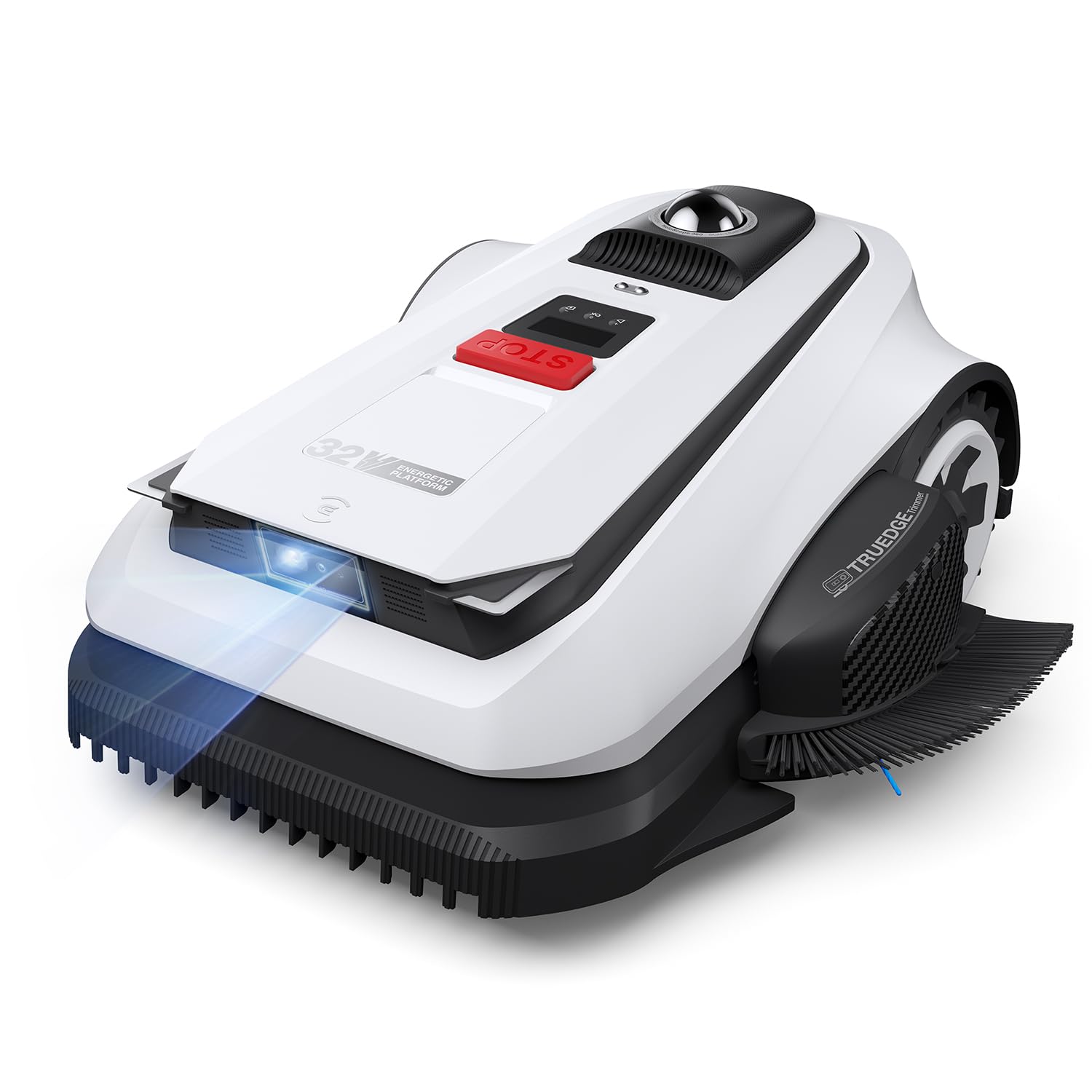
ECOVACS enters the large-yard market with the A3000 LiDAR PRO, a 32V high-power system with a 7500 mAh battery and 189W fast charging that fully recharges in about 70 minutes. This means the mower can run, recharge, and resume quickly enough to cover up to 3/4 acre in a single day without you worrying about battery anxiety. The HoloScope 360° Dual-LiDAR system maintains 2 cm positioning accuracy even under heavy tree cover, a key advantage over RTK-only mowers that lose lock near foliage.
Owners consistently mention the integrated TruEdge trimmer as a standout feature — it reduces manual string trimming around driveways and flower beds significantly compared to standard robot mowers. The cutting performance on thick Bermuda and St. Augustine is strong, thanks to the high-torque dual-blade disc system. That said, the mower does struggle with tight corners and uneven terrain transitions; users with complex landscaping report about 98% coverage that still requires a bit of occasional touch-up.
The ECOVACS app allows full control of mowing zones, no-go areas, cutting height (1.2 to 3.6 inches), and travel paths. Some early adopters noted that the initial mapping walk can be confusing and that the mower occasionally enters no-go zones on curved boundaries. Overall, this is a solid pick for large, relatively flat lawns with some trees, especially if you value fast charging and a built-in edging solution.
Why it’s great
- 189W fast charging — 70 minutes to full, minimal downtime
- Integrated TruEdge trimmer cuts string-trimming frequency in half
- Dual-LiDAR works reliably under tree canopy and along fences
Good to know
- Struggles with tight corners and uneven terrain transitions
- App setup can be finicky for complex yard layouts
- Occasionally enters no-go zones on curved boundaries
5. Lymow One Plus
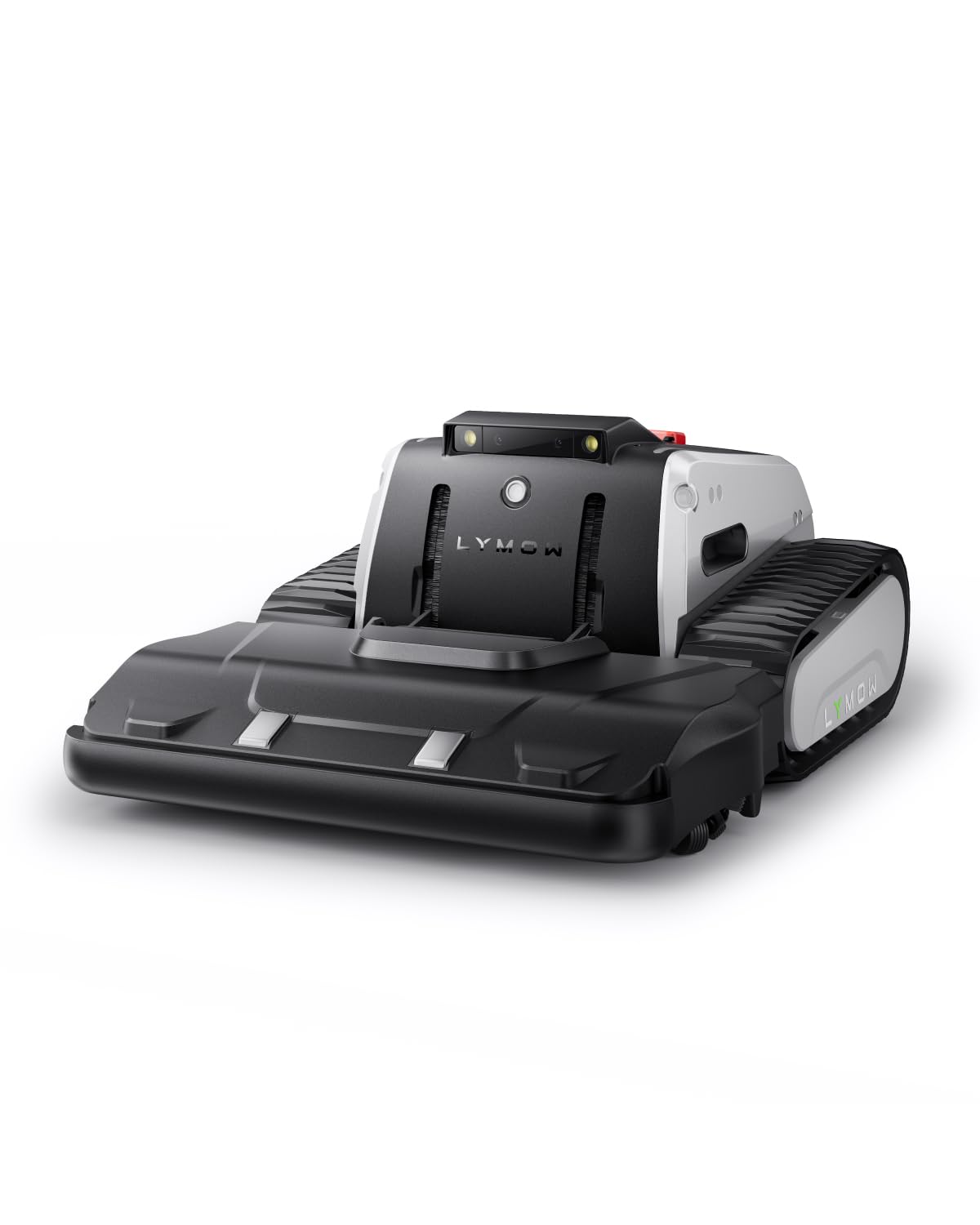
The Lymow One Plus uses a heavy-duty track drive system — unique among lawn mowers — to manage slopes up to 45° (a true 100% climbing capability) and 2.8-inch obstacles. Instead of wheels, continuous rubber tracks provide traction on loose soil, wet grass, and gravel paths where wheeled mowers spin out. The Lycut System 2.0 spins dual SK5 tool steel blades at up to 6,000 RPM with a peak motor power of 1785W, using cyclone airflow to lift flattened grass for a clean cut even in wet conditions.
Real-world owners report daily coverage of 3-4 acres in heavy season (about 1.2-1.7 acres per charge cycle) thanks to the 15,000 mAh LiFePO₄ battery rated for 2,000+ cycles. The RTK-plus-VSLAM navigation holds accurate position near tall trees and high walls. However, the RTK antenna placement is critical — it needs a clear view of the sky and a buffer zone near metal fences to avoid signal interference. A handful of users experienced dead batteries and unresponsive customer support, though this appears to be early-production teething issues.
The 80-zone management, adjustable cutting height (1.2 to 4 inches), and self-lifting blade deck for easy cleaning make this a genuinely low-maintenance machine. The 35.2 kg weight is substantial, but the tracks distribute it well enough to avoid rutting. If you have extreme slopes or a very large property, this is the only mower that combines track traction with AI navigation.
Why it’s great
- Track drive conquers 45° slopes and 2.8″ obstacles wheeled mowers cannot
- LiFePO₄ battery lasts 2,000+ cycles vs. typical 500-800
- Cyclone blade system mulches leaves into fine fertilizer
Good to know
- RTK placement is finicky — requires clear sky and no metal interference
- Some early units had battery charging issues and slow support
- Very heavy and large — not easily moved between disconnected properties
6. Husqvarna Automower 410iQ
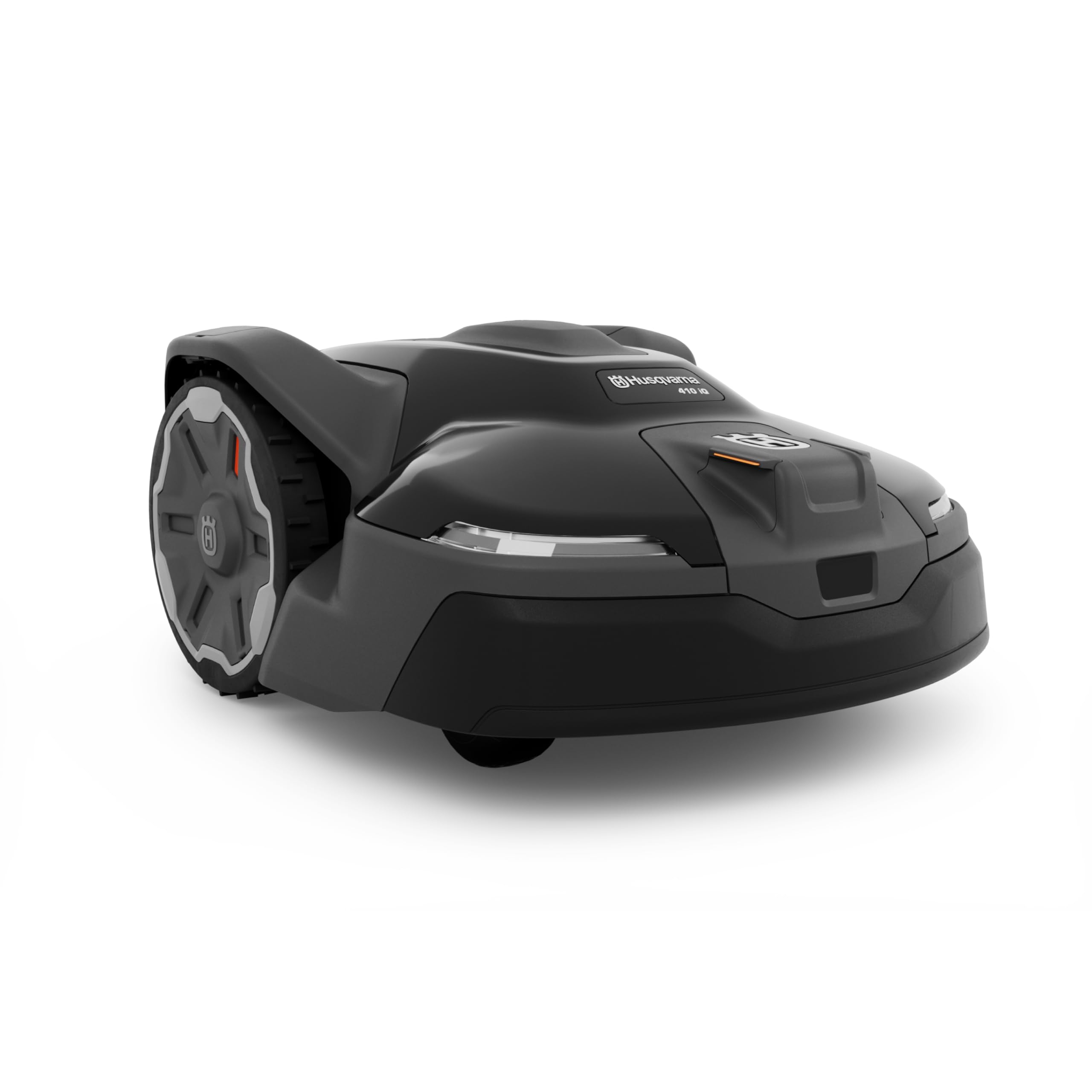
Husqvarna’s 410iQ is the only mower in this roundup that uses EPOS (Exact Positioning Operating System) — a proprietary RTK network that provides centimeter-accurate location data via satellite. The mower also has onboard radar for obstacle avoidance, though it lacks the 3D vision depth of LiDAR competitors. Its 1–4 inch cutting height range is the widest among AI mowers, accommodating everything from a tight 1-inch golf-green cut to a longer 4-inch length for hot-season grass health.
Reviews are polarized. Owners with open, unshaded, fairly flat yards (up to 0.5 acre) love the consistent patterned cuts (random, striped, or checkerboard) and the hose-washable design. The 4-year warranty and free blades for the first year are strong value-adds. However, suburban users with narrow side yards or moderate tree cover report that the mower loses GPS lock when traveling between front and back yards, often leaving it stuck mid-transit. The “Support by Wire” function is also broken for some, with app links returning 404 errors.
The 45% slope rating is modest compared to competitors, but the larger wheels and durable bumper allow it to cross driveways and paths without issues. If your lawn is a clean, open rectangle with good sky access, this is a polished, supported option. If your yard has any shade or narrow passages, look elsewhere.
Why it’s great
- Widest cut height range (1-4 inches) for seasonal grass management
- Best-in-class 4-year warranty with free first-year blades
- Proven brand with robust customer support network
Good to know
- Loses GPS lock in narrow side yards and under tree cover
- “Support by Wire” feature is non-functional for many users
- Obstacle avoidance is radar-based only — no 3D vision depth
7. Sunseeker X7
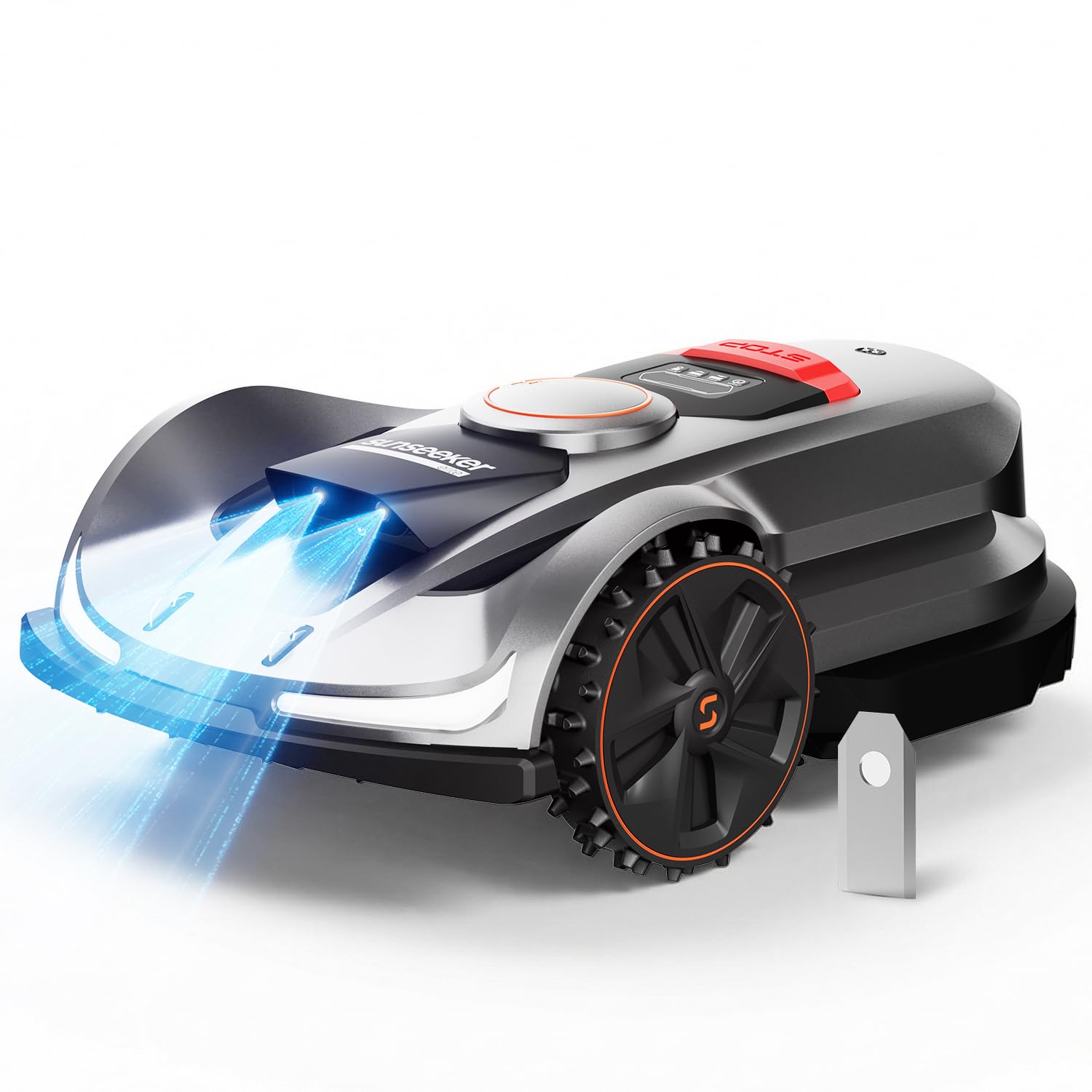
The Sunseeker X7 uses binocular 3D AI vision — two cameras for genuine depth perception — rather than a single camera or LiDAR. This human-like vision system detects the exact size and distance of obstacles, allowing the mower to navigate around them without tearing up turf. The AWD chassis with deep-tread off-road tires climbs up to 70% slopes (35°) and the floating cutting deck adjusts to ground contours to prevent scalping on uneven lawns.
Owners upgrading from previous robot mowers note that the X7 rarely gets stuck — it climbs hills and self-recovers from tricky spots that left earlier mowers stranded. The RTK-based satellite navigation is stable with no reported dropouts, though some users in areas with poor sky visibility experienced intermittent signal loss that required a repositioned base station. The app is intuitive but the setup requires following a guided YouTube video for optimal mapping.
The 14-inch cutting width with 11-position height adjustment (0.8 to 4 inches) covers large areas efficiently. Some owners have reported that the mower can beat grass down rather than cutting cleanly, leaving tassels that wrap around idle wheels — this seems to be an issue in very wet conditions. The Sunseeker customer support team is highly responsive, even offering on-site help for difficult installations.
Why it’s great
- Binocular vision gives genuine depth perception for safer navigation
- AWD with off-road tires handles up to 70% slopes without slipping
- Floating cutting deck prevents scalping on uneven terrain
Good to know
- Can beat grass down in wet conditions, leaving tassels
- RTK connection may drop in areas with poor sky visibility
- Setup requires following a video guide — not fully intuitive
8. Mammotion LUBA 3 AWD 3000H
The 3000H is the smaller sibling of the 5000H, sharing the same Tri-Fusion navigation (360° LiDAR, NetRTK, dual-camera AI vision) but with a 12Ah battery rated for 0.75 acres. The 165W dual-disc motors and 6-blade system deliver a clean, professional-looking finish with straight, parallel lines that compete with a manual push mower. Like the 5000H, it climbs 80% slopes and steps over 50 mm obstacles thanks to the omni wheel and adaptive suspension.
Users consistently mention that the cut quality on thick grass is excellent and that the app-based mapping is straightforward — no RTK module is needed for initial setup, though the iNavi service (cloud RTK) is not yet available everywhere. The 30-zone management allows separate schedules for front and back yards, garden beds, and play areas. A recurring critique is that obstacle avoidance can be overly cautious, triggering on tall grass tufts and requiring disabling for very shaggy lawns.
The mower cannot cover the full 0.75 acres in a single charge — expect it to return to the dock once during a full-yard cycle. Edge proximity improves with each pass as the algorithm learns the boundary, but initial runs may leave 2-3 inches of uncut grass along fences. This is a well-rounded mid-range option for properties that need reliable navigation without the price tag of the 5000H.
Why it’s great
- Same Tri-Fusion navigation as the flagship 5000H at a lower price
- Excellent cut quality with straight, professional lines
- Handles 80% slopes and 50 mm obstacles with ease
Good to know
- Requires one recharge to cover full 0.75 acres
- Obstacle avoidance triggers on tall grass — may need disabling
- RTK requirement may limit functionality in areas without iNavi
9. Segway Navimow i215
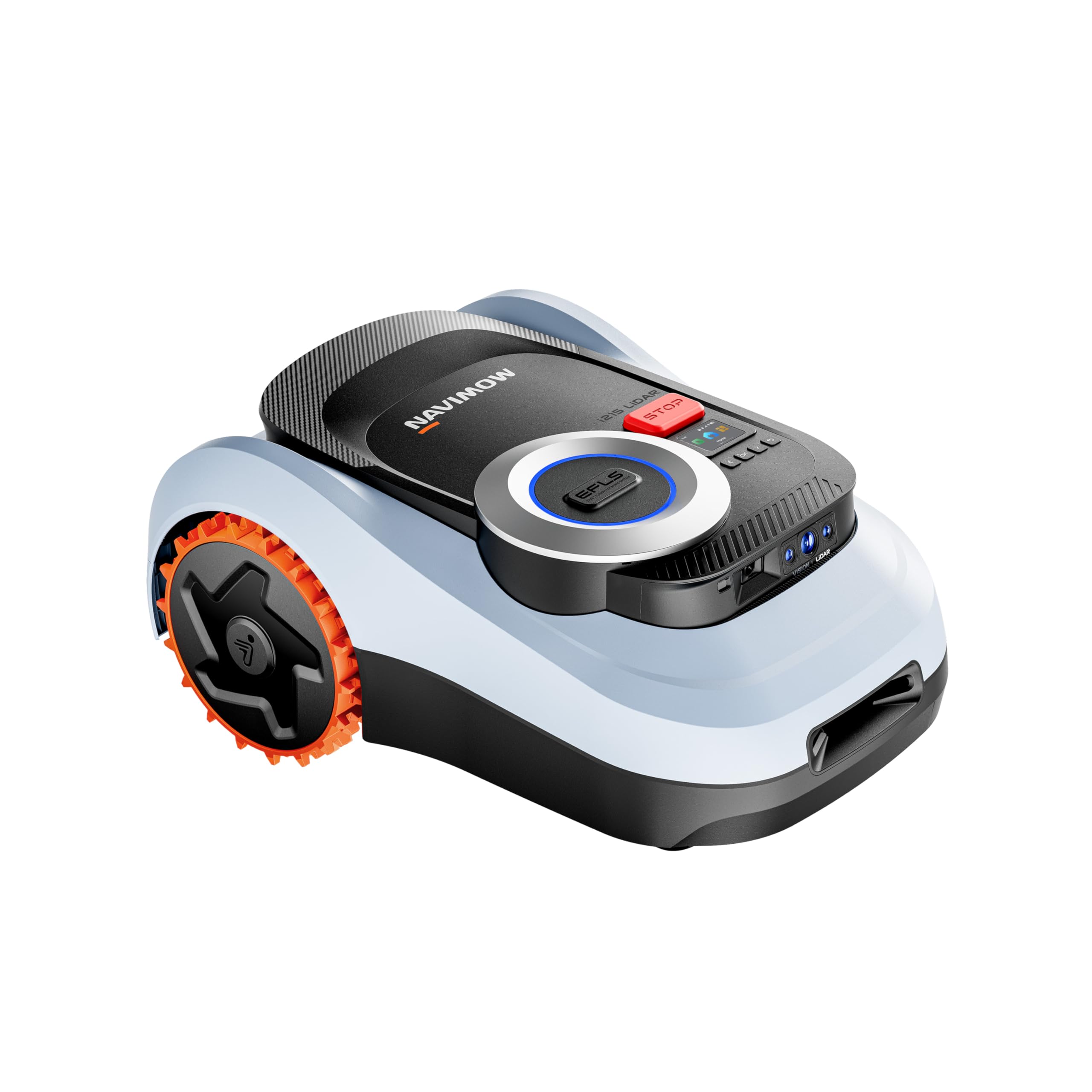
The Navimow i215 uses solid-state LiDAR paired with onboard vision sensors — no moving parts — for stable, satellite-free navigation that works reliably day or night. This is a genuine advantage for yards with tall trees that block GPS signals, as the LiDAR creates a 3D awareness map without needing any overhead sky access. The mower operates at just 59 dB(A), quiet enough for early-morning or late-evening mowing without disturbing neighbors.
Owners with moderately complex yards (0.25–0.3 acres with tree rings, trampolines, and garden beds) report that the i215 maps accurately and navigates around obstacles without intervention. The AI VisionFence detects 200+ obstacle types with 0.4-inch accuracy, and the GeoSketch feature allows editing up to 20 mowing zones on an interactive map. The 7.1-inch cutting width is narrower than most competitors, which means it takes longer to cover the full rated area — some users split their yard into 7 zones running one per night (48 minutes each).
The battery life is a point of contention: one user measured only 27% of the rated capacity used in 1.8 hours on a 0.25-acre lot, suggesting the mower retraces paths excessively and leaves uncut islands. Segway’s customer support has been responsive for software issues but slow to address hardware complaints. For small, shaded yards where GPS mowers fail, this LiDAR-based option is effective, but budget extra time for the initial learning curve.
Why it’s great
- Solid-state LiDAR works in total darkness and under dense tree canopy
- Very quiet operation at 59 dB — mow anytime without noise complaints
- Voice control via Alexa and Google Home for hands-free scheduling
Good to know
- Battery runtime is significantly less than advertised in real-world use
- Narrow 7.1″ cutting width requires multiple sessions to cover the rated area
- Some users report path retracing that leaves uncut islands
10. ECOVACS Goat O1000 LiDAR PRO
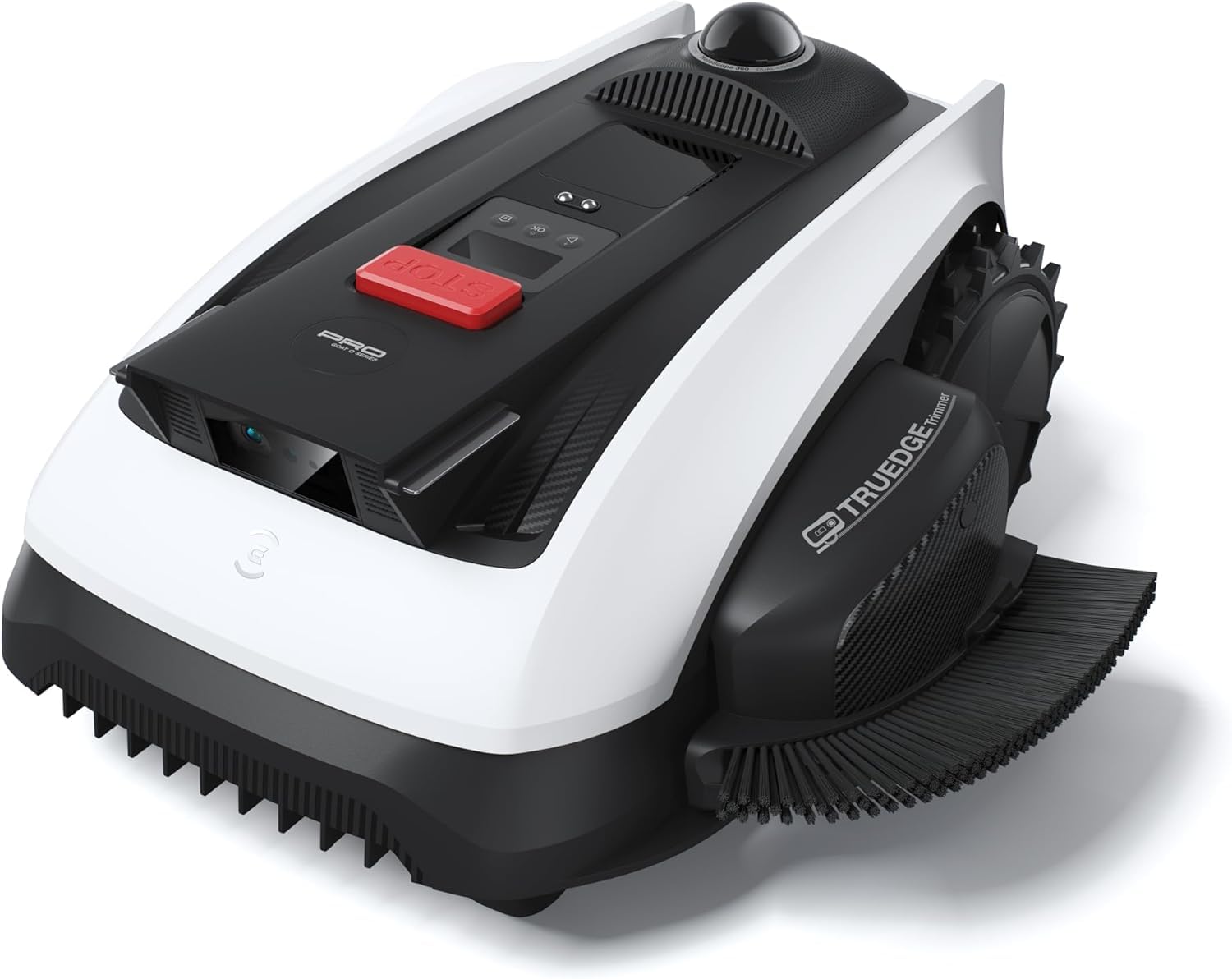
The GOAT O1000 LiDAR PRO is designed for smaller properties with tight access — its super-narrow body passes through gaps as slim as 0.8 meters (about 31 inches), making it the only mower in this guide that can navigate side-yard corridors and narrow pathways. The HoloScope 360° Dual-LiDAR system provides the same 2 cm positioning accuracy as the larger A3000 but in a more compact, lighter 47.7-pound package.
The integrated TruEdge trimmer is a standout for a compact mower — it trims along driveways and flower beds with a built-in trimmer line that significantly reduces manual string-trimming work. Owners report that the mower handles overgrown grass well and avoids pets reliably, though it does get confused in complex areas with curves and paved zones, occasionally entering no-go zones during the first few runs. The 3D ToF LiDAR and AI vision detect over 200 obstacle types, but the detection precision is 5 cm (about 2 inches) — less sharp than the premium models.
The ECOVACS app allows zone editing, scheduling, and cutting height adjustment (1.2 to 3.6 inches). Some users note that the mower misses corners even after manual mapping, requiring several software updates to fine-tune. For very small yards with narrow passages, this is the only AI mower that fits — just expect a week of adjustments to get it right.
Why it’s great
- Only AI mower that passes through 0.8-meter gaps — perfect for narrow side yards
- Built-in TruEdge trimmer reduces manual string-trimming effort
- Dual-LiDAR navigation works without RTK in shaded areas
Good to know
- Gets confused in complex curved zones — may need multiple mapping sessions
- Misses corners even after manual boundary adjustment
- 5 cm obstacle detection precision is less accurate than premium models
11. MOVA LiDAX Ultra 2000
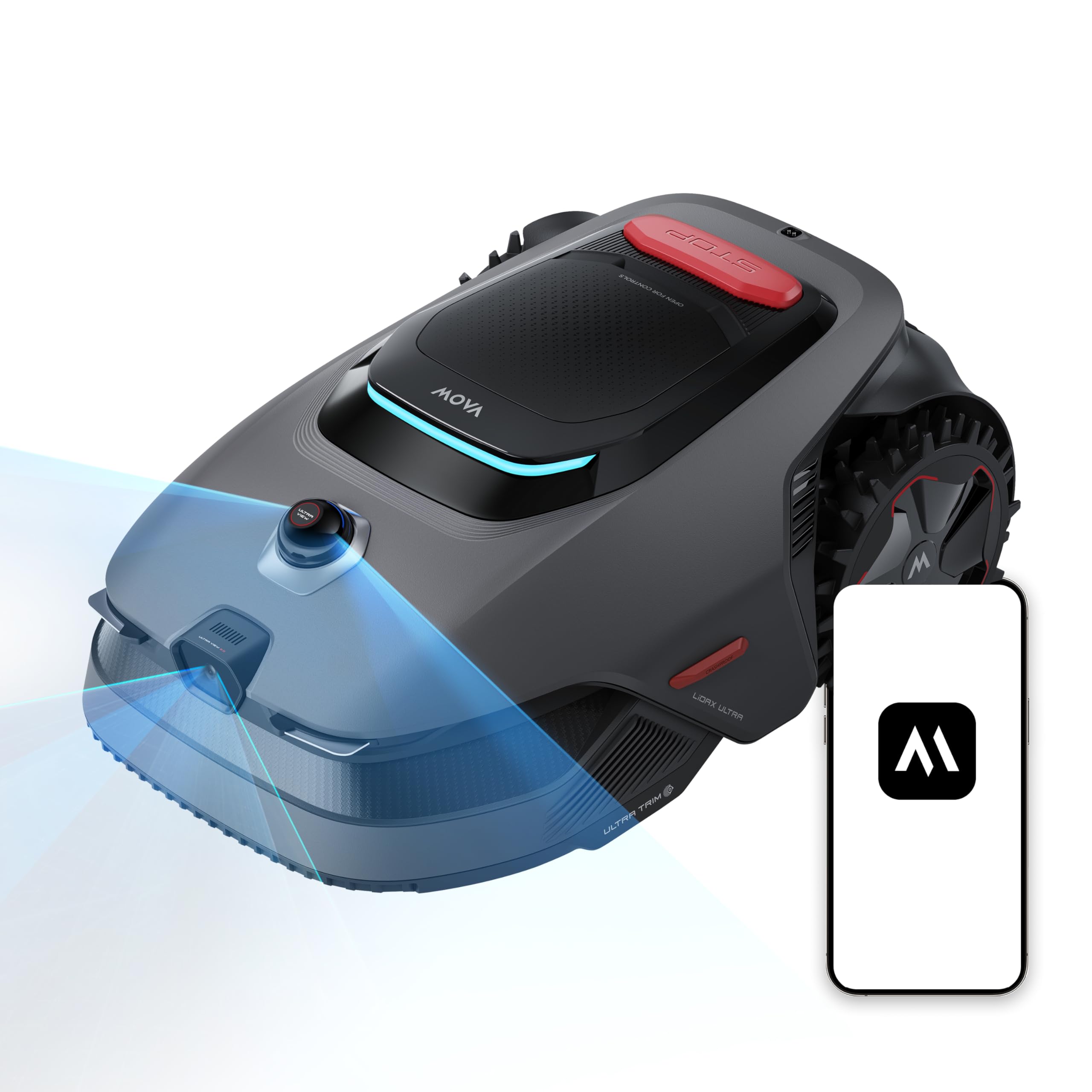
The LiDAX Ultra 2000 is the mid-range variant of MOVA’s LiDAR-based lineup, offering the same 360° 3D LiDAR and AI vision core as the 3000 AWD but without the all-wheel-drive system. It uses a rear-wheel-drive system with off-road wheels that still climbs 45% slopes and overcomes 1.6-inch obstacles — sufficient for modestly hilly yards. The 0.5-acre rating makes it suitable for small to medium properties at a lower entry point.
Owner reviews highlight the fast, wire-free setup (about 20 minutes to map a 0.25-acre yard) and the movable cutting disc that handles about 95% of edge trimming within roughly 2 inches of walls. The AI vision recognizes over 300 obstacle types with continuous algorithm updates, and the 3-year warranty provides peace of mind. Some users note that the mower needs one recharge to finish a 0.5-acre yard and that the charging dock alignment can be finicky.
The UltraTrim system reduces but doesn’t eliminate manual trimming — expect to trim edges every 4-5 days. The 60-minute battery life is modest, and the mower’s performance in wet grass (mud accumulation on wheels) requires periodic cleaning. For budget-conscious buyers who still want wire-free LiDAR navigation, this is the most affordable entry point into the MOVA ecosystem.
Why it’s great
- Wire-free LiDAR setup at a lower price than most competitors
- Movable cutting disc handles 95% of edge trimming within 2 inches
- 3-year warranty with 24/7 after-sales support
Good to know
- Needs one recharge to finish 0.5 acres — total runtime about 2 hours
- Charging dock contacts require precise alignment
- Wheels accumulate mud in wet conditions, needing hose cleaning
12. eufy E18
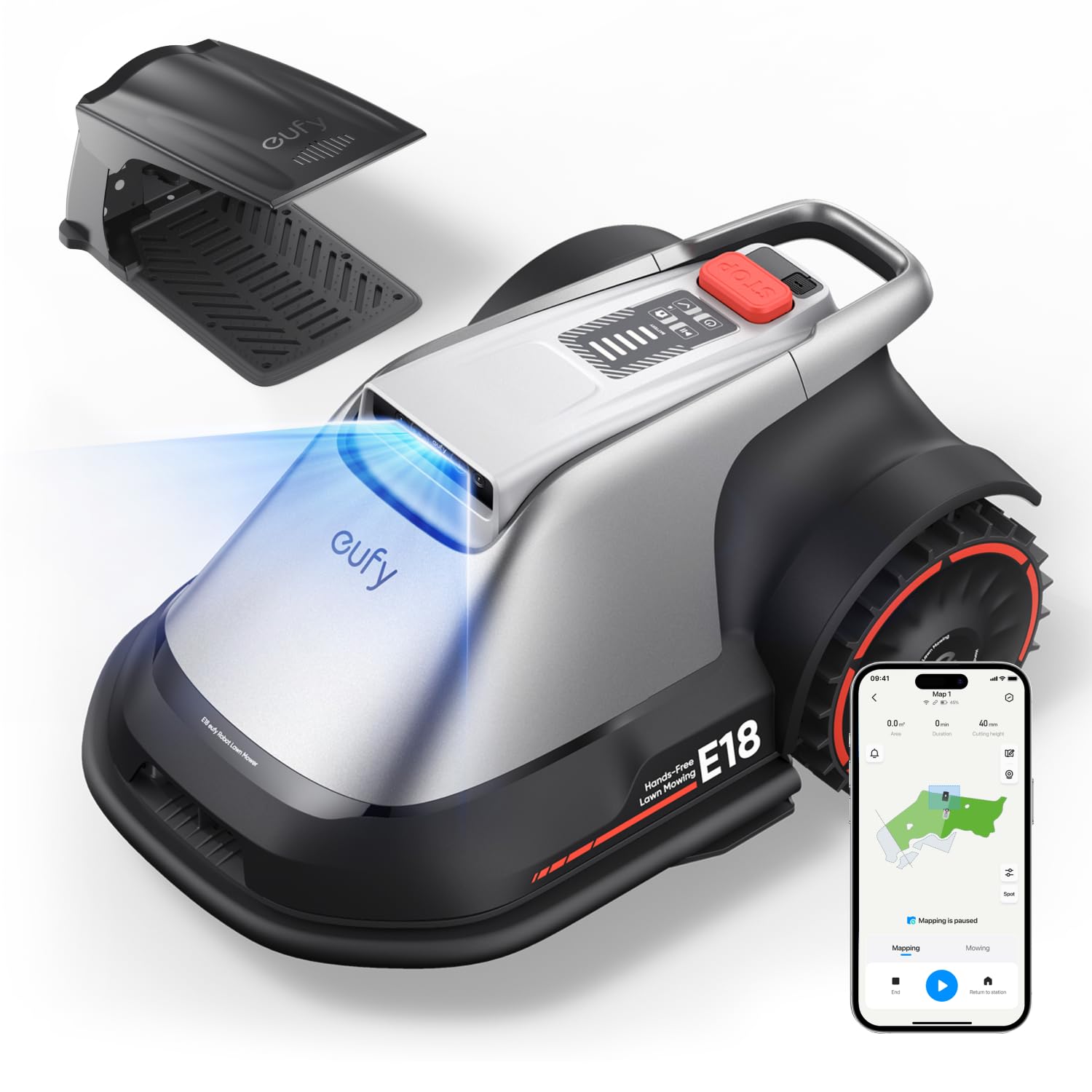
The eufy E18 uses the same V-FSD 1.0 vision system as the E15 but is rated for 0.3 acres (13,000 sq ft) instead of 0.2 acres. The stereo cameras and AI algorithms map the yard automatically in about 5 minutes with zero boundary wire or external station. The 3D perception system detects low obstacles (rocks, toys) and tall obstacles (pools, garden beds) with enough precision to avoid collisions in complex garden layouts.
Owners praise the auto-mapping and zone scheduling capabilities, along with the excellent obstacle avoidance that keeps pets safe. The linear parallel cutting produces clean, professional-looking stripes. However, a notable long-term review revealed significant battery degradation after one year — the mower could only cover about 33% of its rated area before needing a recharge. eufy’s customer support replaced the battery quickly under warranty, but this durability concern is worth noting.
The app, while functional, has a dated interface that some users compare to a 1990s software experience. Blade changes are hazardous and difficult, requiring tools and careful handling. The mower requires flat terrain (slopes under 18°) and is not suitable for St. Augustine or dense Zoysia grass. For flat, fenced yards under 0.3 acres where GPS mowers fail, this is a capable entry-level option.
Why it’s great
- True wire-free setup — 5-minute auto-mapping with no infrastructure
- Excellent obstacle avoidance in complex garden layouts
- GPS anti-theft tracking with 24-month warranty
Good to know
- Significant battery degradation reported after one year of use
- Blade changes are difficult and potentially hazardous
- Requires flat terrain and cannot handle St. Augustine or thick Zoysia
13. eufy E15
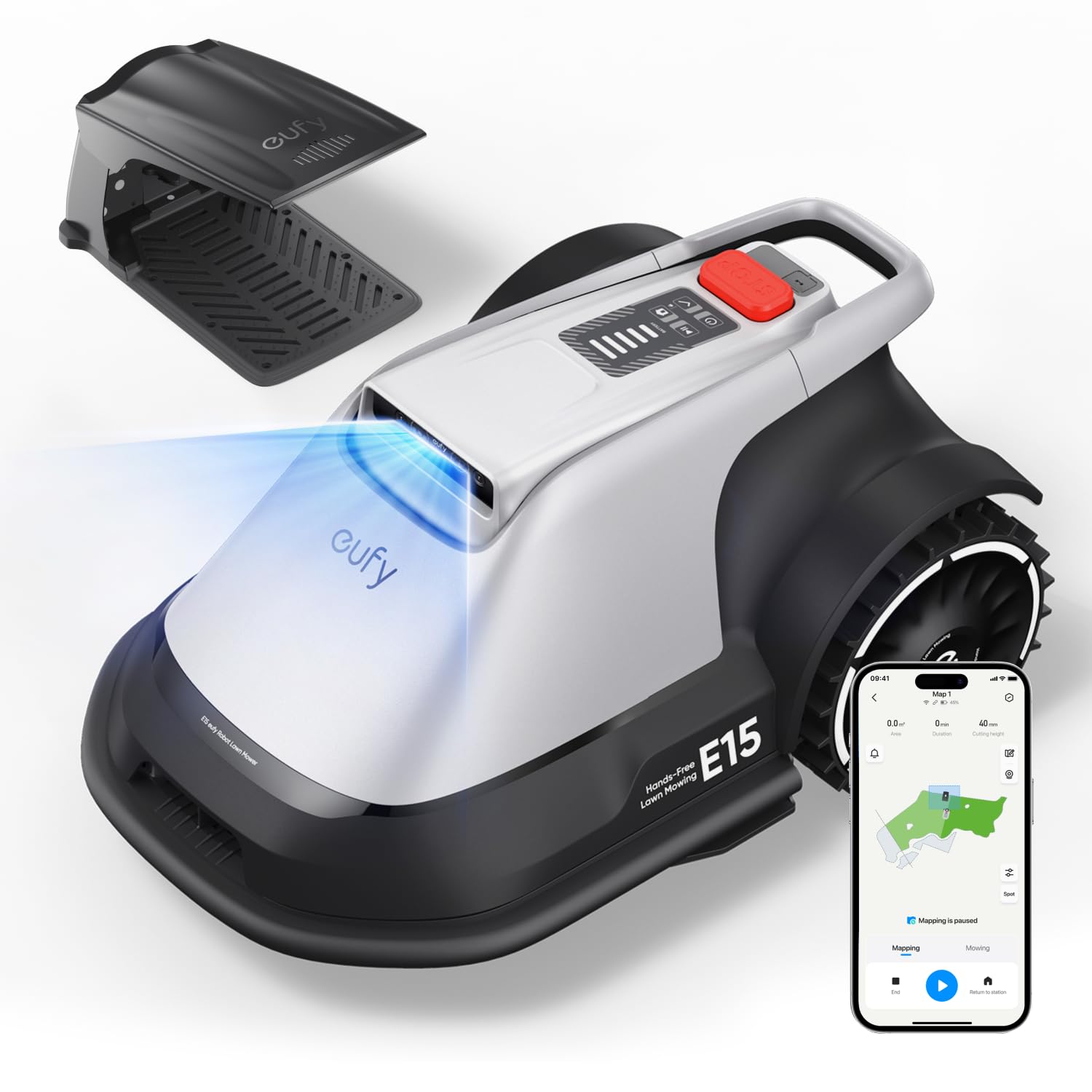
The eufy E15 is the smallest vision-only mower in this guide, designed for lawns up to 0.2 acres (about 8,700 sq ft). The V-FSD 1.0 vision system uses stereo cameras and SLAM algorithms to map and navigate the yard without any boundary wire or RTK station. Setup is genuinely fast — owners report unboxing to first mow in about 15 minutes. The mower operates very quietly, handles small sticks well, and ignores dog waste, making it pet-friendly.
Owners with small, flat, fenced yards are overwhelmingly positive, praising the 10/10 performance for fenced properties. The mower handles elevation changes and paving stones gracefully, and the app allows easy zone editing and manual joystick control. However, the camera-based vision only works in daylight, so nighttime mowing is not possible. The 1.5-hour recharge time after 1.5 hours of mowing means it can take a full day to fine-tune the initial mapping.
The mapping system is demanding — auto-mapping only works on lush, full grass. Yards with bare patches or sandy soil cause mapping failures that require manual zone drawing, which is frustrating. The mower also buries itself in sand and gets stuck on patchy lawns. If your small lawn is dense, even, and fenced, this is the easiest wire-free mower to set up. If your lawn has any bare spots or sandy soil, it will be a source of frustration.
Why it’s great
- Fastest setup time — 15 minutes from unboxing to mowing
- Very quiet — operates without disturbing neighbors or pets
- Auto-mapping creates a precise layout of fenced yards
Good to know
- Mapping fails on lawns with bare patches or sandy soil
- Only mows in daylight — no nighttime operation
- Battery and recharge cycle mean about 50% uptime per session
FAQ
Can an AI lawn mower work without any boundary wire?
How does an AI lawn mower handle obstacles like toys or pets?
What size lawn is too small or too large for an AI mower?
Do AI lawn mowers work in the rain or at night?
How often do I need to replace blades on an AI lawn mower?
Final Thoughts: The Verdict
For most users, the secure winner of the best ai lawn mower debate is the Mammotion LUBA 3 AWD 5000H because its Tri-Fusion navigation (LiDAR + RTK + vision) provides fail-safe positioning on any terrain up to 1.25 acres, with a cut quality that rivals professional service. If you need zero-turn agility and extreme slope capability (84%) with a wider cutting deck, the Segway Navimow X430 is the better choice for thick, fast-growing grass on complex hills. And for the tightest budgets wanting wire-free simplicity, the MOVA LiDAX Ultra 2000 delivers LiDAR precision at the most accessible price point — just be ready for a few extra charging cycles to cover the full yard.